The Quick Read
India's marine archaeology began in 1981, when the National Institute of Oceanography (NIO) in Goa started underwater surveys off Dwarka. Key milestones include the 1982 Bet Dwarka wall and the ASI's Underwater Archaeology Wing in 2001. Mahabalipuram followed in 2004–05, and Poompuhar was surveyed again in 2026. The field has produced firm finds. It still lacks a national site register.
Key Takeaways
- Organised marine archaeology in India started in 1981 at NIO Goa.
- India's underwater heritage spans roughly 4,000 years, from Harappan ports onward.
- Bet Dwarka yielded a 580-metre wall dated to about 1500 BCE.
- India has not ratified the 2001 UNESCO underwater heritage convention.
- New surveys in 2025–2026 have returned to Dwarka, Mahabalipuram and Poompuhar.
Priya, a Class 11 student in Ahmedabad, has two sources open on her phone for a school project on Dwarka. One says divers found a legendary city under the sea. Her textbook says something narrower: a Late Harappan seal and a stone wall dated to around 1500 BCE. The gap between those two versions is the real story of underwater research in this country. A clear marine archaeology timeline India students can trust has to separate what was found from what was claimed. This guide does that, date by date. It covers the first NIO dives in 1981 and the Poompuhar survey of 2026.
When did marine archaeology begin in India?
Marine archaeology in India began as an organised science in 1981. That year, the National Institute of Oceanography (NIO) in Goa started underwater work, according to an NIO paper. The groundwork came earlier. Excavations on land at Lothal in Gujarat during the 1950s showed that Harappan communities built facilities linked to water trade.
Why did Lothal come first?
Lothal is a land site, but it shaped how India thinks about its maritime past. Archaeologist S.R. Rao led excavations there for the Archaeological Survey of India (ASI) between 1955 and 1960. He identified a large brick basin as a tidal dockyard used by Harappan traders. Not every scholar accepted that reading. Some argued the basin was a water reservoir instead. That debate is still worth knowing because it shows a pattern. Indian maritime sites often carry a strong interpretation that later researchers test and sometimes question.
What changed when NIO started underwater work in 1981?
NIO turned a land-based interest into fieldwork at sea. Rao moved from Lothal to lead the institute's marine archaeology effort, and Dwarka became the first major target. Divers, sonar and coring tools let teams record stone structures and artefacts below the waterline. NIO researchers later estimated that India's underwater heritage, in the form of submerged settlements and sunken ships, spans around 4,000 years or more (NIO/ResearchGate). That figure explains why one institute could not cover the whole coast. India's shoreline is long, the water off Gujarat is murky, and the diving season is short because of the monsoon.
What are the key dates in the marine archaeology timeline India students should know?
The core dates run from 1981 to 2026. They include the first NIO dives at Dwarka, the 1982 Bet Dwarka wall and the ASI wing founded in 2001. Mahabalipuram followed in 2004–05. The 2025–2026 surveys came later. The table below lists the anchors for any marine archaeology timeline India readers need for exams or projects.
| Year | Site or event | Agency | What happened |
|---|---|---|---|
| 1955–1960 | Lothal, Gujarat | ASI | Land excavation; basin identified as a possible dockyard |
| 1981 | Dwarka, Gujarat | NIO Goa | Organised marine archaeology begins |
| 1982 | Bet Dwarka, Gujarat | NIO Goa | 580-metre wall dated to c. 1500 BCE reported |
| 1981–1994 | Bet Dwarka | NIO Goa | Repeated explorations of the island |
| 1980s–1990s | Somnath, Goa, Lakshadweep, Poompuhar | NIO Goa | Coastal and offshore surveys |
| 2001 | Underwater Archaeology Wing | ASI | Dedicated ASI underwater unit established |
| 2001, 2004–05 | Mahabalipuram, Tamil Nadu | ASI UAW | Investigations, then excavations |
| 2015 | UAW | ASI | Wing reported as defunct (J. Maritime Archaeology, 2024) |
| Feb 2025 | Dwarka | ASI | Five-member team led by Prof. Alok Tripathi begins dives |
| Aug 2025 | Mahabalipuram | ASI UAW | Work resumes (Organiser) |
| Dec 29, 2025 | Porbandar to Muscat | Indian Navy | INSV Kaundinya departs on 18-day voyage |
| 2026 | Poompuhar | TNSDA and Indian Maritime University | Third survey phase concludes |
| 30 July 2026 | Parliament | Government of India | ASI work at four coastal sites detailed |
What did divers find at Dwarka and Bet Dwarka?
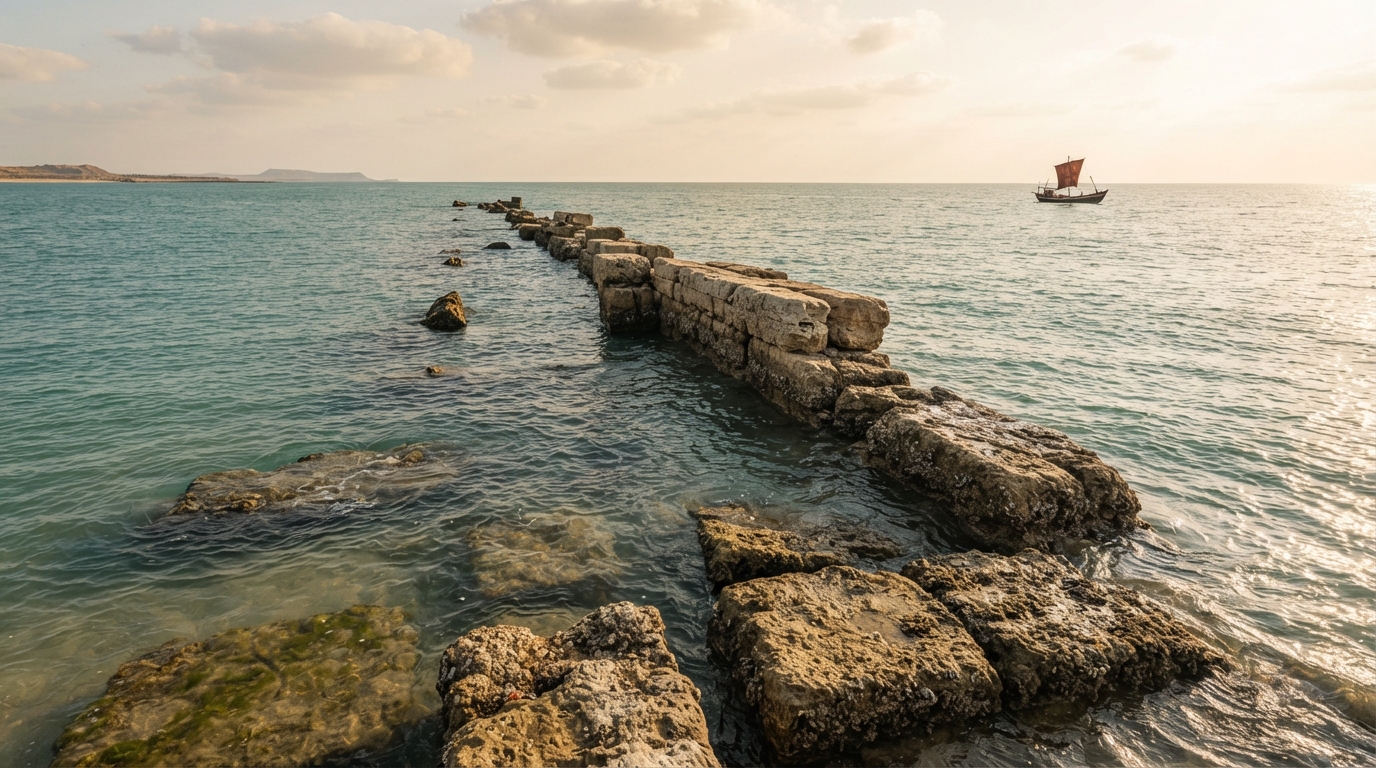
Bet Dwarka is the Gujarat island site that produced the field's most cited early results. In 1982, National Institute of Oceanography (NIO) teams reported a protection wall about 580 metres long, dated to around 1500 BCE. Reported artefacts include a Late Harappan seal, an inscribed jar and a mould used by a coppersmith.
These Bet Dwarka details appear on Wikipedia, which points to S.R. Rao and A.S. Gaur's 1992 report as the primary source. Students should cite the Rao and Gaur report directly where possible.
Tradition links Dwarka with the city of Krishna. The archaeology at Dwarka and Bet Dwarka shows something more modest and still important: a protohistoric coastal settlement with trade links.
Which other sites did NIO survey in the 1980s and 1990s?
The National Institute of Oceanography (NIO) in Goa is the agency that carried India's underwater surveys beyond Gujarat. Through the 1980s and 1990s, NIO teams surveyed waters off Somnath, Goa, the Lakshadweep islands and Poompuhar in Tamil Nadu, with each survey area adding a different historical period to the record.
Poompuhar matters because Sangam-era Tamil texts such as the Silappatikaram describe Poompuhar as a busy port called Kaveripoompattinam.
Goa's waters are linked to centuries of Portuguese shipping, which our guide to the Portuguese era in Goa covers in detail.
Together, the Somnath, Goa, Lakshadweep and Poompuhar surveys stretched India's underwater record from the Harappan age to the colonial era.
How did the ASI Underwater Archaeology Wing shape the 2000s?
The ASI set up its Underwater Archaeology Wing (UAW) in 2001. That created a second national body for submerged heritage alongside NIO. The UAW took on coastal temples, island wrecks and inland lakes. It also faced staffing and funding limits. A 2024 review in the Journal of Maritime Archaeology reports that the wing became defunct in 2015.
What did the UAW do after 2001?
The ASI Underwater Archaeology Wing (UAW) is the unit that, after 2001, worked across a varied set of submerged sites. ASI records list Bangaram Island in Lakshadweep, Mahabalipuram, Dwarka, Loktak Lake in Manipur and Elephanta Island near Mumbai among the wing's sites, ranging from open sea to inland lake.
That spread of five sites is wider than most popular articles suggest. The site list shows the UAW treated "underwater" as any submerged context, not only the open sea.
The UAW's limitation was scale. A small team could visit sites but rarely sustain long excavations, and few full reports reached the public. A 2024 review in the Journal of Maritime Archaeology reports that the wing became defunct in 2015.
What happened at Mahabalipuram after the 2004 tsunami?
Mahabalipuram became a focus after initial ASI investigations in 2001. The Indian Ocean tsunami of 26 December 2004 stripped sand from parts of the shore. That briefly exposed carved stones and structural remains near the famous Shore Temple. The ASI carried out excavations during 2004–05, according to Organiser (Aug 2025). Local stories had long described submerged temples off the coast. The work gave those stories a tested, physical basis at specific spots, though not proof of a whole sunken city.
Why is the Gulf of Khambhat claim disputed?
The Gulf of Khambhat claim is the clearest case for caution in this timeline. In the early 2000s, sonar surveys in the gulf were presented as evidence of a very old submerged city. Many archaeologists did not accept this. Some argue that the sonar data was misinterpreted and that the "structures" may be natural features or survey artefacts (Futura-Sciences, 2026). Material reportedly dredged from the area also lacked secure stratigraphic context. For students, the rule is simple: a sonar image is a lead, not a finding, until divers or cores confirm it.
What shipwrecks and inland sites have been studied in India?
Underwater heritage in India is a broader category than drowned ports: documented sites include steam-era shipwrecks, Lakshadweep island sites, Loktak Lake in Manipur and Elephanta Island near Mumbai. Researchers have recorded these ships, lakes and islands, but no verified national count of shipwrecks or underwater sites exists.
The 2024 Journal of Maritime Archaeology review lists the Amee Shoals wreck, which holds steam-engine remains of probable British origin from the 1880s or later, and a wreck off Konark in Odisha still marked "details awaited." ASI records place Underwater Archaeology Wing work at Bangaram Island, Loktak Lake and Elephanta Island.
Any national figure for Indian shipwrecks or underwater sites quoted online should be treated as unconfirmed. The subsections below cover the documented wrecks first, then the inland and island sites.
Which shipwrecks are documented?
Published shipwreck data in India is thin but specific. The Amee Shoals wreck contains steam-engine remains of probable British origin. It dates from the 1880s or later, according to the 2024 Journal of Maritime Archaeology review. A wreck off Konark in Odisha is listed with "details awaited," which tells you how much survey work remains unfinished. Bangaram Island in Lakshadweep is another wreck-linked site the UAW examined. Wrecks are often easier to date than settlements. Their engines, fittings and cargo carry clear manufacturing signatures.
Why do lakes and islands count?
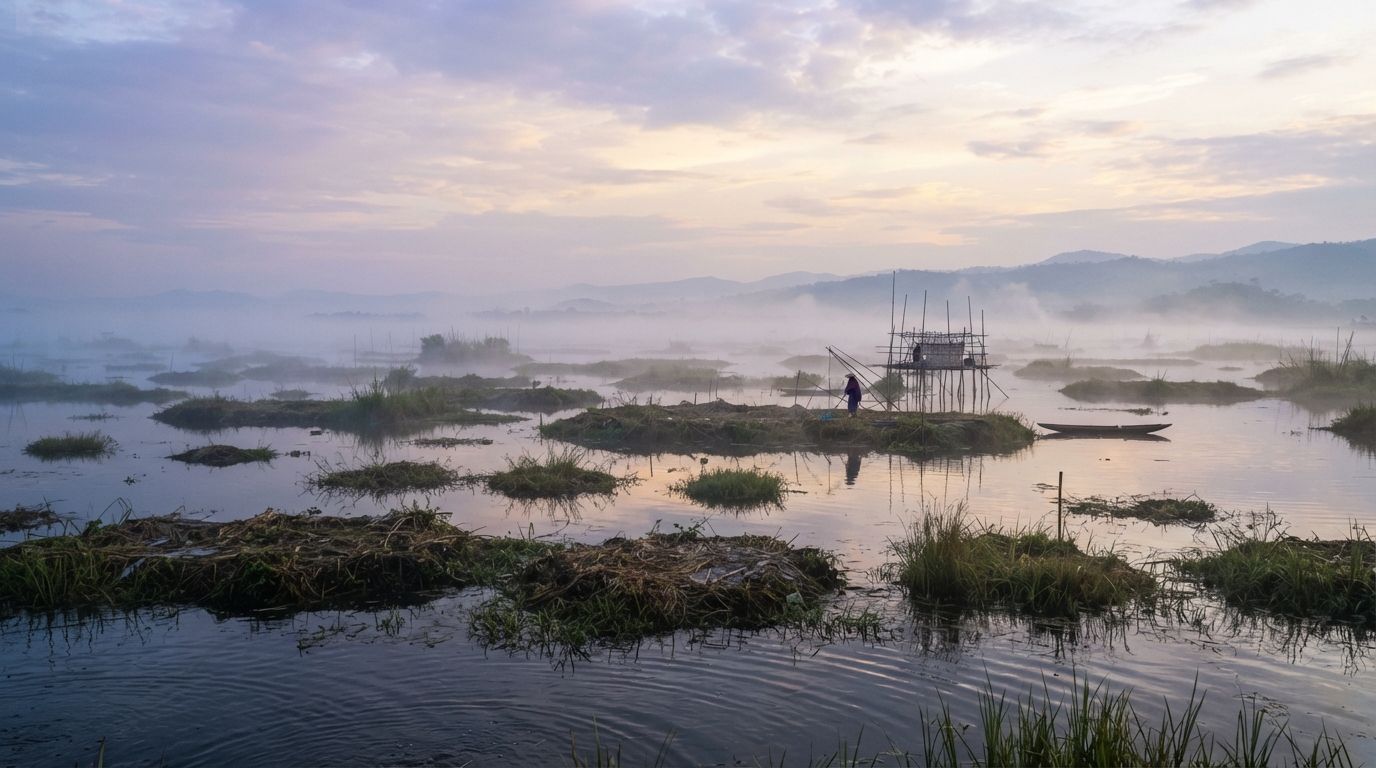
Lakes and islands count because submerged heritage is not limited to coasts. Loktak Lake in Manipur holds the floating phumdis and long-settled shorelines. Elephanta Island sits beside one of India's major historic harbours. UAW work at both sites, per ASI records, widened the field's definition. This also changes how a student should search for sources. Looking only for "marine" or "ocean" will miss inland reports filed under underwater or lake archaeology.
What are the latest marine archaeology discoveries in India (2025–2026)?
Between 2025 and 2026, fieldwork picked up at Dwarka, Mahabalipuram and Poompuhar. A state-led Poompuhar survey recorded more than 250 ceramic fragments. The government also detailed ASI work at four coastal sites on 30 July 2026. These updates bring the marine archaeology timeline India students follow right up to the present.
What did the 2026 Poompuhar survey find?
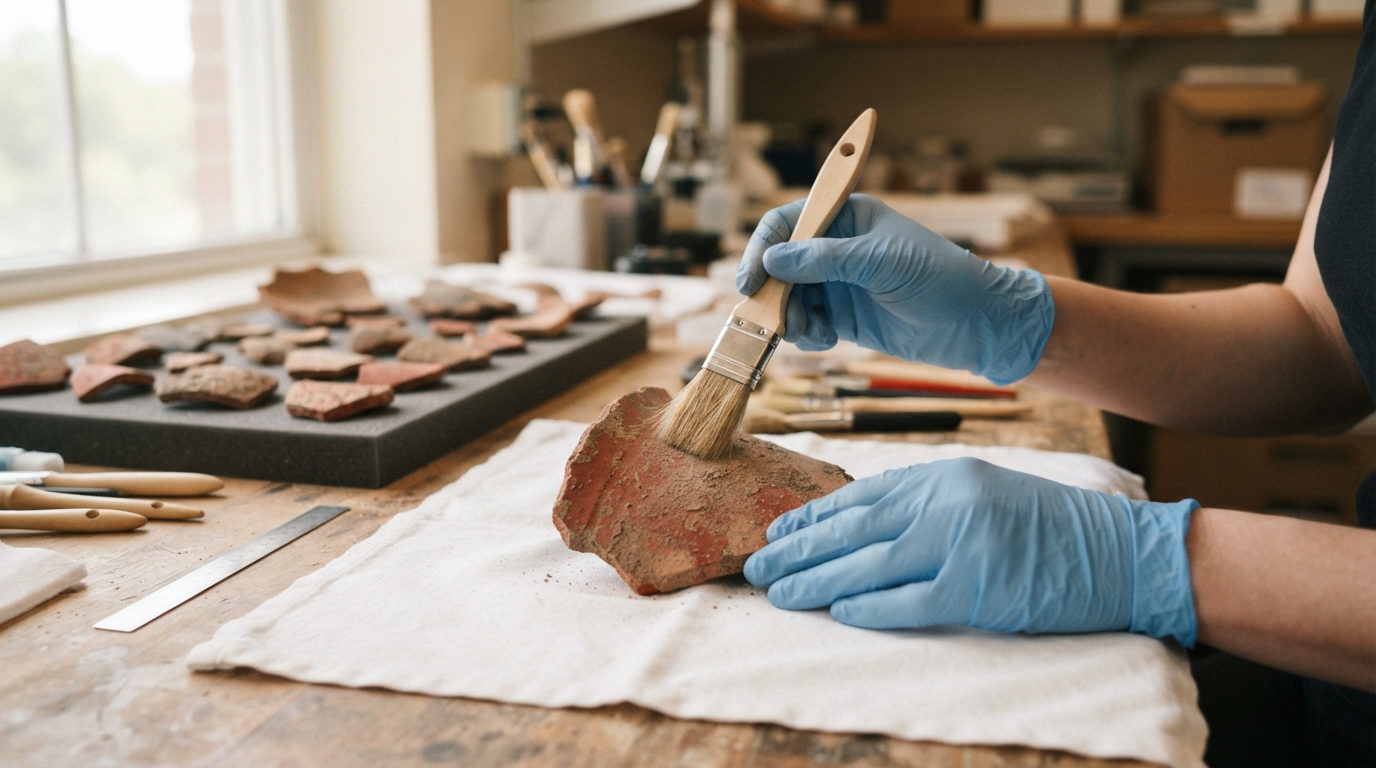
The third phase of the Poompuhar exploration was run by the Tamil Nadu State Department of Archaeology (TNSDA) and the Indian Maritime University. It covered a two-square-kilometre underwater zone and recorded more than 250 ceramic fragments (Hitavada/ThePrint, 2026). One fragment came from a West Asian "torpedo jar," with an estimated diameter of 30–35 cm. Jars of this type are associated with long-distance trade across the western Indian Ocean. A detailed report is expected in February 2027, per ThePrint. Until then, treat date ranges in news coverage as provisional.
Are Dwarka and Mahabalipuram being re-examined?
Yes, both sites have new ASI teams. In February 2025, a five-member ASI team led by Prof. Alok Tripathi began underwater explorations off Dwarka (DeshGujarat, Feb 2025). By August 2025, reports said the UAW had resumed work at Mahabalipuram (Organiser, Aug 2025). On 30 July 2026, the government detailed ASI work at Dwarka, Bet Dwarka, Mahabalipuram and Karaikal in Puducherry (Cavalier, 2026). One caution matters here. A 2025 Jerusalem Post piece described new sonar finds from Dwarka, but those claims have not been confirmed by ASI or PIB.
How do Lothal's NMHC and INSV Kaundinya fit in?
Both projects turn research into public learning. The National Maritime Heritage Complex at Lothal covers roughly 400 acres. It has a total project cost of around ₹4,500 crore under the Sagarmala Programme (The Week, 2026). Phase 1A includes six galleries, a recreation of the Lothal township and artefacts from the Navy. INSV Kaundinya is a stitched ship modelled on 5th-century Ajanta cave paintings. It left Porbandar on December 29, 2025, and completed an 18-day voyage to Muscat (NewKerala, 2026). That makes it a working example of experimental archaeology, where researchers test old methods by rebuilding them. For related context, see our date-wise guide to scientific milestones in Indian history.
What gaps still limit marine archaeology in India?
Marine archaeology in India is limited by two main gaps: legal protection and record-keeping. India has not ratified the 2001 UNESCO Convention on underwater heritage, and the country has no public national register of underwater sites. Both gaps make the marine archaeology timeline India researchers rely on harder to complete and harder to protect.
On legal protection, UNESCO's Eric Falt urged India in 2022 to ratify the convention to protect shipwrecks and submerged sites (PTI/ThePrint, 2022). The 2024 Journal of Maritime Archaeology review by Zeeshan Shaikh, Sila Tripati, Vasant Shinde and Lucy Blue names the unratified convention and the Underwater Archaeology Wing's collapse in 2015 as core problems.
On record-keeping, findings sit across NIO, the ASI and state departments such as TNSDA. The National Maritime Foundation has called for "a national atlas of underwater cultural heritage" (NMF, 2025).
Why does the UNESCO convention matter?
The 2001 UNESCO Convention on the Protection of the Underwater Cultural Heritage sets shared rules for treating wrecks and submerged sites. It discourages commercial salvage and favours preserving sites in place. In 2022, UNESCO's Eric Falt urged India to ratify it to protect shipwrecks and submerged sites (PTI/ThePrint, 2022). The 2024 review by Zeeshan Shaikh, Sila Tripati, Vasant Shinde and Lucy Blue closes by asking where the field goes next. It points to the UAW's collapse and the unratified convention as core problems. Recent ASI activity suggests a revival, but the legal gap remains.
Why is there no national count of sites?
India has no verified national count of shipwrecks or underwater sites. Records sit across NIO, the ASI and state departments like TNSDA, often in separate reports. The National Maritime Foundation has called for "a national atlas of underwater cultural heritage" (NMF, 2025). An atlas would help with dating as much as protection. It would let researchers compare finds across coasts instead of treating each site alone. For a broader reference chart, our Indian history timeline chart places these coastal finds against wider events. A future guide on Harappan ports and trade routes would build on the same evidence.
Related Reading
- India at the Olympics: A Timeline of Historic Sporting Milestones
- The 1971 India-Pakistan War: Key Dates and Historical Summary
- Timeline of Mahatma Gandhi's Nonviolent Movements in India
- December 1984: A Historical Timeline of the Bhopal Gas Tragedy
FAQ
Q: When did marine archaeology start in India? Organised marine archaeology in India started in 1981 at the National Institute of Oceanography in Goa. S.R. Rao led early underwater surveys off Dwarka. Earlier land digs at Lothal in the 1950s laid the groundwork.
Q: Is there proof that Dwarka was the city of Krishna? No archaeological find confirms that link. Bet Dwarka produced a 580-metre wall dated to about 1500 BCE and a Late Harappan seal. These show a protohistoric settlement, not a specific figure from tradition.
Q: What is the ASI Underwater Archaeology Wing? It is a specialist ASI unit founded in 2001 to study submerged sites. It worked at Mahabalipuram, Dwarka, Bangaram Island, Loktak Lake and Elephanta. A 2024 academic review says it became defunct in 2015, though work resumed in 2025.
Q: What was found at Poompuhar in 2026? A 2026 survey covered two square kilometres and recorded more than 250 ceramic fragments. One was from a West Asian "torpedo jar" about 30–35 cm across. A full report is expected in February 2027.
Q: Has India signed the UNESCO underwater heritage convention? No. India has not ratified the 2001 UNESCO Convention. UNESCO officials urged ratification in 2022.
Further reading
Pick one site from the table above and trace it back to its primary report before you cite any news story. That single habit will keep a school project or lesson plan accurate. These sources are the best place to start:
- S.R. Rao, The Lost City of Dvaraka (1999): the excavator's own account of the Dwarka and Bet Dwarka work, useful for seeing the original interpretation.
- S.R. Rao and A.S. Gaur's 1992 Bet Dwarka report: the primary source behind the 580-metre wall and the seal finds.
- Shaikh, Tripati, Shinde and Blue, Journal of Maritime Archaeology (2024): a four-decade review that explains the UAW's decline and the UNESCO gap.
- UNESCO 2001 Convention on the Protection of the Underwater Cultural Heritage: the full legal text, short enough to read in one sitting.
- National Maritime Foundation paper (2025): sets out the case for a national atlas of underwater cultural heritage.
Sources
- Maritime and Underwater Archaeology in India: A Critical Appraisal and a Future Prospect — Journal of Maritime Archaeology (Springer), 2024. Supports: NIO Goa's Marine Archaeology Centre was set up in 1981, and the Shaikh, Tripati, Shinde and Blue review of four decades of the field, which ends with prospects for its future.
- Archaeology of Bet Dwarka Island — NIO Goa / ResearchGate, 1990s. Supports: NIO's Marine Archaeology Centre explored Bet Dwarka between 1981 and 1994 and found protohistoric artefacts, including a seal and inscriptions.
- Under Water Archaeology – Underwater Archaeology Wing — Archaeological Survey of India. Supports: Underwater archaeology in India began in 1981, and the ASI set up its Underwater Archaeology Wing in 2001.
- Underwater Archaeology Wing of ASI begins exploration off Dwarka coast — DeshGujarat, 2025. Supports: In February 2025 an ASI team led by Prof. Alok Tripathi began underwater exploration off Dwarka.
- ASI resumes underwater archaeological studies off Mahabalipuram — Organiser, 2025. Supports: The ASI's Underwater Archaeology Wing restarted work at Mahabalipuram in August 2025 after nearly two decades.
- India's maritime past lies submerged. Archaeology can bring it back — ThePrint, 2026. Supports: The latest Poompuhar survey recorded more than 250 ceramic fragments at the port once called Kaveripoompattinam.
- INSV Kaundinya's Maiden Voyage to Muscat: A Maritime Revival — NewKerala, 2026. Supports: The stitched ship INSV Kaundinya completed an 18-day maiden voyage from Porbandar to Muscat.
- India to get world's biggest maritime museum in 2026? Here is what we know — The Week, 2026. Supports: The National Maritime Heritage Complex at Lothal covers about 400 acres and costs around ₹4,500 crore under the Sagarmala Programme.
- UNESCO official urges India to ratify Convention on Protection of Underwater Cultural Heritage — ThePrint (PTI), 2022. Supports: In 2022 UNESCO's Eric Falt urged India to ratify the 2001 Convention on underwater cultural heritage.