The Quick Read
India's surviving colonial monuments date from the 1760s to the 1930s. They arrived in waves. First came East India Company memorials such as Kolkata's Ochterlony Monument. Next were Crown-era statues and Durbar sites from 1858 to 1911. The capital move added Gateway of India and India Gate. After 1947, India mostly relocated, renamed or repurposed these structures.
Key Takeaways
- India mostly relocated or renamed colonial monuments rather than destroying them after 1947.
- The 1911 Delhi Durbar triggered the largest colonial building projects in Indian history.
- Company-era memorials from the 1820s honoured individual generals, not the British Crown.
- Delhi's 52-acre Coronation Park now holds statues moved from across the city.
- Colonial sites are still changing, with renamings and replacements recorded through 2026.
The Archaeological Survey of India looks after about 3,685 centrally protected monuments and sites, according to Ministry of Culture figures from July 2025. That list runs from Mauryan pillars to Mughal tombs to marble halls built for a British queen. The colonial layer is the youngest part of it. It's also the most argued over. Anyone studying colonial monuments history India will find that dates matter more here than almost anywhere else. A statue's meaning often depends on the year it went up, the year it came down, and where it ended up. This guide walks through those dates in order, one wave at a time.
Colonial Monuments History India: The Company Era, 1760s to 1857
The earliest surviving colonial monuments in India are East India Company memorials, cemeteries and pillars, mostly in Calcutta (now Kolkata). Built between the 1760s and 1857, they celebrated individual officers and military victories. They weren't imperial statements yet. The Company was a trading firm with an army, and its monuments reflect that narrower, more personal focus.
Cemeteries came before columns
The first lasting European memorials in Bengal were graves. South Park Street Cemetery in Kolkata opened in 1767. Its obelisks, urns and domed tombs copy classical European styles. They mark merchants, judges and soldiers who died far from home.
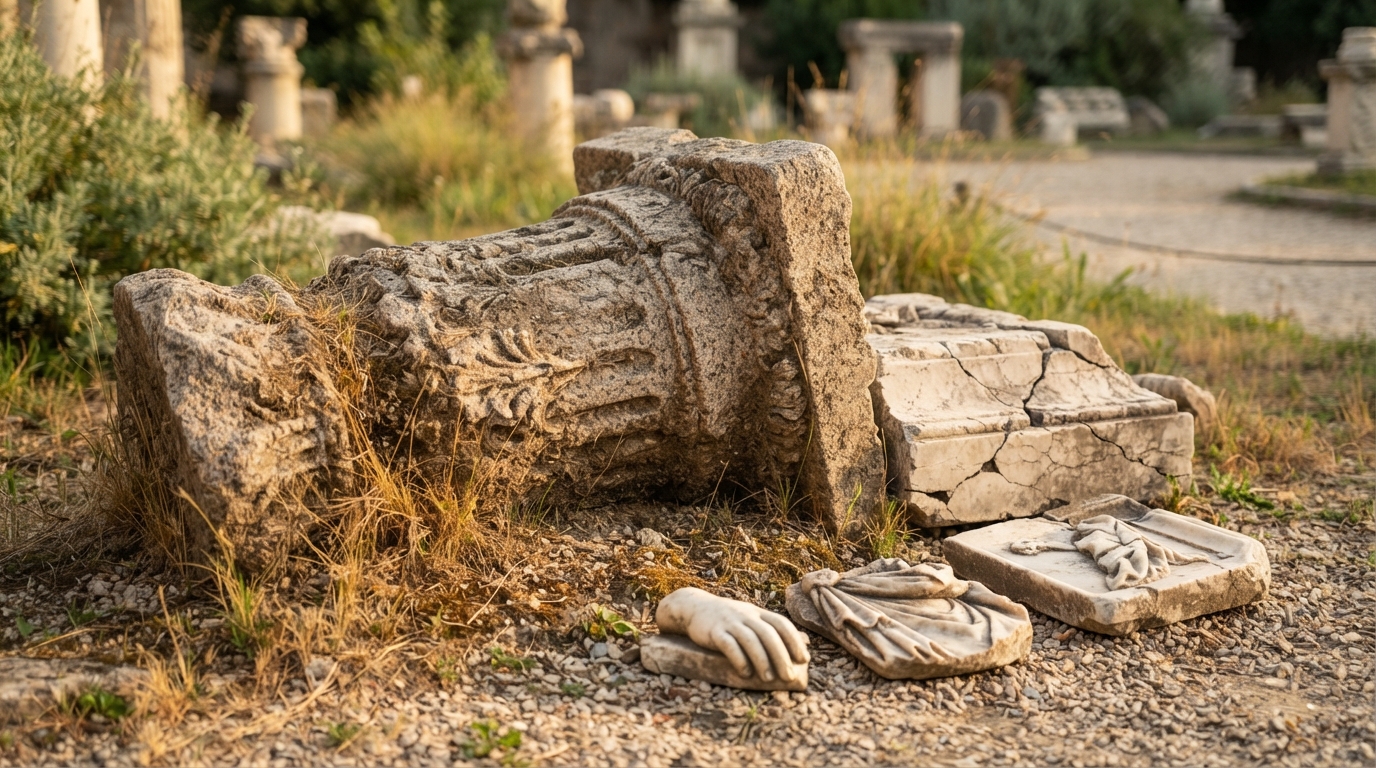
These tombs are easy to overlook. They matter because they set the visual language for what followed. The obelisk shape seen here would later appear at Delhi's Coronation Park, more than a century after.
The Ochterlony Monument and the pillar tradition
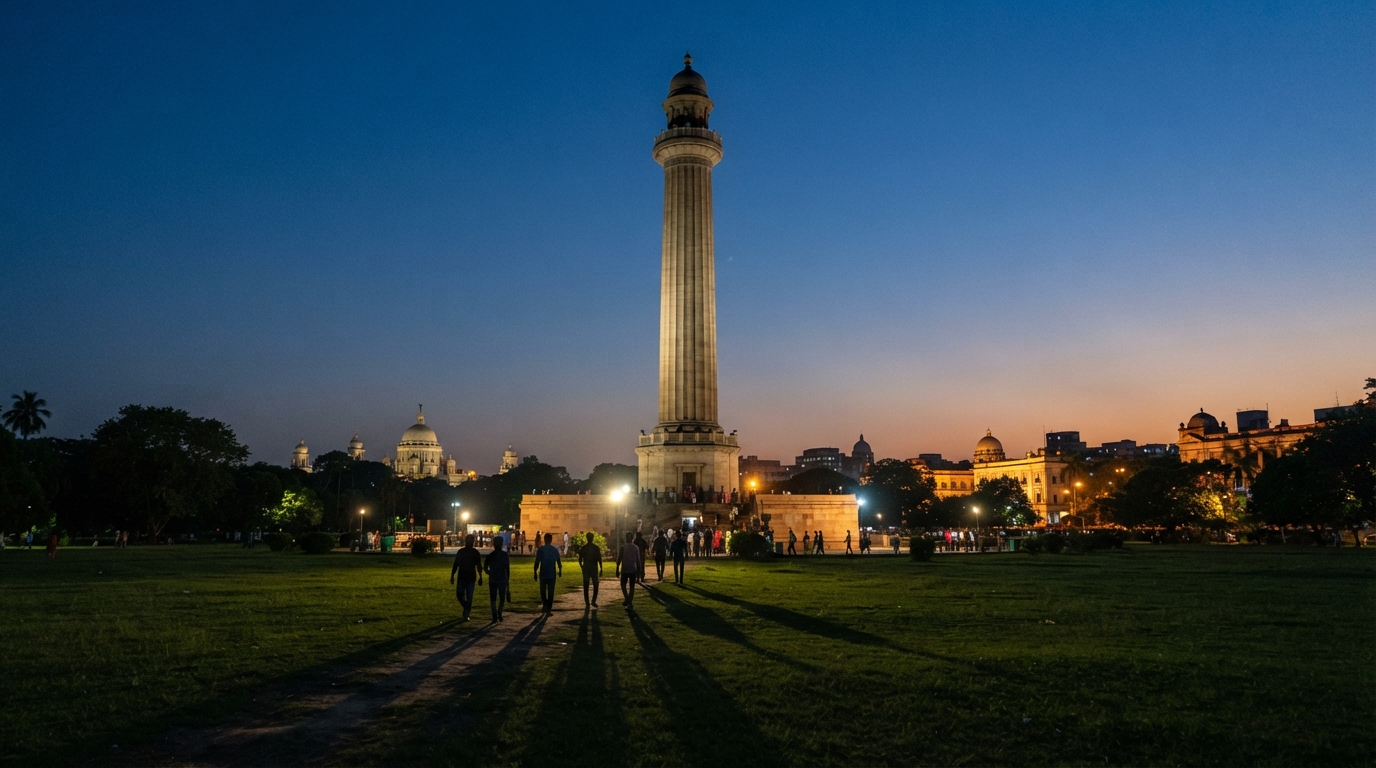
Kolkata's tallest colonial pillar honours Sir David Ochterlony. He was a Company general who led campaigns in the Anglo-Nepalese War of 1814–16. The monument is commonly dated to 1828, though some tourist sources give 1848. Check a primary source if the exact year matters for your work.
The column rises 157 ft, according to Incredible India. Its design mixes styles. The base looks Egyptian, the column is classical, and the top carries a Turkish-style cupola. It was a statement of one man's fame, not of the British state.
Why Kolkata came first
Kolkata, then called Calcutta, is where Company-era colonial monuments in India first clustered, because Calcutta was the East India Company's capital in Bengal and home to Fort William, its main military base. South Park Street Cemetery opened there in 1767, and the 157 ft Ochterlony Monument followed, according to Incredible India.
Fort William drew Company money, officers and builders to one place. That concentration explains why most Company-era monuments cluster along the Hooghly River.
If you're mapping this period, start with Kolkata. Delhi and Mumbai only became monument hubs after the Crown took direct control. For a wider view of how this period fits Indian history overall, the Indian history timeline chart is a useful companion.
What Changed After 1858 Under the Crown?
After the Revolt of 1857, the British Crown took over from the East India Company in 1858. Monuments changed in purpose. They stopped honouring single officers and started projecting royal power. Statues of Queen Victoria, memorials to British losses in 1857, and three grand Delhi Durbars defined this period, which ran until 1911.
The Mutiny Memorial on Delhi's Ridge
The British built the Mutiny Memorial in 1863 on the Delhi Ridge. It's a Gothic tower honouring British and loyal Indian soldiers who died in 1857. Its plaques called the Indian fighters "the enemy."
That framing didn't last. In 1972, on the 25th anniversary of independence, the tower was renamed Ajitgarh. A new plaque recast the "enemy" as people who rose against colonial rule. The stone stayed. The story told about it changed.
The three Delhi Durbars
The Durbars were mass ceremonies held on open ground north of Delhi. That ground is now Coronation Park.
- 1 January 1877: Lord Lytton proclaimed Queen Victoria Empress of India.
- 1 January 1903: Lord Curzon marked Edward VII's coronation.
- 12 December 1911: George V attended in person and announced the capital would move from Calcutta to Delhi.
An obelisk still marks the 1911 event. It's one of the few pillars in India tied to a single, exact calendar date. We've built our daily archive around dates like this one, because a fixed day makes a monument easier to remember.
Statues of Victoria and the museum habit
Victoria statues went up in cities across India during this era. Mumbai's Victoria and Albert Museum, which opened its building in 1872, collected many Raj-era works. It was renamed the Dr. Bhau Daji Lad Museum in 1975. Today it keeps a Matthew Noble bust of Victoria dated 1870, according to Google Arts & Culture.
Bombay's statues also included the "Kala Ghoda," an equestrian figure of Edward VII as Prince of Wales, unveiled in 1879. It was moved in 1965 to Jijamata Udyan in Byculla, the same grounds as the museum. The neighbourhood still carries its nickname.
The Capital Move Produced India's Largest Colonial Monuments
The 1911 decision to move the capital to Delhi launched the biggest colonial building programme India ever saw. Between 1913 and 1936, the British completed Gateway of India, Victoria Memorial, India Gate and New Delhi itself. These structures are the ones most visitors know. They're also the ones most often renamed, reused or reinterpreted since 1947.
Gateway of India and Victoria Memorial
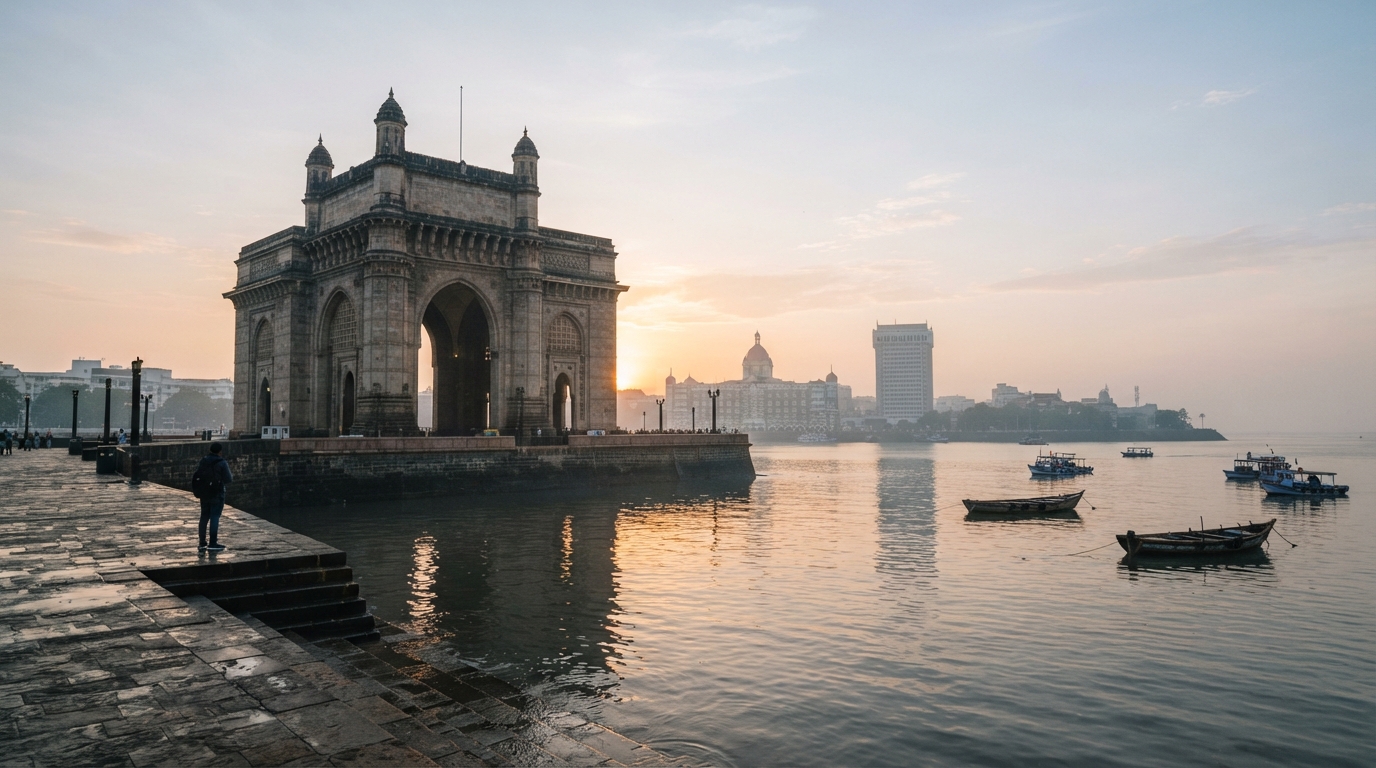
The Gateway of India marks the spot where George V and Queen Mary landed in Bombay in December 1911. Its foundation stone was laid on 31 March 1913. Architect George Wittet finished it in 1924. In February 1948, the last British troops left India through this same arch.
Victoria Memorial in Kolkata was Lord Curzon's idea after the queen's death in 1901. Its foundation stone went in on 4 January 1906. The white marble hall opened in 1921. It still runs as a museum under the Government of India, according to the Victoria Memorial Hall's official site.
India Gate and the empty canopy
India Gate began as the All India War Memorial. Edwin Lutyens designed it, and the foundation stone was laid in 1921. It was finished in 1931. More than 13,000 names of Indian and British soldiers are carved into it.
Its history kept moving after independence:
- 1936: A statue of George V was placed under a canopy nearby.
- 1968: The statue was removed. The canopy stood empty for decades.
- 1972: The Amar Jawan Jyoti flame was added after the 1971 India-Pakistan war.
- September 2022: A statue of Netaji Subhas Chandra Bose was unveiled under the canopy (PTI, 2022).
Dates at a glance
This table is a quick reference to five major colonial monuments in India, listing each monument's city, construction start, completion year and later change. The five sites run from the Ochterlony Monument of the 1820s to the Netaji statue unveiled under India Gate's canopy in September 2022, according to PTI (2022).
| Monument | City | Construction | Opened/Completed | Later change |
|---|---|---|---|---|
| Ochterlony Monument | Kolkata | 1820s (disputed) | 1828 or 1848 | Renamed Shaheed Minar, 1969 |
| Mutiny Memorial | Delhi | 1863 | 1863 | Renamed Ajitgarh, 1972 |
| Gateway of India | Mumbai | 1913 | 1924 | British troops departed, 1948 |
| Victoria Memorial | Kolkata | 1906 | 1921 | Still a museum |
| India Gate | New Delhi | 1921 | 1931 | Netaji statue at canopy, 2022 |
After 1947, India Chose Relocation Over Destruction
India's post-1947 approach to colonial monuments is relocation rather than destruction: statues moved to parks and museums, pillars were renamed, and Indian figures took over old pedestals. Most changes came in the 1960s and early 1970s, including the George V statue's removal from India Gate in 1968 and the Ochterlony Monument's renaming as Shaheed Minar in 1969.
The result is a scattered but surviving collection, which is unusual among former colonies with this many imperial monuments.
Coronation Park: where statues went
Coronation Park covers 52 acres in north Delhi, according to Outlook India (2023). Coronation Park holds statues of viceroys including Hardinge, Willingdon, Irwin and Chelmsford. The tall marble George V figure from the India Gate canopy also ended up here.
The site has its limits. Coronation Park was meant to be redeveloped in time for the 2011 Durbar centenary. The DDA and INTACH missed several deadlines, according to Outlook (2023). Some statues stood broken or headless for years. The Contested Histories Initiative still lists the park as case study #313, a model of moving rather than destroying. Both views are fair. Relocation saved the statues, but saving them isn't the same as caring for them.
Renaming as a form of reuse
Renaming was cheaper and faster than removal. Renaming also kept skylines intact.
- Shaheed Minar (1969): The Ochterlony Monument was renamed to honour freedom fighters.
- Ajitgarh (1972): The Mutiny Memorial got a new name and a new plaque.
- Bhau Daji Lad Museum (1975): Mumbai's Victoria and Albert Museum took the name of an Indian physician and scholar.
New faces on old pedestals
Sometimes the pedestal stayed and the figure changed. In Old Delhi's Edward Park, a statue of Bose replaced Edward VII's in the 1970s, according to PTI (2022). The park is now called Subhash Park. Pedestal replacement turned colonial infrastructure into a stage for the independence movement.
For teaching, these swap sites are the most useful. One place shows two eras at once. Students can see what was there, what replaced it, and roughly when.
Why Are Colonial Sites Still Changing Today?
Colonial monuments in India are still being renamed, rebuilt and reinterpreted. Since 2021, changes have included the Jallianwala Bagh revamp, the renaming of Rajpath, a new Parliament building, and the renaming of Raj Bhavans. These events show that colonial monuments history India is an ongoing record, not a closed chapter.
Renovation can erase as much as removal
The Jallianwala Bagh memorial in Amritsar was revamped in 2021. The site marks the massacre of 13 April 1919. Historian Kim A. Wagner argued the revamp removed the site's last physical traces, including the narrow entrance used by Dyer's troops (The Quint, 2021). Historian S. Irfan Habib also criticised the work.
The Culture Ministry said the renovation was done "with utmost respect" (Scroll, 2021). The lesson for students is simple. A site can lose historical evidence through polish, not only through demolition.
Names and buildings in New Delhi
Several changes reshaped Lutyens' Delhi in a short span:
- September 2022: Rajpath, once Kingsway, was renamed Kartavya Path.
- May 2023: A new Parliament building replaced the Lutyens–Baker building for sittings.
- February 2026: A bust of Edwin Lutyens at Rashtrapati Bhavan was replaced with one of C. Rajagopalachari, the only Indian Governor-General of independent India (PTI/ThePrint, 2026). The government described this as a step away from colonial-era symbols.
A 2025 paper published by Taylor & Francis traces Kingsway's full arc. It runs from George V's canopy statue to the 2022 Netaji statue.
Raj Bhavan becomes Lok Bhavan
Between November and December 2025, Raj Bhavans across India were renamed Lok Bhavan after a Home Ministry memo. Maharashtra's renaming took effect on 2 December 2025. Goa followed on 19 December 2025, according to the Goa government's information department. These are the governors' official residences, many built in the colonial period.
The ASI's own capacity shapes what survives, too. It set aside ₹376.88 crore for conserving protected monuments in 2025–26, while reporting 3,073 vacant posts (Lok Sabha reply, via Telangana Today, 2025). Staffing gaps of that size affect how fast any site gets repaired or documented.
India's Approach Compared With Other Countries
India's approach to colonial monuments is a gradual mix of relocation, renaming, replacement and museum display spread across six decades. That approach differs from recent single, dramatic removals in South Africa and Britain, such as the University of Cape Town's Rhodes statue in April 2015 and Bristol's Colston statue in June 2020.
Each Indian method keeps some history and loses some, so no single approach is clearly better for teaching.
Four methods, side by side
The four Indian methods for handling colonial monuments are relocation, renaming, replacement and museum display, compared below with toppling abroad. Each row gives an Indian example and year, from the George V statue's move to Coronation Park in 1968 to Netaji's statue under the India Gate canopy in 2022, plus what each method keeps and loses.
| Method | Indian example | Year | What it keeps | What it loses |
|---|---|---|---|---|
| Relocation | George V statue to Coronation Park | 1968 | The object itself | Original setting and context |
| Renaming | Ochterlony Monument to Shaheed Minar | 1969 | Structure and skyline | Original purpose, unless explained |
| Replacement | Netaji under India Gate canopy | 2022 | Canopy and site | Colonial figure on site |
| Museum display | Bhau Daji Lad Museum statuary | 1975 rename | Object plus interpretation | Public street presence |
| Toppling (abroad) | Colston statue, Bristol | 2020 | Moment of protest | Ordered, planned process |
Lessons from Cape Town and Bristol
The University of Cape Town removed its Cecil Rhodes statue on 9 April 2015, after the Rhodes Must Fall protests. In Bristol, protesters pulled down the statue of slave trader Edward Colston on 7 June 2020. The Colston statue was later placed in the city's M Shed museum.
Both cases ended in museums or storage. India reached that point decades earlier and with less public confrontation. We'd argue the museum route teaches students the most. A statue in a gallery comes with dates, labels and context. A renamed pillar on a busy street usually comes with none.
Where each approach falls short
Renaming has a blind spot. A visitor to Shaheed Minar today may never learn about Ochterlony at all. Relocation has a different problem. Coronation Park's statues lost their original sightlines, so their intended effect is hard to picture. That's why pairing a site visit with a dated timeline works so well. If you're building that habit, our guide on learning Indian history through chronological timelines explains the method.
Related Reading
- India at the Olympics: A Timeline of Historic Sporting Milestones
- Milestones in Indian Women's History: A Chronological Guide
- 1,000 Years of Indian Medical History: A Chronological Guide
- Economic Milestones in Indian History: From 1947 to Present
FAQ
Q: What is the oldest colonial monument still standing in India? Among Kolkata's colonial memorials, South Park Street Cemetery, opened in 1767, is one of the oldest surviving examples. Its tombs predate the Ochterlony Monument by roughly six decades. Earlier European churches and forts exist in places like Kochi and Goa, but those are Portuguese and Dutch, not British.
Q: Why did India move colonial statues instead of destroying them? Moving statues kept the objects while taking them out of public spaces. Most removals happened in the 1960s, and many statues went to Coronation Park in Delhi or museum grounds in Mumbai. The Contested Histories Initiative cites Coronation Park as a model of relocation over destruction.
Q: When was the Ochterlony Monument renamed Shaheed Minar? It was renamed in 1969 to honour India's freedom fighters. The pillar itself, about 157 ft tall, stayed in place in Kolkata. Its original construction year is disputed between 1828 and 1848.
Q: What stood under the canopy near India Gate before Netaji's statue? A statue of George V stood there from 1936 until 1968. The canopy then sat empty for more than five decades. A statue of Netaji Subhas Chandra Bose was unveiled there in September 2022.
Q: How many monuments does the ASI protect in total? The ASI protects about 3,685 centrally protected monuments and sites, according to Ministry of Culture figures from July 2025. Other official releases give 3,686 or 3,688. The list covers all periods, not only colonial structures.
Pick one colonial monument in your own city and find two dates for it: the year it was built and the year it was changed. That pair tells you most of its story. For more dated events, browse our daily archive or the major events FAQ. A future guide on the Delhi Durbars of 1877, 1903 and 1911 will cover those ceremonies in more detail.
Further reading
- Thomas R. Metcalf, An Imperial Vision: Indian Architecture and Britain's Raj (1989): The standard study of how British architecture in India tried to express imperial power.
- Robert Grant Irving, Indian Summer: Lutyens, Baker, and Imperial Delhi (1981): A detailed account of how New Delhi and India Gate were planned and built.
- Jan Morris with Simon Winchester, Stones of Empire: The Buildings of the Raj (1983): A readable, well-illustrated tour of colonial buildings across the subcontinent.
- Archaeological Survey of India, list of centrally protected monuments (asi.nic.in): The official state-by-state register to check whether a site is protected.
- Contested Histories Initiative, Case Study #313 on Coronation Park: A focused look at relocation as a method, with comparisons to other countries.
Sources
- 3,685 Centrally Protected Monuments, Sites Under Jurisdiction Of ASI: Govt Tells Lok Sabha — Daily Excelsior, 2025. Supports: The ASI looks after about 3,685 centrally protected monuments and sites, according to government figures given to the Lok Sabha in mid-2025.
- Centre allocates Rs 376.88 crore for protected monuments; ASI reports 3,073 vacancies — Telangana Today, 2025. Supports: ₹376.88 crore was set aside for monument conservation in 2025–26, and the ASI reported 3,073 vacant posts.
- Coronation Park: Where The Statues Of The Raj Rest In Ruins — Outlook India, 2023. Supports: Coronation Park is a 52-acre park holding statues of British monarchs and viceroys moved from places across Delhi, including Rajpath.
- Shaheed Minar in Kolkata — Incredible India (Ministry of Tourism), n.d. Supports: The Ochterlony Monument honours East India Company general Sir David Ochterlony and stands 157 ft tall.
- 'Netaji' sits in India Gate canopy vacated by King George V in 1968 — ThePrint/PTI, 2022. Supports: The George V statue was removed from the India Gate canopy in 1968, and a Netaji statue was unveiled there in September 2022.
- 'Bose' moved to Edward Park in 70s; now his new statue to assume King George canopy — The Tribune/PTI, 2022. Supports: In the 1970s a Bose statue took Edward VII's place in Old Delhi's Edward Park, and the colonial statues were moved to Coronation Park.
- British architect Lutyens' statue replaced with bust of C Rajagopalachari's at Rashtrapati Bhavan — ThePrint/PTI, 2026. Supports: On 23 February 2026, the Lutyens bust at Rashtrapati Bhavan was replaced with one of C. Rajagopalachari, the only Indian Governor-General of independent India.
- Raj Bhavan Renamed 'Lok Bhavan' in Goa — Department of Information and Publicity, Government of Goa, 2025. Supports: Goa's Raj Bhavan became Lok Bhavan from 19 December 2025.
- 'Disservice to the Tragedy': Historians, Others Condemn Jallianwala Bagh Makeover — The Quint, 2021. Supports: Historian Kim A. Wagner argued the 2021 Jallianwala Bagh revamp erased the site's last physical traces.