In Short
Indian stock market history begins in 1875, when Bombay brokers formed the Native Share & Stock Brokers' Association. That group is now BSE, Asia's oldest exchange. Later turning points include the Sensex in 1986, SEBI's legal powers and the Harshad Mehta crash in 1992, NSE's screen trading in 1994, demat depositories in 1996, and NSE's own listing in 2026.
Key Takeaways
- Regulation, more than rallies, did the most to shape India's equity markets.
- BSE started in 1875 and is Asia's oldest stock exchange.
- The Sensex fell 12.77% in one day on 29 April 1992.
- Domestic SIP money now absorbs much of the selling by foreign investors.
- Headline index points mislead, so check inflation-adjusted returns across decades.
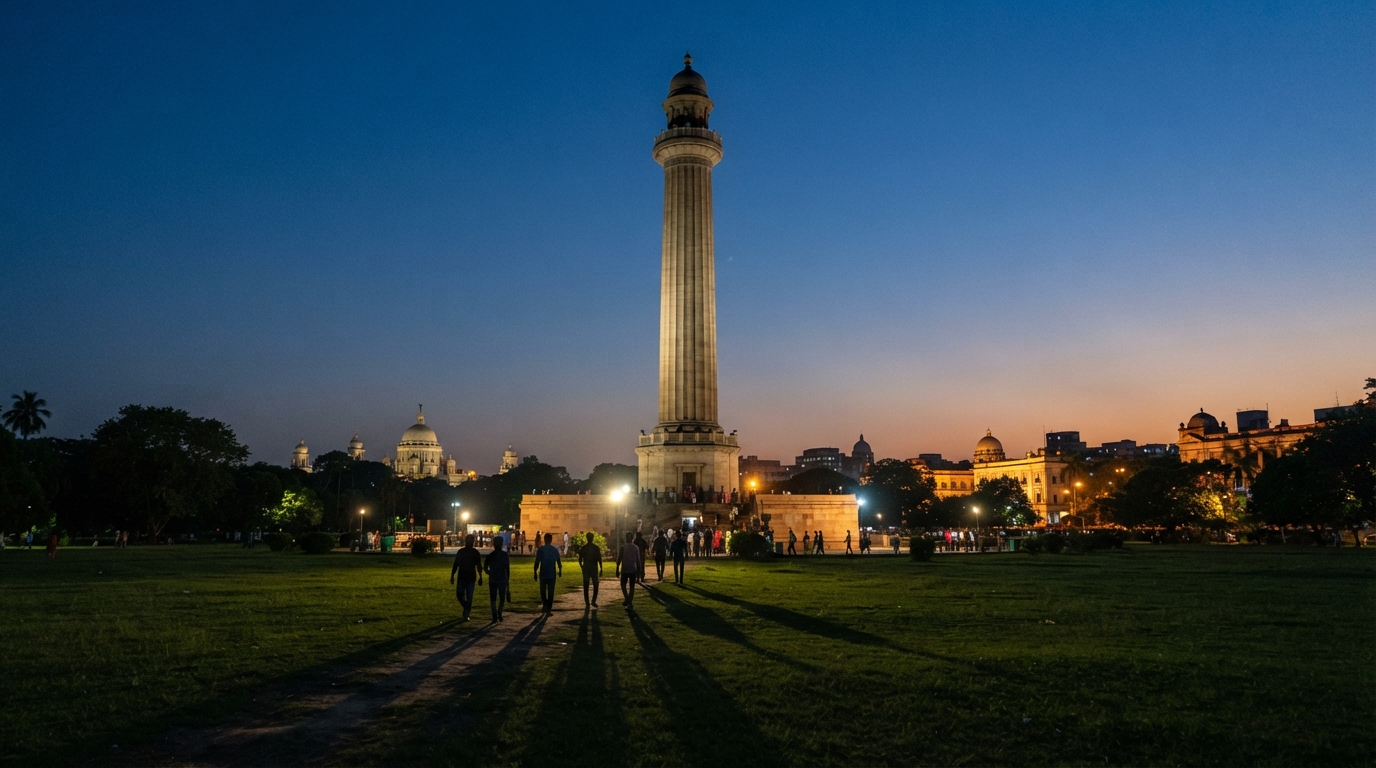
Stand on Dalal Street in Mumbai's Fort district on a weekday morning. Office workers hurry past a tall concrete tower without looking up. That building is Phiroze Jeejeebhoy Towers, home of BSE. About 150 years ago, the same trade happened outdoors. Cotton and share brokers gathered under a banyan tree, shouting prices and settling deals by hand.

The distance between that tree and today's market has two parts. One part is time. The other is a long series of rules, crashes, and fixes. This timeline traces Indian stock market history date by date, with the same focus we use for our Indian history timeline chart. We cover the founding, the regulators, the crashes, the indices, and the recent shift in who owns Indian shares.
How Did the Bombay Stock Exchange Begin?
The Bombay Stock Exchange (BSE) is Asia's oldest stock exchange, and it began in 1875. That year, Bombay broker Premchand Roychand brought a group of brokers together and formed the Native Share & Stock Brokers' Association. Business Standard (2017) and ITUS Capital (2026) both describe the BSE as Asia's oldest exchange. Before 1875, share trading in Bombay was informal, open-air, and loosely organised. The trade grew out of the city's cotton boom during the American Civil War in the 1860s. Brokers gathered first near Town Hall and later on the lane that became Dalal Street. The 1875 association gave those scattered brokers entry rules, fixed trading hours, and a single address. After independence, the Securities Contracts (Regulation) Act of 1956 created a recognition system for exchanges, and the BSE received permanent recognition under that Act in 1957. Those three steps, from street trading to a formal association to government recognition, form the opening chapter of Indian stock market history.
Brokers under the banyan tree
Dalal Street is the Mumbai lane where Bombay's early share brokers traded, and "dalal" means broker. Bombay's share trade grew out of its cotton trade. During the American Civil War in the 1860s, demand for Indian cotton jumped, and speculation in shares followed. Brokers met in the open, first near Town Hall and later on the lane that became Dalal Street.
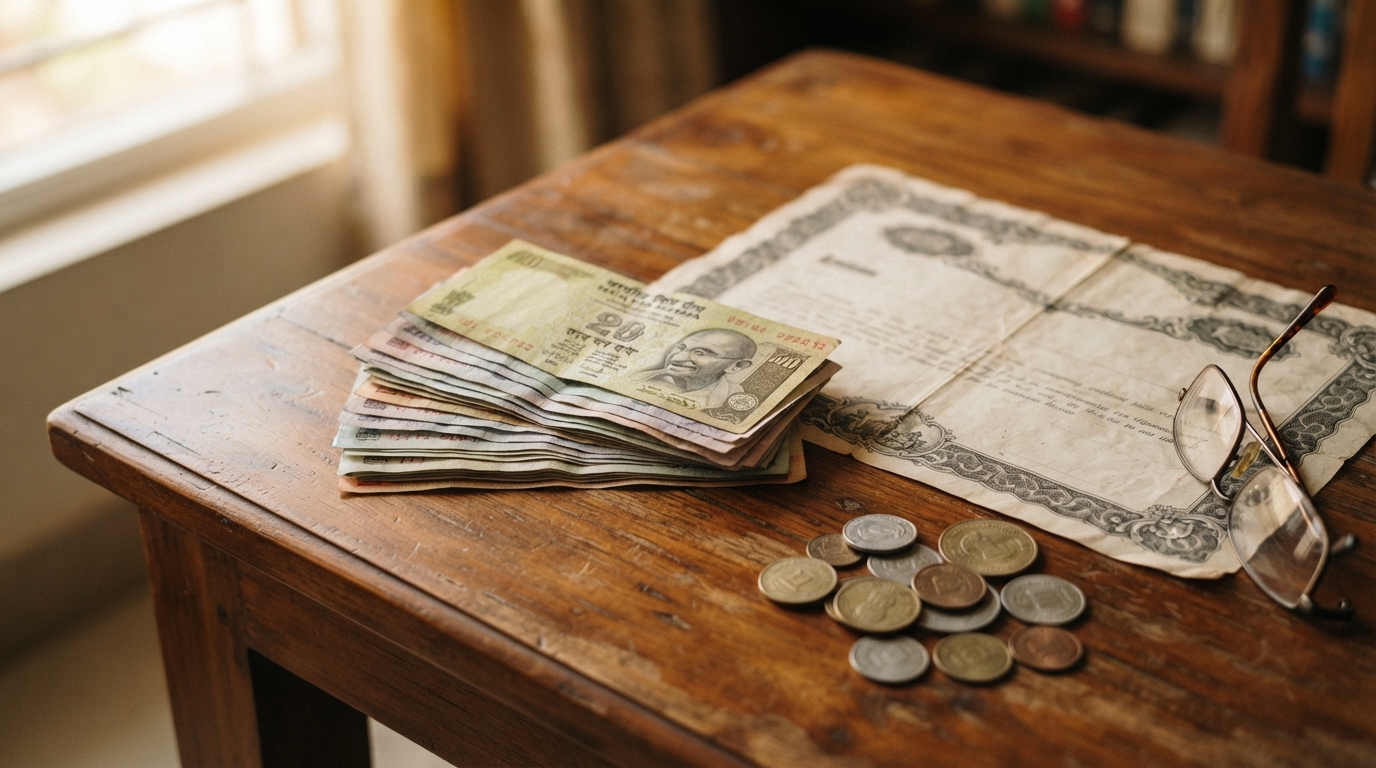
The open-air sessions had no screens and no clearing house. A trade between two brokers was a handshake and a memory.
The 1875 association
The Native Share & Stock Brokers' Association is the body Bombay brokers formed in 1875, and it is the direct ancestor of today's BSE. Premchand Roychand, a Bombay broker, helped organise the group. Business Standard (2017) and ITUS Capital (2026) both trace Asia's oldest exchange to this association. The association set entry rules and trading hours, and it gave a scattered trade a single address. The 1875 founding matters for students because it marks the move from a crowd of brokers to an institution. The name BSE came much later.
Recognition after independence
After 1947, the new government wanted tighter control over capital markets. The Securities Contracts (Regulation) Act of 1956 set out a recognition system for exchanges. BSE received permanent recognition under that Act in 1957. For the wider economic backdrop of those years, see our guide to economic milestones from 1947 to the present.
Regulation Built India's Modern Equity Market
India's modern equity market came from rules more than rallies. Three changes did most of the work. SEBI got legal powers in 1992. NSE introduced screen-based trading in 1994. Depositories then replaced paper share certificates with electronic records. Each change cut a specific kind of fraud or delay that earlier traders accepted as normal.
SEBI gets its powers in 1992
The Securities and Exchange Board of India (SEBI) is the regulator of India's securities markets, and the SEBI Act of 1992 gave it legal teeth. SEBI was set up in 1988 as an advisory body with no power to punish anyone. The SEBI Act of 1992 gave the regulator statutory authority to register intermediaries, investigate, and penalise. In the same year, 1992, the old Controller of Capital Issues was abolished. The Controller of Capital Issues had fixed IPO prices. After its abolition, companies could price their own issues.
NSE and the end of the trading floor
NSE was incorporated in 1992 and launched equity trading in November 1994. Its system was fully screen-based and nationwide. A broker in Guwahati saw the same price as one in Mumbai. BSE answered with its own system, BOLT, in 1995. Within a few years, open-outcry floors faded out.
Demat and the depositories
Paper certificates caused real problems. Shares were forged, lost in the post, or delayed by bad signatures. The Depositories Act of 1996 allowed electronic holding. NSDL started in 1996 and CDSL followed in 1999.
| Year | Institution or change | What it fixed |
|---|---|---|
| 1875 | Native Share & Stock Brokers' Association | Gave informal trading a formal body |
| 1957 | BSE recognised under SCRA 1956 | Brought exchanges under government rules |
| 1992 | SEBI Act passed | Gave the regulator power to punish |
| 1994 | NSE screen trading begins | Ended price gaps between cities |
| 1996 | NSDL set up | Replaced paper shares with demat records |
| 1999 | CDSL set up | Added a second depository and competition |
There is a tradeoff here. Demat made trading cheap and fast. It also made frequent trading easy. That ease later fed the derivatives boom that SEBI now spends heavy effort trying to contain.
What Do the Big Crashes Reveal About Indian Stock Market History?
The big crashes in Indian stock market history each exposed a weak point in the system. They also pushed regulators to fix it. The 1992 Harshad Mehta scam exposed loopholes in bank settlement. Later crashes in 2001, 2008, 2020, and the 2023 Adani episode tested broker practices, global links, pandemic shocks, and disclosure rules.
29 April 1992: the Harshad Mehta collapse
Harshad Mehta used bank-receipt fraud to pump money into shares. That drove a sharp bull run. Journalist Sucheta Dalal exposed the scheme in the Times of India in April 1992. On 29 April 1992, the Sensex fell 570 points, or 12.77%, in one day (5paisa, 2026). Over the next year it lost more than 50% (Groww, 2024). The 2020 series Scam 1992 brought the story to a new generation. The crash date sits in our archive of late April in Indian history.
2001, 2008, and March 2020
Three more crashes often appear on standard lists:
- 2001: The Ketan Parekh scandal involved price rigging in a group of technology stocks.
- 2008: The global financial crisis pulled foreign money out of India fast.
- March 2020: COVID-19 lockdowns triggered one of the sharpest falls on record.
We've left exact drawdown figures out here on purpose. Blog posts quote these numbers inconsistently. BSE's historical index data is the safer source for anyone writing an assignment.
Adani and Hindenburg, 2023
In January 2023, US short-seller Hindenburg Research published a report on the Adani Group. The group lost up to $153 billion in market value (Bloomberg, 2024). Its stocks later recovered those losses (ThePrint, 2026). The episode put the focus on disclosure and offshore holdings. Insider trading by one person was not the issue.
The Sensex and Nifty Track the Long Climb
The Sensex and the Nifty are the two benchmark indices of Indian equities. The Sensex launched on 2 January 1986 with 30 stocks and a base value of 100, set in 1978–79 (BSE). NSE's Nifty followed in 1996 with 50 stocks. Together they turn decades of trading into readable numbers.
Milestones worth knowing
These dates come up often in quizzes and exams:
- 1 April 1979 (base date): The Sensex base is set at 100.
- 2 January 1986: The Sensex is published for the first time.
- 25 July 1990: The Sensex closes above 1,000.
- 1996: NSE launches the Nifty 50.
- February 2006: The Sensex crosses 10,000.
- December 2025: The Sensex hits an all-time high of about 86,159 (Investing.com, 2026).
Why points can mislead
A Sensex point gain is a nominal measure, which means it ignores inflation and currency moves, so raw points overstate how much investors actually gained. The Sensex rose from its base value of 100 (BSE) to an all-time high of about 86,159 in December 2025 (Investing.com, 2026). That jump looks enormous: roughly an 860-fold rise across about 46 years. But inflation ate a large part of the Sensex's nominal gain over those 46 years. The rupee also lost value against the dollar over the same period. A foreign investor measuring Sensex returns in dollars sees a much smaller gain than the 860-fold figure suggests. The same caution applies to the Nifty 50, which has been calculated only since 1996. When you compare decades of Indian stock market history, use inflation-adjusted or dollar returns rather than index points. Raw Sensex or Nifty points don't give a fair picture of real wealth created, especially across periods as long as the 46 years since the Sensex base date.
Sensex versus Nifty
The Sensex is older and easier to recall in history lessons. The Nifty covers 50 companies, so it gives a slightly broader view. Most derivatives trading in India is tied to Nifty-linked contracts. For a historical timeline, we lean on the Sensex because its record goes back further.
Recent Milestones in Indian Stock Market History (2024–2026)
The years from 2024 to 2026 changed who owns Indian shares. Domestic retail investors and monthly SIP flows grew into a major force. Foreign investors sold heavily in 2026. SEBI cracked down on risky derivatives trading. NSE itself became a listed company on 24 September 2026.
Retail investors and SIP money
Monthly SIP inflows hit a record ₹29,529 crore in October 2025 (AMFI, 2025). Retail investors' share of NSE market cap reached 18.75% in Q2 FY26, a 22-year high (Business Standard, Nov 2025). IPOs boomed as well. In 2025, 103 companies raised a record ₹1,75,901 crore through mainboard issues (Millennium Post/PTI, 2025). Demat account totals are quoted differently by different trackers. SEBI's monthly bulletin is the place to check.
The F&O boom and SEBI's response
Cheap apps turned futures and options into a mass activity. Most traders lost. A SEBI study found 91% of individual F&O traders lost money in FY25, with an average loss of ₹1.1 lakh (SEBI, July 2025). The FY24 figure was 93%. In July 2025, SEBI barred Jane Street from Indian markets over alleged expiry-day index manipulation. The firm put about US$554 million into escrow (CNBC, 2025). SEBI said the trust of millions of small investors was at stake. Brazil's B3 overtook NSE in 2025 as the world's largest derivatives exchange by contract volume (Angel One, 2025).
NSE's listing and the 2026 bear phase
NSE listed on 24 September 2026 at ₹1,800, a 0.8% premium over its ₹1,785 issue price (IndiaInfoline, 2026). It was India's second-largest IPO after Hyundai Motor India's 2024 issue (India TV, 2026). The listing ended an effort that began around 2016.
The bears also returned. Foreign investors pulled a record ₹3.08 lakh crore from Indian equities in the first nine months of 2026. That is nearly double the ₹1.66 lakh crore they withdrew in all of 2025 (The Statesman/NSDL, 2026). India's market capitalisation fell from about $5.3 trillion to $4.77 trillion, the largest drop in 15 years (5paisa, 2026). By 21 October 2026, the Sensex stood near 74,675 (Deccan Herald/IANS, 2026). For more on this period, see our timeline of 25 historic Indian events from 2000 to 2025.
Related Reading
- Milestones in Indian Women's History: A Chronological Guide
- 1,000 Years of Indian Medical History: A Chronological Guide
- Economic Milestones in Indian History: From 1947 to Present
- What Are the Major Events in Indian History? (FAQ Archive)
FAQ
Q: When was the Bombay Stock Exchange founded? BSE traces its formal start to 1875, when the Native Share & Stock Brokers' Association was formed in Bombay. Brokers had traded informally under banyan trees for years before that. It is widely described as Asia's oldest stock exchange.
Q: What happened in the Harshad Mehta scam? Harshad Mehta used fake bank receipts to channel bank money into shares and inflate prices. After the fraud was exposed in April 1992, the Sensex fell 12.77% on 29 April. It lost more than half its value over the following year.
Q: What is the difference between BSE and NSE? BSE began in 1875 and runs the Sensex, a 30-stock index. NSE began trading in 1994 with screen-based trading across India and runs the Nifty 50. NSE handles most of India's derivatives volume.
Q: Why did SEBI get more powers in 1992? SEBI had been an advisory body since 1988 and could not penalise anyone. The SEBI Act of 1992 gave it statutory powers. The same year, the Mehta scam showed why a regulator with real authority was needed.
Q: How did demat accounts change Indian investing? The Depositories Act of 1996 allowed shares to be held electronically through NSDL and, from 1999, CDSL. This removed problems like forged or lost certificates. It also made trading faster and cheaper.
Further Reading
Pick one date from this timeline, such as 29 April 1992, and look up the original BSE closing figure yourself. Checking a primary source once builds a habit that guards against bad blog numbers.
- The Scam: Who Won, Who Lost, Who Got Away by Sucheta Dalal and Debashis Basu: A detailed account of the 1992 scam from the journalist who broke the story.
- BSE Sensex historical data: The primary source for verified index closes, including crash-day figures.
- SEBI study on F&O traders (July 2025): The regulator's own analysis behind the 91% loss figure.
- NSDL FPI Monitor: Monthly foreign investor flow data, useful for tracking the 2026 selling.
- Our guide to learning history through timelines: A study method for remembering dates like these.
Sources
- BSE Foundation Day: Key milestones of Asia's oldest stock exchange — Business Today, 2023. Supports: BSE started in 1875 as the Native Share & Stock Brokers' Association and is Asia's oldest stock exchange.
- Worst Stock Market Crashes in History: Causes, Impact & Lessons — 5paisa, 2026. Supports: The Sensex fell 570 points (12.77%) on 29 April 1992 after the Harshad Mehta scam was exposed.
- Hindenburg Made Just $4 Million From $153 Billion Adani Rout — Bloomberg, 2024. Supports: Hindenburg's 2023 report wiped out up to $153 billion of the Adani Group's market value.
- AMFI Monthly Note – October 2025 — AMFI, 2025. Supports: Monthly SIP inflows hit a record ₹29,529 crore in October 2025.
- Retail investors' NSE market-cap share at 22-yr high of 18.75% in Q2FY26 — Business Standard, 2025. Supports: Retail investors' share of NSE market cap reached a 22-year high of 18.75% in Q2 FY26.
- India's IPO market hits record in 2025, strong pipeline seen for 2026 — Millennium Post/PTI, 2025. Supports: 103 companies raised a record ₹1,75,901 crore through mainboard IPOs in 2025.
- Jane Street barred from Indian markets as regulator freezes $566 million over Nifty 50 manipulation claims — CNBC (via NBC Los Angeles), 2025. Supports: SEBI barred Jane Street over alleged index manipulation and said the trust of millions of small investors was at stake (note: this source gives about $566 million, not the article's US$554 million).
- NSE Angel One: NSE Loses Top Derivatives Exchange Title to Brazil B3 — Angel One, 2025. Supports: Brazil's B3 overtook NSE in 2025 as the world's largest derivatives exchange by contract volume.
- NSE IPO Listing Highlights: Shares list at a premium of 0.84% over issue price — India TV, 2026. Supports: NSE listed on 24 September 2026 at ₹1,800, a roughly 0.8% premium to its issue price.
- FPIs pull record Rs 3.08 lakh crore from Indian equities in 2026, nearly double 2025 outflows — The Statesman, 2026. Supports: Foreign investors pulled a record ₹3.08 lakh crore from Indian equities in the first nine months of 2026, nearly double 2025's outflow.
- India Market Cap Falls $533B in 2026, Steepest Drop in 15 Years — 5paisa, 2026. Supports: India's market capitalisation fell by more than $533 billion in 2026, the largest drop in 15 years.