Bottom Line
An ancient Indian empires timeline rests on two anchors. The Maurya Empire ruled from about 322 to 185 BCE and peaked under Ashoka after the Kalinga War (c. 261 BCE). The Gupta Empire ran from about 320 to 550 CE and peaked under Chandragupta II. Roughly five centuries of regional kingdoms, including the Shungas, Indo-Greeks, Kushans and Satavahanas, sit between the two empires.
Key Takeaways
- The Maurya and Gupta empires sit about five centuries apart, not back-to-back.
- Most ancient dates are estimates, so "c." marks a scholarly range.
- Ashoka's Kalinga casualty figures come from his own Rock Edict XIII.
- Gupta power weakened after Huna invasions began around 455 CE.
- New ASI work at Kumhrar and a 2025 UNESCO bid keep both eras in active study.
The Maurya and Gupta empires were back-to-back dynasties. That belief shows up in classrooms all the time, and it's wrong. About 500 years separate the death of the last Mauryan ruler in 185 BCE from the rise of Chandragupta I around 320 CE. Both dynasties used Pataliputra (modern Patna) as a capital, and both had a ruler named Chandragupta. That's why they blur together.
A clear ancient Indian empires timeline fixes the blur. It shows who ruled, when power shifted, and how we know any of it. Below, you'll find the key ascensions, wars and achievements in order, plus the evidence behind each date. For a shorter overview, see our Maurya and Gupta milestones guide.
The Mauryan Empire Lasted About 137 Years
The Maurya Empire was a dynasty based at Pataliputra that ruled from about 322 to 185 BCE, roughly 137 years. Three rulers define the Maurya Empire. Chandragupta Maurya founded it, Bindusara held and extended it, and Ashoka pushed it to its widest reach. After Ashoka died in 232 BCE, Mauryan territory shrank for nearly five decades.
Chandragupta Maurya founds the empire (322–298 BCE)
Chandragupta Maurya overthrew the Nanda dynasty of Magadha and took Pataliputra. Wikipedia's list of Maurya emperors gives Chandragupta's reign as 321–298 BCE. Other references prefer c. 320–297 BCE. This article uses 322 BCE for the empire's start and treats every reign date as approximate.
Chandragupta's biggest test came from the northwest. The Seleucid–Mauryan War ran from 305 to 303 BCE (Wikipedia). Seleucus I, a successor of Alexander, fought Chandragupta and then made peace. The treaty moved territory in the northwest under Mauryan control.
Greek writers help fix the dates of Chandragupta's reign. Greek authors called Chandragupta "Sandrokottos," and their chronology anchors his rule. The Seleucid envoy Megasthenes lived at Pataliputra and described the city in his Indica. Only fragments of the Indica survive, quoted by later Greek and Roman authors.
Bindusara and Ashoka carry the empire to its peak (298–232 BCE)
Bindusara ruled from 298 to 272 BCE. Ashoka's reign is usually dated 268–232 BCE. The four-year gap between Bindusara and Ashoka likely reflects a succession struggle, though the sources don't agree on details.
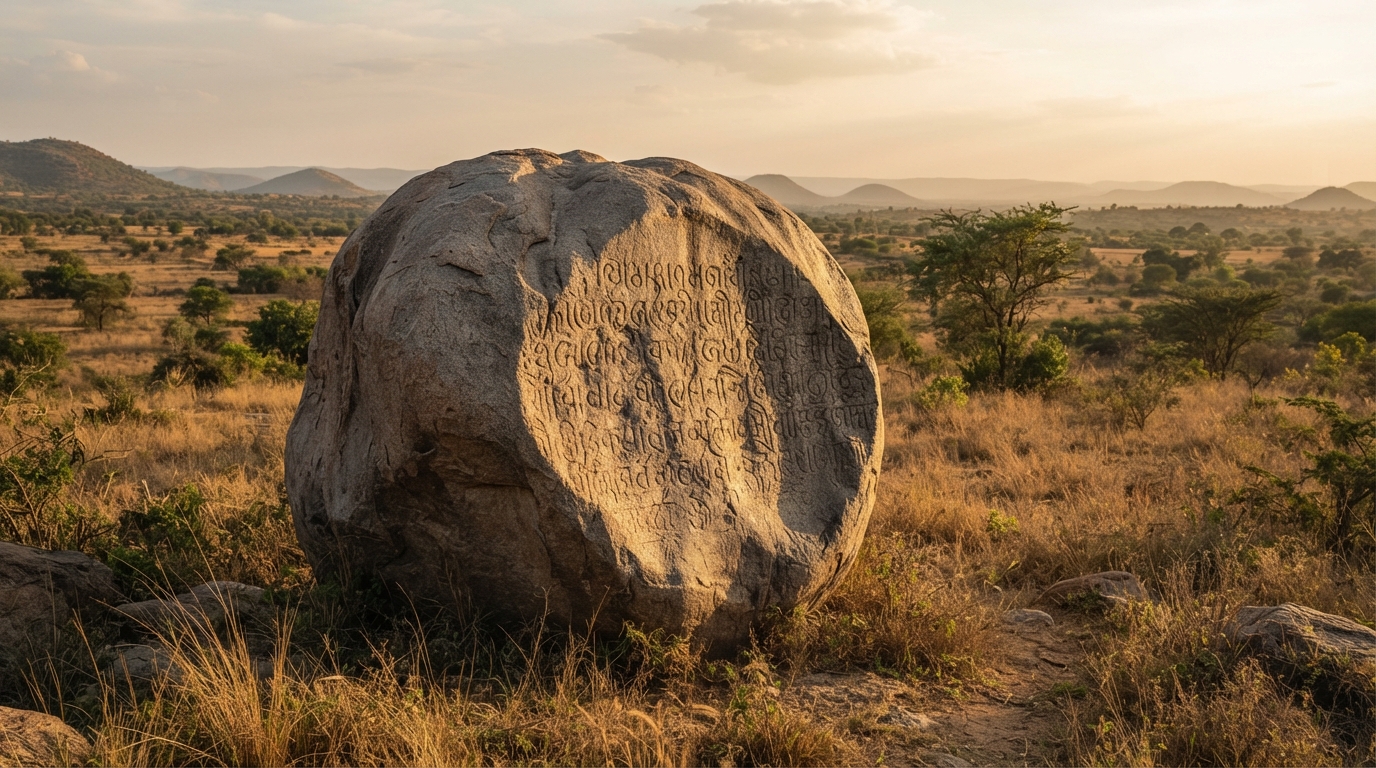
The Kalinga War, c. 261 BCE, changed Ashoka's reign. Ashoka's Rock Edict XIII records 100,000 killed and 150,000 deported (Vajiram & Ravi, 2025). Rock Edict XIII also expresses Ashoka's regret. After Kalinga, Ashoka promoted dhamma, a moral code built on non-violence and tolerance.
Ashoka's reach was wide. The Kandahar Greek Edicts, carved in Greek in present-day Afghanistan, show Mauryan messaging far to the west. Tradition places the Third Buddhist Council at Pataliputra around 250 BCE.
The empire fades out by 185 BCE
Ashoka's successors held a smaller and weaker state. The last Mauryan ruler, Brihadratha, reigned from 187 to 185 BCE (Wikipedia). Brihadratha's general, Pushyamitra Shunga, killed him and founded the Shunga dynasty.
Mauryan dates for your notes:
- c. 322 BCE: Chandragupta takes Pataliputra
- 305–303 BCE: Seleucid–Mauryan War
- 298 BCE: Bindusara succeeds
- 268 BCE: Ashoka's reign begins
- c. 261 BCE: Kalinga War
- 232 BCE: Ashoka dies
- 185 BCE: Brihadratha killed; Mauryan rule ends
Five Centuries of Regional Kingdoms Bridge the Two Empires
The post-Mauryan period is the stretch of roughly five centuries, from 185 BCE to about 320 CE, when no single dynasty ruled most of the subcontinent. Power split among four main powers: the Shungas, Indo-Greeks, Kushans and Satavahanas. Leaving this period out makes the Guptas look like direct heirs of the Mauryas, which they weren't.
Most top-ranking timelines skip the post-Mauryan stretch entirely.
Shungas and Indo-Greeks hold the north
Pushyamitra Shunga began the Shunga dynasty around 185 BCE in the Gangetic plain. The Shungas ruled a much smaller core than the Mauryas. The Shunga era is linked to the expansion of the stone railings and gateways at the Buddhist site of Bharhut.
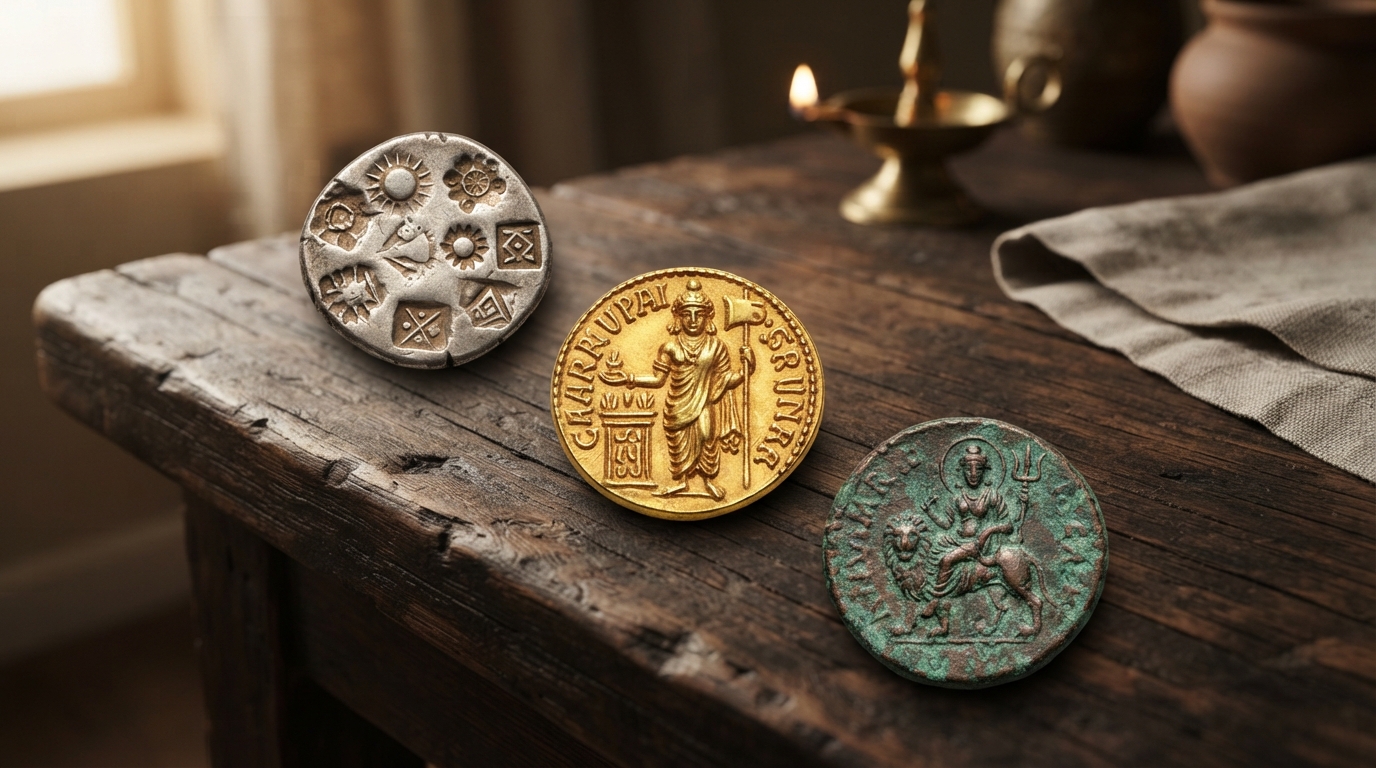
The Indo-Greeks controlled parts of the northwest in the 2nd century BCE. The best-known Indo-Greek ruler is Menander, remembered as King Milinda in the Buddhist text Milindapanha. Menander's coins circulated widely and help date the period.
Kushans and Satavahanas split the map
The Kushans came from Central Asia and ruled a belt from Bactria into the Gangetic plain. Kanishka is the most famous Kushan king. Kushan rule overlaps with two major schools of Buddhist sculpture, Gandhara and Mathura.
The Satavahanas ruled the Deccan during the same centuries. The Satavahanas controlled trade routes linking inland India to western ports. Satavahana inscriptions and coins sit at sites like Nashik and Karle.
A timeline that jumps from Ashoka to Samudragupta hides the Shungas, Indo-Greeks, Kushans and Satavahanas. If you're studying for an exam, add a single row for this gap with "c. 185 BCE–320 CE." A fuller breakdown of these kingdoms could live in a dedicated post-Mauryan kingdoms guide.
The Gupta Empire Ruled North India from About 320 to 550 CE
The Gupta Empire lasted from about 319/320 to 550 CE (Wikipedia; Cosmos Learning, 2025). It rose under Chandragupta I and expanded under Samudragupta. It peaked under Chandragupta II, c. 375–415 CE, then declined after Huna invasions. Vishnugupta, c. 540–550 CE, was the last ruler to use imperial titles and issue gold coins.
Chandragupta I and Samudragupta build the base (c. 320–375 CE)
The Gupta era, a dating system later used in inscriptions, begins in 319–320 CE. Chandragupta I is linked to that start. He took the title Maharajadhiraja, meaning "great king of kings."
Samudragupta ruled from about 335 to 375 CE. His court poet Harisena listed his campaigns on the Allahabad pillar. That same pillar already carried Ashoka's edicts. One stone holds records from both empires, about six centuries apart.
Chandragupta II marks the peak (c. 375–415 CE)
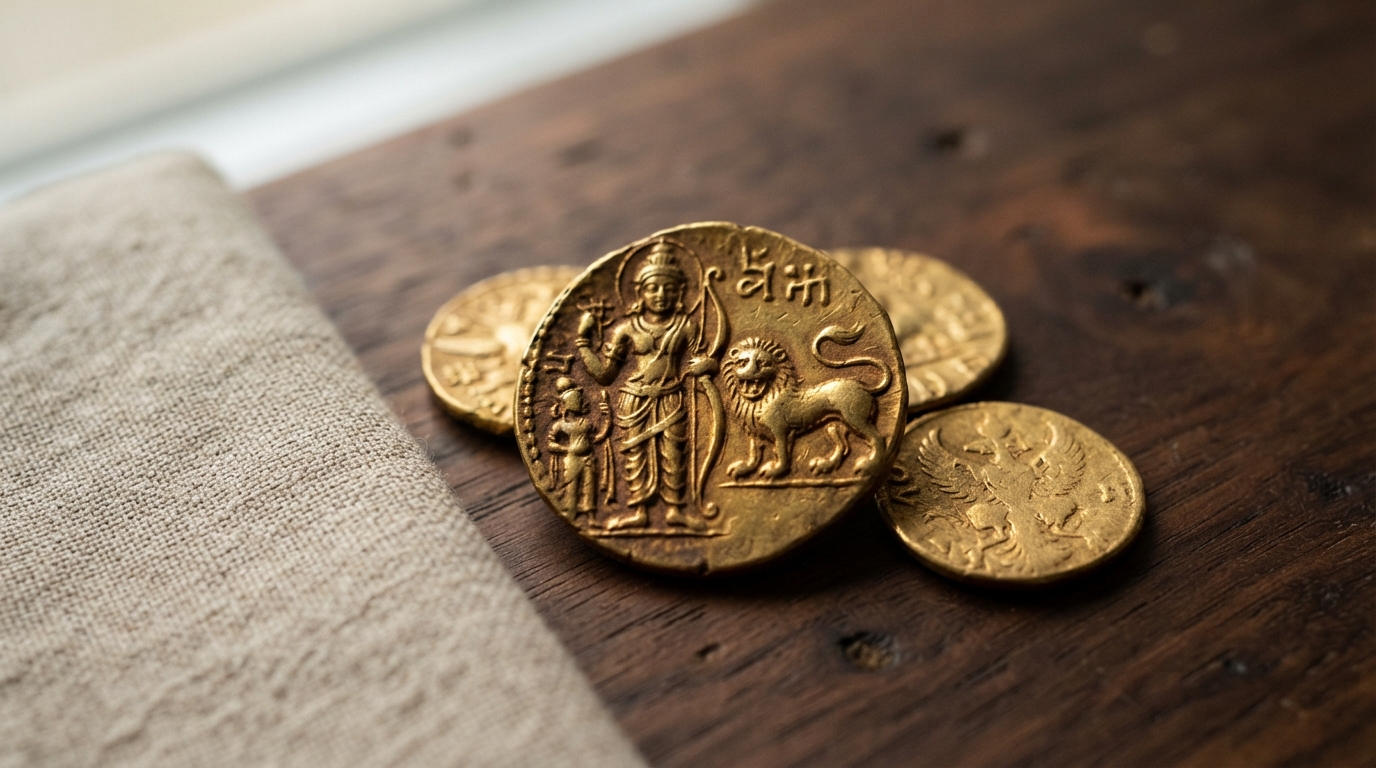
Chandragupta II, also called Vikramaditya, ruled at the empire's height. His gold coins are among the finest of the period. The Chinese monk Faxian traveled through India during his reign and left a written account.
The "Golden Age" label covers more than one reign. Aryabhata wrote the Aryabhatiya around 499 CE (Wikipedia; History Collection, 2025). Gupta-era builders made the Dashavatara Temple at Deogarh, one of the earliest surviving freestanding stone temples. The decimal place-value system was in use during these centuries, too.
Hunas and the slow end (c. 455–550 CE)
The first recorded Huna invasion came around 455 CE. Skandagupta pushed it back, according to the Junagadh and Bhitari inscriptions (Lumen Learning; Wikipedia). The Bhitari pillar is his own record of that victory.
Repeated pressure weakened the state anyway. Later Gupta kings controlled less land each generation. By Vishnugupta's time, c. 540–550 CE, imperial rule had effectively ended.
| Feature | Maurya Empire | Gupta Empire |
|---|---|---|
| Approximate dates | 322–185 BCE | c. 320–550 CE |
| Length | About 137 years | About 230 years |
| Capital | Pataliputra | Pataliputra (among others) |
| Founder | Chandragupta Maurya | Chandragupta I |
| Peak ruler | Ashoka (268–232 BCE) | Chandragupta II (c. 375–415 CE) |
| Turning point | Kalinga War, c. 261 BCE | Huna invasion, c. 455 CE |
| Key evidence | Rock and pillar edicts, Greek texts | Prashastis, gold coins, temples |
An Ancient Indian Empires Timeline Depends on Inscriptions, Coins and Greek Texts
Every date on an ancient Indian empires timeline traces back to physical evidence: stone inscriptions such as Ashoka's edicts, coins such as Menander's, and Greek or Chinese travel accounts such as Megasthenes' Indica. Each source type has limits. That's why careful writers attach "c." to most ancient dates and note when a number comes from a ruler's own claim.
Prinsep cracked the Brahmi script in 1837
The Brahmi script is the writing system of Ashoka's edicts, and James Prinsep, working in Calcutta, deciphered Brahmi in 1837. For centuries before Prinsep's work, nobody could read Ashoka's edicts. Prinsep's breakthrough turned dozens of carved rocks and pillars into readable history.
Once scholars could read Ashoka's edicts, they matched the edicts' references to Greek kings with known Greek dates. That cross-check gives the Mauryan timeline much of its footing. Without the Greek cross-check, the Mauryan timeline would have far weaker anchors.
Why "c." appears on nearly every date
The 322 versus 320 BCE split for the Maurya Empire's founding is a good example. Different scholars weigh the Greek and Indian sources differently. Both answers are defensible, so neither is "wrong."
Casualty figures need the same care. Ashoka's count of 100,000 dead at Kalinga is his own statement in Rock Edict XIII, carved for public display. No independent tally exists. Rock Edict XIII is still the best evidence we have, but cite the figure as Ashoka's claim.
The same caution applies to population estimates. A figure of 50 to 60 million for the Mauryan Empire appears often online. We couldn't trace that figure to a solid scholarly source, so we don't use it on our cards.
Maps show blocks, but scholars increasingly see networks
Most textbook maps shade the Mauryan Empire as one solid block. Archaeologist Monica L. Smith (2005) argued that the evidence fits a network of relationships better than firm territorial control. Namita Sugandhi, writing in Antiquity (2025), describes early states as "nodes" such as cities and resource zones, linked by "corridors."
The network view matters for timelines. A date like "Ashoka's empire reaches Kandahar" doesn't mean every village between Patna and Kandahar sat under direct rule. The date means Mauryan influence reached key points along routes.
Fieldwork in 2024 and 2025 Is Reshaping How We See These Eras
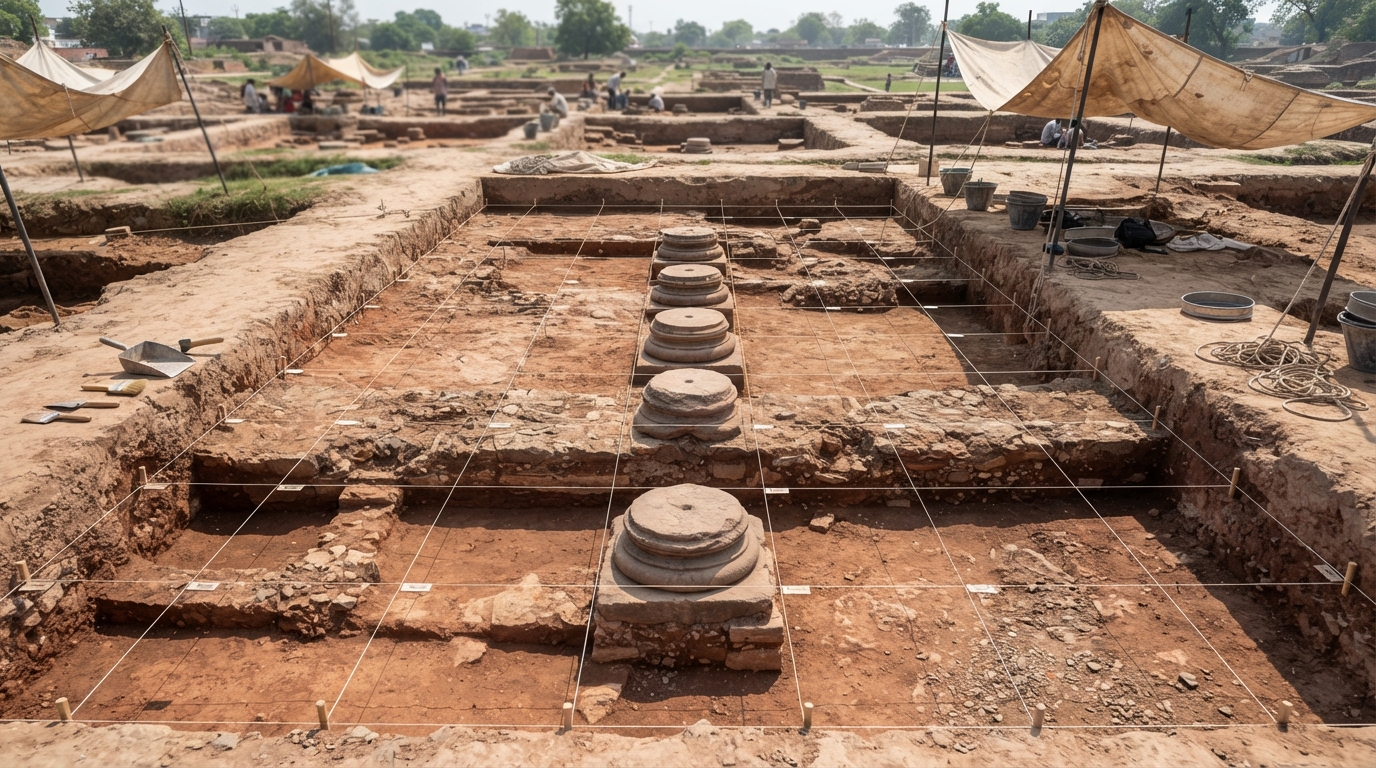
Ancient history isn't frozen. In December 2024, the Archaeological Survey of India (ASI) began re-exposing the Mauryan 80-pillar hall at Kumhrar in Patna. In March 2025, India added Gupta temples to its UNESCO tentative list. Both stories add new dates to the long timeline of these empires.
The Kumhrar 80-pillar hall comes back into view
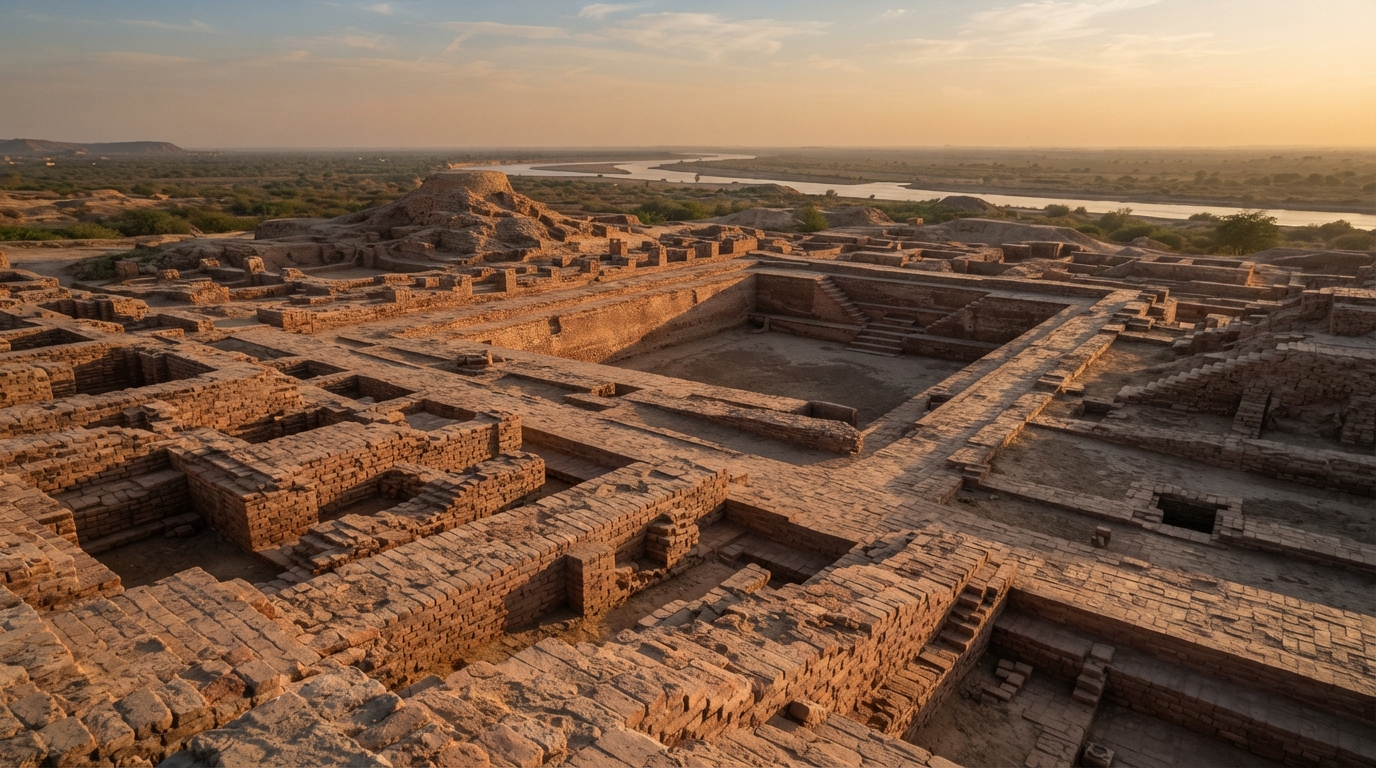
D.B. Spooner first excavated the Kumhrar hall in 1912–15. A second dig followed in 1951–55 (ASI via Organiser, 2024). Tradition links the hall to Ashoka's Third Buddhist Council, c. 250 BCE.
Waterlogging damaged the site, so it was reburied in 2004–05. The ASI started re-exposing it in December 2024 (Organiser, 2024; Drishti IAS, 2024). By late 2025, the ASI was building a full-size replica that includes one re-exposed original pillar. The ASI's Hari Om Sharan said most of that work was complete (ETV Bharat, 2025).
Gupta temples join India's UNESCO tentative list
In March 2025, India added "Gupta Temples of North India" to its UNESCO World Heritage tentative list. The group includes Deogarh, Tigawa and Nachna, among others. The addition brought India's tentative list to 62 sites (EnsureIAS, 2025; Lokmat Times, 2025).
A tentative listing isn't full World Heritage status. It's the first formal step. Still, it signals that Gupta temple architecture is getting fresh attention from heritage bodies.
New readings of old inscriptions
Not all new work involves digging. The 2025 Antiquity paper uses Ashoka's inscriptions as data points in a network analysis of the Mauryan state. Each edict's location becomes a node on a map of influence.
New finds keep adding to the record, too. More than a dozen versions of Ashoka's Minor Rock Edicts are now known. Each one helps scholars test where and how his messages spread.
Your Ancient Indian Empires Timeline Works Best as Year-Based Cards
Year-based cards are the simplest way to study the Mauryan and Gupta eras. Each short card gets one year, one event and one source. The card format works for exam prep and classroom use. The format also has a clear limit: ancient events such as the Kalinga War almost never have a known calendar day.
Build a ten-date memory spine
Start with these ten dates. The ten dates cover both empires and the gap between them.
- c. 322 BCE: Maurya Empire founded at Pataliputra
- 305–303 BCE: Seleucid–Mauryan War
- 268 BCE: Ashoka's reign begins
- c. 261 BCE: Kalinga War
- 185 BCE: Last Mauryan ruler killed; Shunga rule begins
- c. 320 CE: Gupta era begins under Chandragupta I
- c. 375 CE: Chandragupta II takes the throne
- c. 455 CE: First recorded Huna invasion
- c. 499 CE: Aryabhata writes the Aryabhatiya
- c. 550 CE: Gupta imperial rule ends
Learn these ten dates first. Then add rulers and achievements around them.
Know what the daily format can and can't hold
Our archive organizes history by calendar date, like a "today in Indian history" feed. The calendar-date format works well for modern events with exact days. The format doesn't work for the Kalinga War, because no source records the month or day.
So we treat ancient history differently. Year-based cards hold the Mauryan and Gupta milestones. Modern discoveries about the two empires, such as excavation starts and UNESCO listings, can carry more precise dates. Our Indian history timeline chart places these ancient eras alongside later periods.
Pair cards with primary sources
A primary-source citation is the named piece of evidence behind a date, and every timeline card should carry one. Write "Rock Edict XIII" on the Kalinga War card (c. 261 BCE), since Ashoka's own edict records the 100,000 killed. Write "Bhitari inscription" on the Huna invasion card (c. 455 CE). Naming the evidence shows students how historians know what they know. For a wider set of exam-ready dates, use our Indian history study materials index.
Related Reading
- Indian History Milestones: The Maurya and Gupta Empires
- Indian History Timeline Chart: Key Milestones (Digital Reference)
- 25 Historic Indian Events from 2000 to 2025: A Timeline
- Milestones in Indian Women's History: A Chronological Guide
FAQ
Q: When did the Maurya Empire begin and end? The Maurya Empire ran from about 322 to 185 BCE, roughly 137 years. Some sources start it at c. 320 BCE because scholars weigh Greek and Indian evidence differently. It ended when Pushyamitra Shunga killed Brihadratha, the last Mauryan ruler.
Q: How many years separate the Maurya and Gupta empires? About 500 years separate them. The Mauryan line ended in 185 BCE, and the Gupta era began around 319/320 CE. The Shungas, Indo-Greeks, Kushans and Satavahanas ruled parts of India in between.
Q: Which Indian empire is called the "Golden Age" of ancient India? The Gupta Empire, especially under Chandragupta II (c. 375–415 CE), usually gets that label. The era is linked to Aryabhata's Aryabhatiya (c. 499 CE), fine gold coinage and early stone temples like the Dashavatara Temple at Deogarh. The term is a later label, not one the Guptas used.
Q: How reliable is the Kalinga War death toll? The figure of 100,000 killed and 150,000 deported comes from Ashoka's own Rock Edict XIII. No independent count exists to check it. Treat it as Ashoka's statement, which is still valuable evidence for an ancient Indian empires timeline.
Q: Why did the Gupta Empire decline? Repeated Huna invasions, starting around 455 CE, put heavy pressure on the state. Skandagupta repelled the first attack, but later rulers controlled less territory. By c. 550 CE, imperial Gupta rule had ended.
Further Reading
Start today by writing the ten-date memory spine on index cards, one date per card, with the source named on the back. Then use these resources to go deeper:
- Romila Thapar, Aśoka and the Decline of the Mauryas (1961): A standard scholarly study of Ashoka's reign and the empire's collapse.
- Upinder Singh, A History of Ancient and Early Medieval India (2008): A detailed textbook that covers both empires and the centuries between them.
- Namita Sugandhi, Antiquity Project Gallery (2025): A short read on the "nodes and corridors" view of the Mauryan state.
- Maurya and Gupta milestones on IndiaOnThisDay: Scannable cards for quick revision before a class or exam.
Sources
- List of Maurya emperors — Wikipedia, n.d. Supports: The Maurya Empire lasted c. 322–185 BCE, Ashoka reigned 268–232 BCE, and Brihadratha was the last Mauryan ruler.
- Kalinga War 261 BCE, Reasons, Course, Outcomes, Impact — Vajiram & Ravi, 2025. Supports: Ashoka's Rock Edict XIII records 100,000 killed and 150,000 deported in the Kalinga War (c. 261 BCE), and it expresses his regret.
- List of Gupta emperors — Wikipedia, n.d. Supports: The Gupta Empire ended around 550 CE, with Vishnugupta (c. 540–550 CE) as its last ruler, and it was based at Pataliputra among other capitals.
- Gupta–Hunnic Wars — Wikipedia, n.d. Supports: Skandagupta defeated the Huna invaders, as recorded in the Junagadh and Bhitari inscriptions.
- Aryabhatiya — Encyclopaedia Britannica, 2025. Supports: Aryabhata wrote the Aryabhatiya around 499 CE.
- Uncovering The Past: ASI begins historic excavation of Mauryan empire's 'assembly hall' in Patna — Organiser, 2024. Supports: The ASI started re-exposing the Mauryan 80-pillar hall at Kumhrar, Patna, in December 2024.
- ASI Creating Replica Of Famous 80-Pillared Mauryan Era Hall Buried To Save It From Waterlogging In Patna — ETV Bharat, 2025. Supports: The ASI is building a replica of the Kumhrar hall that includes one re-exposed original pillar.
- Tentative Lists – India — UNESCO World Heritage Centre, 2025. Supports: The "Serial nomination of Gupta Temples in North India" is on India's UNESCO World Heritage tentative list. (UNESCO dates the submission to 11/02/2025, while news reports put the addition in March 2025.)
- Networks of intention in a peripheral landscape — Antiquity Project Gallery (Cambridge University Press), 2025. Supports: Namita Sugandhi's network analysis of the Mauryan state, which uses the locations of Ashoka's inscriptions.
- What Hindutva historians could learn from James Prinsep, the Englishman who decoded Ashokan edicts — Scroll.in, 2018. Supports: James Prinsep deciphered the Brahmi script of Ashoka's edicts in 1837.