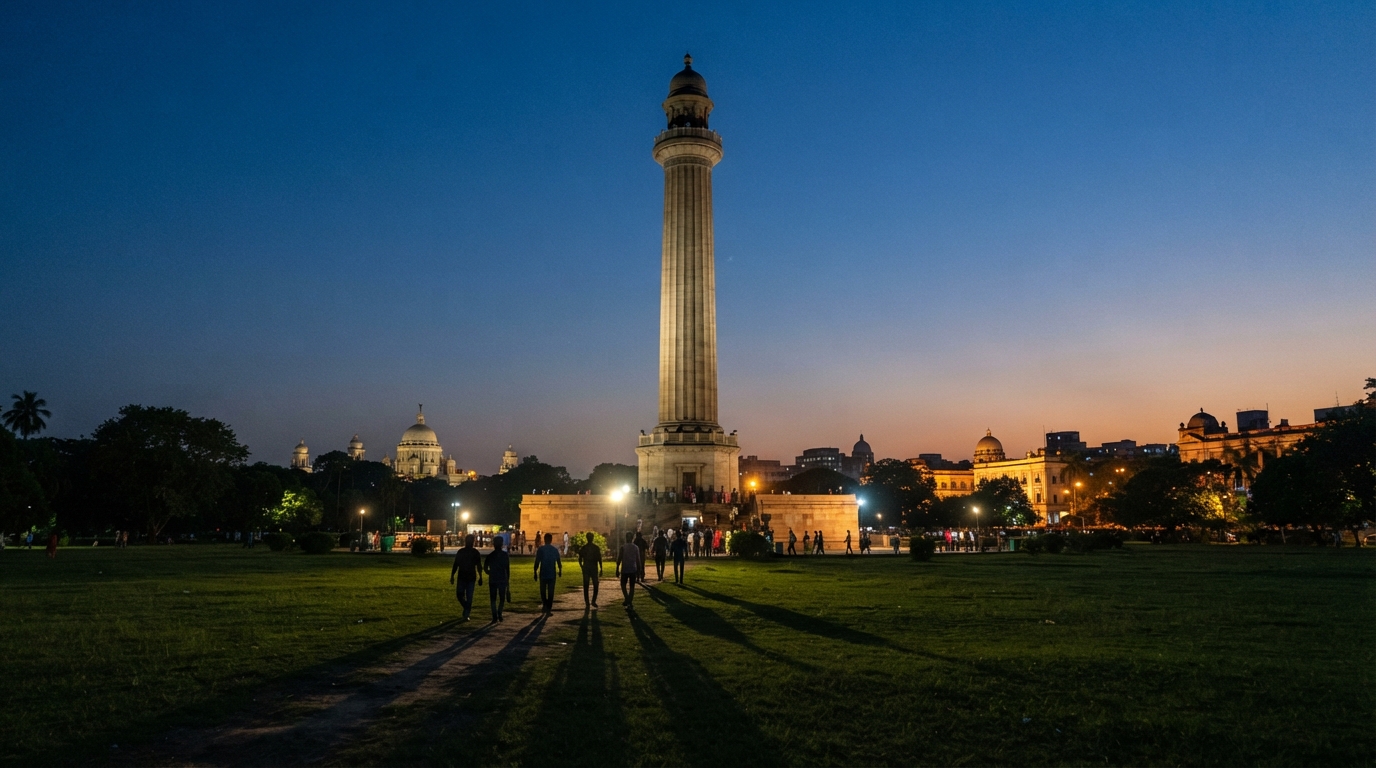
In Short
Indian security agencies history is the institutional development of India's intelligence, paramilitary, and law enforcement organizations created across two centuries to counter national security threats. According to official government records, key milestones include the founding of the Assam Rifles in 1835, the Intelligence Bureau in 1887, the Border Security Force in 1965, the Research and Analysis Wing in 1968, and the National Investigation Agency in 2008.
Key Takeaways
- Major conflicts in 1962, 1965, and 2008 directly triggered India's modern security agency formations.
- The Assam Rifles represents India's oldest continuously operating paramilitary force, founded in 1835.
- External intelligence separated from domestic intelligence in September 1968 with RAW's creation.
- India's security apparatus divides authority between the Ministry of Home Affairs and the Cabinet Secretariat.
Over 15,106 kilometers of land borders and 7,516 kilometers of coastline define India's geographical defense perimeter. Managing this vast expanse requires a network of specialized intelligence bureaus, border guards, and counter-terror strike units. Studying Indian security agencies history reveals that few of these institutions emerged during quiet peacetime planning. Instead, most agencies took shape after sudden border conflicts, security breaches, or intelligence gaps exposed institutional weaknesses. When students examine historic dates in modern India, agency foundation dates stand out as critical turning points. Each new agency marked a deliberate shift in how the nation collected intelligence, policed frontiers, and responded to asymmetric threats.
What Are the Oldest Intelligence and Security Wings in India?
The oldest intelligence and security wings in India are the Assam Rifles, established in 1835, the Intelligence Bureau, founded on December 23, 1887, and the Central Reserve Police Force, raised on July 27, 1939. According to official Ministry of Home Affairs records, the British colonial administration originally created these specialized security formations to protect commercial tea plantations, defend vulnerable revenue frontiers, monitor Russian movements during the Great Game, and suppress domestic political unrest. Following Indian independence in August 1947, Home Minister Sardar Vallabhbhai Patel and the Indian Parliament reorganized these colonial-era units into constitutional security bodies. This comprehensive restructuring transitioned imperial frontier levies into federal apparatuses dedicated to safeguarding sovereign borders, coordinating domestic intelligence, and maintaining internal civil order across the Indian republic.
The 1835 Origins of Assam Rifles
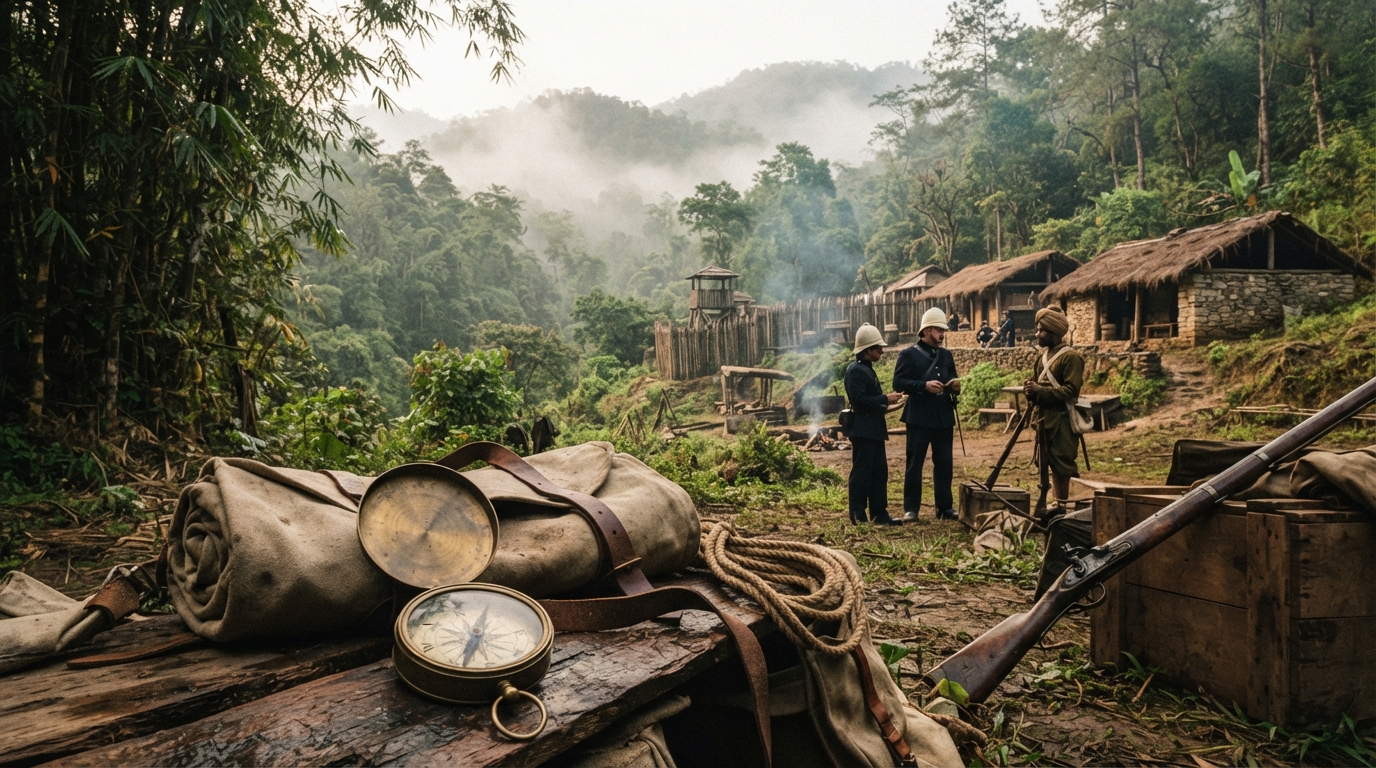
The Assam Rifles traces its lineage to 1835, when the British administration formed a small paramilitary unit called the Cachar Levy. British tea planters and colonial officers in northeast India wanted protection against raids from tribal communities in the surrounding hills. The unit started with roughly 750 officers and men. The Cachar Levy proved effective at mountain warfare and jungle tracking across difficult terrain.
Over the decades, the force underwent several name changes, including the Assam Frontier Police and the Assam Military Police. The force took the official name Assam Rifles in 1917 to recognize its combat service during World War I. Today, the force operates under a dual control structure. The Ministry of Home Affairs manages administrative matters, while the Indian Army directs operational deployments. The force guards the 1,643-kilometer Indo-Myanmar border and runs counter-insurgency operations across northeastern states. Readers can explore related institutional developments in our detailed guide on the history of Indian paramilitary forces.
How the Intelligence Bureau Evolved from Colonial Roots
The Intelligence Bureau (IB) stands as one of the oldest continuous domestic intelligence organizations in the world. On December 23, 1887, the British Secretary of State for India approved the creation of the Central Special Branch. Major General Sir Charles MacGregor had pushed for a centralized intelligence unit to track Russian troop movements toward the northwest frontier during the Great Game. Lord Dufferin, then Viceroy of India, established the branch to monitor frontier threats and emerging political movements.
In 1920, the British government reorganized this body into the Intelligence Bureau to counter growing anti-colonial activities across British India. Following Indian independence in 1947, Home Minister Sardar Vallabhbhai Patel reorganized the bureau to serve the new republic. T.G. Sanjeevi Pillai took charge as the first Indian Director of the Intelligence Bureau in April 1947. Under long-serving Director B.N. Mullik, who led the bureau from 1950 to 1964, the IB handled both internal security and foreign intelligence gathering. That combined mandate lasted until external intelligence split into a separate agency in 1968.
Crown Representative's Police Becoming the Modern CRPF
The Central Reserve Police Force began its existence on July 27, 1939, under the title of the Crown Representative's Police. The British Raj established this unit in Neemuch, Madhya Pradesh, to help princely states maintain law and order during civil unrest. The force originally consisted of a single battalion tasked with assisting local rulers against political demonstrations.
Following independence, Indian leaders recognized the need for a central armed reserve force that could support state police departments without deploying the regular army. Home Minister Sardar Patel led the legislative effort to formalize the institution. On December 28, 1949, the Indian Parliament enacted the Central Reserve Police Force Act, which gave the organization its current name. Today, the CRPF functions as India's largest Central Armed Police Force with more than 240 battalions. The CRPF manages riot control, election security, counter-insurgency in Jammu and Kashmir, and anti-Naxal operations across central India.
Indian Security Agencies History and Post-1962 Border Reorganizations
Indian security agencies history after the 1962 Sino-Indian War is the strategic transformation of India's border defense and internal security architecture following severe frontier intelligence failures. Prime Minister Jawaharlal Nehru's administration established specialized mountain warfare forces, civilian intelligence networks, and federal anti-corruption agencies between 1962 and 1963 to secure high-altitude Himalayan boundaries and streamline national defense coordination.
1962 Sino-Indian War
  │
  ├──► Indo-Tibetan Border Police (Oct 24, 1962) ──► High-altitude LAC defense
  ├──► Sashastra Seema Bal (Dec 20, 1963)        ──► Border village intelligence
  └──► Central Bureau of Investigation (Apr 1, 1963) ──► Federal investigative mandate
Raising the Indo-Tibetan Border Police in October 1962
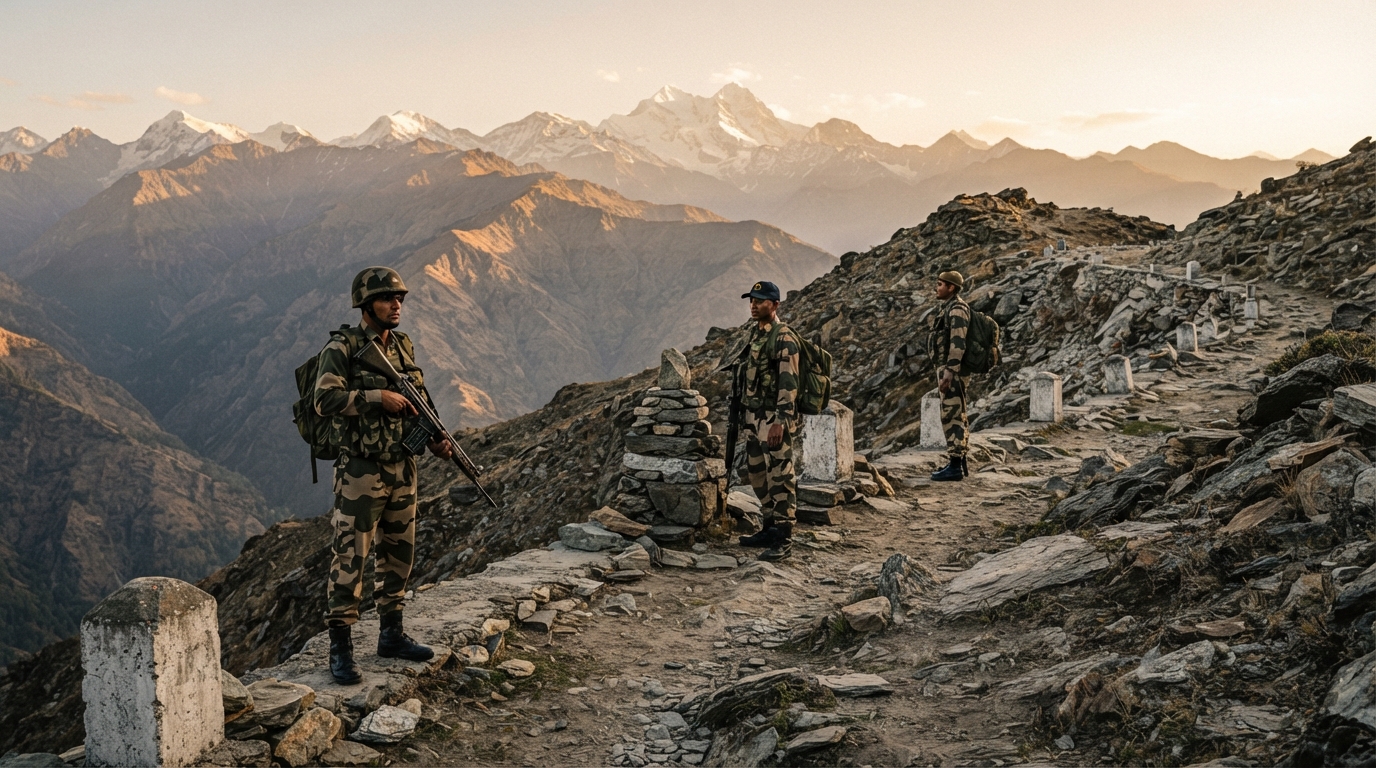
The Indo-Tibetan Border Police (ITBP) came into existence on October 24, 1962, during the height of the Sino-Indian border conflict. Indian military planners realized that regular infantry and state police units lacked the specialized equipment and acclimatization needed for high-altitude warfare. The ITBP began with just four pioneer battalions raised under the provisions of the Central Reserve Police Force Act. Inspector General Balbir Singh led the initial organization of the force.
Personnel trained extensively in mountaineering, skiing, and high-altitude survival tactics. The force took responsibility for guarding remote mountain passes along the northern frontier. In 1992, the Indian Parliament passed the Indo-Tibetan Border Police Force Act to give the organization an independent statutory footing. The ITBP currently guards the 3,488-kilometer Line of Actual Control between India and the Tibet Autonomous Region of China. Its border outposts operate at elevations ranging from 9,000 to 18,700 feet where winter temperatures drop below minus 40 degrees Celsius.
Sashastra Seema Bal and Village Defense Networks
The government established the Special Service Bureau on December 20, 1963, following strategic reviews of the 1962 war. The concept originated within the Directorate General of Security to build civilian resilience in remote frontier areas. Defense planners wanted to train border populations in self-defense, sabotage resistance, and intelligence gathering in case of future foreign incursions.
For nearly four decades, the organization operated quietly along sensitive international boundaries in Jammu, Himachal Pradesh, Uttarakhand, and the northeast. In June 2001, the Union Government transferred the organization from the Cabinet Secretariat to the Ministry of Home Affairs following recommendations from the Group of Ministers on national security. In 2004, the government officially renamed it the Sashastra Seema Bal (SSB). Today, the SSB guards India's 1,751-kilometer border with Nepal and its 699-kilometer border with Bhutan. The SSB uses a community-friendly policing model to prevent smuggling, human trafficking, and illegal border crossings while maintaining open borders with both neighboring nations.
Central Bureau of Investigation and the 1963 Mandate
The roots of the Central Bureau of Investigation (CBI) date back to 1941, when the British government created the Special Police Establishment (SPE). The SPE investigated corruption and bribery in war-related procurements during World War II. After the war, the Delhi Special Police Establishment Act of 1946 expanded the agency's jurisdiction to investigate corruption among central government employees across India.
On April 1, 1963, the Ministry of Home Affairs issued an executive resolution that established the Central Bureau of Investigation. The new body absorbed the SPE while adding specialized divisions for economic crimes, organized fraud, and interstate offenses. D.P. Kohli took charge as the CBI's founding director. Unlike state police departments, the CBI derives its investigative powers from the 1946 Act rather than an independent central policing statute. The agency handles high-profile corruption probes, financial fraud, and cases transferred to the CBI by state governments or constitutional courts.
How Did the 1965 War Reshape Indian Border Control and External Espionage?
The 1965 Indo-Pakistan War revealed that relying on scattered state police units to guard international frontiers caused command confusion and inconsistent defensive standards. Indian planners also recognized that a single intelligence agency could not manage domestic security and foreign intelligence at the same time. These lessons prompted a structural overhaul in border defense, critical infrastructure protection, and foreign espionage.
1965 Indo-Pakistan War
  │
  ├──► Border Security Force (Dec 1, 1965) ──► Unified international border defense
  ├──► RAW (Sept 21, 1968)                 ──► Dedicated foreign strategic intelligence
  └──► CISF (Mar 10, 1969)                 ──► Critical infrastructure & industry security
Border Security Force Foundation in December 1965
In April 1965, Pakistani armed forces attacked Indian police posts in the Rann of Kutch in Gujarat. State armed police battalions from Gujarat and Rajasthan struggled to counter coordinated military incursions. The incident demonstrated that state police forces lacked the heavy weapons, centralized communications, and tactical training required along disputed frontiers. Prime Minister Lal Bahadur Shastri approved the creation of a unified federal border security force.
On December 1, 1965, the Indian government established the Border Security Force (BSF). Khusro Faramurz Rustamji, a senior police officer from Madhya Pradesh, became the founding Director General. Rustamji built the BSF into a capable armed force with its own artillery units, air wing, and water wing. In 1968, Parliament enacted the Border Security Force Act to formalize the organization's powers. The BSF played an active combat role alongside the Indian Army during the 1971 war. Today, the BSF guards India's 4,096-kilometer border with Bangladesh and the 3,323-kilometer border with Pakistan.
Creation of the Research and Analysis Wing in September 1968
Before 1968, the Intelligence Bureau handled both internal counter-intelligence and foreign intelligence collection. Intelligence gaps during the 1962 war with China and the 1965 war with Pakistan convinced Prime Minister Indira Gandhi to separate domestic intelligence from external operations. The government wanted a dedicated foreign espionage service that reported directly to the Prime Minister rather than the Home Ministry.
On September 21, 1968, the government created the Research and Analysis Wing (RAW) under the administrative control of the Cabinet Secretariat. Indira Gandhi appointed Rameshwar Nath Kao, a seasoned intelligence officer, as RAW's first chief. Kao built the agency into a professional intelligence service focused on strategic foreign analysis, covert actions, and geopolitical monitoring across South Asia. Under Kao's leadership, RAW gathered tactical intelligence that contributed to the liberation of Bangladesh in 1971 and supported the peaceful accession of Sikkim into the Indian Union in 1975.
CISF and the Protection of Critical Industrial Assets
During the late 1960s, India invested heavily in state-owned heavy industries, steel plants, power stations, and public sector infrastructure. Labor unrest, industrial sabotage, and fire hazards threatened these public investments. Local state police forces could not provide dedicated security to industrial complexes without pulling officers away from regular civil policing duties.
On March 10, 1969, Parliament enacted the Central Industrial Security Force Act, formally establishing the Central Industrial Security Force (CISF). The force started with an initial strength of roughly 2,800 personnel. The CISF initially served as an unarmed watch-and-ward force without police arrest powers. In 1983, Parliament passed major amendments that converted the CISF into a full armed force of the Union. Following the 1999 Kandahar hijacking of flight IC-814, the government assigned airport security across India to the CISF. Today, the force secures 68 commercial airports, space research centers, nuclear power plants, and the Delhi Metro system.
Evolution of Counter-Terrorism Units from Operation Blue Star to 26/11
The evolution of counter-terrorism units in Indian security agencies history is the creation of specialized tactical assault, technical intelligence, and federal investigative bodies following national crises between 1984 and 2008. According to Ministry of Home Affairs records, Operation Blue Star, the 1999 Kargil conflict, and the 2008 Mumbai attacks directly produced the National Security Guard, National Technical Research Organisation, and National Investigation Agency.
National Security Guard Establishment in September 1986
In June 1984, the Indian military conducted Operation Blue Star to clear armed militants from the Golden Temple complex in Amritsar. The heavy casualties and infrastructure damage convinced defense planners that regular military formations were not suited for urban counter-terror assaults in civilian areas. The Union Cabinet decided to create an elite federal commando unit trained specifically for counter-hijacking and hostage rescue operations.
The government raised the force in 1984, and the Indian Parliament formalized its powers by passing the National Security Guard Act on September 22, 1986. Modeled on the British Special Air Service and Germany's GSG 9, the National Security Guard (NSG) operates under the Ministry of Home Affairs. The NSG draws its core combat personnel from two distinct streams. The Special Action Group (SAG) recruits entirely from the Indian Army for direct assault operations, while the Special Ranger Group (SRG) recruits from central police forces for logistical and perimeter support. NSG commandos demonstrated their capabilities during Operation Black Thunder in 1988 and Operation Black Tornado during the November 2008 Mumbai attacks.
Post-Kargil Structural Reforms and the NTRO
The 1999 Kargil conflict exposed serious weaknesses in technical surveillance, satellite imaging, and interception capabilities along the Line of Control. Pakistani soldiers had occupied unmonitored mountain ridges during winter without detection by Indian intelligence services. Following the conflict, the Indian government formed the Kargil Review Committee, led by defense analyst K. Subrahmanyam, to examine intelligence shortfalls and recommend structural reforms.
The committee recommended creating a specialized technical intelligence agency dedicated to signals intelligence, imagery analysis, and cyber defense. In May 2004, the government established the National Technical Research Organisation (NTRO) under the Prime Minister's Office and the National Security Adviser. The NTRO functions as India's premier technical intelligence collection agency. The NTRO manages earth observation satellites, signals interception stations, maritime tracking infrastructure, and cyber security systems across critical national networks.
National Investigation Agency and the Post-Mumbai Transformation
On November 26, 2008, ten Pakistani terrorists launched a coordinated three-day attack on hotels, a railway terminal, a hospital, and a cultural center in Mumbai, killing 166 people. The attacks revealed that India lacked a central investigative agency with nationwide jurisdiction to investigate interstate terror networks and foreign financial trails. State police departments faced legal and geographical limits when tracking conspiracies that spanned multiple states and foreign countries.
In response, the Indian Parliament passed the National Investigation Agency Act on December 31, 2008. The National Investigation Agency (NIA) began operations in January 2009 with Radha Vinod Raju serving as its founding Director General. The NIA operates under the Ministry of Home Affairs as India's premier federal counter-terrorism law enforcement body. The agency holds legal authority to investigate scheduled offenses across any Indian state without requiring prior permission from state police authorities. Specialized NIA courts handle expedited trials for cases involving terrorism, terror funding, and attacks on national infrastructure.
Chronological Milestone Matrix of Indian Security Agencies
Indian security agencies history shows a clear pattern of organizational evolution tied to specific defense crises. The table below outlines the foundation dates, parent administrative bodies, and core operational mandates of India's key security and intelligence institutions. Readers tracking dates in Indian history can see how each agency addresses a distinct national security requirement.
| Agency Name | Foundation Date | Parent Administrative Body | Primary Operational Mandate |
|---|---|---|---|
| Assam Rifles | 1835 (Cachar Levy) | Ministry of Home Affairs / MoD | Indo-Myanmar border defense and counter-insurgency |
| Intelligence Bureau (IB) | December 23, 1887 | Ministry of Home Affairs | Domestic counter-intelligence and internal security |
| Central Reserve Police Force (CRPF) | July 27, 1939 | Ministry of Home Affairs | Internal security, riot control, and counter-insurgency |
| Special Police Establishment (later CBI) | 1941 (SPE) / April 1, 1963 (CBI) | Ministry of Personnel, Public Grievances | Federal anti-corruption and major criminal investigations |
| Indo-Tibetan Border Police (ITBP) | October 24, 1962 | Ministry of Home Affairs | High-altitude Line of Actual Control security |
| Sashastra Seema Bal (SSB) | December 20, 1963 | Ministry of Home Affairs | Indo-Nepal and Indo-Bhutan border defense |
| Border Security Force (BSF) | December 1, 1965 | Ministry of Home Affairs | Indo-Pakistan and Indo-Bangladesh border security |
| Research and Analysis Wing (RAW) | September 21, 1968 | Cabinet Secretariat (Prime Minister) | Foreign strategic intelligence and covert operations |
| Central Industrial Security Force (CISF) | March 10, 1969 | Ministry of Home Affairs | Industrial assets, airports, and critical infrastructure |
| National Security Guard (NSG) | September 22, 1986 | Ministry of Home Affairs | Urban counter-terrorism and anti-hijacking operations |
| National Technical Research Organisation (NTRO) | May 2004 | Cabinet Secretariat / PMO | Technical intelligence, satellite surveillance, and cyber security |
| National Investigation Agency (NIA) | December 31, 2008 | Ministry of Home Affairs | Federal counter-terror and terror-funding investigations |
Comparing Agency Mandates and Parent Ministries
Most security forces in India report to the Ministry of Home Affairs (MHA), which oversees domestic peace and border guarding. However, strategic intelligence collection follows a separate administrative chain. The Research and Analysis Wing reports directly to the Cabinet Secretariat under the Prime Minister. Similarly, the National Technical Research Organisation works under the oversight of the National Security Adviser in the Prime Minister's Office.
This separation keeps strategic external intelligence distinct from routine civil law enforcement. For students using online study materials on important dates, understanding these ministerial divisions clarifies how Indian defense architecture operates during international crises.
Structural Gaps and Institutional Overlaps
While each agency operates under an assigned legal mandate, operational overlaps can present coordination challenges. For example, both the BSF and the Indian Army deploy along sections of the Line of Control in Jammu and Kashmir. In the northeast, the Assam Rifles balances operational commands from the Army with administrative directions from the Home Ministry.
To improve inter-agency cooperation, the government strengthened the Multi-Agency Centre (MAC) under the Intelligence Bureau after the Kargil conflict. The MAC operates continuous data-sharing desks to pool real-time inputs from military intelligence, RAW, central police forces, and state police departments. This shared communication network helps prevent intelligence bottlenecks between federal bodies. Readers can review how institutional developments fit into broader historical study in our guide on how to learn Indian history easily.
Why Do Foundation Dates Matter in Indian Security Studies?
Foundation dates in Indian security studies are historical benchmarks that define the statutory powers, constitutional mandates, and operational doctrines of national defense and intelligence institutions. According to security analysts, documenting these founding dates reveals how the Government of India transitioned from reactive colonial policing models to specialized, proactive national security frameworks across two centuries.
Institutional Maturity Pattern
  │
  ├── 19th Century ──► Colonial policing & frontier control (Assam Rifles, IB)
  ├── Mid-20th Century ──► Border defense & post-war specialization (ITBP, BSF, RAW)
  └── Late 20th / 21st Century ──► Asymmetric counter-terrorism & technical intel (NSG, NTRO, NIA)
Tracing Doctrine Through Crisis-Driven Formation
Crisis-driven formation in Indian security agencies history is the operational doctrine whereby major geopolitical conflicts and security breaches dictate the design and statutory powers of newly raised agencies. According to defense analysts, every security organization in India carries an operational character shaped by the specific crisis that prompted its establishment.
The BSF focuses on defensive border deterrence because the BSF originated during the 1965 border skirmishes in Gujarat and Punjab. The NIA focuses on forensic financial investigations and international legal coordination because the 26/11 attacks involved transnational logistics. By reviewing agency origins, defense analysts can track how India transitioned from reactive border patrolling to proactive, intelligence-led deterrence.
Daily History Connections Across the Calendar Year
Specific calendar dates hold deep institutional meaning for security personnel across India. For example, October 24 marks ITBP Raising Day, and December 1 marks BSF Raising Day. Tracking these dates in a daily history archive connects present ceremonial traditions with the geopolitical crises of the twentieth century.
For anyone exploring today in history India archives, foundation milestones highlight how modern governance developed through institutional reform. Specific date searches across defense history, such as inquiries for an August 10 special day in India, an August 8 special day in India, or an August 14 special day in India, often connect directly with parliamentary acts, border treaties, and security notifications that shaped modern Indian federalism. When examining major events in Indian history, identifying agency establishment dates explains how government responses to national emergencies matured over successive decades.
Frequently Asked Questions
Q: Which is the oldest security agency in India?
The Assam Rifles is the oldest security agency and paramilitary force in India, founded in 1835 as the Cachar Levy. For civil intelligence, the Intelligence Bureau is the oldest, established on December 23, 1887, as the Central Special Branch under the British administration.
Q: What is the primary difference between the Intelligence Bureau and RAW?
The Intelligence Bureau manages domestic intelligence, internal surveillance, and counter-espionage within Indian borders under the Ministry of Home Affairs. The Research and Analysis Wing focuses exclusively on foreign strategic intelligence, external threats, and international espionage under the Cabinet Secretariat.
Q: When was the National Investigation Agency formed?
The Indian Parliament passed the National Investigation Agency Act on December 31, 2008, following the November 2008 Mumbai terror attacks. The agency began its official federal investigative operations in January 2009 under founding Director General Radha Vinod Raju.
Q: Which Indian security agencies report directly to the Prime Minister's Office?
The Research and Analysis Wing reports to the Cabinet Secretariat under the direct oversight of the Prime Minister. The National Technical Research Organisation operates under the Prime Minister's Office and reports through the National Security Adviser.
Save this chronological guide to your browser bookmarks to quickly verify foundation dates, legislative acts, and institutional milestones across Indian security agencies history.
Related Reading
- Milestones in Indian Women's History: A Chronological Guide
- 1,000 Years of Indian Medical History: A Chronological Guide
- Economic Milestones in Indian History: From 1947 to Present
- What Are the Major Events in Indian History? (FAQ Archive)
Sources
- Annual Report 2021-22 — Ministry of Home Affairs, Government of India, 2022. Supports: The Assam Rifles was raised as the "Cachar Levy" in 1835 as India's oldest paramilitary force and is responsible for guarding the 1,643-kilometer Indo-Myanmar border.
- Shri Arun Jaitley to address the 28th I.B. Centenary Endowment Lecture tomorrow — Press Information Bureau, Government of India, 2015. Supports: The Intelligence Bureau traces its foundation to the establishment of the Central Special Branch on December 23, 1887.
- Brief History — Central Reserve Police Force, Ministry of Home Affairs, 2023. Supports: The Central Reserve Police Force was raised on July 27, 1939, as the Crown Representative's Police before being renamed under the CRPF Act.
- Union Minister of State for Home Affairs Shri G Kishan Reddy presides as Chief Guest on the occasion of the 58th Raising Day of Indo-Tibetan Border Police — Press Information Bureau, Government of India, 2019. Supports: The Indo-Tibetan Border Police was raised on October 24, 1962, in the aftermath of Chinese border aggression.
- History of NSG — National Security Guard, Ministry of Home Affairs, 2026. Supports: The National Security Guard was formally established upon presidential assent to the National Security Guard Act on September 22, 1986.
- The National Investigation Agency Act, 2008 — National Investigation Agency, Ministry of Home Affairs, 2019. Supports: The National Investigation Agency was constituted under the National Investigation Agency Act enacted on December 31, 2008.
- Central Industrial Security Force Citizen's Charter — Ministry of Home Affairs, Government of India, 2022. Supports: The Central Industrial Security Force was created under a 1968 parliamentary enactment and became operational in 1969 to guard industrial undertakings and critical infrastructure.