TL;DR
The evolution of Indian military aviation spans from 1930s British biplanes to modern indigenous stealth fighter programs. The Indian Air Force is currently transitioning from imported Soviet-era jets to domestically produced platforms like the Tejas, while integrating unmanned drone swarms and artificial intelligence to rebuild its depleted combat squadron strength.
Key Takeaways
- India currently operates 29 to 31 active combat squadrons, well below its 42-squadron authorization.
- The indigenous AMCA program aims to build fifth-generation stealth fighters locally.
- Dassault Aviation restructured the 114-jet Rafale deal to control local manufacturing quality.
- The military plans to acquire 30 to 50 specialized combat UAVs by 2030.
- Artificial intelligence now powers 77 active military projects, including predictive maintenance.
In September 2025, an Indian Air Force pilot cut the engine on a MiG-21 interceptor for the final time. That quiet moment on the tarmac marked the end of a 60-year era for a jet that defined Cold War skies. The evolution of indian military aviation is a story of these constant transitions. The military continuously moves from foreign reliance to domestic ambition.
The foundation of Indian air power relied on imported technology
Early Indian military aviation depended almost entirely on foreign hardware. The Royal Indian Air Force started with British biplanes before the Cold War pushed India toward a massive reliance on Soviet fighters. This dynamic created a legacy fleet that took decades to modernize.
The early days of the Royal Indian Air Force
The Indian Air Force officially formed on October 8, 1932. The first squadron flew Westland Wapiti biplanes. These early aviators relied on British training and equipment to secure the airspace. The fleet slowly expanded during World War II. Pilots flew combat missions in Burma using Hawker Hurricanes and Supermarine Spitfires.
Following independence in 1947, the newly formed republic needed to secure its borders. The military purchased de Havilland Vampires, entering the jet age. These early procurement decisions shaped Economic Milestones in Indian History: From 1947 to Present. Defense spending heavily favored foreign imports. Building a domestic aviation industry required infrastructure that simply did not exist yet.
| Aircraft Model | Era Introduced | Primary Role | Origin |
|---|---|---|---|
| Westland Wapiti | 1930s | Army Co-operation | United Kingdom |
| de Havilland Vampire | 1940s | Fighter-Bomber | United Kingdom |
| MiG-21 | 1960s | Interceptor | Soviet Union |
| Mirage 2000 | 1980s | Multi-role Fighter | France |
The shift to Soviet platforms in the Cold War
The 1960s marked a sharp pivot toward the Soviet Union. Western nations restricted arms sales during the regional conflicts of 1965 and 1971. India needed reliable suppliers. The Soviet Union offered the MiG-21 on favorable terms. This interceptor became the backbone of the Indian Air Force for decades.
Relying on a single major supplier created long-term vulnerabilities. The military struggled with spare parts shortages when the Soviet Union collapsed in 1991. The fleet aged rapidly. Upgrading these older airframes proved difficult and expensive. The military realized that true security required domestic manufacturing capabilities.
Indigenous manufacturing drives the modern evolution of Indian military aviation
India is shifting its focus from buying foreign jets to building its own combat aircraft. The government has committed heavy funding to indigenous helicopter and fighter programs. This financial backing aims to build a self-reliant defense industrial base over the next decade.
The Tejas program and supply chain realities
The Light Combat Aircraft (LCA) Tejas program represents India's primary effort to replace aging Soviet jets. Hindustan Aeronautics Limited (HAL) designed the Tejas to be a lightweight, multi-role fighter. The project faced decades of delays. Building a modern fighter jet from scratch is incredibly difficult.
Even with local production, supply chain bottlenecks persist. The Tejas Mk1A relies on American engines. GE Aerospace launched a dedicated production facility for the F404 engine to resolve severe supply chain bottlenecks. Roughly 30 fully assembled Tejas Mk1A airframes were waiting for powerplants. GE Aerospace has committed to delivering 20-22 F404-IN20 engines by the end of 2026, and 30 more in 2027 [Defence News India, 2026].
| Program | Budget Outlay | Focus Area | Timeline |
|---|---|---|---|
| IMRH | ₹94,200 crore | Multi-Role Helicopter | 2025–2035 |
| LCH | ₹62,700 crore | Light Combat Helicopter | 2025–2035 |
| AMCA | Undisclosed | 5th-Gen Stealth Fighter | Prototypes by 2030 |
The indigenous military aviation pipeline includes a projected ₹94,200 crore outlay for the Indian Multi-Role Helicopter (IMRH) and ₹62,700 crore for Light Combat Helicopters over the next decade [The Financial Express, 2026]. These investments push the evolution of indian military aviation forward. Local factories gain critical experience.
The Advanced Medium Combat Aircraft (AMCA) push
India walked away from the Russian FGFA stealth fighter program due to technology transfer disputes. The military pivoted entirely to the domestic Advanced Medium Combat Aircraft (AMCA) project. This fifth-generation stealth fighter is vital for future air superiority.
In May 2026, India's Ministry of Defence issued Requests for Proposals (RFPs) to three bidders to select a production partner to build five prototypes of the 5th-generation Advanced Medium Combat Aircraft [The Kaufman Fund, 2026]. The government wants private industry involved from the start. State-owned enterprises cannot meet production timelines alone.
Fighter squadron depletion forces strategic procurement changes
The Indian Air Force faces a critical shortage of combat aircraft right now. With only 29 to 31 active squadrons against an authorized strength of 42, the military must carefully balance urgent foreign purchases with long-term domestic production goals.
The Rafale MRFA restructuring
The military cannot wait for domestic programs to fill the squadron gap. The Indian Air Force currently operates 29 to 31 active combat squadrons, well below its authorized strength of 42 [Defence News India, 2026]. The government initiated the Multi-Role Fighter Aircraft (MRFA) tender to buy 114 jets quickly.
In July 2026, Dassault Aviation restructured its approach to the 114-jet MRFA deal. The French company took full responsibility for local production and testing to avoid the bureaucratic pitfalls of the previous HAL-led MMRCA tender [Indian Defence News, 2026]. Dassault signed agreements with Tata Advanced Systems Limited (TASL) to manufacture Rafale fuselage sections in Hyderabad. This embeds Indian private industry into global supply chains.
These strategic partnerships represent major 25 Historic Indian Events from 2000 to 2025: A Timeline. Foreign manufacturers now accept liability for locally built jets. They choose their own Indian partners rather than relying on state-owned entities. Quality control improves dramatically under this model.
The cost of the MRO deficit
Buying a fighter jet is only the first step. Keeping it flying requires a massive Maintenance, Repair, and Overhaul (MRO) ecosystem. India's MRO sector remains heavily dependent on foreign entities. This deficit impacts long-term fleet readiness.
When a jet needs an engine overhaul, the military often ships it back to France or Russia. This process takes months. A grounded jet provides no combat value. Building domestic MRO facilities is tedious work. It lacks the glamour of buying new stealth fighters. Yet, fixing this deficit is the only way to keep the current 30 squadrons operational.
Unmanned systems shape the next era of combat operations
Future air combat will rely heavily on autonomous drones and artificial intelligence rather than just manned fighter jets. The Indian military is actively integrating predictive maintenance algorithms and unmanned combat swarms to reduce human risk and increase overall operational efficiency.
The 2025 Unmanned Force Plan
Modern warfare demands cheaper, expendable platforms. The military cannot risk a $100 million fighter jet on every routine strike mission. The Indian Air Force recognized this shift. The IAF is shifting toward a future-proof unmanned fleet, planning to acquire 30 to 50 specialized UAVs within the next three to five years for specific combat roles [IAF Unmanned Force Plan, 2025].
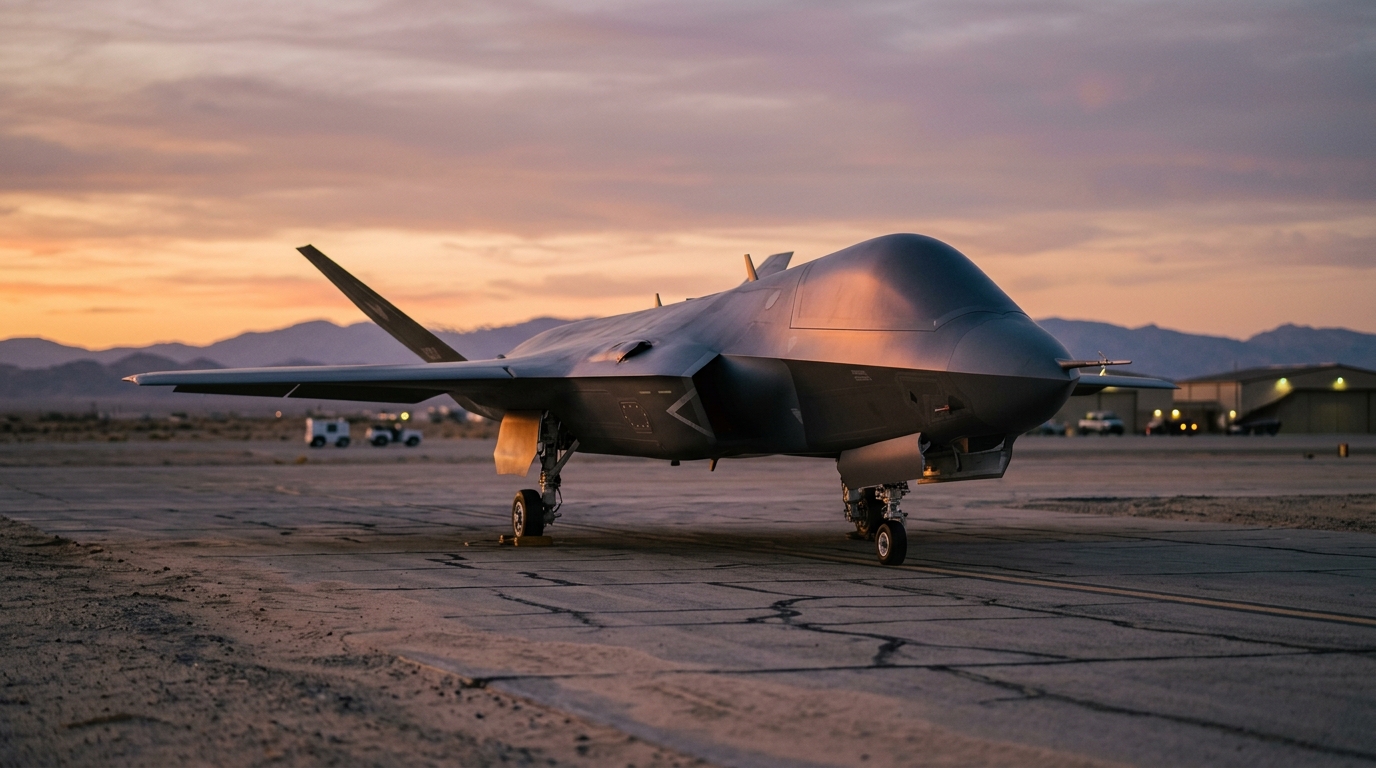
Programs like the DRDO Ghatak aim to build autonomous Unmanned Combat Aerial Vehicles (UCAVs). These stealthy drones will fly alongside manned fighters. They serve as loyal wingmen. The drones can carry weapons, conduct surveillance, or act as decoys. This approach multiplies the combat effectiveness of the limited manned squadrons.
Artificial intelligence integration
Software is just as important as hardware in modern aviation. The military generates massive amounts of data from radar, satellites, and aircraft sensors. Human analysts cannot process this information fast enough.
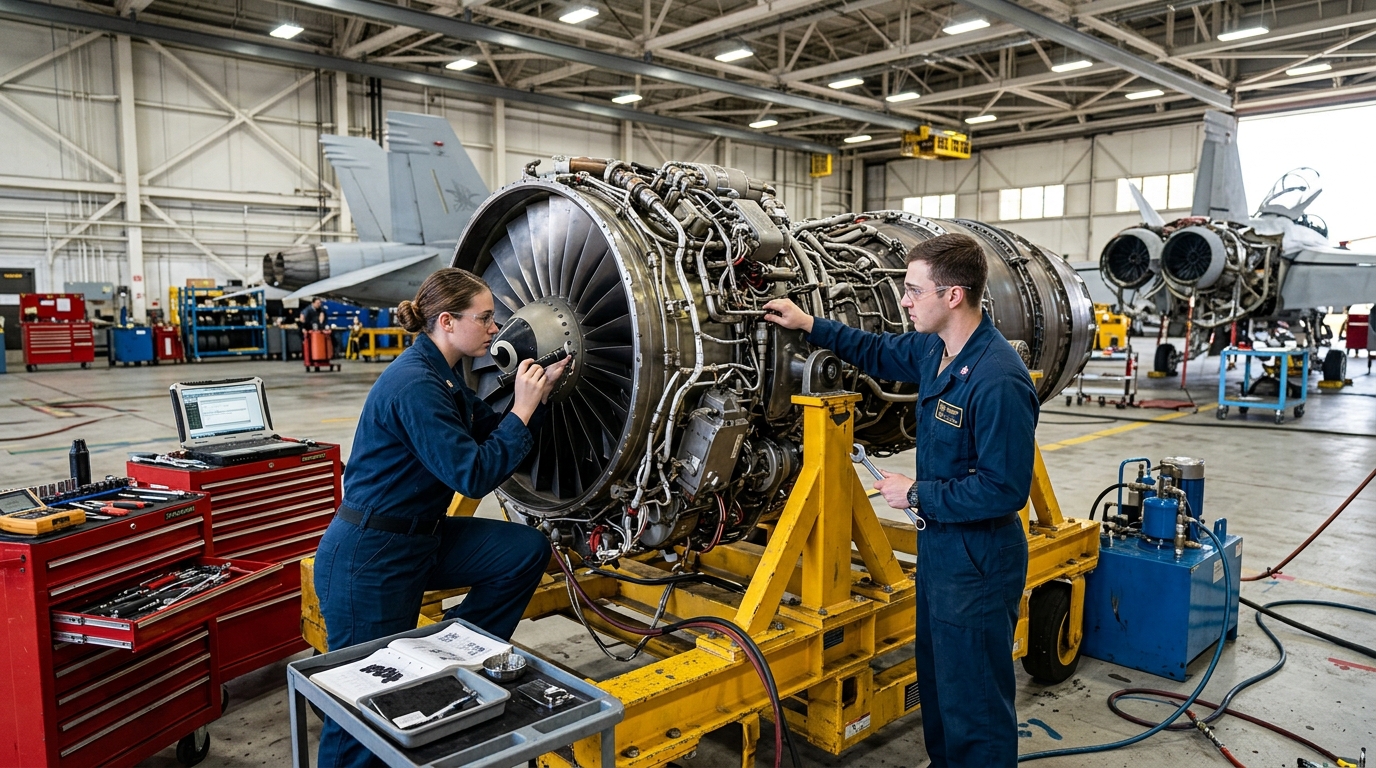
As of February 2026, the Indian military has completed 77 out of 129 approved artificial intelligence projects, including IAF predictive maintenance and airspace management tools [CSDR, 2026]. Predictive maintenance algorithms analyze sensor data to predict when a jet engine will fail. Mechanics replace parts before they break. This keeps planes in the air and reduces maintenance downtime.
Preserving aviation history creates a tangible educational timeline
Historic aircraft provide a physical record of technological progress for students and history enthusiasts alike. Restoring decommissioned planes keeps the evolution of indian military aviation highly visible to the public, turning static museum displays into active, flying history lessons.
The IAF Heritage Flight program
Air shows inspire the next generation of engineers and pilots. Seeing a vintage aircraft fly is completely different from looking at a photograph. The military understands this educational value.
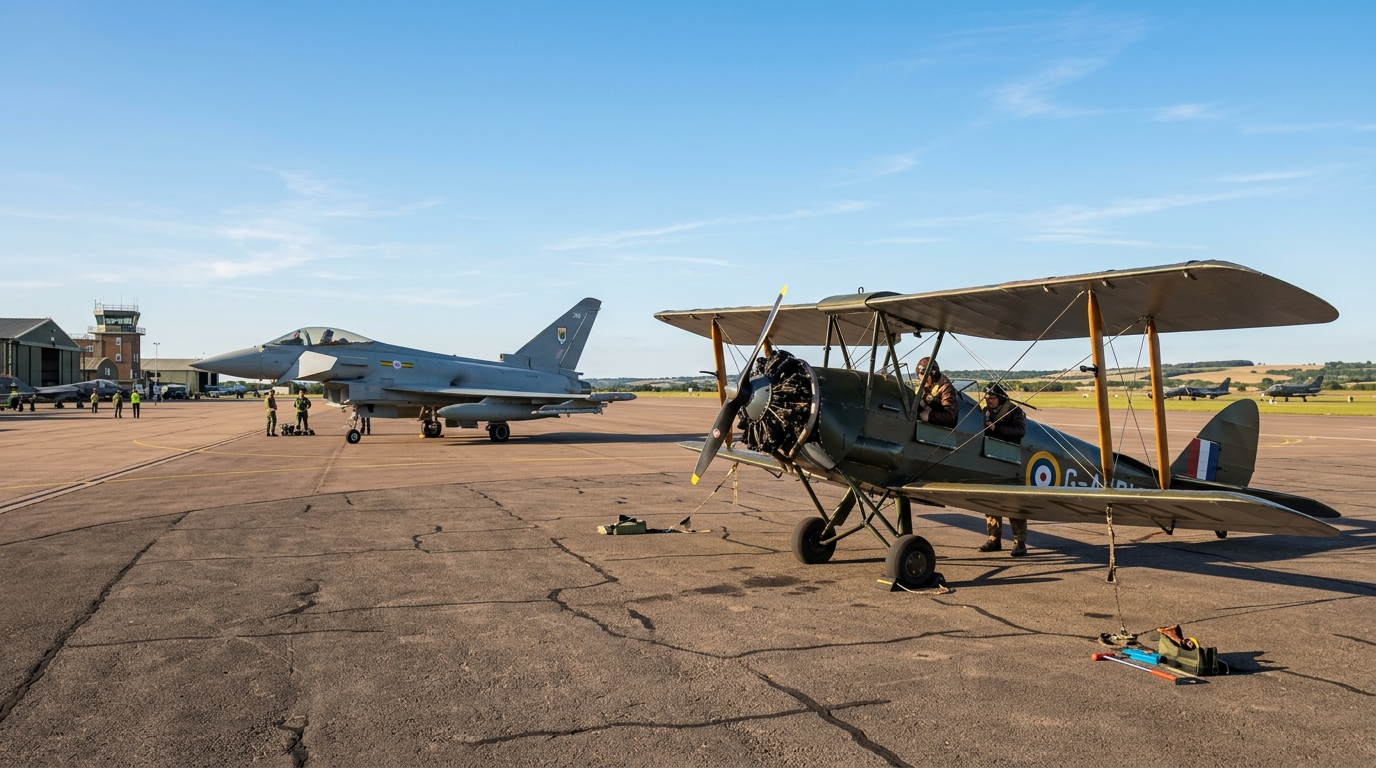
The IAF is actively restoring decommissioned MiG-21s (phased out in late 2025) to fly alongside WWII-era Tiger Moths and Dakotas at air shows, physically demonstrating the evolution of Indian air power [The Tribune, 2025]. Mechanics spend thousands of hours rebuilding these legacy machines. They source original parts and reverse-engineer components that no longer exist.
Documenting milestones for future generations
Digital archiving ensures this history survives. Historical sites thrive on imagery. Adding relevant photos with descriptive alt text helps students find these records through visual search. Explicitly defining Indian historical figures as entities using Wikification connects individual pilots to broader historical timelines.
We see this same dedication to archiving in other fields, much like tracking Historic Milestones in Indian Athletics: Track and Field Records. If you want to dive deeper into the physical preservation of these machines, explore the history of indian aviation museums. Documenting the past provides context for the future.
Related Reading
- Milestones in Indian Women's History: A Chronological Guide
- 1,000 Years of Indian Medical History: A Chronological Guide
- Historic Milestones of Indian Cinema on the Global Stage
- Economic Milestones in Indian History: From 1947 to Present
FAQ
Q: How many fighter squadrons does the Indian Air Force have? The Indian Air Force currently operates 29 to 31 active combat squadrons. This number falls short of the officially authorized strength of 42 squadrons needed to manage a two-front threat.
Q: What is the AMCA program? The Advanced Medium Combat Aircraft (AMCA) is India's indigenous fifth-generation stealth fighter project. The Ministry of Defence recently issued requests to private industry to help build the first five prototypes by 2030.
Q: Why did Dassault restructure the Rafale deal in India? Dassault Aviation restructured the 114-jet MRFA deal to take full responsibility for local production quality. They chose to partner with private companies like Tata Advanced Systems rather than relying on state-owned entities to avoid bureaucratic delays.
Q: What is the IAF Heritage Flight? The IAF Heritage Flight is a specialized program that restores and flies decommissioned military aircraft. The fleet currently includes WWII-era Tiger Moths, Dakotas, and recently retired MiG-21 interceptors.
Visit a local aviation museum this weekend to see these historical airframes in person. Look closely at the rivets on a vintage Tiger Moth and compare them to the smooth composites of a modern Tejas fighter. You will instantly understand how far this technology has come.
Sources
- Wings of Glory: The story behind the evolution of the Indian Air Force — Chintan, 2024. Supports: The Indian Air Force officially formed on October 8, 1932, and its first squadron flew Westland Wapiti biplanes.
- Not possible to reach 42 fighter squadrons in next 10-15 years: IAF chief — The Hindu, 2021. Supports: The Indian Air Force operates well below its authorized strength of 42 combat squadrons.
- GE Aerospace Sets Up Dedicated F404-IN20 Line to Speed Up Tejas Mk1A Deliveries — Defence News India, 2026. Supports: GE Aerospace launched a dedicated production facility and committed to delivering 20-22 F404-IN20 engines by the end of 2026.
- BEL, HAL, and Solar Industries: Decoding the ₹10 Lakh Crore Order Pipeline Ahead of Budget 2026 — The Financial Express, 2026. Supports: The indigenous military aviation pipeline includes a ₹94,200 crore outlay for the Indian Multi-Role Helicopter (IMRH) and ₹62,700 crore for Light Combat Helicopters.
- India withdraws from FGFA project with Russia — Janes, 2018. Supports: India walked away from the Russian FGFA stealth fighter program.
- AMCA fighter jet project moves ahead as Defence Ministry issues RFP to shortlisted firms — The Hindu, 2026. Supports: In May 2026, India's Ministry of Defence issued RFPs to three bidders to build five prototypes of the 5th-generation Advanced Medium Combat Aircraft.
- Dassault Restructures Rafale MRFA Deal To Avoid MMRCA Pitfalls — Indian Defence News, 2026. Supports: Dassault Aviation restructured its approach to the 114-jet MRFA deal and signed agreements with Tata Advanced Systems Limited to manufacture Rafale fuselage sections in Hyderabad.