What Is the Khejarli Massacre Timeline in Short?
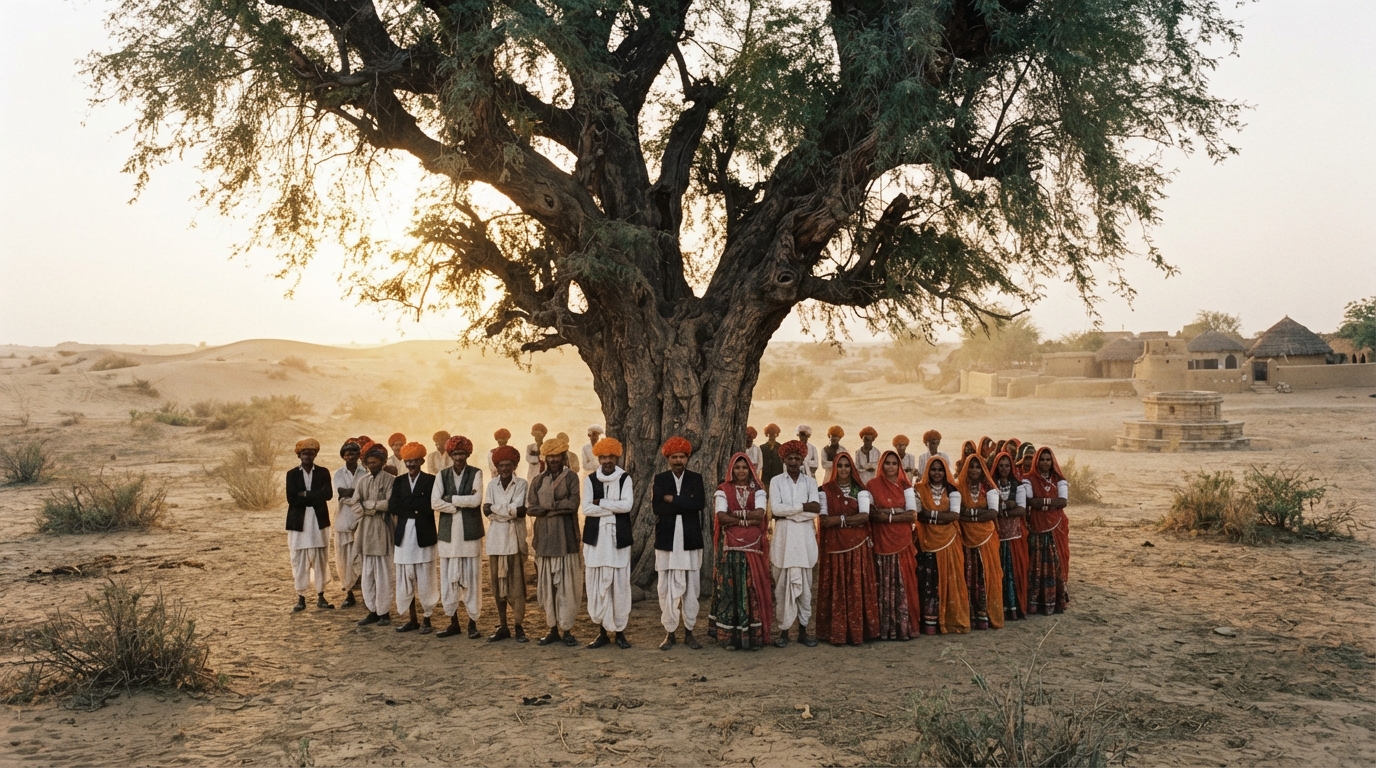
The 1730 Khejarli massacre timeline is the chronological sequence of events from September 1730, when 363 Bishnoi villagers in Rajasthan died protecting Khejri trees from royal loggers. As noted by environmental writer Riaz Laghari, the Bishnoi community's nonviolent resistance forced Maharaja Abhai Singh to ban deforestation across 83 villages.
Key Takeaways
- Amrita Devi led 363 Bishnois in sacrificing their lives to save Khejri trees.
- Maharaja Abhai Singh needed the wood to fire lime kilns for a new palace.
- The 1730 sacrifice directly inspired the famous 1973 Chipko movement in the Himalayas.
- The Bishnoi community follows 29 strict ecological principles established in 1485.
In the arid expanse of the Thar Desert, the Khejri tree's deep roots pull water from exhausted aquifers, offering shade, nitrogen for the soil, and pods for livestock. The Bishnoi community living around Jodhpur relies entirely on the Khejri trees to survive the harsh dry seasons. Observers see the Bishnoi reverence in the community's daily routines today. The Bishnois bury deceased members instead of cremating the bodies to avoid burning precious wood. Community members patrol village borders to deter poachers. This intense ecological discipline is not a modern reaction to climate change. The practice dates back to 1485, rooted in a specific and brutal event.
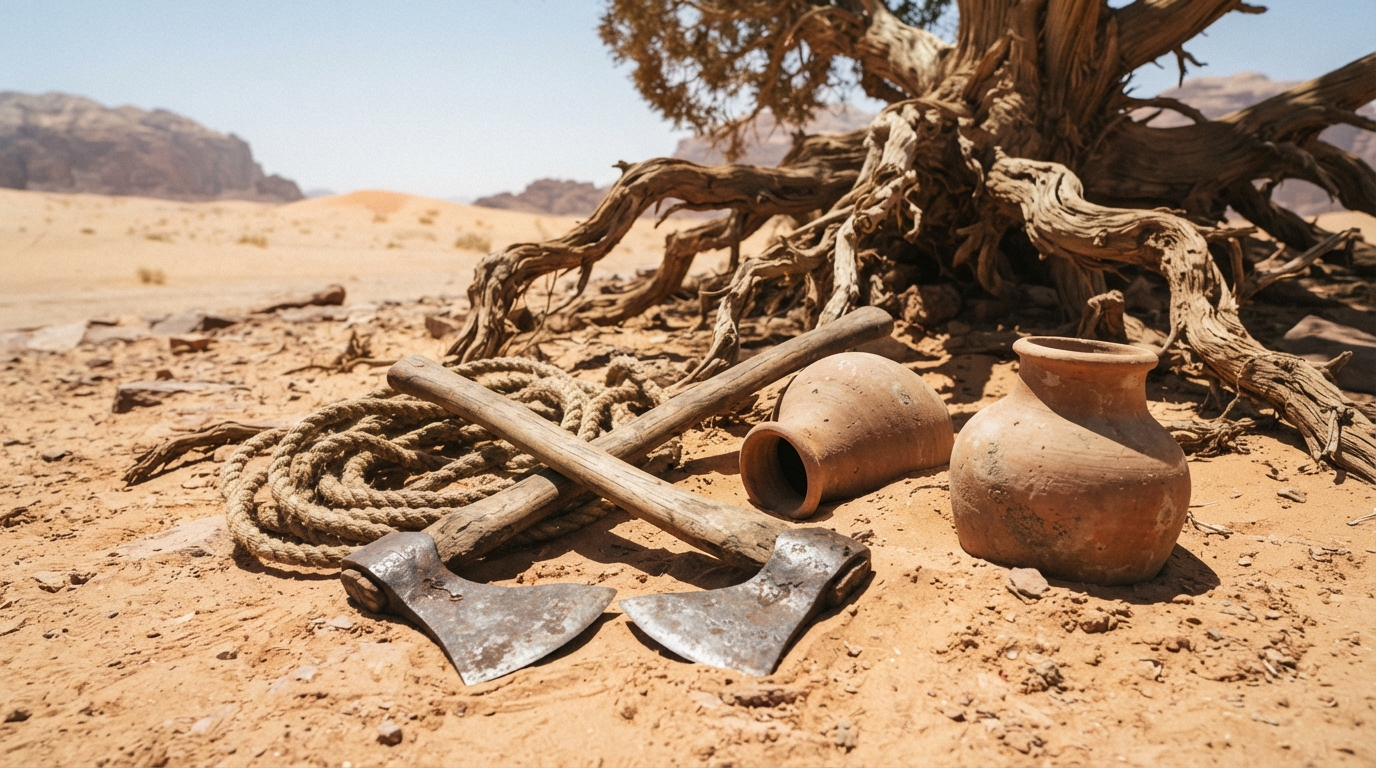
Understanding the Khejarli massacre timeline requires looking past the legend to see the stark economic conflicts of 18th-century Rajasthan. A royal palace needed building materials. The local villagers needed the desert ecosystem intact. When those two realities collided in September 1730, the collision resulted in a 363-person mass sacrifice that still defines Indian environmentalism. Environmental writer Riaz Laghari notes that Khejarli was not merely a dispute over timber. The 1730 conflict was a confrontation between two worldviews, challenging the concept that a forest is merely vacant space waiting for human exploitation. The following historical analysis breaks down how the Khejarli tragedy unfolded and why the September 1730 event shapes modern conservation efforts today.
What Are the Roots of Resistance: Why Did the Bishnois Protect the Trees?
The roots of resistance are the religious and practical foundations of the Bishnoi community’s environmentalism. According to author Anu Lall, the 1485 edicts of Guru Jambheshwar successfully drove ecological responsibility through spiritual connection. The everyday survival tactics surrounding the Khejri tree set the stage for the historic September 1730 confrontation.
The 29 Principles of Guru Jambheshwar
The foundation of the Bishnoi faith rests on 29 ecological and spiritual edicts. Guru Jambheshwar laid down these rules in 1485 after witnessing a severe drought in Rajasthan. The name "Bishnoi" translates directly to 29, combining "bish" (twenty) and "noi" (nine). The tenets mandate strict compassion for all living beings and absolutely forbid the cutting of green trees. This strict religious code transformed ecological conservation into a daily spiritual duty for the entire community.
Author Anu Lall analyzes this phenomenon in her upcoming April 2026 book, Bishnois and the Blackbuck: Can Dharma Save the Environment? Lall argues that ecological responsibility can be successfully driven by spiritual connection, moving beyond secular Western concepts of environmentalism. The Bishnois did not view the Khejri tree as a simple resource. The villagers viewed the Khejri as a sacred entity requiring physical protection. If a tree fell naturally, the community could use the dead wood. If a tree was still living, severing the branches violated the core tenets of the Bishnoi faith.
These rules applied universally across the region. You can track similar rigid religious adherence in the Timeline of Mahatma Gandhi's Nonviolent Movements in India, where spiritual vows dictated political action. Breaking the 29 principles meant risking a practitioner's spiritual salvation and community standing. This strict religious adherence explains the Bishnois' uncompromising stance when 18th-century royal soldiers eventually arrived with axes. The protesters chose death over breaking fundamental vows.
Everyday Ecological Practices in the Desert
Faith alone did not save the trees. Practical survival demanded strict conservation. The Khejri tree (Prosopis cineraria) acts as a vital lifeline in the Thar Desert. The Khejri is a highly drought-resistant species that survives when all other vegetation dies. The tree provides essential fodder for cattle during the dry months. The Khejri's fallen leaves restore nitrogen to the sandy soil, enabling subsistence farming in an otherwise barren landscape. Without the Khejri, the desert simply overtakes the villages.
The Bishnois structured their entire society around preserving this specific species. We see this most clearly in the community's death rituals. Traditional Hindu customs dictate cremating the dead on a wooden pyre. The Bishnois abandoned this practice entirely. The Bishnois chose to bury deceased relatives instead. This ancient 1485 rule was designed specifically to prevent cutting wood for funeral pyres. The burial tradition grounds the Bishnois' willingness to die for the trees in daily action, rather than just a spontaneous protest.
The Bishnois also extended the strict protection to local wildlife. Blackbucks and chinkaras roam freely through Bishnoi settlements because the residents strictly prohibit hunting. When you study the Historic Dates in Modern India: From Independence to the 21st Century, you see modern conservation laws struggling to achieve what these desert villages accomplished through everyday social norms. The Bishnois created an artificial oasis by treating the desert ecosystem as an extension of their own families. The villagers refused to separate human survival from ecological health.
What is the Khejarli Massacre Timeline?
The Khejarli massacre timeline is the chronological sequence of events spanning September 1730. As documented by researcher Martin Goodman, the conflict escalated from Maharaja Abhai Singh's royal order for firewood, through Amrita Devi's initial tree-hugging protest, and concluded with the mass mobilization of 83 surrounding Bishnoi villages against armed royal forces.
The Maharaja's Need for Wood
The tragedy began with a pragmatic economic requirement in the royal court of Jodhpur. Maharaja Abhai Singh wanted to build a new palace, the Phool Mahal, to commemorate his recent military victories. Constructing a palace in 18th-century Rajasthan required vast amounts of lime for mortar. Producing this lime required burning limestone in massive kilns at extremely high temperatures. The royal soldiers needed an enormous supply of firewood to fuel these lime kilns.
The desert surrounding Jodhpur offered very little timber. The royal minister, Giridhar Bhandari, identified the village of Khejarli as the optimal source for fuel. Khejarli sat just 26 kilometers from the capital and contained a dense forest of mature Khejri trees. The trees thrived there precisely because the Bishnoi villagers had protected the groves for generations. The royal forces viewed this protected forest as an untouched inventory of timber waiting for a human purpose.
On a Tuesday in September 1730, Bhandari dispatched a heavily armed contingent of soldiers to Khejarli. The soldiers brought carts and axes, expecting a routine logging operation. The royal guard did not anticipate resistance from a rural farming community. This miscalculation mirrors administrative blind spots seen throughout the 1,000 Years of Indian Medical History: A Chronological Guide, where central authorities frequently misunderstood local indigenous practices. The armed men arrived in Khejarli and immediately began marking the oldest Khejri trees for felling.
Amrita Devi's Protest and the Royal Response
The sound of axes striking wood drew the attention of a local woman named Amrita Devi. Amrita Devi rushed out of the family home with three daughters: Asu, Ratni, and Bhagu. Amrita Devi confronted the soldiers, pleading with the royal guard to stop cutting the sacred trees. The mother explained that felling green trees violated the Bishnoi religious principles. The soldiers ignored the pleas, citing the direct orders of Maharaja Abhai Singh. The logging crew mockingly offered to spare the Khejri trees if Amrita Devi paid a bribe.
Amrita Devi refused to pay. The activist declared that paying a bribe would insult the Bishnoi faith, while dying to protect the trees would honor the religion. Amrita Devi uttered a phrase that remains central to the Khejarli massacre timeline: "A chopped head is cheaper than a chopped tree." The matriarch then physically wrapped both arms around the trunk of a Khejri tree to shield the bark from the axes. This is the first recorded instance of tree-hugging as a form of environmental protest in Indian history.
The troops could return to Maharaja Abhai Singh empty-handed and face royal wrath, or the guards could execute an unarmed civilian. Giridhar Bhandari ordered the men to proceed with the logging. The soldiers swung axes through Amrita Devi's body to cut the tree down. Undeterred by the mother's murder, the three daughters immediately stepped forward. Asu, Ratni, and Bhagu hugged the remaining trees and were similarly beheaded. The royal forces assumed the swift triple execution would terrify the remaining villagers into submission.
The Escalation Across 83 Villages
The murders of Amrita Devi and her daughters did not end the resistance. News of the killings spread rapidly from Khejarli to the surrounding settlements. The local village elders immediately summoned a council. The council members sent messengers to 83 surrounding Bishnoi villages, calling for mass mobilization. The community decided that every Bishnoi family must send volunteers to Khejarli to protect the forest with their lives.
Men, women, and children abandoned their farms and marched to the logging site. As the soldiers moved from tree to tree, a new volunteer would step forward and embrace the trunk. The royal forces continued the systematic slaughter. Old men, young mothers, and teenagers all took turns shielding the Khejri trees. The death toll climbed steadily throughout the day. The sheer scale of the sacrifice shocked the soldiers, who were accustomed to fighting armed combatants. The guards were not prepared to execute hundreds of peaceful civilians.
By the end of the massacre, 363 Bishnois had been killed protecting the trees in September 1730. The site became a gruesome scene of severed heads and felled trunks. The soldiers finally stopped the logging operation. The royal officers realized the logging crew could not harvest enough wood without wiping out the entire regional population. The nonviolent tactic of mass sacrifice overwhelmed the military objective. This staggering loss of 363 lives cemented the event as a pivotal moment in global environmental history.
How Did the Khejarli Massacre Timeline Shape Modern Environmentalism?
The influence of the Khejarli massacre timeline is the direct foundation of modern environmentalism in India. As noted by environmental writer Riaz Laghari, the 1730 events connected directly to subsequent conservation milestones. Maharaja Abhai Singh's formal apology and permanent royal decree protecting Bishnoi lands established early legal frameworks for ecological preservation.
The staggering loss of 363 Bishnoi lives demonstrated that grassroots resistance could successfully force central authorities to change environmental state policy. The 1730 tree-hugging strategy proved so effective against mechanized logging operations that the tactic remained relevant centuries later. By establishing a nonviolent blueprint for eco-resistance, the desert villages provided direct inspiration for the famous 1973 Chipko Movement in the Garhwal Himalayas. The local community's willingness to prioritize ecological health over human survival created a lasting framework that modern conservation laws still struggle to achieve. Consequently, the 18th-century royal decree protecting the Khejri tree transformed local religious dogma into a permanent cornerstone of Indian ecological activism.
The Maharaja's Royal Decree
The royal soldiers returned to Jodhpur and reported the mass slaughter to Maharaja Abhai Singh. The scale of the civilian casualties deeply shocked the ruler. Maharaja Abhai Singh had ordered the collection of firewood, not the massacre of Jodhpur subjects. Abhai Singh immediately halted the construction of the Phool Mahal's lime kilns. The ruler rode out to the village of Khejarli to personally assess the aftermath of Minister Giridhar Bhandari's orders.
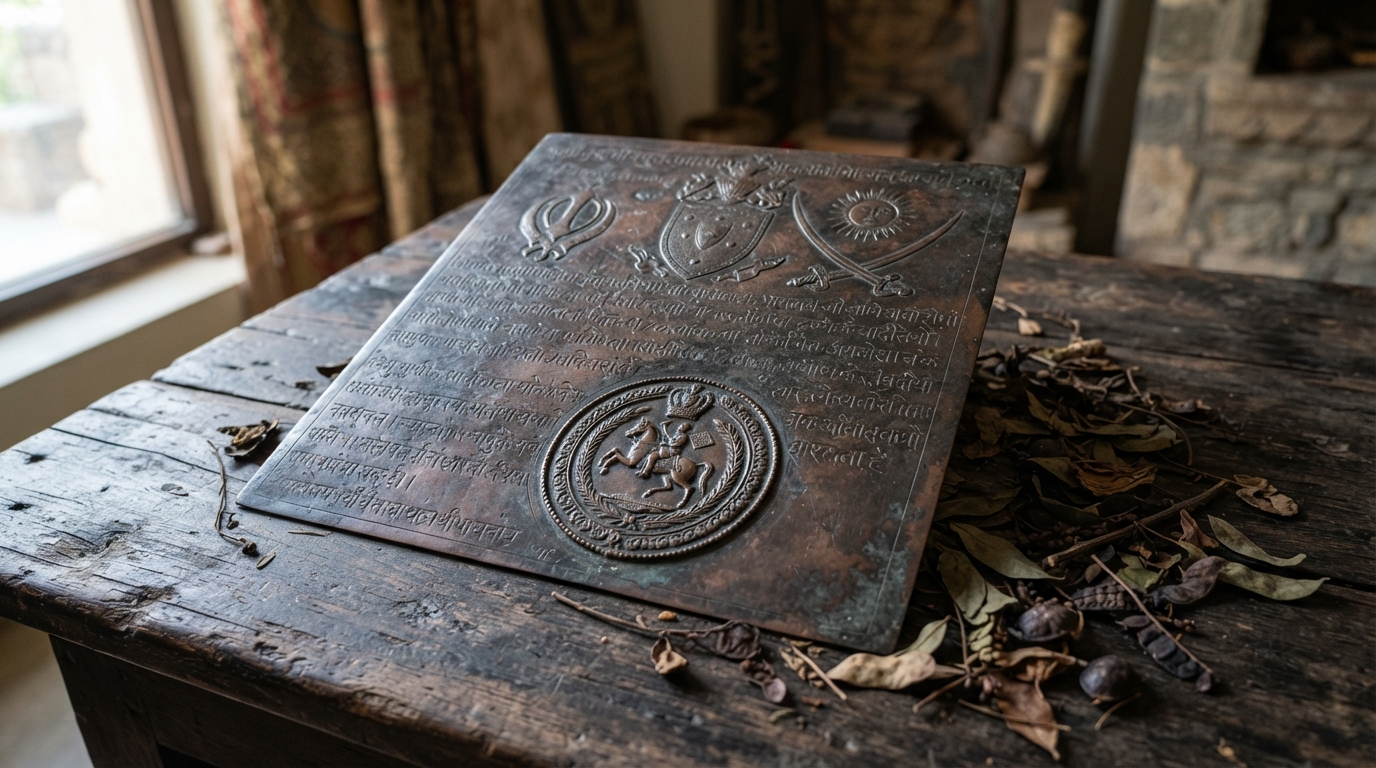
The Maharaja witnessed the devastation and issued a formal apology to the Bishnoi community. The Maharaja realized that governing the desert region required respecting the ecological laws that kept the Thar Desert habitable. To make amends, Abhai Singh issued a copper-plate royal decree. This 1730 edict permanently banned tree felling and animal hunting in all Bishnoi villages. The royal decree also exempted the Bishnoi community from paying specific state taxes as compensation for the 363-person sacrifice.
This copper plate remains one of the earliest legal documents enforcing environmental conservation in India. The copper plate effectively formalized the 29 principles of Guru Jambheshwar into state law. We see similar historic shifts in governance detailed in the Visual History of the Indian Independence Movement: Key Dates, where mass civilian resistance successfully changes state policy. The Maharaja's decree held firm for centuries. The legislative ban allowed the Khejri forests in Bishnoi territories to recover and flourish long after the British colonial era began.
Inspiring the 1973 Chipko Movement
The tactics pioneered in Khejarli did not stay confined to Rajasthan. The 1730 massacre provided direct inspiration for the famous Chipko Movement in the 1970s. "Chipko" literally translates to "hug" or "cling to" in Hindi. When commercial loggers threatened the forests of the Garhwal Himalayas in 1973, local women remembered the story of Amrita Devi. The Himalayan women replicated Amrita Devi's exact strategy to stop the deforestation of the local hillsides.
The Chipko activists physically shielded the trees from chainsaws by wrapping their arms around the trunks. The modern activists utilized the exact moral pressure that halted the royal axes in September 1730. The modern loggers, unlike the 18th-century soldiers, could not legally commit mass murder to harvest timber. The nonviolent resistance successfully forced the Indian government to impose a 15-year ban on commercial felling in the region. This victory demonstrated the enduring power of the Bishnoi blueprint for eco-resistance.
| Feature | 1730 Khejarli Massacre | 1973 Chipko Movement |
|---|---|---|
| Location | Thar Desert, Rajasthan | Garhwal Himalayas, Uttarakhand |
| Opponent | Royal forces of Jodhpur | Commercial logging contractors |
| Primary Tactic | Physical tree-hugging | Physical tree-hugging |
| Immediate Outcome | 363 civilian deaths | Halted logging without casualties |
| Policy Result | Royal ban on regional felling | 15-year national logging ban |
We can compare this lineage of nonviolent tactics to the political strategies outlined in The Dandi March Day-by-Day: A Timeline of the 1930 Salt Satyagraha. Just as Gandhi used salt to highlight colonial oppression, the tree-huggers used their bodies to highlight ecological destruction. Martin Goodman explores this exact lineage in his August 2025 publication, My Head for a Tree. Goodman documents how the 1730 sacrifice continues to fuel contemporary climate crisis activism across the Global South. The strategy remains highly effective against mechanized logging operations today.
What is the Legacy of the Khejarli Massacre Timeline in Contemporary India?
The legacy of the Khejarli massacre timeline is the ongoing institutional and cultural reverence for the 363 martyrs in modern India. According to the Ministry of Environment and Forests, the government formally honors this sacrifice through the Amrita Devi Bishnoi National Award, while modern activists currently fight groundwater depletion in Rajasthan.
Institutionalizing the Sacrifice
The Indian state now formally recognizes the events of the Khejarli massacre timeline through national awards and memorials. The Ministry of Environment and Forests instituted the Amrita Devi Bishnoi National Award to honor extraordinary courage in wildlife and environmental protection. This award carries a cash prize of one lakh rupees and goes to grassroots activists who risk their lives to stop poachers or illegal loggers. By naming the highest conservation honor after Amrita Devi, the government institutionalized her 1730 sacrifice.
The Bishnoi community also maintains the site of the massacre as a sacred pilgrimage destination. The Bishnoi residents built a cenotaph in Khejarli village listing the names of the 363 martyrs. Every September, thousands of Bishnois gather at this memorial to commemorate the anniversary of the event. Attendees use the September gathering to renew spiritual vows to protect the desert ecosystem. This annual assembly keeps the history alive and serves as a coordination hub for current environmental campaigns.
The history also resurfaces forcefully in modern cultural conflicts. In late 2024, the Khejarli legacy appeared prominently in national news cycles when gangster Lawrence Bishnoi threatened actor Salman Khan over a 1998 Blackbuck poaching case. The incident drew massive public attention to the community's historical eco-militancy. The strict enforcement of the 29 principles continues to drive real-world actions. This proves that historical timelines still actively shape Indian society today.
Modern Threats to the Khejri Tree
Despite surviving royal axes, the Khejri tree now faces a much more insidious threat. The forests of Rajasthan are currently dying off due to severe groundwater depletion and fungal infections. The introduction of deep tube wells for water-intensive commercial agriculture has dramatically lowered the water table in the Thar Desert. The deep roots of the Khejri tree can no longer reach the receding aquifers. We are seeing a slow ecological collapse rather than a sudden logging event.
To combat this, activists recently launched a renewed "Khejri Bachao Andolan" (Save Khejri Movement) in Bikaner, Rajasthan. The Rajasthan activists invoke the 1730 martyrs' proverb about chopped heads and chopped trees to protest proposed tree-cutting for 21st-century solar farms and highway development projects. This highlights a critical limitation of the original Khejarli tactic. Physical tree-hugging cannot stop a fungal disease or replenish a drained aquifer. You cannot hug a receding water table.
Modern conservation requires systemic policy changes alongside physical protection. The state agricultural departments are currently researching drought-resistant grafts to save the dying trees. You can track similar technological interventions in the Scientific Milestones in Indian History: A Date-Wise Guide. The Bishnois managed to save the Khejri tree from the Maharaja's kilns in 1730. The community must now navigate complex hydrological challenges to ensure the species survives the 21st century.
Related Reading
- India at the Olympics: A Timeline of Historic Sporting Milestones
- December 1984: A Historical Timeline of the Bhopal Gas Tragedy
- Indian History Timeline Chart: Key Milestones (Digital Reference)
- The Dandi March Day-by-Day: A Timeline of the 1930 Salt Satyagraha
FAQ
Q: When exactly did the Khejarli massacre occur? The massacre took place in September 1730. Royal soldiers from Jodhpur arrived in the village of Khejarli to harvest timber, sparking the deadly confrontation.
Q: How many people died during the Khejarli massacre? Exactly 363 Bishnoi villagers died protecting the trees. This massive death toll included men, women, and children from 83 different local settlements.
Q: Why is the Khejri tree so important to the Bishnoi community? The Khejri tree provides vital fodder, food, and soil nitrogen in the arid Thar Desert. The 29 principles of the Bishnoi faith also strictly forbid cutting any green tree, making its protection a religious duty.
Q: Did the Khejarli massacre inspire the Chipko movement? Yes, the 1730 sacrifice provided the direct tactical blueprint for the 1973 Chipko Movement. Himalayan villagers successfully replicated Amrita Devi's tree-hugging method to stop commercial logging.
Further reading
- My Head for a Tree by Martin Goodman (August 2025) – Explores how the 1730 sacrifice fuels contemporary climate activism in the Global South.
- Bishnois and the Blackbuck: Can Dharma Save the Environment? by Anu Lall (April 2026) – Analyzes if indigenous religious dogma works as a modern environmental tool.
- The Dandi March Day-by-Day: A Timeline of the 1930 Salt Satyagraha – Tracks another major nonviolent civilian resistance movement in Indian history.
- Historic Dates in Modern India: From Independence to the 21st Century – Contextualizes how ancient ecological laws compare to modern state legislation.
Sources
- Khejarli massacre — Wikipedia, 2024. Supports: 363 Bishnoi villagers sacrificed their lives in September 1730 to protect Khejri trees from royal loggers.
- Khejarli — Wikipedia, 2024. Supports: Maharaja Abhai Singh's soldiers attempted to fell the Khejri trees to burn them in massive kilns to produce lime for a new palace.
- The Bishnoi: Revisiting Religious Environmentalism and Traditional Forest and Wildlife Management in the Thar Desert — Environment & Society Portal, 2020. Supports: Guru Jambheshwar established the Bishnoi faith's 29 ecological and spiritual principles in 1485, strictly forbidding the cutting of green trees.
- When 300 Bishnois sacrificed their lives to save trees from a maharaja — India Today, 2024. Supports: The 1730 Khejarli massacre provided the tactical blueprint for the 1973 Chipko movement and recently resurfaced in national news due to a 1998 blackbuck poaching case.
- Khejri Bachao Andolan: Why Rajasthan is rallying to protect its Kalpavriksha, explained — The Times of India, 2024. Supports: Activists recently launched a renewed "Khejri Bachao Andolan" in Rajasthan to protest tree-cutting for modern development projects like solar farms.
- Between Dharma and the Desert — The New Indian Express, 2026. Supports: Author Anu Lall's April 2026 book, Bishnois and the Blackbuck, analyzes whether ecological responsibility can be successfully driven by spiritual connection.
- Eco-resistance: The Khejarli massacre — Medium, 2024. Supports: Environmental writer Riaz Laghari notes that the 1730 conflict was a clash of worldviews challenging the concept that a forest is merely vacant space waiting for human exploitation.
- How the Bishnoi made environmental protection central to their identity (Book Review) — Mongabay, 2025. Supports: Martin Goodman's August 2025 book, My Head for a Tree, documents how the 1730 sacrifice continues to fuel contemporary climate crisis activism across the Global South.