Bottom Line
Indian women chess history is a five-decade record of institutional breakthroughs, world championships, and international Grandmaster titles. According to FIDE tournament archives, Indian female players progressed from Rohini Khadilkar overturning gender barriers in 1978 and Koneru Humpy setting world rating benchmarks in 2002 to Team India winning historic gold at the 2024 Budapest Olympiad.
Key Takeaways
- India won its first women's team Olympiad gold medal at Budapest in 2024.
- Rohini Khadilkar forced a 1978 global rule change allowing women in open tournaments.
- Koneru Humpy became the youngest female Grandmaster in world history in 2002.
- Only three Indian women hold the full Grandmaster title among 85 total Grandmasters.
- Divya Deshmukh and Vantika Agrawal secured individual board gold medals at the 45th Olympiad.
Many sports enthusiasts assume Indian women entered competitive chess only during the recent internet boom. That assumption ignores five decades of hard-fought victories that laid the groundwork for today's elite players. The timeline of Indian women chess history started long before digital streaming and online coaching platforms existed.
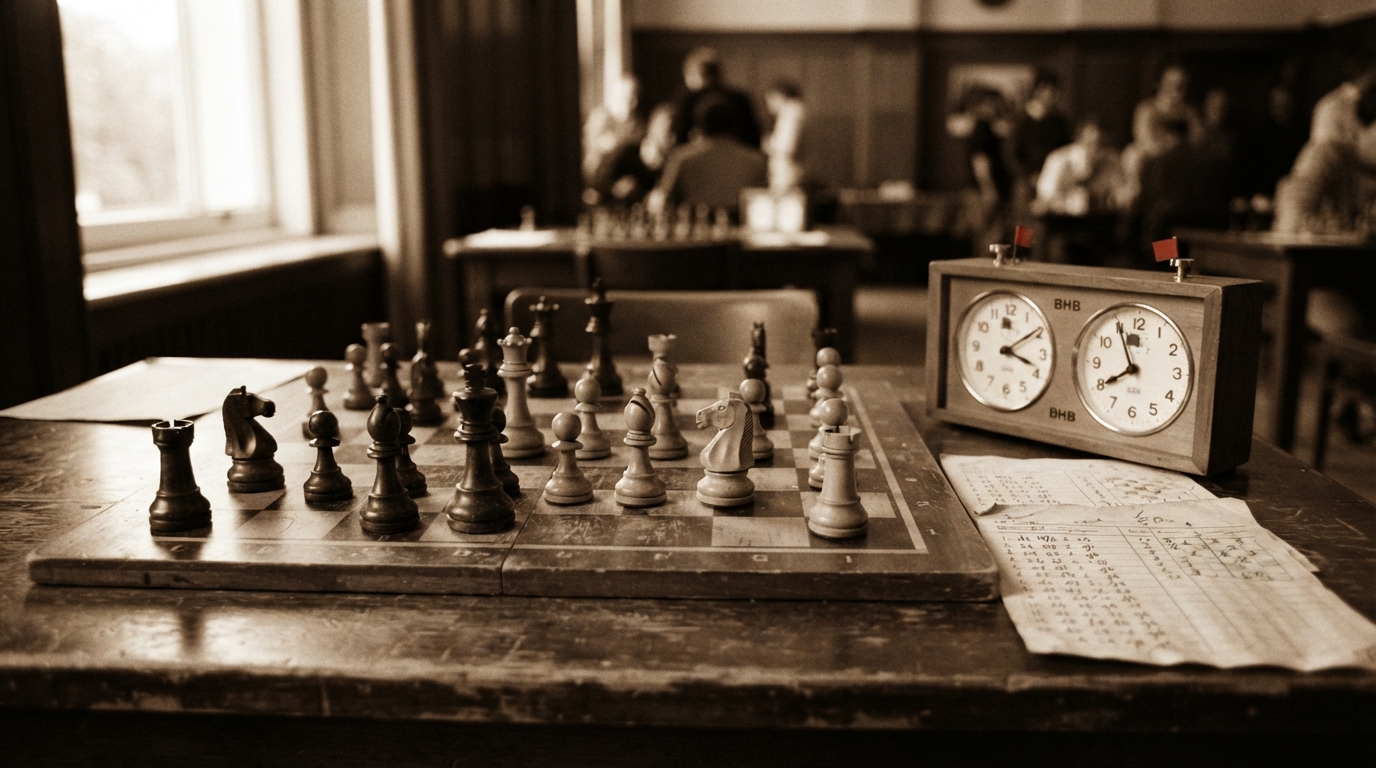
Indian female chess players broke administrative barriers in the 1970s and set world records by the 2000s. Understanding this progression helps us appreciate how India became a dominant global chess power. When exploring milestones in Indian women's history, sports achievements stand alongside political and social reforms. Chess offers a clear example of individual persistence reshaping international sports rules.
The Khadilkar sisters established the foundation of Indian women chess history
The Khadilkar sisters era is the founding period of competitive Indian women chess history, spanning ten consecutive national championship victories between 1974 and 1983. According to ChessBase India, Vasanti, Jayshree, and Rohini Khadilkar dismantled gender barriers, secured India's first international titles, and forced FIDE in 1978 to permit women to compete in open national tournaments.
The 1970s national championship monopoly
Indian competitive chess had few formal platforms for women before 1974. That year, the All India Chess Federation organized the inaugural National Women's Chess Championship. The three Khadilkar sisters from Mumbai seized control of the event immediately. Vasanti Khadilkar won the first title in 1974. Jayshree Khadilkar then won four titles, while Rohini Khadilkar captured five.

Together, the sisters won ten straight national championships from 1974 to 1983 [ChessBase India, 2021]. Their father introduced them to chess because tournament selection was objective. You won your games, and you earned your spot. The family funded their travel and training without corporate sponsors. Their domestic dominance proved that structured training could produce world-class female athletes in India.
The 1978 legal precedent for female players
In 1978, Rohini Khadilkar qualified to play in the Indian Men's National Championship. The All India Chess Federation (AICF) barred her from competing because of her gender [Rediff, 2026]. The federation claimed women could not participate in male tournaments. Rohini and her family refused to accept the decision. They appealed directly to the International Chess Federation (FIDE).
FIDE President and former World Champion Max Euwe reviewed the case. He ruled that women could not be excluded from open national or international tournaments [ChessBase India, 2021]. The ruling created an immediate global precedent. Rohini competed in the tournament, finishing ahead of several experienced male masters. Her courage changed international regulations for every female chess player who followed.
The first international titles and continental dominance
The sisters translated their domestic success onto the international stage quickly. Jayshree Khadilkar became India's first Woman International Master (WIM) in 1979 [Rediff, 2026]. Two years later, Rohini Khadilkar won the first Asian Women's Chess Championship held in 1981. She defended that Asian title successfully in 1983.
At the 1982 Chess Olympiad in Luzern, Switzerland, the Khadilkar trio made history again. Vasanti, Jayshree, and Rohini represented India as a single-family team [Wikipedia, 2026]. No other country had fielded three sisters as an entire national team. Their performances placed India on the international chess map.
The bridge generation broke international title barriers
During the late 1990s and early 2000s, Indian women transitioned from regional contenders to international medalists. Led by Subbaraman Vijayalakshmi, this bridge generation secured India's first Woman Grandmaster title and won individual board medals at the Chess Olympiad, proving Indian women could defeat top European players consistently.
Subbaraman Vijayalakshmi earned the first Woman Grandmaster title
Subbaraman Vijayalakshmi changed the standard for Indian female chess players. Born in New Delhi and raised in Chennai, Vijayalakshmi dominated national youth championships throughout the 1990s. She won the National Women's Premier title six times, including five consecutive titles between 1998 and 2002.
In 2001, Vijayalakshmi became India's first Woman Grandmaster (WGM). She did not stop there. She also earned the open International Master (IM) title, defeating seasoned male grandmasters in open events. Her attacking style and deep tactical preparation inspired a younger generation of girls across south India to take up chess professionally.
Early Olympiad breakthroughs shaped modern team standards
Vijayalakshmi proved her talent on the world's biggest team stage. At the 34th Chess Olympiad in Istanbul in 2000, she won the individual silver medal on Board 1. Two years later, at the 2002 Olympiad in Bled, Slovenia, she repeated the feat by taking another individual silver medal on Board 1.
These medals showed that Indian women could outplay top grandmasters from Eastern Europe and China. India finished within the top ten teams at Bled, signaling a permanent rise in international rankings. When you look at an Indian history timeline chart, the early 2000s stand out as the turning point for Indian sport on the global stage.
Koneru Humpy and Harika Dronavalli elevated Indian chess to world contention
Koneru Humpy and Harika Dronavalli are the foundational grandmasters who elevated Indian women chess history into world championship contention during the 2000s and 2010s. According to FIDE official records, Humpy became the world's youngest female Grandmaster at age 15 in 2002, while Harika achieved the Grandmaster title in 2011 and secured three World Championship bronze medals.
Koneru Humpy smashed global age and rating records
Koneru Humpy achieved milestones that rewrote world chess records. In May 2002, at age 15 years, 1 month, and 27 days, Humpy earned the full Grandmaster title [FIDE, 2002]. She broke the previous world record held by Hungarian legend Judit Polgár. Humpy was the first Indian woman to achieve the full GM title.
In October 2007, Humpy crossed an Elo rating of 2606 [FIDE, 2007]. She became only the second woman in chess history to cross the 2600 Elo mark. Humpy challenged for the Women's World Championship title in 2011. Later in her career, she won the Women's World Rapid Championship in 2019 and reclaimed it in New York in December 2024 [Chess.com, 2024].
Harika Dronavalli cemented elite consistency across three decades
Harika Dronavalli joined Humpy at the pinnacle of world chess. Earning her Grandmaster title in 2011, Harika became India's second female GM [The Hindu, 2023]. Her calm approach under pressure made her one of the most reliable tournament players in the world.
Harika won bronze medals at the Women's World Chess Championship knockout tournaments in 2012, 2015, and 2017. She has served as the anchor on Board 1 for the Indian national team for two decades. Her steady play against the world's top grandmasters gave India a reliable foundation in team competitions.
Milestone timeline of elite Indian female chess players
The progression of Indian women in chess features distinct generational breakthroughs. Tracking these dates reveals how individual pioneers created pathways for team success. Readers who want to learn Indian history easily through chronological timelines will see a clear pattern of accelerating achievements.
| Year | Player / Team | Major Milestone | Significance |
|---|---|---|---|
| 1974 | Vasanti Khadilkar | Won 1st National Women's Championship | Initiated decade-long Khadilkar dominance |
| 1978 | Rohini Khadilkar | FIDE ruling by Max Euwe | Allowed women into open national championships globally |
| 1979 | Jayshree Khadilkar | First Woman International Master (WIM) | India's first international title in women's chess |
| 1981 | Rohini Khadilkar | Asian Women's Championship Gold | First Asian continental title for an Indian woman |
| 2001 | S. Vijayalakshmi | First Woman Grandmaster (WGM) | Established modern professional title standards |
| 2002 | Koneru Humpy | Full Grandmaster Title (Age 15) | Youngest female GM in world history at the time |
| 2007 | Koneru Humpy | Crosses 2606 Elo Rating | Second woman in history to break 2600 Elo |
| 2011 | Harika Dronavalli | Full Grandmaster Title | India's second female Grandmaster |
| 2023 | Vaishali Rameshbabu | Full Grandmaster Title | First brother-sister Grandmaster duo in world history |
| 2024 | Team India | Women's Olympiad Gold (Budapest) | First team gold medal in Indian women chess history |
The new era delivers double gold and historic records in Indian women chess history
The 2024 Olympiad generation is the gold-medal era of Indian women chess history, marked by historic international dominance across team and individual boards. According to FIDE tournament reports, Grandmasters Vaishali Rameshbabu, Harika Dronavalli, Divya Deshmukh, Vantika Agrawal, and Tania Sachdev secured India's first women's team Olympiad gold at the 45th Chess Olympiad in Budapest with 19 match points.
Vaishali Rameshbabu made global chess history with the grandmaster title
Vaishali Rameshbabu earned her full Grandmaster title in December 2023 at the IV El Llobregat Open in Spain [The Hindu, 2023]. She crossed the 2500 Elo threshold to become India's third female Grandmaster. This achievement carried unique global significance.
Her brother, Rameshbabu Praggnanandhaa, had earned his Grandmaster title in 2018. Vaishali's qualification made them the first brother and sister Grandmaster duo in chess history [Wikipedia, 2026]. Vaishali won the 2023 FIDE Women's Grand Swiss, qualifying for the 2024 Women's Candidates Tournament in Toronto. Her sharp tactical play makes her a dangerous opponent against any elite grandmaster.
The 45th Chess Olympiad in Budapest produced team and individual gold
In September 2024, the Indian women's team arrived at the 45th Chess Olympiad in Budapest as serious contenders. The squad featured Harika Dronavalli, Vaishali Rameshbabu, Divya Deshmukh, Vantika Agrawal, and Tania Sachdev. Koneru Humpy was resting, testing the team's overall depth.
The squad dominated the tournament. They scored 19 match points across 11 rounds, recording 9 wins, 1 draw, and only 1 loss [FIDE, 2024]. India secured the gold medal in the Women's section, while the men's team won the Open section. India also captured the Gaprindashvili Cup for best combined performance [The Guardian, 2024].
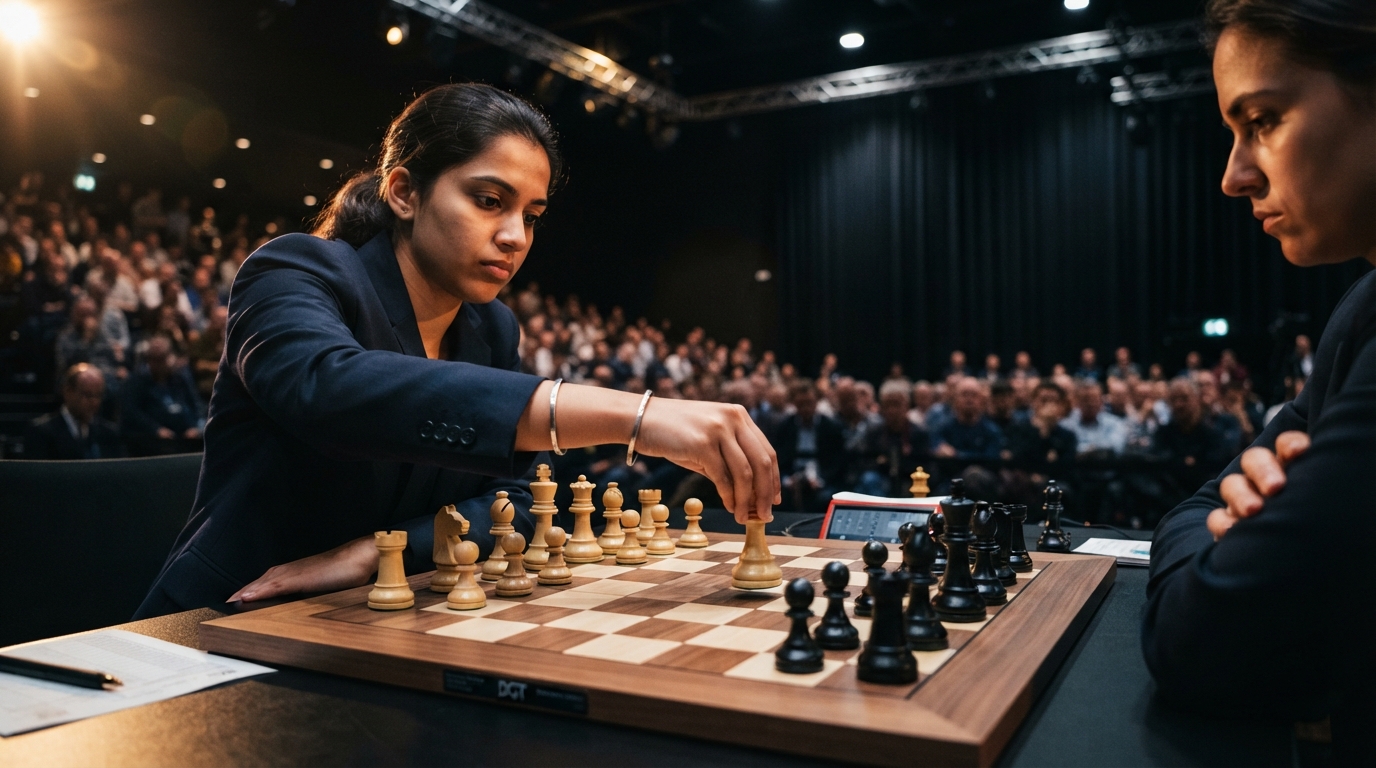
Individual performances were remarkable. Eighteen-year-old Divya Deshmukh scored 9.5 out of 11 points on Board 3, registering a 2608 tournament performance rating to win individual gold [FIDE, 2024]. Vantika Agrawal won individual gold on Board 4 with 7.5 points out of 9 rounds.
Teenage dominance dismantled old progression timelines
Grandmaster Pravin Thipsay noted that this new generation has destroyed the old myth that female chess players must wait until their thirties to reach their peak [Scroll.in, 2024]. Players like Divya Deshmukh and Vantika Agrawal play without fear against experienced European masters.
Modern training methods explain part of this shift. Access to chess engines, online masterclasses, and international sparring partners allows teenage players to gain decades of positional understanding in a few years. These young players combine deep home preparation with high tactical speed.
Structural challenges highlight the conversion gap in competitive chess
The Grandmaster conversion gap is the primary structural challenge in Indian women chess history, characterized by a sharp drop in female representation at elite senior levels. According to All India Chess Federation data, women hold only 3 of India's 85 open Grandmaster titles—roughly 3.5 percent—due to junior drop-off between ages 15 and 19 and inadequate corporate sponsorship.
The three point five percent grandmaster disparity
India celebrated producing more than 85 Grandmasters by 2024. Yet only three of those Grandmasters are women: Koneru Humpy, Harika Dronavalli, and Vaishali Rameshbabu [The Hindu, 2023]. That means female players make up roughly 3.5 percent of India's Grandmaster pool.
This statistical gap is not unique to India, but it remains a clear bottleneck. India has dozens of Woman Grandmasters (WGMs) and Woman International Masters (WIMs). Bridging the 200 Elo rating gap between WGM (2300) and open GM (2500) requires competing regularly in open international tournaments.
Junior retention and institutional sponsorship hurdles
The drop-off among young female players occurs primarily between the ages of 15 and 19. Academic pressures in India, combined with limited financial support for coaching, force many talented girls out of the sport. Traveling abroad to play in open European tournaments costs thousands of dollars per event.
Without corporate backing or state sports stipends, families bear the entire financial burden. Jayshree Khadilkar noted decades ago that open competition provides objective evaluation [Rediff, 2026]. However, players need financial resources to enter those open competitions. Solving the conversion gap requires corporate sponsors to invest directly in teenage female masters before they reach the top 20 rankings.
When reviewing events recorded for today in history india, chess victories stand out as major national milestones. Looking at today history in india shows how sports diplomacy has grown. Studying today in indian history gives educators direct insight into female athletic participation. Every entry in today history reminds us of pioneering sacrifices. For readers searching the history of the day, India's Olympiad triumph in Budapest is an inspiring study. Discovering today's history of the day helps connect past struggles to current triumphs. Whether researching 12 august history or landmark sports dates, women's achievements deserve focused attention. Remembering what happened on this day in history keeps the legacy of early champions alive.
Frequently Asked Questions
Q: Who was the first female Grandmaster from India? Koneru Humpy became India's first female Grandmaster in May 2002 at the age of 15 years, 1 month, and 27 days. Her achievement broke the world record previously held by Judit Polgár for the youngest female Grandmaster in history.
Q: How many female Grandmasters does India have? India has three female Grandmasters who hold the full open Grandmaster title: Koneru Humpy (2002), Harika Dronavalli (2011), and Vaishali Rameshbabu (2023). Many other Indian players hold the Woman Grandmaster (WGM) and International Master (IM) titles.
Q: When did Indian women win their first Chess Olympiad gold medal? The Indian women's team won their first-ever Olympiad gold medal on September 22, 2024, at the 45th Chess Olympiad in Budapest, Hungary. The team finished with 19 match points, winning nine matches, drawing one, and losing one.
Q: How did Rohini Khadilkar change international chess rules for women? In 1978, the All India Chess Federation barred Rohini Khadilkar from playing in the Men's National Championship because of her gender. FIDE President Max Euwe overturned the ban, establishing a worldwide precedent that allowed women to compete in open national and international tournaments.
Examine the tournament games of Koneru Humpy, Vaishali Rameshbabu, and Divya Deshmukh on a digital chessboard today to analyze how positional discipline and sharp tactical preparation create world championship results.
Related Reading
- Milestones in Indian Women's History: A Chronological Guide
- 1,000 Years of Indian Medical History: A Chronological Guide
- Economic Milestones in Indian History: From 1947 to Present
- What Are the Major Events in Indian History? (FAQ Archive)
Sources
- Chess Olympiad 2024: Indian teams make history, bag gold in both categories — The Hindu, 2024. Supports: Team India winning the women's team gold and individual board golds at the 45th Chess Olympiad in Budapest.
- The evolution of women's chess in India — ChessBase India, 2021. Supports: Rohini Khadilkar's 1978 appeal to FIDE President Max Euwe allowing women in open tournaments, and the Khadilkar sisters' decade of national titles.
- India proud of youngest female grandmaster — ChessBase, 2002. Supports: Koneru Humpy becoming the world's youngest female Grandmaster in 2002 at age 15.
- Vaishali Rameshbabu — Wikipedia, 2026. Supports: Vaishali Rameshbabu crossing the 2500 Elo threshold to become India's third female Grandmaster and establishing the world's first brother-sister Grandmaster duo.
- Koneru Humpy wins historic Rapid chess world title — The Hindu, 2024. Supports: Koneru Humpy winning the 2024 FIDE Women's World Rapid Chess Championship in New York.
- Subbaraman Vijayalakshmi — Wikipedia, 2026. Supports: Subbaraman Vijayalakshmi becoming India's first Woman Grandmaster in 2001 and securing individual Olympiad silver medals on Board 1 in 2000 and 2002.