Milestones in Indian Women's Cricket: A Timeline of Historic Firsts
TL;DR
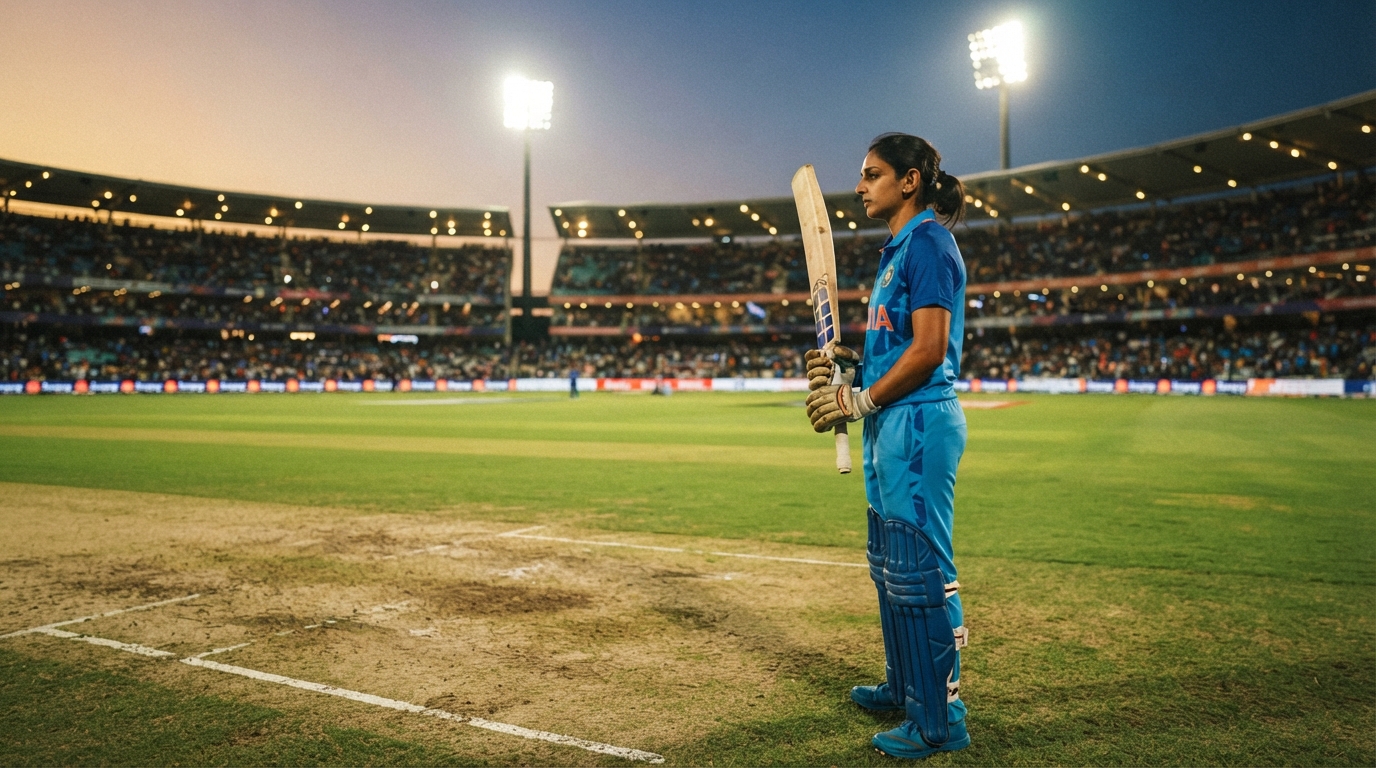
Indian women's cricket history is a fifty-year trajectory of institutional transformation, beginning with the registration of the Women’s Cricket Association of India in 1973. Spanning India's maiden Test victory in 1976, landmark World Cup finals in 2017 and 2020, and the Women’s Premier League launch in 2023, the sport evolved from self-funded amateurism into a fully commercialized international discipline.
Key Takeaways
- India won its first women's Test match in Patna against the West Indies in 1976.
- The BCCI officially took over women's cricket administration in 2006, establishing centralized player contracts.
- Mithali Raj and Jhulan Goswami hold all-time world records in Women's One Day International cricket.
- Equal match fees were introduced in 2022, matching women's per-match compensation to the men's team.
- The Women's Premier League generated over ₹4,669 crore in franchise value during its 2023 debut.
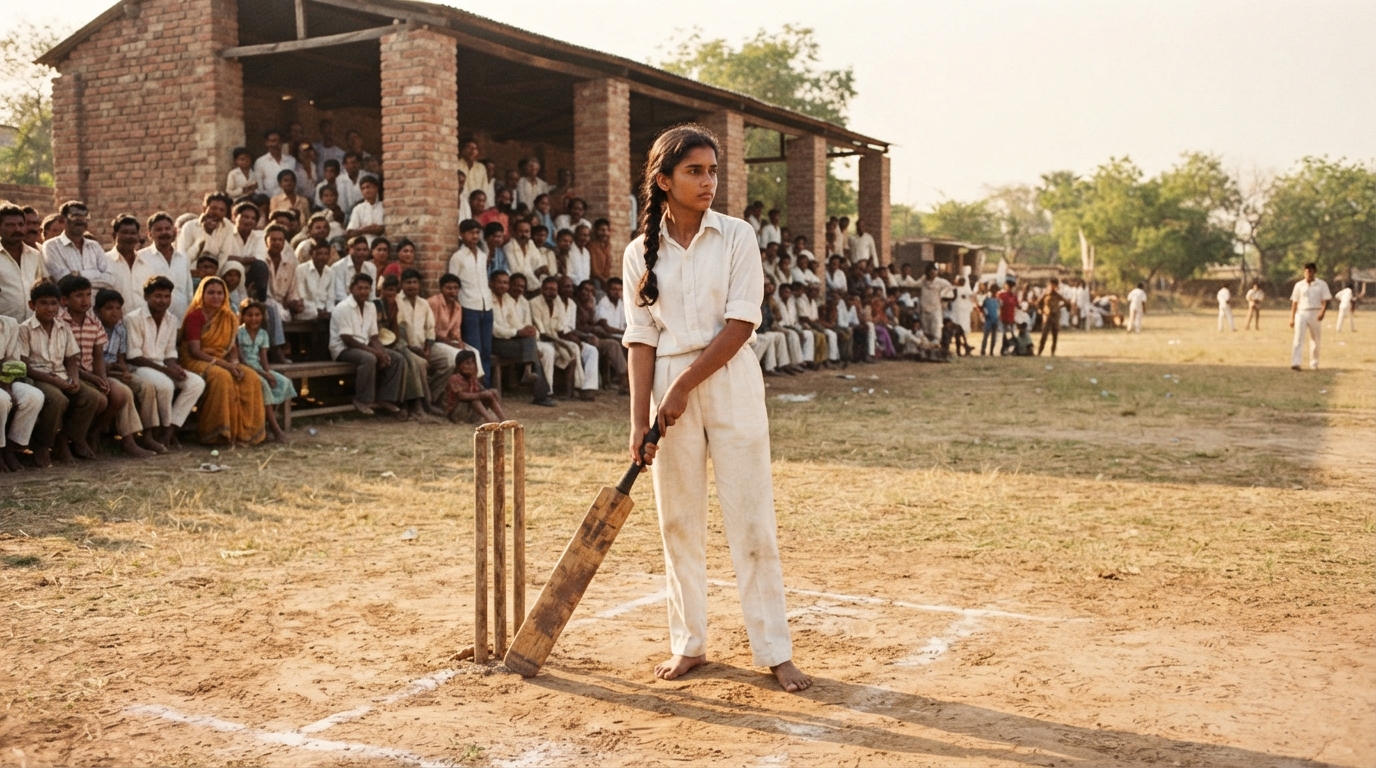
In November 1976, over 25,000 spectators gathered at the Moin-ul-Haq Stadium in Patna to witness the Indian national team secure its first international Test victory. That match marked an early high point in a long, difficult struggle for recognition. For decades, female cricketers in India paid for their own kits, travelled in unreserved railway compartments, and organized matches on municipal grounds without institutional backing.
Understanding Indian women's cricket history requires looking closely at key inflection points across administration, grassroots development, and international performance. The journey reflects broader shifts in Indian sports culture, mirroring milestones found across India at the Olympics and historic milestones in Indian athletics. Today, Indian women's cricket stands as one of the most commercially valuable and competitive sporting operations in the world.
The amateur era established the roots of women's cricket from 1973 to 1999
The amateur era of Indian women's cricket is the foundational period between 1973 and 1999 governed by the independent Women's Cricket Association of India (WCAI). During these twenty-six years, volunteer administrators, private donors, and pioneering players established national championships, secured government employment via Indian Railways, and organized India's first official Test matches without male board funding.
The formation of the WCAI and early domestic tournaments
Mahendra Kumar Sharma registered the Women’s Cricket Association of India under the Societies Act in Lucknow in 1973. Mahendra Kumar Sharma organized the inaugural National Senior Women’s Championship that same year in Pune, featuring three state teams: Bombay, Maharashtra, and Karnataka. Within two years, the domestic field grew to fourteen regional associations.
Players funded their own travel and stitched their own uniforms. WCAI officials ran operations out of private homes, securing train concessions through direct petitions to the Railway Board. Indian Railways soon became the primary public sector employer for female cricketers, providing secure government jobs, sports quotas, and paid leave for training camps.
India's 1976 Test debut and the historic victory in Patna
India played its first official women's Test series in the autumn of 1976 against the West Indies. Captained by Shantha Rangaswamy, the six-match series opened in Bangalore on October 31, 1976, resulting in a draw.
1976 Patna Test Match Summary:
- Venue: Moin-ul-Haq Stadium, Patna
- Opponent: West Indies Women
- Result: India won by 5 wickets
- Captain: Shantha Rangaswamy
- Key Performance: Diana Edulji (match-haul of 8 wickets)
The breakthrough came during the third Test at Patna. Left-arm spinner Diana Edulji took eight wickets across two innings, while Shubhangi Kulkarni provided critical all-round support. India chased down the fourth-innings target to win by five wickets in front of a capacity crowd at Moin-ul-Haq Stadium. The victory proved that women's cricket could draw stadium audiences in non-metropolitan sports centers.
Early World Cup appearances and Diana Edulji's leadership
India made its One Day International (ODI) debut at the 1978 Women's Cricket World Cup, which the WCAI hosted on domestic soil across Calcutta, Patna, and Hyderabad. India lost all three group matches against England, Australia, and New Zealand. The tournament highlighted a stark tactical gap between foreign teams playing regular white-ball matches and an Indian side built primarily around multi-day cricket.
Diana Edulji assumed team leadership through the 1980s, serving as a tactical anchor and policy advocate. Diana Edulji pushed the WCAI to schedule matches against top-tier international opponents despite persistent budget shortfalls. Under Diana Edulji's captaincy, India claimed its first away Test series win in 1986 against England, drawing the series decider at Worcester through disciplined bowling and steady defensive batting.
BCCI governance shifted professional standards from 2006 to 2016
The absorption of the WCAI into the Board of Control for Cricket in India (BCCI) in 2006 replaced amateur organizing with structured governance. Central contracts, state academy access, and specialized coaching staff raised athletic benchmarks, setting the stage for record-breaking individual careers that altered international cricket records.
Administrative Timeline (2006–2016):
├── 2006: BCCI absorbs the WCAI under an ICC mandate
├── 2010: Introduction of graded domestic stipends
├── 2014: Historic away Test victory against England at Wormsley
└── 2015: First BCCI central contracts issued for senior national women
The administrative merger and basic infrastructure upgrades
Under a mandate from the International Cricket Council (ICC), the BCCI absorbed the WCAI in late 2006. The immediate result was mixed. The merger eliminated the grassroots independence of older state associations, but it gave female players direct access to the National Cricket Academy (NCA) in Bengaluru.
Players gained access to certified physiotherapists, performance analysts, and standardized training equipment. In 2015, the BCCI introduced graded annual retainers for women, categorizing senior players into Grade A and Grade B brackets. This policy allowed cricketers to focus entirely on training without holding down unrelated full-time jobs.
Mithali Raj and Jhulan Goswami set global statistical benchmarks
During this transitional decade, batter Mithali Raj and fast bowler Jhulan Goswami became the statistical anchors of the national team. Mithali made her ODI debut in 1999 with an unbeaten 114 against Ireland at Milton Keynes. Over a 23-year career, she accumulated 7,805 runs in Women’s ODIs, retiring as the highest run-scorer in the format's history [ESPNcricinfo, 2025].
Jhulan Goswami led the fast bowling attack from 2002 to 2022. She captured 255 wickets in 204 ODIs, making her the all-time leading wicket-taker in women's international cricket [ESPNcricinfo, 2025]. Their combined durability anchored the team through years of limited fixtures, ensuring India remained competitive against fully professional Australian and English setups.
The 2014 red-ball breakthrough before the extended hiatus
In August 2014, India played its first Test match in eight years, facing England at Wormsley. Featuring eight Test debutants, including Smriti Mandhana and Harmanpreet Kaur, India chased down 181 in the fourth innings to win by six wickets. Mithali Raj scored an unbeaten half-century to seal the win.
Despite this technical success, the BCCI deprioritized red-ball women's cricket immediately afterward. India did not play another women's Test match for seven years until their 2021 tour of England. The domestic multi-day inter-state tournament was cancelled, concentrating all domestic development into 50-over and 20-over formats.
Global finals and broadcast records reshaped public recognition from 2017 to 2022
The 2017 to 2022 era in Indian women's cricket history is a transformative commercial phase defined by global tournament finals, record television viewership, and major policy reforms. Breakthrough performances at the 2017 World Cup and 2020 T20 World Cup generated massive broadcast revenues, elite corporate sponsorships, and the Board of Control for Cricket in India's historic 2022 pay parity mandate.
The 2017 Lord's final redefined commercial viability
The 2017 World Cup campaign in England marked a cultural pivot. Harmanpreet Kaur's unbeaten 171 runs from 115 balls against Australia in the semi-final at Derby drew record digital viewership across Indian streaming platforms.
Although India lost the final to England by nine runs at Lord's, the match sold out the stadium and set global broadcast records. The team returned home to state government felicitations, corporate endorsements, and live television coverage for subsequent bilateral series. Women's matches, previously relegated to untelevised auxiliary fields, moved permanently to primary international venues.
T20 World Cup progression and Commonwealth Games success
India adapted its tactical approach to suit the fast-moving commercial market of short-format cricket. At the 2020 ICC Women's T20 World Cup in Australia, an aggressive top order led by Shafali Verma took India undefeated through the group stage into the final at the Melbourne Cricket Ground. The final drew an audience of 86,174 spectators, setting an attendance record for a women's sports fixture in Australia.
Key ICC and Multi-Sport Tournament Results (2017–2022):
- 2017 ODI World Cup (England): Runners-Up (lost to England by 9 runs)
- 2020 T20 World Cup (Australia): Runners-Up (lost to Australia by 85 runs)
- 2022 Commonwealth Games (Birmingham): Silver Medal (lost to Australia by 9 runs)
At the 2022 Commonwealth Games in Birmingham, cricket returned to the multi-sport schedule for the first time since 1998. Harmanpreet Kaur’s side secured the silver medal, losing a close final to Australia by nine runs after defeating England in the semi-final.
The 2022 policy mandate for equal match fees
In October 2022, the BCCI implemented a pay parity policy for its centrally contracted international players [ICC / BCCI, 2022]. Under this framework, women players receive the exact same match fees as the men's team for international fixtures across all formats:
- Test matches: ₹15 lakh per match
- One Day Internationals: ₹6 lakh per match
- Twenty20 Internationals: ₹3 lakh per match
Former captain Mithali Raj noted that this pay structure helped resolve the financial instability that had pushed previous generations of cricketers into early retirement. While annual central contracts retained a wide wage gap, match fee equity marked a major policy shift.
Franchise growth and ICC titles define modern Indian women's cricket history
Recent developments in Indian women's cricket history highlight financial strength and high-pressure tournament execution. The launch of the Women's Premier League (WPL), title victories at both Under-19 and senior levels, and away Test triumphs confirmed India's status as a global leader in women's athletics.
Financial Valuation of the Women's Premier League (2023):
├── Franchise Auction Revenue: ₹4,669.99 crore ($572.5 million)
├── Five-Year Media Rights: ₹951 crore ($116.7 million)
├── Top Player Valuation: ₹3.4 crore (Smriti Mandhana to RCB)
└── League Standing: Second-highest valued women's sports league globally at launch
Shafali Verma led India to the 2023 Under-19 World Cup title
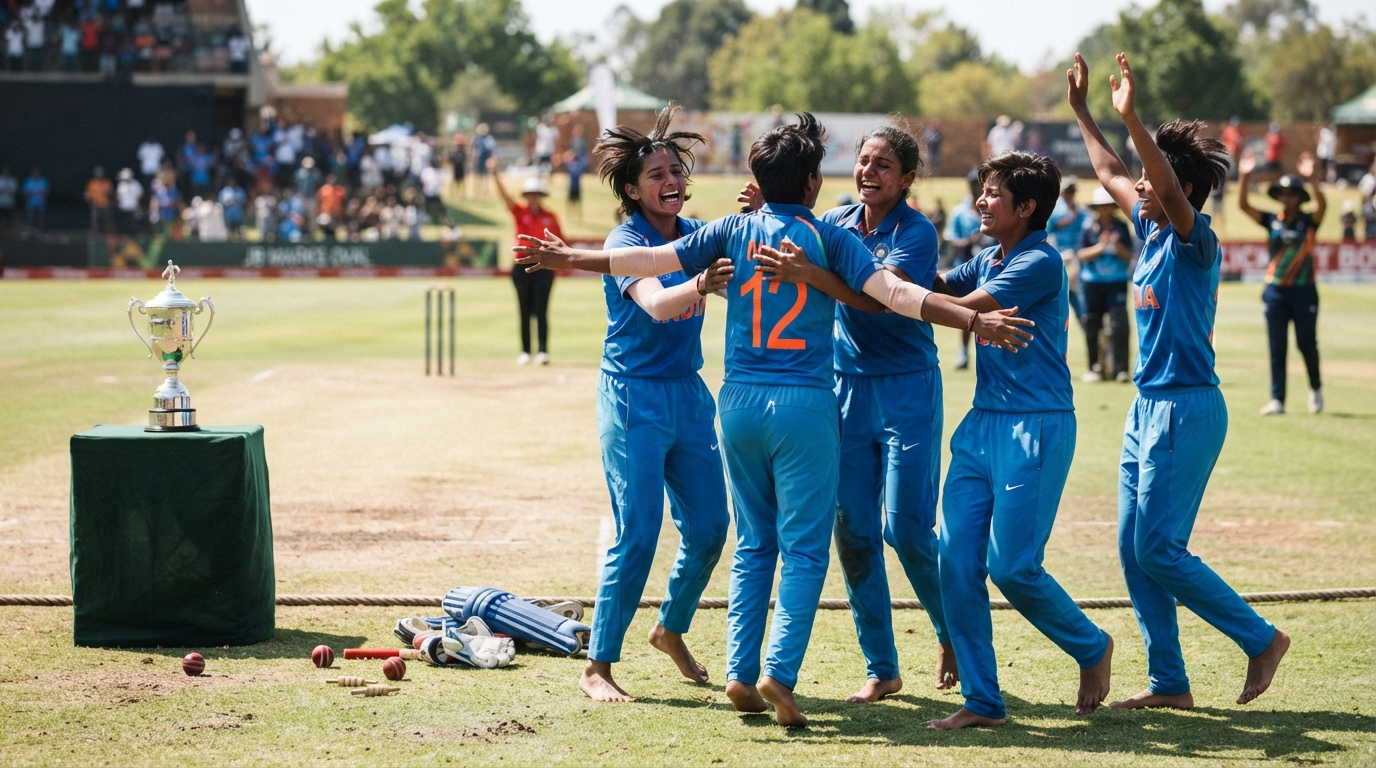
In January 2023, India secured its first-ever ICC championship in women's cricket at the inaugural ICC Under-19 Women's T20 World Cup in Potchefstroom, South Africa. Captained by Shafali Verma and featuring leg-spinner Parshavi Chopra, India dominated the tournament.
In the final, India bowled out England for 68 runs, chasing the target in 14 overs to secure a seven-wicket victory. The win demonstrated the depth of talent emerging from state academies, proving that structured youth systems could produce players ready for high-stakes international competition.
The Women's Premier League created global economic benchmarks
The BCCI launched the Women's Premier League in March 2023, creating an immediate financial shift in domestic women's sport. The auction for the initial five franchises generated ₹4,669.99 crore ($572.5 million), while Viacom18 acquired the media rights for ₹951 crore over five years [BCCI, 2023].
Opening player auctions established new salary marks. Royal Challengers Bengaluru signed opening batter Smriti Mandhana for ₹3.4 crore, making her the highest-paid player in the tournament [BCCI, 2023].
The 2026 auction maintained this spending power. All-rounder Deepti Sharma secured a ₹3.2 crore contract via UP Warriorz's Right-to-Match card [The Economic Times, 2025]. The WPL provided domestic players with high-level coaching, analytics, and experience playing alongside top international stars.
Top Inaugural WPL Player Auction Signings (2023):
1. Smriti Mandhana (RCB): ₹3.40 crore ($415,000)
2. Ashleigh Gardner (Gujarat Giants): ₹3.20 crore ($390,000)
3. Nat Sciver-Brunt (Mumbai Indians): ₹3.20 crore ($390,000)
4. Deepti Sharma (UP Warriorz): ₹2.60 crore ($317,000)
5. Jemimah Rodrigues (Delhi Capitals): ₹2.20 crore ($268,000)
Senior championship victories and multi-day international dominance
India achieved its primary milestone by winning the 2025 ICC Women's Cricket World Cup. Playing before a home crowd at the DY Patil Stadium in Navi Mumbai, India defeated South Africa in the final to lift its maiden senior global trophy [ICC, 2025].
The team followed this success with a historic multi-day victory in July 2026. Playing in the first-ever standalone women's Test match held at Lord's, India defeated England by 270 runs [BCCI, 2026]. Two months later, India added a gold medal at the 2026 Asian Games in Aichi-Nagoya, defeating Sri Lanka by 147 runs in the final [BCCI, 2026].
Structural gaps persist across domestic retainers and long-format schedules
Structural inequality in Indian women's cricket history is the continuing disparity between men's and women's professional frameworks, particularly in annual BCCI retainer values, domestic multi-day red-ball schedules, and overall fixture volume. Although match-day fee parity was established in October 2022, systemic pay gaps and limited multi-day domestic tournaments constrain long-term professional development across national and state squads.
Match fee parity highlights base retainer inequalities
The introduction of equal match fees in 2022 resolved match-day compensation gaps, but base annual retainers remain uneven. Grade A women cricketers receive an annual retainer of ₹50 lakh. By contrast, Grade A+ men receive ₹7 crore, while Grade A men earn ₹5 crore annually under standard BCCI contract terms.
BCCI Annual Retainer Structure Comparison:
┌─────────────────┬──────────────────┬─────────────────┐
│ Contract Grade  │ Women's Retainer │ Men's Retainer  │
├─────────────────┼──────────────────┼─────────────────┤
│ Grade A+ / Top  │ N/A              │ ₹7.00 crore     │
│ Grade A         │ ₹50 lakh         │ ₹5.00 crore     │
│ Grade B         │ ₹30 lakh         │ ₹3.00 crore     │
│ Grade C         │ ₹10 lakh         │ ₹1.00 crore     │
└─────────────────┴──────────────────┴─────────────────┘
Because international women play fewer total fixtures annually than men, the match fee parity policy yields lower total gross earnings over a calendar year. Equalizing base contracts remains the critical next step for institutional pay equity.
The calendar disparity between domestic multi-day and franchise cricket
The calendar disparity in Indian domestic cricket is the operational imbalance between high-profile white-ball leagues and red-ball multi-day competitions. While domestic T20 tournaments and the 50-over Senior Women's One Day Trophy operate on structured schedules, the Senior Women's Inter-Zonal Multi-Day Trophy faces irregular scheduling windows.
Fast bowlers and top-order batters often play multi-day cricket only immediately prior to infrequent overseas Test tours. Building a durable talent pipeline requires state cricket associations to fund, staff, and run regular three-day domestic matches alongside profitable white-ball tournaments.
Timeline of Major Firsts in Indian Women's Cricket
| Date | Milestone / Event | Primary Figures | Significance |
|---|---|---|---|
| 1973 | Formation of the WCAI | Mahendra Kumar Sharma | Registered in Lucknow; established organized domestic women's cricket. |
| Oct 31, 1976 | India's Debut International Test | Shantha Rangaswamy | Played against the West Indies at M. Chinnaswamy Stadium, Bangalore. |
| Nov 1976 | First International Test Victory | Diana Edulji, S. Rangaswamy | Defeated the West Indies by 5 wickets in Patna before 25,000 fans. |
| Jan 1, 1978 | Women's World Cup Debut | Diana Edulji | Hosted by India; marked India's entry into international ODI cricket. |
| Nov 2006 | BCCI-WCAI Merger | Sharad Pawar, Sudha Shah | Brought women's cricket under official BCCI governance and funding. |
| Aug 2014 | Wormsley Test Victory | Mithali Raj, Smriti Mandhana | First away Test win in England in 8 years; featured 8 debutants. |
| Jul 23, 2017 | Lord's World Cup Final | Mithali Raj, Harmanpreet Kaur | Reached final against England; catalyzed television and digital media interest. |
| Oct 27, 2022 | Equal Match Fee Policy | Jay Shah, Apex Council | Implemented equal per-match fees across Test, ODI, and T20I formats. |
| Jan 29, 2023 | U-19 T20 World Cup Title | Shafali Verma, Parshavi Chopra | India's first ICC championship title across any women's cricket division. |
| Mar 4, 2023 | Women's Premier League Launch | Smriti Mandhana, Harmanpreet Kaur | Five-team franchise tournament debuts after generating ₹4,669 crore. |
| 2025 | Senior ICC World Cup Trophy | Harmanpreet Kaur, Deepti Sharma | Defeated South Africa at DY Patil Stadium to win first senior ODI World Cup. |
| Jul 2026 | First Standalone Lord's Test Win | Harmanpreet Kaur, Shafali Verma | Defeated England by 270 runs in historic standalone red-ball match. |
Frequently Asked Questions
Q: Who was the first captain of the Indian women's cricket team?
Shantha Rangaswamy served as India's first captain, leading the national side in their debut Test against the West Indies in Bangalore in 1976. She captained India in 12 Tests and 16 ODIs, earning the Arjuna Award in 1976.
Q: When did India win its first global ICC trophy in women's cricket?
India won its first global ICC trophy on January 29, 2023, at the Under-19 Women's T20 World Cup in Potchefstroom, South Africa. Led by Shafali Verma, India defeated England by seven wickets in the final.
Q: How does pay parity work in Indian women's cricket?
The BCCI match fee policy grants female cricketers the exact same per-game fee as male cricketers: ₹15 lakh per Test, ₹6 lakh per ODI, and ₹3 lakh per T20I. Base annual central contract retainers remain structured separately across different pay grades.
Q: Who holds the record for the most runs and wickets in Indian Women's ODI cricket?
Mithali Raj holds the all-time record for the most ODI runs with 7,805 runs across 232 matches. Jhulan Goswami holds the all-time bowling record with 255 wickets in 204 matches.
Further Reading
- "The Fire Burns Blue: A History of Women's Cricket in India" by Karunya Keshav and Sidhanta Patnaik: A comprehensive narrative history documenting early WCAI records, forgotten scorecards, and pioneer interviews.
- "Free Hit: The Story of Women's Cricket in India" by Suprita Das: An inside account focusing on the personal struggles, railway careers, and social barriers faced by players from the 1970s to 2017.
- BCCI Match Center and Historical Archives: The official portal providing verified digital scorecards, domestic fixture calendars, and player performance metrics.
- Wisden Cricketers' Almanack (Women's Cricket Section): Annual reference volumes detailing global records, historical match reports, and international player ratings.
To explore this history yourself, look up the digital match archives on official board portals or attend a local domestic match this season. Following state-level games directly supports the grassroots system that develops the next generation of international cricketers.
Related Reading
- Milestones in Indian Women's History: A Chronological Guide
- 1,000 Years of Indian Medical History: A Chronological Guide
- Economic Milestones in Indian History: From 1947 to Present
- What Are the Major Events in Indian History? (FAQ Archive)
Sources
- BCCI confirms equal match fees for India cricketers — International Cricket Council, 2022. Supports: The BCCI's October 2022 pay parity mandate establishing match fees of ₹15 lakh per Test, ₹6 lakh per ODI, and ₹3 lakh per T20I for women cricketers.
- WPL set to give new wings to women's cricket — The Times of India, 2023. Supports: The Women's Premier League raising ₹4,669.99 crore from the sale of its initial five franchises.
- Smriti Mandhana hits it out of the park with ₹3.4 crore bid — Mint, 2023. Supports: Smriti Mandhana becoming the highest-paid player in the inaugural 2023 WPL auction with a ₹3.4 crore bid from Royal Challengers Bangalore.
- BCCI announces the successful bidder for acquiring the Media Rights for the Women's Indian Premier League (WIPL) Seasons 2023-2027 — Board of Control for Cricket in India, 2023. Supports: Viacom18 securing the global media rights for the Women's Premier League across five seasons for ₹951 crore.
- India deny England in final to win first Women's Under-19 T20 World Cup — The Guardian, 2023. Supports: Shafali Verma leading India to victory at the inaugural 2023 ICC U-19 Women's T20 World Cup in Potchefstroom, dismissing England for 68 in the final.
- ICC Women's T20 World Cup 2020 delivers record-breaking fan engagement numbers — International Cricket Council, 2020. Supports: The 2020 ICC Women's T20 World Cup final between Australia and India at the Melbourne Cricket Ground drawing an audience of 86,174 spectators.