TL;DR
India domestic travel history is the multi-millennial evolution of internal pilgrimage, trade, and leisure mobility across the subcontinent into a modern economy generating 2.95 billion annual trips. Historically anchored by sacred routes and royal highway rest houses, domestic travel expanded after the 1853 railway launch, post-independence Leave Travel Concessions, budget airlines, and expressways.
Key Takeaways
- Ancient pilgrimage networks like the Char Dham created India's earliest domestic travel routes.
- British railway expansion after 1853 established modern leisure travel to colonial hill stations.
- Post-independence Leave Travel Concessions democratized middle-class family vacations across public sectors.
- Domestic travelers generate 84% of total tourism spending across the Indian economy today.
In 2024, Indian travelers completed 2.95 billion domestic tourist visits across the country, according to data from the Ministry of Tourism and the Press Information Bureau. That number represents a sharp rise from 2.51 billion visits in 2023. It also surpasses the pre-pandemic record of 2.3 billion visits set in 2019. Most public discussions about tourism focus heavily on international visitors arriving at major airports.
Yet domestic movement accounts for the overwhelming majority of India's travel economy. A 2026 report by the IMPRI Impact and Policy Research Institute revealed that domestic travelers generate 84% of total travel and tourism spending in India. In fiscal year 2023–24, the broader tourism and hospitality sector generated ₹15.73 lakh crore, which represents 5.22% of the national GDP and supports 84.6 million jobs.
Understanding India domestic travel history requires looking far beyond modern weekend getaways and flight booking apps. Internal travel across the Indian subcontinent has deep roots in ancient religious obligations, royal infrastructure projects, and colonial health strategies. Over centuries, these journeys shifted from arduous spiritual quests on foot into fast vacations taken by road, rail, and air.
+-----------------------------------------------------------------------------------+
|               CHRONOLOGY OF DOMESTIC TRAVEL IN INDIA                              |
+-----------------------------------------------------------------------------------+
|  ANCIENT & MEDIEVAL   | Tirtha Yatra circuits, Buddhist trails, royal sarai nets  |
|  1853 - 1947          | Indian Railways, hill stations (Shimla, Ooty, Darjeeling) |
|  1956 - 1988          | Leave Travel Concession (LTC), ITDC hotels, state tourism |
|  2000 - 2015          | Online travel portals (OTAs), Air Deccan budget aviation  |
|  2016 - PRESENT       | Vande Bharat trains, expressways, Bharat Gaurav, NIDHI+   |
+-----------------------------------------------------------------------------------+
How Did Ancient Pilgrimage Circuits Lay the Foundation for Indian Travel?
Ancient Indian domestic travel began with sacred pilgrimage corridors known as Tirtha Yatra. Long before modern tourism, millions crossed the subcontinent to visit river ghats, shrines, and monastic centers. Royal rulers supported these spiritual journeys by constructing grand trunk roads, roadside rest stops, and water stations to secure safe public passage across diverse kingdoms.
+--------------------------------------------------------------------------+
| TRADITIONAL SACRED TRAVEL CIRCUITS |
+----------------------+---------------------------------------------------+
| Circuit Name | Key Geographic Nodes / Regions Covered |
+----------------------+---------------------------------------------------+
| Char Dham | Badrinath (North), Puri (East), |
| | Rameswaram (South), Dwarka (West) |
+----------------------+---------------------------------------------------+
| Chota Char Dham | Yamunotri, Gangotri, Kedarnath, Badrinath |
+----------------------+---------------------------------------------------+
| Buddhist Circuit | Bodh Gaya, Sarnath, Kushinagar, Rajgir, Vaishali |
+----------------------+---------------------------------------------------+
| Kumbh Mela System | Prayagraj, Haridwar, Ujjain, Nashik |
+----------------------+---------------------------------------------------+
The Civilizational Pull of Tirtha Yatra and Sacred Corridors
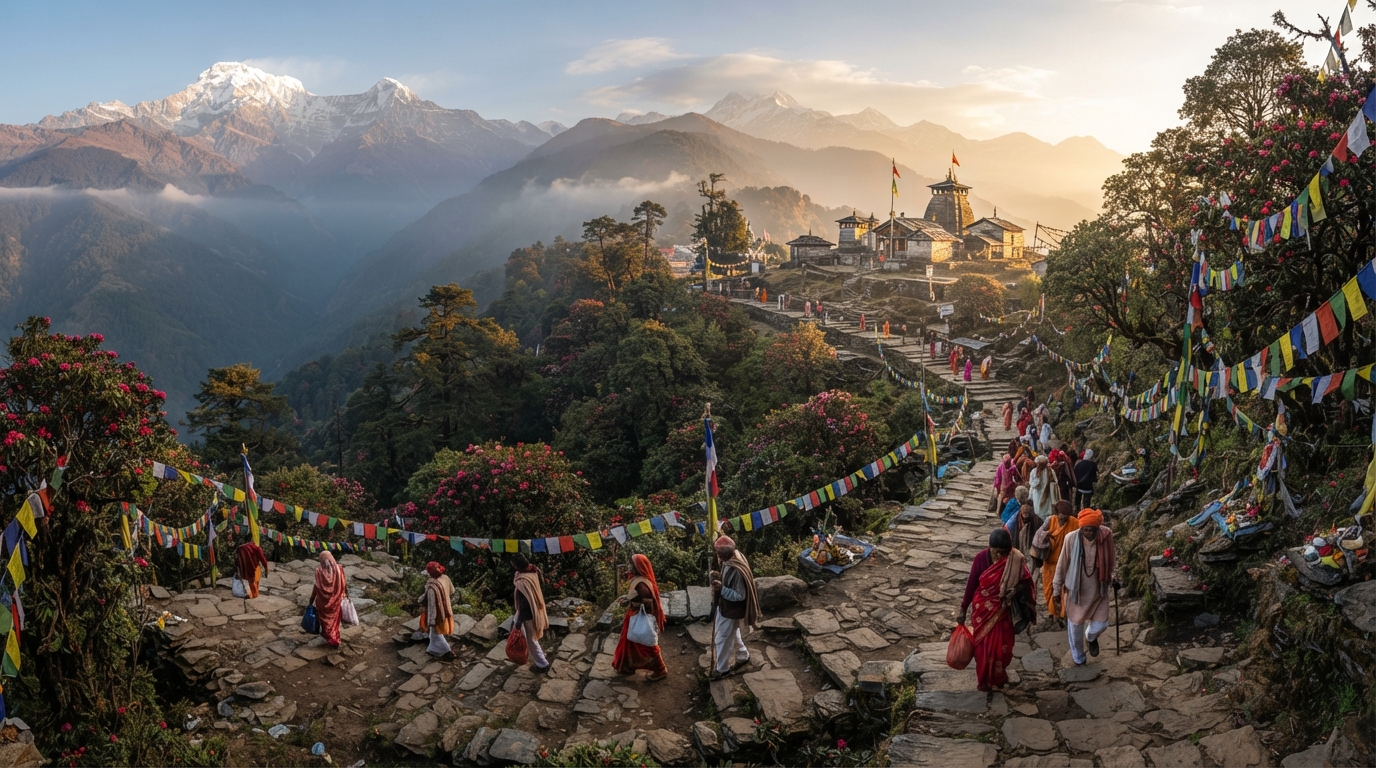
Long before tourism existed as a commercial industry, spiritual duty drove internal mobility across India. The concept of Tirtha Yatra (pilgrimage to sacred waters and shrines) motivated ordinary citizens to journey thousands of kilometers away from their native villages. The establishment of the original Char Dham circuit spanning Badrinath in the north, Puri in the east, Rameswaram in the south, and Dwarka in the west created a geographic template for pan-Indian travel. Traveling to these four corners was seen as a lifetime spiritual goal.
These sacred trails were not reserved for the wealthy. Entire families and merchant guilds traveled together in organized caravans known as sanghas for mutual protection against banditry and harsh weather. Seasonal gatherings created temporary cities that hosted millions of domestic travelers at predictable calendar intervals.
The Kumbh Mela, rotating between Prayagraj, Haridwar, Ujjain, and Nashik, served as the largest peaceful gathering of humanity in the pre-modern world. These gatherings fostered cultural exchange, trade, and language sharing across distant regions. Readers studying milestones from ancient Indian history can trace these spiritual paths back over two millennia.
Royal Rest Houses, Shady Avenues, and Mauryan Road Networks
Spiritual journeys required physical infrastructure to remain viable across changing seasons. During the Maurya Empire (c. 322–185 BCE), Emperor Ashoka codified state responsibility for domestic travelers in his major rock edicts. The imperial administration planted shade trees along primary routes, dug public wells at regular intervals, and built dharmashalas (free rest shelters) for common pilgrims. These public investments lowered the mortality rate of long-distance travelers and encouraged inter-regional movement.
Centuries later, medieval rulers expanded this transit infrastructure for both administrative control and trade. In the 16th century, Sher Shah Suri rebuilt and unified the ancient route running from Bengal to Peshawar, creating the Sadak-e-Azam (the Grand Trunk Road). Suri constructed fortified roadside inns, known as sarais, roughly every two leagues (about 12 kilometers).
Each sarai provided secure lodging, clean water, separate cooking quarters for travelers of different communities, and feed for pack animals. Mughal emperors expanded this system by lining major highways with milestones (kos minars) and establishing security outposts. These early royal amenities laid the physical foundation for regional travel networks that survived well into the modern era.
How Did the Colonial Era Reshape India Domestic Travel History?
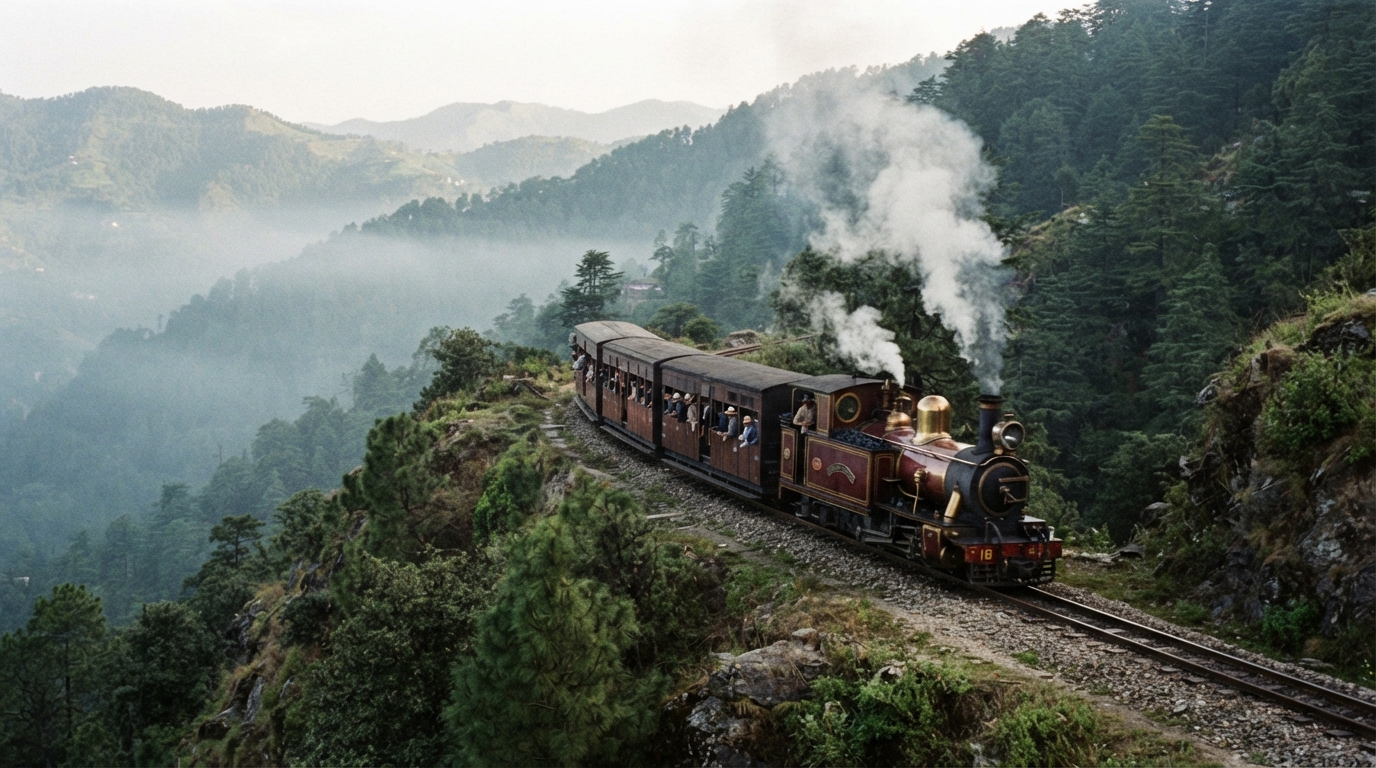
The British colonial period altered India domestic travel history by introducing mechanized transit and seasonal leisure migrations. Starting in 1853, the Indian railway network connected inland trade centers with isolated regions. The colonial administration established mountain sanatoriums to escape summer heat. This development permanently redirected domestic movement toward dedicated holiday hill stations across northern and southern India.
+--------------------------------------------------------------------------+
| COLONIAL HILL STATION NETWORK |
+--------------------+---------------------+-------------------------------+
| Destination | Year Established | Original Primary Purpose |
+--------------------+---------------------+-------------------------------+
| Shimla | 1819 (Founding) | British Summer Capital |
| Ooty (Udhagamand.) | 1821 (Settlement) | Madras Sanatorium & Military |
| Darjeeling | 1835 (Acquisition) | Bengal Health Sanatorium |
| Mahabaleshwar | 1828 (Sanatorium) | Bombay Presidency Retreat |
+--------------------+---------------------+-------------------------------+
The 1853 Railway Boom and the Birth of Mass Transit
On April 16, 1853, India's first commercial passenger train ran 34 kilometers between Bori Bunder in Bombay and Thane. While colonial authorities designed the railway network primarily to extract raw materials and deploy troops quickly, the tracks quickly revolutionized public movement. Ordinary Indian citizens embraced train travel in massive numbers.
By the late 19th century, third-class passenger coaches were routinely packed with pilgrims, daily laborers, and small traders. The rail network reduced travel times between major cities from several weeks by bullock cart to a couple of days.
+--------------------------------------------------------------------------+
|                 PRE-RAIL VS. POST-RAIL DOMESTIC TRAVEL                   |
+---------------------+-----------------------+----------------------------+
| Feature             | Pre-1853 System       | Post-1853 Railway Era      |
+---------------------+-----------------------+----------------------------+
| Primary Mode        | Foot, Bullock, River  | Steam Locomotive           |
| Average Daily Range | 15 to 30 km / day     | 300 to 600 km / day        |
| Major Hazards       | Disease, Bandits      | Overcrowded Third Class    |
| Primary Motivation  | Faith, Trade, Army    | Faith, Trade, Civil Work   |
+---------------------+-----------------------+----------------------------+
The introduction of scheduled train services allowed people to plan journeys with predictable timetables for the first time. Major junction stations like Mughalsarai, Kalyan, and Kharagpur grew into transit cities with dedicated waiting rooms, tea stalls, and cheap lodging. Railways made sacred shrines accessible to elderly citizens and poorer families who could never afford months-long walking expeditions. Exploring the broad digital reference chart of Indian history shows how railways reshaped the geographic identity of 19th-century India.
The Sanitaria Concept: Shimla, Darjeeling, and Ooty
Colonial medical theories in the 19th century held that tropical heat and humidity caused debilitating fevers among Europeans. In response, British administrators built high-altitude settlements known as sanitaria in the lower Himalayas, the Western Ghats, and the Nilgiri Hills. Shimla, founded after the Gurkha War, became the official summer capital of British India in 1864. Similar settlements developed at Darjeeling in Bengal, Ootacamund (Ooty) in the Madras Presidency, and Mahabaleshwar in the Bombay Presidency.
These retreats were initially designed as exclusive, whites-only enclaves modeled on idyllic English country villages. Over time, wealthy Indian princely families, merchants, and administrative clerks began purchasing summer properties in these mountain towns.
The construction of mountain railways—such as the Kalka-Shimla Railway in 1903 and the Darjeeling Himalayan Railway in 1881—opened these retreats to wider domestic populations. This development introduced the concept of the secular, climate-driven family vacation to the Indian subcontinent, marking a clear departure from traditional pilgrimage.
How Did Post-Independence State Policies Democratize Family Vacations?
Post-independence state democratization of family vacations is the institutional transformation of Indian leisure travel from an elite luxury into an accessible middle-class norm through government subsidies and public hospitality infrastructure. Initiated in 1956, statutory travel reimbursements, state-run transit fleets, and affordable lodging networks enabled salaried civil servants to take structured annual holidays across the country.
In post-1947 India domestic travel history, state intervention established internal mobility as a regular civic practice. The central government introduced the Leave Travel Concession (LTC) in 1956 to subsidize civil servants' journeys across public sectors. In October 1966, the central government launched the India Tourism Development Corporation (ITDC) to construct budget accommodations, while state tourism boards established regional resorts and economical bus tours. These coordinated administrative policies turned annual family vacations into a standard institutional practice across urban India.
ITDC and the Rise of State Tourism Infrastructure (1966)
The India Tourism Development Corporation (ITDC) is a public sector enterprise established in October 1966 by the Government of India to construct, manage, and scale national hospitality infrastructure. ITDC provided autonomous public accommodations, transport fleets, and tourist lodges to foster internal travel and national integration where private capital was absent.
Following independence in 1947, India faced urgent economic challenges that pushed leisure travel down the list of national priorities. However, national leaders recognized that internal travel was necessary to build a shared identity across culturally diverse states. ITDC established the iconic public Ashoka Hotel chain, tourist lodges in remote cultural regions, and safe highway transport fleets.
State governments followed this ITDC model by creating regional tourism development corporations during the 1970s and 1980s. Entities like the Maharashtra Tourism Development Corporation (MTDC) and Tamil Nadu Tourism Development Corporation (TTDC) established budget beachfront resorts, pilgrimage guest houses, and guided bus tours.
These state properties provided affordable lodging for middle-income families who avoided high-end private hotels. State tourism buses, known for low fares and packed itineraries, became the standard vehicle for Indian family vacations during the 1970s and 1980s.
The Central Civil Services LTC Multiplier Effect (1956–1988)
The Central Civil Services Leave Travel Concession (LTC) is a statutory travel reimbursement scheme introduced by the Government of India in 1956 to finance employee journeys. Originally covering home-town visits during approved leave, the LTC rules expanded in 1988 to subsidize "All India" travel every four years for public sector workers.
A major administrative catalyst for middle-class domestic vacations was the introduction of the Central Civil Services (Leave Travel Concession) Rules in 1956. Public sector banks, public enterprises, and state governments quickly adopted identical leave rules.
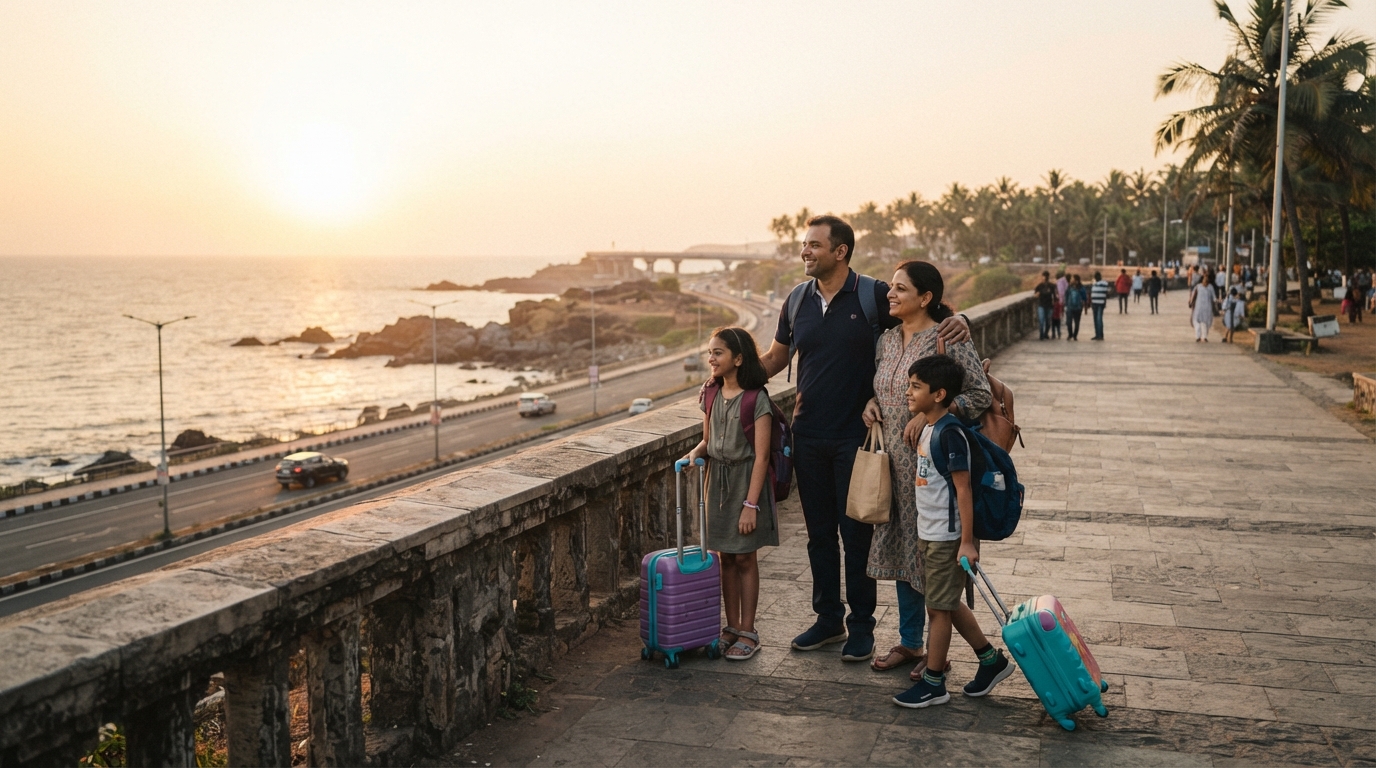
The LTC policy changed family budgets across the country. Government employees, who formed the core of the post-independence salaried middle class, could now take their families across the nation without paying out of pocket for rail transit. This guaranteed pool of public funding supported regular off-season travel to destinations like Kashmir, Kanyakumari, Goa, and Puri.
The LTC policy established an institutional rhythm for family holidays, closely tied to school summer vacations in May and June. In 2025, the central government modernized these rules by allowing LTC claims on 385 high-speed rail services, including Vande Bharat, Tejas, and Humsafar trains (PIB, 2025).
How Did Economic Liberalization and Digital Platforms Revolutionize Modern Travel?
Economic reforms after 1991 sparked private aviation, online booking platforms, and rising disposable incomes that decentralized domestic travel. Air Deccan launched low-cost aviation in 2003, making flying accessible to regional passengers. Digital portals replaced manual railway ticket counters. These shifts allowed millions of middle-income citizens to plan independent weekend trips and commercial family holidays across India.
+--------------------------------------------------------------------------+
|                  THE DIGITAL & AVIATION SHIFT (2000-2025)                |
+---------------------+-----------------------+----------------------------+
| Feature             | 1990s Model           | 2020s Digital Model        |
+---------------------+-----------------------+----------------------------+
| Booking Channel     | Physical Agent / PRS  | Smartphone Apps / IRCTC    |
| Transit Speed       | Overnight Mail Trains | Low-Cost Air / Vande Bharat|
| Trip Duration       | 10-15 Day Annual Tour | 2-4 Day Micro-Vacations    |
| Accommodation Type  | State Guest Houses    | Homestays / Boutique Hotels|
+---------------------+-----------------------+----------------------------+
Budget Airlines and the 2003 Low-Cost Carrier Revolution
Prior to the early 2000s, domestic air travel in India was an exclusive privilege reserved for corporate executives, politicians, and wealthy travelers. State carrier Indian Airlines held a dominant domestic position, and ticket prices were high relative to average household incomes. On August 25, 2003, Air Deccan launched operations with a fleet of turboprop aircraft, introducing the low-cost carrier (LCC) model to Indian aviation. Air Deccan offered dynamic pricing and promotional fares starting at just ₹1 plus taxes.
This pricing disruption forced legacy carriers to lower their prices and opened air travel to first-time fliers from tier-2 and tier-3 cities. Private airlines like IndiGo and SpiceJet followed, scaling high-frequency fleets across secondary airports. The aviation boom reduced travel time across north-south corridors from 40 hours by train to under three hours by air. Families who once spent their entire leave period in train compartments could now take short weekend trips to distant destinations. This democratization of commercial aviation permanently accelerated the growth of domestic tourism.
Online Travel Agencies and Digital Booking Ecosystems
Planning a domestic journey in 20th-century India required queuing at railway booking counters (Passenger Reservation System or PRS) or hiring physical travel agents. The launch of MakeMyTrip in 2000, followed by platforms like Yatra and Cleartrip, transformed this experience.
These online travel agencies (OTAs) consolidated flight schedules, private hotel inventories, and bus tickets into single transparent interfaces. Travelers could now compare prices, read independent reviews, and confirm reservations instantly without paying middleman fees.
+--------------------------------------------------------------------------+
|                 DOMESTIC TOURISM EVOLUTION: 1980 vs. 2025                |
+-------------------------+----------------------+-------------------------+
| Indicator               | Circa 1980           | Circa 2025              |
+-------------------------+----------------------+-------------------------+
| Annual Domestic Visits  | ~150 Million (Est.)  | 2.95 Billion            |
| Primary Booking Method  | Physical Counters    | Mobile Apps & OTAs      |
| Average Trips Per Year  | 1 Major Annual Trip  | 3 to 5 Micro-Trips      |
| Information Source      | Word of Mouth/Guides | Social Media & Portals  |
+-------------------------+----------------------+-------------------------+
The launch of the IRCTC online booking portal by Indian Railways in 2002 further simplified domestic travel planning. Within a decade, IRCTC grew into one of the largest e-commerce platforms in the Asia-Pacific region, processing millions of rail tickets daily.
In recent years, the Ministry of Tourism deployed the Incredible India Digital Platform (IIDP) and the NIDHI+ database. These systems verify the safety and quality of homestays, bed-and-breakfasts, and regional tour guides. This digital infrastructure gives travelers the confidence to explore rural homestays and offbeat locations outside established resort hubs. You can read more about post-reform modernization in our guide to historic dates in modern India.
What Does India Domestic Travel History Reveal About Modern Spiritual Tourism?
Modern spiritual tourism in India domestic travel history is the ongoing economic practice of undertaking faith-based journeys that integrate sacred pilgrimage with contemporary leisure, wellness, and heritage travel. Religious mobility remains the primary driver of internal travel, with sacred circuits in Uttar Pradesh, Tamil Nadu, and Karnataka generating the vast majority of regional trips.
+--------------------------------------------------------------------------+
|                  TOP 3 DOMESTIC TOURISM STATES (2024–2025)               |
+----------------------+---------------------------------------------------+
| State                | Primary Mobility Drivers                          |
+----------------------+---------------------------------------------------+
| 1. Uttar Pradesh     | Kashi Vishwanath, Ayodhya Ram Mandir, Mathura     |
| 2. Tamil Nadu        | Madurai Meenakshi, Rameswaram, Thanjavur          |
| 3. Karnataka         | Hampi, Tirupati-border routes, Mysuru, Udupi      |
+----------------------+---------------------------------------------------+
*Data Source: Ministry of Tourism Compendium / PIB, 2025*
Hybrid Infrastructure: High-Speed Corridors and Bharat Gaurav Trains
Hybrid tourism infrastructure in India is the multimodal transit network combining high-speed expressways, semi-high-speed Vande Bharat trains, and Bharat Gaurav tourist rail packages to connect modern travelers with sacred heritage destinations. Managed by Indian Railways, this infrastructure merges subsidized pilgrimage transit with onboard hospitality, hotel lodging, and regional road sightseeing.
The historical boundary between religious pilgrimage and modern leisure travel has largely dissolved. Today’s domestic travelers regularly combine temple visits with food tours, heritage walks, and luxury wellness stays. To meet this domestic demand, the Indian government introduced specialized transit initiatives that combine modern comfort with sacred geography.
Indian Railways operates Bharat Gaurav Tourist Trains, which run subsidized, theme-based circuit tours such as the Shri Ramayana Yatra and the Buddhist Circuit. These train packages include onboard hospitality, guided road transfers, and hotel stays in a single ticket.
At the same time, high-speed road networks have made traditional pilgrimage towns accessible for weekend excursions. Access to Varanasi, Ayodhya, Tirupati, and Puri has been upgraded with multilane expressways and semi-high-speed Vande Bharat rail connections.
Cities that once required an arduous four-day trek can now be reached in a six-hour train ride from major urban hubs. This improved transit access has created a flourishing weekend economy in sacred towns across Uttar Pradesh, Tamil Nadu, and Karnataka.
Economic Powerhouse: Domestic Spend vs Inbound Tourism
The domestic tourism economy in India is the primary driver of national hospitality revenue, generating 84% of total travel spending compared to 16% from foreign inbound travel, according to a 2026 report by the IMPRI Impact and Policy Research Institute. Internal mobility serves as the sector's main financial foundation against global disruptions.
Policy makers and media outlets often emphasize international tourist arrivals as the main barometer of travel industry health. However, the domestic market remains the true backbone of the hospitality sector.
Dr. Simi Mehta, CEO of the IMPRI Impact and Policy Research Institute, noted in a 2026 report that domestic travelers account for 84% of total travel spending in India. This reliance on domestic demand protected the local hospitality industry from deep international shocks during global travel restrictions.
+--------------------------------------------------------------------------+
|                  DOMESTIC VS. FOREIGN TOURISM SPEND SHARE                |
+--------------------------------------------------------------------------+
|  Domestic Tourist Spending (84%)  ████████████████████████████████░░░░    |
|  Foreign Inbound Spending (16%)   ░░░░░░░░░░░░░░░░░░░░░░░░░░░░░░████    |
+--------------------------------------------------------------------------+
*Source: IMPRI Policy Research Report, 2026*
Union Minister for Tourism and Culture Gajendra Singh Shekhawat highlighted in 2025 that domestic mobility serves as the primary engine to build a $1 trillion tourism economy by 2047. Rather than focusing solely on elite foreign tourism corridors, central funding initiatives like Swadesh Darshan 2.0 and Dekho Apna Desh focus on upgrading tier-2 and tier-3 domestic infrastructure.
These programs support local homestays, improve highway sanitation facilities, and preserve regional heritage sites. These investments ensure that internal tourism revenue circulates directly through local village and small-town economies.
Which Key Milestones Defined the Evolution of Domestic Travel in India?
The evolution of domestic travel across India follows clear structural milestones, from imperial roadway edicts to modern digital mobility portals. Key turning points include the first passenger train in 1853, the foundation of ITDC in 1966, the civil service travel rules of 1988, and the launch of the Incredible India digital platform in 2025.
+-----------------------------------------------------------------------------------+
|               KEY MILESTONES IN INDIA DOMESTIC TRAVEL HISTORY                     |
+---------------+-------------------------------------------------------------------+
| Date / Period | Historical Event and Long-Term Impact                             |
+---------------+-------------------------------------------------------------------+
| c. 250 BCE    | Ashoka the Great constructs traveler rest houses and wells.       |
| 1540–1545 CE  | Sher Shah Suri rebuilds the Grand Trunk Road with roadside sarais. |
| Apr 16, 1853  | First passenger rail runs from Bori Bunder to Thane.              |
| 1864          | Shimla declared British summer capital, spurring hill stations.   |
| 1956          | Central Civil Services Leave Travel Concession (LTC) introduced.  |
| Oct 1, 1966   | India Tourism Development Corporation (ITDC) established.         |
| 1988          | LTC rules expand to cover All-India travel every four years.      |
| 2000          | MakeMyTrip founded; online travel aggregators enter the market.   |
| 2002          | IRCTC launches online ticketing platform for Indian Railways.     |
| Aug 25, 2003  | Air Deccan introduces low-cost domestic aviation to tier-2 hubs.  |
| 2021          | Ministry of Tourism rolls out Dekho Apna Desh initiative.         |
| 2024–2025     | Domestic tourist visits reach 2.95 billion across Indian states.   |
+---------------+-------------------------------------------------------------------+
Chronological Milestones from 300 BCE to 1950
The earliest phase of organized mobility in India centered on security, royal transit, and pilgrimage pathways. In 250 BCE, the Mauryan Empire established standardized roadside amenities, making long-distance land travel safer across the subcontinent. Between 1540 and 1545, Sher Shah Suri created the sarai lodging system, providing secure public shelters along major commercial arteries.
Mechanized travel arrived on April 16, 1853, with the launch of the first passenger railway line in Bombay. Ten years later, in 1864, Shimla was named the summer capital of British India, setting the precedent for commercial hill-station holiday travel. By the time India gained independence on August 15, 1947, the country inherited an extensive, integrated rail network that served as the primary transit backbone for the newly formed republic.
Modern Travel Milestones from 1956 to 2025
The modern era of Indian domestic tourism began with government-backed workplace benefits and institutional support. The launch of the Leave Travel Concession rules in 1956 turned annual holidays into an expected middle-class benefit. On October 1, 1966, the government founded the ITDC, formalizing state-run hospitality and roadside amenities across regional circuits.
The digital transition gathered pace after 2000 with the rise of online travel portals and the launch of the IRCTC website in 2002. Air Deccan democratized domestic air travel on August 25, 2003, with its entry into low-cost aviation.
By 2024, domestic tourist visits climbed to a record 2.95 billion, led by sacred and cultural destinations across Uttar Pradesh, Tamil Nadu, and Karnataka (PIB, 2025). As you explore historical archives to discover what happened today in history in India, these infrastructure dates show how internal movement shaped modern Indian society.
Frequently Asked Questions
Q: How many domestic tourists travel within India each year? According to the Ministry of Tourism and Press Information Bureau data, Indian travelers recorded 2.95 billion domestic tourist visits in 2024. That figure marks a substantial increase from 2.51 billion visits in 2023 and 2.3 billion in 2019.
Q: What is the Leave Travel Concession (LTC) and how did it shape domestic tourism? The Leave Travel Concession is a government benefit introduced in 1956 that reimburses public-sector employees for travel expenses across India during approved annual leave. This policy gave millions of middle-class families the financial support needed to take regular holidays, creating consistent demand for regional hotels, trains, and airlines.
Q: Which Indian states receive the highest number of domestic travelers? Uttar Pradesh, Tamil Nadu, and Karnataka record the highest numbers of domestic tourist visits in India. Their popularity is driven primarily by world-famous spiritual corridors, historic temples, and modern highway connectivity that links major cities to heritage circuits.
Q: How did the introduction of Indian Railways change domestic travel history? The opening of passenger railways in 1853 reduced intercity travel times from weeks to hours and significantly lowered transit costs for ordinary citizens. This shift allowed millions of pilgrims and families to complete long journeys that were previously too dangerous or expensive to undertake on foot.
Further Reading
- The Great Indian Railways by Ruskin Bond: A vivid collection of stories capturing the cultural impact of passenger train travel across the towns and junctions of northern India.
- Pilgrim Tales by Various Historians: Scholarly historical essays documenting how ancient Tirtha Yatra corridors shaped early Indian geography and local market economies.
- Dekho Apna Desh Portal (Ministry of Tourism): The official central government platform providing cultural information, itinerary ideas, and verified homestay listings for travelers exploring domestic destinations.
To turn these historical insights into action for your own domestic journeys, skip the crowded commercial hubs on your next trip. Instead, choose a historic transit corridor—such as the Grand Trunk route or a Nilgiri mountain rail route—and support family-owned homestays registered on state tourism portals.
Related Reading
- India at the Olympics: A Timeline of Historic Sporting Milestones
- Milestones in Indian Women's History: A Chronological Guide
- 1,000 Years of Indian Medical History: A Chronological Guide
- Economic Milestones in Indian History: From 1947 to Present
Sources
- India as a Tourism Hub — Press Information Bureau, Government of India, 2026. Supports: Domestic tourist visits climbed to 2.9+ billion, generating ₹15.73 lakh crore (5.22% of GDP) and supporting 84.6 million jobs in FY 2023–24.
- Year End Review-2024 : Ministry of Tourism — Press Information Bureau, Government of India, 2024. Supports: India recorded 2.51 billion domestic tourist visits during 2023 alongside the rollout of Swadesh Darshan 2.0 and Dekho Apna Desh.
- A History of Indian Railways — National Rail Museum / Google Arts & Culture, 2020. Supports: India's first commercial passenger train operated on April 16, 1853, covering 34 kilometers between Bori Bunder and Thane.
- India Tourism Development Corporation — Wikipedia, 2024. Supports: The India Tourism Development Corporation (ITDC) was founded on October 1, 1966, to build public hospitality infrastructure like the Ashok Hotel chain.
- Simplifly Deccan — Wikipedia, 2024. Supports: Air Deccan launched operations on August 25, 2003, pioneering the low-cost carrier model in Indian domestic aviation.
- Dashboard - India Tourism Data Portal — Ministry of Tourism, Government of India, 2025. Supports: Monitoring annual domestic tourist visits, regional mobility trends, and state-wise tourism footfalls.