How to Research Daily Indian History Events Using Digital Archives
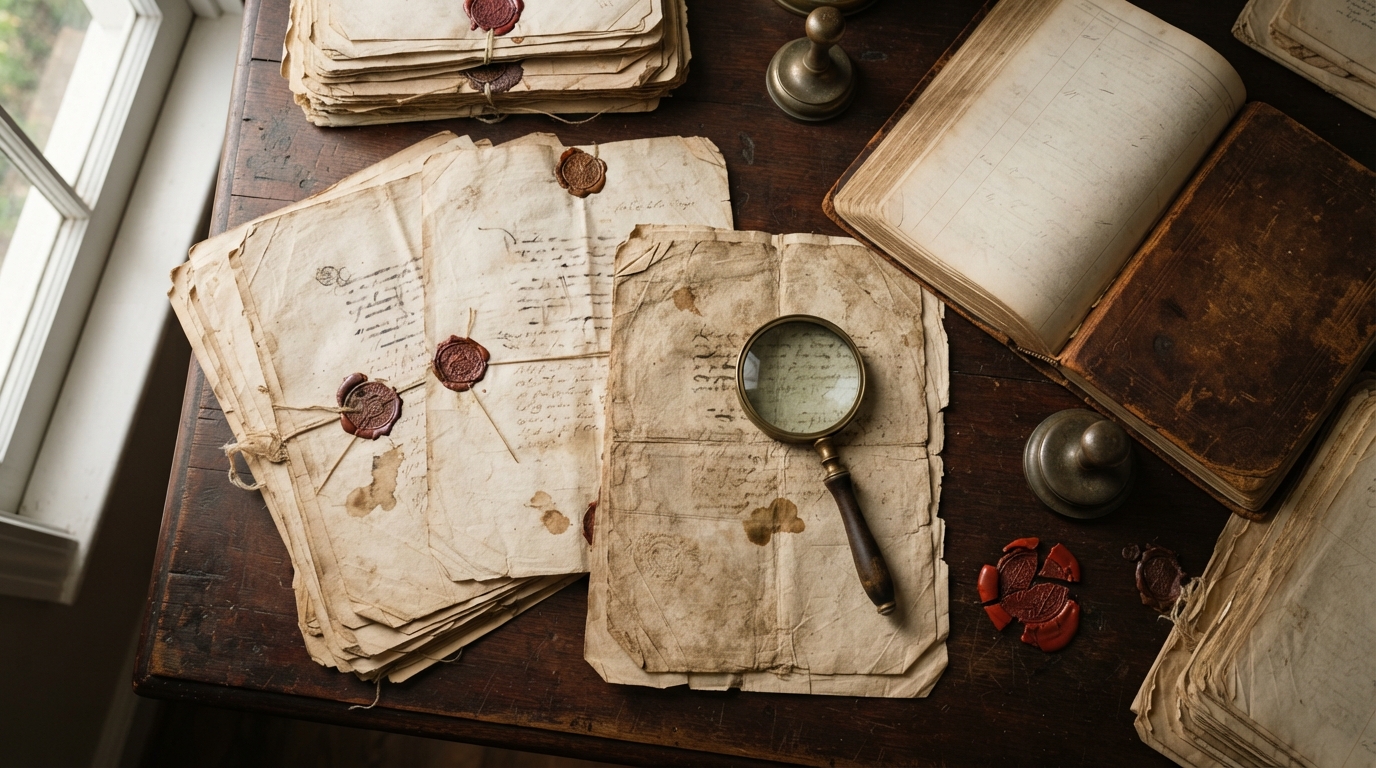
In October 1998, a history teacher in Pune waited four weeks for a physical microfilm spool from New Delhi. The film arrived with torn edges and faded ink. That spool hid the exact date of a 1931 municipal labor strike.
Today, that same record sits on a public server. You can view it in three seconds on a phone.
When you research Indian history online, you do not need physical archive passes or library slips to find verified daily events. Mass digitization efforts have moved millions of government papers, colonial gazettes, and vernacular newspapers to the public web.
The National Archives of India has digitized over 20 crore (200 million) pages on its Abhilekh Patal portal out of 34 crore targeted holdings (Press Information Bureau / Ministry of Culture, 2026). Over 58% of those central records are now accessible online.
Finding what happened on a specific calendar date still requires a clear method. Digital archives index records differently than web search engines. This guide shows you how to track down daily events using free, public databases.
What You'll Achieve
Historical event verification in digital repositories is a structured methodology for locating, verifying, and documenting daily occurrences in South Asian history using primary-source digital archives. This guide provides a step-by-step workflow designed to help researchers research Indian history online with institutional precision. Through this process, historians and researchers learn to query government portals such as the National Archives of India, convert non-Gregorian calendar dates into standardized solar formats, cross-reference colonial state gazettes, and extract verified primary-source documentation. By mastering targeted search strings, filtering digitized repository metadata, and resolving optical character recognition errors in nineteenth-century publications, researchers can independently corroborate administrative decrees, legislative debates, and regional announcements. Ultimately, the workflow enables readers to establish an authoritative evidentiary trail for daily historical milestones, ensuring that archival discoveries remain accurate, reproducible, and citable across academic and professional historical research projects.
Before You Start
Make sure you have the following resources ready:
- A desktop or mobile web browser (Google Chrome 120+, Firefox 120+, or Safari 17+).
- A free user account on the National Archives of India portal (Abhilekh Patal).
- A PDF reader with built-in text search capabilities.
- Basic familiarity with Boolean search operators (
AND,OR, and quotation marks for exact phrasing). - Time required: 20 to 35 minutes per specific calendar date query.
Step 1: Search Central Government Repositories on Abhilekh Patal
This step shows you how to query the central repository of the National Archives of India for dated official records. You will use filtered parameters to pull declassified ministry proceedings, intelligence files, and political department reports tied to specific days.
As union minister Gajendra Singh Shekhawat noted, mass digitization transforms historical research from physical retrieval into open civic scholarship (Ministry of Culture / PIB, 2026). The central portal currently hosts over 4.87 million digitized records and 8.29 million reference media entries (Abhilekh Patal, 2026).
Follow these instructions to run your query:
- Open
abhilekh-patal.inin your browser. - Click Login / Register at the top right and sign in.
- Select Advanced Search from the primary navigation bar.
- Set the Department / Section filter to
Home Department (Political)orForeign and Political Department. - Enter your target date using the format
DD/MM/YYYYin the date range selector. - Enter specific search terms in the keyword field enclosed in quotation marks (for example,
"Lahore Conspiracy"or"Civil Disobedience"). - Check the box labeled Only Digitized Records to filter out physical-only catalog cards.
- Click Search and sort results by Date (Ascending).
✅ Check: The search results display a list of files with green document icons. Clicking a title opens an interactive multi-page viewer showing the original scanned administrative paper with matching date stamps.
Step 2: Cross-Reference Regional Events in Decentralized State Archives
Central repositories often skip local municipal events, district police reports, and provincial assembly actions. This step guides you through state-level digital repositories to uncover local daily records that never reached central government files in New Delhi.
Director General of the National Archives of India Arun Singhal stated that integrating localized records into digital networks is essential for filling gaps in formal administrative histories (Akashvani / NewsOnAIR, 2024).
Follow these actions to find state records:
- Identify the historical province or presidency matching your geographic area (such as Bombay Presidency, Madras Presidency, or Bengal Presidency).
- Visit the respective state portal, such as the Tamil Nadu Virtual Academy library (
tamildigitallibrary.in) or the West Bengal State Archives portal. - Go to the District Gazetteers or Police Abstracts of Intelligence archive.
- Set the record year in the catalog filter.
- Download the monthly or weekly intelligence compilation covering your target date.
- Press
Ctrl + F(orCmd + Fon macOS) and type the day number followed by the month name (for example,14th Aprilor14 April).
✅ Check: You locate an entry detailing local arrests, municipal meetings, market prices, or public speeches on your chosen date, backed by district magistrate signatures.
Step 3: Search Open-Access Periodicals on South Asia Open Archives
Official government gazettes reflect the state perspective. Historical daily newspapers show how the public received those events on the exact morning they occurred. This step walks you through the South Asia Open Archives (SAOA) to locate dated press reports.
The SAOA repository hosts more than 30,000 open-access historical print items, including rare serials, daily vernacular reports, and gazettes (Center for Research Libraries / SAOA, 2024).
Use these steps to search the collection:
- Go to the South Asia Open Archives collection on JSTOR (
jstor.org/site/saoa). - Click Browse and select Serials & Newspapers.
- Enter your target calendar date in the main search bar in
YYYY-MM-DDformat (for example,1942-08-09). - Select your preferred language filter in the left sidebar (such as English, Urdu, Hindi, or Tamil).
- Open the newspaper issue matching your date.
- Check the issue masthead to confirm the publication date matches your search target.
- Click the Download PDF icon in the upper toolbar to save the page for your records.
Target Search String Example:
"August 9, 1942" AND ("Bombay" OR "Congress") AND content_type:serial
✅ Check: The viewer loads a complete newspaper front page from that exact date, displaying contemporary headlines, editorials, and telegram dispatches.
Step 4: Convert Regional Calendar Dates to the Gregorian Standard
Vernacular records, temple documents, and princely state firmans rarely use the Gregorian calendar. You must convert Samvat, Hijri, and Fasli dates into standard calendar days before you research Indian history online for specific daily events.
A 2026 allocation of ₹491.66 crore under the Gyan Bharatam Mission funds the survey and digitization of ancient manuscripts across 28 States and Union Territories (Press Information Bureau, 2026). Many of these records use non-Gregorian dating systems.
Use this conversion workflow when analyzing vernacular manuscripts:
- Identify the calendar era stated in the manuscript header (such as Vikram Samvat, Saka Samvat, Hijri, or Fasli).
- Check whether the record uses a solar month or a lunar fortnight (Shukla Paksha or Krishna Paksha).
- Apply the appropriate calendar calculation formula from the table below.
- Verify the converted weekday against the day name recorded in the text (such as Ravivar for Sunday or Jum'ah for Friday).
| Calendar System | Primary Historical Usage | Conversion Formula to Gregorian (CE) | Astronomical Variance |
|---|---|---|---|
| Vikram Samvat (VS) | North and West India, Princely States | Subtract 57 years (or 56 for dates before Chaitra) | Lunar tithi shifts by ±1 day |
| Saka Samvat | South Indian inscriptions, National Calendar | Add 78 years (add 79 years after March 21/22) | Matches solar cycle |
| Hijri (AH) | Mughal firmans, Hyderabad Nizam records | Gregorian Year ≈ (AH × 0.970224) + 621.57 |
Drifts 10 to 11 days earlier each solar year |
| Fasli Era | Deccan land revenue, agricultural records | Add 590 years to the stated Fasli year | Aligned with solar harvest cycles |
✅ Check: Your converted Gregorian date matches the astronomical weekday and moon phase named in the original document text.
Step 5: Verify Gazette Notifications and Legislative Debates
A historical event often became legally binding only when published in an official government gazette. This step explains how to confirm daily policy announcements, royal proclamations, and legislative debates.
You can verify major policy milestones using our online Indian history study materials alongside original parliamentary transcripts.
Follow these steps to search legislative debates and gazettes:
- Visit the Parliament of India Digital Library (
eparlib.nic.in). - Click Debates and choose Pre-Independence Debates (for 1854–1947) or Lok Sabha Debates (for post-1947).
- Choose the legislative session and filter by the specific day, month, and year.
- Select the debate transcript PDF for that sitting.
- Review the daily Order of Business listed on the first page.
- Search the document text for the specific bill, motion, or ministerial statement.
✅ Check: You find a verbatim transcript from that day's session containing the official speaker remarks, member votes, and formal timestamps.
Step 6: Distinguish Catalog Reference Media from Digitized Full Texts
Archival databases index descriptive reference cards alongside actual digitized page scans. This step ensures you do not mistake index metadata for full records when you research Indian history online.
Recent deployments of OCR and Handwritten Text Recognition (HTR) on Abhilekh Patal help index older papers (The New Indian Express, 2024). Some database hits still point only to physical shelf locations.
Follow these actions to verify document availability:
- Look at the record badge next to each title in your search results list.
- Verify that the entry is marked Digitized Record rather than Reference Media.
- Click the item title to load the detailed summary page.
- Look for the embedded document reader window in the center of the screen.
- Check the file metadata: records under 100 KB are text summaries, while readable document scans range from 2 MB to 50 MB.
- If the item shows Reference Media Only, copy the record's Fonds Number, File Number, and Branch for future consultation.
Example of a Full Archival Citation:
NAI Collection: Home Department (Political - Private)
File No: 45/5/1931-Poll | Date: 23 March 1931
Status: Digitized Full Text Available (34 Pages, PDF)
✅ Check: The interactive document reader loads high-resolution scans of the original physical file with visible signatures, marginal notes, and department seals.
Troubleshooting
OCR Errors Obscure Date Searches in 19th-Century Scans
An optical character recognition (OCR) search failure is an archival query error that occurs when nineteenth-century letterpress ink smudges, broken typography, or degraded paper prevent search engines from parsing specific date strings like "15 August 1872". Archival researchers resolve this issue by querying unique proper nouns, agency titles, or legislation names and navigating manually to target volumes.
Symptom: Searching for a specific date like "15 August 1872" returns zero results, even though researchers know a major gazette was published that morning.
Fix: Older letterpress prints often contain ink blots or broken letterforms that confuse optical character recognition software. Instead of searching for the full date string, search for a unique proper noun or institution name associated with that historical event. Once the digital document loads in the archival viewer, navigate manually to the target issue by matching the volume and issue number.
Search Queries Return Reference Metadata Without Downloadable PDFs
A metadata-only search result is an archival database entry that displays descriptive catalog records, accession cards, and physical storage box numbers without attaching downloadable PDF files or digital scans. In repositories like the National Archives of India portal, which hosts 8.29 million reference media entries, filtering queries specifically for digitized records resolves this cataloging barrier.
Symptom: Researchers click a promising search result, but the archive page displays only an index card with a physical box number and no digital viewer.
Fix: The National Archives portal contains over 8.29 million reference media entries, but not all entries have digital scans attached. Return to the search panel, open the advanced filters, and check the box for Digitized Records Only. Checking this filter removes physical-only collection cards from your results.
Vernacular Administrative Records Use Non-Standard Calendar Eras
A vernacular calendar discrepancy is a chronological mismatch occurring when regional administrative documents, princely state records, and historical gazettes use lunar dating systems such as Vikram Samvat rather than Gregorian solar dates. Standard archive engines cannot index lunar dates directly, requiring researchers to convert regal and regional tithis into Gregorian equivalents before querying catalog databases.
Symptom: A princely state gazette records an event on "14th of Kartik, Samvat 1988," making the record impossible to locate using standard solar date queries.
Fix: Do not type the vernacular date into Gregorian date fields. Use the conversion table in Step 4 to convert the Vikram Samvat year and lunar month into the corresponding Gregorian date. Run the archival search using the converted solar date format.
Colonial Gazette Scans Contain Broken Pagination or Missing Daily Supplements
Symptom: A regular weekly gazette volume skips the specific date researchers need, moving directly from one week to the next.
Fix: Urgent administrative announcements were published as separate "Extraordinary" issues rather than standard regular editions. Clear the volume search filter and search specifically for the publication title Gazette of India Extraordinary. Filter by the target month and year to locate the missing emergency supplement.
What to Do Next
Now that you can research Indian history online, you can use these search steps to verify daily historical milestones. You can track municipal records, follow parliamentary debates, or compile regional timelines.
To see how individual dates fit into broader national developments, explore our Indian history timeline chart or read our guide on major events in Indian history. You can also learn how researchers organize source materials in our guide to historical document preservation methods.
Further Reading
Archival historical research literature is a collection of reference indexes, ephemerides, and institutional user guides that assist historians in querying digitized collections, converting historical calendars, and locating verified legislative records. The following foundational texts and official catalog guides provide essential documentation for navigating regional archives, colonial gazettes, and national repository collections effectively:
- Abhilekh Patal User Guide (National Archives of India, 2026) — Practical guide to querying over 20 crore digitized government records.
- Indian Ephemeris A.D. 700 to A.D. 1999 by L.D. Swamikannu Pillai — Standard manual for converting lunar tithis and regional calendar systems to Gregorian dates.
- South Asia Open Archives Resource Directory (Center for Research Libraries, 2024) — Catalog index of open-access newspapers, censuses, and colonial administrative files.
- Parliamentary Debates Digitization Index (Lok Sabha Secretariat, 2025) — Reference tool for locating verbatim legislative records from 1854 to the present.
Related Reading
- Online Indian History Study Materials: Important Dates Index
- Milestones in Indian Women's History: A Chronological Guide
- 1,000 Years of Indian Medical History: A Chronological Guide
- Economic Milestones in Indian History: From 1947 to Present
Sources
- Gyan Bharatam Mission and Preservation of Manuscript Heritage — Press Information Bureau, 2026. Supports: The ₹491.66 crore sanction for the Gyan Bharatam Mission (2025–2031) to survey, conserve, and digitize ancient Indian manuscripts across 28 States and Union Territories.
- Turning the Wheel of Heritage — Press Information Bureau, 2026. Supports: Statistics on the mass digitization of records and millions of pages hosted on the National Archives of India's Abhilekh Patal portal.
- Abhilekh Patal: Portal for Access to Archives and Learning — National Archives of India, 2026. Supports: The NAI central repository hosting millions of digitized records and reference media items for public historical research.
- South Asia Open Archives (SAOA) — Center for Research Libraries / JSTOR, 2024. Supports: The SAOA repository hosting tens of thousands of open-access digitized periodicals, colonial gazettes, and historical newspapers.
- National Archives of India to utilise AI for enhanced user experience — The New Indian Express, 2024. Supports: The adoption of artificial intelligence, OCR, and automated tools by the National Archives of India to improve search across historical records.
- National Archives of India Undertakes First Overseas Digitization of Diaspora Records in Oman — Akashvani News / NewsOnAIR, 2024. Supports: Director General Arun Singhal's statements and NAI initiatives to digitize regional and overseas historical records.
- Tamil Digital Library — Tamil Virtual Academy, Government of Tamil Nadu, 2024. Supports: Decentralized state-level archival access to regional historical publications, periodicals, and gazetteers.