The Quick Read
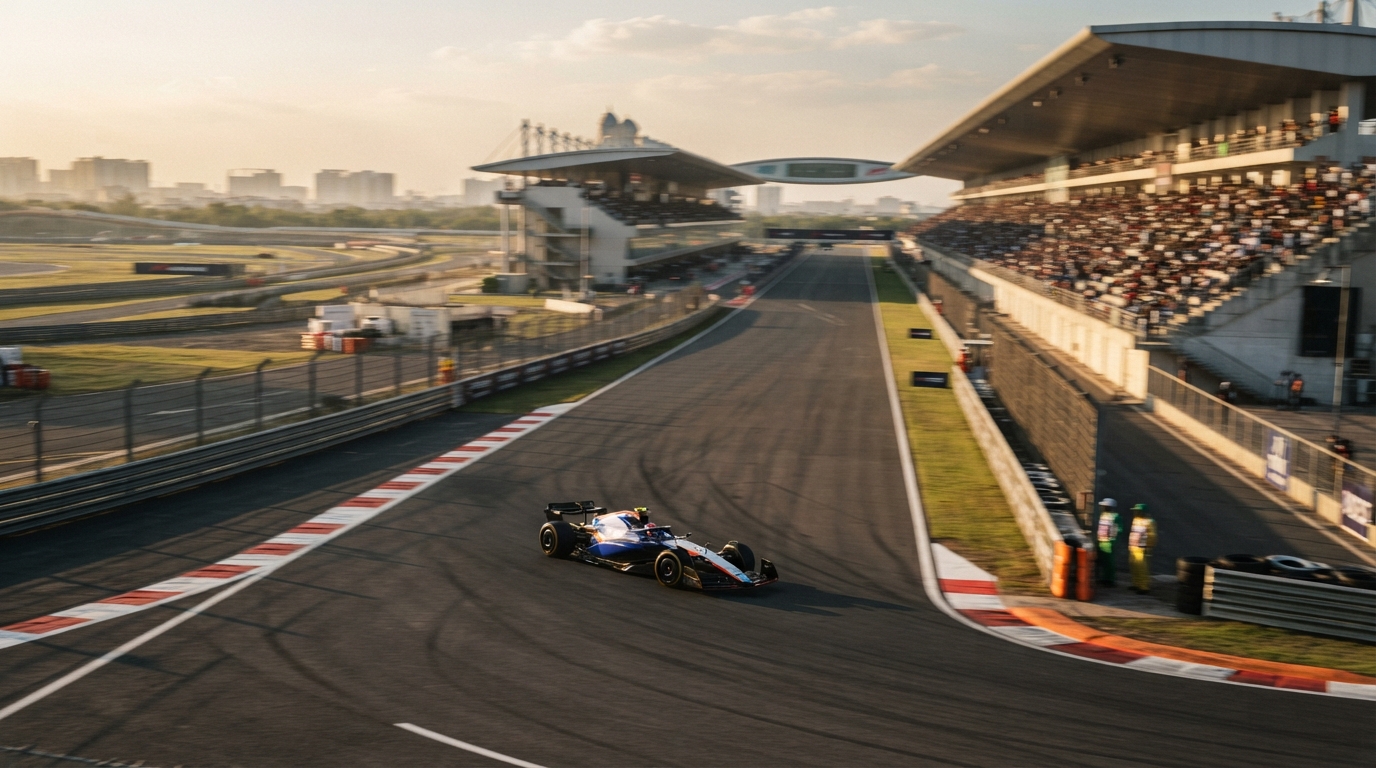
Indian Grand Prix history is the chronicle of Formula 1 championship events held at the Buddh International Circuit in Greater Noida between 2011 and 2013. German driver Sebastian Vettel won all three Grands Prix for Red Bull Racing before tax disputes, customs bottlenecks, and promoter debt ended the race. Decades of grassroots competition laid the groundwork.
Key Takeaways
- Sebastian Vettel swept all three Indian Grand Prix editions from 2011 to 2013.
- The Jaypee Group spent ₹2,000 crore to construct the Buddh International Circuit.
- A 2017 Supreme Court tax ruling confirmed foreign race promoters held permanent establishment status.
- Promoter payment defaults led MotoGP to pause its Indian round after 2023.
- Domestic series like the Indian Racing League now sustain national competitive motorsport.
₹2,000 crore was spent to build the Buddh International Circuit in Greater Noida during 2011. This massive capital project placed India on the premier global motorsport calendar for the first time. Formula 1 raced in the country for three consecutive seasons before tax disputes and promoter debts halted the event.
Understanding Indian Grand Prix history requires looking beyond those three October race weekends. The journey spans post-independence airfield racing in Tamil Nadu, the rise of domestic racing circuits, and pioneering drivers. Examining these milestones reveals how sports taxation, infrastructure investments, and international sanctioning bodies interact in modern India.
What Are the Early Origins of Indian Motorsport History?
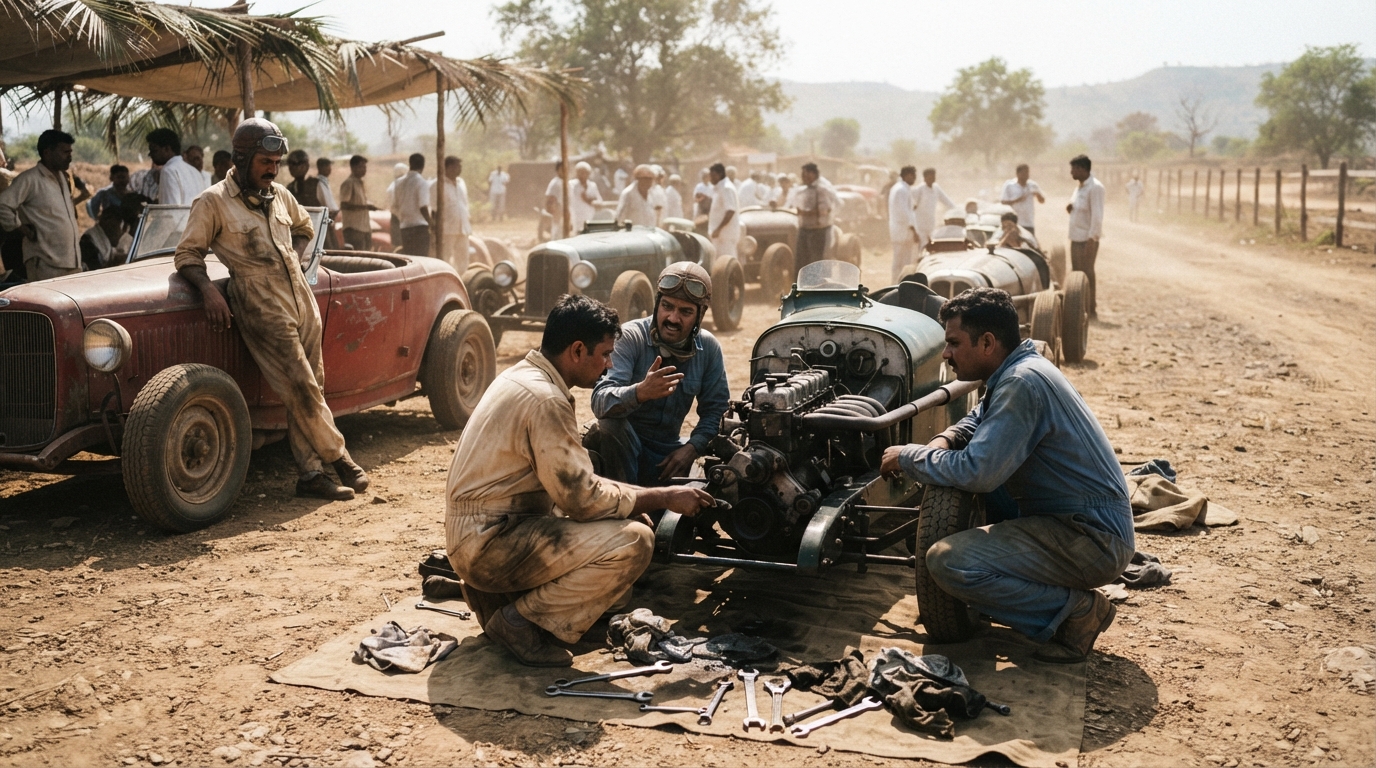
Indian motorsport originated on World War II airstrips during the 1950s before transitioning to dedicated racing circuits in southern India. Enthusiasts in Madras modified imported saloons and motorcycles to build a competitive local culture. This grassroots network established the regulatory clubs, talent pipelines, and permanent tracks that later supported international racing.
+-----------------------------------------------------------------------+
| EARLY INDIAN MOTORSPORT FOUNDATIONS |
+-----------------------------------+-----------------------------------+
| 1950s-1980s: Sholavaram Airstrip | • Converted WWII military runway |
| (Madras Motor Sports Club) | • Dirt-track and mixed surfaces |
| | • Grassroots tuning culture |
+-----------------------------------+-----------------------------------+
| 1990: Irungattukottai Track | • India's first permanent circuit |
| (MMRT, Chennai) | • FIA-sanctioned asphalt layout |
+-----------------------------------+-----------------------------------+
| 2003: Kari Motor Speedway | • Ultra-technical testing ground |
| (Coimbatore) | • Formula Maruti single-seaters |
+-----------------------------------+-----------------------------------+
The Sholavaram Airfield Era and Post-Independence Racing
The Sholavaram airfield era is the foundational post-independence period of Indian motorsport spanning from 1953 through the late 1980s on an abandoned World War II military runway near Chennai. Organizers at the Madras Motor Sports Club hosted annual races where drivers competed in modified saloons, imported single-seaters, and custom-fabricated specials before tens of thousands of spectators.
Sholavaram attracted tens of thousands of spectators each race weekend through the 1970s and 1980s. Tuners stripped Fiat 1100s and Ambassador cars to race alongside vintage British machinery. Resources were scarce under import restrictions, so local mechanics fabricated their own performance parts. This resourceful engineering culture established the technical knowledge base for competitive racing across India.
Permanent Circuits: Irungattukottai and Kari Motor Speedway
Sholavaram could not meet modern racing safety standards as car speeds increased through the 1980s. The Madras Motor Sports Club addressed this issue by building the Madras Motor Race Track at Irungattukottai in 1990. This 3.717-kilometer circuit received official FIA sanctioning and became India's first modern asphalt racing facility.
In 2003, former racer B. Vijay Kumar converted an airstrip in Coimbatore into the Kari Motor Speedway. Kari provided a technical proving ground for single-seater open-wheel cars, particularly the domestic Formula Maruti category. These tracks shifted racing off informal airfields and onto closed-circuit facilities. They helped young drivers learn racecraft, telemetry analysis, and chassis tuning within India. For broader context on post-1947 development, explore economic milestones in Indian history from 1947 to present.
The Rise of India's First Formula 1 Drivers
Domestic tracks provided the baseline training that sent Indian drivers to international championships in the 2000s. Narain Karthikeyan made history in March 2005 by debuting for the Jordan Formula 1 team at the Australian Grand Prix. He became the first Indian driver to compete and score championship points in Formula 1.
+-----------------------------------------------------------------------+
|                    PIONEERING INDIAN F1 DRIVERS                       |
+----------------------+--------------------+---------------------------+
| Driver               | F1 Debut Year      | Notable Teams             |
+----------------------+--------------------+---------------------------+
| Narain Karthikeyan   | 2005               | Jordan, HRT               |
| Karun Chandhok       | 2010               | HRT, Team Lotus           |
+----------------------+--------------------+---------------------------+
Karun Chandhok followed in 2010 by signing with the Hispania Racing Team. Chandhok later raced for Team Lotus in 2011. These individual breakthroughs showed that Indian athletes could reach elite global motorsport grids. Their presence raised public interest and justified private sector investments in a world-class domestic Grand Prix venue.
How Did the Buddh International Circuit Reshape Indian Grand Prix History?
The Buddh International Circuit established India on the international Formula 1 calendar from 2011 to 2013. Designed by German architect Hermann Tilke, the Greater Noida facility featured dramatic elevation changes and a high-speed layout. Sebastian Vettel swept all three editions, creating a dominant run in Indian Grand Prix history.
       [Turn 1] ---> Rapid downhill compression
          |
       [Turn 3] ---> Tight hairpin right
          |
       [Turn 4] ---> Long 1.06 km back straight (over 320 km/h)
          |
    [Turns 10-11] -> Parabolic multi-apex banked complex
          |
       [Turn 16] ---> Final right-hander onto the start-finish straight
Architectural Ambition: Designing the Greater Noida Track
Real estate conglomerate Jaypee Group funded the ₹2,000 crore ($400 million) construction of the Buddh International Circuit in Greater Noida, Uttar Pradesh [Wikipedia, 2025]. German circuit designer Hermann Tilke planned the 5.125-kilometer track across 875 acres. Tilke incorporated modern safety zones while adding 14 meters of natural elevation change.
The layout included a 1.06-kilometer back straight where Formula 1 V8 engines exceeded 320 kilometers per hour. Drivers praised the banked Turn 10-11 complex, which mirrored the high lateral forces of Istanbul Park's famous Turn 8. The facility opened in October 2011 to broad international praise for its engineering standard and spectator views.
Sebastian Vettel's Complete Dominance (2011–2013)
Sebastian Vettel of Red Bull Racing controlled every official Formula 1 session in Indian Grand Prix history. Vettel secured pole position, led the most laps, and won the race in 2011, 2012, and 2013 [Wikipedia, 2025]. In the inaugural 2011 event, roughly 95,000 spectators filled the grandstands to watch him claim victory.
+-----------------------------------------------------------------------+
|                 INDIAN GRAND PRIX EDITIONS (2011–2013)                |
+------+----------------------+----------------------+------------------+
| Year | Winning Driver       | Winning Constructor  | Attendance       |
+------+----------------------+----------------------+------------------+
| 2011 | Sebastian Vettel     | Red Bull Racing      | ~95,000          |
| 2012 | Sebastian Vettel     | Red Bull Racing      | ~65,000          |
| 2013 | Sebastian Vettel     | Red Bull Racing      | ~60,000          |
+------+----------------------+----------------------+------------------+
Vettel sealed his fourth consecutive Formula 1 World Championship at the Buddh International Circuit on October 27, 2013. After crossing the finish line, he broke protocol by performing celebratory donuts on the main straight. He then bowed before his Red Bull RB9 car in front of the grandstands. That moment remains the defining image of Formula 1 in India. Read more about modern national milestones in our timeline of 25 historic Indian events from 2000 to 2025.
Force India and National Motorsport Pride
The Grand Prix era coincided with a competitive Indian-owned team on the Formula 1 grid. Industrialist Vijay Mallya bought the Spyker F1 team in late 2007 and rebranded it as Force India Formula One Team for the 2008 season. Force India operated out of Silverstone but raced under the Indian flag and displayed national colors on its livery.
       +-------------------------------------------------------+
       |           FORCE INDIA FORMULA ONE TEAM (2008-2018)    |
       +-------------------------------------------------------+
       | • First Podium: 2nd Place, 2009 Belgian Grand Prix   |
       | • Engine Partners: Ferrari (2008), Mercedes (2009-18) |
       | • Constructors' Rank: 4th Place overall (2016, 2017)  |
       | • Total F1 Podiums: 6 podium finishes                 |
       +-------------------------------------------------------+
Force India regularly outperformed larger manufacturers despite operating on a modest budget. The team scored its first pole position and podium at the 2009 Belgian Grand Prix with Giancarlo Fisichella. Force India secured fourth place in the World Constructors' Championship in 2016 and 2017. The team gave Indian fans a domestic constructor to support alongside the home race.
Why Did Formula 1 Leave India After Only Three Races?
Formula 1 departed India due to state tax classifications, customs clearance disputes, and promoter insolvency. The Uttar Pradesh government classified the event as entertainment rather than sport, blocking expected tax exemptions. Combined with falling ticket sales and unresolved cross-border tax liabilities, these costs made the race commercially unsustainable for private promoters.
+-----------------------------------------------------------------------+
|                    WHY FORMULA 1 LEFT INDIA                           |
+-----------------------------------------------------------------------+
| 1. State Entertainment Tax: UP classified F1 as entertainment,        |
|    demanding commercial entertainment levies instead of sports waivers|
| 2. Customs Import Duties: Bureaucratic hurdles and bond deposits      |
|    for temporary freight and racing fuel                              |
| 3. Permanent Establishment (PE) Exposure: Supreme Court ruled BIC     |
|    created direct tax exposure on global rights revenue               |
| 4. Promoter Financial Collapse: Jaypee Group accumulated massive      |
|    debt, leading to $51.4M in unpaid hosting fees                     |
+-----------------------------------------------------------------------+
The Entertainment Tax Dispute and Customs Bottlenecks
The Indian Grand Prix entertainment tax dispute is the regulatory conflict between the Uttar Pradesh government and race organizers over event classification [How taxes drove Formula 1 out of India, 2025]. The state government ruled that Formula 1 was commercial entertainment rather than sport, denying statutory sports duty waivers and levying local entertainment taxes on ticketing revenue.
Formula 1 teams also ran into customs bottlenecks when importing racing cars, spare engines, and specialized fuel. Indian customs required large financial deposits and bonds to ensure all temporary equipment left the country after the race. These bureaucratic hurdles inflated logistics costs for visiting European teams and race organizers.
The Supreme Court Ruling on Permanent Establishment
The Supreme Court permanent establishment ruling is the landmark 2017 tax judgment in Formula One World Championship Ltd (FOWC) v. Commissioner of Income Tax [Wolters Kluwer, 2017]. The Supreme Court of India determined that the Buddh International Circuit constituted a fixed-place permanent establishment, making Formula One World Championship Ltd liable for domestic taxes on commercial revenues generated in India.
The permanent establishment ruling created domestic tax liabilities on global media rights, team fees, and sponsorship revenue earned during Indian Grand Prix rounds. Formula One World Championship Ltd set aside a $14.8 million tax provision to address Indian tax liabilities [Forbes, 2017]. The Supreme Court ruling established a binding legal precedent that raised compliance costs for future world championship racing in India.
Falling Attendance and Promoter Financial Collapse
The Jaypee Group funded the circuit's construction using debt from its real estate and infrastructure businesses. As Jaypee Group's broader corporate balance sheet ran into trouble, the firm could not afford Formula 1's annual hosting fees. Promoter debts left Jaypee owing $51.4 million in unpaid race sanction fees to Formula One World Championship Ltd [Forbes, 2017].
Ticket sales dropped at the same time. Race-day attendance declined from approximately 95,000 in 2011 to roughly 60,000 in 2013 [How taxes drove Formula 1 out of India, 2025]. High ticket prices priced out everyday sports fans once the initial novelty faded. Without government subsidies or stable ticket revenue, the promoter missed contractual payments, and Formula 1 dropped India from its 2014 calendar.
What Is the Timeline of Historic Milestones in Indian Motorsports?
Indian motorsport history spans more than seven decades, moving from post-war dirt tracks to world championship events. The sport grew through local engineering clubs, achieved international status in the 2010s, and now operates through structured domestic professional leagues.
       1953: Madras Motor Sports Club founded
         │
       1990: Irungattukottai circuit opens in Chennai
         │
       2005: Narain Karthikeyan debuts in Formula 1
         │
       2011: Inaugural Indian Grand Prix at BIC (Greater Noida)
         │
       2013: Sebastian Vettel wins final Indian GP; Jaypee exits
         │
       2023: MotoGP Bharat debuts at BIC
         │
       2026: Karun Chandhok runs RB8 demo at BIC; F1 return rejected
Chronological Milestones: 1953 to 2026
The development of Indian motorsport features distinct phases of track construction, regulatory formation, and global competition:
| Year | Milestone Event | Historical Significance |
|---|---|---|
| 1953 | Madras Motor Sports Club formed | Established formal racing rules and organized Sholavaram airfield events. |
| 1990 | Irungattukottai circuit opens | Created India's first permanent asphalt circuit with FIA safety standards. |
| 2000 | Narain Karthikeyan tests Jaguar F1 | Marked the first time an Indian driver tested contemporary F1 machinery. |
| 2005 | First Indian driver in Formula 1 | Karthikeyan raced for Jordan Grand Prix at Melbourne, scoring 5 points that season. |
| 2008 | Force India F1 Team debuts | Provided India with a constructor on the grid for ten consecutive seasons. |
| 2011 | First Indian Grand Prix at BIC | Formula 1 held its inaugural championship race in Greater Noida on October 30. |
| 2013 | Final Indian Grand Prix held | Sebastian Vettel won his third straight Indian race and fourth world title. |
| 2017 | Supreme Court tax ruling | FOWC v. CIT established permanent establishment tax liabilities for foreign race promoters. |
| 2023 | MotoGP Bharat debut | Marco Bezzecchi won the inaugural premier-class motorcycle Grand Prix at BIC. |
| 2026 | F1 2027 comeback dismissed | Formula 1 rejected claims of a 2027 return, citing calendar and commercial limits. |
MotoGP Bharat and Recent International Attempts
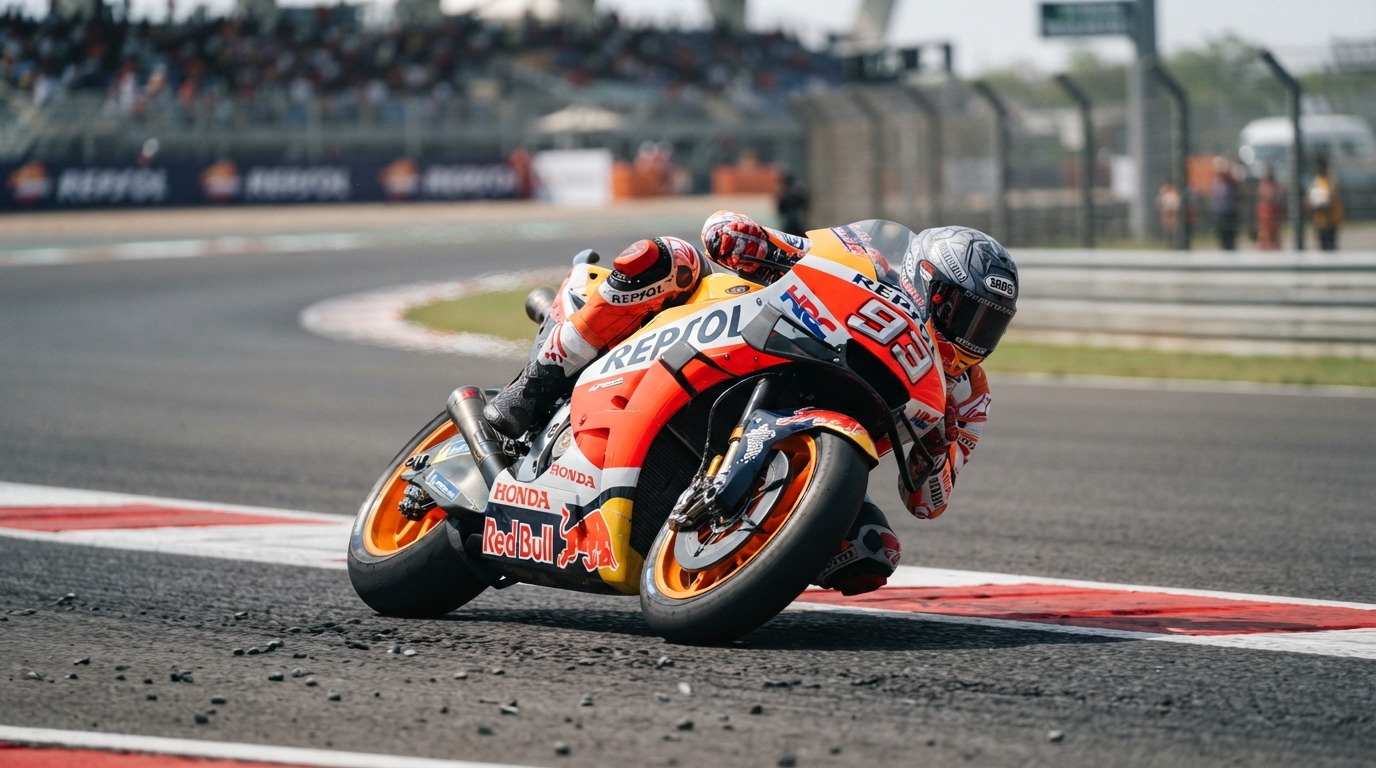
In September 2023, top-tier international motorsport returned to the Buddh International Circuit with MotoGP Bharat. Italian rider Marco Bezzecchi won the inaugural motorcycle Grand Prix on a modified, safer circuit layout. The race drew over 50,000 spectators and proved that Indian fans remained interested in two-wheel racing.
+-----------------------------------------------------------------------+
|                    MOTOGP BHARAT CHALLENGES (2023–2026)               |
+-----------------------------------+-----------------------------------+
| 2023 Inaugural Race               | • Successful race weekend at BIC  |
|                                   | • Won by Marco Bezzecchi (Ducati) |
+-----------------------------------+-----------------------------------+
| 2024-2026 Calendar Hiatus         | • Local promoter payment defaults |
|                                   | • Dorna Sports cancelled events   |
|                                   | • Shifted focus to direct funding |
+-----------------------------------+-----------------------------------+
Commercial stability remained difficult to maintain. Indian promoter Fairstreet Sports failed to meet scheduled contractual payments to commercial rights holder Dorna Sports [BlackBook Motorsport, 2024]. Dorna subsequently excluded India from the 2024, 2025, and provisional 2026 MotoGP calendars [Times of India, 2025]. The cancellation showed that international racing series still faced operational risks without dependable, well-funded promoters. Track more athletic achievements in our review of historic milestones in Indian athletics and records.
Can International Racing Return to Indian Grand Prix History?
A return of Formula 1 or MotoGP to India requires solvent circuit ownership, clear tax policies, and an open calendar slot. While the central government has offered to simplify customs rules, Formula 1's 24-race limit presents scheduling constraints. Domestic series like the Indian Racing League and asset restructuring at Greater Noida are rebuilding the foundation.
+-----------------------------------------------------------------------+
|               KEY REQUIREMENTS FOR AN F1 RETURN TO INDIA              |
+-----------------------------------------------------------------------+
| [ ] Open calendar slot within the strict FIA 24-race limit           |
| [ ] Resolution of Jaypee Infratech insolvency via corporate bidding  |
| [ ] State and central tax waivers for foreign broadcast revenues     |
| [ ] Financially solvent race promoter with long-term underwriting    |
+-----------------------------------------------------------------------+
Calendar Limits and Commercial Realities
Formula 1 calendar limits are the strict 24-race annual scheduling caps set by the Fédération Internationale de l'Automobile that restrict additions to the World Championship season [PlanetF1, 2026]. Global bidding competition from international host cities like Madrid, Las Vegas, and Doha restricts available dates, preventing prospective Indian race organizers from securing an immediate championship return.
In April 2026, Formula 1 leadership dismissed claims from regional politicians that an Indian Grand Prix return was finalized for 2027 [PlanetF1, 2026]. Formula 1 CEO Stefano Domenicali confirmed that India remains an attractive commercial market for the sport [Read Motorsport, 2026]. However, Stefano Domenicali stated that any return requires vetted promoters, long-term funding, and sustainable commercial terms. Without an open calendar slot, race organizers cannot secure dates regardless of venue quality.
Asset Restructuring and Domestic Revival
The physical circuit in Greater Noida is entering a new operational phase. Insolvency proceedings for Jaypee Infratech opened the door for corporate restructuring, with major Indian industrial conglomerates submitting bids to manage the facility [MotorBiscuit, 2026]. In February 2026, Karun Chandhok completed demonstration laps at the circuit in a 2012 Red Bull RB8. That demonstration marked the first time Formula 1 machinery ran on the track in over a decade [YouTube, 2026].
       +-------------------------------------------------------+
       |             MODERN INDIAN DOMESTIC MOTORSPORT         |
       +-------------------------------------------------------+
       | • Indian Racing League (IRL): City franchise racing   |
       | • Formula 4 Indian Championship: FIA Super License pts|
       | • Madras International Circuit: Grassroots testing    |
       | • Kari Motor Speedway: Single-seater junior driver hub|
       +-------------------------------------------------------+
Domestic racing has expanded beyond private track days into organized professional series. The Indian Racing League uses a city-franchise model that features male and female drivers competing in identical sports prototypes. The FIA-certified Formula 4 Indian Championship offers young drivers official FIA Super License points without traveling abroad. Learn how domestic car manufacturing supported this engineering ecosystem in our guide to the history of the Indian automobile industry.
Government Policy Revisions and Sports Status
State and central government attitudes toward motorsport have changed significantly since 2011. Union Sports Minister Mansukh Mandaviya stated that the government intends to help eliminate administrative bottlenecks and tax disputes for international sporting events [RacingNews365, 2026]. Central authorities now view major racing events as drivers of international tourism rather than commercial spectacles.
+-----------------------------------------------------------------------+
|                    POLICY SHIFTS: 2011 VS. TODAY                      |
+--------------------------+--------------------------------------------+
| 2011 Framework           | • Categorized as "Entertainment"           |
|                          | • High customs tariffs on transient freight|
|                          | • Minimal central government involvement   |
+--------------------------+--------------------------------------------+
| Current Position         | • Official recognition as Sports           |
|                          | • Single-window customs clearance support  |
|                          | • Direct state backing for tourism growth  |
+--------------------------+--------------------------------------------+
Official sports recognition allows promoters to apply for customs exemptions on temporary high-performance freight. Single-window clearances reduce the logistical costs that troubled earlier race editions. A stable corporate owner paired with these updated sports policies gives the Buddh International Circuit a viable path back to international racing.
Frequently Asked Questions
Q: Why was the Indian Grand Prix cancelled after 2013?
The race was dropped due to taxation disputes and promoter financial problems. The Uttar Pradesh government classified the event as entertainment rather than a sport, denying tax exemptions. Jaypee Group's growing debt also left them unable to pay Formula 1's annual hosting fees.
Q: Who won the most Indian Grand Prix races?
Sebastian Vettel won all three official Indian Grand Prix races in 2011, 2012, and 2013 driving for Red Bull Racing. Vettel also took all three pole positions and led almost every lap in the event's history.
Q: Is Formula 1 returning to India soon?
Formula 1 has dismissed claims of an immediate return, citing its strict 24-race calendar limit. While series executives view India as an important growth market, a return requires a solvent race promoter and long-term commercial contracts.
Q: What was the Supreme Court's tax ruling on Formula 1 in India?
In April 2017, the Supreme Court of India ruled in FOWC v. CIT that the Buddh International Circuit served as a permanent establishment for Formula 1's management company. This ruling meant foreign rights holders faced Indian income taxes on revenue generated during race weekends.
Your Next Move
If you are researching Indian Grand Prix history for academic work or sports analysis, begin by reviewing the 2017 Supreme Court FOWC v. CIT tax judgment to understand sports hosting contracts. If your focus is athletic history, track how junior drivers advance through the FIA-certified Formula 4 Indian Championship to see how the domestic talent pipeline has matured.
Related Reading
- Milestones in Indian Women's History: A Chronological Guide
- 1,000 Years of Indian Medical History: A Chronological Guide
- Economic Milestones in Indian History: From 1947 to Present
- What Are the Major Events in Indian History? (FAQ Archive)
Sources
- Formula One World Championship Ltd vs Commissioner Of Income Tax, International Taxation on 24 April, 2017 — Supreme Court of India / Indian Kanoon, 2017. Supports: The 2017 Supreme Court ruling determining that the Buddh International Circuit constituted a fixed-place permanent establishment, making foreign race promoters liable for domestic taxes on revenue generated in India.
- 2013 FORMULA 1 AIRTEL INDIAN GRAND PRIX - RACE RESULT — Formula 1, 2013. Supports: Sebastian Vettel winning the 2013 Indian Grand Prix to complete a sweep of all three Formula 1 championship races held at the Buddh International Circuit.
- 2005 Narain Karthikeyan Driver Standings — Formula 1, 2005. Supports: Narain Karthikeyan making his Formula 1 debut in March 2005 for the Jordan team at the Australian Grand Prix.
- UNDERDOG TALES: When Fisichella put Force India on top of the world with a Spa weekend to remember — Formula 1, 2023. Supports: Giancarlo Fisichella securing Force India's first pole position and a second-place podium finish at the 2009 Belgian Grand Prix.
- Marco Bezzecchi Wins Inaugural Bharat GP — BBC TopGear India, 2023. Supports: Marco Bezzecchi winning the inaugural MotoGP Bharat race at the Buddh International Circuit in September 2023.
- F1's Indian Permanent Establishment: Car crash or racing to the future? — Wolters Kluwer, 2017. Supports: The application of the India-UK double taxation avoidance agreement establishing tax exposure for Formula One World Championship Ltd's commercial rights revenue in India.