Turning Points of 1965: Key Battles of the Second Kashmir War
TL;DR
The 1965 Indo-Pak war battles centered on massive armored clashes and high-altitude mountain warfare following Pakistan's covert infiltration of Kashmir. Key engagements like Asal Uttar and Chawinda saw Indian forces use tactical flooding and infantry resilience to halt technologically superior Pakistani tanks, leading to a UN-mandated ceasefire.
Key Takeaways
- India captured roughly 1,900 square kilometers of Pakistani territory before the ceasefire.
- Pakistani forces lost 97 tanks at Asal Uttar due to poor infantry screening.
- Indian troops intentionally flooded the Madhupur Canal to trap heavier enemy armor in mud.
- Diplomats returned the strategically vital Haji Pir Pass during the post-war Tashkent Agreement.
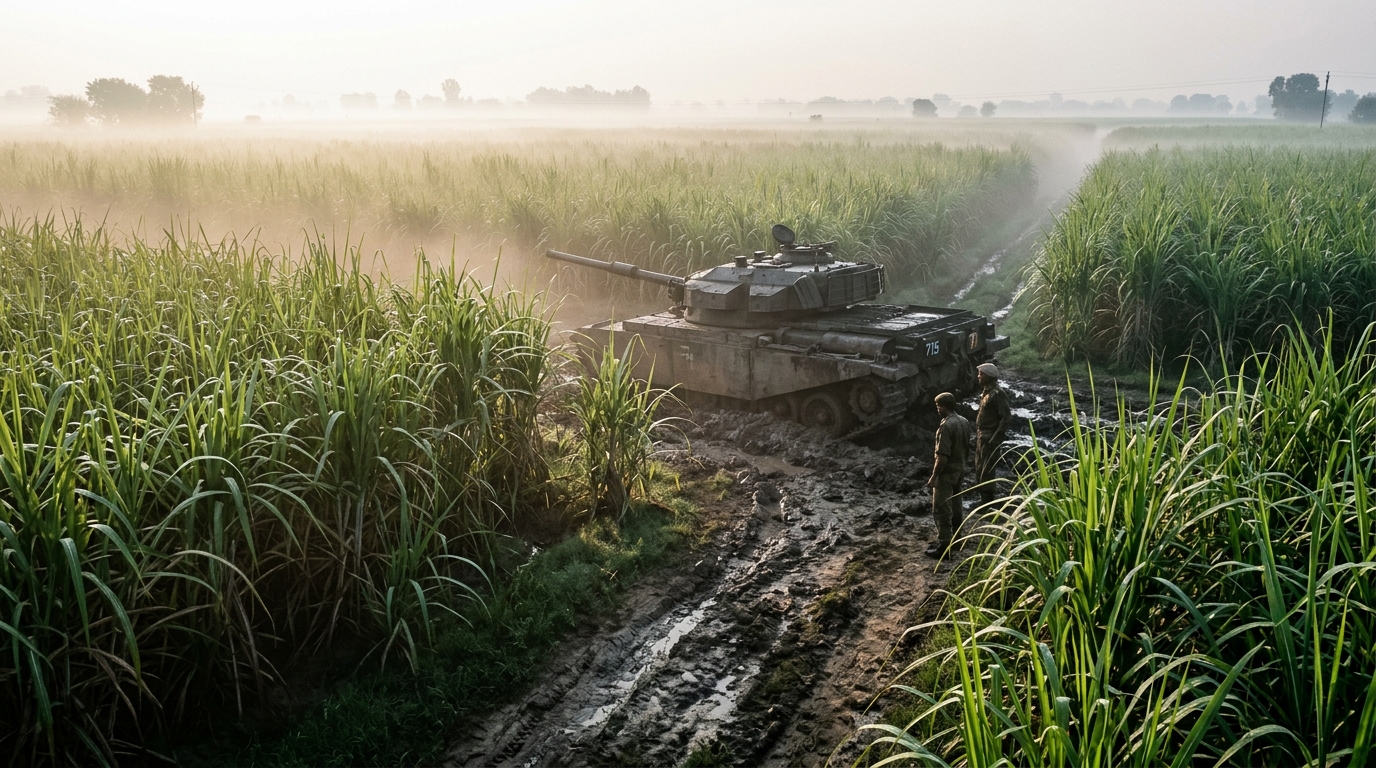
Early September mornings in the Punjab plains usually bring a quiet mist over tall sugarcane fields. In 1965, that quiet broke when over 100 Pakistani Patton and M47 tanks rolled toward the Indian border. Indian troops from the 4th Mountain Division waited in the mud. They had intentionally breached the nearby Madhupur Canal to flood the ground. The heavy, American-supplied tanks sank into the wet soil. This muddy trap set the stage for one of the most decisive 1965 Indo-Pak war battles.
Military history often focuses on the machines of war. The reality on the ground usually comes down to geography, logistics, and human endurance. The events of 1965 reshaped the subcontinent's borders and military doctrines. Both nations deployed massive armies across a wide front. They fought in the freezing altitudes of Kashmir and the dusty plains of Punjab. Understanding these specific engagements reveals how tactical victories on the battlefield often collide with political realities at the negotiating table.
What triggered the 1965 Indo-Pak war battles?
The 1965 Indo-Pak war battles began when Pakistan launched Operation Gibraltar in August. Thousands of covert Pakistani soldiers infiltrated Jammu and Kashmir to spark a local rebellion. The rebellion failed to materialize. Instead, the infiltration forced the Indian Army to launch a massive conventional counter-offensive across the international border.
Operation Gibraltar's Covert Infiltration
Pakistan designed Operation Gibraltar to exploit perceived weaknesses in India's regional control. In early August 1965, Pakistani forces crossed the Ceasefire Line disguised as local Kashmiris. Their goal was simple on paper. They wanted to incite an uprising, sabotage military infrastructure, and sever Indian supply lines.

The plan quickly fell apart. The local Kashmiri population did not rise up in rebellion. Instead, local civilians reported the presence of the infiltrators to the Indian authorities. Indian security forces began hunting down the hidden units. The failure of the covert operation left regular Pakistani troops stranded behind enemy lines. To relieve the pressure on these trapped units, Pakistan launched Operation Grand Slam on September 1. This overt military offensive targeted the Akhnoor sector in Jammu. The goal was to cut off India's primary supply route into Kashmir.
The situation escalated rapidly from a covert skirmish to a conventional war. India recognized that defending Kashmir solely within the state's borders was a losing strategy. The terrain favored the attackers. Indian military leaders knew they had to force Pakistan to divert its resources away from Akhnoor.
The Indian Counter-Offensive Across the Ceasefire Line
On September 6, India made a critical strategic move. The Indian Army crossed the international border into West Punjab. This offensive aimed directly at the major Pakistani city of Lahore. It was a bold escalation that officially broadened the conflict.
By threatening Lahore, India forced the Pakistani military to pull its armor and infantry away from the Kashmir offensive. The gambit worked. Pakistan rushed its forces back to defend its heartland. This maneuver relieved the pressure on Akhnoor and shifted the primary theater of war to the Punjab plains. The conflict now involved massive conventional formations. It required immense resources, straining the developing economies of both nations. You can trace the long-term financial impact of such conflicts in our guide to Economic Milestones in Indian History: From 1947 to Present.
The decision to cross the international border changed the rules of engagement. It guaranteed that the 1965 conflict would be fought with heavy armor, artillery, and air power.
How did India defeat superior tanks at the Battle of Asal Uttar?
India defeated superior Pakistani armor at Asal Uttar by combining terrain manipulation with close-quarter infantry tactics. Indian forces flooded the battlefield to stall the heavy tanks. Once the armor bogged down, Indian anti-tank detachments picked them off from hidden positions in the tall sugarcane fields.
The Tactical Flooding of Khem Karan
The Battle of Asal Uttar remains a masterclass in defensive warfare. In early September, Pakistan's 1st Armoured Division initiated an offensive with a force of over 100 Patton and M47 tanks [Grokipedia, 2024]. They aimed to punch through the Indian defenses at Khem Karan and drive toward Amritsar. The American-built Patton tanks possessed superior firepower and thicker armor than anything in the Indian arsenal.
India's 4th Mountain Division fell back to a horseshoe-shaped defensive position around the village of Asal Uttar. They knew they could not win a direct shootout on open ground. Instead, Indian engineers intentionally breached the Madhupur Canal. Water poured into the surrounding sugarcane fields overnight.
When the Pakistani tanks advanced the next morning, they drove straight into a swamp. The heavy Pattons sank into the mud. Their mobility vanished. They became sitting ducks. Indian soldiers hid in the unharvested sugarcane, armed with recoilless guns and older Sherman tanks. They engaged the trapped Pakistani armor at point-blank range. Company Quarter Master Havildar Abdul Hamid destroyed several tanks with his recoilless gun before falling in combat. He earned the Param Vir Chakra for his actions.
The Creation of "Patton Nagar"
The Pakistani armored thrust collapsed completely. The failure stemmed from a classic military blunder. Pakistan advanced its heavy armor rapidly without adequate infantry screening or reconnaissance. Tanks need infantry to protect them from hidden anti-tank crews. Without that protection, the bogged-down Pattons were defenseless.
The aftermath of the battle left the landscape littered with destroyed machinery. Pakistan lost 97 tanks, including 72 US-supplied Pattons, compared to India's 32 tanks [Honourpoint, 2024]. The sheer number of captured and destroyed enemy vehicles led Indian troops to nickname the area "Patton Nagar" or Patton City.
This engagement shattered the myth of technological invincibility. Superior equipment cannot overcome poor tactics and hostile terrain. The Indian victory at Asal Uttar halted the Pakistani advance into Punjab and secured the southern flank of the war. To understand how decisive battles shape national borders over centuries, compare this armor clash with older conflicts outlined in April 21, 1526: A Historical Timeline of the First Battle of Panipat.
Why was the Battle of Chawinda a strategic stalemate?
The Battle of Chawinda ended in a stalemate because both sides suffered severe logistical friction and heavy casualties. India's 1st Armoured Division clashed brutally with Pakistan's 6th Armoured Division. While India destroyed dozens of tanks, Pakistani defenses successfully halted the Indian advance toward Sialkot.
The Sialkot Sector Armor Clash
While Asal Uttar defined the southern sector, the Sialkot sector hosted a grinding war of attrition. The Battle of Chawinda is often cited as one of the largest tank engagements since the Second World War. India's objective was to capture the city of Sialkot and sever the Pakistani supply lines running toward Kashmir.
India committed its premier armored formation, the 1st Armoured Division, equipped with British-made Centurion tanks. They met Pakistan's 6th Armoured Division head-on. The fighting raged for days across dusty plains and small farming villages. Unlike the tactical trap at Asal Uttar, Chawinda was a brutal slugfest. Both sides traded heavy artillery fire and mounted massive armored charges.
The Indian forces inflicted heavy damage. They destroyed dozens of enemy tanks and pushed deep into Pakistani territory. However, the Pakistani defense held its ground around the town of Chawinda. They utilized the local railway line as an elevated defensive berm. This natural barrier slowed the Indian tanks and exposed them to concentrated anti-tank fire. The Indian advance eventually stalled just short of its primary objectives.
Logistics and Ammunition Bottlenecks
The stalemate at Chawinda highlighted a critical reality of the 1965 war. Neither nation possessed the industrial capacity to sustain a prolonged, high-intensity conflict. As the fighting dragged on, logistical bottlenecks paralyzed both armies.
Tanks consume massive amounts of fuel. Artillery batteries burn through thousands of shells a day. By the third week of September, both India and Pakistan faced severe ammunition shortages. The narrative of the war rarely covers this logistical friction. The lack of supplies forced commanders to scale back their offensives.
This mutual exhaustion made international intervention inevitable. When the United Nations Security Council passed a resolution demanding a ceasefire on September 22, both sides accepted it. They simply lacked the resources to continue fighting at that scale. The Chawinda sector froze in place, leaving neither side with a decisive operational victory.
What made the capture of Haji Pir Pass so critical?
Haji Pir Pass served as the primary logistical route for Pakistani infiltrators entering Kashmir. Indian forces captured it to cut off these supply lines. The victory required a grueling, high-altitude pincer movement that showcased India's superior mountain warfare capabilities before the ceasefire took effect.
High-Altitude Pincer Movements
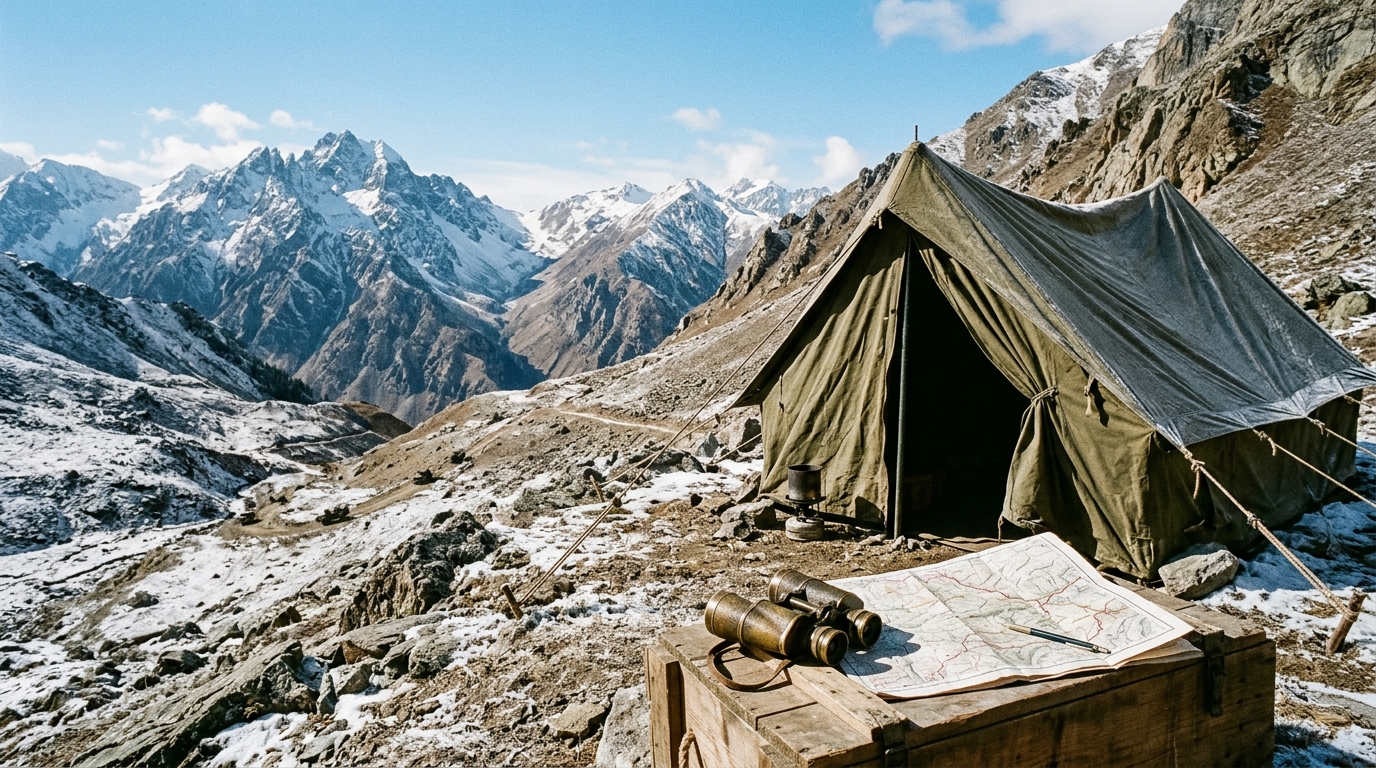
The war in the mountains required entirely different skills than the tank battles in the plains. The Haji Pir Pass sits at an elevation of over 8,600 feet. It connects the towns of Uri and Poonch. In 1965, Pakistan used this strategic corridor to funnel troops and supplies into the Kashmir Valley. Indian commanders knew they had to plug this route to stop the infiltration.
The assault on Haji Pir was a masterpiece of mountain warfare. Indian forces launched a pincer movement under harsh weather conditions. Troops from the 1st Parachute Regiment, led by Major Ranjit Singh Dayal, scaled steep, rain-slicked cliffs in the dead of night. They bypassed the main Pakistani defenses on the roads.
The climb was exhausting. The soldiers carried heavy weapons and ammunition up sheer rock faces. Their surprise appearance above the Pakistani positions broke the enemy's defense. The Indian Army secured the pass on August 28. This tactical victory effectively sealed the infiltration route and linked the Uri and Poonch sectors. It remains one of the most celebrated infantry operations in Indian military history.
The Tashkent Agreement and Diplomatic Concessions
Winning ground in battle is only half the equation. Keeping it requires political leverage. The capture of Haji Pir Pass became a major point of contention during the post-war peace talks in Tashkent.
Under pressure from the Soviet Union and the United States, India agreed to return all captured territory to its pre-war status. This meant handing the Haji Pir Pass back to Pakistan. The decision deeply frustrated the Indian military. Soldiers had bled to secure the high ground. In September 2025, India's Western Command chief Lt Gen Manoj Kumar Katiyar publicly addressed this historical event. He framed the return of the pass as a "tough but peace-oriented decision" [Hindustan Times, 2025].
This diplomatic concession highlights the complex relationship between military victory and statecraft. If you want to explore how political agreements shape regional stability, check out our 1966 Tashkent Agreement Timeline.
Did the 1965 Indo-Pak war battles establish lasting deterrence?
The 1965 Indo-Pak war battles failed to establish long-term deterrence. While India successfully defended its territory and captured enemy land, political leaders returned these gains. Historians argue this diplomatic concession signaled a lack of resolve, leaving the underlying Kashmir conflict unresolved for future generations.
Tactical Wins vs. Strategic Failures
By the time the ceasefire took effect on September 23, the map favored India. The Indian Army had captured roughly 1,900 square kilometers of Pakistani territory. In contrast, Pakistan held only 540 square kilometers of Indian land [Rob Johnson, A Region in Turmoil / Wikipedia, 2024]. India clearly won the tactical ground war.
However, tactical success does not always translate to strategic deterrence. Mainstream narratives often focus on the battlefield heroism but ignore the wider geopolitical failure. Historian Srinath Raghavan notes that while India successfully defended against the invasion, it failed to establish post-war deterrence. The Indian government viewed the necessary signals of resolve—such as holding onto captured territory—as too politically costly [Taylor & Francis, 2019].
Returning the hard-won land at Tashkent reset the borders. It allowed the underlying territorial disputes to fester. Pakistan did not achieve its goal of taking Kashmir, but India did not impose a cost severe enough to prevent future conflicts. This lack of strategic resolution directly paved the way for the 1971 war just six years later.
The Air Force's Role in the Western Sector
The 1965 conflict also marked the first time the Indian Air Force (IAF) engaged in full-scale combat since independence. The air war heavily influenced the ground battles. The IAF flew approximately 4,000 sorties in the western sector, dropping 335 tons of bombs [PIB Delhi, 2025].
Indian aircraft struck Pakistani supply lines, railway yards, and armored columns. They provided critical close air support during the battles of Asal Uttar and Chawinda. The air campaign disrupted Pakistan's ability to reinforce its front lines. It proved that control of the skies is mandatory for modern ground operations. The lessons learned in 1965 pushed India to rapidly modernize its air fleet over the next decade.
FAQ
Q: How long did the 1965 Indo-Pak war last? The main conventional war lasted for 17 days. It began with India's crossing of the international border on September 6 and ended with a UN-mandated ceasefire on September 23, 1965.
Q: Who won the 1965 Indo-Pak war? India is generally considered the victor because it successfully defended its territory, halted the Pakistani invasion of Kashmir, and captured significantly more enemy land. However, the war ended in a negotiated ceasefire rather than a total military surrender.
Q: What was the main cause of the 1965 war? The conflict ignited when Pakistan launched Operation Gibraltar. They sent thousands of covert forces into Jammu and Kashmir to trigger a local rebellion against Indian rule, forcing India to respond militarily.
Q: What happened to the captured Pakistani tanks? Many of the destroyed and captured Patton tanks were left near the village of Khem Karan. The site became known as "Patton Nagar." Several of these tanks are still displayed as war trophies at Indian military bases today.
Understanding the 1965 Indo-Pak war battles requires looking past the medals and machinery. You must examine the terrain, the supply chains, and the political treaties that followed the gunfire. Your next move is to read the exact terms of the Tashkent Declaration. Look at what was traded away at the negotiating table, and you will immediately understand why the region remains contested today.
Sources
- Indo-Pakistani War of 1965 — Wikipedia, 2024. Supports: India captured roughly 1,900 square kilometers of Pakistani territory before the ceasefire.
- Battle of Asal Uttar — Wikipedia, 2024. Supports: Pakistani forces lost 97 tanks at Asal Uttar.
- Battle of Asal Uttar — Wikipedia, 2024. Supports: Indian troops intentionally flooded the ground to trap heavier enemy armor in mud.
- Battle of Haji Pir Pass — Wikipedia, 2024. Supports: Diplomats returned the strategically vital Haji Pir Pass during the post-war Tashkent Agreement.
- Operation Gibraltar — Wikipedia, 2024. Supports: Pakistan launched Operation Gibraltar in August 1965 to covertly infiltrate Kashmir.
- Operation Grand Slam — Wikipedia, 2024. Supports: Pakistan launched Operation Grand Slam on September 1 targeting the Akhnoor sector.
- Abdul Hamid (soldier) — Wikipedia, 2024. Supports: Company Quarter Master Havildar Abdul Hamid destroyed several tanks with his recoilless gun and earned the Param Vir Chakra.
- Battle of Chawinda — Wikipedia, 2024. Supports: India's 1st Armoured Division clashed with Pakistan's 6th Armoured Division at the Battle of Chawinda.