In Short
The Royal Indian Air Force entered the Second World War in September 1939 with one full squadron and ended it with about 25,000 personnel. Its defining dates include its first combat over Burma in early 1942, the Imphal air battle from February 1944, the "Royal" prefix on 12 March 1945, and VJ Day in August 1945.
Key Takeaways
- The IAF grew from one squadron in 1939 to 25,000 personnel by 1945.
- Nine IAF squadrons flew reconnaissance and ground-attack missions during the Burma campaign.
- The "Royal" prefix, granted on 12 March 1945, recognised the IAF's wartime record.
- Karun Krishna Majumdar became the first IAF officer awarded the DFC in November 1942.
- No. 3 Squadron, raised in 1941 for war, stayed in service until 31 March 2025.
Many people believe the Indian Air Force began its fighting life after independence in 1947. It didn't. Indian pilots were flying combat missions over Burma more than five years before independence, under a flag that was not yet their own. The Indian Air Force WWII history dates show a small, new service that was thrown into a world war and came out of it as a tested fighting force. This guide sets out those dates in order, so students and teachers can place each mission on a clear timeline.

Indian Air Force WWII History Dates Begin With One Squadron in 1939
The Indian Air Force (IAF) is the air arm raised in British India on 8 October 1932, and the IAF entered the Second World War in September 1939 with only one full squadron, according to the RAF Museum (2022). The years from 1932 to 1941 explain how that single unit came to exist and how the IAF grew once the fighting began.
From biplanes to wartime: 1932 to 1939
The Indian Air Force was formally established on 8 October 1932, according to the IAF's official site. The IAF was raised within the British Indian Empire, and the new force took months to become operational. Its first flight came into being on 1 April 1933. That first flight had six RAF-trained Indian officers and 19 Havai Sepoys, the air force's first enlisted men. The unit flew Westland Wapiti biplanes, which were open-cockpit aircraft built for army co-operation work. Today, 8 October is marked as Air Force Day, which is why the founding date appears on most Indian history calendars.
September 1939: entering the war small
The IAF's strength in September 1939 was one full squadron: No. 1 Squadron, the unit that grew out of the flight formed on 1 April 1933, according to the RAF Museum (2022). For a country the size of India, No. 1 Squadron was a tiny force, and its main tasks were policing work and army support on the North-West Frontier. Few people in 1939 expected the IAF to fight a modern air war within three years. Yet the threat from Japan would change those plans quickly.
Growth by 1941: new squadrons and coastal flights
The IAF expanded fast once the war began. By the end of 1941, the IAF had three squadrons and five coastal defence flights, according to GlobalSecurity. The coastal flights were small units that patrolled India's long shoreline and the sea approaches to its ports. The coastal defence flights are often left out of popular accounts, but those flights gave many Indian airmen their first operational experience. No. 3 Squadron was raised on 1 October 1941, as recorded on Wikipedia. No. 3 Squadron would later fight in Burma and survive in service for more than eight decades.
The Burma Campaign Defined the IAF's Combat Record
The Burma Campaign is the theatre where the Indian Air Force earned its combat reputation. The RAF Museum (2020) states that nine IAF squadrons mounted reconnaissance, ground-attack and army co-operation missions in Burma. The three phases below cover the first sorties at Toungoo in 1942, the siege of Imphal in 1944, and the push down the Arakan coast in 1945.
Early 1942: first combat at Toungoo
No. 1 Squadron moved to Toungoo in Burma as Japanese forces pushed north. The exact arrival date is unsettled. Some sources give 31 January 1942, while others give 1 February 1942. A one-day gap like this is common in wartime records, because unit diaries, signals and later histories often logged the same event differently. When we build date cards, we list both dates and name the disagreement rather than picking one quietly. From Toungoo, No. 1 Squadron flew reconnaissance and attack sorties against Japanese airfields. The Toungoo sorties were the first real combat missions in IAF history.
Imphal, 1944: the battle in the air
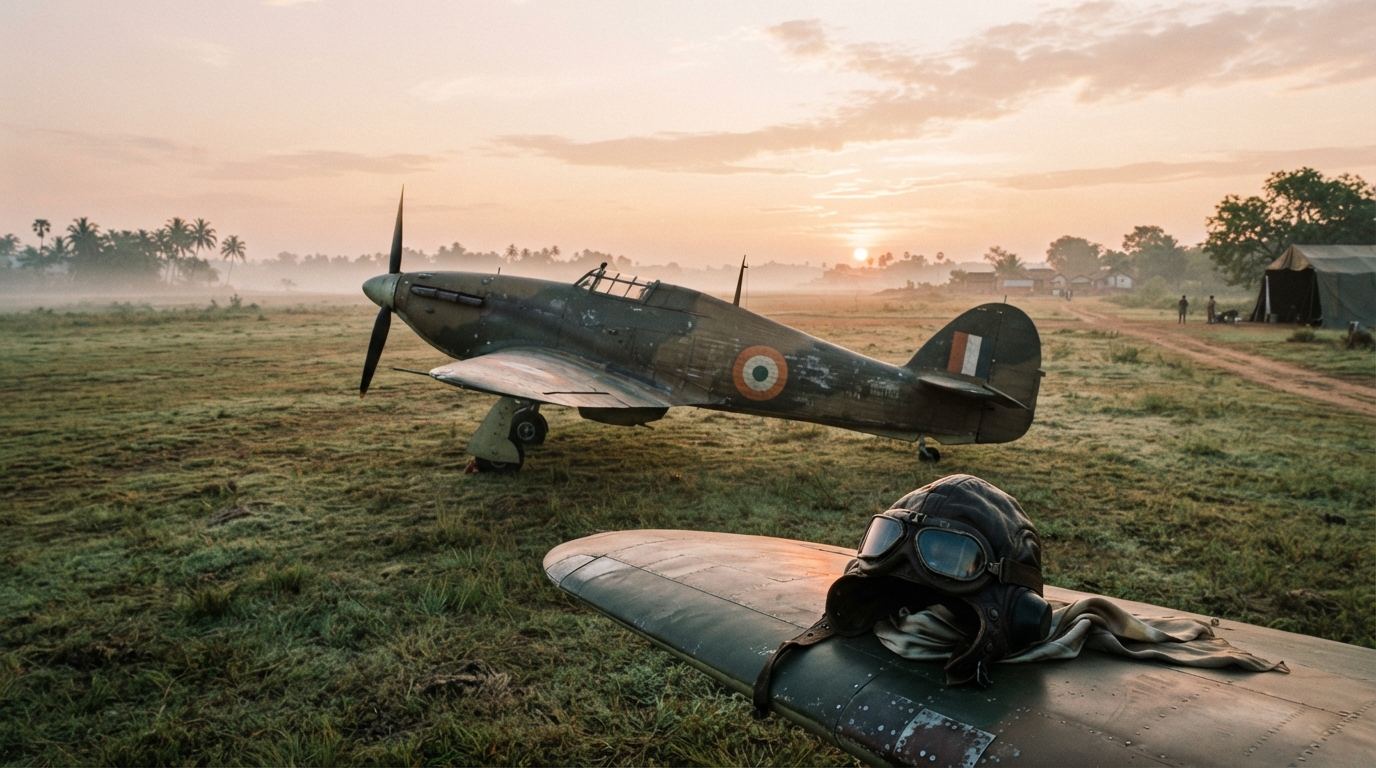
Imphal is the most cited chapter in the IAF's war. Squadron Leader Arjan Singh led No. 1 Squadron back to Imphal on 3 February 1944, according to PIB and GlobalSecurity. By then No. 1 Squadron was flying Hawker Hurricanes. Bharat Rakshak records that No. 1 Squadron flew 412 sorties totalling 485 hours in April 1944 alone. A different source gives 1,034 sorties for the whole defence of Imphal. Both figures can be right, since the Bharat Rakshak figure covers a single month and the 1,034 figure covers the full siege. Students should always check which period a sortie count refers to before quoting it.
Arakan, January 1945: No. 3 Squadron moves in
The final phase brought fresh units to the front. Early in January 1945, No. 3 Squadron received orders to move to Burma for operations on the Arakan front, according to Bharat Rakshak. The Arakan was a coastal region with jungle, hills and tidal creeks. Ground forces in the Arakan needed close air support and constant reconnaissance. IAF pilots flew low over difficult terrain to find and strike Japanese positions. By the time the war ended in 1945, the Burma campaign had made the IAF a tactical air force with real combat depth.
Indian Pilots Also Flew Over Britain
Burma was not the only theatre for Indian airmen. The X-squad is the group of 24 Indian pilots selected in 1940 for service with the RAF in Britain. The X-squad's story shows that Indian airmen took part in the air war over Europe as well as Asia, and the group carried a heavy cost: eight of the 24 pilots were killed.
The 1940 selection
According to Wikipedia, the 24 X-squad pilots were chosen from 72 trainees in 1940. That ratio is one place for every three candidates. The X-squad pilots travelled to Britain at a time when the RAF badly needed trained aircrew. Several flew fighters during and after the Battle of Britain period. The X-squad's service is still far less known in India than the Burma campaign. For a learner, the X-squad is a reminder that India's WWII role stretched across continents.
Mahinder Singh Pujji and the Gravesend statue
Mahinder Singh Pujji is the best-known member of the X-squad. Pujji flew with the RAF and later served in other theatres of the war. In 2014, a statue of Pujji was unveiled in Gravesend, Kent, according to Gravesham Council. The Pujji statue went on to win the Marsh Award for Excellence in Public Sculpture. The Gravesend statue stands as one of the few public memorials in Britain to an individual Indian airman. Teachers can use a photo of the statue as an easy entry point for a class discussion on wartime memory.
The cost: eight of 24
The X-squad's losses were severe: Wikipedia records that eight of the 24 Indian pilots selected for RAF service in 1940 were killed during training or in action. That is a death rate of one in three. The figure matters because it shows that the X-squad's service was not ceremonial. The X-squad pilots were frontline airmen doing dangerous work. Any timeline of this period should include the X-squad's losses alongside honours such as Pujji's 2014 Gravesend statue.
Individual Pilots Earned the IAF's First Major Honours
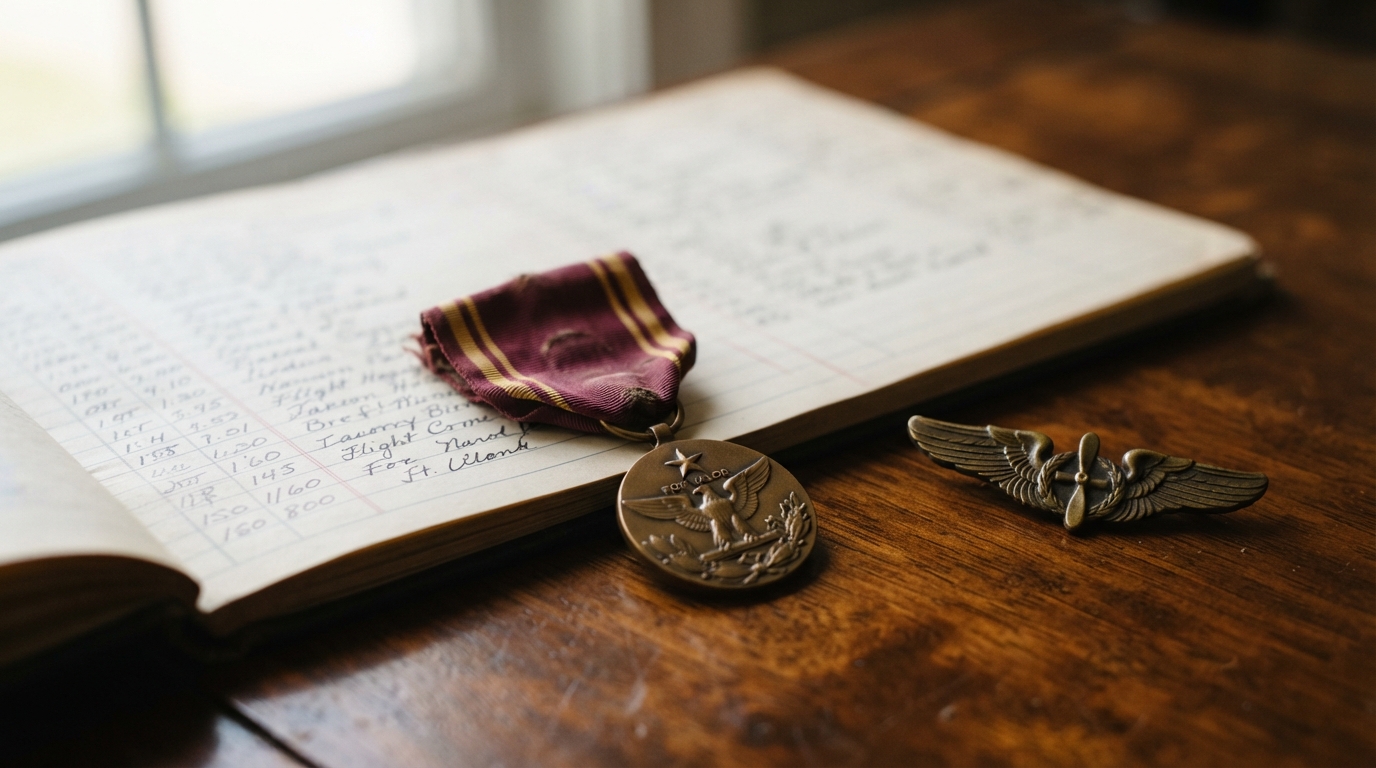
The IAF's wartime awards tell its story in numbers. According to the RAF Museum, RIAF personnel received one DSO, 22 DFCs and one Bar, two AFCs and 45 Mentions in Despatches. Two names stand out from that list: Karun Krishna Majumdar and Arjan Singh. Their careers mark key dates in Indian aviation.
Karun Krishna "Jumbo" Majumdar
Majumdar became the first Indian Air Force officer awarded the Distinguished Flying Cross in November 1942, according to Bharat Rakshak. He later received a Bar to the DFC for further operations. That makes him the only IAF pilot to hold a Bar to the DFC. He was killed on 17 February 1945, less than three months before the war in Europe ended. His death is often missing from short histories, which tend to stop at his medals. For a date-based archive, both November 1942 and 17 February 1945 belong on the record.
Arjan Singh and Imphal
Arjan Singh received the DFC for outstanding leadership, great skill and courage in the Burma campaign, according to PIB. He led No. 1 Squadron back to Imphal on 3 February 1944. His wartime command shaped a long later career in independent India. He went on to become Chief of the Air Staff and, later, Marshal of the Indian Air Force. His story links the colonial-era air force directly to the modern one.
The full awards tally
The RAF Museum's figures are easier to read in a table.
| Award | Number received by RIAF personnel |
|---|---|
| Distinguished Service Order (DSO) | 1 |
| Distinguished Flying Cross (DFC) | 22, plus 1 Bar |
| Air Force Cross (AFC) | 2 |
| Mentions in Despatches | 45 |
Source: RAF Museum. Students should note that the single Bar to the DFC belongs to Majumdar, so it is a second award rather than a separate pilot.
The "Royal" Title Marked a Turning Point in Indian Air Force WWII History Dates
The "Royal" prefix was the clearest sign of wartime recognition. The IAF became the Royal Indian Air Force on 12 March 1945, while the Burma campaign was still under way. The months that followed brought victory over Japan, peak wartime strength, and, five years later, the end of the royal title.
12 March 1945: why the IAF became "Royal"
The RAF Museum links the title directly to the IAF's record in Burma. It notes that the nine squadrons serving there became known for their courage and professionalism. That reputation led to the "Royal" prefix. The timing matters. The award came during active operations, not after the war ended. This places 12 March 1945 among the most important Indian Air Force WWII history dates for any student timeline.
VJ Day and 25,000 personnel
Japan announced its surrender on 15 August 1945, and the formal surrender followed on 2 September 1945. By VJ Day, the IAF had grown to 25,000 personnel, according to Wikipedia. That is a striking jump from one squadron in 1939. The date 15 August also carries a second meaning for India, since independence came on the same day two years later. Dr Daniel Cowling of the National Army Museum wrote in 2025 about the "ragged end" of the war in the Asia-Pacific. His point is useful here, because fighting, disorder and aftermath did not stop neatly on a single day.
From "Royal" to republic in 1950
The royal title lasted less than five years. When India became a republic in 1950, the "Royal" was dropped, according to MigFlug (2025). The service has been the Indian Air Force ever since. That change fits into the wider story told in our visual history of the Indian independence movement. It shows how military institutions changed alongside the constitution.
The WWII Legacy Lasted Until 2025
The IAF's WWII legacy is the chain of wartime units and traditions that survived long after 1945. No. 3 Squadron, raised on 1 October 1941 and later sent to Burma, was only stood down on 31 March 2025, according to Wikipedia. These links make the Indian Air Force WWII history dates feel close to the present for today's students.
No. 3 Squadron's 84-year run
No. 3 Squadron, the "Cobras," was active from 1 October 1941 to 31 March 2025, according to Wikipedia. That 84-year span covers the Arakan campaign, the post-independence decades and the jet age. The IAF retired its last MiG-21 fighters on 26 September 2025, after 62 years of service, according to Aviation Geek Club (2025). A unit raised to fight in Burma outlived the aircraft that defined much of the Cold War air force. Few institutional links between 1941 and today are this direct.
Air Force Day and modern remembrance
The IAF marked its 93rd Air Force Day on 8 October 2025 at Hindon, according to Business Standard (2025). Each year's Air Force Day celebration counts back to the 1932 founding date. Remembrance has also grown abroad. For VJ Day 80, the National Army Museum opened an exhibition called Beyond Burma: Forgotten Armies, as reported by The Gazette (2025). The exhibition's title says a lot about how long the Burma story stayed in the background. We plan to cover the full history of Air Force Day in a separate guide.
Using these dates for today in Indian history
The IAF's WWII dates work well in a daily learning routine. When you check today in Indian history, a single card can link a modern event to a 1940s mission. For example, 3 February ties to Arjan Singh's return to Imphal, and 12 March ties to the "Royal" prefix. Placing these dates on an Indian history timeline chart helps students see cause and effect across decades. The method behind date cards is explained in our guide to learning history through chronological timelines. Short, dated facts are easier to remember than long narrative chapters.
| Date | Event | Source |
|---|---|---|
| 8 October 1932 | Indian Air Force established | IAF official site |
| 1 April 1933 | First flight formed | IAF official site |
| September 1939 | IAF enters WWII with one squadron | RAF Museum (2022) |
| 1 October 1941 | No. 3 Squadron raised | Wikipedia |
| 31 Jan / 1 Feb 1942 | No. 1 Squadron at Toungoo (sources differ) | Multiple |
| November 1942 | Majumdar awarded first IAF DFC | Bharat Rakshak |
| 3 February 1944 | No. 1 Squadron returns to Imphal | PIB; GlobalSecurity |
| January 1945 | No. 3 Squadron ordered to Arakan | Bharat Rakshak |
| 17 February 1945 | Majumdar killed | Bharat Rakshak |
| 12 March 1945 | "Royal" prefix granted | RAF Museum |
| 1950 | "Royal" dropped as India becomes a republic | MigFlug (2025) |
| 31 March 2025 | No. 3 Squadron stood down | Wikipedia |
Related Reading
- 10 Most Searched Dates in Indian History and Why They Matter
- Milestones in Indian Women's History: A Chronological Guide
- Online Indian History Study Materials: Important Dates Index
- 1,000 Years of Indian Medical History: A Chronological Guide
FAQ
Q: When did the Indian Air Force get the "Royal" prefix? The IAF became the Royal Indian Air Force on 12 March 1945. The RAF Museum links the honour to the courage and professionalism of the IAF squadrons that fought in Burma.
Q: How many IAF squadrons fought in Burma during WWII? Nine IAF squadrons served in the Burma campaign, according to the RAF Museum (2020). They flew reconnaissance, ground-attack and army co-operation missions in support of ground forces.
Q: Who was the first Indian Air Force officer to win the DFC? Karun Krishna "Jumbo" Majumdar received the Distinguished Flying Cross in November 1942. He later earned a Bar to the DFC, the only IAF pilot to do so, and was killed on 17 February 1945.
Q: How large was the IAF by the end of the war? By VJ Day in 1945, the IAF had grown to about 25,000 personnel, according to Wikipedia. It had started the war in September 1939 with only one full squadron.
Further Reading
A good first step is simple. Pick one date from the table above, such as 3 February or 12 March. Check that date on India On This Day, then read one source below to see the event in fuller detail.
- Bharat Rakshak (IAF history section): Squadron-level records, including No. 1 Squadron's Imphal sortie counts and No. 3 Squadron's Arakan move.
- RAF Museum online articles on the Indian Air Force in WWII: Clear summaries of the Burma squadrons and the full RIAF awards tally.
- Somnath Sapru, Combat Lore: The Indian Air Force 1930–1945 (2014): A detailed book-length history of the IAF's early and wartime years.
- National Army Museum, Beyond Burma: Forgotten Armies: The VJ Day 80 exhibition that places Indian forces at the centre of the Burma story.
- Gravesham Council's page on the Mahinder Singh Pujji statue: A short, visual starting point for teaching the X-squad's service in Britain.
Sources
- Our Journey – Indian Air Force — Indian Air Force (official site), n.d. Supports: The IAF was formally established on 8 October 1932, and its first flight was formed on 1 April 1933 with six RAF-trained officers and 19 Havai Sepoys.
- Indian Air Force — RAF Museum, 2022. Supports: The IAF entered WWII in September 1939 with only one full squadron, was given the "Royal" prefix on 12 March 1945, and was 25,000 strong by VJ Day.
- Indian Air Force — RAF Museum, 2022. Supports: The awards tally for RIAF personnel: one DSO, 22 DFCs and one Bar, two AFCs and 45 Mentions in Despatches.
- Legacy – Never Forgotten: The War in the East (VJ75) — RAF Museum, 2020. Supports: Nine IAF squadrons flew reconnaissance, ground-attack and army co-operation missions in Burma, and the IAF received the "Royal" prefix on 12 March 1945.
- Karun Krishna Majumdar DFC & Bar — South Asian Heritage Month, 2022. Supports: Majumdar became the first IAF officer to be awarded the Distinguished Flying Cross, in November 1942.
- IAF Pays Tribute to the Marshal of Air Force Arjan Singh DFC — Press Information Bureau, Government of India, 2022. Supports: Arjan Singh received the DFC for outstanding leadership, great skill and courage in the Burma campaign.
- Mahinder Singh Pujji – Historic Statues and Plaques — Gravesham Borough Council, n.d. Supports: The Pujji statue in Gravesend was unveiled in 2014 and won the Marsh Award for Excellence in Public Sculpture.
- Indian Air Force Day 2025: IAF marks 93rd foundation day with grand parade — Business Standard, 2025. Supports: The IAF marked its 93rd Air Force Day on 8 October 2025 at Hindon.
- Indian Air Force MiG-21 Bison Retires After 62 Years in Service — The Aviationist, 2025. Supports: The IAF retired its last MiG-21 fighters on 26 September 2025, after 62 years of service.
- Dedicated display 'Beyond Burma: Forgotten Armies' to mark 80th anniversary of VJ Day — National Army Museum, 2025. Supports: The National Army Museum opened the exhibition Beyond Burma: Forgotten Armies for VJ Day 80.