The Reorganization of Indian States: A Timeline of Regional Elections

What is the Short History of Indian State Elections?
The history of Indian state elections is a timeline tracing directly back to the integration of princely states and the 1956 States Reorganisation Act. Historical records indicate that the 1956 linguistic borders reshaped regional politics, influenced voter demographics, and established the electoral frameworks guiding state assembly contests across India today.
Key Takeaways
- The 1956 Act consolidated 27 existing states into 14 states and 6 Union Territories.
- Linguistic borders established in 1956 directly correlate with modern regional economic voting patterns.
- Early regional elections in Kerala and Assam set precedents for current state assembly contests.
- Future delimitation exercises threaten to alter political representation between northern and southern states.
In October 1952, Potti Sreeramulu began a hunger strike demanding a separate Telugu-speaking state. His death 56 days later ignited massive protests, forcing the Indian government to create Andhra State. This single event triggered the complete redrawing of India's internal borders.
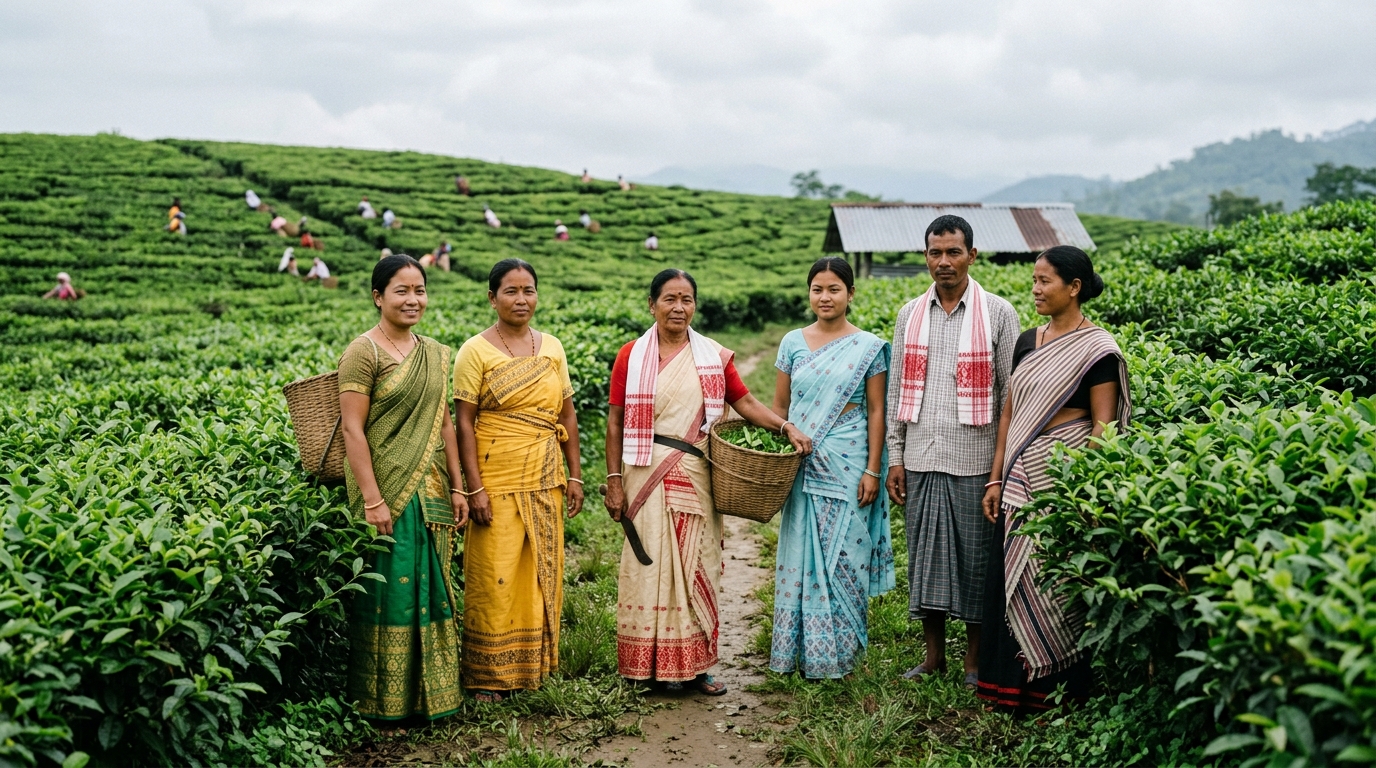
The formation of Andhra State served as the catalyst for the broader linguistic reorganization of India. The formation set a precedent that still fuels regional party identities in modern state elections. Understanding Indian state elections history requires looking at how these borders were drawn. The lines on the map dictate the political, cultural, and economic realities of the country. Voters align themselves based on the distinct regional identities formalized during these early decades.
What Was the 1956 States Reorganisation Act and Its Early Milestones?
The States Reorganisation Act of 1956 is the legislative framework that fundamentally altered India's political map by consolidating 27 disparate states into 14 states and 6 Union Territories based on language. According to parliamentary archives, the 1956 restructuring dictated the boundaries for all subsequent regional elections and modern state-level governance.
What Was the Fazl Ali Commission?
The Fazl Ali Commission is the official body appointed by the Indian government to solve the governance problems of integrating over 500 princely states post-1947. Historical archives show the Fazl Ali Commission evaluated Part A, B, C, and D categories, ultimately recommending the linguistic reorganization of India's internal borders.

The Fazl Ali Commission spent months traveling India to assess public demand for linguistic states. The Fazl Ali Commission submitted the official report in 1955. The Indian government accepted most recommendations, leading to the 1956 Act. The 1956 Act dissolved the old categories and replaced the old categories with a streamlined system of states and Union Territories.
The 1956 Act had an immediate impact on how political parties organized campaigns. National parties had to build regional leadership structures. National parties could no longer rely solely on central messaging. The new borders forced politicians to address local linguistic and cultural concerns.
The First Elections After Reorganization
The 1957 general elections were the first held under the new state boundaries. The 1957 elections tested the new political map. Voter turnout and campaign strategies shifted dramatically. Politicians had to appeal to newly consolidated linguistic groups.
| Pre-1956 Category | Governance Structure | Post-1956 Outcome |
|---|---|---|
| Part A | Former British provinces ruled by an elected governor | Converted into linguistic states |
| Part B | Former princely states governed by a Rajpramukh | Merged into linguistic states |
| Part C | Chief Commissioners' provinces | Reorganized into Union Territories |
| Part D | Andaman and Nicobar Islands | Retained as a Union Territory |
The reorganization created a stable foundation for the Indian state elections history we study today. The reorganization allowed regional leaders to emerge. These leaders built platforms on the specific needs of the newly defined states. The shift laid the groundwork for the regional parties that dominate many state assemblies now. You can see similar structural shifts in our guide to Economic Milestones in Indian History: From 1947 to Present.
How Did Linguistic Borders Shape Indian State Elections History?
Linguistic borders created highly localized political identities that regional parties still use to mobilize voters today. These boundaries transformed state elections from broad ideological battles into focused contests over cultural representation, language rights, and regional resource allocation.
What Caused the Rise of Regional Parties?
The rise of regional parties is a direct political consequence of the 1956 linguistic borders giving local organizations a distinct electoral advantage. Political scientists note that a regional party could focus entirely on one state, win enough seats, and influence national politics without needing a pan-India presence.
Regional parties began to champion local causes. Regional parties fought for greater autonomy and larger shares of central funds. The localized focus made state elections highly competitive. National parties had to form alliances with regional players to secure power. The linguistic borders essentially created captive voter bases bound by language and shared history.
Modern Campaign Targeting
Today, political campaigns exploit historical borders using advanced technology. Modern campaigns use AI and Natural Language Processing to micro-target voters based on the specific linguistic and cultural divides formalized during the state reorganizations.
Campaigns analyze local dialects and cultural references. Campaigns tailor messaging to resonate with specific sub-regions within a state. A message that works in coastal Andhra Pradesh might fail in the Rayalaseema region. Data analytics allow parties to map historical fault lines precisely. Parties deploy targeted advertisements that speak directly to the localized identities created decades ago. The technological approach has made Indian state elections history highly relevant to current campaign managers.
What Are the Regional Milestones in Kerala and Assam?
The regional milestones in Kerala and Assam are clear historical examples of how early state formations influenced long-term electoral outcomes. Election Commission records demonstrate that Kerala's early elections established a persistent two-front political system, while Assam's border dynamics created complex electoral landscapes defined by migration and regional identity.
Kerala's Electoral Evolution
Kerala was formed in 1956 by merging Malayalam-speaking regions. The state quickly made history. In 1957, Kerala elected the first communist government in India. The 1957 election established a bipolar political landscape that persists today. Power typically alternates between two major coalitions.
Recent elections show how historical patterns evolve. Between April and May 2026, regional elections were held in several states, including Kerala. During the 2026 cycle, the Left Democratic Front lost the traditional foothold in the state. Political Analyst Vasudevan noted that traditional left-wing voters in Kerala used the 2026 state elections as a corrective measure against the Left Democratic Front leadership, signaling a need for the political left to completely restructure as an opposition force.
The shift highlights the demanding nature of the Kerala electorate. Voters hold leaders accountable based on high literacy rates and strong political awareness. The state remains a fascinating case study in Indian state elections history.
Assam's Border Politics
Assam's political history is defined by complex borders and demographic shifts. The state has seen continuous reorganization. Several new states were carved out of Assam to accommodate different tribal identities. The divisions left a lasting impact on Assam's internal politics.
Migration and citizenship are central issues in Assam's elections. The 2026 elections confirmed the shifting political allegiances in the region. The Bharatiya Janata Party successfully secured a third consecutive victory in Assam. The win solidified the Bharatiya Janata Party's influence in the Northeast. The 2026 victory demonstrated the Bharatiya Janata Party's ability to manage the ethnic and linguistic divides characterizing Assam. The party managed to build a coalition that appealed to diverse voter groups while addressing historical anxieties about border security.
What Role Does Delimitation Play in Modern Regional Politics?
Delimitation redraws electoral boundaries based on population shifts, directly impacting how many seats a state holds. The process creates tension between northern and southern states, as regions with slower population growth risk losing political representation in the national legislature.
The 2026 Delimitation Bill
The upcoming delimitation exercise is a critical issue for state representation. The Union government circulated draft legislation in April 2026 to uncouple the delimitation of constituencies from the post-2026 Census timeline. The change allows the immediate redrawing of electoral boundaries.
The proposed Constitution (131st Amendment) Bill, 2026 seeks to expand the Lok Sabha to a maximum of 850 seats. The expansion includes up to 815 members from states and 35 from Union Territories. Southern states view the expansion with concern. States like Tamil Nadu and Kerala have successfully controlled population growth. Southern states fear that delimitation will reward northern states with higher populations by granting northern states more seats. The demographic reality threatens to reduce the political influence of the south. If you want to understand the mechanics behind the process, our history of Indian delimitation commissions offers a detailed breakdown.
Voter Roll Revisions
Accurate voter rolls are essential for fair elections. The Election Commission routinely updates voter lists to remove duplicate or ineligible entries. The update process can be massive in scale.
Approximately 9 million names were removed from the West Bengal voter rolls during the Election Commission's 2026 Special Intensive Revision exercise. The massive cleanup aimed to eliminate duplicate and ineligible voters before the state assembly elections. The scale of the revision highlights the logistical challenges of managing Indian state elections history. Accurate data is crucial when political margins are thin. In the subsequent 2026 elections, the BJP conducted an aggressive, highly targeted campaign against incumbent Chief Minister Mamata Banerjee, successfully capturing the state after decades of failed attempts.
The Economic Reality of State Reorganization
The borders drawn in 1956 created distinct economic zones that shape modern voter behavior and campaign finance. The continuous creation of new states fragments regional funding and alters how corporate entities contribute to state-level political campaigns.
Economic Disparities and Voting Patterns
Most historical timelines ignore how the linguistic borders established in 1956 directly correlate with modern regional economic disparities. States with coastal access and early industrialization developed faster than landlocked regions. The economic differences drive state-level economic voting patterns.
Voters in wealthier states prioritize infrastructure and technology investments. Voters in poorer states often vote based on welfare schemes and basic service delivery. Regional parties tailor manifestos to match the economic realities. The linguistic borders effectively locked in the economic zones. A state's economic performance heavily influences political stability.
Campaign Finance Fragmentation
The creation of new states changes how political campaigns are funded. When a state splits, regional parties must divide resources. Corporate donors also adjust contribution strategies.
The formation of Telangana in 2014 provides a clear example. The division of Andhra Pradesh fragmented regional party funding. Businesses had to interact with two separate state governments, altering corporate campaign contributions. The fragmentation creates opportunities for new political movements.
Yamini Aiyar from the Centre for Policy Research observed that the 2026 state assembly elections have fundamentally scrambled long-held assumptions about Indian politics, with upstart parties disrupting decades-old regional duopolies. In Tamil Nadu, the rise of actor Vijay's Tamilaga Vettri Kazhagam party disrupted the entrenched political duopoly of the DMK and AIADMK. The Tamilaga Vettri Kazhagam party successfully captured younger and urban voters. The shifts prove that Indian state elections history is still being actively written. New states and shifting demographics constantly reshape the political landscape. You can track similar modern shifts in our timeline of 25 Historic Indian Events from 2000 to 2025.
Related Reading
- Milestones in Indian Women's History: A Chronological Guide
- 1,000 Years of Indian Medical History: A Chronological Guide
- Economic Milestones in Indian History: From 1947 to Present
- What Are the Major Events in Indian History? (FAQ Archive)
FAQ
Q: What was the main purpose of the States Reorganisation Act of 1956? The Act aimed to organize India's internal borders along linguistic lines. The Act replaced a complex system of princely states and provinces with 14 states and 6 Union Territories to improve governance and administration.
Q: How did the creation of Andhra State influence the rest of India? The formation of Andhra State in 1953 proved that linguistic states were politically viable. The formation forced the central government to form the Fazl Ali Commission, which led to the nationwide reorganization of state borders.
Q: What is delimitation and why is it controversial? Delimitation is the process of redrawing electoral boundaries based on population data. Delimitation is controversial because states that successfully controlled population growth fear losing parliamentary seats to states with higher population growth.
Q: How do modern political campaigns use historical linguistic borders? Campaigns use data analytics and Natural Language Processing to target voters based on regional dialects and cultural identities. Campaigns design specific messages that appeal to the distinct communities formed by the 1956 reorganization.
Further reading
- The Story of the Integration of the Indian States by V.P. Menon: A detailed firsthand account of how India consolidated territory post-independence.
- Election Commission of India Statistical Reports: The primary source for historical voter turnout and seat allocation data across all state assembly elections.
- India After Gandhi by Ramachandra Guha: Provides extensive context on the political and social impacts of the linguistic reorganization of states.
Sources
- States Reorganisation Act, 1956 — Wikipedia, 2026. Supports: The 1956 Act consolidated 27 existing states into 14 states and 6 Union Territories.
- Potti Sreeramulu — Wikipedia, 2026. Supports: Potti Sreeramulu's 56-day hunger strike in 1952 and subsequent death forced the creation of Andhra State.
- States Reorganisation Commission — Wikipedia, 2026. Supports: The Fazl Ali Commission submitted its official report in 1955 recommending linguistic reorganization.
- 1957 Indian general election — Wikipedia, 2026. Supports: The 1957 general elections were the first held under the newly drawn state boundaries.
- 1957 Kerala Legislative Assembly election — Wikipedia, 2026. Supports: Kerala elected the first communist government in India in 1957.
- 2026 Kerala Legislative Assembly election — Wikipedia, 2026. Supports: Regional elections were held in Kerala in April and May 2026, resulting in the Left Democratic Front losing power.