25 Historic Indian Events from 2000 to 2025: A Timeline
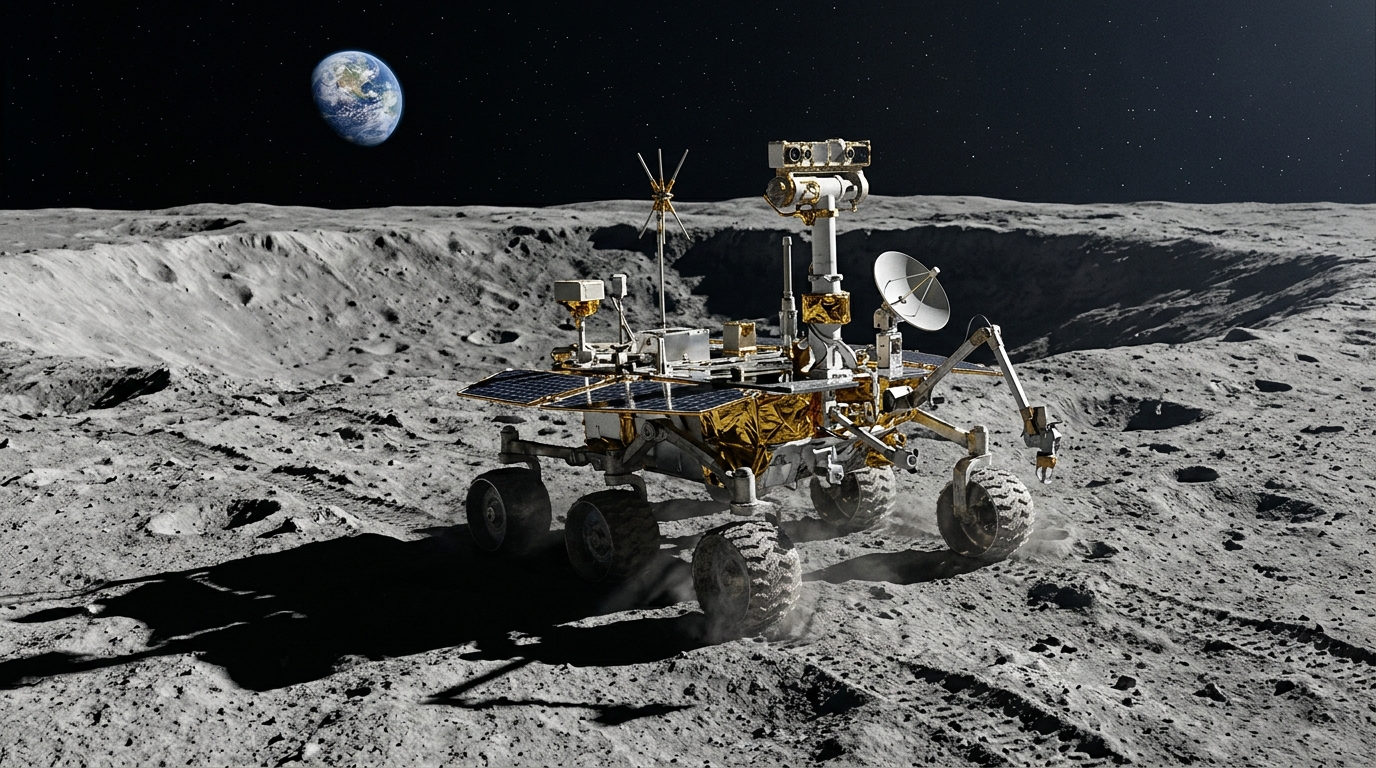
The first quarter of the new millennium transformed India. The country shifted from a developing regional presence into a major global heavyweight. We saw rovers land on the lunar surface. We witnessed massive economic reforms reshape daily commerce. We watched digital identity systems reach over a billion people in record time.
Studying 21st century Indian history requires tracking a fast-paced evolution across science, politics, and culture. You cannot understand modern India without looking at the specific dates that forced the country to adapt and grow. This chronological archive breaks down twenty-five defining milestones from 2000 to 2025. For a broader look at how these fit into the country's full timeline, you can review Historic Dates in Modern India: From Independence to the 21st Century.
Early 21st Century Indian History Milestones (2000–2005)
The early 2000s set the physical and legislative foundation for modern India. The government redrew state borders, laid thousands of kilometers of highway, and passed laws that fundamentally changed how citizens interact with the state.
Redrawing the Map and Building Roads
1. Creation of Three New States (November 2000) Parliament reorganized the political map of India. Madhya Pradesh, Uttar Pradesh, and Bihar lost territory to create three new states: Chhattisgarh, Uttarakhand, and Jharkhand. This move aimed to improve local governance and give political representation to historically marginalized tribal and hill communities.
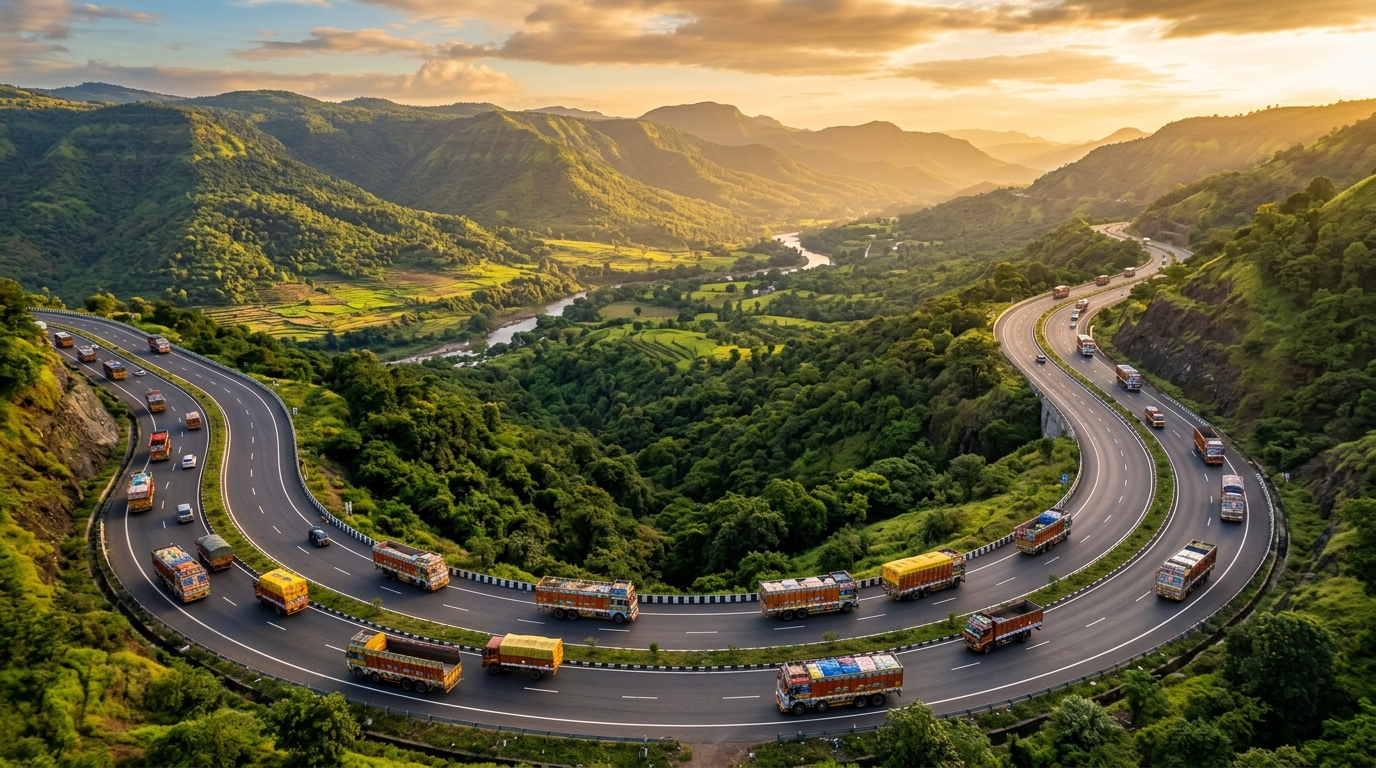
2. The Golden Quadrilateral Begins (2001) Prime Minister Atal Bihari Vajpayee launched the largest highway project in Indian history. The Golden Quadrilateral connected the four major major metropolises: Delhi, Mumbai, Chennai, and Kolkata. The 5,846-kilometer network drastically cut freight transit times. It spurred industrial growth along its corridors.
3. Launch of the GSLV (April 2001) The Indian Space Research Organisation (ISRO) successfully launched the Geosynchronous Satellite Launch Vehicle (GSLV). This rocket gave India the heavy-lift capability needed to place large communication satellites into high earth orbit. It ended the country's reliance on foreign space agencies for heavy payloads.
Empowering the Public
4. EDUSAT Reaches Orbit (September 2004) ISRO launched GSAT-3, widely known as EDUSAT. It was the first Indian satellite built exclusively to serve the educational sector. The satellite beamed interactive educational programming to thousands of remote rural schools. It proved that advanced space technology could solve basic classroom shortages.
5. The Right to Information Act (October 2005) The Right to Information (RTI) Act gave ordinary citizens the legal power to request records from government bodies. Public authorities had to respond within 30 days. This law exposed countless instances of corruption. It forced a notoriously opaque bureaucracy to operate with actual transparency.
Global Ambitions and National Resilience (2006–2010)
During this five-year stretch, Indian corporations made aggressive global acquisitions. Indian athletes broke long-standing records. The country also faced severe domestic challenges that tested its security infrastructure.
Corporate and Sporting Firsts
6. MGNREGA Becomes Law (February 2006) The government rolled out the Mahatma Gandhi National Rural Employment Guarantee Act. This law guaranteed 100 days of wage employment in a financial year to rural households. It became one of the largest social security and public works programs in human history. It provided a crucial safety net during agricultural downturns.
7. Tata Buys Corus (October 2006) Tata Steel acquired the Anglo-Dutch steelmaker Corus for $12 billion. At the time, it was the largest overseas acquisition by an Indian company. This aggressive buyout signaled a shift. Indian corporations were no longer just domestic players; they were buying established Western legacy brands.
8. First Individual Olympic Gold (August 2008) Shooter Abhinav Bindra won gold in the 10-meter air rifle event at the Beijing Olympics. Before this moment, India had only won Olympic gold medals in team field hockey. Bindra's precise final shot shattered a psychological barrier for Indian athletes.
Space Exploration and Digital Identity
9. Chandrayaan-1 Reaches the Moon (October 2008) India launched its first lunar probe. Chandrayaan-1 orbited the moon and dropped an impactor probe onto the surface. The mission made a massive scientific breakthrough by discovering direct evidence of water molecules on the moon. You can explore more about this era in our guide to Scientific Milestones in Indian History: A Date-Wise Guide.
10. The 26/11 Mumbai Attacks (November 2008) Ten terrorists carried out a series of coordinated shooting and bombing attacks across Mumbai over four days. The attacks killed 166 people and targeted iconic locations like the Taj Mahal Palace Hotel. The tragedy exposed severe flaws in India's coastal security. It led to the immediate creation of the National Investigation Agency (NIA).
11. The Aadhaar Project Begins (2009) The government established the Unique Identification Authority of India (UIDAI). Tech entrepreneur Nandan Nilekani took charge as its first chairman. The goal was massive: issue a 12-digit unique identity number based on biometric data to every Indian resident. Aadhaar eventually became the world's largest biometric ID system.
Shaping 21st Century Indian History: The Middle Years (2011–2015)
The middle of the decade brought moments of intense national celebration. The country achieved major public health victories and executed highly cost-effective space missions that stunned the global scientific community.
Triumphs in Sports and Health
12. Cricket World Cup Victory (April 2011) Under the leadership of MS Dhoni, the Indian cricket team won the ICC Cricket World Cup on home soil in Mumbai. It ended a 28-year drought since the country's first win in 1983. The victory sparked massive street celebrations across the nation.
13. Polio Eradication (March 2014) The World Health Organization (WHO) officially certified India as a polio-free nation. Just five years earlier, India accounted for nearly half of all global polio cases. A massive, sustained public health campaign involving millions of frontline health workers made this eradication possible. It remains a defining moment in 21st century Indian history.
The Mars Orbiter and Political Shifts
14. Mangalyaan Enters Mars Orbit (September 2014) ISRO successfully inserted the Mars Orbiter Mission (Mangalyaan) into Martian orbit. India became the first Asian nation to reach Mars orbit, and the first nation in the world to do so on its maiden attempt. The mission cost roughly $74 million—less than the budget of many Hollywood sci-fi movies.
15. Telangana Becomes a State (June 2014) After decades of protests and political negotiation, Telangana officially separated from Andhra Pradesh to become India's 29th state. The city of Hyderabad served as the joint capital for a transitional period. This reorganization recognized distinct cultural and economic disparities within the region.
16. NITI Aayog Replaces the Planning Commission (January 2015) Prime Minister Narendra Modi's government dissolved the 65-year-old Planning Commission. They replaced it with NITI Aayog (National Institution for Transforming India). The new think tank moved away from Soviet-style centralized five-year plans. It adopted a "bottom-up" approach to economic policy and state cooperation.
Major Policy and Digital Transformations (2016–2020)
This period saw the government take unprecedented steps to formalize the economy. Legal rulings modernized civil rights, while the end of the decade brought a global crisis that tested the country's infrastructure.
Sweeping Economic Reforms
17. Demonetization (November 2016) In a sudden televised address, the government announced that all ₹500 and ₹1,000 banknotes would cease to be legal tender at midnight. This removed 86% of the country's currency in circulation overnight. The stated goals were to curb black money and push digital payments. The immediate result was severe cash shortages and economic disruption, though it did accelerate the adoption of digital payment systems like UPI.
18. Implementation of GST (July 2017) India rolled out the Goods and Services Tax. It replaced a complex web of central and state taxes with a single, unified tax structure. The transition was chaotic for small businesses. However, it eventually streamlined interstate commerce and formalized a massive sector of the Indian economy.
Rewriting the Legal Landscape
19. Decriminalization of Homosexuality (September 2018) The Supreme Court of India unanimously read down Section 377 of the Indian Penal Code. This colonial-era law had criminalized consensual same-sex relations. The ruling was a massive victory for human rights and the LGBTQ+ community in India.
20. Abrogation of Article 370 (August 2019) The Indian government revoked the special autonomous status of Jammu and Kashmir. Parliament passed a reorganization act that split the state into two Union Territories: Jammu & Kashmir, and Ladakh. The move fundamentally altered the political relationship between the region and the central government.
The Pandemic and Border Tensions
21. Nationwide COVID-19 Lockdown (March 2020) The government imposed a strict, sudden nationwide lockdown to contain the spread of the novel coronavirus. The halt of all public transport triggered a massive migrant crisis. Millions of daily wage workers walked hundreds of kilometers back to their home villages.
22. Galwan Valley Clash (June 2020) Indian and Chinese troops engaged in a brutal hand-to-hand clash in the Galwan Valley along the Line of Actual Control (LAC). Twenty Indian soldiers died. It was the first deadly clash on the disputed border in 45 years. The event severely strained diplomatic and economic ties between the two nations.
Recent Milestones in 21st Century Indian History (2021–2025)
The most recent years show a country recovering from a pandemic, asserting its diplomatic weight on the global stage, and pushing further into space exploration.
Mass Vaccination and Lunar Success
23. One Billion COVID-19 Vaccinations (October 2021) India crossed the milestone of administering one billion doses of COVID-19 vaccines. The government used the proprietary CoWIN digital platform to track and manage the massive rollout. This logistical feat helped stabilize the country after a devastating second wave of the virus.
24. Chandrayaan-3 Lands on the Lunar South Pole (August 2023) ISRO achieved a historic first. The Chandrayaan-3 lander safely touched down near the lunar south pole. No other country had managed to land in this rugged, resource-rich region. The mission solidified India's position as a tier-one space power.
| Major ISRO Space Missions (2000-2025) | Launch Year | Key Achievement |
|---|---|---|
| Chandrayaan-1 | 2008 | Discovered water molecules on the Moon. |
| Mangalyaan (MOM) | 2013 | First Asian nation to reach Mars orbit. |
| Chandrayaan-3 | 2023 | First nation to land on the lunar south pole. |
| Aditya-L1 | 2023 | India's first dedicated solar observation mission. |
| Gaganyaan | 2024-2025 | Ongoing tests for India's first crewed spaceflight. |
For a deeper dive into these technical achievements, read our indian-space-program-timeline.
Global Diplomacy and Social Legislation
25. The G20 Summit and Women's Reservation Bill (September 2023) India hosted the G20 Summit in New Delhi. The event showcased the country's growing geopolitical influence and resulted in a consensus declaration despite deep global divisions over the war in Ukraine.
Days later, Parliament passed the Women's Reservation Bill. This historic legislation mandates that one-third of all seats in the lower house of Parliament (Lok Sabha) and state assemblies be reserved for women. It was a legislative battle that took nearly three decades to resolve. You can track the lead-up to this moment in our guide to Milestones in Indian Women's History: A Chronological Guide.
How to Build Your Own Historical Reference Guide
Memorizing dates rarely helps you understand the context. Instead, as you study 21st century Indian history, you need to connect events to their broader impact. When you review an event, map out its immediate cause and its long-term effect.
Here is how you can use this timeline practically:
- Group by theme: Don't just read chronologically. Pull out all the economic events (Demonetization, GST) and study them as a single narrative.
- Look for the tech intersection: Notice how government policy increasingly relies on digital infrastructure. You cannot separate the Aadhaar rollout from the later success of the CoWIN vaccination platform.
- Use visual anchors: Search for the iconic photographs attached to these dates. The image of ISRO's women scientists celebrating the Mars orbit insertion provides immediate context that text alone cannot capture.
Keep this timeline bookmarked as a quick-reference guide. Check back on specific dates to see exactly how the events of the past twenty-five years continue to shape the India you interact with today.