The Diaspora Enterprise: Key Dates in Indian Overseas Hospitality History
In Short
The history of Indian overseas hospitality traces its roots to the 1940s when Gujarati immigrants first purchased residential hotels in California. This early foothold expanded through community financing, family labor, and strategic property acquisitions. Today, this phenomenon represents a cornerstone of Indian diaspora history, with people of Indian origin controlling a massive share of the global lodging industry.
Key Takeaways
- Early Gujarati immigrants initiated the motel ownership trend in 1940s California.
- Community-based financing allowed new arrivals to bypass traditional banking barriers.
- The 1965 Immigration Act dramatically accelerated Indian hospitality investments.
- Unpaid family labor models kept operating costs low during economic downturns.
- Modern Indian hoteliers now dominate major global franchise portfolios.
Drive down any American interstate today, pull off at a random exit, and walk into a branded midscale hotel. The person who owns that building, manages the staff, and balances the books likely traces their family lineage to the western Indian state of Gujarat. This specific dominance in the lodging sector did not happen by accident. It represents a highly structured, decades-long progression of resource pooling, risk tolerance, and community support. The broader narrative of Indian diaspora history often highlights academic and medical achievements, but the hospitality sector reveals a distinct entrepreneurial blueprint.

By examining the key dates and structural shifts in this industry, we can understand how a small group of agricultural workers built a multibillion-dollar commercial empire. We can look back at the Economic Milestones in Indian History: From 1947 to Present to see how domestic economic pressures pushed many families to seek opportunities abroad, setting the stage for this overseas expansion. The timeline of this enterprise shows exactly how social capital translates into financial dominance.
The Foundations of Overseas Trade Predate Modern Migration
Long before the mid-century motel boom, Indian merchants established extensive commercial outposts across global trade routes. These early networks provided the cultural template for overseas enterprise. Understanding this foundational era of Indian diaspora history explains how later generations rapidly adapted to foreign business environments.
Early Maritime Trade Networks
Centuries before commercial flights and modern immigration policies, merchants from Gujarat and Sindh navigated the Indian Ocean trade routes. They established semi-permanent settlements in East Africa, the Arabian Peninsula, and Southeast Asia. These early pioneers built localized supply chains. They traded textiles and spices for regional commodities. Their success relied heavily on trust-based credit systems, known as hundis. This system allowed capital to move across borders without physical currency transfer. A merchant in Mumbai could guarantee a payment for a trader in Zanzibar purely based on family reputation.

This historical reliance on informal, community-backed financial networks laid the groundwork for the modern financing models used in the hospitality industry. These early traders faced immense logistical challenges. Yet their ability to maintain cohesive business networks across vast distances proved highly resilient. They learned to operate as minority populations in foreign legal jurisdictions. They focused on trade rather than political assimilation, a strategy that protected their assets during regional conflicts. The cultural memory of these early trade networks normalized the idea of leaving India for commercial gain.
The Indentured Labor Era and Small Enterprises
The mid-19th century brought a darker, more restrictive phase of global movement through the British indentured labor system. Millions of Indians were transported to the Caribbean, Fiji, South Africa, and Mauritius. They worked on sugar and rubber plantations under harsh conditions. While this system was exploitative, many individuals who completed their contracts chose to remain in their new countries rather than return home. They slowly transitioned from manual labor into small-scale retail. They opened provision stores, tailor shops, and local supply depots.
This shift marked a critical evolution in the diaspora's economic footprint. By moving into retail, these communities learned how to negotiate with wholesalers. They learned to manage inventory and serve diverse local populations. They pooled resources to buy commercial real estate, often living above their shops to save money. You can see similar patterns of adaptation in our timeline of Historic Milestones of Indian Cinema on the Global Stage, where early cultural exports gradually found mainstream commercial success. The transition from agricultural labor to business ownership in these colonies served as a direct precursor to the 20th-century hospitality boom.
The Mid-Century Shift Sparked the Indian Motel Phenomenon
The modern era of Indian diaspora history in hospitality officially began in the 1940s. A specific group of immigrants identified a gap in the American lodging market and capitalized on it. This period transformed transient agricultural workers into property owners, setting a precedent for future generations.
The 1940s California Entry Point
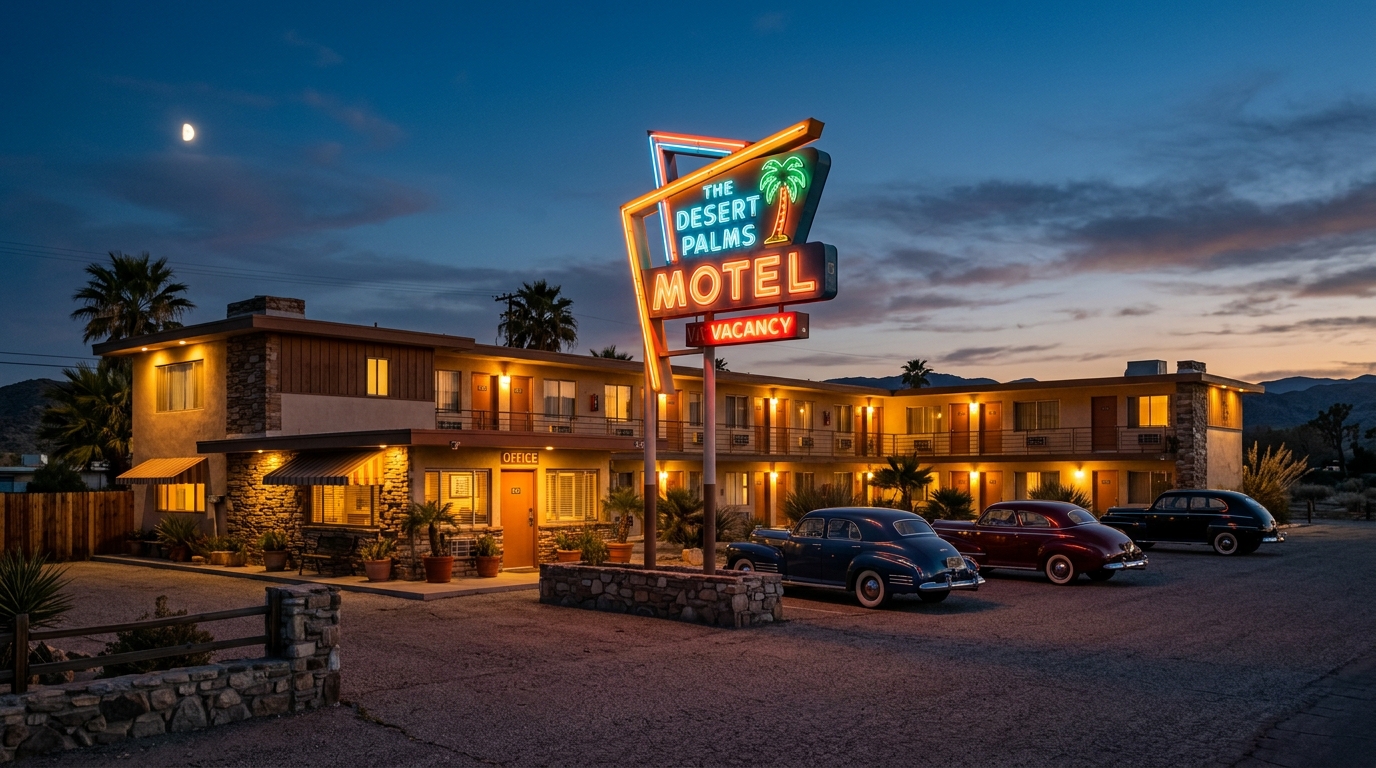
The traditional origin story of the Indian motel industry centers on an undocumented immigrant named Kanjibhai Desai. In the early 1940s, Desai managed to purchase a residential hotel in San Francisco. The property served as a low-cost boarding house, primarily catering to transient workers and other immigrants. Desai soon realized that managing a small lodging facility required minimal English proficiency. It could be run entirely by a single family unit. The business model was highly efficient. The family lived on-site, eliminating separate housing costs, while simultaneously generating a steady daily income.
Word of this success reached other Gujarati immigrants working in California's agricultural sector. Many of these workers pooled their savings to purchase their own distressed residential hotels in urban centers. They focused on Single Room Occupancy (SRO) buildings that required minimal upkeep. This initial wave of acquisitions established a replicable template for commercial success. It proved that real estate ownership was accessible even to those with limited formal education. The model relied entirely on hard work, low overhead, and a willingness to live in the business itself.
The Patel Motel Cartel Origins
As the 1950s progressed, a distinct surname began to dominate these property records: Patel. Originating from the agricultural communities of central and southern Gujarat, the Patels possessed a strong cultural inclination toward self-employment. When one family successfully acquired a motel, they immediately sponsored relatives from India to join them. These new arrivals would work at the front desk or clean rooms. They learned the operational mechanics of the business from the inside out. Once they saved enough capital, the original owners would help them purchase their own property.
This exponential growth model earned the community the informal moniker of the "Patel Motel Cartel." However, this network operated entirely legally. It relied on shared knowledge and mutual support rather than monopolistic coercion. Sociologist Pawan Dhingra extensively documented this phenomenon in his research on Indian American entrepreneurship. He noted that the community's success stemmed from extreme frugality and collective risk-taking. They shared maintenance tools, bulk-purchased supplies, and covered shifts for one another during emergencies. This dense network of mutual aid made it nearly impossible for independent operators outside the community to compete on price.
Legal Changes Accelerated the Boom
The trajectory of this industry changed forever with the passage of the US Immigration and Nationality Act of 1965. This legislation abolished the restrictive national origins quota system. It opened the doors for widespread Asian immigration. Simultaneously, the US government expanded its interstate highway system. This infrastructure project created a massive demand for roadside accommodations. Indian immigrants, already familiar with the lodging business model, aggressively purchased independent motels along these new transit corridors.
They targeted aging, underperforming properties that traditional banks deemed too risky to finance. By the 1970s, the oil crisis severely depressed commercial real estate prices. This economic downturn allowed immigrant buyers to acquire significant assets at bargain prices. Corporate hotel chains were shedding properties to reduce debt. The Indian buyers stepped in, willing to take on the risk because their operating costs were significantly lower. This perfect storm of changing immigration law, infrastructure development, and economic timing solidified the community's grip on the midscale hospitality sector.
Community Financing Built an Unmatched Support System
Traditional banking institutions routinely denied commercial loans to early Indian immigrants. To bypass this barrier, the community developed strong internal financing mechanisms. This self-reliance remains a defining characteristic of Indian diaspora history, proving that social capital can effectively replace institutional capital.
Informal Lending Networks
When a new immigrant wanted to purchase a motel in the 1970s, they rarely walked into a local bank branch. Instead, they relied on verbal agreements and handshake loans from extended family members. A prospective buyer might borrow small amounts from twenty different individuals. This aggregation provided enough cash for a substantial down payment. These loans carried minimal interest and no formal collateral. They relied entirely on the borrower's reputation within the community.
Defaulting on a loan meant severe social ostracization. This consequence served as a stronger enforcement mechanism than any legal contract. This system allowed the community to move quickly on real estate deals. They outbid competitors who had to wait for traditional mortgage approvals. It also kept wealth circulating within the localized network. As one family paid off their motel, they immediately lent their profits to the next arrival. This continuous recycling of capital built immense collective financial strength over time. It turned a group of isolated immigrants into a unified economic force.
The Role of Family Labor
The financial viability of these early motels depended heavily on unpaid family labor. Operating a 20-room roadside motel requires constant attention. The front desk must remain open late into the night. Housekeeping must begin at dawn. By living behind the front desk, Indian families eliminated the need to hire outside staff. Children often completed their homework in the lobby, ready to hand out room keys when a customer arrived. Spouses managed the housekeeping and maintenance, working long hours without formal wages.
This aggressive cost-cutting strategy allowed owners to lower their nightly rates. They consistently undercut nearby competitors who had to pay minimum wage to a full staff. During economic recessions, when corporate-owned hotels struggled to meet payroll, these family-run operations easily survived on reduced revenue. The reliance on family labor represented a significant personal sacrifice. Vacations were rare, and privacy was minimal. Yet it generated the profit margins necessary to pay off community loans and acquire larger properties.
Global Hospitality Expansion Reached Beyond North America
While the American motel industry receives the most attention, Indian diaspora history features similar hospitality expansions globally. Immigrant communities in Europe and Africa adapted the same core business principles to their local environments. This global footprint highlights the versatility of the diaspora enterprise.
The UK Corner Shop to Hotel Pipeline
In the United Kingdom, the trajectory toward hospitality ownership often began in the retail sector. Following the post-World War II labor shortages, many Indians migrated to Britain. They opened small convenience stores, colloquially known as corner shops. These businesses shared the exact operational DNA as the American motels. They relied on family labor, extended operating hours, and living quarters attached to the commercial space.
As these shop owners accumulated capital through the 1970s and 1980s, they began diversifying their investments. Many recognized the high margins available in the bed-and-breakfast and budget hotel sectors. They purchased aging guesthouses in coastal towns like Blackpool and major transit hubs like London's King's Cross. Over time, these independent operators formed powerful trade associations. They advocated for their specific commercial interests, negotiating better rates with local councils and tourism boards. The transition from retail to real estate mirrored the American experience, proving the model worked across different economic environments.
East African Entrepreneurship and Resettlement
The Indian community in East Africa developed a strong presence in local hospitality long before the political upheavals of the 1970s. Indian merchants owned prominent hotels and lodges in major urban centers across Kenya and Uganda. They catered to both local business travelers and international tourists. However, the 1972 expulsion of Asians from Uganda by Idi Amin forced thousands of established hoteliers to flee. They left their physical assets and life savings behind.
Many of these refugees resettled in Canada, the UK, and the United States. Despite arriving with minimal financial resources, they brought decades of high-level business acumen. This specific subset of the diaspora quickly re-established themselves in the hospitality sector. They used their prior experience to bypass the entry-level motel phase entirely. They aggressively pursued larger, full-service hotel acquisitions. This significantly accelerated the community's upward mobility in their new home countries. We often discuss the impact of political displacement on economic strategy, similar to the systemic changes documented in our guide to the Portuguese Era in Goa: Key Dates and Architectural Milestones.
Modern Consolidation Shaped Current Industry Dominance
The contemporary environment of Indian diaspora history in hospitality looks vastly different from the independent motels of the 1970s. Today, the community controls massive franchise portfolios and influences global corporate strategy. This consolidation phase transformed small business owners into institutional investors.
From Independent Motels to Franchise Empires
The transition from independent roadside motels to branded franchises marks the most significant evolution in this industry. By the late 1980s, consumer preferences shifted heavily toward predictable, standardized lodging experiences. Travelers wanted the security of a known brand name. Indian hotel owners recognized this trend and began aggressively partnering with major franchise brands. They signed agreements with Choice Hotels, Wyndham, and eventually Marriott and Hilton.
Buying into a franchise required strict adherence to corporate standards. Owners had to fund expensive property renovations and pay significant royalty fees. However, it also provided access to global reservation systems and national marketing campaigns. The Asian American Hotel Owners Association (AAHOA), founded in 1989, played a crucial role in this transition. The organization used the collective buying power of its members to negotiate fairer franchise agreements. They actively combated discriminatory lending practices and unfair corporate mandates. Today, AAHOA members own approximately 60% of all hotels in the United States, representing a staggering concentration of industry control.
Generational Shifts in Business Focus
The children and grandchildren of the original motel pioneers are currently driving the industry's future. Unlike their parents, who learned the business through trial and error, this new generation operates differently. They often hold advanced degrees in finance, real estate, and hospitality management from top universities. They are less interested in operating single 30-room properties. Instead, they focus entirely on institutional-scale investments.
These modern operators form private equity groups. They develop ground-up luxury resorts and manage third-party operations for institutional investors. They use sophisticated data analytics to optimize room pricing and streamline daily operations. Yet, despite this professionalization, the core tenets of the original diaspora model remain intact. The reliance on strong community networks, collective investment, and long-term asset appreciation continues to define their strategy. If you want to explore how these modern business practices intersect with broader societal changes, our timeline on 25 Historic Indian Events from 2000 to 2025: A Timeline provides excellent context for the current era.
Related Reading
- Milestones in Indian Women's History: A Chronological Guide
- 1,000 Years of Indian Medical History: A Chronological Guide
- Economic Milestones in Indian History: From 1947 to Present
- What Are the Major Events in Indian History? (FAQ Archive)
FAQ
Q: How much of the US hotel industry is owned by the Indian diaspora? Members of the Asian American Hotel Owners Association (AAHOA), who are predominantly of Indian descent, own approximately 60% of all hotels in the United States. This represents tens of thousands of properties and billions of dollars in real estate assets.
Q: Why did Gujarati immigrants specifically dominate the motel business? The initial entry into the market by a few Gujarati pioneers created a localized knowledge base. They actively sponsored relatives and provided the necessary informal financing, creating a self-sustaining cycle of property acquisition within their specific cultural network.
Q: What role did the 1965 Immigration Act play in this industry? The 1965 Immigration and Nationality Act removed strict national origin quotas, allowing a significant influx of Indian immigrants into the US. This demographic shift coincided with the expansion of the interstate highway system, providing the necessary workforce and market demand for the motel boom.
Q: Do Indian hoteliers still rely on informal community loans today? While community partnerships and family investment groups remain common, modern operators primarily use traditional commercial banking and private equity. The scale of current acquisitions, often involving multi-million dollar franchise properties, requires institutional capital.
Further Reading
- Life Behind the Lobby: Indian American Motel Owners and the American Dream by Pawan Dhingra. An academic look into the sociological and economic factors driving the Patel motel phenomenon.
- The Global Indian Diaspora Timeline. Our suggested visual timeline mapping major migration waves and their economic impacts.
- The Asian American Hotel Owners Association (AAHOA) Annual Reports. Primary source data tracking the current market share and economic footprint of Indian hoteliers.