TL;DR
The Indian Premier League began on 13 September 2007, when the BCCI announced a city-based Twenty20 league. Sony and World Sports Group bought broadcast rights in January 2008. Eight franchises sold for US$723.59 million on 24 January, and the player auction followed on 20 February. The first match was played on 18 April 2008. Rajasthan Royals won the final on 1 June 2008.
Key Takeaways
- The cheapest 2008 franchise, Rajasthan Royals, won the very first IPL title.
- Eight franchises sold for US$723.59 million against a US$400 million base price.
- MS Dhoni was the costliest player at the first auction, at US$1.5 million.
- Brendon McCullum's 158* in the opening match set the tone for the league.
- The full 2008 sequence ran from September 2007 to 1 June 2008.
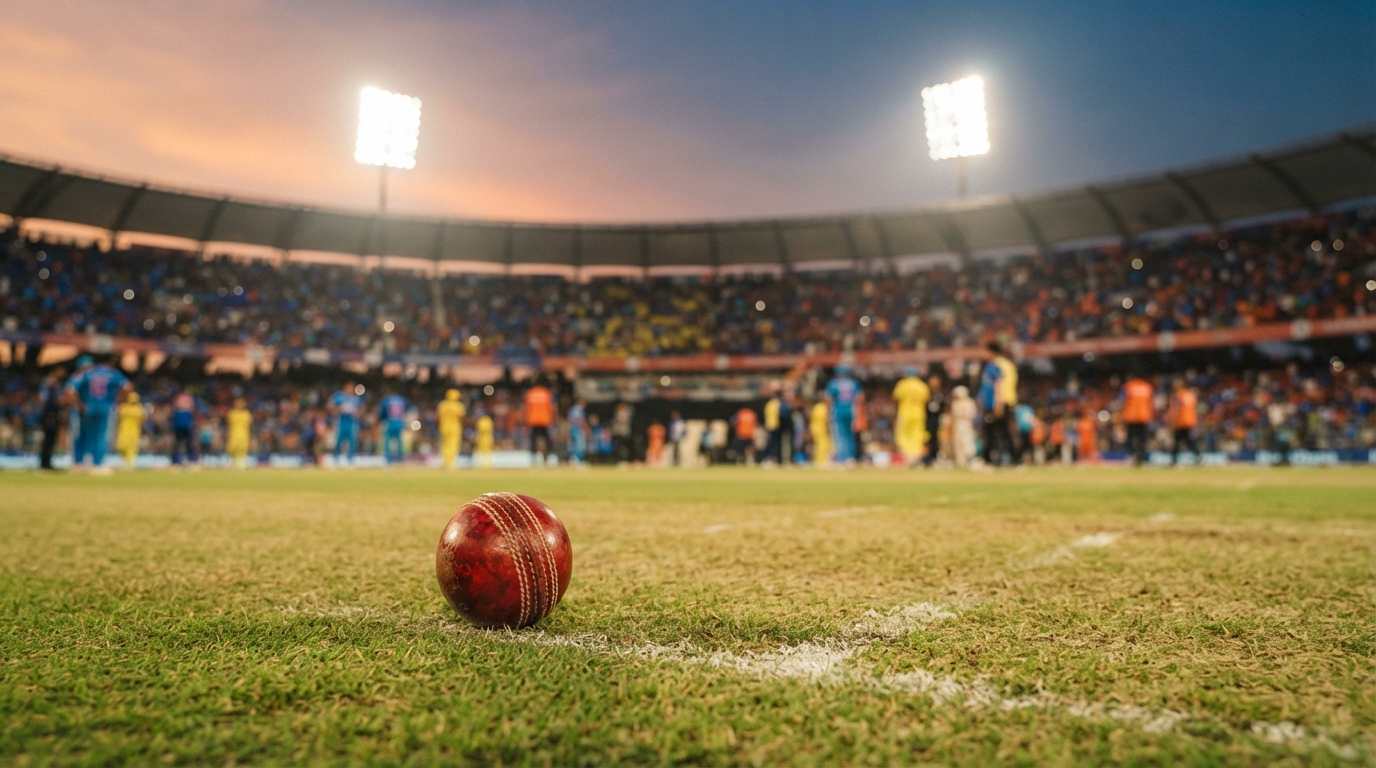
Picture Arjun, a Class 11 student in Bengaluru, on the evening of 18 April 2008. He's at the M. Chinnaswamy Stadium with a ticket his uncle bought, unsure who to cheer for. Rahul Dravid leads the home side. Sourav Ganguly, a national hero, leads the visitors from Kolkata. Within three hours, a New Zealander named Brendon McCullum has hit 13 sixes, and Arjun is cheering for a city team rather than a country. That shift in loyalty is the real story of 2008. This IPL history timeline traces how it happened, date by date.
Why Did the BCCI Create the IPL in 2007?
The BCCI created the IPL for two linked reasons. A rival league was taking shape without board approval, and India's win at the first World Twenty20 in September 2007 showed that fans had a strong appetite for the short format. Lalit Modi, then a BCCI vice-president, pushed a city-based franchise model borrowed from global sports leagues.
The rival league that forced the board to act
The Essel Group's Indian Cricket League (ICL) was announced earlier in 2007. It offered players a private Twenty20 competition outside the BCCI's control. The board refused to recognise it, and players who joined faced bans from official cricket.
That pressure mattered. A Columbia Business School case study and reporting by Scroll both describe the ICL as a push factor behind the IPL's timing. The BCCI needed its own league, and it needed one fast.
The ICL ran its first tournament in late 2007. The IPL beat it on money and on star power. The rival league shut down within a few years.
The World T20 effect
The World T20 effect is the surge of public interest that India's 2007 ICC World Twenty20 title gave the newly announced IPL. The BCCI announced the league on 13 September 2007. Eleven days later, on 24 September, MS Dhoni's young side beat Pakistan in the Johannesburg final, giving the IPL a ready audience and a ready-made star.
India's title turned Twenty20, a format that Indian fans had largely ignored, into a national story within the same month as the IPL announcement.
That timing handed the new league an audience already primed for short-format cricket. The World Twenty20 win also handed the IPL a ready-made star in Dhoni, the captain who had just led India to the inaugural title.
Modi's "gold mine" idea
Lalit Modi argued that cricket's economy was unusual because it centred on country-versus-country matches. He described a city-based league as a "gold mine" that had not been tapped (Yahoo Sports/Telegraph, 2023).
His model drew on the NFL, NBA, MLB, English Premier League and Japan's J-League, according to sports writer David Cushnan (Substack, 2026). Each franchise got exclusive rights to its city. No rival team could set up within roughly 100 km. The IPL was designed as a city-based business first and a cricket tournament second.
The IPL History Timeline: Key Dates from Launch to Final
The IPL history timeline for 2008 is a sequence of six milestones spread over about nine months. The sequence starts with the BCCI's announcement on 13 September 2007 and moves through the TV deal, the franchise sale and the player auction. The timeline ends with the opening match on 18 April and the final on 1 June 2008.
The full sequence in one table
Most accounts scatter these dates across different pages. Here they are in order:
| Date | Milestone | Key detail |
|---|---|---|
| 13 September 2007 | BCCI announces the IPL | City-based T20 league with eight teams |
| 24 September 2007 | India wins World Twenty20 | Final against Pakistan in Johannesburg |
| January 2008 | Broadcast rights sold | Sony and World Sports Group, US$1.026 billion, 10 years |
| 24 January 2008 | Franchise auction | Eight teams sold for US$723.59 million |
| 20 February 2008 | First player auction | Dhoni sold to CSK for US$1.5 million |
| 18 April 2008 | Opening match | KKR beat RCB by 140 runs in Bangalore |
| 30–31 May 2008 | Semi-finals | RR beat Delhi; CSK beat Kings XI Punjab |
| 1 June 2008 | Final | RR beat CSK by three wickets in Navi Mumbai |
Why the order matters
The order of the 2008 IPL milestones matters because the money came first. Broadcasters Sony and World Sports Group committed US$1.026 billion in January 2008, before a single franchise was sold (ESPNcricinfo, 2008). That guaranteed broadcast income made the franchise bids on 24 January 2008 far less risky for owners.
Franchises were sold on 24 January 2008, nearly a month before the first player auction on 20 February. Franchise owners therefore knew their costs and their city before building a squad. Students who learn the IPL's launch sequence find the auction prices, such as Dhoni's US$1.5 million sale to CSK, easier to understand.
For a wider view of how this fits into recent decades, see our timeline of historic Indian events from 2000 to 2025.
The season itself
The 2008 IPL season was a 59-match tournament played over 45 days, from the opening match on 18 April to the final on 1 June 2008. The 59 matches included 56 league games, two semi-finals and the final. Each of the eight teams played every other team twice, once at home and once away.
The season opened in Bangalore, where Kolkata Knight Riders beat Royal Challengers Bangalore by 140 runs. The semi-finals followed on 30–31 May, and Rajasthan Royals beat Chennai Super Kings by three wickets in the Navi Mumbai final.
How Did the 2008 Auctions Work?
The 2008 auctions happened in two stages. On 24 January, companies and celebrities bid for eight city franchises against a base price of US$50 million each. On 20 February, those franchises bid for players under a US$5 million salary cap. Both auctions were held in Mumbai.
The franchise auction: who paid what
Bidding pushed every team above its US$50 million base. Here are the eight 2008 franchises, as listed in Wikipedia's 2008 auction record and confirmed by several cricket outlets:
| Franchise | Owner (2008) | Price (US$) |
|---|---|---|
| Mumbai Indians | Reliance Industries | 111.9 million |
| Bangalore Royal Challengers | UB Group (Vijay Mallya) | 111.6 million |
| Deccan Chargers (Hyderabad) | Deccan Chronicle | 107 million |
| Chennai Super Kings | India Cements | 91 million |
| Delhi Daredevils | GMR Group | 84 million |
| Kings XI Punjab | Preity Zinta, Ness Wadia and partners | 76 million |
| Kolkata Knight Riders | Red Chillies Entertainment (Shah Rukh Khan) | 75.09 million |
| Rajasthan Royals | Emerging Media (Manoj Badale) | 67 million |
The gap between first and second place was just US$300,000. Rajasthan, the cheapest side, cost US$44.9 million less than Mumbai.
The player auction and the icon system
The first player auction took place on 20 February 2008. Auctioneer Richard Madley ran the room. Each team had a US$5 million salary cap and had to spend at least US$3.3 million (CricTracker, 2026).
MS Dhoni went to Chennai Super Kings for US$1.5 million. He was the most expensive player of the day. Andrew Symonds joined Deccan Chargers for US$1.35 million.
Some stars were kept out of the auction as "icon players." They were tied to their home cities:
- Sachin Tendulkar for Mumbai
- Sourav Ganguly for Kolkata
- Rahul Dravid for Bangalore
- Yuvraj Singh for Punjab
- Virender Sehwag for Delhi
Each icon earned 15% more than the highest-paid player in his squad. The rule protected local loyalty. It also squeezed budgets, since a big auction buy pushed up the icon's fee too.
The tradeoff owners faced
The salary cap created a real dilemma. Spend heavily on one star, and the rest of the squad thins out. Rajasthan took the opposite approach, with modest buys and a captain-coach in Shane Warne. Warne also negotiated an equity stake in the franchise in 2008 (Onmanorama, 2026).
Rajasthan's results showed that a balanced squad could beat a star-heavy one. It's a lesson many franchises took years to absorb.
The First Season Produced Matches Still Cited Today
The 2008 season produced the matches that most IPL histories still lead with. Brendon McCullum's unbeaten 158 opened the tournament on 18 April. Sohail Tanvir's bowling and Shane Watson's all-round play shaped the season. A last-ball finish on 1 June gave the cheapest franchise the first title.
18 April 2008: McCullum's opening night
Kolkata Knight Riders faced Royal Challengers Bangalore at the M. Chinnaswamy Stadium. McCullum scored 158 not out off 73 balls, with 10 fours and 13 sixes (ESPNcricinfo). KKR posted 222 for 3.
Bangalore were bowled out for 82. KKR won by 140 runs. The innings showed TV audiences the kind of cricket the league was selling.
The stars of the league stage
A few players stood out across the 59 matches:
- Shaun Marsh (Kings XI Punjab) scored 616 runs and won the Orange Cap.
- Sohail Tanvir (Rajasthan Royals) took 22 wickets and won the Purple Cap. His 6 for 14 against CSK in Jaipur stood as the IPL's best bowling figures for years.
- Shane Watson (Rajasthan Royals) was named Player of the Tournament.
1 June 2008: the final at DY Patil Stadium
Chennai Super Kings batted first and made 163 for 5. Rajasthan chased with nerves showing. Yusuf Pathan scored 56 off 39 balls and also took three wickets.
The chase went to the last ball. Tanvir scored the winning run, and Rajasthan won by three wickets (CricMind, 2026). Pathan was named Man of the Match.
The cheapest team in the league had won it. That result is still the strongest argument for smart squad-building over big spending.
What Did the 2008 Prices Look Like Next to Today's?
The 2008 prices look small next to recent valuations. Rajasthan Royals cost US$67 million in 2008 and sold for a reported US$1.65 billion in 2026. Media rights rose from US$1.026 billion for ten years to about US$6 billion for five. The comparison shows how much value the first season created.
Franchise values, then and now
| Item | 2008 | Recent figure | Source for recent figure |
|---|---|---|---|
| Rajasthan Royals | US$67 million | US$1.65 billion (2026 sale) | Business Standard, 2026 |
| Mumbai Indians | US$111.9 million | About US$2.1 billion (valuation) | Sportico via Outlook India, 2026 |
| Media rights | US$1.026 billion (10 years) | ₹48,390 crore, about US$6 billion (2023–27) | BCCI/iplt20.com, 2022 |
Mumbai's valuation is roughly 19 times its 2008 price, according to Outlook India (2026). Houlihan Lokey's 2026 study puts the league's total business value at US$20.6 billion.
Did the early owners make money?
Early IPL ownership was profitable for some franchises almost immediately. Kolkata Knight Riders reportedly made a profit of ₹130 million in the 2008 season. The first broadcast deal, however, ran into trouble: the US$1.026 billion Sony-WSG contract was disputed and renegotiated in 2009 (Business Standard, 2009), so early gains came alongside legal friction.
The Kolkata Knight Riders profit figure comes mainly from Wikipedia and has not been confirmed by a primary source, so readers should treat the ₹130 million number with care.
The Sony-WSG broadcast dispute shows that the IPL's early commercial success was not smooth. First-season profits for franchises such as Kolkata Knight Riders came with legal friction over the league's biggest contract.
What the numbers don't show
Price growth tells only part of the story. The 2008 season also created a route for young domestic players to share dressing rooms with international stars. Players such as Yusuf Pathan, Ravindra Jadeja and Shikhar Dhawan featured in that first year.
Valuations also change with ownership deals, so recent figures can shift. For the long view of India's economic growth over the same period, our guide to economic milestones in Indian history gives useful context.
Key IPL 2008 Dates for Your On-This-Day Calendar
The IPL's founding season gives you at least six dates for a "today in Indian history" calendar. The most cited are 18 April, for the first match, and 1 June, for the first final. The auction dates, 24 January and 20 February, help explain how the league was built.
Dates to mark on this day in Indian history
Use these entries as quick-reference cards:
- 13 September (2007): BCCI announces the Indian Premier League.
- 24 September (2007): India wins the first ICC World Twenty20.
- 24 January (2008): Eight IPL franchises sold for US$723.59 million.
- 20 February (2008): First IPL player auction; Dhoni goes to CSK.
- 18 April (2008): First IPL match; McCullum scores 158*.
- 1 June (2008): Rajasthan Royals win the first IPL final.
How to use this IPL history timeline in class
Teachers can pair the IPL history timeline with older sporting milestones. Our page on India at the Olympics works well for a sport-history unit. Students can compare how India's sporting identity shifted from national teams to city clubs.
A simple exercise works well. Give students the eight franchise prices and the final result, then ask them to explain why the cheapest team won. The answer pulls in salary caps, squad balance and leadership. Our guide on learning history through chronological timelines has more methods like this.
Where sports history fits in the larger record
Sports dates sit alongside political, scientific and cultural ones in any Indian history archive. The IPL's launch belongs with the economic changes of the 2000s. It reflects rising TV audiences, corporate sponsorship and urban fan bases. A future guide on India's 2011 Cricket World Cup win would extend the story.
Related Reading
- Indian History Timeline Chart: Key Milestones (Digital Reference)
- India at the Olympics: A Timeline of Historic Sporting Milestones
- Indian History Milestones: The Maurya and Gupta Empires
- Milestones in Indian Women's History: A Chronological Guide
FAQ
Q: When was the first IPL match played? The first IPL match was played on 18 April 2008 at the M. Chinnaswamy Stadium in Bangalore. Kolkata Knight Riders beat Royal Challengers Bangalore by 140 runs. Brendon McCullum scored 158 not out off 73 balls.
Q: Who won the first IPL in 2008? Rajasthan Royals won the first IPL on 1 June 2008. They beat Chennai Super Kings by three wickets off the last ball at DY Patil Stadium in Navi Mumbai. Shane Warne captained and coached the side.
Q: How much did the IPL franchises cost in 2008? The eight franchises sold for a combined US$723.59 million on 24 January 2008. Reliance Industries paid the most, US$111.9 million, for Mumbai. Emerging Media paid the least, US$67 million, for Rajasthan.
Q: Who was the most expensive player in the first IPL auction? MS Dhoni was the most expensive player at the 20 February 2008 auction. Chennai Super Kings bought him for US$1.5 million. Each team worked under a US$5 million salary cap.
Q: Why was the IPL started? The BCCI started the IPL partly in response to the rival Indian Cricket League, launched by the Essel Group in 2007. India's World Twenty20 win in September 2007 also showed strong fan demand. Lalit Modi designed it as a city-based franchise league.
Print the six-date list from the calendar section above and pin it beside your study desk or classroom board. Each time one of those dates comes up, look up the matching event on India On This Day and add one new fact to the card. In a year, you'll have a working IPL history timeline that you built yourself.
Sources
- Indian Premier League — Encyclopaedia Britannica, 2026. Supports: the eight franchises sold for US$723.59 million, against a combined base price of US$400 million.
- IPL announces franchise owners — ESPNcricinfo, 2008. Supports: the eight city franchises and their owners were named at the 24 January 2008 franchise auction.
- Million dollar Dhoni — Sky Sports, 2008. Supports: MS Dhoni was the most expensive player at the 20 February 2008 player auction, at US$1.5 million.
- IPL: Birth of Cricketainment: A Case Study on Sports Marketing by Board of Control for Cricket in India — ResearchGate case study, 2008. Supports: Sony and World Sports Group bought 10-year IPL broadcast rights for US$1.026 billion.
- Sony, BCCI may settle IPL telecast case out of court — Business Standard, 2009. Supports: the US$1.026 billion Sony-WSG broadcast deal was disputed in 2009.
- Everything you wanted to know about the ICL — ESPN, 2007. Supports: the Essel Group announced the rival Indian Cricket League in 2007, before the IPL.
- IPL 2007/08, RCB vs KKR 1st match Match Report – McCullum's record 158 leads rout — ESPNcricinfo, 2008. Supports: Brendon McCullum scored 158 not out off 73 balls in the 18 April 2008 opening match in Bangalore.
- KKR beat RCB, KKR won by 140 runs — ESPNcricinfo, 2008. Supports: KKR made 222 for 3 and beat RCB by 140 runs in the first IPL match.
- CSK vs RR, Final at Navi Mumbai, June 01, 2008 – Full Scorecard — ESPNcricinfo, 2008. Supports: CSK made 163 for 5 in the DY Patil Stadium final, and Yusuf Pathan scored 56 off 39 balls and took 3 for 22.
- On this day in 2008, Rajasthan Royals captured the inaugural Indian Premier League — ANI, 2022. Supports: Rajasthan Royals beat Chennai Super Kings on 1 June 2008 to win the first IPL, with Yusuf Pathan as Man of the Match.
- IPL media rights for 2023-'27 sold for Rs 48,390 crore — Scroll, 2022. Supports: the 2023–27 IPL media rights sold for ₹48,390 crore.
- IPL set to expand to 12 teams with two new franchises in 2028: Reports — Business Standard, 2026. Supports: a consortium led by the Lakshmi Mittal family and Adar Poonawalla bought Rajasthan Royals at a US$1.65 billion valuation.
- Indian Premier League Business Value Surges to $20.6 Billion in 2026 — Bloomberg, 2026. Supports: Houlihan Lokey's 2026 study puts the IPL's total business value at US$20.6 billion.