The Andaman and Nicobar Islands: A Historical Timeline of Key Events
TL;DR
The Andaman and Nicobar Islands history timeline spans from ancient indigenous settlements to strategic modern integration. Key events include the establishment of British penal colonies in the 1850s, the construction of the Cellular Jail, a brief Japanese occupation during World War II, and incorporation into independent India in 1947.
Key Takeaways
- The islands functioned as a brutal British penal settlement known as "Kala Pani" for political prisoners.
- Indigenous tribes inhabited the archipelago in complete isolation for tens of thousands of years.
- Japanese forces occupied the territory from 1942 to 1945, subjecting locals to severe military administration.
- The 2004 Indian Ocean tsunami reshaped the region's geography and accelerated modern infrastructure development plans.
- Independent India designated the islands as a Union Territory in 1956 to maintain direct strategic oversight.
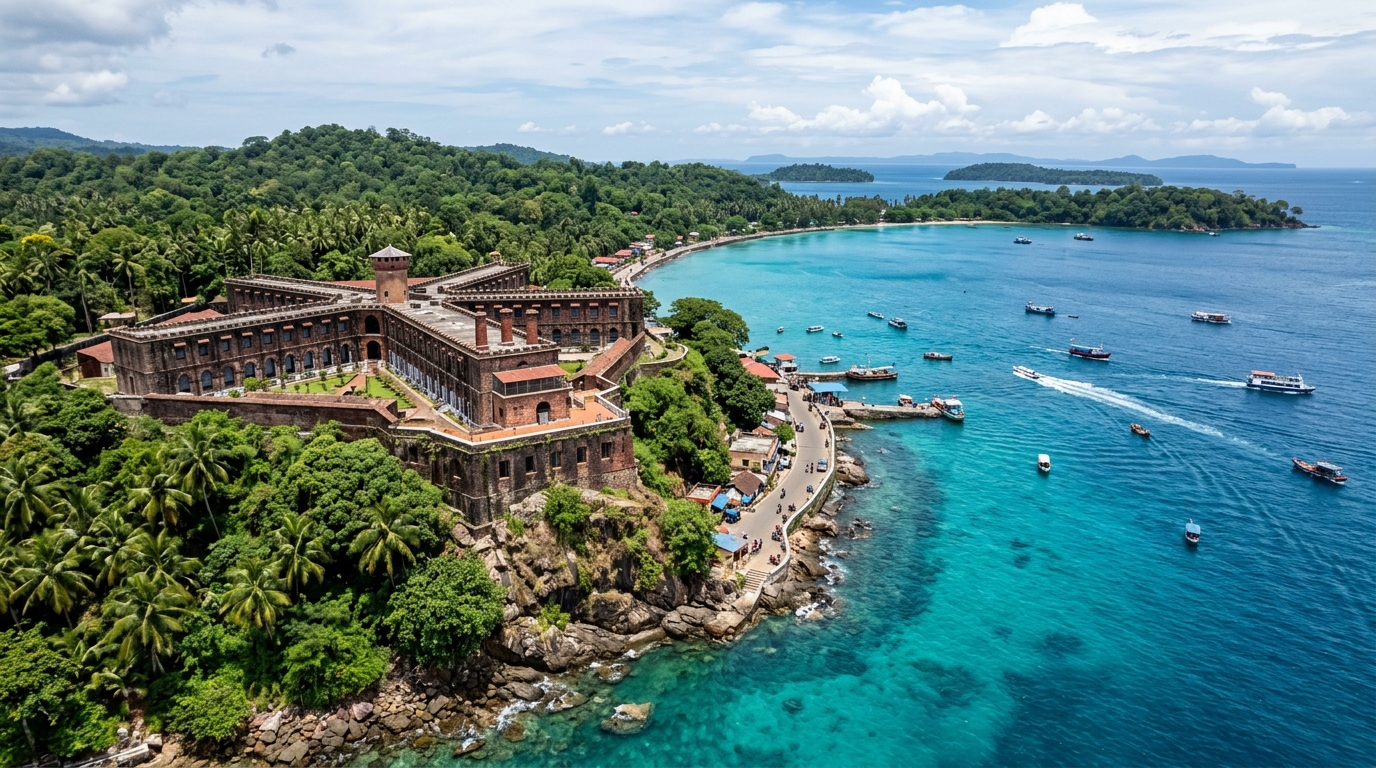
Visitors stepping through the iron gates of the Cellular Jail in Port Blair immediately feel the heavy humidity and the weight of the past. The rusted bars and narrow solitary cells stand in stark contrast to the turquoise waters of the Bay of Bengal visible just beyond the walls. Archival photographs of this historical site capture a visual dissonance that defines the entire archipelago. A deep dive into the Andaman and Nicobar Islands history timeline reveals a landscape that served simultaneously as a tropical refuge and a site of immense human suffering.
Documenting this history requires looking past the modern resort facades and tourist brochures. We examine colonial records, maritime logs, and anthropological studies to piece together how these remote islands shaped the broader narrative of the subcontinent. Understanding this progression helps educators map out the geopolitical shifts that transformed an isolated tribal haven into a crucial strategic outpost. The historical milestones of this region offer a raw look at colonialism, resistance, and survival.
Early Inhabitants and Pre-Colonial Era
Long before European ships mapped the Bay of Bengal, the Andaman and Nicobar Islands hosted thriving, isolated indigenous populations. This era covers thousands of years of tribal self-sufficiency, followed by fleeting contact with powerful mainland Indian empires like the Cholas who used the islands as strategic naval bases.
Indigenous Tribes and Isolation
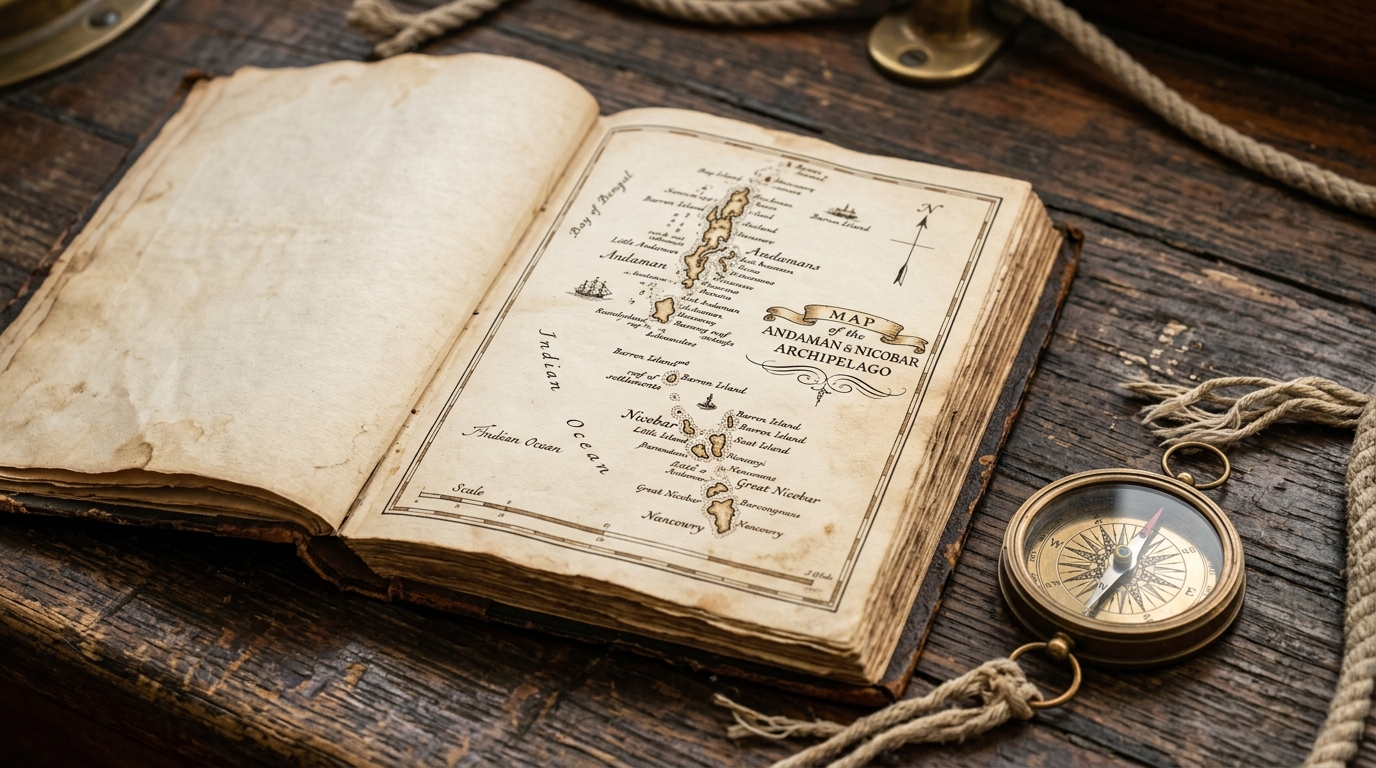
The human history of the Andaman and Nicobar Islands begins roughly 30,000 to 60,000 years ago. Anthropological evidence suggests that the ancestors of the Great Andamanese, Jarawa, Onge, and Sentinelese people migrated from Africa and settled in these islands. These groups lived in near-complete isolation from the rest of the world for millennia. They developed distinct languages, unique hunter-gatherer techniques, and deep ecological knowledge of the tropical rainforests and coral reefs. Because they left no written records, historians rely heavily on genetic studies and archaeological findings to understand their early existence. The Nicobar Islands hosted different groups, including the Shompen and Nicobarese, who likely migrated from Southeast Asia. This long period of undisturbed isolation ended abruptly when outside powers recognized the strategic maritime value of the archipelago.
Chola Empire and Maratha Connections
Mainland Indian empires eventually took notice of the islands during their naval expansions across the ocean. In the 11th century, the Chola dynasty under the leadership of Rajendra Chola I utilized the Andaman and Nicobar Islands as a strategic naval base. The Cholas needed a secure staging ground to launch massive expeditions against the Srivijaya Empire in present-day Indonesia. Historical records from the Thanjavur inscriptions refer to the islands as "Ma-Nakkavaram," which translates to the great open land, likely the root of the modern name Nicobar. Centuries later, the Maratha Empire naval admiral Kanhoji Angre established a base in the islands during the early 18th century. He used this position to challenge British and Portuguese naval supremacy in the region. This era mirrors the maritime struggles documented in the Portuguese Era in Goa: Key Dates and Architectural Milestones, showing how European and Indian powers constantly vied for coastal dominance.
When Did European Colonization Begin in the Islands?
European colonization began in the 1750s when the Danish East India Company claimed the Nicobar Islands. The British followed shortly after, establishing their first settlement in the Andamans in 1789 to secure trade routes and create a remote penal colony for mainland rebels.
The Danish East India Company in Nicobar
The Danish East India Company made the first formal European attempt to colonize the Nicobar Islands in 1755. Operating out of their mainland base in Tranquebar, they named the territory "Frederiksøerne" or Frederick's Islands. The Danish intended to establish a lucrative spice trade and a strong missionary presence to rival other European powers. However, this colonial venture proved disastrous almost immediately. Repeated outbreaks of malaria and other severe tropical diseases decimated the Danish settlers, forcing them to abandon and resettle the islands multiple times over the next century. The Moravian Church also attempted to establish missions during this period, but these efforts largely failed due to the harsh climate and relentless disease. Denmark eventually relinquished its claims to the British in 1868, selling the rights to the Nicobar Islands and ending their erratic colonial presence in the Bay of Bengal.
British Arrival and the First Penal Settlement
British involvement in the Andaman Islands started in 1789 when Lieutenant Archibald Blair of the Bombay Marine established a naval base. The British East India Company wanted a safe harbor for ships during the monsoon season and a strategic outpost to protect their lucrative trade routes to China. Two years later, they relocated the settlement to a different part of the island, naming it Port Cornwallis. Rampant disease forced them to abandon the project entirely by 1796, leaving the islands free of European settlements for the next sixty years. This changed dramatically following the Indian Rebellion of 1857. The British needed a secure, inescapable location to exile thousands of captured rebels, mutineers, and political prisoners. In 1858, they established a new penal settlement at Port Blair, marking the beginning of a dark chapter in the Andaman and Nicobar Islands history timeline.
The Cellular Jail and the Indian Freedom Struggle
The construction of the Cellular Jail in 1906 transformed the Andaman Islands into a notorious political prison. This section covers the brutal conditions faced by Indian freedom fighters, their organized resistance against colonial authorities, and the temporary Japanese occupation during World War II.
Construction of the "Kala Pani"
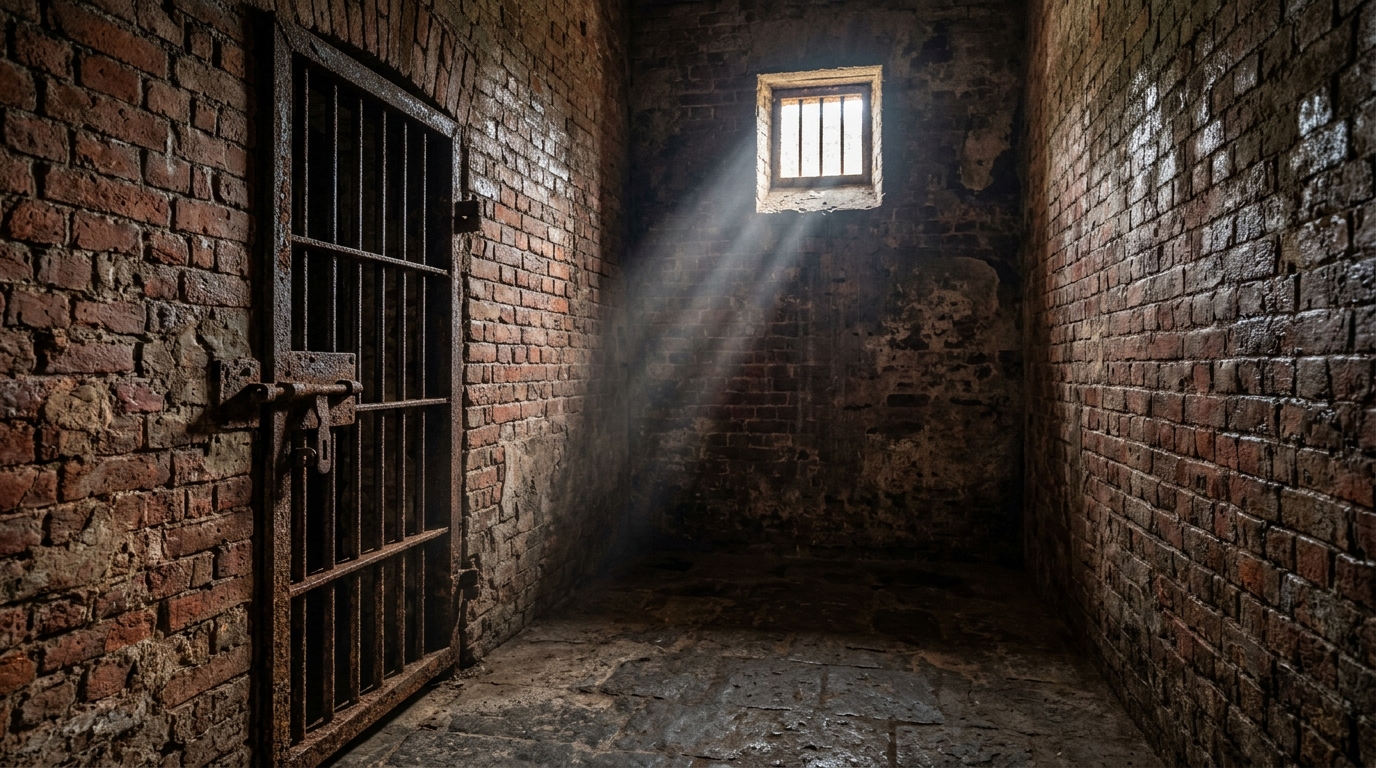
As the Indian independence movement gained momentum in the late 19th century, the British required a more permanent and isolating facility for political prisoners. They began constructing the Cellular Jail in 1896, completing the massive structure in 1906 using convict labor. The architecture featured seven wings radiating from a central watchtower, designed specifically to prevent any communication between inmates. Authorities placed prisoners in solitary confinement within tiny cells measuring just 13.5 by 7 feet, giving the facility its dreaded nickname, "Kala Pani" or Black Water. The physical isolation across the Bay of Bengal stripped prisoners of their identity and connection to the mainland. The jail became a tool of psychological warfare, designed to break the spirit of the educated revolutionaries leading the anti-colonial struggle. Understanding this period is crucial for anyone studying the broader timeline of Mahatma Gandhi's nonviolent movements, as the threat of Kala Pani loomed over every act of civil disobedience.
Political Prisoners and Revolutionary Resistance
Despite the harsh conditions, the Cellular Jail became a crucible for revolutionary thought and organized resistance. Prominent freedom fighters like Vinayak Damodar Savarkar—a key figure in the Hindu nationalist movement—and revolutionaries like Batukeshwar Dutt endured years of torture and forced labor within its walls. The British forced inmates to extract coconut oil by hand, flogging those who failed to meet impossible daily quotas. In response, the political prisoners organized massive hunger strikes in 1932 and 1933 to demand basic human rights and recognition as political detainees. These strikes garnered significant attention on the mainland, forcing the colonial government to eventually repatriate the political prisoners in 1937. The resilience of these inmates remains a cornerstone of the Andaman and Nicobar Islands history timeline. Their sacrifice mirrors the dedication seen in other major resistance efforts, such as those detailed in the Dandi March Day-by-Day: A Timeline of the 1930 Salt Satyagraha.
World War II and Japanese Occupation
The outbreak of World War II brought a sudden and violent shift to the islands' administration. Japanese forces invaded and occupied the Andaman and Nicobar Islands in March 1942, facing little resistance from the retreating British garrison. The Japanese occupation lasted for three years and brought unprecedented hardship to the local population. While the Japanese initially allied with Subhas Chandra Bose's Indian National Army—even allowing Bose to hoist the Indian tricolor at Port Blair in 1943—their military administration was exceptionally brutal. Suspected spies and locals faced torture, execution, and forced labor under the Kempeitai, the Japanese military police. The Homfreyganj massacre in 1944, where Japanese troops executed 44 Indian civilians suspected of espionage, stands as a grim reminder of this period. British forces finally reoccupied the islands in October 1945 following the formal Japanese surrender.
How Did the Islands Integrate into Independent India?
Following the British reoccupation in 1945, the islands transitioned toward independence alongside the mainland. In 1947, they officially became part of the newly independent India, later achieving the status of a Union Territory in 1956 to ensure direct federal administration and strategic military oversight.
Post-War Reoccupation and 1947 Independence
The immediate post-war years involved significant rebuilding and administrative restructuring for the battered archipelago. When the British officially abolished the penal settlement in 1945, many former convicts chose to remain on the islands, forming the nucleus of the modern local population. As negotiations for Indian independence accelerated, the fate of the archipelago became a major point of contention. Some British officials proposed retaining the islands as a separate crown colony for strategic naval purposes in the Indian Ocean. However, Indian leaders successfully argued that the islands, steeped in the blood of Indian freedom fighters, rightfully belonged to the new nation. On August 15, 1947, the Andaman and Nicobar Islands officially joined independent India. The transition was relatively smooth, though the central government faced immediate challenges in establishing communication, healthcare, and administrative infrastructure across the scattered landmasses.
Statehood and Administrative Evolution
The constitutional status of the islands evolved significantly over the first decade of independence. In 1950, the Indian Constitution classified the Andaman and Nicobar Islands as a Part D state, administered by a Chief Commissioner appointed by the President. This unique classification recognized the region's distinct geographical and demographic challenges compared to mainland states. When the States Reorganisation Act passed in 1956, the government redesignation the islands as a Union Territory. This shift placed the archipelago under the direct control of the Ministry of Home Affairs in New Delhi. The central government prioritized strategic military development and demographic engineering, offering land grants to refugees from East Pakistan and repatriates from Sri Lanka to boost the local population. This influx of settlers fundamentally altered the demographic makeup of the islands, creating a diverse, multi-ethnic society that persists today and forms a vital part of the Andaman and Nicobar Islands history timeline.
Modern Milestones in the Andaman and Nicobar Islands History Timeline
The modern era of the islands features a delicate balance between strategic military expansion, ecological preservation, and disaster recovery. Key milestones include the devastating 2004 tsunami that reshaped the coastline and recent infrastructure projects aimed at boosting tourism.
The 2004 Tsunami Impact
The morning of December 26, 2004, permanently altered the physical and social landscape of the archipelago. A massive magnitude 9.1 undersea earthquake off the coast of Sumatra triggered a tsunami that devastated the Andaman and Nicobar Islands. The waves swallowed entire villages, destroyed critical infrastructure, and claimed an estimated 3,000 lives across the territory. The Nicobar Islands, situated closer to the epicenter, suffered catastrophic damage, with the Indira Point lighthouse—India's southernmost tip—partially submerged by the shifting tectonic plates. The disaster prompted a massive military and civilian relief operation, ranking among the largest in Indian history. Recovery efforts took years, requiring the complete reconstruction of ports, roads, and telecommunications networks. The tsunami also highlighted the remarkable survival instincts of the indigenous tribes, who reportedly used ancestral knowledge of natural warning signs to retreat to higher ground before the waves struck.
Strategic Development and Tribal Protection
In recent decades, the central government has heavily invested in the strategic and economic development of the islands. The establishment of the Andaman and Nicobar Command in 2001 created India's first and only tri-service theater command, emphasizing the region's importance in monitoring the vital Malacca Strait. Simultaneously, the islands have become a major hub for eco-tourism, drawing visitors to their pristine beaches and historical sites. However, this development frequently clashes with the need to protect the remaining isolated indigenous groups. The tragic death of an American missionary on North Sentinel Island in 2018 brought global attention to the strict Indian laws prohibiting contact with the Sentinelese people. The government continues to navigate the complex tradeoff between integrating the islands into the mainland economy and preserving the delicate ecological and anthropological heritage. For more context on how India manages complex regional developments, our guide on 25 Historic Indian Events from 2000 to 2025: A Timeline offers a broader perspective on modern national milestones.
Related Reading
- Indian History Timeline Chart: Key Milestones (Digital Reference)
- India at the Olympics: A Timeline of Historic Sporting Milestones
- Indian History Milestones: The Maurya and Gupta Empires
- Milestones in Indian Women's History: A Chronological Guide
FAQ
Q: Who were the first inhabitants of the Andaman and Nicobar Islands? The first inhabitants were indigenous tribes, including the Great Andamanese, Onge, Jarawa, and Sentinelese. Anthropological evidence indicates they migrated from Africa and lived in complete isolation on the islands for tens of thousands of years before European contact.
Q: Why did the British build the Cellular Jail? The British built the Cellular Jail to exile and isolate Indian political prisoners and revolutionaries. The architecture physically prevented communication among inmates, serving as a tool for psychological torture known as "Kala Pani."
Q: When did the Andaman and Nicobar Islands become part of India? The islands officially became part of independent India on August 15, 1947. They were later designated as a Union Territory in 1956 to ensure direct administrative and military control by the central government in New Delhi.
Q: Did the Japanese occupy the islands during World War II? Yes, Japanese forces occupied the islands from March 1942 until October 1945. The occupation involved severe brutality, forced labor, and executions of local residents suspected of espionage or resistance.
Q: How did the 2004 tsunami affect the islands? The 2004 tsunami caused catastrophic damage, claiming thousands of lives and sinking parts of the coastline, including Indira Point. It forced a massive, multi-year rebuilding effort that modernized much of the territory's infrastructure.
To truly grasp the scale of the Andaman and Nicobar Islands history timeline, you need to map these dates against the broader Indian independence movement. Open a historical atlas and locate the maritime trade routes connecting Port Blair to mainland ports like Chennai and Kolkata. Understanding this geography will immediately clarify why both colonial powers and modern governments view this archipelago as a non-negotiable strategic asset.