The 1999 Kargil War: A Day-by-Day Timeline of Operation Vijay
The Quick Read
The Kargil War timeline spans May to July 1999, detailing India's Operation Vijay to evict Pakistani infiltrators from the Line of Control. The conflict involved high-altitude mountain warfare, critical airstrikes, and intense infantry battles. It concluded on July 26, 1999, when India successfully reclaimed all occupied territories.
Key Takeaways
- Operation Vijay required complex high-altitude mountain warfare to reclaim occupied Indian peaks.
- Local shepherds provided the first crucial intelligence regarding the Pakistani infiltration in early May.
- The Indian Air Force launched Operation Safed Sagar to provide vital close air support.
- The capture of Tololing and Tiger Hill marked the war's most decisive tactical turning points.
- July 26 is celebrated annually as Kargil Vijay Diwas to honor the Indian Armed Forces.
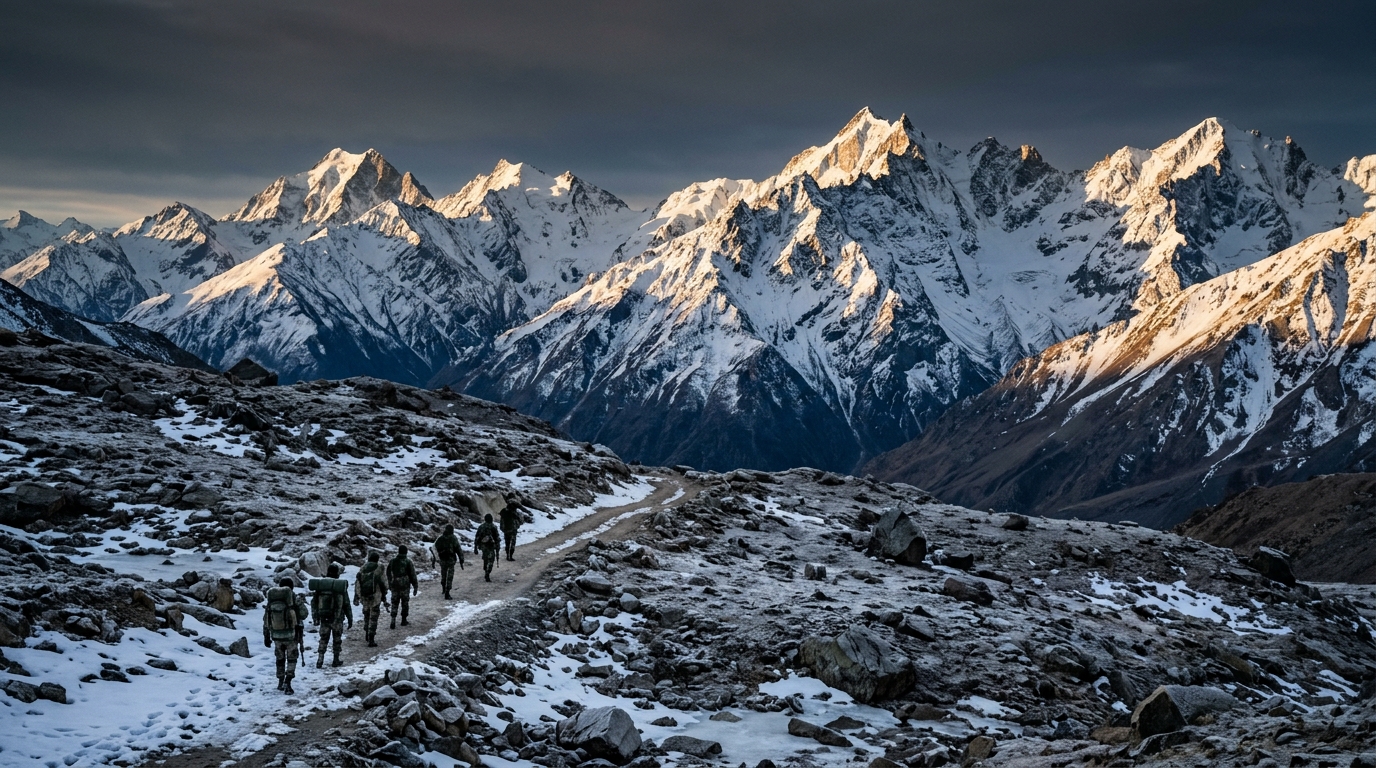
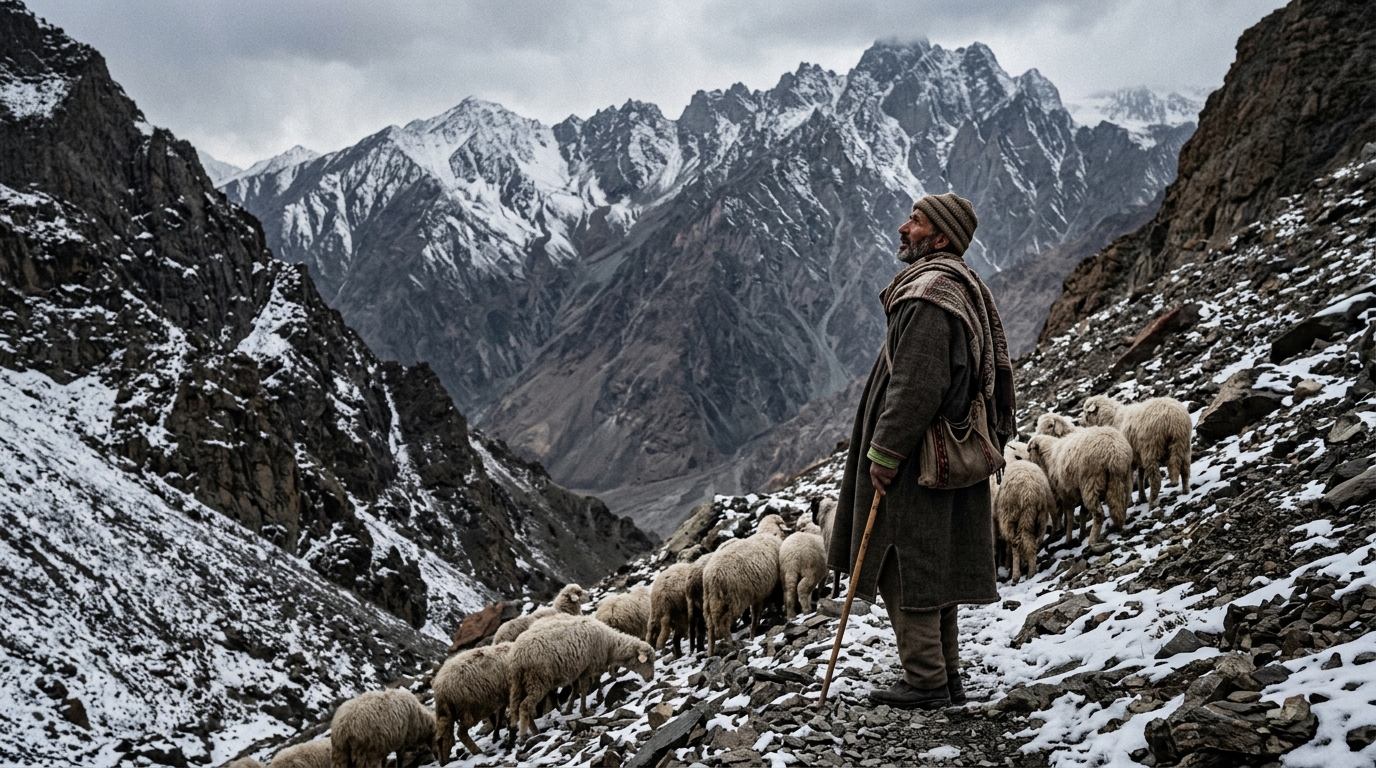
Local shepherds grazing their flocks in the rugged, snow-covered Batalik sector noticed men in dark civilian clothes digging bunkers along the ridgelines. It was May 3, 1999. Those shovels turning the frozen earth marked the quiet beginning of a massive military conflict. The ensuing Kargil War timeline reveals a harsh, rapid escalation from isolated border skirmishes to full-scale high-altitude warfare. Just months earlier, India and Pakistan had signed the Lahore Declaration, promising a peaceful resolution to bilateral issues. Yet, high above the valleys, regular Pakistani troops disguised as militants were quietly crossing the Line of Control (LoC).
They occupied unstaffed Indian forward posts across a 160-kilometer stretch of the Himalayas. The terrain was brutal. Peaks soared past 18,000 feet, temperatures dropped to minus 15 degrees Celsius, and the air held barely enough oxygen to breathe. Fighting a war here required scaling near-vertical ice walls under heavy enemy machine-gun fire. Understanding how India mobilized, adapted, and ultimately reclaimed these heights requires looking closely at the daily progression of the conflict.
How Did the Infiltration Begin in Early May?
Pakistani forces breached the Line of Control during the harsh winter months of early 1999. They occupied unstaffed Indian forward posts across the Kargil, Dras, and Batalik sectors. India discovered the intrusion in early May, triggering immediate reconnaissance missions and the rapid mobilization of Operation Vijay.
The Shepherd's Warning (May 3–5)
The conflict did not begin with a formal declaration of war. It began with Tashi Namgyal, a local yak herder looking for a lost animal near Jubar ridge in the Batalik sector. On May 3, he spotted armed men clearing snow and building sangars (stone bunkers). Namgyal reported this to the nearest Indian Army post. Initially, local commanders suspected these were a handful of routine militant infiltrators. The true scale of the intrusion remained hidden behind the jagged mountain ridges.
The First Patrols and Casualties (May 14–15)
To verify the shepherd's reports, the Indian Army dispatched several small reconnaissance patrols. On May 14, Captain Saurabh Kalia and five soldiers from the 4 Jat Regiment ventured into the Bajrang Post area in the Kaksar sector. They walked into an ambush. The Pakistani forces captured the patrol alive. The brutal torture and subsequent death of Captain Kalia and his men stripped away any illusion of a minor militant skirmish. This was a coordinated military occupation.
Mobilization of Forces (May 15–25)
By mid-May, the Indian military command realized that hundreds of well-armed troops controlled the heights overlooking National Highway 1A (NH 1A). This highway was the sole lifeline connecting Srinagar to Leh. If Pakistan severed it, they could isolate the Siachen Glacier and force India to renegotiate the Kashmir borders. The Indian Army initiated Operation Vijay. They moved massive troop formations from the Kashmir valley up into the Kargil sector. Artillery units towed 155mm Bofors howitzers up winding mountain roads, preparing for a grinding uphill battle.
Escalation and the Air Force Entry
As infantry units faced heavy casualties attempting to scale steep, exposed inclines, the Indian government authorized air support. The Indian Air Force launched Operation Safed Sagar on May 26. This combined arms approach proved vital for destroying enemy supply lines and bunker complexes on high-altitude peaks.
Operation Safed Sagar Commences (May 26)
Ground troops taking heavy fire from elevated, entrenched positions needed help. The Indian Air Force (IAF) stepped in. Flying fighter jets at 18,000 feet pushes the absolute limits of aerodynamics. The thin air reduces engine thrust and changes how bombs fall. The IAF initially deployed MiG-21s, MiG-23s, and MiG-27s to strike enemy camps. They flew deep into the Himalayan valleys, navigating treacherous terrain to deliver unguided munitions against tiny, camouflaged targets.
Early Setbacks in the Sky (May 27–28)
The early days of the air campaign brought severe losses. On May 27, a MiG-27 piloted by Flight Lieutenant Nachiketa suffered an engine flameout. He ejected and was captured by Pakistani forces. Squadron Leader Ajay Ahuja, flying a MiG-21, diverted to locate Nachiketa. An enemy Stinger surface-to-air missile shot Ahuja down, and he was killed on the ground. The next day, a Russian-built Mi-17 helicopter fell to another missile, killing all four crew members. The IAF quickly adapted. They withdrew helicopters from attack roles and deployed Mirage 2000 fighters equipped with laser-guided bombs to strike precisely from safer altitudes.
The Naval Blockade
While the army and air force fought in the snow, the Indian Navy launched Operation Talwar. They deployed the Eastern and Western fleets to the North Arabian Sea, blockading Pakistani ports. This aggressive maritime posture threatened to cut off Pakistan's oil supply and vital trade routes. The sheer economic pressure of this naval threat played a massive role in forcing Pakistan to the negotiating table later in the conflict.
What Were the Decisive June Battles in the Kargil War Timeline?
June 1999 marked a bloody, grinding phase of the Kargil War timeline. Indian forces fought uphill in freezing temperatures to reclaim critical vantage points. The capture of Tololing was the first major victory, breaking the enemy's psychological hold and paving the way for further advances.
The Battle of Tololing (June 13)
Tololing was a dominant peak in the Dras sector. Enemy artillery spotters on Tololing could see every Indian convoy moving along NH 1A. Reclaiming it was non-negotiable. After weeks of failed attempts and heavy casualties, the 2 Rajputana Rifles launched a massive nighttime assault. Soldiers climbed near-vertical rock faces in pitch darkness, carrying heavy rucksacks and weapons. On June 13, after fierce hand-to-hand combat, India captured the peak. This victory shifted the momentum of the entire war. It proved the infiltrators could be dislodged.
Securing Point 5140 (June 20)
With Tololing secured, the Indian Army pushed toward Point 5140, the highest feature in the Tololing ridge complex. The 13 Jammu and Kashmir Rifles (13 JAK RIF), led by Captain Vikram Batra and Lieutenant Sanjeev Jamwal, assaulted the peak from two directions. Under heavy machine-gun fire, they scaled a sheer rock cliff, surprised the enemy from the rear, and captured the position. Captain Batra radioed his success with the now-famous phrase, "Yeh Dil Maange More" (This heart wants more).
The Diplomatic Front Matures
As India won tactical victories on the ground, they also won the information war. In early June, Indian intelligence intercepted a telephone conversation between Pakistan's Army Chief General Pervez Musharraf (visiting China) and his Chief of General Staff, Lieutenant General Aziz Khan. The recording proved beyond doubt that the regular Pakistani Army, not independent militants, orchestrated the invasion. India released this tape to the global press. International opinion, previously neutral, swung firmly behind India.
The Push for Tiger Hill and Final July Operations
July saw the climax of Operation Vijay with the assault on Tiger Hill, the most prominent peak in the Dras sector. Indian forces launched a massive coordinated artillery and infantry attack. The successful recapture of these final peaks forced a Pakistani withdrawal and ended the conflict.
The Fall of Tiger Hill (July 4)
Tiger Hill stood as the ultimate symbol of the Kargil intrusion. Its sharp, conical peak dominated the landscape. The assault began with a massive artillery barrage. Over 100 Bofors guns fired continuously, turning the mountain into a landscape of fire and shattered rock. The 18 Grenadiers and the 8 Sikh Regiment began their grueling ascent. It took 36 hours of relentless climbing and fighting in sub-zero temperatures. On the morning of July 4, Indian troops secured the summit. The visual of the Indian tricolor flying over Tiger Hill was broadcast across the nation, signaling the imminent end of the war.
The Capture of Point 4875 (July 5–7)
The fighting did not end with Tiger Hill. Point 4875, another massive feature, required clearing. The 13 JAK RIF once again led the charge. The battle was brutal, involving close-quarters combat and heavy casualties. Captain Vikram Batra, who had already distinguished himself at Point 5140, was killed in action while rescuing a fellow officer. India secured the peak on July 7. The loss of officers like Batra highlighted the immense human cost of these high-altitude victories.
The Washington Accord (July 4)
As Indian troops captured Tiger Hill, diplomatic pressure reached its breaking point. Pakistani Prime Minister Nawaz Sharif flew to Washington D.C. to meet with U.S. President Bill Clinton on July 4. Clinton demanded an unconditional withdrawal of Pakistani forces behind the established Line of Control. Facing military defeat on the ground, a crippled economy, and total international isolation, Sharif agreed. The Washington Accord effectively marked the political end of the Kargil War.
How Do We Evaluate the Strategic Aftermath?
The Kargil War reshaped India's defense strategy and border management protocols. It exposed critical gaps in intelligence gathering and high-altitude logistics. The resulting Kargil Review Committee led to sweeping military reforms, better equipment procurement, and a permanent winter deployment.
The Cost of Victory
The two-month conflict exacted a heavy toll. India lost 527 soldiers, with over 1,360 wounded. The rugged terrain and the necessity of fighting uphill against fortified positions meant infantry units bore the brunt of the casualties. Pakistan's casualties were estimated to be between 700 and 1,000 regular troops, though official numbers remain contested. The war demonstrated the severe consequences of intelligence failures and the raw courage required to correct them.
The Kargil Review Committee
Following the war, the Indian government established the Kargil Review Committee, headed by strategic analyst K. Subrahmanyam. The committee's mandate was to understand how the intrusion went undetected for months. Their report highlighted severe flaws in national intelligence sharing and border surveillance. This led to massive structural reforms, including the creation of the Defense Intelligence Agency (DIA) and the National Technical Research Organization (NTRO). The military accelerated the procurement of weapon-locating radars, unmanned aerial vehicles (UAVs), and better high-altitude gear.
Permanent Winter Postures
Before 1999, both India and Pakistan routinely vacated their highest forward posts during the brutal winter months to save lives and resources. Kargil changed that forever. India realized they could never leave the LoC unguarded again. Today, the Indian Army maintains a permanent, year-round presence on these inhospitable peaks. The financial and human cost of maintaining this winter posture is staggering, but it remains a necessary deterrent against future incursions.
A Chronological Summary of the Kargil War Timeline
Tracking the daily progress of Operation Vijay provides a clear view of how momentum shifted. This chronological breakdown highlights the specific dates when intelligence was gathered, major offensives were launched, and critical diplomatic resolutions were achieved during the summer of 1999.
| Date | Event | Sector / Significance |
|---|---|---|
| May 3, 1999 | Local shepherds spot infiltrators digging bunkers. | Batalik Sector. First intelligence of the intrusion. |
| May 14, 1999 | Captain Saurabh Kalia's patrol is ambushed and captured. | Kaksar Sector. Confirms a large-scale, hostile military presence. |
| May 26, 1999 | IAF launches Operation Safed Sagar. | Airspace over Kargil. First use of air power in the conflict. |
| May 27–28, 1999 | India loses two fighter jets and one Mi-17 helicopter. | Tactical shift to higher-altitude bombing using Mirage 2000s. |
| June 13, 1999 | Indian Army captures Tololing Peak. | Dras Sector. A major psychological and tactical turning point. |
| June 20, 1999 | Capture of Point 5140 by 13 JAK RIF. | Dras Sector. Secures the Tololing ridge complex entirely. |
| July 4, 1999 | Indian Army captures Tiger Hill. | Dras Sector. The most prominent peak falls after a 36-hour battle. |
| July 4, 1999 | Nawaz Sharif meets Bill Clinton in Washington D.C. | Diplomatic resolution. Pakistan agrees to withdraw forces. |
| July 7, 1999 | Indian Army captures Point 4875. | Dras Sector. Captain Vikram Batra is martyred. |
| July 14, 1999 | Indian Prime Minister A.B. Vajpayee declares Operation Vijay a success. | Official acknowledgment of military victory. |
| July 26, 1999 | Kargil conflict officially ends. | Celebrated annually as Kargil Vijay Diwas. |
The Kargil War timeline shows how quickly border tensions can escalate into conventional warfare. The conflict forced India to modernize its military infrastructure and rethink its approach to national security. To see how these events fit into the broader scope of modern Indian history, reviewing the 25 historic Indian events from 2000 to 2025 provides excellent context on how the early 2000s were shaped by the fallout of this war.
Furthermore, the integration of air power in mountain warfare during Kargil changed defense doctrines globally. For readers interested in how Indian military aviation has developed since these critical airstrikes, exploring the evolution of Indian military aviation offers deep insights into current capabilities.
Historical sites thrive on accurate documentation. When studying the Kargil War, reviewing archival imagery of the Bofors guns firing at night or the Mirage 2000s taking off from high-altitude bases helps contextualize the sheer physical scale of the operation. The geography defined the tactics.
Related Reading
- The 1971 India-Pakistan War: Key Dates and Historical Summary
- India at the Olympics: A Timeline of Historic Sporting Milestones
- Dr. B.R. Ambedkar's Life: A Chronological Timeline of Legacy
- December 1984: A Historical Timeline of the Bhopal Gas Tragedy
FAQ
Q: How long did the Kargil War last? The Kargil War lasted for roughly two and a half months. It began with the discovery of infiltrators in early May 1999 and officially concluded on July 26, 1999, when India cleared all occupied territories.
Q: What was the main cause of the Kargil War? The conflict was caused by the covert infiltration of Pakistani regular forces into Indian territory across the Line of Control. Their objective was to sever the vital National Highway 1A and cut off Indian supply lines to the Siachen Glacier.
Q: Why was Tiger Hill so important? Tiger Hill is one of the highest and most prominent peaks in the Dras sector. Enemy artillery observers stationed on its summit had a clear, unobstructed view of Indian troop movements along the national highway, making its recapture critical for Indian logistics.
Q: What is Kargil Vijay Diwas? Kargil Vijay Diwas is celebrated every year on July 26. It marks the day the Indian Armed Forces successfully completed Operation Vijay, evicting the last of the Pakistani infiltrators from Indian soil.
Review the official citations of the Param Vir Chakra awardees from the Kargil War to understand the ground-level reality of these battles. If you are studying modern Indian military history, cross-reference this timeline with our guide on the 10 most searched dates in Indian history and why they matter to see how border conflicts shape national policy.