Space Exploration Milestones In India: A Historical Guide
TL;DR
India's space program evolved from launching sounding rockets in the 1960s to achieving complex interplanetary missions like Mars orbit insertion and lunar south pole landings. Modern space exploration milestones in India include autonomous space docking, private rocket launches, and joint global radar satellite missions.
Key Takeaways
- India operates an elite space program on a highly efficient budget of roughly USD 1.95 billion annually.
- Chandrayaan and Mangalyaan missions established the nation as a primary interplanetary explorer.
- Recent policy changes allow up to 74 percent automatic foreign direct investment for satellite manufacturing.
- Private companies like Skyroot Aerospace now routinely reach orbit from Indian soil.
- Import dependencies for advanced sensors remain a bottleneck for indigenous innovation.
Many observers believe the Indian space program focuses entirely on basic communication satellites for domestic use. The reality is that the Indian Space Research Organisation (ISRO) consistently executes complex interplanetary missions, autonomous orbital docking, and advanced radar imaging on a fraction of Western budgets. Tracking space exploration milestones in India reveals a steady progression from the 1960s to current private sector integration. India allocates approximately 0.04 percent of its GDP to space exploration [Drishti IAS, 2025]. This translates to an ISRO budget of roughly USD 1.95 billion. You can compare this starkly to NASA's budget of USD 25 billion [Drishti IAS, 2025]. Despite this financial constraint, the nation remains one of only four countries to achieve Mars orbit, lunar soft landing, and in-space docking. Understanding this timeline helps educators and students trace how a developing nation built a globally competitive aerospace sector. You can explore broader economic shifts that supported this growth in our guide to Economic Milestones in Indian History: From 1947 to Present.
The Early Decades Established A Foundation Of Frugal Engineering
India built its early space capabilities by prioritizing essential satellite services over prestige projects. The initial decades focused on developing indigenous satellite technology, mastering reliable launch vehicles, and navigating strict international technology embargoes to establish a self-reliant aerospace foundation.
The Aryabhata Satellite Era
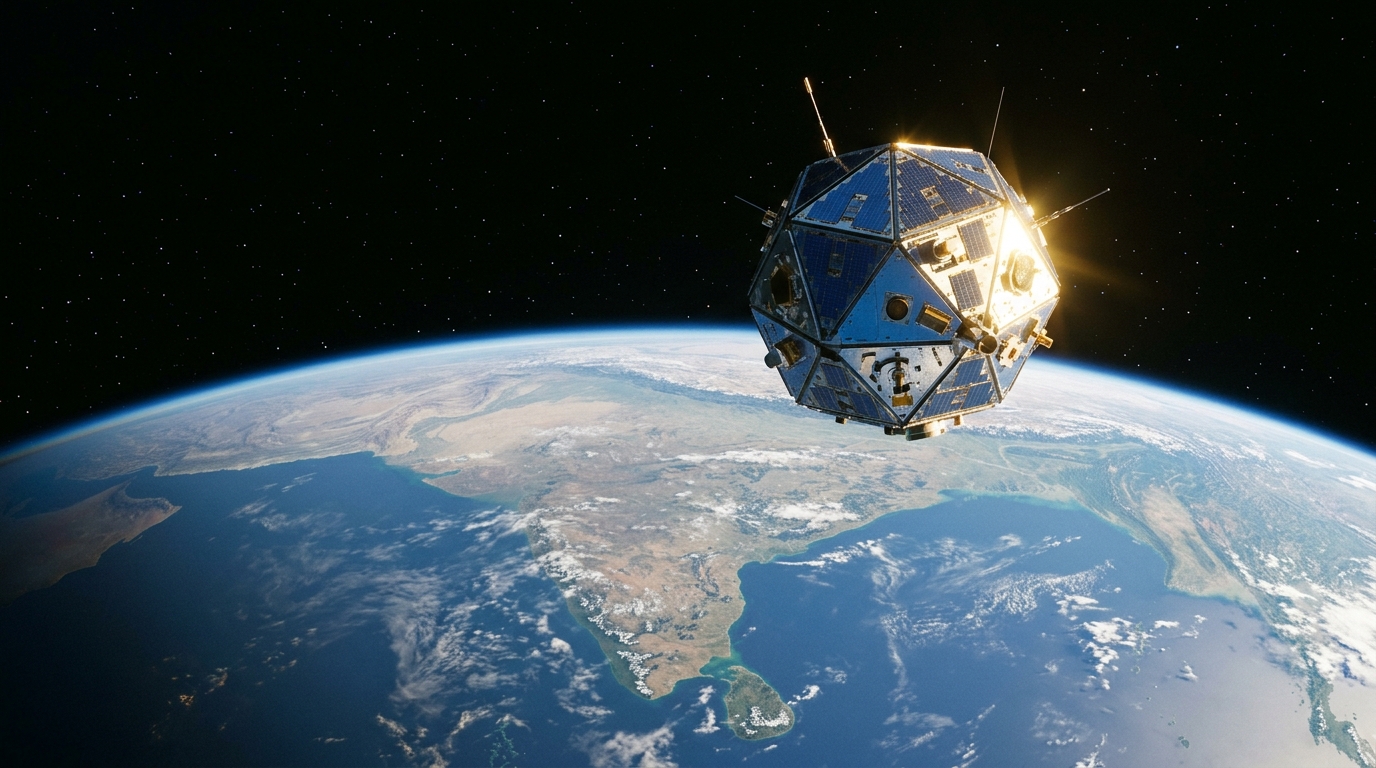
The launch of Aryabhata in 1975 marked the first major satellite milestone. Soviet rockets carried this experimental satellite into orbit. The spacecraft provided Indian scientists with crucial data on X-ray astronomy and solar physics. The project team learned how to design, assemble, and operate a spacecraft in orbit. These early efforts required significant international cooperation. Indian engineers defined the core parameters. Foreign agencies provided the launch infrastructure. This approach allowed ISRO to build institutional knowledge without the immediate expense of developing heavy-lift rockets. The data gathered during this mission informed the design of all subsequent domestic satellites.
How Did ISRO Develop Its Launch Vehicles?
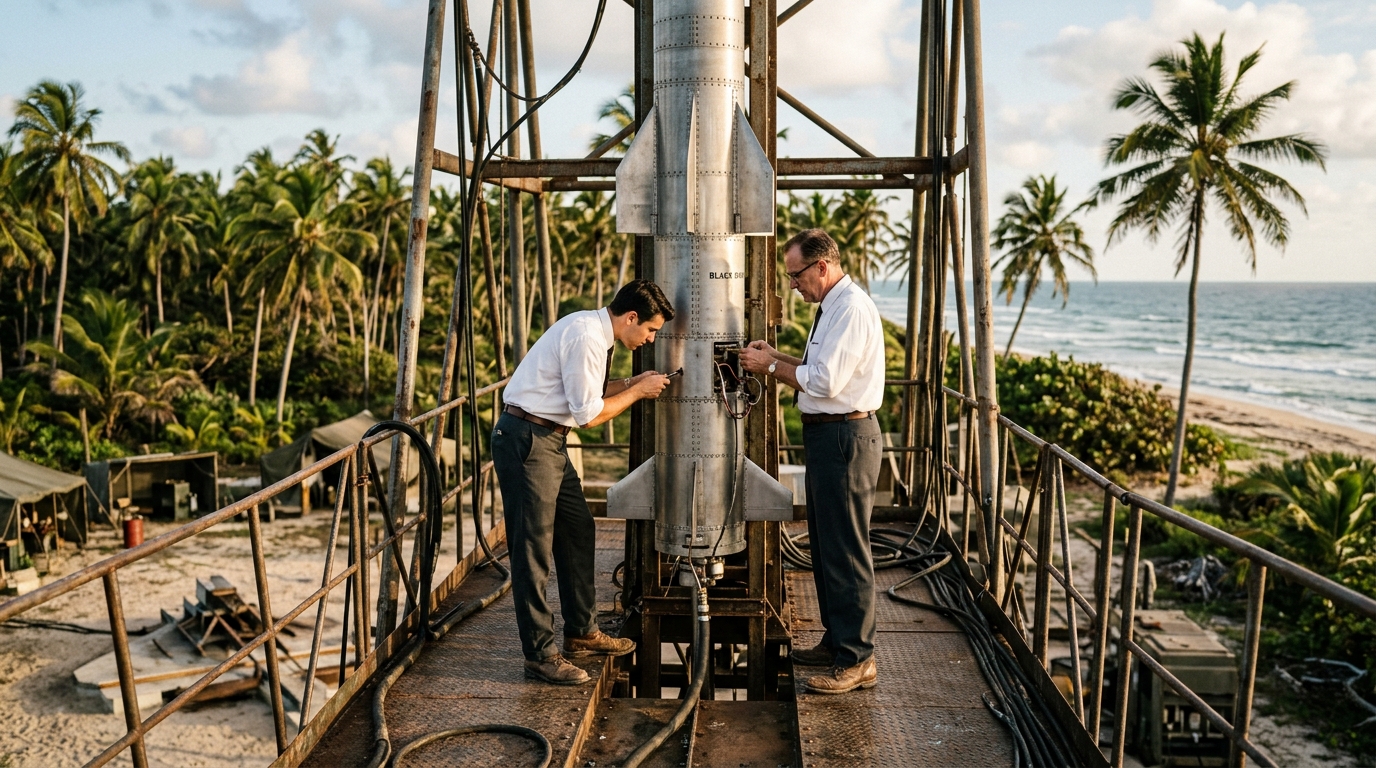
The development of Indian launch vehicles is the strategic process by which the Indian Space Research Organisation built domestic rockets to achieve orbital autonomy, beginning with the Satellite Launch Vehicle placing the Rohini satellite into orbit in 1980. Dr. A.P.J. Abdul Kalam led the Satellite Launch Vehicle initiative, making India the sixth space-faring nation. ISRO subsequently developed the Polar Satellite Launch Vehicle. The Polar Satellite Launch Vehicle became a highly reliable rocket between 1993 and 2023. The Polar Satellite Launch Vehicle executed successful missions throughout the 1990s, 2000s, and 2010s, and launched satellites for foreign space agencies. The Polar Satellite Launch Vehicle's reliability cemented India's reputation as a dependable partner for commercial satellite deployment.
Overcoming Import Dependencies
Early space exploration milestones in India occurred despite significant supply chain challenges. International sanctions in the 1990s restricted India's access to cryogenic engine technology. ISRO responded by initiating a decades-long domestic development program. This effort eventually produced the Geosynchronous Satellite Launch Vehicle. However, hardware challenges remain today. India still relies heavily on foreign imports for advanced sensors and semiconductors [Drishti IAS, 2025]. This reliance continues to bottleneck indigenous innovation. Developing a domestic semiconductor industry is critical for the next phase of Indian space exploration. Without domestic chips, spacecraft manufacturing costs will remain tied to global supply chain fluctuations.
Lunar And Martian Missions Redefined Global Expectations
India shifted global perceptions of its space capabilities by successfully executing complex planetary exploration missions on strict budgets. The Chandrayaan and Mangalyaan programs demonstrated precise orbital mechanics, advanced deep space communication, and the ability to operate scientific payloads across vast distances.
Chandrayaan-1 And The Discovery Of Lunar Water
The Chandrayaan-1 mission launched in 2008 as India's first deep space probe. It carried a suite of Indian and international scientific instruments to orbit the Moon. A major achievement occurred when the Moon Impact Probe deliberately crashed into the lunar surface. Data from this impact confirmed the presence of water molecules on the Moon. Radar measurements supported these findings. This discovery fundamentally altered the trajectory of global lunar exploration. It shifted international focus toward the lunar south pole for future human habitation.
How Did Mangalyaan Prove Interplanetary Feasibility?
Mangalyaan is the Mars Orbiter Mission that achieved Mars orbit in September 2014 on the spacecraft's first attempt, proving that the Indian Space Research Organisation could successfully execute complex interplanetary exploration on a strict budget of USD 74 million. India became the first Asian nation to reach Martian orbit and the first nation globally to succeed on a maiden voyage. The USD 74 million budget represents a fraction of the cost of similar NASA missions. Mangalyaan carried five scientific instruments to study Martian surface features and the Martian atmosphere. The Mangalyaan spacecraft operated from 2014 until 2022. The spacecraft far exceeded the planned six-month mission life.
Chandrayaan-3 Secured The Lunar South Pole
In August 2023, Chandrayaan-3 successfully executed a soft landing near the lunar south pole. This mission corrected the software and hardware anomalies that caused the Chandrayaan-2 lander to fail in 2019. The Vikram lander and Pragyan rover conducted in-situ chemical analyses of the lunar surface. India became the fourth country to soft-land on the Moon. It was the very first to land in the rugged southern polar region. These achievements highlight how the space program prioritizes scientific firsts in challenging environments.
| Mission | Launch Year | Destination | Primary Achievement |
|---|---|---|---|
| Chandrayaan-1 | 2008 | Moon | Confirmed presence of lunar water molecules |
| Mangalyaan | 2013 | Mars | First Asian nation to reach Martian orbit |
| Chandrayaan-3 | 2023 | Moon | First soft landing near the lunar south pole |
Private Sector Integration Accelerates Space Exploration Milestones In India
The Indian government recently dismantled ISRO's monopoly by opening the space sector to private enterprises. This structural shift aims to capture a larger share of the global space economy through technology transfers, startup funding, and liberalized foreign investment regulations.
Policy Shifts And IN-SPACe Formation
India currently accounts for about 2 percent of the global space economy. The government has a stated goal to reach 10 percent [The Hindu, 2024]. To achieve this, officials established the Indian National Space Promotion and Authorization Centre. This regulatory body facilitates private participation in space activities. Foreign Direct Investment rules were recently liberalized. The new rules allow up to 74 percent automatic FDI for satellite manufacturing [PIB, 2026]. This policy change provides private companies with the capital needed to build launch vehicles and satellite constellations. It removes the bureaucratic hurdles that previously stifled private aerospace funding.
Skyroot Aerospace And Startup Contributions
The private sector is already delivering tangible results. By mid-2026, Skyroot Aerospace's Vikram-I rocket became the first privately developed Indian rocket to achieve orbit from Indian soil [India Today, 2026]. This launch illustrates the shift toward private sector space capabilities. Other startups are developing small satellite launch vehicles and earth observation platforms. ISRO Chairman S. Somanath has noted that India must evolve beyond being a service provider. To become a true global space power, the nation must build leading original space companies [The Hindu, 2024]. This requires heavy government support and a thriving startup ecosystem.
What Are Technology Transfers From ISRO?
Technology transfers from ISRO are the formal processes by which the Indian Space Research Organisation shares decades of aerospace research with private enterprises to support the privatization of the Indian space sector. As of January 2026, IN-SPACe has facilitated 71 ISRO technology transfers to private industry and start-ups [PIB, 2026]. The 71 technology transfers include solid propellant formulations, navigation systems, and satellite bus designs. Startups can bypass years of expensive research and development by licensing the proven ISRO technology. The collaborative licensing approach mirrors the early days of NASA's commercial cargo program. The collaborative licensing approach fosters a competitive domestic market that drives down launch costs. You can trace similar patterns of rapid industrial growth in our timeline of 25 Historic Indian Events from 2000 to 2025: A Timeline.
Advanced Orbital Operations Shift ISRO Towards Complex Engineering
Modern Indian space missions focus heavily on complex orbital maneuvers, autonomous robotics, and high-resolution Earth observation. These capabilities are necessary for future space stations, continuous climate monitoring, and advanced scientific experimentation in microgravity environments.
The SPADEX Autonomous Docking Mission
The Space Docking Experiment represents a critical leap in orbital engineering. Launched in late 2024 and operational in 2025, this mission successfully demonstrated autonomous space docking [ISRO, 2026]. Two separate spacecraft found each other in orbit. They aligned their trajectories and physically connected without human intervention. The system also demonstrated successful in-orbit power transfer. This achievement made India the fourth nation to achieve in-space docking. Mastering this technology is a prerequisite for building the planned Bharatiya Antariksha Station. It is also required for future lunar sample-return missions.
The NISAR Earth Observation Satellite
International collaboration remains a key pillar of India's space strategy. The joint NASA-ISRO Synthetic Aperture Radar satellite launched in July 2025 [PNAS / ISRO, 2026]. This massive satellite provides dual-frequency radar imaging for high-resolution Earth observation. NISAR maps the entire globe every 12 days. It tracks changes in ice sheets, forest biomass, and agricultural yields. The mission highlights ISRO's ability to manufacture complex radar payloads that meet stringent international standards. The data generated by this satellite will drive global climate policy for the next decade.
What Is The POEM-04 Experimental Module?
The POEM-04 experimental module is an orbital laboratory created by the Indian Space Research Organisation by converting the spent final stage of a Polar Satellite Launch Vehicle into a functional space platform. In 2025, the PSLV Orbital Experimental Module flew with multiple payloads from Indian space startups and academia [ISRO, 2026]. The POEM-04 platform successfully demonstrated a robotic arm in-orbit. The POEM-04 platform also facilitated the germination of seeds in microgravity. Engineers typically leave the final stage of a rocket as space debris. POEM-04 instead provides a low-cost testing ground for experimental technologies. The orbital laboratory approach allows smaller academic institutions to conduct space-based research without buying a dedicated satellite.
Why Do Strategic Deficits Require Attention For Future Dominance?
Strategic deficits in the Indian space program are the critical gaps remaining in military defense integration and orbital debris management, despite the Indian Space Research Organisation achieving highly visible successes. Addressing the defense and debris deficits is necessary for India to protect Indian orbital assets and compete with the dual-use capabilities of space superpowers.
Managing Space Debris
The rapid proliferation of satellites increases the risk of orbital collisions. There is little coverage of India's lack of effective debris mitigation strategies. The country currently has over 114 Indian-origin objects classified as space debris [Drishti IAS, 2025]. Current tracking capabilities rely heavily on data shared by the United States Space Command. India is developing the Network for space object Tracking and Analysis to build domestic situational awareness. Active debris removal technologies remain in the early conceptual phases. Failing to clean up orbital debris threatens the safety of future crewed missions and expensive commercial satellites.
Addressing Security And Defense Gaps
The militarization of space poses significant challenges for regional stability. Mainstream coverage often misses India's lack of space-based early warning systems [Drishti IAS, 2025]. The country lacks integrated surveillance capabilities compared to the dual-use dominance of China and the US. India demonstrated anti-satellite capabilities with Mission Shakti in 2019. The military still operates without a fully linked network of dedicated defense satellites required for continuous border surveillance. Bridging this gap requires closer coordination between civilian space agencies and military planners. The newly formed Defense Space Agency must accelerate its procurement of dedicated military space assets.
The Gaganyaan Human Spaceflight Roadmap
Human spaceflight represents the next major frontier for the national space program. ISRO scheduled its first uncrewed Gaganyaan flight before March 2026 [Analytics India Magazine, 2025]. This is part of a broader roadmap to execute 50 launches over five years. The Gaganyaan program will eventually carry three Indian astronauts to low Earth orbit. They will conduct a three-day mission before splashing down in Indian waters. Developing human-rated launch vehicles and life support systems demands rigorous testing. Success here will cement India's status as an elite, full-spectrum space power capable of independent human spaceflight.
Related Reading
- India at the Olympics: A Timeline of Historic Sporting Milestones
- Scientific Milestones in Indian History: A Date-Wise Guide
- Indian History Milestones: The Maurya and Gupta Empires
- Historic Dates in Modern India: From Independence to the 21st Century
FAQ
Q: What is the budget of the Indian space program? India allocates approximately 0.04 percent of its GDP to space exploration. This results in an annual ISRO budget of roughly USD 1.95 billion, which is significantly lower than Western space agencies.
Q: Has a private Indian company ever launched a rocket? Yes. By mid-2026, Skyroot Aerospace's Vikram-I rocket became the first privately developed Indian launch vehicle to reach orbit from Indian soil. This marked a major shift in the domestic space industry.
Q: What was the primary discovery of Chandrayaan-1? Chandrayaan-1 confirmed the presence of water molecules on the Moon in 2008. The mission used an impact probe and radar instruments to detect water ice near the lunar south pole.
Q: What is the SPADEX mission? SPADEX is an experimental mission that successfully demonstrated autonomous space docking and power transfer in orbit. This 2025 achievement made India the fourth nation capable of in-space docking.
Evaluate your organization's reliance on satellite data and identify where emerging Indian space companies offer cost-effective alternatives for earth observation or communication services. Review the newly liberalized FDI rules to determine if your firm qualifies for investment opportunities in India's expanding satellite manufacturing sector.
Sources
- Evolution of India's Space Program — Drishti IAS, 2025. Supports: India allocates approximately 0.04 percent of its GDP to space exploration, translating to an ISRO budget of roughly USD 1.95 billion.
- Cabinet Approves Amendment in the Foreign Direct Investment (FDI) Policy on Space Sector — Press Information Bureau, 2024. Supports: Recent policy changes allow up to 74 percent automatic foreign direct investment for satellite manufacturing.
- Aryabhata — ISRO, 2023. Supports: The Aryabhata satellite was launched in 1975 and carried into orbit by a Soviet rocket.
- Aryabhata | Definition & Facts — Britannica, 2024. Supports: The Aryabhata spacecraft provided Indian scientists with crucial data on X-ray astronomy and solar physics.
- Chandrayaan-3 — NASA Science, 2023. Supports: Chandrayaan-3 successfully executed a soft landing near the lunar south pole in August 2023.