Post-Emergency 1977: A Timeline of India's Democratic Restoration
Bottom Line
The 1977 Indian elections timeline marks the transition from a 21-month state of Emergency back to democratic governance. Between January and March 1977, the government announced surprise polls, released political prisoners, and held a general election that resulted in India's first non-Congress national government taking power.
Key Takeaways
- The sudden election announcement in January 1977 caught the political opposition completely off guard.
- Multiple opposition factions merged to form the Janata Party under Jayaprakash Narayan's guidance.
- Voter turnout reached 60.49 percent during the March polling phase across the country.
- The formal Emergency decree was officially revoked on March 21, 1977.
- Morarji Desai became India's first non-Congress Prime Minister on March 24, 1977.
Many people believe the Indian Emergency ended because mass protests finally forced the government out of power. The truth is that the ruling government voluntarily called for elections in a calculated move to secure democratic legitimacy, expecting a comfortable victory. This decision triggered a rapid sequence of events that completely altered the nation's political trajectory within a matter of weeks. Understanding the 1977 Indian elections timeline provides a clear view of how quickly a vast democracy can pivot from centralized control back to a multi-party electoral system. The events of early 1977 required massive logistical coordination, rapid political organizing, and the mobilization of millions of voters across the subcontinent. Historical records from the Election Commission of India show that conducting this election involved printing millions of ballots and setting up polling stations in remote villages with very little lead time. Just as the Economic Milestones in Indian History: From 1947 to Present shaped the nation's financial structure, the events of 1977 permanently reshaped its democratic framework.
The January Surprise Set the Stage for Change
On January 18, 1977, Prime Minister Indira Gandhi unexpectedly announced that parliamentary elections would take place in March. This sudden broadcast dissolved the Lok Sabha and initiated the release of political prisoners, forcing the fragmented opposition to organize a national campaign in less than two months.
The sudden announcement of elections
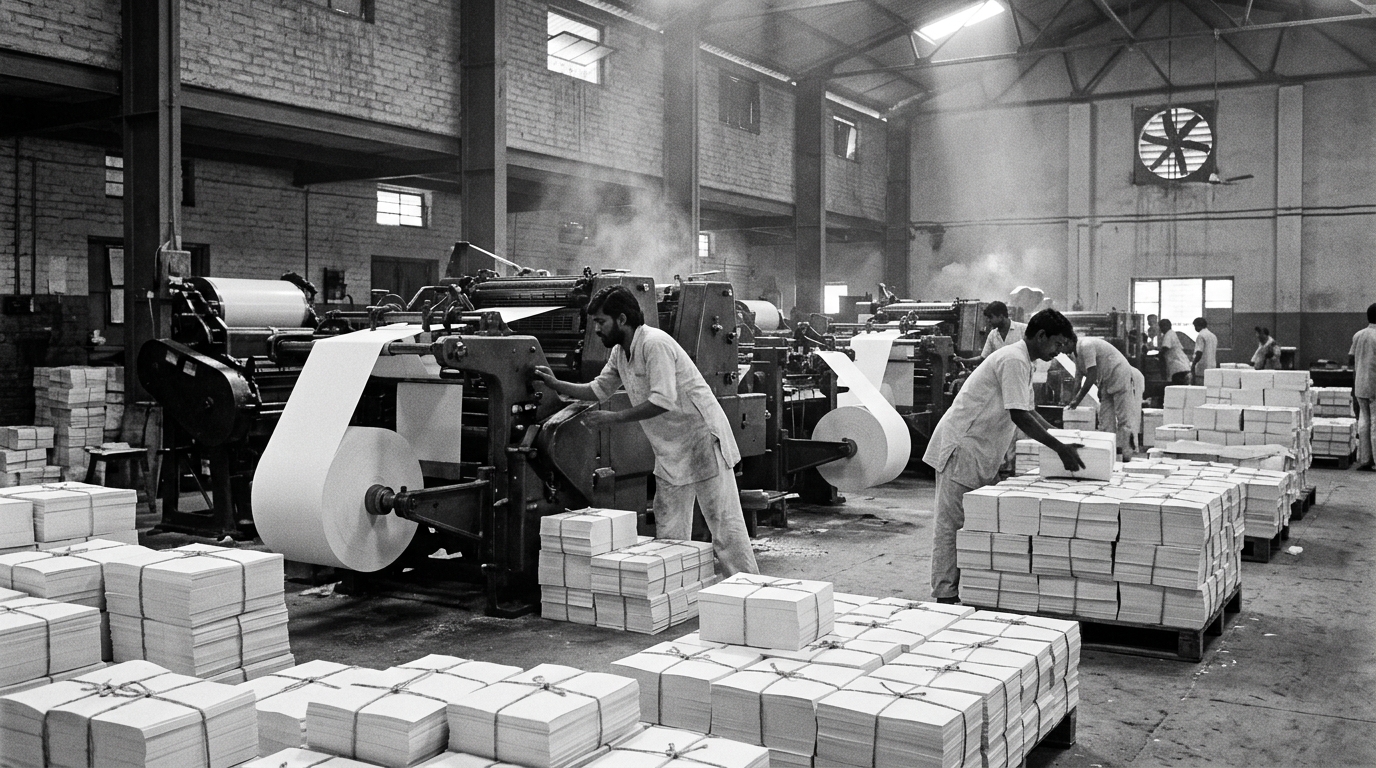
The radio broadcast on January 18 caught both the nation and the political establishment by surprise. Intelligence reports at the time suggested that the ruling Congress party would secure a comfortable majority if elections were held immediately. The government believed that a fresh mandate would validate the policies implemented during the 21-month Emergency period. This assumption relied heavily on the apparent quiet across the country, which officials mistook for public approval. The Election Commission of India suddenly faced the monumental task of organizing a nationwide poll in just eight weeks. Administrators scrambled to update voter rolls, establish polling booths, and train millions of election workers on a highly compressed schedule.
The release of political prisoners
Following the election announcement, the government began releasing key opposition leaders from detention. Prominent figures like Morarji Desai, Atal Bihari Vajpayee, and L.K. Advani walked out of prison after months of confinement. The release happened in phases, meaning many mid-level political workers remained incarcerated while their leaders tried to organize a campaign. This phased release created massive logistical hurdles for the opposition groups trying to communicate across state lines. The shared experience of imprisonment had forged unexpected bonds among politicians who previously held opposing ideological views. Similar to the unified fronts detailed in the Timeline of Mahatma Gandhi's Nonviolent Movements in India, this shared struggle provided a powerful catalyst for political unity.
The Formation of the Janata Party Created a Unified Opposition
The opposition realized that divided votes would ensure another defeat, prompting four distinct political parties to merge into a single entity. Guided by veteran activist Jayaprakash Narayan, this new Janata Party prioritized restoring civil liberties and dismantling the constitutional amendments passed during the Emergency.
Disparate groups joining forces
Four major political groups agreed to fight the elections under a single banner to prevent splitting the anti-Congress vote. The Indian National Congress (Organization), the Bharatiya Lok Dal, the Bharatiya Jana Sangh, and the Socialist Party officially merged to form the Janata Party. These groups held vastly different economic and social philosophies, ranging from conservative nationalism to democratic socialism. They agreed to campaign under the Bharatiya Lok Dal's election symbol, which depicted a farmer with a plough inside a wheel. In February 1977, the movement gained further momentum when senior leader Jagjivan Ram resigned from the cabinet to form the Congress for Democracy. His new faction quickly aligned with the Janata alliance, signaling a significant fracture within the traditional ruling base.
The role of Jayaprakash Narayan
Jayaprakash Narayan served as the ideological anchor for this newly formed political coalition. Despite suffering from severe health issues that required regular dialysis, he traveled extensively to rally public support. He framed the 1977 Indian elections timeline not as a standard political contest, but as a fundamental choice between democracy and dictatorship. His refusal to seek political office for himself gave him immense moral authority among the voting public. He managed to mediate disputes among ambitious party leaders who all saw themselves as potential prime ministers. Without his unifying presence, the fragile coalition of disparate parties likely would have collapsed before polling day.
The March 1977 Indian Elections Timeline Reshaped the Parliament
Millions of Indians cast their ballots between March 16 and March 20, 1977, resulting in a decisive shift in parliamentary power. The final vote counts delivered 298 seats to the Janata alliance, securing an absolute majority and ending three decades of uninterrupted single-party rule.
Polling days and voter turnout
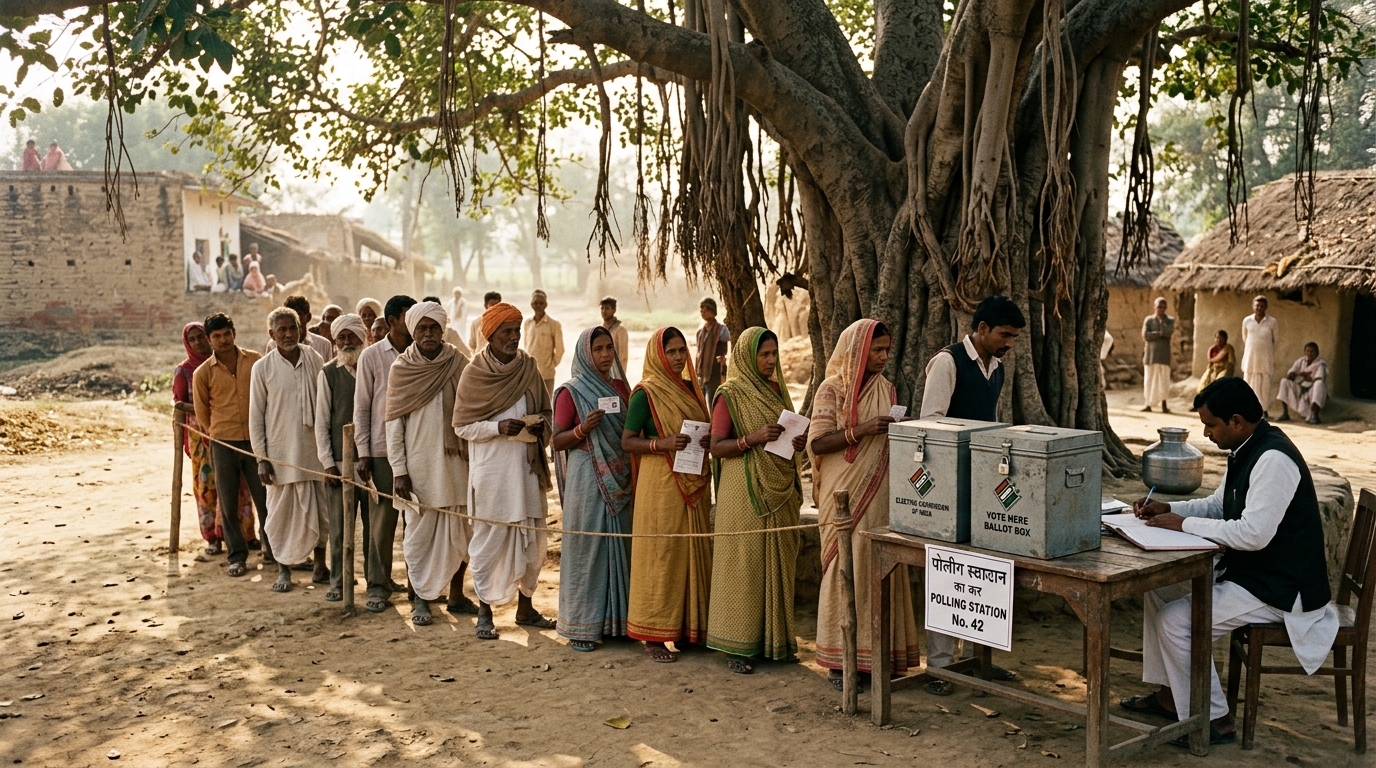
The actual voting took place over several days in mid-March, with millions navigating long lines to cast their paper ballots. The Election Commission recorded a voter turnout of 60.49 percent, a significant increase from previous national elections. The voting patterns revealed a stark geographic divide across the Indian subcontinent. Voters in the northern states overwhelmingly rejected the ruling party, while southern states largely voted to retain the incumbent government. This regional split reflected different localized experiences of the Emergency's administrative policies.
| Political Party / Alliance | Seats Won | Vote Percentage |
|---|---|---|
| Janata Party Alliance | 298 | 41.32% |
| Indian National Congress | 154 | 34.52% |
| CPI (M) | 22 | 4.29% |
| AIADMK | 18 | 2.90% |
The shock defeat in Rae Bareli
The most stunning individual result of the election occurred in the Rae Bareli constituency in Uttar Pradesh. Prime Minister Indira Gandhi lost her parliamentary seat to Raj Narain by a margin of over 55,000 votes. This marked the first time a sitting Indian Prime Minister had lost their own constituency election. Her son, Sanjay Gandhi, also suffered a heavy defeat in the neighboring Amethi constituency. These high-profile losses confirmed the absolute nature of the political wave sweeping through northern India. The news of these defeats spread rapidly via radio broadcasts, signaling to the entire country that the government had officially fallen.
The Lifting of the Emergency Marked a Constitutional Reset
As the election results became clear, the outgoing government formally advised the President to revoke the state of Emergency on March 21, 1977. This executive action immediately restored fundamental rights, lifted press censorship, and returned the constitutional framework to its pre-1975 status.
The formal revocation order
The cabinet met briefly to draft the formal advice required to lift the Emergency provisions. Acting President B.D. Jatti signed the revocation order, officially ending the 21-month period of suspended civil liberties. This action technically involved revoking two separate Emergency declarations: the 1971 external emergency and the 1975 internal emergency. The swift administrative action ensured that the new government would inherit a functioning democratic framework. This specific date remains one of the most critical turning points in modern governance, frequently appearing on lists of the 10 Most Searched Dates in Indian History and Why They Matter. The immediate legal effect was the restoration of Article 19 of the Constitution, which guarantees the freedom of speech and expression.
Restoration of press freedoms
The revocation immediately nullified the strict censorship guidelines that had governed Indian newspapers since June 1975. Editors no longer had to submit their front pages to government censors for approval before printing. Newspapers celebrated by publishing detailed accounts of the election results without fear of reprisal or confiscation. The outgoing government also repealed the Prevention of Publication of Objectionable Matter Act, a law designed to permanently restrict press freedom. Journalists who had been jailed for their reporting were released and returned to their newsrooms. This rapid restoration of media rights allowed the public to finally read uncensored accounts of the political transition.
The First Non-Congress Government Established New Precedents
Morarji Desai took the oath of office as Prime Minister on March 24, 1977, leading a cabinet composed of former political rivals. This new administration immediately focused on reversing centralizing policies and establishing commissions to investigate the administrative actions taken during the previous 21 months.
Morarji Desai takes the oath
The Janata Party held an internal meeting to select their parliamentary leader, choosing Morarji Desai over Jagjivan Ram and Charan Singh. Jayaprakash Narayan and J.B. Kripalani helped broker this leadership decision to avoid an immediate fracture in the new alliance. Desai took the oath of office on March 24, becoming the first person outside the Indian National Congress to hold the position. His cabinet included leaders from all the merged factions, requiring a delicate balancing act of ministerial portfolios. The new government held a massive public rally at Ramlila Maidan in Delhi to publicly pledge their commitment to democratic principles. This public swearing of allegiance to the constitution set a new standard for political accountability.
Early legislative priorities
The new government immediately prioritized dismantling the legal architecture of the Emergency. They introduced the 43rd and 44th Constitutional Amendment bills to reverse the changes made by the 42nd Amendment. These new amendments specifically removed the term "internal disturbance" as a valid reason for declaring a national emergency. They replaced it with "armed rebellion," raising the threshold required to suspend civil liberties in the future. The administration also established the Shah Commission, headed by former Chief Justice J.C. Shah. This commission received the mandate to thoroughly investigate allegations of power abuse and administrative excesses committed between 1975 and 1977.
The Post-Election Period Tested the New Coalition's Stability
The momentum of the 1977 Indian elections timeline carried into the summer, prompting the new government to dissolve several state assemblies. While the Janata Party secured victories in these June state elections, internal ideological fractures quickly began to complicate their ability to govern effectively.
State assembly elections in June
In April 1977, the central government used Article 356 of the Constitution to dismiss nine Congress-ruled state governments. The Janata administration argued that these state assemblies no longer reflected the will of the electorate following the national vote. The Supreme Court upheld this controversial dismissal, paving the way for fresh state elections in June. The Janata Party swept these assembly elections, consolidating their political control across northern and central India. However, this aggressive use of presidential rule set a contentious precedent for federal relations. It demonstrated that the new government was willing to use strong centralized powers to eliminate political opposition at the state level.
Internal ideological differences
Despite their electoral success, the Janata Party struggled to function as a cohesive governing unit. The ideological differences between the socialist members and the conservative nationalist members created constant friction over economic policies. A major dispute arose over the issue of "dual membership," specifically regarding party members who also belonged to the Rashtriya Swayamsevak Sangh (RSS). Socialist leaders demanded that party members sever ties with the RSS, a demand the former Jana Sangh members flatly refused. These internal battles consumed vast amounts of legislative energy and distracted the government from administrative duties. The coalition that successfully navigated the 1977 Indian elections timeline eventually collapsed under the weight of its own contradictions by 1979.
Related Reading
- Indian History Timeline Chart: Key Milestones (Digital Reference)
- 25 Historic Indian Events from 2000 to 2025: A Timeline
- Indian History Milestones: The Maurya and Gupta Empires
- Milestones in Indian Women's History: A Chronological Guide
FAQ
Q: When exactly did the Indian Emergency end? The Indian Emergency officially ended on March 21, 1977. Acting President B.D. Jatti signed the revocation order based on the advice of the outgoing cabinet, restoring fundamental constitutional rights.
Q: Who won the 1977 Indian general elections? The Janata Party alliance won the 1977 elections by securing 298 seats in the Lok Sabha. This victory ended three decades of rule by the Indian National Congress.
Q: What was the voter turnout in the 1977 elections? The voter turnout for the 1977 national elections was 60.49 percent. This represented a high level of civic participation driven by the intense political climate of the time.
Q: Why did the opposition form the Janata Party? The opposition formed the Janata Party to avoid splitting the anti-incumbent vote. Four major political groups merged under the guidance of Jayaprakash Narayan to present a unified front against the ruling government.
Review the text of the 44th Amendment Act to see exactly which emergency provisions were permanently altered. Compare those updated legal thresholds with the original constitutional text to understand how the events of 1977 still protect civil liberties today. Read the official Election Commission reports from that year to grasp the logistical scale of organizing a sudden national vote.