National Maritime Day: April 5 Milestones in Indian Naval History
The Quick Read
April 5 commemorates the maiden voyage of the SS Loyalty in 1919, marking the first time an Indian-owned ship sailed from Mumbai to London. This date celebrates India's merchant navy and commercial shipping sector, honoring the seafarers and port infrastructure that handle 95 percent of the nation's trade volume.
Key Takeaways
- The 1919 voyage of the SS Loyalty broke the British shipping monopoly.
- Indian Maritime Day history honors merchant shipping, distinct from military naval operations.
- India currently supplies 12.16 percent of the global seafaring workforce.
- Modern Indian port capacity reached 2,818 million tonnes per annum in 2025-26.
- Recent legislative overhauls grant infrastructure status to large commercial ships.
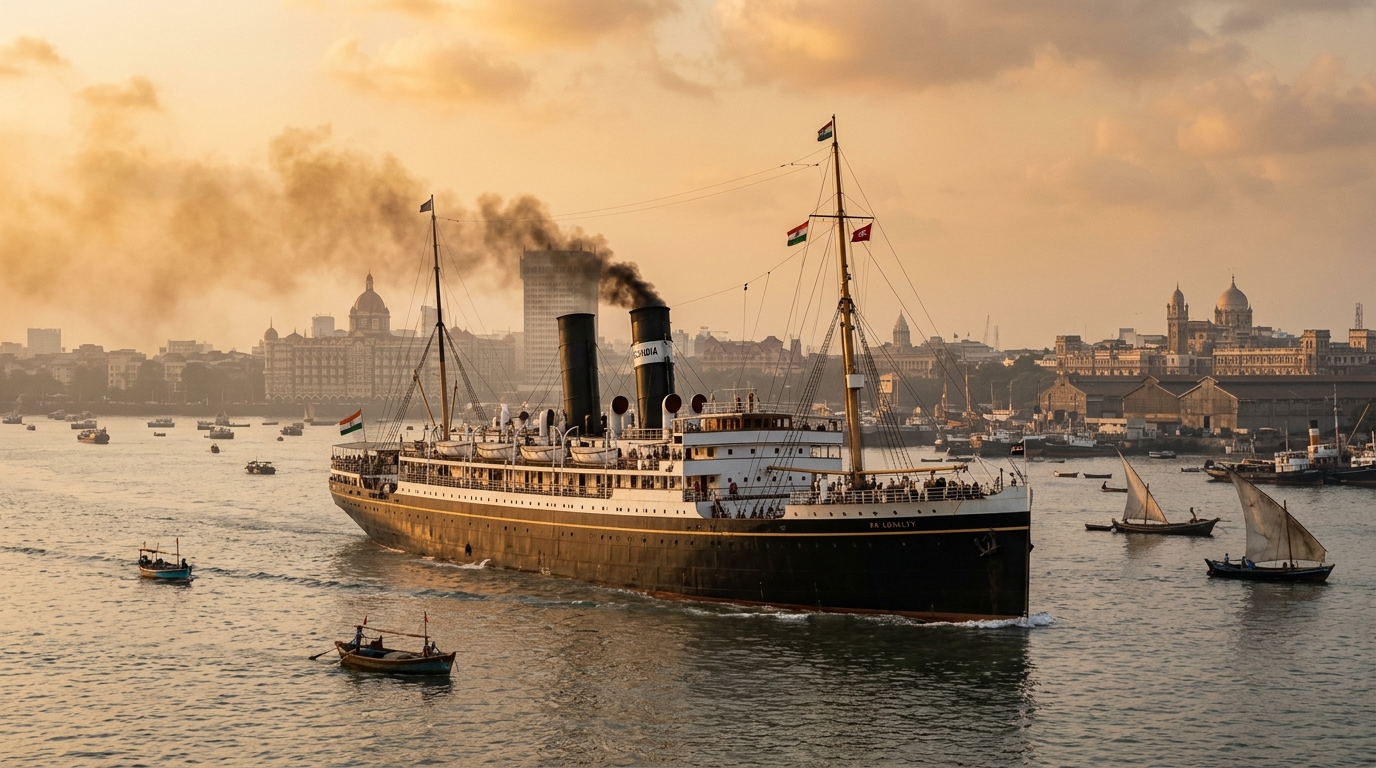
On April 5, 1919, industrialist Walchand Hirachand stood at the docks in Mumbai and watched the SS Loyalty depart for London. He had just purchased the former hospital ship to launch the Scindia Steam Navigation Company. This single vessel represented the first major challenge to a British commercial monopoly that had controlled Indian waters for centuries.
Understanding Indian Maritime Day history requires looking past military battles to the economic struggle for ocean transit. Ocean freight dictated national wealth in the early twentieth century. British firms used their shipping dominance to control Indian trade margins. The launch of a domestic merchant vessel was an act of economic rebellion. Today, this anniversary serves as a benchmark for measuring how far the nation's maritime sector has evolved.
April 5 marks the birth of India's commercial shipping independence
April 5 is celebrated as National Maritime Day because it marks the 1919 departure of the SS Loyalty, the first Indian-flagged merchant vessel to sail to Britain. This event established the Scindia Steam Navigation Company and initiated the country's long transition from a colonized market to an independent maritime power.
The SS Loyalty challenges British monopoly
Before 1919, British companies held absolute control over passenger and cargo transit out of the subcontinent. Indian merchants paid exorbitant freight rates. They had no alternative until Walchand Hirachand and his partners pooled their resources. They bought the RMS Empress, a vessel previously used as a hospital ship, and repurposed it for commercial transit as the SS Loyalty. The maiden voyage to London proved that Indian enterprises could manage long-haul ocean logistics.
This was not a military victory. It was an economic milestone that proved domestic operators could compete on international trade routes. The British maritime establishment noticed the threat immediately. Colonial administrators understood that controlling the ships meant controlling the profits of trade. By launching their own vessel, Indian industrialists signaled they would no longer accept a subordinate role in global commerce. This single voyage shifted the balance of economic power in the region.
Surviving predatory fare wars
Launching a ship was only the first hurdle. British shipping conglomerates responded to the Scindia Steam Navigation Company with aggressive predatory pricing. They slashed passenger and freight fares on the Mumbai-London route to levels that guaranteed a loss, fully expecting the new Indian venture to bankrupt itself trying to match them. British port authorities also delayed the SS Loyalty and denied it standard docking privileges.
The Indian operators survived by securing support from local merchants who willingly paid slightly higher rates to keep the domestic shipping line afloat. This early resistance laid the groundwork for modern commercial independence. The company absorbed massive early losses to establish a foothold in the shipping market. You can trace similar patterns of economic self-determination in the Economic Milestones in Indian History: From 1947 to Present. Their survival forced the British operators to eventually recognize Indian shipping firms as legitimate competitors rather than temporary nuisances.
Indian Maritime Day history separates merchant fleets from military navies
Indian Maritime Day history strictly honors the merchant navy and commercial shipping sector, which drives economic trade. This is distinct from Indian Navy Day on December 4, which commemorates military naval operations. April 5 celebrates the civilian seafarers, port workers, and logistics companies that keep global supply chains moving.
The distinction between April 5 and December 4
Many people confuse the nation's two major ocean-focused anniversaries. December 4 marks the military success of Operation Trident during the 1971 Indo-Pakistani War. April 5 focuses entirely on commerce and civilian transport. A nation needs both a secure coastline and a large-scale commercial fleet to maintain sovereignty. The merchant navy operates the cargo vessels, oil tankers, and bulk carriers that sustain the economy. Military vessels exist to protect these trade routes.
Understanding this separation helps clarify why maritime policies focus heavily on trade agreements, port infrastructure, and civilian workforce training rather than weapons systems. The merchant fleet generates revenue, while the military fleet consumes it for defense. National Maritime Day highlights the economic engine of the ocean. It brings attention to the logistics frameworks that allow domestic manufacturers to reach international buyers.
Acknowledging the merchant workforce
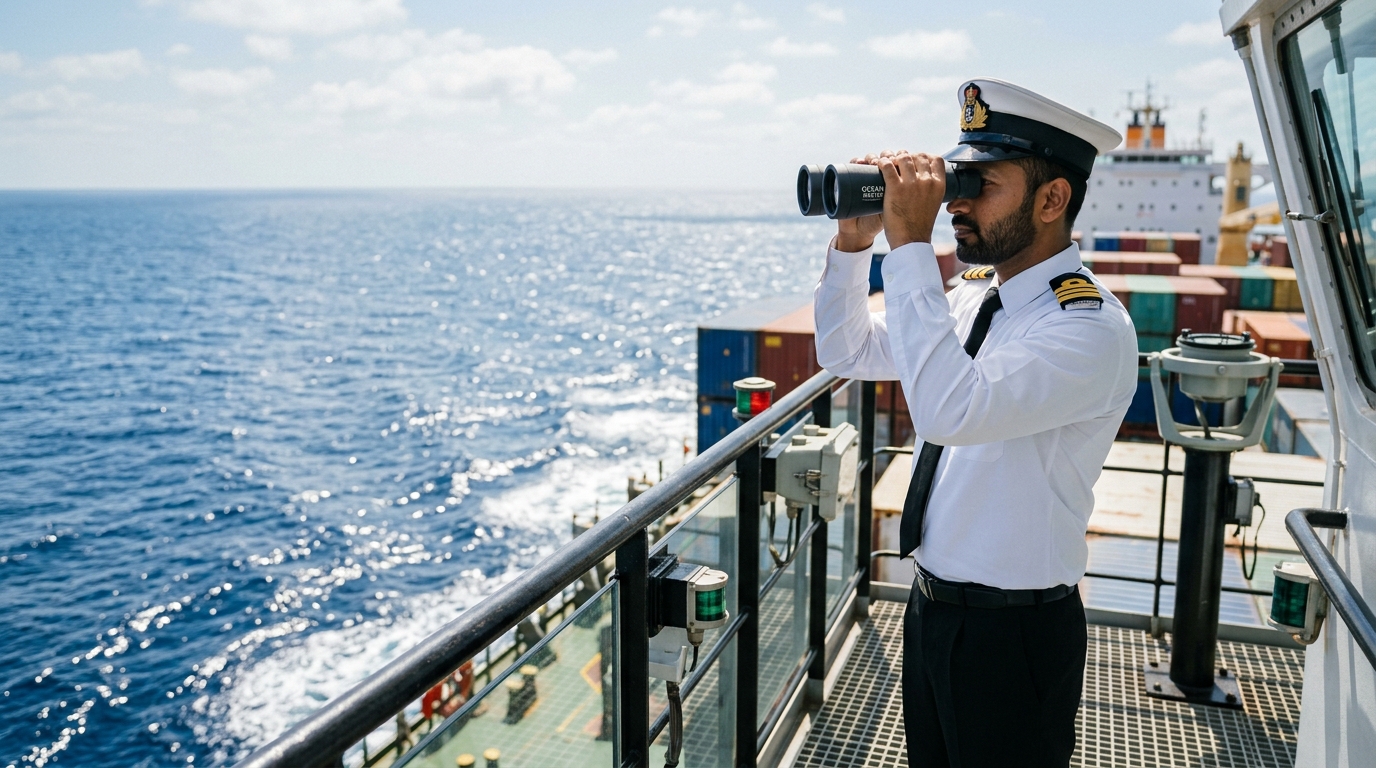
Civilian seafarers face distinct challenges, from long months isolated at sea to navigating complex international trade laws. Stéphane Ouellette, President and CEO of the Merchant Navy Commemorative Theme Project, notes that bridging the gap between the modern shipping industry and its forgotten history is vital to educate the world on the role of sea trade in global security and the economy [MNCTP, 2026]. The merchant fleet ensures factories receive raw materials and agricultural products reach foreign markets.
Without these commercial vessels, the domestic economy would halt within weeks. Merchant sailors operate massive industrial equipment in hazardous ocean conditions. They do not carry weapons, but they face piracy, severe weather, and geopolitical blockades. Their daily work sustains the modern standard of living. Recognizing their contribution on April 5 helps elevate the status of a profession that usually operates out of sight of the general public.
Modern port infrastructure drives the national economy
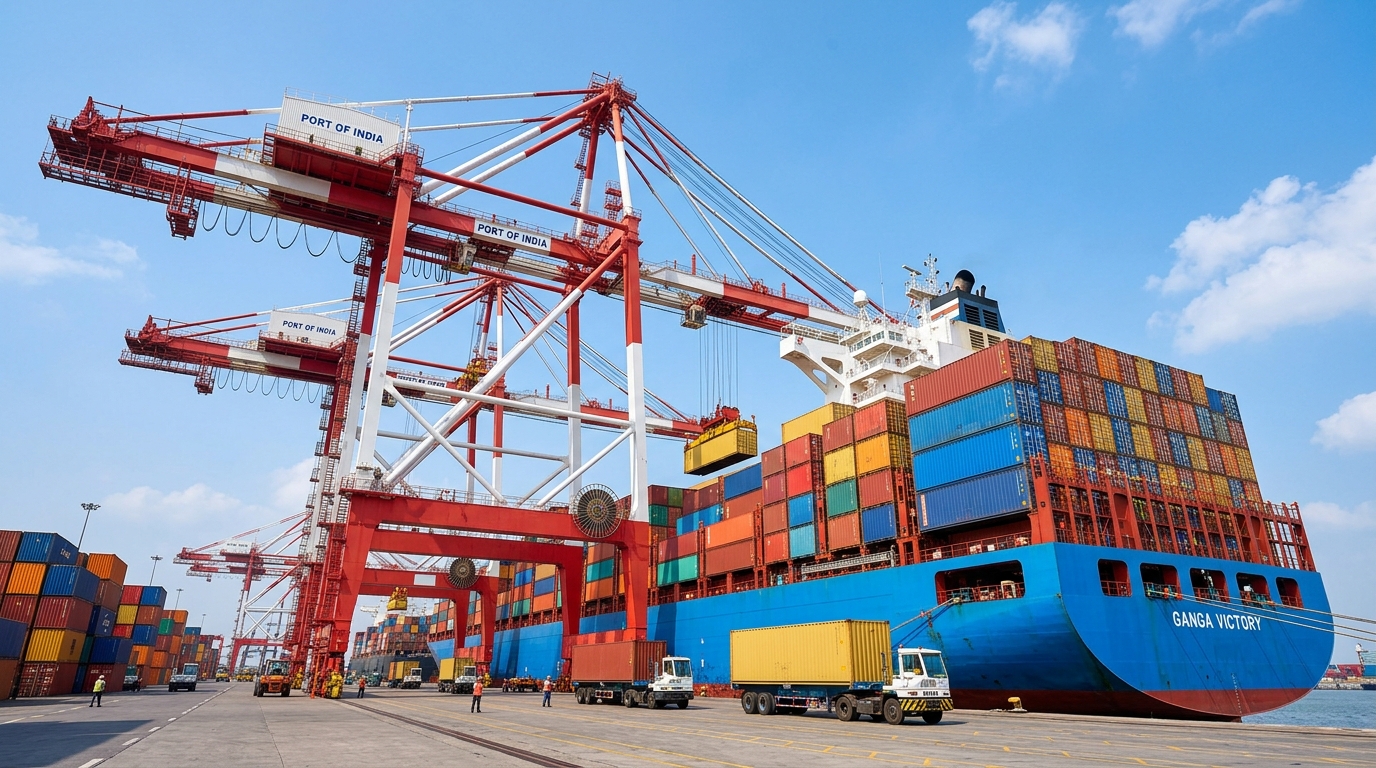
Upgraded port facilities now handle the massive cargo volumes required by a growing economy. India relies on maritime transport for 95 percent of its trade by volume and 70 percent by value, according to the IMPRI Impact And Policy Research Institute [2025]. This requires continuous expansion of coastal infrastructure.
Capacity expansion across 12 major ports
The physical footprint of Indian maritime trade has grown exponentially. Indian port capacity nearly doubled from 1,400 million tonnes per annum (MTPA) in the 2013-14 fiscal year to 2,818 MTPA in 2025-26, according to the Ministry of Ports, Shipping and Waterways [2026]. This expansion spans the 12 major government-owned ports and numerous private facilities along the 7,500-kilometer coastline. Private operators handle a massive share of this load. Adani Ports and Special Economic Zone (APSEZ) processed 420 million metric tons of cargo in 2023-24, accounting for 44 percent of India's containerized seaborne trade [IMARC Group, 2026].
Better infrastructure also means faster processing. The average vessel turnaround time at major Indian ports dropped from 96 hours to under 50 hours over the past decade [Vishal Tupper, 2026]. Fast turnaround times reduce costs for shipping lines and lower the final price of imported goods. Expanding port drafts to accommodate larger container ships allows domestic exporters to benefit from economies of scale.
Legislative overhauls support institutional financing
Physical expansion requires massive capital investment. The government recently modernized the legal framework to attract this funding. Parliament passed five landmark maritime laws in a single session, including the Merchant Shipping Act 2025, Coastal Shipping Act 2025, and Indian Ports Act 2025 [DGMA, 2026]. These laws replaced outdated colonial-era regulations that slowed down private investment.
In September 2025, commercial ships over 10,000 gross tonnage were granted "infrastructure status" [DGMA, 2026]. This designation gives shipowners better access to institutional financing at lower interest rates. Fleet operators can now secure the long-term loans needed to purchase modern, high-capacity vessels. Legal clarity reduces the risk for foreign investors looking to fund terminal expansions. A modern legal framework is just as critical to supply chain efficiency as the physical cranes on the docks.
Indian seafarers dominate the global maritime workforce
India produces a massive share of the skilled personnel required to operate international commercial vessels. The country is currently the world's second-largest supplier of seafarers, contributing 311,936 professionals to the global workforce. This represents 12.16 percent of all active maritime crew members worldwide.
Supplying 12 percent of the world's crew
International shipping companies rely heavily on Indian talent to staff their bridges and engine rooms. The BIMCO-ICS Seafarer Workforce Report [2026] confirms this 12.16 percent global market share. Indian maritime academies produce highly trained navigation officers, marine engineers, and deck cadets who hold recognized international certifications. These professionals work on foreign-flagged vessels across every major ocean.
Their remittances form a vital part of the national economy. Sarbananda Sonowal, Union Minister of Ports, Shipping and Waterways, stated that this rise to the second-largest supplier of global seafarers reflects international confidence in Indian talent and the country's resolve to be a leading maritime nation [PIB, 2026]. Indian officers are known for their strong technical education and English proficiency, making them ideal candidates for multinational crews. The global shipping industry would face a severe labor shortage without this steady pipeline of maritime graduates.
Mission 20 percent and future training
The government intends to expand this workforce dominance. In July 2026, officials launched "Mission 20%," an initiative designed to increase India's share of the global seafaring workforce from its current level to a full 20 percent [PIB, 2026]. Hitting this target requires expanding maritime training institutes and subsidizing certification programs for young cadets.
The 63rd National Maritime Day celebrated this workforce expansion under the theme "Maritime India, Empowering Progress" [PIB, 2026]. The focus has shifted from simply supplying raw labor to providing specialized operators who can manage complex automated navigation systems and modern propulsion technologies. Training centers are updating their curriculums to cover digital twin systems, alternative fuel engines, and advanced cargo handling software. Preparing cadets for these specific technical roles ensures they remain competitive as the global fleet modernizes.
Green transitions define the next era of ocean transport
The maritime sector is actively replacing fossil-fuel-dependent vessels with sustainable alternatives to meet international emissions targets. Modern Indian Maritime Day history now tracks the deployment of eco-friendly ships and zero-emission port equipment. This transition requires completely redesigning how commercial fleets operate and refuel.
The Green Tug Programme targets 2040
Port operations generate significant carbon emissions through the constant use of diesel-powered harbor tugs. The government initiated the Green Tug Programme to eliminate this localized pollution. This initiative targets the deployment of 100 eco-friendly tugs by 2040, backed by a ₹12,000 crore investment [Vishal Tupper, 2026].
These new vessels will run on battery-electric systems or green ammonia fuel cells. Replacing the legacy diesel fleet reduces emissions in coastal cities and helps major ports meet their sustainability compliance metrics. You can read more about how domestic industries adapt to modern environmental standards in the 25 Historic Indian Events from 2000 to 2025: A Timeline. Transitioning a working harbor to alternative fuels requires building entirely new refueling infrastructure alongside the existing diesel tanks.
Scaling eco-friendly vessels
The push for sustainability extends beyond harbor tugs. Major Indian shipyards are retooling their drydocks to construct vessels powered by alternative fuels. The global shipping industry faces strict decarbonization mandates from the International Maritime Organization. Indian fleet operators must upgrade their ships or face heavy penalties at foreign ports.
This shift creates a massive financial burden for smaller shipping companies that cannot afford to retrofit their existing vessels. The recent infrastructure status granted to large ships helps operators finance these mandatory green upgrades. The future of the domestic merchant fleet depends entirely on its ability to adopt clean energy technologies. Companies that fail to transition will find their vessels banned from major international trade routes within the next decade.
Related Reading
- Milestones in Indian Women's History: A Chronological Guide
- 1,000 Years of Indian Medical History: A Chronological Guide
- Economic Milestones in Indian History: From 1947 to Present
- What Are the Major Events in Indian History? (FAQ Archive)
FAQ
Q: What is the significance of April 5 in Indian history? April 5 marks National Maritime Day, commemorating the 1919 maiden voyage of the SS Loyalty from Mumbai to London. This event broke the British shipping monopoly and established India's modern commercial merchant navy.
Q: What is the difference between National Maritime Day and Navy Day? National Maritime Day (April 5) celebrates the civilian merchant navy, commercial shipping, and trade infrastructure. Navy Day (December 4) honors the military Indian Navy and commemorates a specific combat operation during the 1971 war.
Q: How much of India's trade depends on maritime transport? Ocean freight handles 95 percent of the country's trade by volume and 70 percent by value. This massive reliance on shipping requires constant expansion of coastal port infrastructure to prevent supply chain bottlenecks.
Q: What is the current capacity of Indian ports? Indian port capacity reached 2,818 million tonnes per annum in the 2025-26 fiscal year. This represents a near doubling of capacity since 2013-14, driven by both government modernization and private sector investment.
Review your logistics and supply chain dependencies to understand your exposure to ocean freight timelines. Check the latest capacity reports for the specific major ports your vendors use. Plan your quarterly inventory buffers around current vessel turnaround times rather than historical averages.
Sources
- National Maritime Day: A quick look at the history behind it — The Statesman, 2018. Supports: April 5 commemorates the maiden voyage of the SS Loyalty in 1919, marking the first time an Indian-owned ship sailed from Mumbai to London.
- Infrastructure in India: The economics of transition from public to private provision — Brookings Institution, 2009. Supports: Maritime transport handles 95 percent of India's trade by volume and 70 percent by value.
- India Becomes World's Second-Largest Supplier of Seafarers, Strengthening Global Maritime Leadership — Defence Aviation Post, 2026. Supports: India currently supplies 12.16 percent of the global seafaring workforce.
- Maritime India Vision 2030: India's Ports, Shipbuilding and Waterways See Strong Growth — ChartForest, 2026. Supports: Indian port capacity increased from 1,400 million tonnes per annum (MTPA) in 2013-14 to 2,818 MTPA in 2025-26.
- Adani Ports Achieves Record Cargo Handling — Construction World, 2024. Supports: Adani Ports and Special Economic Zone (APSEZ) processed 420 million metric tons of cargo in 2023-24.
- SAGARMALA PROGRAMME AND PORT MODERNISATION — Sumati IAS, 2026. Supports: Average vessel turnaround time at major Indian ports dropped from 96 hours to under 50 hours over the past decade.