March 2020: A Historical Timeline of India's First National Lockdown
Bottom Line
The India 2020 lockdown timeline tracks the unprecedented public health measures enacted in March 2020 to slow the spread of COVID-19. It begins with early international travel restrictions, escalates through a one-day voluntary curfew, and culminates in a strict 21-day nationwide mandate affecting 1.3 billion citizens.
Key Takeaways
- The escalation from localized travel advisories to a complete national mandate occurred in under three weeks.
- The March 22 Janata Curfew served as a critical logistical trial for broader containment measures.
- The official 21-day national lockdown restricted the movement of 1.3 billion people starting March 25.
- The government invoked colonial-era legislation to enforce emergency mandates across all states.
- Essential supply chains remained operational while all public transport networks halted entirely.
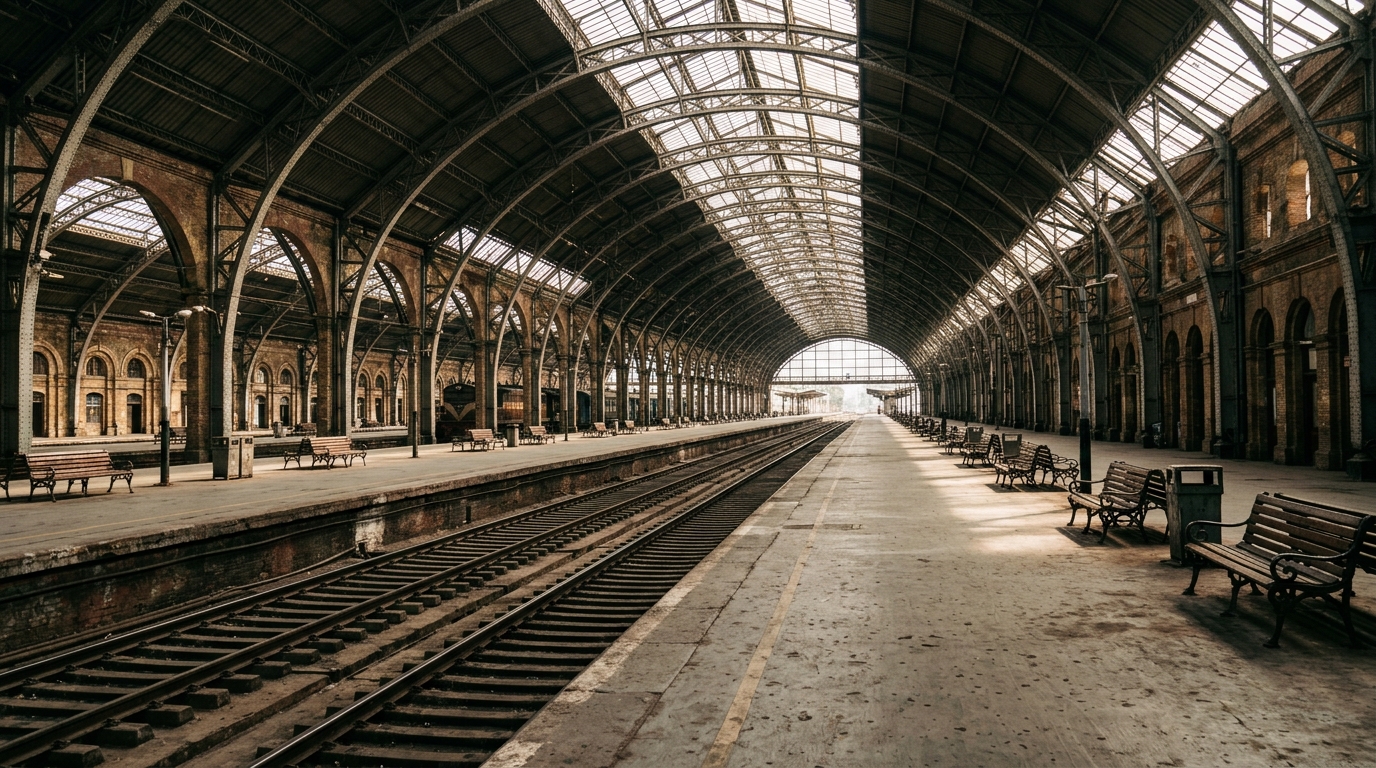
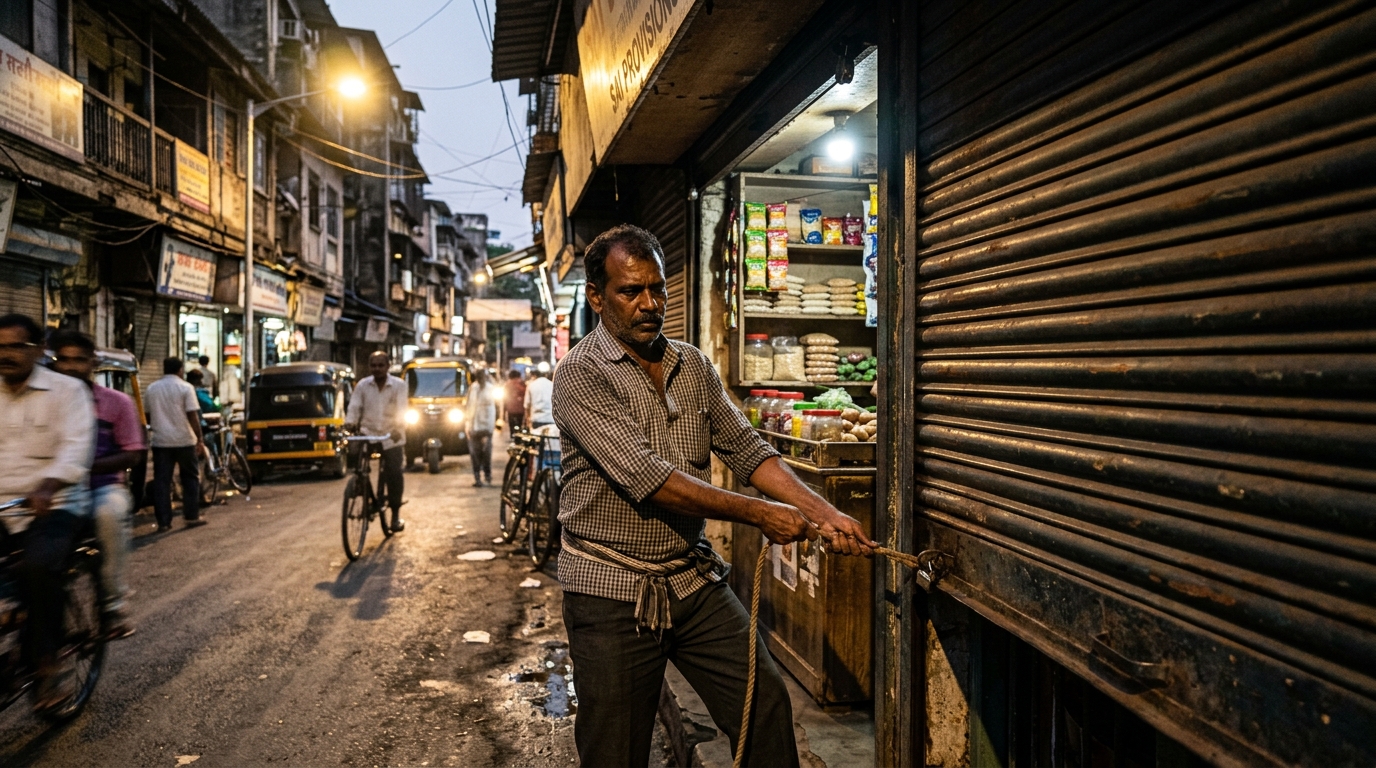
On the evening of March 24, 2020, a shopkeeper in Mumbai pulled down the metal shutters of his grocery store, unsure when he would open them again. Across the country, train stations that normally pulsed with millions of daily commuters stood entirely empty. In a matter of hours, normal life halted as the nation prepared for the largest quarantine in human history.
The India 2020 lockdown timeline represents a defining moment in modern public health history. Within a few short weeks, the central government shifted from monitoring international arrivals to enforcing a complete halt of domestic movement. This chronological record details how those events unfolded day by day.
Understanding this progression provides valuable context for how large-scale administrative decisions happen during global emergencies. It shows the rapid pace of policy shifts and the immediate logistical challenges of halting a vast, interconnected economy. The sheer scale of the mandate parallels other massive structural shifts documented in 25 Historic Indian Events from 2000 to 2025: A Timeline, showing how sudden changes reshape society overnight.
As we review the dates, we see a clear pattern of escalation. The initial steps focused on external borders. The final steps focused on the front doors of individual citizens.
Early March Brought Initial Travel Restrictions and Advisory Measures
The first two weeks of March 2020 focused primarily on border control and international travel. The government systematically suspended visas, implemented mandatory airport screenings, and issued advisories discouraging mass gatherings, setting the administrative groundwork for the broader domestic restrictions that followed.
Suspension of International Visas
In early March, the primary strategy was containment at the borders. The Ministry of Health and Family Welfare closely monitored incoming international flights. On March 3, the government suspended regular visas and e-visas granted to nationals of Italy, Iran, South Korea, and Japan.
This list expanded rapidly. By March 11, the World Health Organization officially declared the outbreak a global pandemic. India responded by suspending all tourist visas until April 15. The government mandated a 14-day quarantine for incoming travelers from affected regions. These early visa suspensions marked the first major disruption to normal global mobility.
State-Level Precautionary Closures
While the central government managed international borders, state governments began implementing their own local restrictions. Between March 12 and March 15, several states invoked emergency protocols. Kerala, Maharashtra, and Delhi announced the closure of schools, colleges, and cinema halls.
State authorities advised private companies to allow employees to work from home. Public gatherings faced heavy restrictions. These piecemeal closures created a patchwork of regulations across the country. Citizens in some states faced strict limitations, while others continued normal daily routines. This fragmented approach soon proved insufficient for a fast-moving public health crisis.
The Declaration of a Notified Disaster
On March 14, the Union government took a crucial administrative step. It declared the crisis a "notified disaster" for the purpose of providing assistance under the State Disaster Response Fund. This legal designation allowed state governments to access emergency funds.
States could now spend money on setting up quarantine facilities, establishing testing laboratories, and purchasing personal protective equipment. This administrative move signaled that the government viewed the situation as a long-term systemic threat requiring significant financial resources.
The Janata Curfew Served as a National Trial Run
The March 22 Janata Curfew marked the first nationwide attempt to restrict public movement. This 14-hour voluntary isolation period tested the public's willingness to comply with stay-at-home orders while allowing authorities to gauge the logistical challenges of a broader shutdown.
The Prime Minister's Public Appeal
On March 19, the Prime Minister addressed the nation during an evening broadcast. He appealed to citizens to observe a "Janata Curfew" (People's Curfew) on Sunday, March 22. The request asked all citizens, except those in essential services, to stay indoors from 7:00 AM to 9:00 PM.
The address framed the curfew as a voluntary exercise in public discipline. It was not a legally binding order. However, the political messaging strongly urged compliance as a matter of national duty. The announcement gave citizens three days to prepare for the temporary isolation.
Execution and Public Response
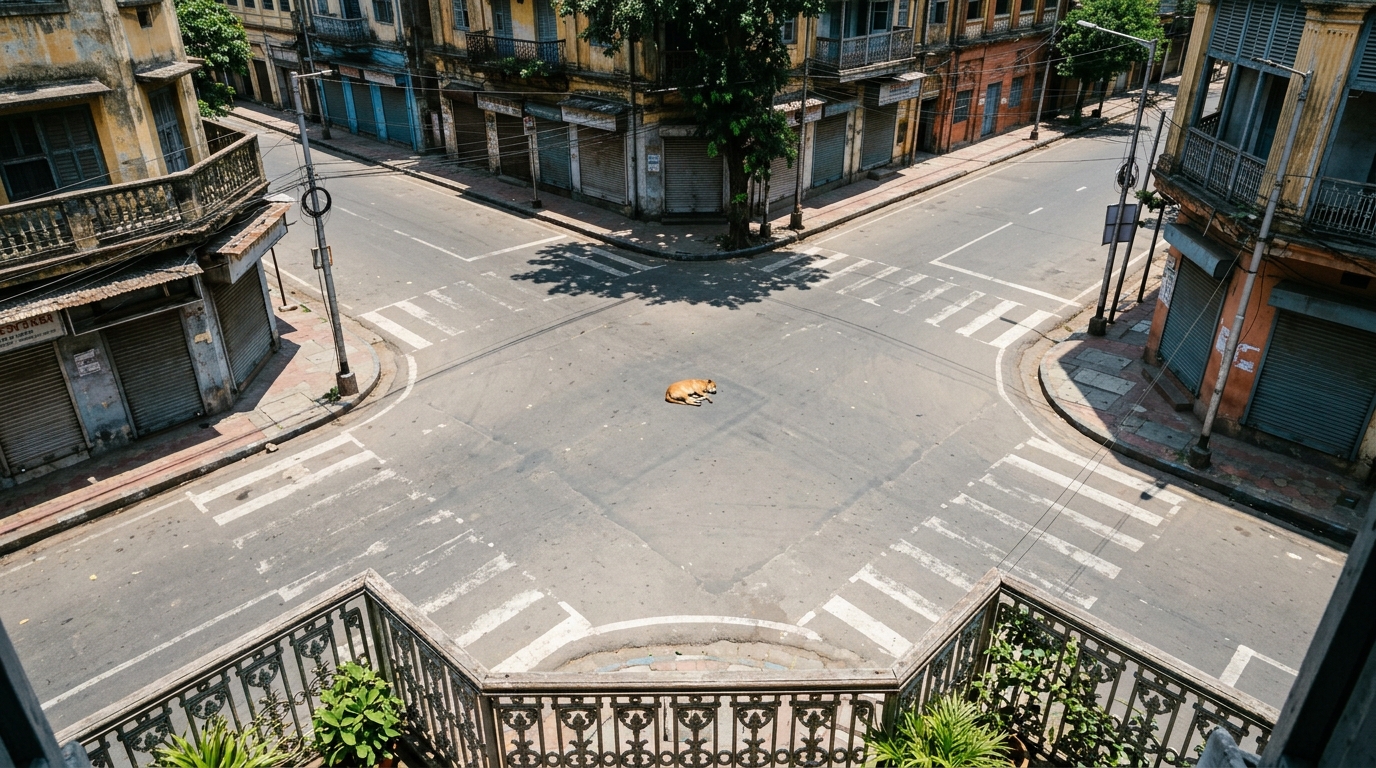
The response on March 22 was nearly universal. Streets across major metropolitan areas emptied. Markets remained closed. Public transport ran at minimal capacity.
At 5:00 PM, millions of citizens stepped onto their balconies and porches. They clapped hands, rang bells, and blew conch shells for five minutes. This act, requested during the national address, aimed to express gratitude to medical professionals and frontline workers. The high compliance rate during this 14-hour window gave administrators confidence that a longer, mandatory restriction could be enforced.
The Suspension of the Railway Network
Behind the scenes of the voluntary curfew, the government executed a massive logistical halt. On March 22, the Ministry of Railways announced the suspension of all passenger train services until March 31.
Indian Railways operates the fourth largest railway network in the world. It carries over 23 million passengers daily. Halting this system was unprecedented. Only freight trains carrying essential goods continued to run. This single decision effectively severed the primary mode of long-distance transport for the working class.
The Final Escalation Toward Complete Domestic Shutdown
Between the voluntary curfew and the final mandate, the India 2020 lockdown timeline shows a rapid cascade of state-level closures. State governments sealed their borders, halted interstate transport, and suspended domestic flights to prevent mass migration before the central government stepped in.
Suspension of Domestic Aviation
Following the halt of the railway network, the government moved to ground domestic air travel. On March 23, the Ministry of Civil Aviation announced that all commercial domestic flights would cease operations at midnight on March 24.
Airlines scrambled to complete their final scheduled routes. Airports, already dealing with complex screening protocols for the few remaining international arrivals, prepared to shut down passenger terminals entirely. Cargo flights and special emergency evacuations remained the only permissible aviation activity.
The Sealing of State Borders
By March 23, state governments recognized the risk of interstate transmission. Authorities in Delhi, Maharashtra, Punjab, and several other states announced complete lockdowns of their respective territories.
Police set up barricades at state borders. They turned back private vehicles and interstate buses. This aggressive containment strategy trapped thousands of travelers in transit. The lack of coordination between neighboring states led to confusion at border checkpoints, where commercial trucks carrying non-essential goods sat stranded.
Invoking Section 144
To enforce these new restrictions, local authorities across the country invoked Section 144 of the Criminal Procedure Code. This colonial-era law prohibits the gathering of four or more people in an area.
Police used Section 144 to legally disperse crowds, close markets, and enforce the state-level lockdowns. Violators faced immediate legal action. The widespread use of this legal tool transformed the public health advisory into a strict law enforcement operation.
The 21-Day Nationwide Mandate Altered Daily Life Instantly
On March 24, the central government announced a strict 21-day nationwide lockdown effective at midnight. This mandate legally restricted 1.3 billion citizens to their homes, closed all non-essential commercial establishments, and triggered a massive administrative effort to maintain essential supply chains.
The Midnight Enforcement
At 8:00 PM on March 24, the Prime Minister delivered his second national address of the month. He announced a complete nationwide lockdown starting in just four hours. The mandate required everyone to stay inside their homes for 21 days.
The short notice triggered immediate panic buying. Citizens rushed to local markets to stock up on groceries, medicines, and household supplies. Despite assurances that essential goods would remain available, the fear of scarcity drove massive crowds to stores, temporarily violating the very social distancing rules the mandate intended to enforce.
Exemptions for Essential Services
The Ministry of Home Affairs quickly released a detailed list of exemptions. Hospitals, pharmacies, and medical manufacturing facilities remained fully operational.
Grocery stores, dairies, and banks also stayed open. Print and electronic media received exemptions to ensure the flow of information. However, all educational institutions, commercial offices, factories, and places of worship closed immediately. The government ordered private employers to pay workers their full wages during the closure, though enforcement of this directive proved difficult in the informal sector.
The Migrant Worker Crisis Emerges
The sudden halt of the economy instantly removed the daily wages of millions of informal workers. With factories closed and public transport suspended, a massive humanitarian crisis unfolded.
Thousands of migrant workers in cities like Delhi and Mumbai packed their belongings. With no trains or buses running, they began walking hundreds of kilometers back to their native villages. This mass exodus highlighted the deep vulnerabilities in the informal labor market. The economic shockwaves from this event are deeply tied to the broader Economic Milestones in Indian History: From 1947 to Present.
Administrative Framework and Legal Mechanisms Enabled the Directives
The government utilized colonial-era legislation alongside modern disaster management frameworks to enforce the lockdown. By invoking the Epidemic Diseases Act of 1897 and the Disaster Management Act of 2005, authorities gained sweeping powers to restrict movement and allocate emergency public funds.
The Epidemic Diseases Act of 1897
To provide a legal basis for the strict health mandates, the government turned to a law over a century old. The Epidemic Diseases Act of 1897 was originally drafted by the British colonial government to control the bubonic plague in Bombay.
This brief, four-section act gives state governments special powers to prescribe temporary regulations to prevent the outbreak of dangerous epidemic diseases. It allows authorities to inspect travelers and segregate suspected cases. The reliance on this 19th-century law underscores how rarely such extreme public health measures are required.
The Disaster Management Act of 2005
While the 1897 Act provided the health framework, the logistical enforcement relied on the Disaster Management Act of 2005. The central government invoked this act to manage the crisis on a national scale.
This legislation empowers the National Disaster Management Authority, headed by the Prime Minister, to issue binding guidelines to state governments. Under this act, the Ministry of Home Affairs issued the specific lockdown orders, defined essential services, and prescribed penalties for non-compliance. This centralized the decision-making process during the critical weeks of March.
Daily Briefings and Public Communication
Managing the flow of information became a critical administrative task. The Ministry of Health and Family Welfare instituted daily press briefings in New Delhi.
These briefings provided official case counts, clarified lockdown rules, and dispelled misinformation. Joint Secretaries from various ministries presented data, answered questions, and outlined the government's procurement of medical supplies. This structured communication strategy aimed to maintain public calm and ensure compliance with the rapidly changing legal directives.
Comparing the March 2020 Timeline to Historical Health Crises
The India 2020 lockdown timeline shares administrative similarities with previous historical responses to outbreaks. While the scale of the 2020 mandate was unprecedented, the fundamental strategies of quarantine, travel restriction, and public communication echo earlier public health interventions.
Parallels with the 1896 Bombay Plague
The immediate reaction to the 2020 lockdown mirrors the events of the 1896 Bombay Plague. In both instances, strict government mandates led to a sudden exodus of migrant labor.
During the 1896 plague, the colonial government implemented aggressive quarantine measures and property inspections. This caused widespread panic, leading hundreds of thousands of workers to flee Bombay for the hinterlands. The 2020 migrant crisis followed a similar historical pattern, demonstrating how informal urban labor reacts to sudden economic and physical restriction.
The Spanish Flu of 1918
The travel restrictions of March 2020 also find historical precedent in the 1918 influenza pandemic. During the Spanish Flu, the disease spread across India primarily through the railway network, carried by returning World War I soldiers.
Authorities in 1918 struggled to halt the trains, leading to massive mortality rates across the subcontinent. The rapid suspension of the Indian Railways on March 22, 2020, reflects an administrative understanding of this specific historical vulnerability. For a deeper look at how medical infrastructure evolved between these events, review the 1,000 Years of Indian Medical History: A Chronological Guide.
The Evolution of State Capacity
The key difference between 2020 and past crises lies in state capacity. In 1918, the government lacked the communication tools to enforce a coordinated national response.
In March 2020, the state used modern telecommunications, digital banking for direct cash transfers, and a vast police apparatus to enforce the mandate. The timeline of March 2020 demonstrates a modern state exercising its full administrative reach. It executed a logistical freeze that would have been entirely impossible during earlier historical epidemics.
Quick Reference: March 2020 Event Sequence
To understand the rapid pace of these changes, it helps to view the events sequentially. The India 2020 lockdown timeline moved from basic advisories to a total national freeze in exactly three weeks.
| Date | Key Event | Administrative Impact |
|---|---|---|
| March 3 | Visa suspensions begin | Early border control for specific nations. |
| March 11 | Tourist visas suspended | Broad restriction on international arrivals. |
| March 14 | Notified disaster declared | Unlocked emergency state funding. |
| March 19 | National address | Prime Minister announces the Janata Curfew. |
| March 22 | Janata Curfew observed | 14-hour voluntary isolation; railways suspended. |
| March 23 | Domestic flights halted | Final closure of long-distance public transport. |
| March 24 | 21-day lockdown announced | Strict mandate begins at midnight. |
This rapid sequence illustrates how quickly public policy can pivot. The decisions made during these specific dates fundamentally altered the trajectory of the nation for the next two years.
Related Reading
- India at the Olympics: A Timeline of Historic Sporting Milestones
- Timeline of Mahatma Gandhi's Nonviolent Movements in India
- The 1971 India-Pakistan War: Key Dates and Historical Summary
- December 1984: A Historical Timeline of the Bhopal Gas Tragedy
FAQ
Q: When did the first COVID-19 lockdown start in India? The first official 21-day nationwide lockdown began at midnight on March 25, 2020. The announcement was made by the Prime Minister at 8:00 PM on March 24.
Q: What was the Janata Curfew? The Janata Curfew was a 14-hour voluntary public curfew observed on March 22, 2020. It served as a trial run to test the public's readiness for stricter isolation measures.
Q: Were grocery stores closed during the 2020 lockdown? No. Grocery stores, pharmacies, and milk booths were classified as essential services. They remained open, though they operated under strict social distancing guidelines.
Q: What legal acts were used to enforce the lockdown? The government primarily used two laws. They invoked the Epidemic Diseases Act of 1897 for health mandates and the Disaster Management Act of 2005 for logistical enforcement.
Q: Did trains run during the 2020 lockdown? All regular passenger trains were suspended starting March 22. Only freight trains carrying essential goods and special emergency transport services were permitted to operate.
Review your local municipality's current emergency management guidelines to understand how essential services operate in your area today. Knowing the official communication channels for civic updates helps you stay prepared for future public health advisories or regional disruptions.