Isro Space Milestones Timeline
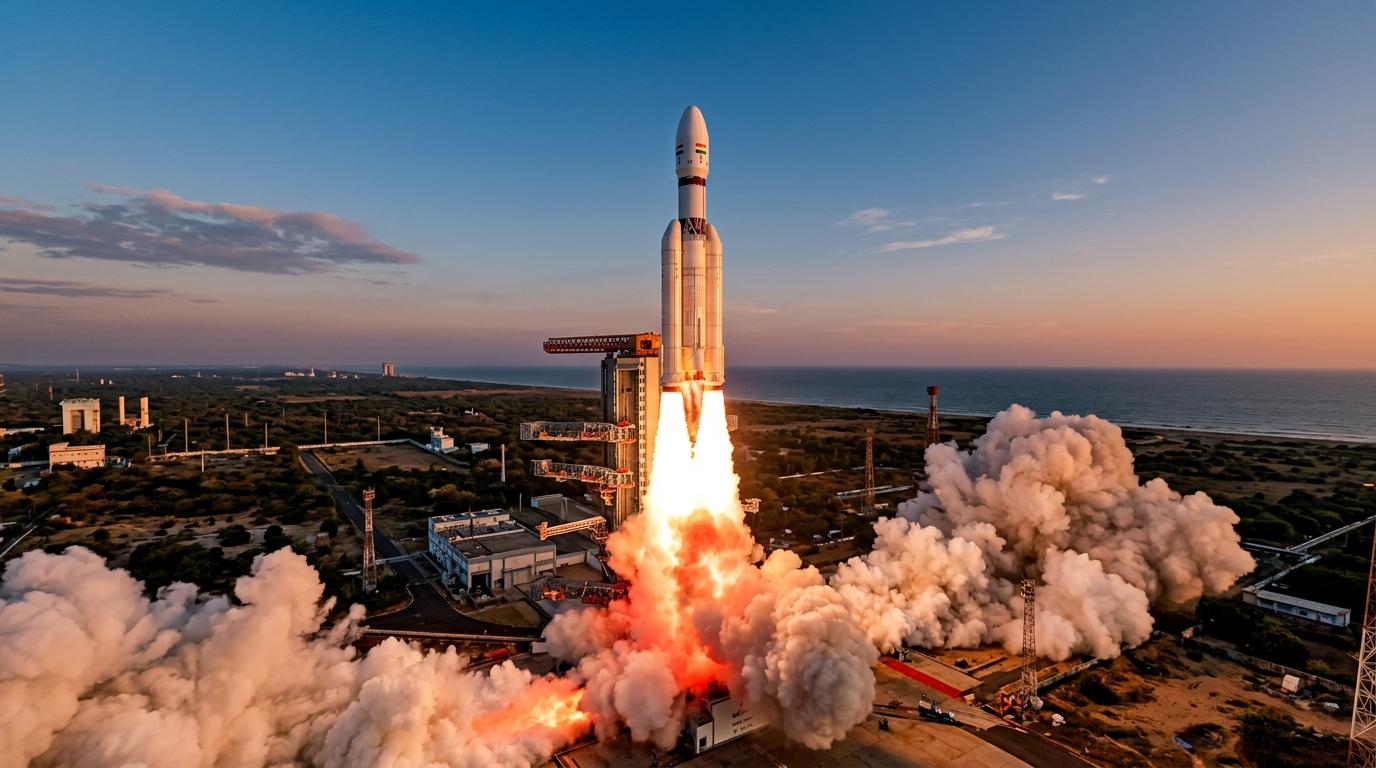
What Is the Bottom Line of the ISRO Space Milestones Timeline?
The bottom line of the ISRO space milestones timeline is a chronological record tracking India's journey from launching 1963 sounding rockets to achieving 2025 autonomous space docking. According to India Today (2026), the Indian Space Research Organisation utilizes a ₹13,705.63 crore budget to fund indigenous launch vehicles, commercial space operations, and human spaceflight.
Key Takeaways
- India's space journey evolved from a modest 1962 committee to a globally competitive agency.
- The PSLV emerged as ISRO's primary workhorse, launching hundreds of domestic and international satellites.
- Chandrayaan and Mangalyaan missions established India as a leader in cost-effective interplanetary exploration.
- Recent 2025 successes like SPADEX demonstrate advanced capabilities for future space stations.
- The 2026 space budget of ₹13,705.63 crore signals a major push toward human spaceflight.
Many people think the ISRO space milestones timeline only became globally relevant with the recent Chandrayaan lunar landings. In reality, India has been quietly pioneering cost-effective, high-impact space technology for over six decades. From transporting rocket parts on bicycles in the 1960s to conducting autonomous space docking in 2025, the Indian Space Research Organisation (ISRO) built its capabilities step by step.
Today, the agency operates with a 2026-2027 budget of ₹13,705.63 crore ($1.64 billion), according to India Today (2026). This funding supports a massive ecosystem of research, commercial launches, and deep-space exploration. Understanding this timeline reveals how India transformed from a developing nation seeking basic satellite communication into a space superpower preparing for human spaceflight. We track these defining moments to show exactly how ISRO engineered its path to the stars.
How Did the ISRO Space Milestones Timeline Begin?
The ISRO space milestones timeline began in the early 1960s with a focus on atmospheric research rather than orbital satellites. The Indian government established a dedicated committee in 1962, which eventually launched small sounding rockets before evolving into the fully-fledged space agency we know today.
The INCOSPAR Origins (1962)
Before ISRO existed, there was the Indian National Committee for Space Research (INCOSPAR). Dr. Vikram Sarabhai convinced the Indian government to invest in space technology in 1962. The team set up the Thumba Equatorial Rocket Launching Station in Kerala. The location was perfect because it sat close to Earth's magnetic equator.
In November 1963, India launched its first sounding rocket. It was a US-built Nike-Apache. Scientists famously transported rocket components to the launch pad using bicycles. This humble beginning laid the groundwork for indigenous research. INCOSPAR officially became ISRO on August 15, 1969. The agency immediately focused on developing technology to solve national problems, such as weather forecasting and communication.
What Was Aryabhata and the First Satellites (1975)?
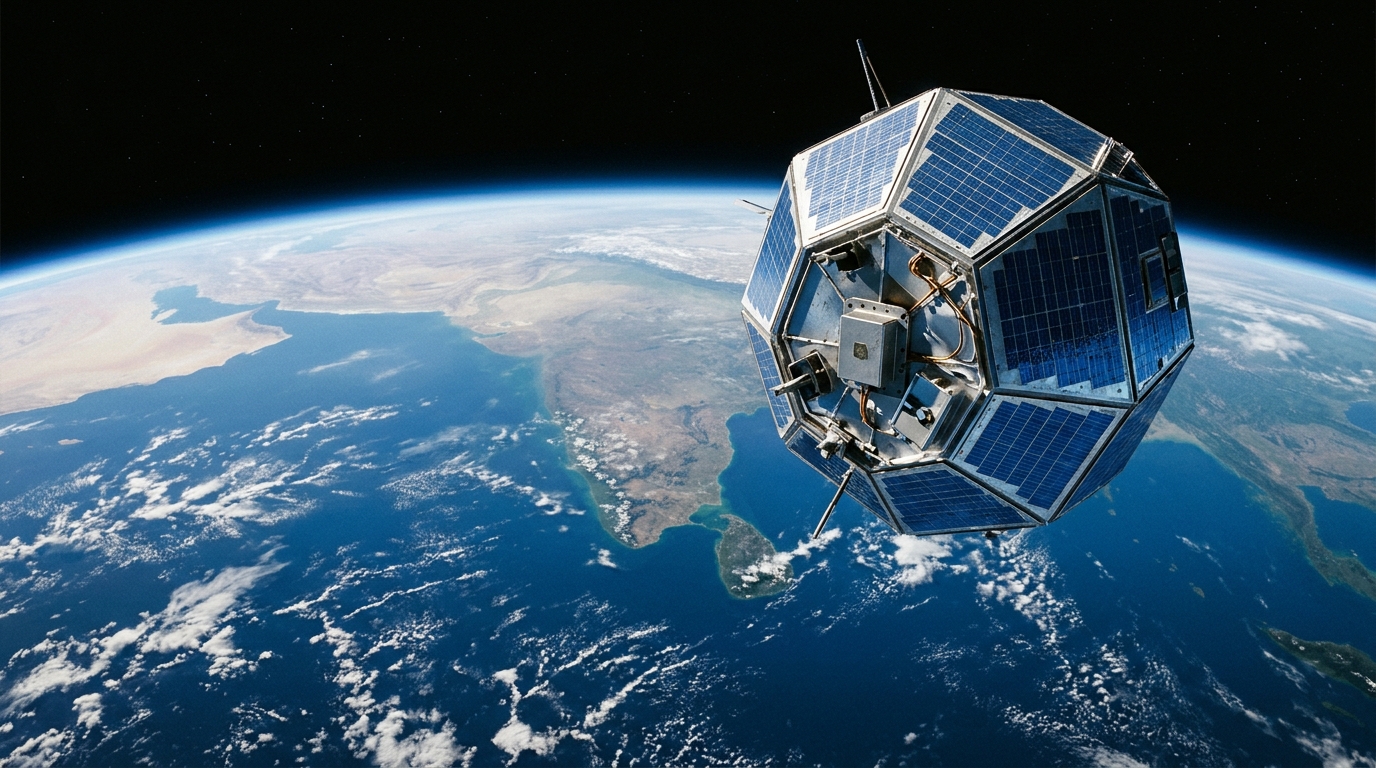
Aryabhata and the first satellites (1975) is the initial phase of orbital spacecraft development where the Indian Space Research Organisation proved the agency could build a functioning satellite. On April 19, 1975, India launched Aryabhata, the nation's first satellite, when a Soviet Kosmos-3M rocket carried the 360-kilogram spacecraft into orbit.
Aryabhata conducted experiments in X-ray astronomy and solar physics. A power failure halted the Aryabhata experiments after a few days. However, Aryabhata proved Indian scientists could design and construct space-grade hardware. The Indian Space Research Organisation followed Aryabhata with the Bhaskara-I satellite in 1979. These 1975 and 1979 satellite missions provided the data processing and tracking experience necessary for future independent Indian Space Research Organisation missions.
The SLV-3 Breakthrough (1980)
Building a satellite is one challenge. Launching it is another entirely. ISRO spent the 1970s developing the Satellite Launch Vehicle (SLV-3). Dr. A.P.J. Abdul Kalam directed the project.
The first experimental launch in 1979 failed. The rocket plunged into the Bay of Bengal. However, the team learned from the telemetry data. On July 18, 1980, the SLV-3 successfully placed the 35-kilogram Rohini satellite into low Earth orbit. This made India the sixth member of the exclusive club of spacefaring nations.
The SLV-3 was a four-stage solid-propellant rocket. It lacked the payload capacity for large communication satellites, but it gave ISRO the structural and aerodynamic data needed to build larger rockets. You can trace similar foundational growth in other sectors by reviewing the Economic Milestones in Indian History: From 1947 to Present.
What Are the Major Launch Vehicle Achievements in the ISRO Space Milestones Timeline?
The major launch vehicle achievements in the ISRO space milestones timeline include the perfection of the Polar Satellite Launch Vehicle (PSLV) and the development of heavy-lift rockets. These vehicles transitioned India from depending on foreign rockets to launching commercial payloads for other nations.
Perfecting the PSLV
The Polar Satellite Launch Vehicle (PSLV) is ISRO's most reliable rocket. Development started in the 1980s. The goal was to launch Indian Remote Sensing satellites into sun-synchronous orbits.
The first developmental flight in 1993 failed due to a software error. Since its first successful launch in 1994, the PSLV has completed dozens of consecutive successful missions. It uses a unique four-stage configuration. The stages alternate between solid and liquid propellants.
The PSLV gained global fame in 2017 when it launched 104 satellites in a single flight (PSLV-C37). This rocket made the ISRO space milestones timeline commercially viable. It provided affordable, reliable access to space for international customers.
The GSLV and Cryogenic Engines
While the PSLV handles lighter payloads, India needed a stronger rocket for heavy communication satellites. The Geosynchronous Satellite Launch Vehicle (GSLV) fills this role. Early GSLV flights used Russian cryogenic engines.
A cryogenic engine uses liquid hydrogen and liquid oxygen at extremely low temperatures. This provides massive thrust. When geopolitical sanctions blocked India from acquiring more engines, ISRO decided to build its own.
The indigenous Cryogenic Upper Stage (CUS) took over a decade to perfect. The GSLV Mk-II, powered by the Indian CUS, achieved its first successful flight in 2014. Mastering cryogenic technology gave India complete self-reliance in launching two-ton class satellites.
LVM3 and Heavy Lift Capabilities
To launch heavier payloads and prepare for human spaceflight, ISRO developed the Launch Vehicle Mark-3 (LVM3). Formerly known as the GSLV Mk-III, this heavy-lift rocket can carry four tons to a geosynchronous transfer orbit. It can carry eight tons to low Earth orbit.
It features two massive solid strap-on boosters, a core liquid stage, and an advanced C25 cryogenic upper stage. The LVM3 had its first successful orbital flight in 2017. It has since launched India's most critical missions, including the Chandrayaan lunar probes.
ISRO also uses the LVM3 to test space debris mitigation. In July 2026, the discarded C25 upper stage of the LVM3-M5 rocket safely re-entered Earth's atmosphere nine months after launch. This demonstrated active debris management (India Today, 2026).
How Has India Explored the Moon and Mars?
India explored the Moon and Mars by prioritizing highly efficient, indigenous orbital mechanics and cost-effective engineering. These interplanetary missions established India as a leader in deep-space exploration, confirming the presence of lunar water and successfully reaching Mars orbit on the first attempt.
Chandrayaan-1 and Lunar Water
India launched its first deep-space mission, Chandrayaan-1, on October 22, 2008. The spacecraft orbited the Moon at a height of 100 kilometers. It carried 11 scientific instruments built in India, the US, the UK, Germany, Sweden, and Bulgaria.
The mission's defining moment occurred when its Moon Impact Probe intentionally crashed into the lunar south pole. Data from the probe, combined with NASA's Moon Mineralogy Mapper aboard the orbiter, confirmed the presence of water molecules on the lunar surface.
This discovery fundamentally changed lunar science. Chandrayaan-1 operated for 312 days before ISRO lost contact. It achieved 95% of its planned objectives.
Mangalyaan (Mars Orbiter Mission)
The Mars Orbiter Mission (MOM), unofficially known as Mangalyaan, launched in November 2013. ISRO built the spacecraft in just 18 months. On September 24, 2014, Mangalyaan successfully entered Martian orbit.
India became the first Asian nation to reach Mars orbit. It was the first nation in the world to do so on its maiden attempt. The mission cost roughly $74 million. This makes it one of the cheapest interplanetary missions ever flown.
Mangalyaan carried five scientific instruments to study the Martian surface and atmosphere. Originally designed for a six-month lifespan, the orbiter functioned for nearly eight years. It lost communication in 2022. This mission proved ISRO could execute complex deep-space navigation.
Chandrayaan-3’s Historic Landing
Following the partial failure of the Chandrayaan-2 lander in 2019, ISRO meticulously redesigned its approach for Chandrayaan-3. The mission launched on July 14, 2023, aboard an LVM3 rocket.
On August 23, 2023, the Vikram lander successfully touched down near the lunar south pole. India became the fourth country to soft-land on the Moon. It was the first to land near the rugged southern polar region.
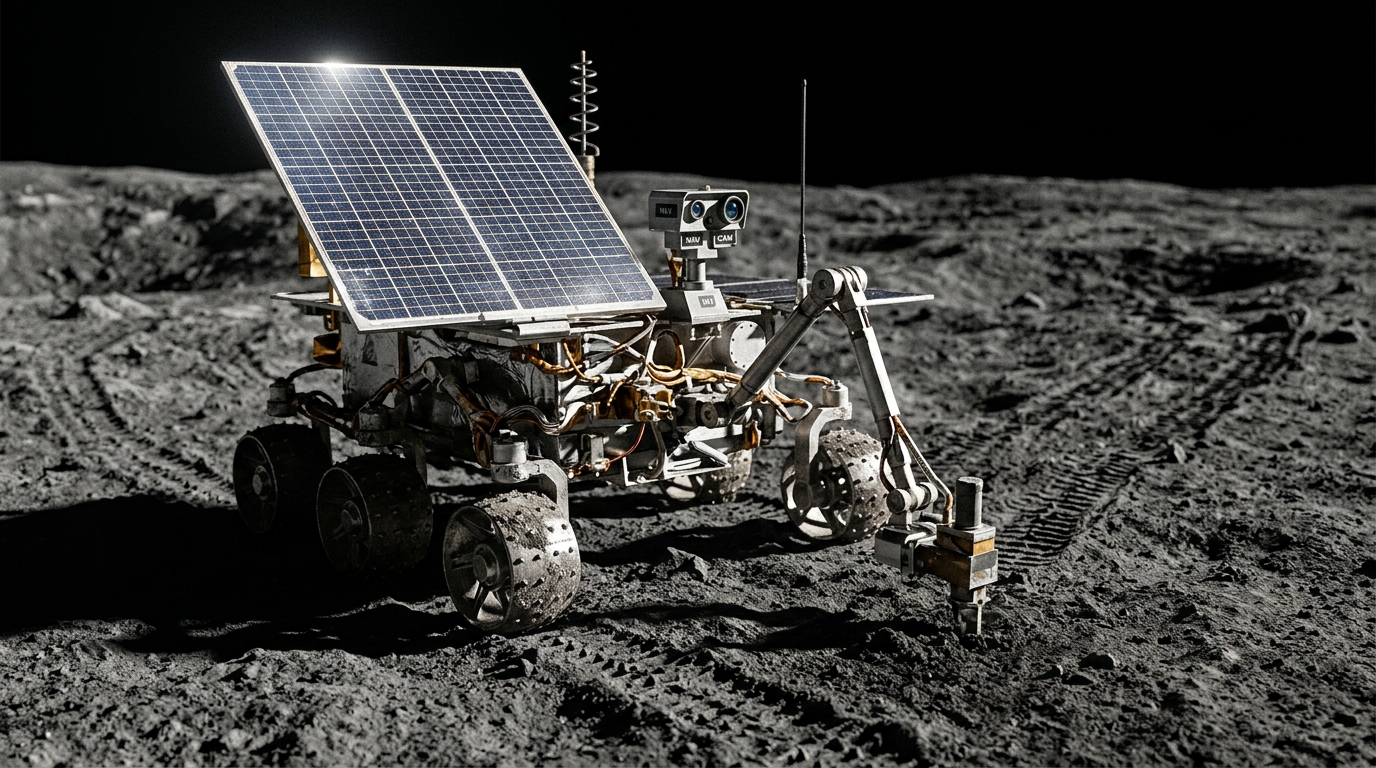
The Pragyan rover rolled out and conducted chemical analyses of the lunar soil. It confirmed the presence of sulfur, aluminum, and calcium. The lander also executed a brief "hop" experiment. It fired its engines to lift off and land again, testing technology necessary for future sample return missions. This milestone ranks among the most celebrated 10 Most Searched Dates in Indian History and Why They Matter.
What Are ISRO's Recent Scientific and Commercial Breakthroughs?
ISRO's recent scientific and commercial breakthroughs is a modern era of space exploration characterized by launching dedicated solar observatories, demonstrating autonomous in-orbit docking, and rapidly expanding private sector partnerships. According to The Hindu (2026), the Indian Space Research Organisation balances pure scientific research with a lucrative commercial satellite launch business.
During this period, the Indian Space Research Organisation achieved historic milestones such as the 2023 Aditya-L1 solar mission and the 2025 Space Docking Experiment (SPADEX). Furthermore, the Indian government established NewSpace India Limited (NSIL) and the Indian National Space Promotion and Authorization Centre (IN-SPACe) to commercialize launch vehicles and regulate private space companies. These structural transitions ensure the Indian Space Research Organisation can focus on advanced deep-space research while private entities handle routine commercial satellite launches, generating ₹1,403 crore in internal and extra-budgetary resources for NewSpace India Limited in 2026.
What Is Aditya-L1 and Solar Observation?
Aditya-L1 and solar observation is India's first dedicated solar mission, launched by the Indian Space Research Organisation on September 2, 2023. According to the Indian Space Research Organisation, the Aditya-L1 spacecraft traveled 1.5 million kilometers from Earth to Lagrange Point 1 (L1) to continuously view the Sun without any eclipses.
At Lagrange Point 1, the Aditya-L1 satellite carries seven payloads to observe the photosphere, chromosphere, and the outermost layers of the Sun, known as the corona. The Aditya-L1 mission aims to understand coronal heating, solar wind dynamics, and space weather drivers. By placing the Aditya-L1 observatory at Lagrange Point 1, the Indian Space Research Organisation joined a select group of space agencies capable of deep-space solar monitoring.
Commercial Push with NSIL and IN-SPACe
The Indian government is shifting from treating private space companies as mere build-to-print vendors to incentivizing them to innovate on architecture and downstream services (Technopolitik, 2026). To facilitate this, the government created NewSpace India Limited (NSIL) as the commercial arm of ISRO.
NSIL packages ISRO's launch vehicles and satellite platforms for international clients. Simultaneously, the Indian National Space Promotion and Authorization Centre (IN-SPACe) acts as a regulatory body to promote private space companies.
The 2026 projections show ₹1,403 crore in internal and extra-budgetary resources for NSIL. This is up from ₹1,030 crore the previous year (The Hindu, 2026). This structural transition ensures ISRO can focus on advanced research while private entities handle routine launches. You can explore the resulting ecosystem further in our Indian Space Startups Timeline.
SPADEX and Autonomous Docking (2025)
In January 2025, ISRO executed the Space Docking Experiment (SPADEX). Two Indian satellites successfully demonstrated autonomous docking, undocking, and power transfer in space (ISRO, 2026).
The Chaser satellite tracked the Target satellite. It aligned itself and mechanically linked the two spacecraft traveling at orbital speeds. India became only the fourth nation to achieve this capability.
SPADEX is a critical technological precursor. You cannot build a modular space station or execute a lunar sample return mission without the ability to dock spacecraft in orbit. This test proved ISRO has mastered the complex algorithms required for autonomous proximity operations.
Where Is the ISRO Space Milestones Timeline Heading Next?
The ISRO space milestones timeline is heading next toward human spaceflight, advanced Earth observation partnerships, and the establishment of an independent Indian space station. The current budget reflects a transition from preparatory planning to the actual build-phase of hardware.
Gaganyaan and Human Spaceflight
The Gaganyaan project will send Indian astronauts to low Earth orbit in an indigenous spacecraft. ISRO has spent years developing human-rated launch vehicles, crew modules, and life support systems.
As a precursor, Indian astronaut Shubhanshu Shukla flew to the International Space Station aboard the commercial Axiom Mission 4 (Ax-4) in June-July 2025 (Wikipedia, 2026). He conducted microgravity experiments to prepare for India's independent mission.
The 2026-2027 space budget allocates ₹10,397.06 crore specifically to Space Technology. This funds core ISRO centers for rockets and satellites (India Budget, 2026). According to the Indian Space Association, this signals a transition from preparatory planning to the actual build-phase of hardware for Gaganyaan (ISpA via Media, 2026).
NISAR and International Collaborations
ISRO relies increasingly on strategic international partnerships. The NASA-ISRO Synthetic Aperture Radar (NISAR) satellite successfully launched on July 30, 2025 (ISRO, 2026).
This $1.5 billion joint Earth-observation satellite uses L-band and S-band radar. It measures changes in the planet's surface as small as a centimeter. It aids in climate and disaster monitoring.
Beyond NASA, ISRO is deepening ties with the French space agency (CNES). The upcoming TRISHNA high-resolution thermal imaging mission, slated for 2026, will map Earth's surface temperature and water cycle. These collaborations allow ISRO to share costs while accessing advanced sensor technology.
Space Debris Mitigation and Sustainability
As low Earth orbit becomes crowded, ISRO is prioritizing sustainable space operations. The agency completed 231 total accomplishments in 2025 alone, including missions, ground tests, and technology demonstrations (ISRO, 2026).
With this increased flight rate comes the responsibility of managing space debris. ISRO now designs its missions with end-of-life disposal in mind. The agency actively de-orbits spent rocket stages, such as the LVM3 C25 upper stage. This ensures they burn up safely in the atmosphere rather than loitering in orbit for decades.
ISRO is also developing technologies for in-orbit servicing. They aim to extend the lifespan of existing satellites and reduce the overall footprint of space junk. You can see a similar long-term planning approach in the 25 Historic Indian Events from 2000 to 2025: A Timeline.
Related Reading
- India at the Olympics: A Timeline of Historic Sporting Milestones
- Indian History Milestones: The Maurya and Gupta Empires
- Indian History Timeline Chart: Key Milestones (Digital Reference)
- December 1984: A Historical Timeline of the Bhopal Gas Tragedy
FAQ
Q: When did ISRO launch its first satellite? A: ISRO launched its first satellite, Aryabhata, on April 19, 1975. It was carried into space aboard a Soviet Kosmos-3M rocket.
Q: What is the difference between PSLV and GSLV? A: The PSLV is designed primarily to launch lighter satellites into polar and sun-synchronous orbits. The GSLV uses cryogenic engines to lift heavier communication satellites into higher geosynchronous orbits.
Q: How much did the Mars Orbiter Mission cost? A: The Mars Orbiter Mission (Mangalyaan) cost approximately $74 million. This made it one of the most cost-effective interplanetary missions in history.
Q: What is the Gaganyaan mission? A: Gaganyaan is ISRO's ongoing human spaceflight program. It aims to launch Indian astronauts into low Earth orbit using an indigenous spacecraft and a human-rated LVM3 rocket.
Q: What was the purpose of the 2025 SPADEX mission? A: SPADEX demonstrated autonomous docking between two satellites in space. This technology is required for building future space stations and executing lunar sample return missions.
What Is Further Reading for the ISRO Space Milestones Timeline?
Further reading for the ISRO space milestones timeline is a curated collection of primary sources and official reports that provide deeper context into India's space achievements. According to the Department of Space and the Indian Space Research Organisation, these resources offer verified data on payload specifications, commercial growth, and regulatory frameworks.
- ISRO Official Website — Check the official Indian Space Research Organisation mission archives for primary source data on payload specifications.
- IN-SPACe Guidelines — Review the regulatory framework shaping India's private space sector.
- NSIL Launch Manifests — Track the commercial growth of India's space program through upcoming NewSpace India Limited launch schedules.
- Department of Space Annual Reports — Read detailed budgetary breakdowns and technical project updates from the Indian government.
Sources
- Budget 2026: Space gets modest hike of 2% as Isro eyes big-ticket launches — India Today, 2026. Supports: ISRO operates with a 2026-2027 budget of ₹13,705.63 crore.
- Aryabhata — Indian Space Research Organisation, 2026. Supports: Aryabhata was India's first satellite, launched on April 19, 1975, by a Soviet Kosmos-3M rocket.
- SLV3 — Vikram Sarabhai Space Centre, 2021. Supports: The SLV-3 successfully placed the Rohini satellite into orbit on July 18, 1980.
- PSLV-C37 — Wikipedia, 2024. Supports: The PSLV gained global fame in 2017 when it launched 104 satellites in a single flight.
- List of LVM3 launches — Wikipedia, 2024. Supports: The LVM3 heavy-lift rocket had its first successful orbital flight in 2017.