Indian Industrial Policies: A Timeline of Manufacturing Milestones
TL;DR
India's industrial evolution shifted from strict state control in 1948 to open-market global integration in 1991, leading to modern tech-focused incentive schemes today. This timeline tracks how the government dictated manufacturing through the License Raj before dismantling barriers to encourage private enterprise, foreign investment, and domestic electronics production.
Key Takeaways
- The 1991 economic reforms remain the most critical pivot point in India's industrial history.
- Early policies prioritized heavy industries like steel and machinery under strict government ownership.
- The infamous License Raj heavily restricted private manufacturing capacities for nearly four decades.
- Current policies leverage direct financial incentives to build global hubs for semiconductor and mobile manufacturing.
Walk through the gates of the Bhilai Steel Plant in Chhattisgarh today, and you see the physical legacy of India's early industrial ambitions. Built in the late 1950s with Soviet assistance, this massive facility replaced scattered, colonial-era textile mills with heavy, state-owned machinery. It marked a deliberate choice by a newly independent nation to build its own foundation from scratch. Tracking the Indian industrial policy history timeline reveals how the country moved from forging basic steel infrastructure to assembling advanced microchips. India did not follow a straight path to industrialization. The government experimented, restricted, and eventually opened its markets. Understanding this progression helps educators, students, and analysts make sense of how India's current manufacturing ecosystem actually functions.
The 1948 Resolution Established a Mixed Economy Foundation
The Industrial Policy Resolution of 1948 explicitly divided the manufacturing sector into four categories, establishing a mixed economy. It gave the central government a monopoly over arms, atomic energy, and railways, while allowing private enterprise to operate under heavy regulation in other sectors.
Precursors to Policy: The Bombay Plan
Before the formal government resolutions took shape, Indian industrialists had already started outlining a vision for the future. In 1944, a group of prominent business leaders published the Bombay Plan. They proposed state intervention in the economic development of the country following independence. They knew private capital alone could not fund the massive infrastructure required. This early consensus shaped the government's approach. It legitimized the idea that the state must take the lead in heavy industry.
Defining State vs. Private Roles
Shortly after independence, India needed rapid infrastructure development. The 1948 policy laid the official groundwork. It allowed the state to control core industries while leaving consumer goods mostly to private companies. However, private operators faced a specific caveat. They had a ten-year window to function before the government would review their status and potentially nationalize their operations. This created an environment of cautious investment. Factory owners hesitated to sink deep capital into plants the government might seize a decade later.
The Focus on Heavy Machinery
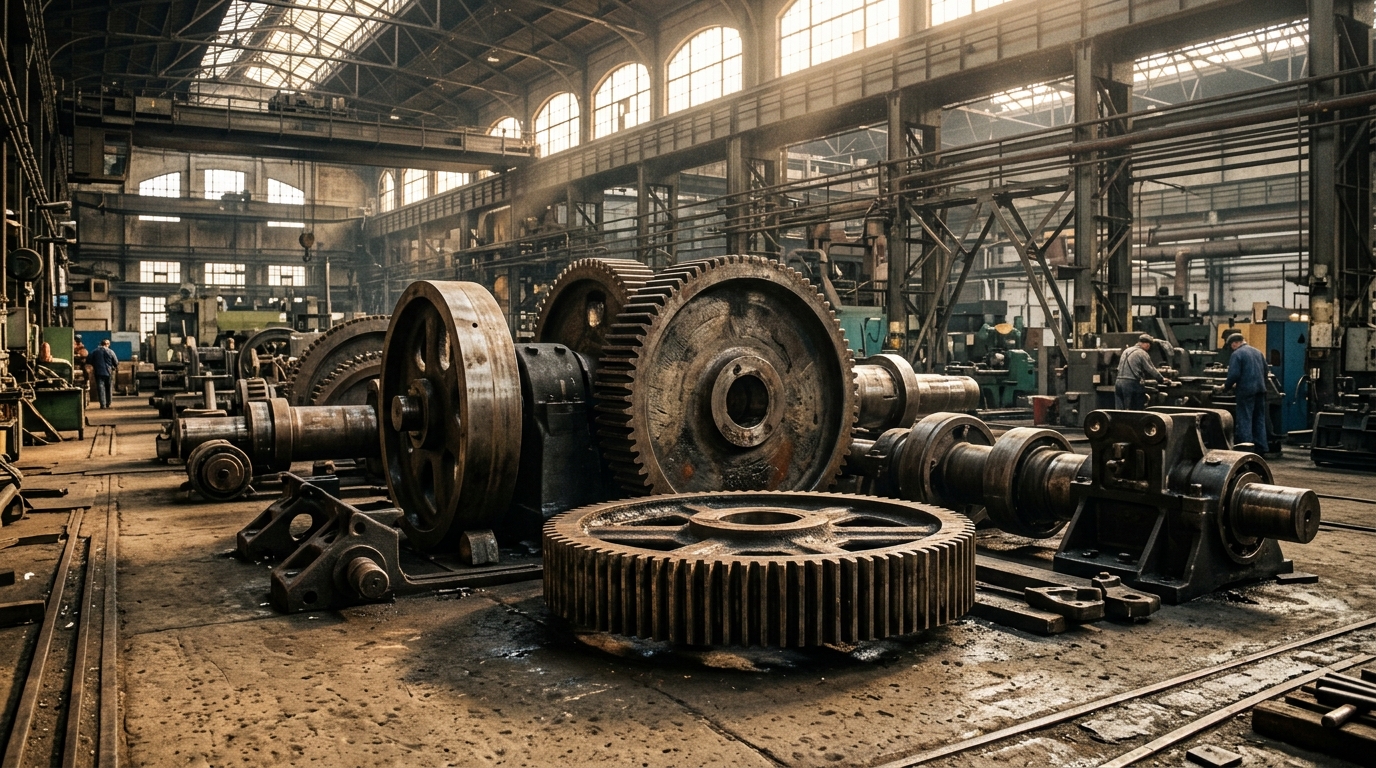
Planners knew India could not rely on imported machinery forever. The focus quickly shifted to building capital goods. Plants for iron, steel, and heavy chemicals became national priorities. The government directed resources toward these sectors, believing heavy industry was the fastest route to true self-reliance. You can see this pattern reflected across Economic Milestones in Indian History: From 1947 to Present. The state poured public funds into dams, power grids, and steel towns. Consumer goods took a back seat.
The 1956 Policy Consolidated State Control Over Manufacturing
The 1956 Industrial Policy Resolution aggressively expanded the public sector's role, classifying industries into three strict schedules. This policy became the economic constitution of India for decades. It prioritized state ownership, restricted private expansion, and laid the regulatory groundwork for the restrictive licensing system.
The Three-Tier Classification System
The government formalized its grip on manufacturing by creating three distinct lists. Schedule A contained 17 industries exclusively reserved for the state, including mining, aircraft production, and shipbuilding. Schedule B included 12 industries where the state would take the lead, but private companies could supplement efforts. Schedule C left the remaining industries to the private sector. However, the state still controlled Schedule C through the Industries (Development and Regulation) Act of 1951. Private enterprise existed mostly on paper. In reality, the state dictated terms.
The License Raj Era Begins
Private companies could not simply open a factory. They needed government permission to start, expand, or change their product lines. This system aimed to prevent monopolies and balance regional development. In practice, it created massive bureaucratic bottlenecks across the Indian industrial policy history timeline. Companies spent more time lobbying for licenses in New Delhi than improving their manufacturing processes. The system actively penalized efficiency. If a factory produced more than its licensed capacity, the government could fine the owners. This era of heavy state control also saw tragic industrial failures, as documented in the December 1984: A Historical Timeline of the Bhopal Gas Tragedy, which later forced a reckoning on industrial safety and oversight.
Tightening the Grip: MRTP and FERA
The regulatory environment grew even stricter in the following decades. In 1969, the government enacted the Monopolies and Restrictive Trade Practices (MRTP) Act. This law forced large companies to seek separate government approvals just to expand their operations, effectively punishing business growth. A few years later, the Foreign Exchange Regulation Act (FERA) of 1973 clamped down on foreign investment. Foreign companies had to dilute their equity to 40% or leave the country. Many multinational corporations chose to pack up and leave. Indian manufacturing fell decades behind global standards.
The 1991 Economic Reforms Dismantled Industrial Licensing
Facing a severe balance of payments crisis, the government introduced the New Industrial Policy of 1991. This marked the most radical shift in the Indian industrial policy history timeline. The policy abolished industrial licensing for most sectors, drastically reduced public sector monopolies, and welcomed foreign direct investment.
The Balance of Payments Crisis
By the middle of 1991, India had only enough foreign exchange reserves to cover about three weeks of imports. The country stood on the edge of a sovereign default. The old model had failed. Pushed by the International Monetary Fund and the World Bank, the government had to act. Finance Minister Manmohan Singh and Prime Minister P.V. Narasimha Rao initiated sweeping reforms. They recognized that protecting domestic industries had only made them uncompetitive. The crisis forced a complete rewrite of the industrial rulebook.
Opening Doors to Foreign Investment
Before 1991, foreign companies faced strict limits on equity ownership. The new policy allowed automatic approval for foreign direct investment up to 51% in high-priority industries. Foreign technology agreements also received automatic clearance. This sudden influx of capital and technology modernized Indian manufacturing. Global automotive brands and electronics manufacturers quickly set up plants in states like Tamil Nadu and Maharashtra. The streets of Indian cities transformed as modern, fuel-efficient cars replaced the outdated models that had dominated for decades.
The Shift from Public to Private Growth
The government reduced the list of industries reserved for the public sector from 17 down to 8. Eventually, they shrank this list to just two: atomic energy and specified railway operations. Loss-making public sector units faced restructuring. The Board for Industrial and Financial Reconstruction stepped in to evaluate failing state enterprises. Private companies finally had the freedom to scale operations based on actual market demand rather than arbitrary government quotas. Peak customs duties, which once stood at a staggering 300%, were slashed. Indian manufacturers had to compete with global imports, forcing them to improve quality and cut costs.
Modern Initiatives Target Global Manufacturing Dominance
Recent policies pivot away from basic deregulation toward active financial promotion. Initiatives like Make in India and Production Linked Incentive (PLI) schemes directly subsidize targeted manufacturing sectors. The government now acts as a facilitator, aiming to position India as a viable alternative in global supply chains.
The National Manufacturing Policy of 2011
Before the current boom, the government tried to stimulate the sector with the National Manufacturing Policy of 2011. The goal was to increase the manufacturing share of GDP to 25% within a decade and create 100 million jobs. The policy proposed National Investment and Manufacturing Zones (NIMZs) to provide world-class infrastructure. While the ambition was clear, execution lagged. Land acquisition hurdles and complex labor laws kept many of these zones from reaching their full potential. The policy served as a bridge, highlighting the need for more direct interventions.
Make in India and PLI Schemes
Launched in 2014, Make in India renewed the push to turn the country into a global design and manufacturing hub. When pure deregulation wasn't enough to attract mega-factories, the government introduced PLI schemes in 2020. These schemes mark a major evolution in the Indian industrial policy history timeline. They offer direct financial rewards to companies based on their incremental sales of products manufactured in India. According to the Ministry of Commerce and Industry, these schemes now cover 14 key sectors, including mobile phones, pharmaceuticals, and automobiles. Apple contractors like Foxconn and Pegatron rapidly expanded their Indian operations to capture these incentives.
Transitioning to Tech and Green Energy
The focus has entirely shifted from traditional heavy metals to advanced electronics and green technology. The India Semiconductor Mission offers billions in subsidies to attract chip fabrication plants. States like Gujarat and Assam are currently building massive semiconductor packaging facilities. Similarly, policies now heavily favor electric vehicle manufacturing and solar panel production. The government wants to capture the industries of the future. You can track similar technological leaps in our timeline-of-indian-space-and-technology-milestones. India is betting that targeted subsidies will build the domestic supply chains necessary to compete with established manufacturing giants in East Asia.
Tracing Milestones Shows a Clear Shift From Protection to Promotion
Looking at the complete Indian industrial policy history timeline reveals a distinct trajectory. The state moved from acting as the primary manufacturer in the 1950s to a strict regulator in the 1970s, before finally becoming a financial sponsor of private enterprise in the 2020s.
Key Manufacturing Milestones
| Year | Policy/Event | Primary Focus | Impact on Manufacturing |
|---|---|---|---|
| 1948 | Industrial Policy Resolution | Mixed economy framework | Established state monopolies in core sectors; gave private sector a secondary role. |
| 1956 | Industrial Policy Resolution | Expansion of public sector | Created the three-tier schedule system; laid the groundwork for the License Raj. |
| 1969 | MRTP Act | Restricting monopolies | Heavily restricted the expansion of large private manufacturing firms. |
| 1991 | New Industrial Policy | Liberalization and deregulation | Abolished industrial licensing; opened doors to foreign direct investment. |
| 2014 | Make in India | Investment promotion | Focused on improving ease of doing business and attracting foreign capital. |
| 2020 | PLI Schemes | Direct financial incentives | Subsidized incremental domestic production in 14 key technology and manufacturing sectors. |
The Legacy of Early Infrastructure
While the License Raj stifled innovation, the early focus on heavy industry did leave a tangible legacy. Institutions built during the 1950s and 1960s provided the engineering talent pool that later fueled both the IT boom and modern industrial growth. The transition was slow and often painful for domestic businesses. Yet, examining this timeline helps predict where the government will direct its resources next. Historical figures like P.C. Mahalanobis, the architect of the Second Five Year Plan, defined the entities that shaped the early era, just as modern policymakers shape the current one. You can see how these economic shifts align with broader national events in our guide to 25 Historic Indian Events from 2000 to 2025: A Timeline. The story of Indian manufacturing is the story of a nation constantly recalibrating its relationship with global markets.
Related Reading
- Indian History Timeline Chart: Key Milestones (Digital Reference)
- Indian History Milestones: The Maurya and Gupta Empires
- Milestones in Indian Women's History: A Chronological Guide
- 1,000 Years of Indian Medical History: A Chronological Guide
FAQ
Q: What was the main goal of the 1956 Industrial Policy Resolution? The 1956 policy aimed to accelerate economic growth by expanding the public sector and building heavy industry. It officially classified industries to give the state total control over core sectors like mining and telecommunications.
Q: What was the License Raj? The License Raj was a system of strict government regulations that required private businesses to obtain multiple licenses to set up, operate, or expand factories. It existed primarily from the 1950s until the economic reforms of 1991.
Q: Why did India change its industrial policy in 1991? India faced a severe balance of payments crisis in 1991 and nearly defaulted on its international debt. To secure emergency loans from the IMF, the government had to liberalize its economy, abolish licensing, and open up to foreign investment.
Q: How do modern PLI schemes differ from older industrial policies? Older policies relied on building state-owned factories or protecting domestic companies with high import tariffs. Modern PLI schemes offer direct financial cash incentives to private and foreign companies based on how much they manufacture and sell from India.
Look up the current Production Linked Incentive (PLI) scheme guidelines for the specific sector you operate in or study. Read the exact domestic value addition requirements listed in those government documents. That single metric will tell you exactly where supply chains are moving in India today.