Indian History Facts for Students: A Quick-Reference Guide
The Quick Read
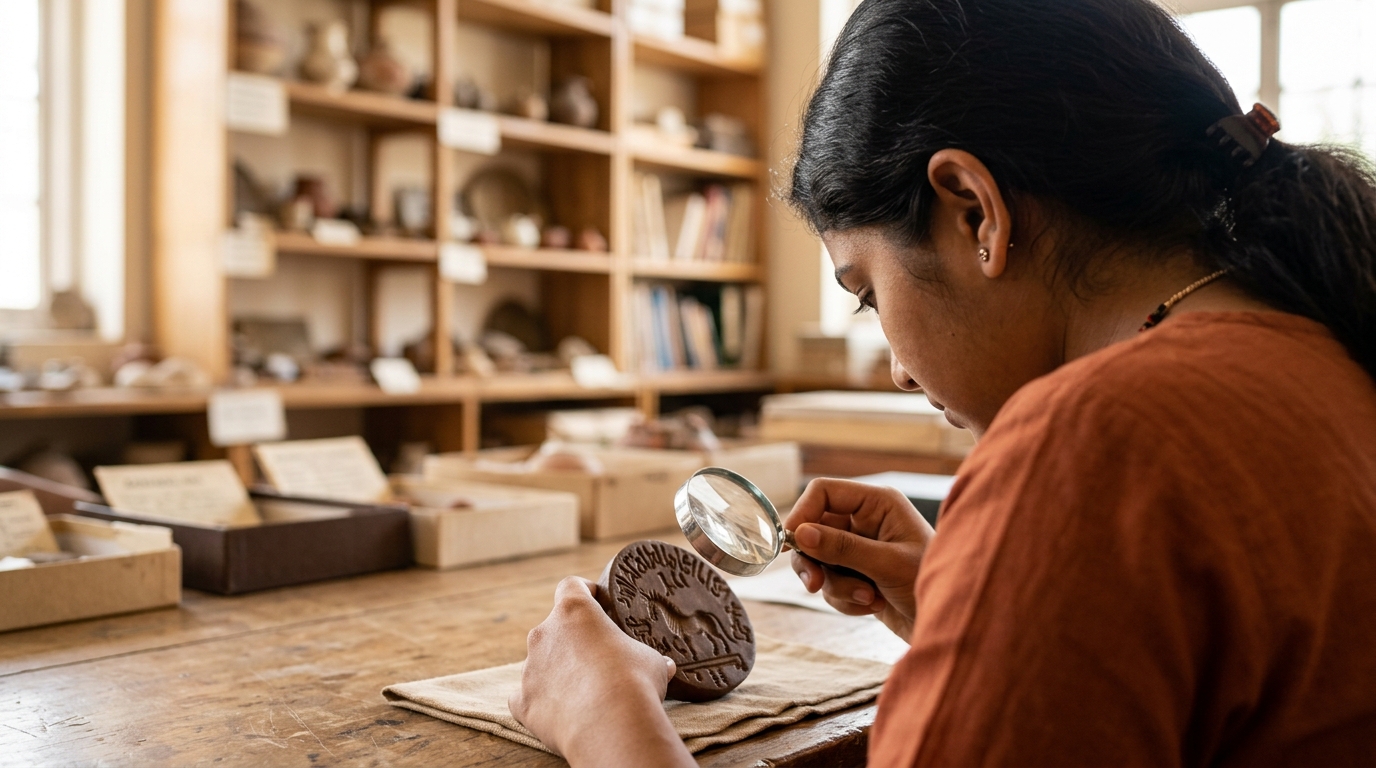
This guide provides a structured overview of essential historical events, recent archaeological discoveries, and curriculum updates for Indian students. It covers ancient civilizations, major empires, and the independence movement. Students and educators can use this reference to track significant dates, cultural milestones, and newly recognized heritage sites across India.
Key Takeaways
- The 2025-2026 NCERT curriculum shift heavily favors ancient Indian history over medieval periods.
- Archaeologists recently discovered 4,500-year-old Harappan civilization remains in the arid Thar desert.
- India officially reached 45 recognized UNESCO World Heritage Sites as of July 2026.
- Severe environmental changes drove the gradual transformation of the Indus Valley Civilization.
- Daily historical archives help students connect specific calendar dates to broader historical movements.
Students opening the 2025-2026 NCERT Class 7 Social Science textbook see a completely different version of the past than students did just two years ago. The chapters covering the Delhi Sultanate are noticeably shorter. The sections detailing the Maurya, Shunga, and Satavahana dynasties now span multiple detailed pages. History education changes constantly as new discoveries emerge from the ground. Gathering accurate indian history facts for students requires looking at both established timelines and recent archaeological breakthroughs. Relying on outdated study materials leaves gaps in a student's understanding of the subcontinent's past.
What Are the Most Recent Archaeological Discoveries in India?
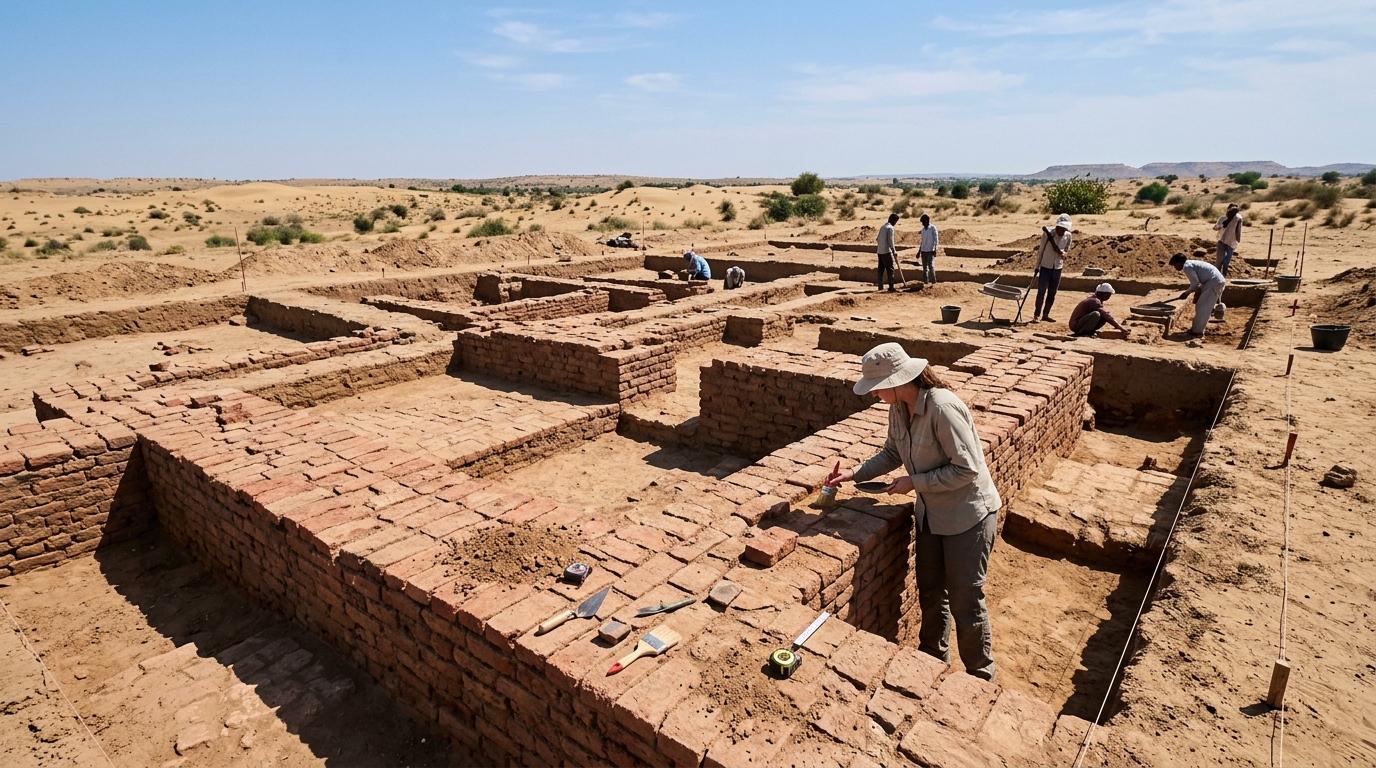
Recent archaeological excavations across India continue to rewrite timelines taught in classrooms. Researchers use ancient DNA analysis and satellite imagery to uncover settlements in unexpected locations. These discoveries provide tangible evidence of early urban planning, trade routes, and societal shifts that predate written records.
The Harappan Outpost in the Thar Desert
Archaeologists recently discovered Harappan remains in Jaisalmer, Rajasthan. This 2025 discovery marks the first time artefacts from the 4,500-year-old civilization have been found in the arid Thar desert [WION, 2025]. Researchers previously believed the Harappan people stayed strictly near major river systems. Finding structural remains in a desert environment forces historians to rethink ancient trade routes and survival strategies.
Discoveries like this shift our understanding of early urbanization. You can trace the evolution of early civic planning straight through to later developments in public health, as seen in the 1,000 Years of Indian Medical History: A Chronological Guide. Ancient Indians adapted to harsh environments long before modern technology existed.
Artefacts from the Noyyal River Bed
The Tamil Nadu State Department of Archaeology (TNSDA) unearthed over 1,000 historical artefacts from the Noyyal river bed at Vellalore in early 2026. These items date between the 1st century BC and the 3rd century AD [GKToday, 2026]. The excavation team found semi-precious stone beads, Roman coins, and specialized pottery shards.
This specific location served as a major trade hub. The presence of Roman currency confirms that ancient southern Indian kingdoms maintained active maritime trade networks with the Mediterranean world.
The Maski Settlement in Karnataka
Excavations at the Maski site in Karnataka confirmed a thriving human settlement lasting from the 11th to the 14th centuries BC [WION, 2025]. Researchers found evidence of advanced metallurgical skills and established agricultural practices.
Southern India holds a dense record of continuous human habitation. The ancient sites in Karnataka provide a stark contrast to the much later colonial architecture documented in the Portuguese Era in Goa: Key Dates and Architectural Milestones. Understanding these early settlements helps students see the deep roots of regional cultures.
Essential Indian History Facts for Students Across Major Eras
Understanding the subcontinent requires breaking its long timeline into distinct eras. Students need to track the rise and fall of major empires, the impact of environmental changes, and the timeline of the independence movement. Grouping these indian history facts for students helps learners build a mental map of India's past.
The Indus Valley Civilization and Climate Shifts
The Indus Valley Civilization did not collapse overnight from a foreign invasion. Modern scientific techniques have completely transformed our understanding of this era. According to historian Ch. A. A. S. K. G. Bhavani, ancient DNA analysis and satellite imagery disprove sudden collapse theories in favor of gradual, environment-driven transformations [IJARSCT, 2026].
A severe drought known as the 4.2-kiloyear climate event forced populations to migrate eastward toward the Ganges basin. The rivers they relied on dried up. This environmental shift fundamentally changed early Indian society.
The Mauryan and Gupta Empires
The Mauryan Empire (322–185 BCE) united most of the Indian subcontinent under a single administration for the first time. Emperor Ashoka expanded the empire before famously renouncing war to embrace Buddhism. His rock edicts remain scattered across India today.
The Gupta Empire (early 4th to late 6th century CE) is widely studied for its advancements in science, mathematics, and literature. Aryabhata calculated the approximation of pi and the solar year during this period. Memorizing the chronologies of these empires is a common requirement in schools. You can see how these eras rank in search interest by checking the 10 Most Searched Dates in Indian History and Why They Matter.
A Chronological Overview of Indian History
Organizing historical periods into a structured format helps students memorize key information quickly. The table below outlines major eras covered in standard curriculums.
| Historical Era | Approximate Dates | Key Defining Feature |
|---|---|---|
| Indus Valley Civilization | 2500 BCE – 1750 BCE | Advanced urban planning and grid-based cities. |
| Vedic Period | 1500 BCE – 500 BCE | Composition of the Vedas and early social stratification. |
| Mauryan Empire | 322 BCE – 185 BCE | Political unification and the spread of Buddhism. |
| Gupta Empire | 319 CE – 543 CE | Significant advancements in mathematics and astronomy. |
| Delhi Sultanate | 1206 CE – 1526 CE | Introduction of Indo-Islamic architecture. |
| Mughal Empire | 1526 CE – 1857 CE | Centralized administration and monumental architecture. |
| British Raj | 1858 CE – 1947 CE | Colonial rule and the rise of the nationalist movement. |
How Are New Curriculum Updates Changing What Students Learn?
The National Council of Educational Research and Training regularly updates textbooks to reflect new educational frameworks. The latest revisions consolidate subjects and shift historical focus. Students using older study guides will find significant discrepancies between their materials and the current national testing standards.
The 2025-26 NCERT Syllabus Overhaul
For the 2025-2026 academic year, NCERT integrated History, Geography, and Civics into a single textbook for classes 6 through 8. The council reduced non-essential or repetitive content in these new history textbooks by approximately 30% [BookMandee, 2026].
This consolidation forces teachers to change their lesson plans. Compressing three subjects into one book means students receive a more streamlined, though less granular, overview of specific historical events. Gathering extra indian history facts for students from outside sources is now a requirement for deep learning.
A Shift Toward Ancient History
The new curriculum heavily shifts focus toward ancient Indian history. NCERT removed or significantly reduced chapters on the Mughal period and the Delhi Sultanate [India Today, 2025; Competishun, 2026].
Textbooks now dedicate more space to indigenous ancient dynasties. Students learn extensively about the Maurya, Shunga, and Satavahana empires. This change alters the baseline historical knowledge expected of middle school students across the country.
India's Growing List of UNESCO World Heritage Sites
Heritage sites provide physical locations where students can observe history directly. India officially holds 45 recognized UNESCO World Heritage Sites. These locations serve as outdoor classrooms, preserving the architectural and cultural milestones of various dynasties, religions, and historical movements.
Sarnath's 2026 Inscription
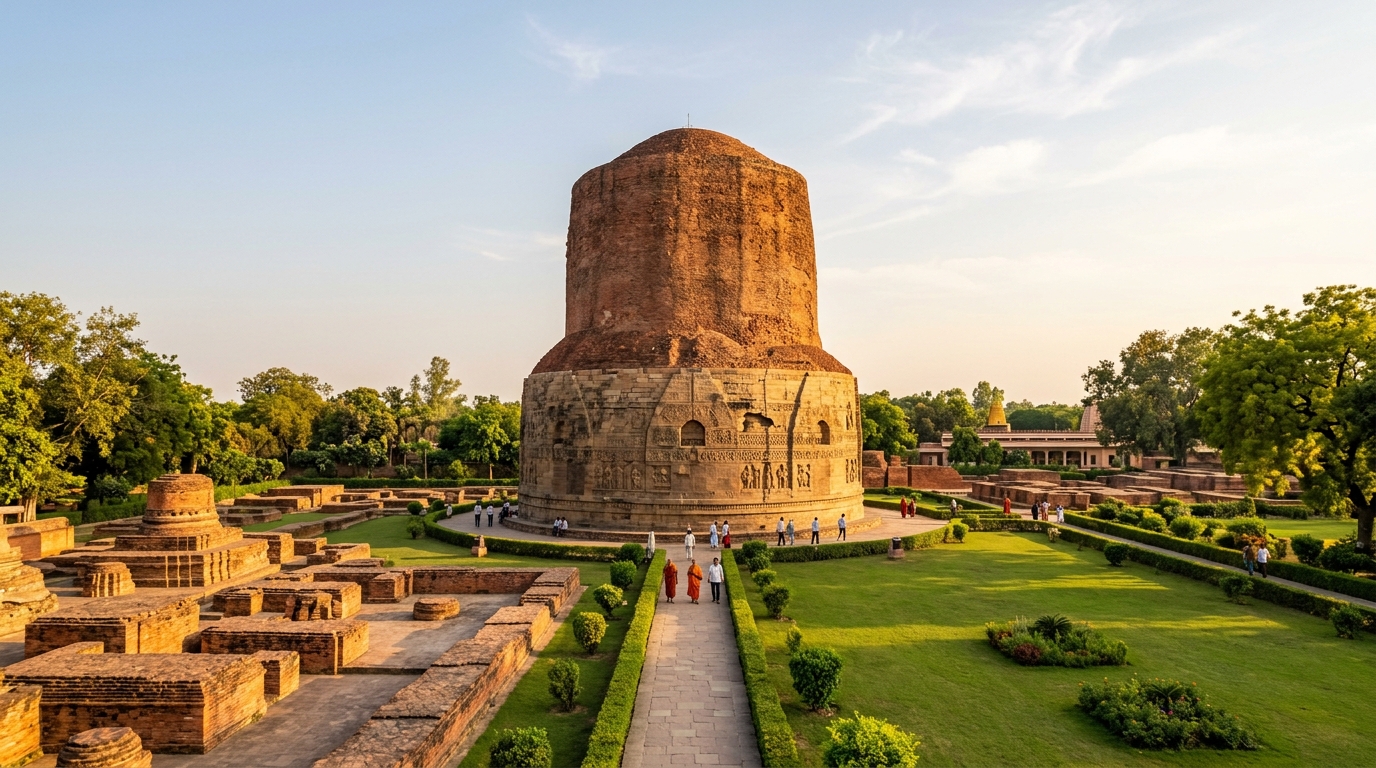
On July 25, 2026, the Ancient Buddhist Site of Sarnath in Uttar Pradesh was officially inscribed on the UNESCO World Heritage List [UNESCO, 2026]. The decision occurred during the 48th session of the World Heritage Committee. Sarnath features the massive Dhamek and Chaukhandi Stupas.
This site marks the exact location where Buddha delivered his first sermon. Tim Curtis, Director at the UNESCO Regional Office for South Asia, noted that Sarnath's inscription highlights the global responsibility to safeguard a location that has inspired peace for over 2,500 years [UNESCO, 2026].
The Value of Heritage Sites in Education
Visiting or studying heritage sites gives students a visual anchor for abstract dates. Defining historical figures and locations clearly helps learners connect the dots between different eras.
Physical battlegrounds and monuments tell complex stories. You can explore the strategic importance of specific locations by reading about April 21, 1526: A Historical Timeline of the First Battle of Panipat. Cultural heritage extends beyond buildings. The global impact of Indian culture is also preserved in modern formats, as detailed in the Historic Milestones of Indian Cinema on the Global Stage.
What Are the Key Milestones in Modern Indian History?
Modern Indian history centers on the struggle for self-rule and the subsequent building of a democratic republic. Students must understand how regional uprisings coalesced into a unified national movement. Tracking these events requires looking at political leaders, economic policies, and mass mobilizations.
The Push for Independence
The Indian independence movement utilized diverse strategies to challenge colonial rule. Mahatma Gandhi introduced mass nonviolent resistance to the political landscape. His campaigns mobilized millions of ordinary citizens who had previously been excluded from political action.
You can follow the exact progression of these campaigns in the Timeline of Mahatma Gandhi's Nonviolent Movements in India. The 1930 Salt March remains a primary example of effective civil disobedience. Students studying this event can track the daily progress of the activists through The Dandi March Day-by-Day: A Timeline of the 1930 Salt Satyagraha.
Economic and Industrial Growth
Post-independence India faced the massive challenge of building a self-sustaining economy. The government implemented Five-Year Plans to develop heavy industry and agriculture. The Green Revolution of the 1960s transformed India from a food-deficient nation into a leading agricultural producer.
Economic liberalization in 1991 opened the country to global markets. This policy shift fundamentally changed the job market and standard of living. You can review these structural changes in the Economic Milestones in Indian History: From 1947 to Present.
Achievements in Global Arenas
India's modern history includes significant achievements outside of politics and economics. Indian athletes and artists have consistently broken records on the global stage.
Tracking sports history shows a nation's growing investment in physical education and international competition. You can explore these achievements in India at the Olympics: A Timeline of Historic Sporting Milestones.
Where Can Students Find Reliable Daily History Facts?
Studying history day-by-day makes a vast subject approachable. Daily history archives help students connect specific dates to major economic, political, and social milestones. Breaking historical events into daily scannable cards improves retention and helps educators build engaging lesson plans around current calendar dates.
Tracking Daily Milestones
Reading one historical event per day builds knowledge without overwhelming the student. Finding reliable indian history facts for students requires using archives that cite primary sources and update content based on new discoveries.
Calendar-based learning helps contextualize events. For example, you can see how specific weeks hold dense historical significance by reviewing Late April in Indian History: Key Dates, Birthdays, and Milestones. Tragic events also require careful chronological study to understand their full impact, as shown in the December 1984: A Historical Timeline of the Bhopal Gas Tragedy.
Analyzing Social Progress
Daily facts highlight the gradual nature of social change. Students can track the evolution of rights, representation, and cultural shifts over decades.
Women's history in India contains numerous distinct milestones that deserve dedicated study. You can explore these vital contributions in the Milestones in Indian Women's History: A Chronological Guide. Looking forward, students can also analyze projections of future milestones by reading 25 Historic Indian Events from 2000 to 2025: A Timeline.
Related Reading
- Milestones in Indian Women's History: A Chronological Guide
- 1,000 Years of Indian Medical History: A Chronological Guide
- Economic Milestones in Indian History: From 1947 to Present
- What Are the Major Events in Indian History? (FAQ Archive)
FAQ
Q: How many UNESCO World Heritage Sites are in India? India officially has 45 UNESCO World Heritage Sites as of July 25, 2026. The Ancient Buddhist Site of Sarnath was the 45th location inscribed on the list.
Q: What changes did NCERT make to history textbooks for 2025-2026? NCERT reduced non-essential content by roughly 30% and integrated History, Geography, and Civics into a single textbook for classes 6 through 8. The new curriculum heavily emphasizes ancient Indian history while reducing coverage of the Mughal period and the Delhi Sultanate.
Q: Why did the Indus Valley Civilization decline? Modern archaeological evidence points to a gradual transformation driven by environmental changes rather than a sudden collapse or invasion. A severe drought known as the 4.2-kiloyear climate event caused rivers to dry up, forcing populations to migrate eastward.
Q: Where were Harappan artefacts recently discovered? In 2025, archaeologists discovered 4,500-year-old Harappan remains in Jaisalmer, Rajasthan. This marked the first time artefacts from this civilization were found in the arid Thar desert.
Open your current history textbook to the index and cross-reference three ancient dynasties against recent archaeological news from the past year.
Sources
- Exploring Society: India and Beyond - NCERT — National Council of Educational Research and Training, 2024. Supports: The integration of History, Geography, and Civics into a single textbook for Class 6 students.
- Unknown Harappan settlement discovered in Thar desert for the first time — WION, 2025. Supports: The 2025 discovery of 4,500-year-old Harappan civilization remains in the arid Thar desert of Jaisalmer, Rajasthan.
- “Ancient Buddhist Site of Sarnath” Inscribed in the UNESCO World Heritage List — Press Information Bureau (Government of India), 2026. Supports: India officially reaching 45 recognized UNESCO World Heritage Sites as of July 2026.
- TNSDA Uncovers Over 1000 Artefacts at Vellalore — GKToday, 2026. Supports: The Tamil Nadu State Department of Archaeology unearthing over 1,000 historical artefacts dating between the 1st century BC and 3rd century AD from the Noyyal river bed.
- 110 years after Maski inscription, 4,000-year-old human settlement found in Karnataka town — WION, 2025. Supports: Excavations at the Maski site in Karnataka confirming a human settlement dating from the 11th to the 14th centuries BC.
- Recent Archaeological Findings and New Interpretations of the Indus Valley Civilization — International Journal of Advanced Research in Science, Communication and Technology (IJARSCT), 2026. Supports: Historian Ch. A. A. S. K. G. Bhavani's publication on how ancient DNA and satellite imagery point to gradual, environment-driven transformations of the Indus Valley Civilization rather than a sudden collapse.