Border Pacts and Ceasefires: A Diplomatic Timeline of India-Pakistan Relations
The Quick Read
The India-Pakistan diplomatic timeline is the chronological sequence of formal bilateral treaties, military ceasefire agreements, and diplomatic summits established between India and Pakistan since 1947. According to official diplomatic records from both nations, foundational pacts including the 1949 Karachi Agreement, the 1960 Indus Waters Treaty, and the 1972 Simla Agreement govern boundary demarcations, water rights, and nuclear safety.
Key Takeaways
- The 1972 Simla Agreement converted the 1949 Ceasefire Line into the modern Line of Control.
- Water allocations remain anchored in the 1960 Indus Waters Treaty river division.
- Both nations have exchanged annual nuclear facility lists continuously every January 1 since 1992.
- Military-to-military ceasefire agreements in 2003 and 2021 proved more durable than high-level political summits.
- Direct bilateral trade fell sharply after 2019 while indirect transshipment through third countries expanded.
Every January 1 at foreign ministry offices in New Delhi and Islamabad, diplomats hand over sealed envelopes. Inside rests a complete inventory of each country's nuclear installations. This quiet protocol has taken place without interruption for 34 consecutive years. It began on January 1, 1992, under the terms of the 1988 Non-Nuclear Aggression Agreement. Even during severe border skirmishes, the exchange happens on schedule.
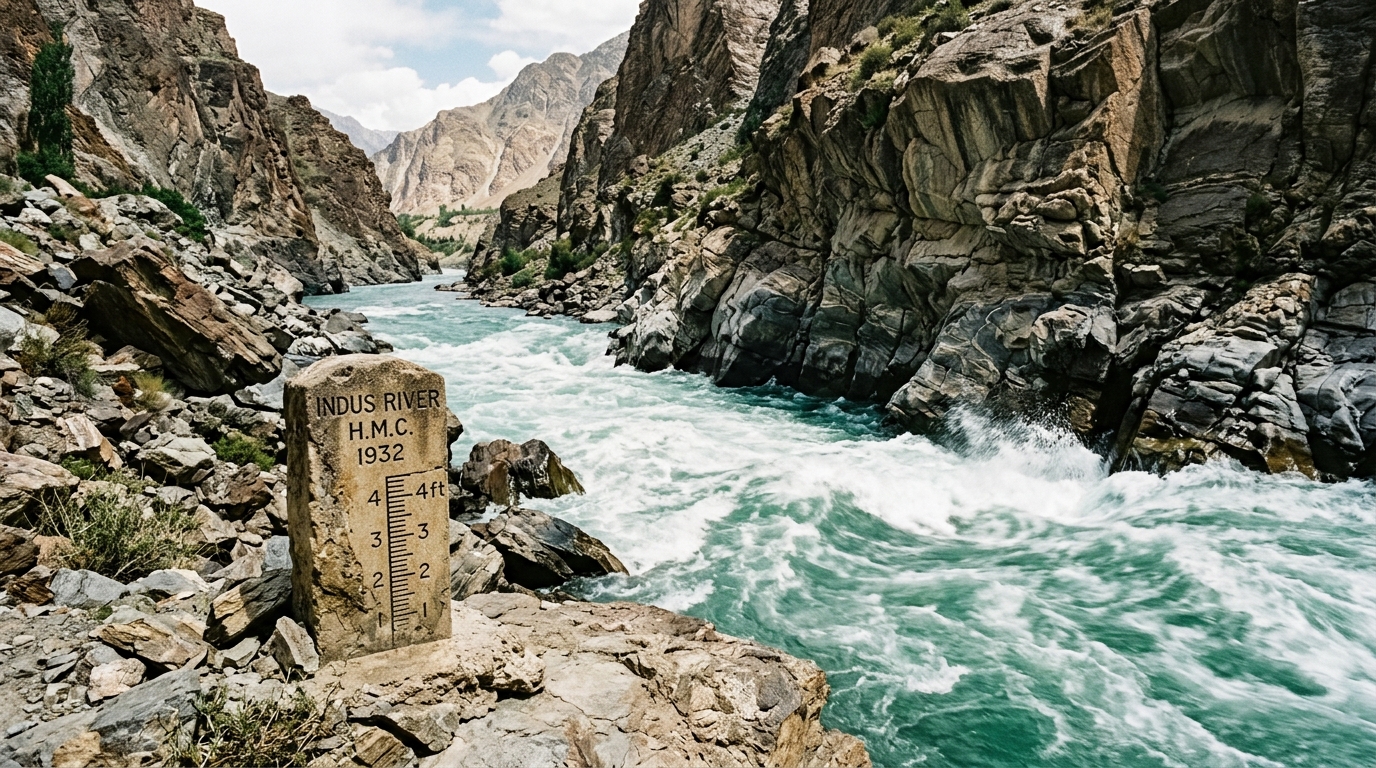
Studying the India-Pakistan diplomatic timeline reveals two parallel realities. High-profile political dialogues frequently break down under the pressure of regional security crises. Meanwhile, institutional treaties continue to manage critical water shares and nuclear safeguards quietly. Tracing these diplomatic milestones shows how both countries built, tested, and rebuilt formal communication channels across eight decades.
Early Treaties Established Critical Ceasefire Boundaries and Water Rights (1947–1965)
Early diplomatic pacts between India and Pakistan established essential borders, minority rights protections, and shared water management systems following Partition. The 1949 Karachi Agreement drew the first military truce line in Kashmir. The 1950 Liaquat-Nehru Pact addressed refugee flows, while the 1960 Indus Waters Treaty permanently split major river systems.
1949 1950 1960
┌─────────────────┐ ┌─────────────────┐ ┌─────────────────┐
│ Karachi Accord │───>│ Liaquat-Nehru │───>│ Indus Waters │
│ 830 km CFL Map │ │ Minority Pact │ │ 80/20 Basin Split│
└─────────────────┘ └─────────────────┘ └─────────────────┘
The 1949 Karachi Agreement and the Ceasefire Line
War broke out in October 1947 over Jammu and Kashmir shortly after the British withdrawal from South Asia. Military representatives from both sides met in Karachi under the supervision of the United Nations Commission for India and Pakistan (UNCIP). On July 27, 1949, military commanders signed the Karachi Agreement. The treaty established an 830-kilometer Ceasefire Line (CFL) monitored on the ground by United Nations observers.
The agreement defined precise map coordinates from the international border in Punjab north to grid point NJ9842. It left the glaciated terrain beyond NJ9842 undescribed, noting only that the line ran "thence north to the glaciers." This deliberate ambiguity later triggered the Siachen glacier conflict in 1984. The pact stopped open combat and established the first mutually recognized military border map. Readers reviewing the 10 Most Searched Dates in Indian History and Why They Matter will recognize how Partition-era demarcations shaped modern frontiers.
The 1950 Liaquat-Nehru Pact on Minority Protection
Mass migration and communal violence in East Pakistan and West Bengal sparked renewed border tensions in early 1950. Prime Minister Jawaharlal Nehru of India and Prime Minister Liaquat Ali Khan of Pakistan met in New Delhi for six days of intense bilateral talks. On April 8, 1950, they signed the Liaquat-Nehru Pact.
The treaty guaranteed equality of citizenship, property rights, and freedom of worship for religious minorities in both countries. It created dedicated minority commissions in West Bengal, Assam, and East Bengal. The pact also allowed refugees to return unmolested to dispose of abandoned property. The agreement stabilized population movements and prevented an impending border conflict between the two new states.
The 1960 Indus Waters Treaty and Basin Allocation
Water sharing emerged as an immediate existential issue after Partition split the Indus basin across international boundaries. Headworks for canals feeding Pakistani agriculture sat inside Indian Punjab. Following nine years of negotiations mediated by the World Bank, Indian Prime Minister Jawaharlal Nehru and Pakistani President Ayub Khan signed the Indus Waters Treaty on September 19, 1960.
The treaty divided the six major rivers of the Indus basin into two distinct groups:
- Eastern Rivers (Ravi, Beas, Sutlej): Allocated to India for unrestricted water use, amounting to approximately 33 million acre-feet (MAF) or 20% of total basin volume.
- Western Rivers (Indus, Jhelum, Chenab): Allocated to Pakistan, amounting to roughly 135 MAF or 80% of total basin flow, as documented by the World Bank and the Ministry of External Affairs.
India retained the right to build run-of-the-river hydroelectric projects on the Western rivers under specific engineering constraints. The treaty established the Permanent Indus Commission, requiring commissioners to meet at least once a year. The pact survived the 1965, 1971, and 1999 wars without suspension.
Post-War Accords Shifted Bilateral Dispute Frameworks (1966–1972)
Post-war accords between India and Pakistan are formal bilateral treaties signed to end armed hostilities and establish conflict resolution mechanisms following the 1965 and 1971 wars. As documented in historical diplomatic archives, the 1966 Tashkent Declaration mediated troop withdrawals to pre-August 1965 positions, while the 1972 Simla Agreement established direct bilateralism to resolve future territorial disputes.
The 1966 Tashkent Declaration Under Soviet Mediation
The seventeen-day war of September 1965 ended following a United Nations Security Council ceasefire resolution. Soviet Premier Alexei Kosygin invited Indian Prime Minister Lal Bahadur Shastri and Pakistani President Ayub Khan to Tashkent, Uzbekistan, to negotiate a formal peace accord. On January 10, 1966, both heads of government signed the Tashkent Declaration.
The declaration required both armed forces to withdraw to positions held before August 5, 1965. Both governments agreed to restore diplomatic missions, repatriate prisoners of war, and cease hostile state propaganda. The accord also created working groups to discuss bilateral trade and communications. Prime Minister Shastri died in Tashkent hours after signing the agreement. The pact demobilized ground forces but left unresolved territorial questions in place.
The 1972 Simla Agreement and the Line of Control
The December 1971 war concluded with the surrender of Pakistani forces in Dhaka and the creation of Bangladesh. Indian Prime Minister Indira Gandhi and Pakistani President Zulfikar Ali Bhutto met in Simla for five days of summit diplomacy. On July 2, 1972, they signed the historic Simla Agreement.
┌──────────────────────────────────────────────────────────┐
│              1972 SIMLA AGREEMENT CORE TERMS             │
├────────────────────────────┬─────────────────────────────┤
│ 1. Line of Control (LoC)   │ 1949 CFL converted to LoC;  │
│    Demarcation             │ unilateral changes banned.  │
├────────────────────────────┼─────────────────────────────┤
│ 2. Direct Bilateralism     │ All disputes resolved       │
│    (Article 1, Clause ii)  │ without third-party forums. │
├────────────────────────────┼─────────────────────────────┤
│ 3. Territorial Returns     │ India returned 13,000+ sq km│
│    and POW Repatriation    │ of captured Western land.   │
└────────────────────────────┴─────────────────────────────┘
The accord converted the 1949 Ceasefire Line into the Line of Control (LoC). Both nations pledged to respect the Line of Control without prejudice to their formal positions. Neither side could alter the line through unilateral military action. India returned over 13,000 square kilometers of captured territory in West Pakistan and cleared the way for the release of roughly 93,000 Pakistani prisoners of war.
Institutionalizing Direct Bilateralism Over Multilateral Forums
Direct bilateralism is the diplomatic principle established under Article 1(ii) of the 1972 Simla Agreement requiring India and Pakistan to resolve all bilateral disputes exclusively through peaceful negotiations without third-party intervention. According to Indian Ministry of External Affairs records, this legal clause mandates that both governments settle Jammu and Kashmir issues strictly between New Delhi and Islamabad.
Article 1(ii) became a foundational cornerstone of Indian foreign policy. The Indian government interpreted Article 1(ii) as excluding third-party mediation in the Kashmir dispute, including United Nations intervention. Pakistani officials maintained that Chapter VI and Chapter VII of the United Nations Charter preserved Pakistan's legal right to raise bilateral disputes internationally. The 1972 Simla Agreement established direct contact as the standard framework for future border talks.
Confidence Building Measures Anchored the India-Pakistan Diplomatic Timeline (1988–1999)
During the late twentieth century, nuclear capabilities prompted new confidence-building measures within the India-Pakistan diplomatic timeline. Landmark treaties established protections against strikes on nuclear sites and set up early warning mechanisms for ballistic missile tests. The 1999 Lahore Declaration attempted to institutionalize nuclear stability before border skirmishes disrupted progress.
       1988                   1998                   1999
┌─────────────────┐    ┌─────────────────┐    ┌─────────────────┐
│ Non-Nuclear     │───>│ Pokhran/Chagai  │───>│ Lahore Summit   │
│ Aggression Pact │    │  Nuclear Tests  │    │ Missile CBMs    │
└─────────────────┘    └─────────────────┘    └─────────────────┘
The 1988 Non-Nuclear Aggression Agreement and Annual List Exchanges
Regional military planning shifted during the 1980s as both countries advanced their nuclear research programs. Indian Prime Minister Rajiv Gandhi and Pakistani Prime Minister Benazir Bhutto met in Islamabad during the fourth SAARC summit. On December 31, 1988, they signed the Agreement on the Prohibition of Attack against Nuclear Installations and Facilities.
The pact barred both militaries from attacking, damaging, or destroying listed nuclear facilities. Under Article II, both countries must exchange lists showing the exact geographic coordinates of their nuclear power stations, research reactors, and fuel processing plants on January 1 of each year. The treaty took effect on January 27, 1991. The first list exchange occurred on January 1, 1992, and the protocol has continued without interruption for 34 consecutive years through January 1, 2025, according to the Ministry of External Affairs.
The 1999 Lahore Declaration and Nuclear Risk Reduction
In May 1998, India and Pakistan conducted reciprocal nuclear tests in Pokhran and the Chagai Hills. In February 1999, Indian Prime Minister Atal Bihari Vajpayee traveled to Lahore on an inaugural cross-border bus journey to meet Pakistani Prime Minister Nawaz Sharif. On February 21, 1999, both leaders signed the Lahore Declaration.
The accompanying Memorandum of Understanding introduced structured nuclear confidence-building measures:
- Advance Flight Test Notifications: Both nations agreed to notify each other before testing ballistic missiles.
- Accidental Launch Prevention: Both sides committed to upgrading communication hotlines between military operational commands to prevent unauthorized weapon releases.
- Moratorium on Testing: Both states reaffirmed unilateral moratoriums on further underground nuclear testing unless extraordinary security events intervened.
These technical agreements formed an essential chapter in the India-Pakistan diplomatic timeline. Readers can explore broader national developments from this decade in 25 Historic Indian Events from 2000 to 2025: A Timeline.
Cross-Border Bus Diplomacy and the Kargil Disruption
The Lahore summit generated public optimism about long-term bilateral reconciliation. The Delhi-Lahore bus service, named Sada-e-Sarhad, began transporting civilian passengers and separated families across the Wagah border post.
Three months later, Pakistani military personnel crossed the Line of Control into the heights of Kargil, initiating an armed conflict in May 1999. The Kargil War exposed the limits of summit diplomacy when civilian leaders and military commanders pursue conflicting strategies. The fighting stopped civilian political dialogues, but the ballistic missile advance notification pact survived the crisis.
Military Ceasefires Stabilized Frontline Clashes Across Two Decades (2003–2021)
Military ceasefires between India and Pakistan are bilateral operational pacts established by the Directors General of Military Operations to halt artillery shelling and cross-border firing along the Line of Control. According to joint statements from Indian and Pakistani military commands, hotline understandings in November 2003 and February 2021 successfully reduced frontline combat incidents across border sectors.
The 2003 Director Generals of Military Operations Understanding
Following the 2001–2002 military mobilization triggered by the attack on the Indian Parliament, heavy artillery duels displaced thousands of civilians along the border. In November 2003, Pakistani Prime Minister Zafarullah Khan Jamali proposed a formal ceasefire along the Line of Control, the International Border, and the Actual Ground Position Line at Siachen. Prime Minister Atal Bihari Vajpayee agreed.
The Directors General of Military Operations (DGMO) established the ceasefire terms through direct hotline talks on November 25, 2003. The agreement brought immediate relief to border populations in Jammu and Kashmir. Farmers resumed cultivating fields within sight of frontline posts. The operational truce also allowed the Indian Army to construct an electrified border security fence along the Line of Control to intercept infiltration.
Composite Dialogue Cycles and Terrorism Friction Points
Between 2004 and 2008, both governments conducted the structured Composite Dialogue process. The dialogue organized bilateral talks into eight distinct subjects:
- Peace and Security (including military confidence-building measures)
- Jammu and Kashmir
- Siachen Glacier
- Sir Creek boundary demarcation
- Wullar Barrage / Tulbul Navigation Project
- Economic and Commercial Cooperation
- Terrorism and Drug Trafficking
- Promotion of Friendly Exchanges in Various Fields
Cross-LoC trade began in October 2008 through designated crossing points at Salamabad and Chakan-da-Bagh. Cross-border bus routes connected Srinagar with Muzaffarabad and Poonch with Rawalakot. This diplomatic track broke down after the November 2008 Mumbai terrorist attacks. The assault demonstrated how non-state armed violence could halt civilian diplomatic tracks instantly.
The 2021 DGMO Recommitment and Border Stability
Border ceasefire violations climbed between 2014 and 2020, reaching over 5,000 recorded firing incidents in 2020. The Directors General of Military Operations held special hotline consultations to resolve border friction. On February 25, 2021, both militaries issued a joint statement agreeing to observe a strict ceasefire along the Line of Control and all other border sectors.
According to a 2024 assessment by the Carnegie Endowment, the 2021 agreement produced the longest period of border stability along the Line of Control in two decades. Dr. Happymon Jacob of the Council for Strategic and Defence Research (CSDR) pointed out that border firing incidents often stem from tactical adjustments by local commanders rather than political decisions. Direct operational communication between military headquarters remains the most effective tool for managing frontline management in the India-Pakistan diplomatic timeline.
Modern Diplomatic Freezes Reshape Bilateral Realities (2019–Present)
Relations entered an extended structural freeze following the 2019 Pulwama attack and the subsequent constitutional reorganization of Jammu and Kashmir. Direct trade plummeted while informal transshipment through third-party hubs expanded. Meanwhile, legal disputes over hydropower infrastructure challenged the long-term dispute resolution mechanics of the 1960 Indus Waters Treaty.
          2019                            2023–2024                     2024
┌──────────────────────┐           ┌──────────────────────┐    ┌──────────────────────┐
│ Trade Halted         │──────────>│ India Issues IWT     │───>│ S. Jaishankar Visits │
│ Envoys Recalled      │           │ Modification Notices │    │ Islamabad (SCO)      │
└──────────────────────┘           └──────────────────────┘    └──────────────────────┘
Trade Halts and the Indirect Transshipment Economy
India withdrew Most Favoured Nation (MFN) trade status from Pakistan in February 2019 and levied a 200% basic customs duty on all Pakistani imports. Following India's August 2019 decision to revoke the special constitutional status of Jammu and Kashmir, Pakistan suspended bilateral trade and recalled its High Commissioner from New Delhi.
Data from the Ministry of Commerce & Industry and the Global Trade Research Initiative (GTRI) shows that direct trade stood at $1.18 billion in Indian exports and $2.88 million in Pakistani imports in FY 2023–24. This was down from a direct trade total of $2.56 billion in FY 2018–19.
Despite official restrictions, an estimated $10 billion in Indian-origin goods enters Pakistan annually through indirect transshipment hubs in Dubai and Singapore, according to GTRI calculations in 2025. Products like pharmaceuticals, industrial chemicals, and synthetic fabrics take indirect sea routes, adding substantial transport costs for consumers. These shifts reflect broader historical trade patterns documented in Economic Milestones in Indian History: From 1947 to Present.
Legal Disputes Over Indus Hydropower Projects
Technical disagreements over run-of-the-river hydroelectric power projects created severe strain on the Indus Waters Treaty dispute mechanism. Pakistan objected to the design of the 330 MW Kishanganga project on the Jhelum tributary and the 850 MW Ratle project on the Chenab river. Pakistan argued that their pondage capacities and spillway gates violated treaty guidelines.
Disputes over how to resolve these objections led to parallel international legal proceedings:
- India requested the appointment of a single World Bank Neutral Expert to examine technical engineering parameters.
- Pakistan petitioned the Permanent Court of Arbitration in The Hague to rule on broader treaty interpretations.
India boycotted The Hague proceedings, arguing that parallel forums created contradictory rulings on identical river systems. Citing population growth, renewable energy needs, and technical impasses, India issued formal legal notices to Pakistan in January 2023 and August 2024 under Article XII(3) to renegotiate the 1960 treaty, as reported by Diplomat Magazine in 2024.
High-Level Multilateral Contacts and Future Bilateral Prospects
Direct political negotiations remain stalled by firm diplomatic preconditions. Pakistan requires India to restore the pre-2019 constitutional status of Jammu and Kashmir before resuming bilateral talks. India maintains that formal bilateral engagement requires an end to cross-border terrorism. Atlantic Council analyst Michael Kugelman noted that while deterrence dynamics remain vulnerable to sudden security crises, neither government seeks open military conflict.
Multilateral organizations provide occasional points of contact during this freeze. In October 2024, Indian External Affairs Minister S. Jaishankar traveled to Islamabad to attend the 23rd Shanghai Cooperation Organisation (SCO) Council of Heads of Government. This visit marked the first trip to Pakistan by an Indian foreign minister since December 2015, according to Al Jazeera reporting in 2024. The visit focused strictly on SCO business, but it demonstrated that working multilateral diplomatic channels remain operational. This ongoing balance between formal freezes and functional contact represents a defining period in the India-Pakistan diplomatic timeline.
Major India-Pakistan Treaties, Pacts, and Accords
The table below outlines the core treaties, declarations, and operational military understandings signed by both nations since 1947:
| Agreement / Accord | Year | Signatories / Facilitators | Primary Objective | Practical Result | Current Operational Status |
|---|---|---|---|---|---|
| Karachi Agreement | 1949 | Military Commanders (UNCIP) | Establish post-war truce | Established 830 km Ceasefire Line | Superseded by 1972 Simla Agreement |
| Liaquat-Nehru Pact | 1950 | J. Nehru, L. A. Khan | Protect religious minorities | Created minority monitoring commissions | Historical accord; partially superseded |
| Indus Waters Treaty | 1960 | J. Nehru, A. Khan (World Bank) | Allocate river basin waters | 80% water to Pakistan, 20% to India | Active; India seeking treaty review |
| Tashkent Declaration | 1966 | L. B. Shastri, A. Khan (USSR) | Conclude 1965 armed conflict | Restored pre-war 1965 troop positions | Completed; historical peace accord |
| Simla Agreement | 1972 | I. Gandhi, Z. A. Bhutto | Settle post-1971 war borders | Formed Line of Control; set bilateralism | Active foundational diplomatic treaty |
| Non-Nuclear Attack Pact | 1988 | R. Gandhi, B. Bhutto | Prevent strikes on atomic sites | Annual nuclear facility list exchange | Active; 34 consecutive annual exchanges |
| Lahore Declaration | 1999 | A. B. Vajpayee, N. Sharif | Nuclear risk reduction | Advance missile test launch alerts | Active protocols; broader talks stalled |
| DGMO Ceasefire | 2003 / 2021 | Military Operations Chiefs | Stop border artillery duels | Reduced Line of Control shelling | Active frontline operational truce |
Frequently Asked Questions
Q: What is the main difference between the Ceasefire Line and the Line of Control?
The 1949 Karachi Agreement established the Ceasefire Line, which was monitored by United Nations military observers following the first Kashmir war. The 1972 Simla Agreement converted that demarcation into the Line of Control (LoC). The LoC is a strictly bilateral border that neither country may alter through unilateral military action.
Q: How does the 1960 Indus Waters Treaty split river waters between India and Pakistan?
The treaty gives India exclusive rights over the three Eastern rivers (Ravi, Beas, Sutlej), which account for 20% of the basin volume. Pakistan received rights over the three Western rivers (Indus, Jhelum, Chenab), representing 80% of total basin flow. India may construct run-of-the-river hydroelectric power facilities on Western rivers under defined technical guidelines.
Q: What is the purpose of the annual January 1 nuclear list exchange?
Under the 1988 Non-Nuclear Aggression Agreement, India and Pakistan must share lists of their nuclear power stations, research reactors, and fuel facilities on the first day of every year. This confidence-building protocol prevents either nation from attacking listed atomic sites during hostilities. Both nations have completed this exchange every year since January 1, 1992.
Q: Why did formal trade between India and Pakistan decline after 2019?
Direct trade dropped after India withdrew Pakistan's Most Favoured Nation status and levied 200% duties following the 2019 Pulwama attack. Pakistan then suspended bilateral trade after India reorganized Jammu and Kashmir later that year. Direct trade totaled $1.18 billion in FY 2023–24, though over $10 billion in Indian goods continues to enter Pakistan indirectly via Dubai and Singapore.
The diplomatic history between India and Pakistan demonstrates that institutional technical agreements and direct military hotlines frequently outlast high-profile civilian political summits. When exploring the India-Pakistan diplomatic timeline, track how practical mechanisms like the annual nuclear registry exchange and the DGMO ceasefire manage frontline risk even while broader political talks remain paused.
Further Reading
Further reading on the India-Pakistan diplomatic timeline is a collection of academic studies and diplomatic memoirs analyzing border pacts, ceasefire mechanisms, and water disputes between New Delhi and Islamabad. According to South Asian security scholars, these texts provide comprehensive historical documentation of the 1960 Indus Waters Treaty, the Line of Control, and military crisis management.
- "The Line of Control: Traveling the Frontier of India and Pakistan" by Happymon Jacob: Examines how frontline tactical frictions shape border ceasefire compliance and military hotline management.
- "Indus Divided: India, Pakistan and the River Basin Dispute" by Daniel Haines: Details the diplomatic and engineering negotiations behind the 1960 water treaty.
- "Choices: Inside the Making of India's Foreign Policy" by Shivshankar Menon: Analyzes how Indian policymakers managed crises, border agreements, and backchannel negotiations.
- "Line on Fire: Ceasefire Violations and India-Pakistan Escalation Dynamics" by Happymon Jacob: Explores why operational military agreements often succeed where civilian summits face gridlock.
Related Reading
- The 1971 India-Pakistan War: Key Dates and Historical Summary
- India at the Olympics: A Timeline of Historic Sporting Milestones
- Timeline of Mahatma Gandhi's Nonviolent Movements in India
- December 1984: A Historical Timeline of the Bhopal Gas Tragedy
Sources
- Agreement between Military Representatives of India and Pakistan Regarding the Establishment of a Ceasefire Line in the State of Jammu and Kashmir (Karachi Agreement) — United Nations Peacemaker, 1949. Supports: The signing of the Karachi Agreement on July 27, 1949, establishing the 830-kilometer Ceasefire Line monitored by United Nations observers up to grid point NJ9842.
- Agreement between the Governments of India and Pakistan regarding Security and Rights of Minorities (Nehru-Liaquat Agreement) — United Nations Peacemaker, 1950. Supports: The April 8, 1950 Liaquat-Nehru Pact guaranteeing minority protections, property disposal rights, and establishing minority commissions.
- Fact Sheet: The Indus Waters Treaty 1960 and the Role of the World Bank — World Bank, 2018. Supports: The September 19, 1960 Indus Waters Treaty division allocating the Eastern Rivers to India and Western Rivers to Pakistan under the oversight of the Permanent Indus Commission.
- Tashkent Declaration — United Nations Peacemaker, 1966. Supports: The January 10, 1966 Tashkent Declaration requiring Indian and Pakistani forces to withdraw to positions held before August 5, 1965.
- Agreement on Bilateral Relations Between the Government of India and the Government of Pakistan (Simla Agreement) — United Nations Peacemaker, 1972. Supports: The July 2, 1972 Simla Agreement converting the 1949 Ceasefire Line into the Line of Control and establishing a strictly bilateral negotiation framework.
- India, Pakistan exchange lists of nuclear facilities, prisoners — Al Jazeera, 2023. Supports: The continuous annual diplomatic exchange of nuclear installation lists every January 1 since 1992 under the 1988 Non-Nuclear Aggression Agreement.