Aviation History in India: A Timeline of Air India
The Quick Read
The Air India history timeline spans from its 1932 founding by J.R.D. Tata through its 1953 nationalization, a disastrous 2007 merger, and its 2022 return to the Tata Group. Today, the airline faces staggering financial losses and a delayed, decade-long turnaround effort to modernize its fleet and regain market share.
Key Takeaways
- Tata Sons bought back Air India in 2022 after 69 years of state control.
- A 2007 merger with Indian Airlines caused massive debt and operational bloat.
- The airline reported a net loss of ₹222.4 billion for FY2026.
- A $400 million refit program is currently upgrading 67 legacy aircraft interiors.
- IndiGo controls 66.3% of the domestic market, dwarfing Air India's 23.9%.
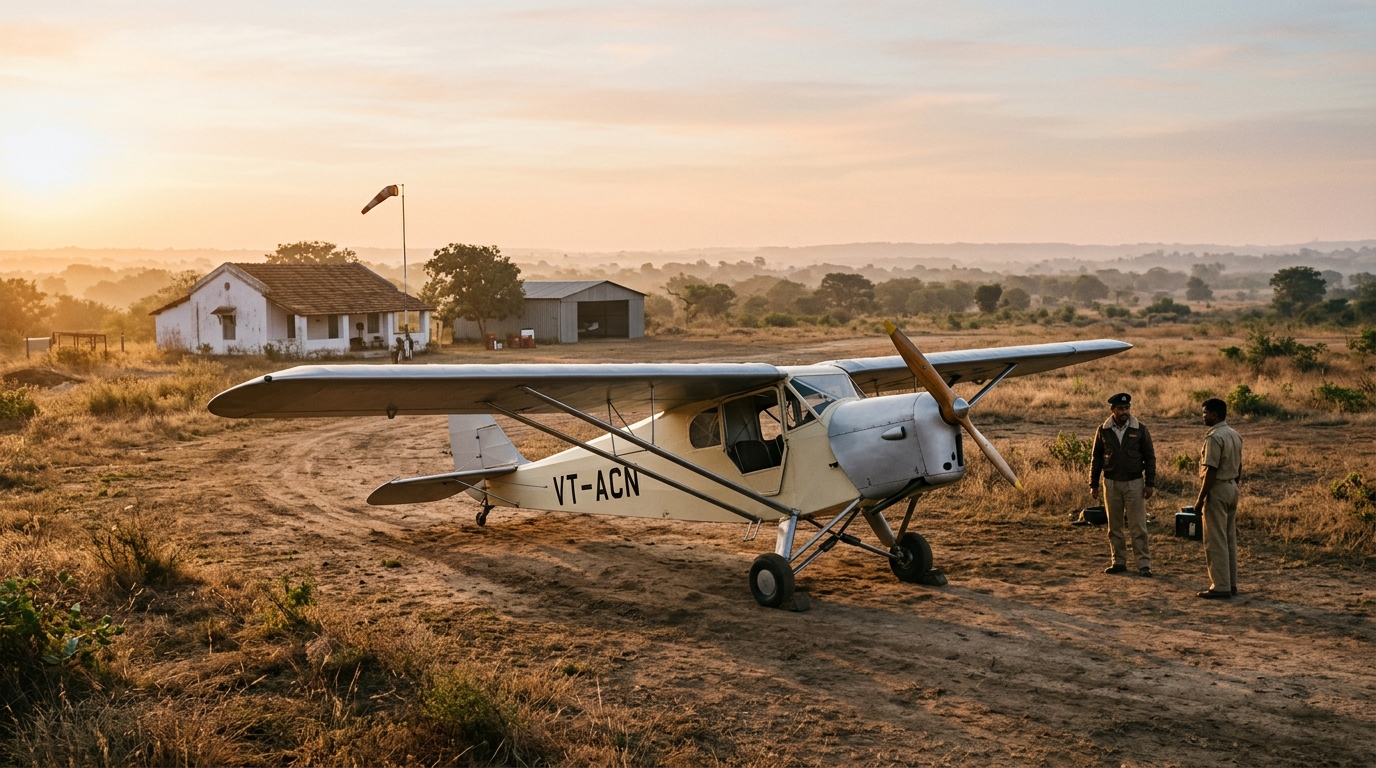
In October 1932, a young J.R.D. Tata climbed into a tiny de Havilland Puss Moth in Karachi. He carried a load of mail bound for Mumbai. That single flight launched an aviation empire that would eventually become India's national carrier. Understanding the Air India history timeline means tracking a cycle of private ambition, state control, and modern corporate struggle.
The Tata Cycle Began with a Single Puss Moth Flight
Air India started as a small mail carrier before expanding into passenger service. Early operations established a reputation for luxury and precision under the Tata Group. This era laid the groundwork for commercial aviation across the subcontinent before political independence completely changed the regulatory landscape.
J.R.D. Tata and the 1932 Launch
Aviation in India began as a logistical experiment. J.R.D. Tata secured a contract to carry weekly mail between Karachi and Madras via Ahmedabad and Bombay. He founded Tata Aviation Service in 1932. The company relied on two single-engine planes and two pilots.
Passenger travel was an afterthought. The planes had no proper seats. Early travelers sat on top of the mailbags. Despite these crude beginnings, the airline turned a profit in its first year. The operation flew 160,000 miles and carried 155 passengers without a single delay. This early reliability built public trust in air travel. You can trace many similar Economic Milestones in Indian History: From 1947 to Present back to these early industrial experiments.
Post-War Expansion and the Maharaja
World War II halted commercial expansion. The government requisitioned Tata's planes for military transport. When the war ended, the aviation landscape shifted rapidly. Tata Airlines became a public limited company in 1946. Leadership renamed it Air India.
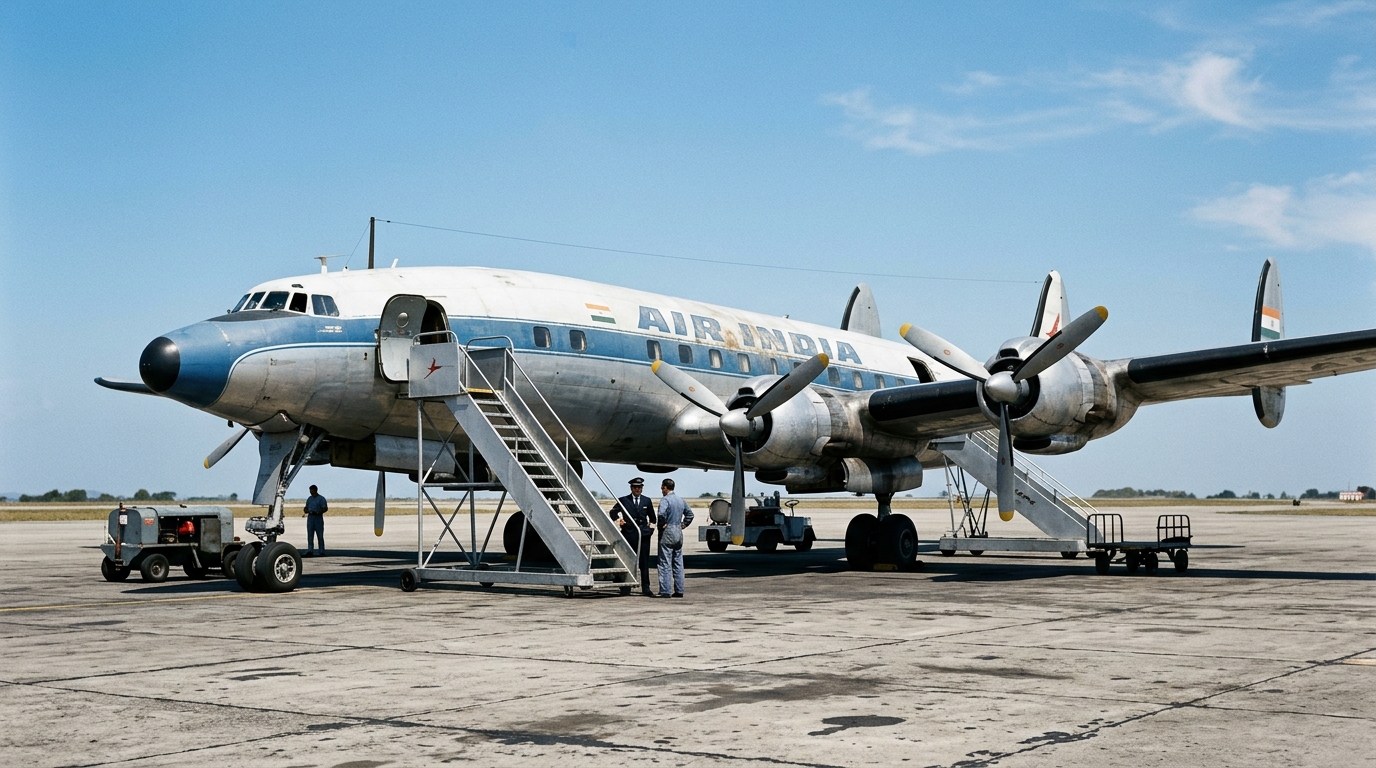
The airline needed an identity to stand out in a crowded post-war market. Commercial director Bobby Kooka created the Maharaja mascot in 1946. The figure featured a striped turban, a sweeping mustache, and a welcoming bow. The Maharaja promised passengers royal treatment. Air India launched its first international flight from Bombay to London in 1948. The Lockheed Constellation aircraft made stops in Cairo and Geneva. The flight took roughly 24 hours. Indian aviation had officially entered the global stage.
Nationalization Shifted Control to the Indian Government
The Indian government took ownership of the airline in 1953 to consolidate the scattered aviation industry. This move split operations into domestic and international carriers. State control provided massive funding but slowly introduced bureaucratic inefficiencies that would plague operations for decades.
The 1953 Air Corporations Act
Post-independence India faced a chaotic aviation market. Nine different airlines competed for limited routes. Most lost money heavily. The government passed the Air Corporations Act in 1953 to stabilize the sector. The state purchased a majority stake in Air India.
The act created two distinct entities. Indian Airlines Corporation handled all domestic flights. Air India International managed overseas routes. J.R.D. Tata argued against nationalization. He believed state control would stifle innovation. The government compromised by keeping him on as chairman. He remained in that role for 25 years. His continued presence protected the airline from immediate political interference.
Decades of Global Reach
The 1960s and 1970s marked a golden age for the carrier. Air India became the first Asian airline to enter the jet age. The company purchased a Boeing 707 in 1960. Jet engines cut flight times in half. The airline expanded routes to New York, Tokyo, and Sydney.
Service quality peaked during these decades. The airline hired famous artists to design its offices. Flight attendants wore custom silk sarees. Salvador Dalí even designed a customized ashtray for the airline in exchange for a baby elephant. The carrier set the global standard for in-flight hospitality. Other regional carriers, including Singapore Airlines, studied Air India's service models to build their own operations.
The 2007 Merger Triggered a Decades-Long Downfall
The government merged Air India with domestic carrier Indian Airlines in 2007 to cut costs and improve efficiency. The decision backfired entirely. The combined entity suffered from bloated headcounts, incompatible company cultures, and massive debt that crippled its ability to compete.
Merging Air India and Indian Airlines
By the early 2000s, both state-owned carriers were losing money. Private airlines like Jet Airways and Sahara dominated the domestic market. The government decided to merge Air India and Indian Airlines into a single mega-carrier in 2007. The goal was to create a unified network that could compete with growing international rivals.
The execution failed on almost every level. The two airlines operated entirely different fleet types. Air India flew Boeing aircraft. Indian Airlines flew Airbus planes. This required maintaining two separate maintenance divisions and two distinct pilot training programs. The merger destroyed any potential cost savings. Human resources clashed over seniority lists and pay scales. Strikes became frequent.
Mounting Debt and Market Share Loss
The financial damage compounded rapidly. The newly merged company placed massive orders for 111 new aircraft just as global fuel prices spiked. The debt burden crushed the airline's operational budget. Service quality plummeted. In-flight entertainment systems broke and stayed broken. Cabins grew shabby.
Private low-cost carriers seized the opportunity. IndiGo launched in 2006 and focused purely on on-time performance and cheap fares. Travelers abandoned the national carrier. The government spent billions in taxpayer money bailing out the airline year after year. By 2012, the carrier survived only on state-funded rescue packages. The Air India history timeline entered its darkest chapter. You can see similar structural shifts in our guide to 25 Historic Indian Events from 2000 to 2025: A Timeline.
The 2022 Privatization Returned the Airline to Tata Sons
Tata Sons bought back the heavily indebted airline in 2022 to rebuild its legacy. The acquisition marked the end of state control and the beginning of a massive modernization effort. Leadership quickly launched plans to replace aging aircraft and overhaul the corporate culture.
The Vihaan.AI Turnaround Plan
The Indian government finally sold the airline back to its original founders. Tata Sons took control in January 2022. The conglomerate paid roughly $2.4 billion and assumed a massive portion of the existing debt. Leadership immediately launched a five-year transformation program called Vihaan.AI.
The plan outlined strict phases. The first phase focused on fixing basic issues like broken seats and grounded planes. The subsequent phases aimed to expand the network and achieve sustained profitability. Tata also began consolidating its other aviation assets. The group initiated mergers to fold Vistara and AirAsia India into the main Air India brand.
Record Aircraft Orders and Modernization
The new owners knew the existing fleet could not compete. Air India made global headlines in 2023 with record-breaking orders. The airline committed to buying 470 new aircraft from Boeing and Airbus.
As of April 2025, the fleet comprised 198 aircraft, bolstered by the first wave of these new deliveries [Air India Fact Sheet, 2025]. The company also launched a massive rebranding effort. They introduced a new logo, updated liveries, and redesigned uniforms. The initial post-privatization momentum suggested a quick return to global prominence.
The 2026 Reality Check Forces a Decade-Long Horizon
External shocks and supply chain failures derailed the original five-year turnaround plan. The airline now faces aggressive domestic competition and staggering financial losses. Leadership recently admitted that fixing the carrier will take at least ten years instead of five.
Supply Chain Delays and the $400 Million Refit
The optimism of 2022 met the harsh realities of global manufacturing in 2025. Boeing and Airbus faced severe production bottlenecks. Air India did not receive its new planes on schedule. The airline had to fly its outdated, broken-down legacy fleet much longer than anticipated.
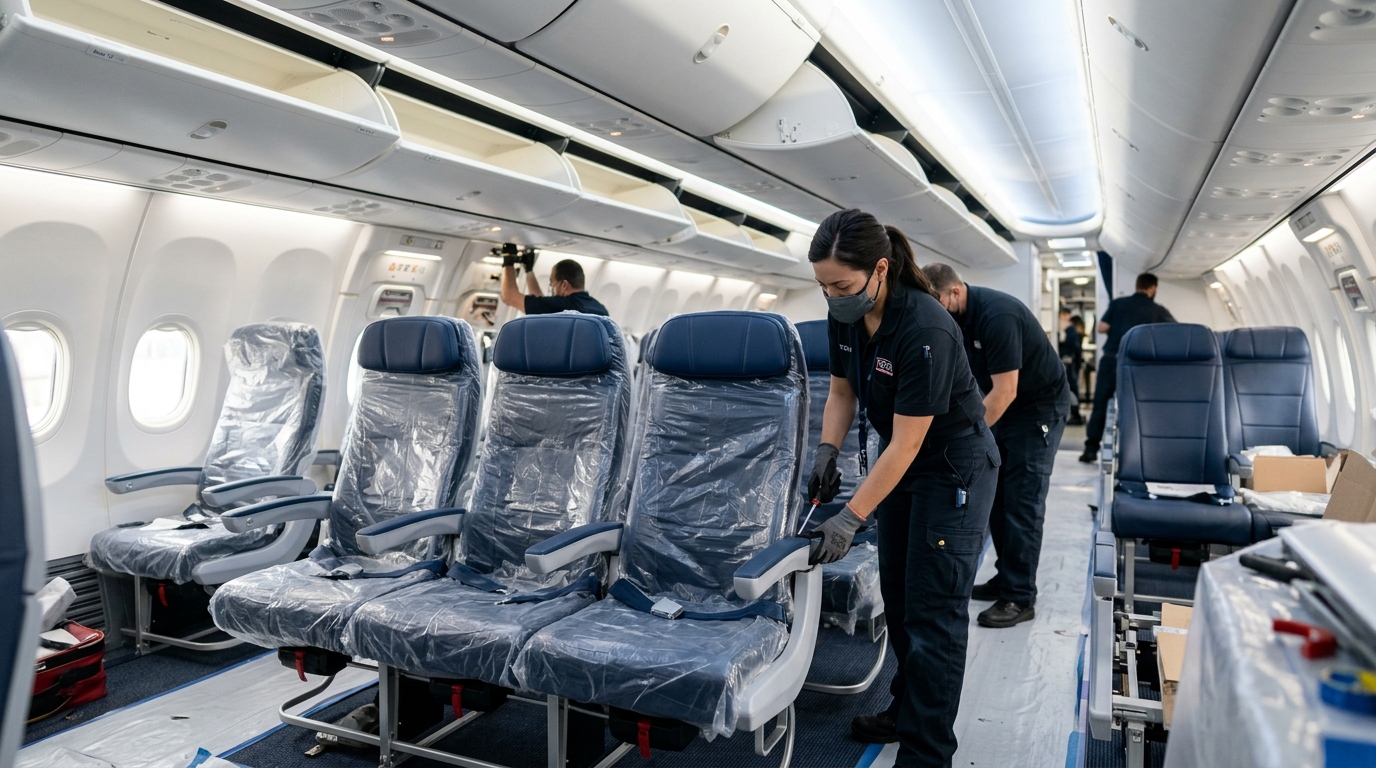
To stop bleeding premium customers, leadership authorized an emergency interior overhaul. A $400 million refit program is currently underway to revamp the interiors of 67 legacy aircraft [Air India Fact Sheet, 2025]. This includes 27 narrowbody and 40 widebody planes. Workers are tearing out old seats, replacing carpets, and installing new entertainment screens.
The delays forced a strategic reset. In July 2026, Tata Sons Chairman N. Chandrasekaran announced that Air India's transformation into a world-class airline could take up to a decade, abandoning the original five-year "Vihaan.AI" timeline [CNA, 2026]. Leadership instability added to the friction. CEO Campbell Wilson announced his resignation in April 2026 and will officially step down by September 2026 [AeroMorning, 2026].
IndiGo's Dominance and Financial Losses
The external environment proved just as hostile as the internal challenges. The airline faced airspace closures and fuel price hikes driven by Middle East conflicts throughout 2025 and 2026. The tragic crash of Flight AI171 in June 2025 further damaged the brand's recovering reputation [Mint, 2026].
Financially, the turnaround is bleeding cash. The airline reported a net loss of ₹222.4 billion (approx. $2.6 billion) for FY2026, more than doubling its ₹108.6 billion loss from the previous year [Mint, 2026].
Meanwhile, competitors are not waiting for Air India to fix its problems. IndiGo capitalized on the integration hurdles. The low-cost carrier has effectively cornered the local market.
| Aviation Metric (June 2026) | Air India | IndiGo |
|---|---|---|
| Domestic Market Share | 23.9% | 66.3% |
| FY2026 Financial Trajectory | ₹222.4B Net Loss | Consistent Profitability |
| Fleet Strategy | Mixed legacy/new, pending refits | Uniform, rapid turnaround |
Source: Market share data via Whalesbook, 2026.
The Air India history timeline is far from complete. The carrier possesses the financial backing of the Tata Group, but money alone cannot fix broken supply chains. The airline must survive the current transition period while flying inferior products against highly efficient rivals. Check our list of the 10 Most Searched Dates in Indian History and Why They Matter to see how other massive national projects evolved over decades.
Related Reading
- India at the Olympics: A Timeline of Historic Sporting Milestones
- Indian History Timeline Chart: Key Milestones (Digital Reference)
- Indian History Milestones: The Maurya and Gupta Empires
- Timeline of Mahatma Gandhi's Nonviolent Movements in India
FAQ
Q: When did the Tata Group originally found Air India? The airline started as Tata Aviation Service in 1932. J.R.D. Tata flew the first commercial mail flight from Karachi to Mumbai in a de Havilland Puss Moth.
Q: Why did the Indian government nationalize the airline? The government passed the Air Corporations Act in 1953 to stabilize a chaotic, loss-making aviation sector. The state took over all carriers to consolidate routes and eliminate unsustainable competition.
Q: What caused Air India's massive financial decline? A disastrous 2007 merger with domestic carrier Indian Airlines created massive operational bloat. The combined company took on crushing debt to buy new planes just as global fuel prices spiked and private competitors entered the market.
Q: What is the Vihaan.AI turnaround plan? Vihaan.AI was a five-year transformation strategy launched in 2022 after Tata bought the airline back. The plan focused on fixing legacy issues, expanding the fleet, and returning to profitability, though the timeline has since been extended to a decade.
Q: How many planes does Air India currently operate? As of April 2025, the airline operates a fleet of 198 aircraft. The company also holds pending orders for 570 new Airbus and Boeing planes.
Your next move is to look past the marketing announcements and track the actual aircraft deliveries. If you are booking a long-haul flight this year, check the specific aircraft type assigned to your route. Choose flights operated by the newly delivered A350s or the recently refitted Boeing 777s to avoid the outdated cabins still plaguing the legacy fleet.
Sources
- Air India | Business — Tata Group, 2026. Supports: Air India was founded in 1932 by J.R.D. Tata.
- Air India turnaround could take up to a decade, owner Tata Sons says — CNA, 2026. Supports: Tata Sons bought back Air India in 2022.
- Air India kicks off $400-million refit programme to spruce up 67 legacy aircraft — The Indian Express, 2024. Supports: A $400 million refit program is currently upgrading 67 legacy aircraft interiors.
- 70 Policies — Nationalisation of Air India, 1953 — Observer Research Foundation, 2018. Supports: The Indian government passed the Air Corporations Act in 1953 to nationalize the airline.
- Indian Airlines — Wikipedia, 2026. Supports: The government merged Air India with domestic carrier Indian Airlines in 2007.
- Air India — Wikipedia, 2026. Supports: Tata Sons launched a five-year transformation program called Vihaan.AI.