April Anniversaries: 10 Defining Historic Events That Shaped India
TL;DR
April holds some of the most transformative moments in Indian history, from the establishment of the Mughal Empire in 1526 to the Jallianwala Bagh massacre in 1919. These ten defining historical events reshaped the subcontinent's political, social, and cultural trajectory, establishing foundations that still influence modern India today.
Key Takeaways
- The First Battle of Panipat in April 1526 initiated over three centuries of Mughal rule.
- Tragedies like the Jallianwala Bagh massacre fundamentally shifted the Indian independence movement.
- April marks the birth of Dr. B.R. Ambedkar, the chief architect of the Indian Constitution.
- India's space age began in April 1975 with the launch of the Aryabhata satellite.
- The introduction of the passenger railway in April 1853 revolutionized continental transport.
Exactly 331 years of Mughal dominance began on a single morning in April 1526. The fourth month of the year repeatedly serves as a pivot point for the subcontinent. When tracking April historic events India, you find a dense concentration of military conquests, social revolutions, and scientific breakthroughs.
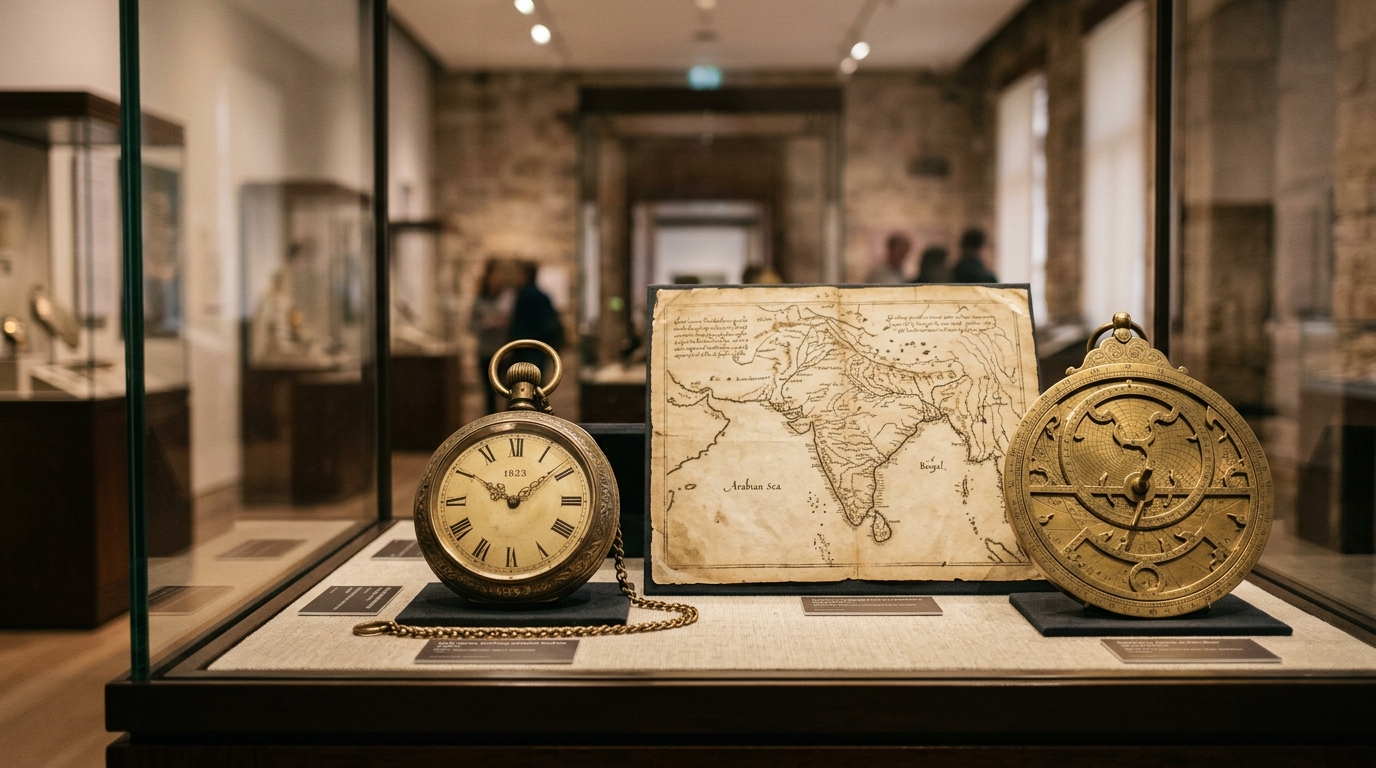
Historical sites across the country display archival imagery and markers tied to these exact dates. Understanding these milestones provides a clear window into how modern India was built. We will look at ten specific days in April that altered the course of Indian history.
What were the major military and political shifts that occurred in April?
April witnessed massive dynastic and political upheavals, most notably the First Battle of Panipat and the execution of key freedom fighters. These events dismantled existing power structures and laid the foundation for entirely new empires and resistance movements across the subcontinent.
The First Battle of Panipat (April 21, 1526)
On April 21, 1526, the forces of Zahir-ud-din Muhammad Babur defeated the massive army of Ibrahim Lodi. This single military engagement ended the Delhi Sultanate and established the Mughal Empire. Babur utilized field artillery and matchlocks—technologies rarely seen on the subcontinent at that time.
He arranged his forces using the Tulughma tactic, dividing his army into flank units to surround the enemy. Lodi's forces relied heavily on war elephants. The loud sounds of Babur's cannons panicked the elephants, causing them to trample their own soldiers.
If you want to understand the tactical breakdown of this day, review our historical timeline of the First Battle of Panipat. The aftermath of this battle reshaped Indian architecture, administration, and culture for centuries.
| Force Commander | Estimated Troop Size | Key Technology/Advantage | Outcome |
|---|---|---|---|
| Babur | 12,000 - 25,000 | Field artillery, matchlocks, flanking tactics | Decisive Victory |
| Ibrahim Lodi | 50,000 - 100,000 | War elephants, sheer numbers | Defeat and death of Lodi |
Execution of Mangal Pandey (April 8, 1857)
Mangal Pandey, a sepoy in the 34th Bengal Native Infantry, was executed by the British East India Company on April 8, 1857. His act of rebellion at Barrackpore a few weeks earlier directly preceded the widespread Indian Rebellion of 1857.
Pandey objected to the use of new Enfield rifle cartridges, which were rumored to be greased with animal fat. This offended the religious sentiments of both Hindu and Muslim soldiers. The British scheduled his execution for April 18 but moved it up to April 8 to prevent a wider mutiny.
Records from the National Archives of India show that his death did exactly what the British feared. It provided a martyr for the cause. Within weeks, full-scale rebellion erupted across northern and central India.
How did April shape the Indian independence movement?
The struggle for independence saw devastating tragedies and powerful symbolic victories during this month. From the horrific Jallianwala Bagh massacre to the defiant conclusion of the Salt March, these milestones galvanized the masses against British colonial rule and shifted the national consciousness.
The Jallianwala Bagh Massacre (April 13, 1919)
The Jallianwala Bagh massacre remains one of the darkest April historic events India has ever recorded. On the day of the Baisakhi festival, thousands of unarmed civilians gathered in a walled enclosure in Amritsar. They were protesting the oppressive Rowlatt Act and the arrest of nationalist leaders.
Brigadier-General Reginald Dyer ordered his Gurkha and Sikh troops to block the only narrow exit. He then ordered them to fire directly into the dense crowd without warning. They fired 1,650 rounds until their ammunition ran out.
The official British Hunter Commission report cited 379 dead, but Indian leaders estimated the death toll exceeded 1,000. This brutal event shattered any remaining illusions of British benevolence. It directly caused Mahatma Gandhi to launch the Non-Cooperation Movement, fundamentally changing the nature of the freedom struggle. If you study the Jallianwala Bagh timeline, you see how this single day alienated moderate Indian politicians forever.
The End of the Dandi March (April 6, 1930)
Mahatma Gandhi concluded his historic Salt March on the morning of April 6, 1930. After walking 240 miles from the Sabarmati Ashram to the coastal village of Dandi, Gandhi picked up a handful of saline mud and salt crystals. This simple action defied the British Salt Act of 1882.
The law prohibited Indians from collecting or selling salt, forcing them to buy heavily taxed British salt. Gandhi's act of civil disobedience sparked a nationwide movement. Millions of Indians began making their own salt.
The British responded by arresting over 60,000 people, including Gandhi himself. You can trace the daily progression of this movement through our detailed timeline of the 1930 Salt Satyagraha. This April morning proved that nonviolent resistance could effectively challenge imperial monopolies.
Which social and constitutional milestones happened in April?
April marks the birth of India's foremost social reformer and the formal recognition of fundamental civil rights. The month brought significant legislative changes and the introduction of leaders who systematically dismantled caste-based discrimination and drafted the framework of modern India.
The Birth of Dr. B.R. Ambedkar (April 14, 1891)
Dr. Bhimrao Ramji Ambedkar was born on April 14, 1891, in the military cantonment of Mhow. Born into the Mahar caste, which was treated as untouchable, he overcame severe social discrimination to become one of India's greatest intellectuals.
Ambedkar earned doctorates from both Columbia University and the London School of Economics. He returned to India to lead the movement against caste discrimination. As the Chairman of the Drafting Committee, he became the chief architect of the Indian Constitution.
His work ensured that the Constitution included fundamental rights, abolished untouchability, and provided affirmative action for marginalized communities. To explore his extensive impact, read our chronological guide to Dr. B.R. Ambedkar's life. His birth anniversary, Ambedkar Jayanti, is celebrated globally as a day of equality.
Implementation of the Right to Education Act (April 1, 2010)
The Right of Children to Free and Compulsory Education Act came into effect on April 1, 2010. This historic legislation made education a fundamental right for every child between the ages of 6 and 14 in India.
The act requires all private schools to reserve 25% of seats for children from disadvantaged sections. It also prohibits unrecognised schools from practice, bans physical punishment, and mandates specific student-teacher ratios.
Before this act, millions of children dropped out of the education system due to financial constraints. By enforcing Article 21A of the Constitution, India joined a group of roughly 135 countries that guarantee education as a fundamental human right.
Why is April significant for Indian space and scientific exploration?
India's journey into space and major scientific advancements trace their roots to April. The launch of the country's first satellite and the establishment of key research institutions demonstrated India's capability to compete globally in technology and space exploration.
The Launch of Aryabhata (April 19, 1975)
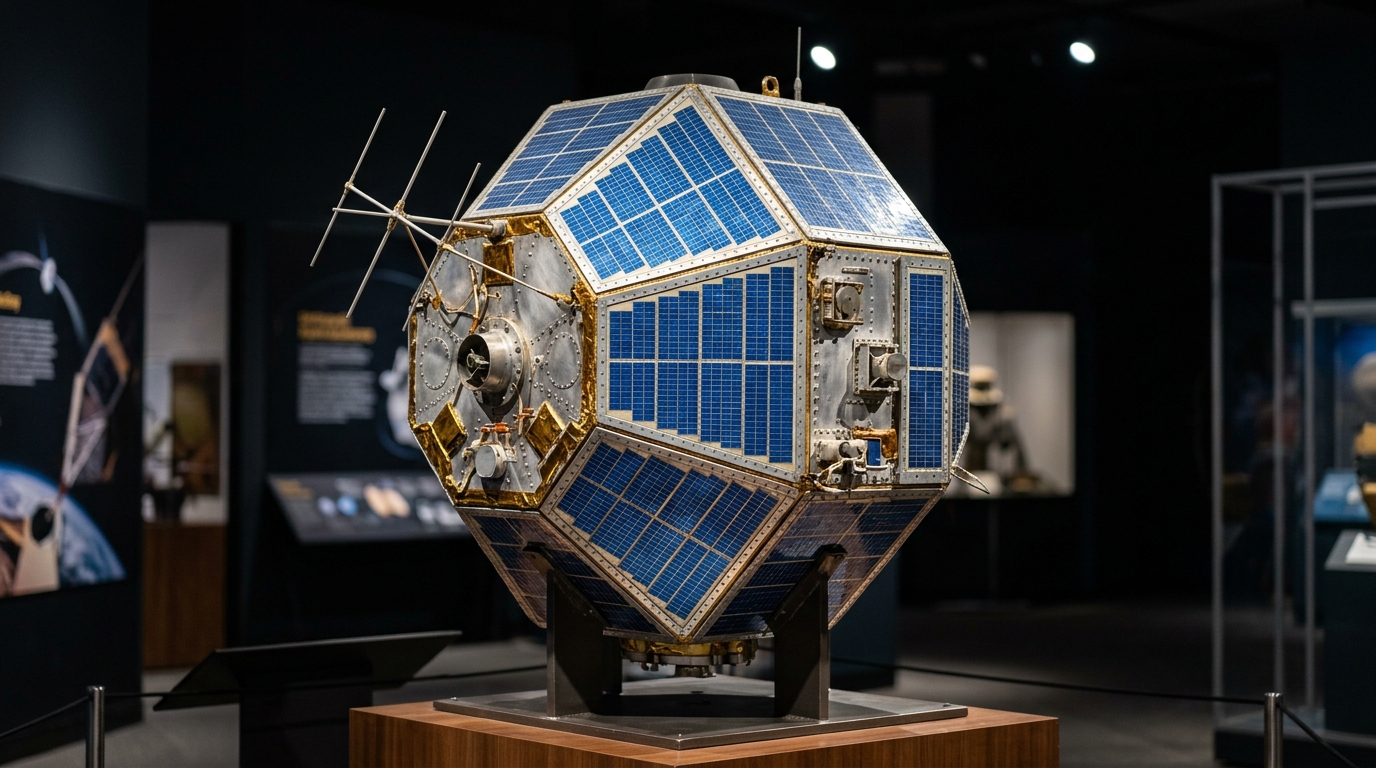
India entered the space age on April 19, 1975. The Indian Space Research Organisation (ISRO) successfully launched its first satellite, Aryabhata. Named after the famous 5th-century Indian astronomer, the satellite was built entirely in India.
Because India lacked a heavy launch vehicle at the time, Aryabhata launched from Kapustin Yar in the Soviet Union using a Kosmos-3M launch vehicle. The 360-kilogram satellite carried instruments to conduct experiments in X-ray astronomy, aeronomics, and solar physics.
A power failure halted experiments after just four days. However, the launch itself was a massive victory. It proved that Indian scientists could design, build, and track orbital hardware. This ranks among the most critical April historic events India has achieved in the modern era.
Rakesh Sharma's Spaceflight (April 3, 1984)
On April 3, 1984, Squadron Leader Rakesh Sharma became the first Indian citizen to travel into space. He flew aboard the Soviet Soyuz T-11 spacecraft as part of the Interkosmos program.
Sharma spent seven days, 21 hours, and 40 minutes aboard the Salyut 7 orbital station. During his time in orbit, he conducted multi-spectral photography of northern India to help construct hydroelectric power stations. He also practiced specialized yoga exercises to study the effects of zero gravity on the human body.
During a televised press conference from space, Prime Minister Indira Gandhi asked him how India looked from orbit. Sharma famously replied, "Sare Jahan Se Achha" (Better than the entire world).
What cultural and late-month milestones define April historic events in India?
The latter half of April brought cultural shifts, the birth of Indian cinema, and significant infrastructural milestones. These events established the first passenger train network and premiered the first full-length Indian feature film, forever changing how Indians traveled and consumed entertainment.
India's First Passenger Train (April 16, 1853)
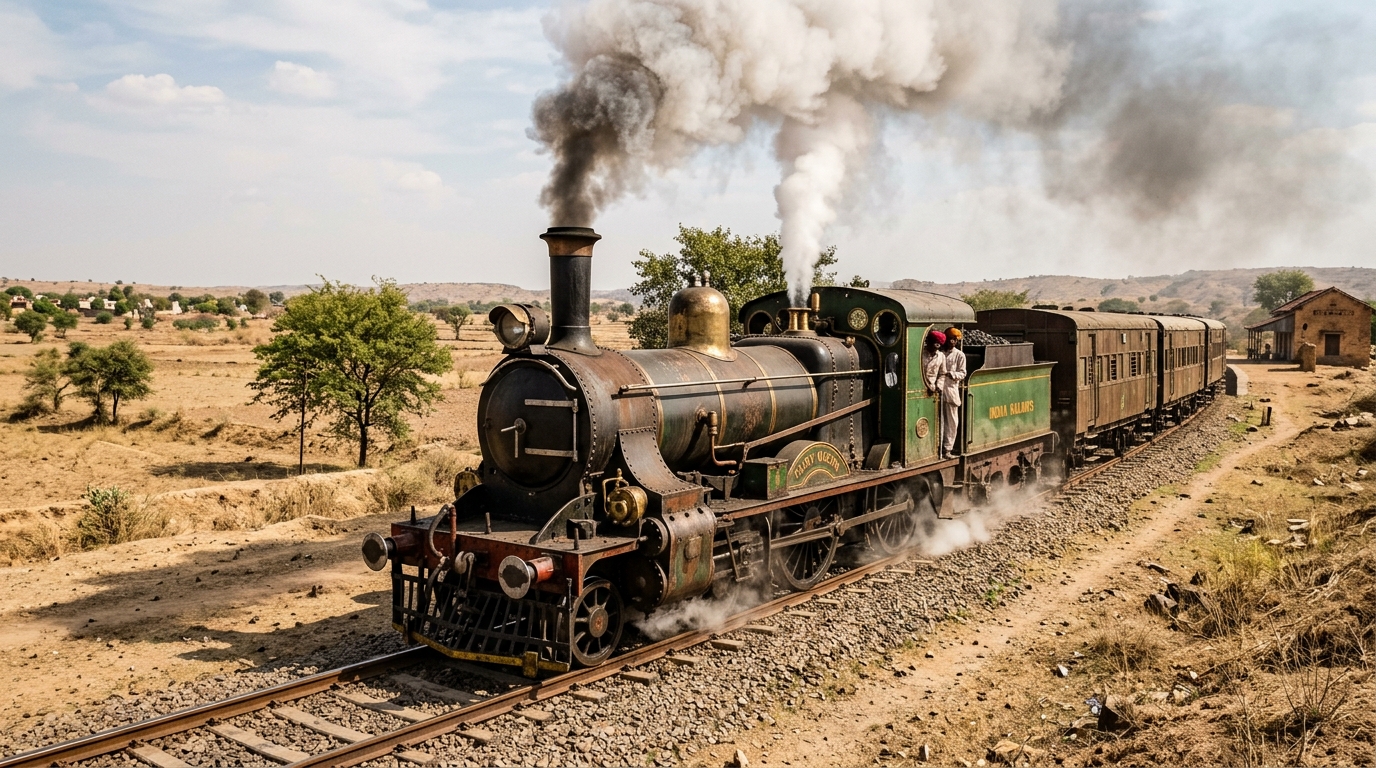
The history of Indian Railways began on April 16, 1853. At 3:30 PM, the first passenger train departed from Bori Bunder in Bombay (now Mumbai) heading to Thane.
A 21-gun salute marked the departure. Three steam locomotives named Sahib, Sindh, and Sultan pulled the 14-carriage train. It carried 400 invited guests across a distance of 34 kilometers. The journey took one hour and fifteen minutes.
This single event triggered an infrastructure boom. The railway network quickly expanded, connecting distant regions of the subcontinent. It facilitated trade, moved troops, and eventually helped unite the country during the independence struggle.
The Premiere of Raja Harishchandra (April 21, 1913)
Indian cinema was born on April 21, 1913, at the Olympia Theatre in Bombay. Dhundiraj Govind Phalke, known as Dadasaheb Phalke, premiered Raja Harishchandra, the first full-length Indian feature film.
The silent film recounted the mythological story of a righteous king. Phalke handled almost every aspect of the production. He directed, produced, wrote the script, and managed the camera. Because acting was considered an unsuitable profession for women at the time, male actors played all the female roles.
The film was a massive commercial success. It proved that indigenous filmmaking was viable, paving the way for what would eventually become the largest film industry in the world. You can discover more late-month milestones in our guide to key dates in late April.
Related Reading
- Historic Dates in Modern India: From Independence to the 21st Century
- India at the Olympics: A Timeline of Historic Sporting Milestones
- 25 Historic Indian Events from 2000 to 2025: A Timeline
- What Are the Major Events in Indian History? (FAQ Archive)
FAQ
Q: What is the most significant historical event that happened in April in India? A: The First Battle of Panipat on April 21, 1526, is often considered the most significant. It ended the Delhi Sultanate and established the Mughal Empire, which ruled the subcontinent for over three centuries.
Q: Why is April 13 an important date in Indian history? A: April 13 marks the anniversary of the Jallianwala Bagh massacre in 1919. British troops fired on unarmed civilians in Amritsar, a tragedy that fundamentally shifted the Indian independence movement toward total self-rule.
Q: Which major Indian leader was born in April? A: Dr. B.R. Ambedkar was born on April 14, 1891. He was a pioneering social reformer, the principal architect of the Indian Constitution, and India's first Minister of Law and Justice.
Q: What was India's first major space achievement in April? A: On April 19, 1975, India launched Aryabhata, its first domestically built satellite. Nine years later, on April 3, 1984, Rakesh Sharma became the first Indian in space.
Bookmark this page and review the specific dates on our calendar when April arrives to see exactly what happened on this day in Indian history.