A Visual Timeline of Indian Art and Cultural Artifacts
Bottom Line
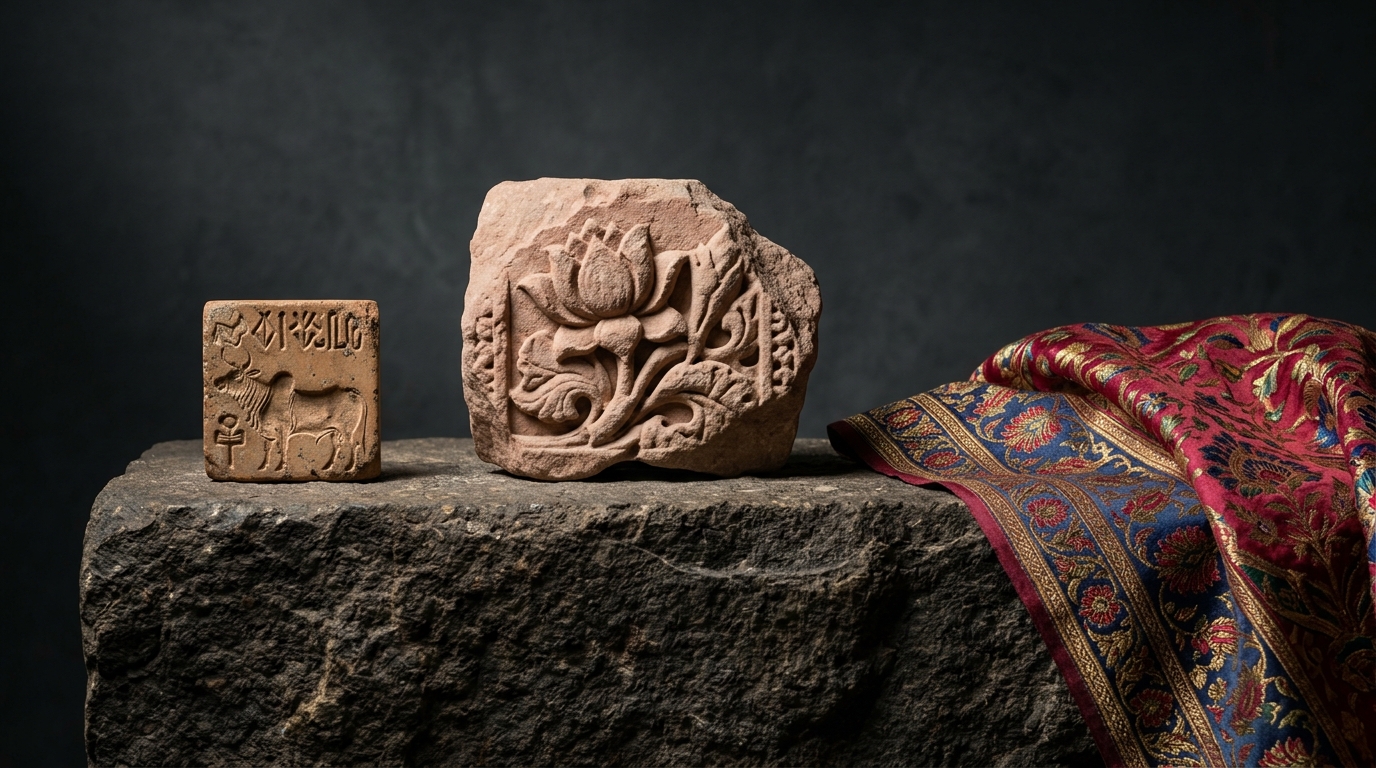
An Indian cultural history timeline reveals how design, architecture, and daily objects evolved from 2500 BCE to the modern era. This chronological guide tracks the shift from Indus Valley terracotta to Mughal miniatures and colonial-era textiles, showing how historical artifacts shaped India's visual identity.
Key Takeaways
- Indus Valley artifacts prove early Indian design prioritized civic function over royal monuments.
- Gupta-era cave paintings set the foundation for classical Indian visual storytelling.
- Medieval architecture successfully combined local stone-carving traditions with imported structural techniques.
- Colonial trade networks permanently altered traditional Indian textile production and global distribution.
Many people believe early Indian art was entirely religious, focused only on temple carvings and deity sculptures. The truth is that India's earliest design milestones were deeply practical, rooted in urban planning, trade seals, and everyday household artifacts. You cannot understand the subcontinent's visual history just by looking at monuments.
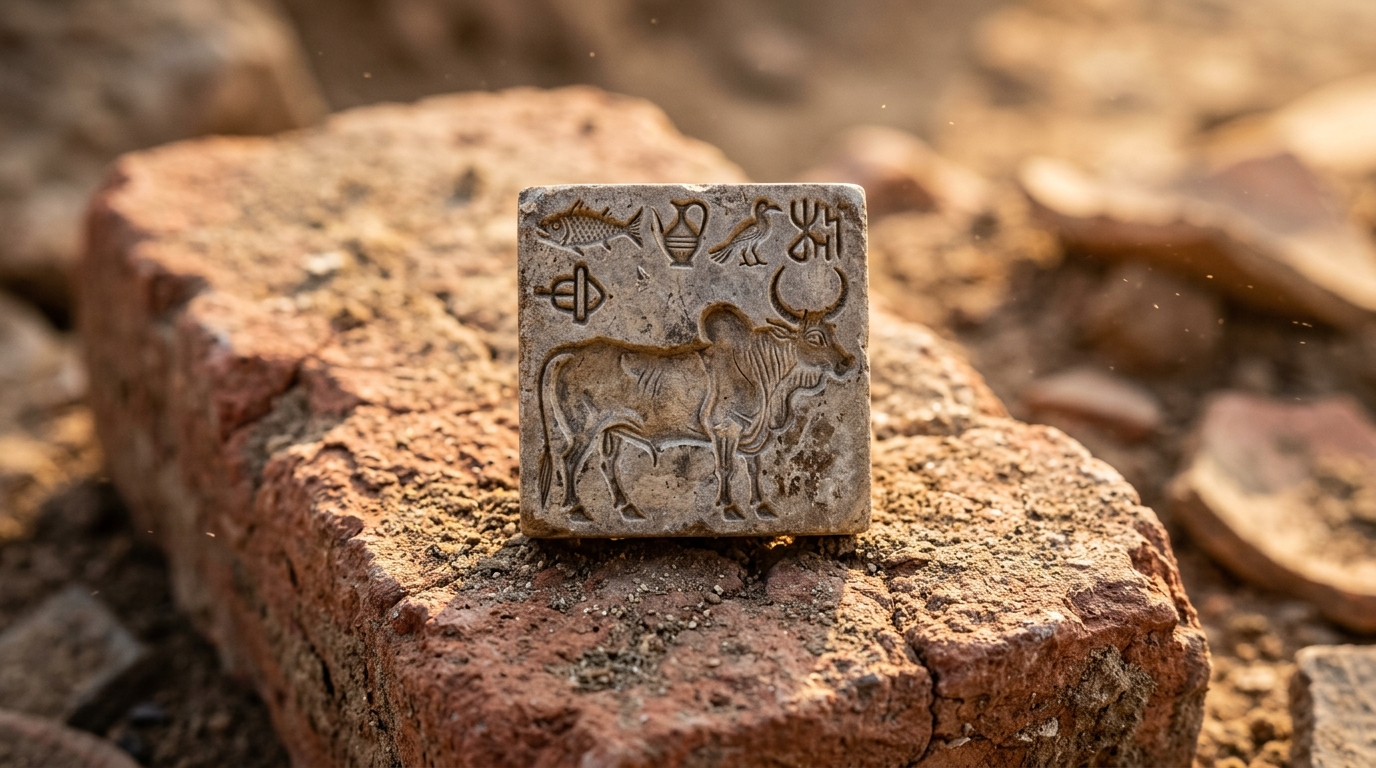
Building an accurate Indian cultural history timeline requires looking at both the sacred and the mundane. The objects people used daily tell us as much about a civilization as the massive structures they built. From the precise grid cities of Harappa to the intricate weave of a Mughal carpet, these artifacts chart a clear path of innovation.
Early artisans worked with the materials they had at hand. They baked clay from riverbeds, carved stone from local quarries, and wove cotton grown in nearby fields. As trade networks expanded, so did the materials and influences available to these craftsmen. Following these historic trade routes of India helps explain how local designs eventually reached a global audience.
The Indus Valley Civilization Established Early Design Standards
The Indus Valley Civilization (2500–1900 BCE) prioritized civic utility over grand palaces. Their artifacts demonstrate a highly standardized approach to daily life. Town planning, baked brick architecture, and standard weights show an early society that valued order, measurement, and functional design over monumental displays of power.
Urban Planning and Terracotta Artifacts
Indus Valley cities like Mohenjo-Daro and Harappa featured grid-like street plans. Builders used standardized baked bricks with exact ratios. This uniformity points to a central authority that cared deeply about civic infrastructure.
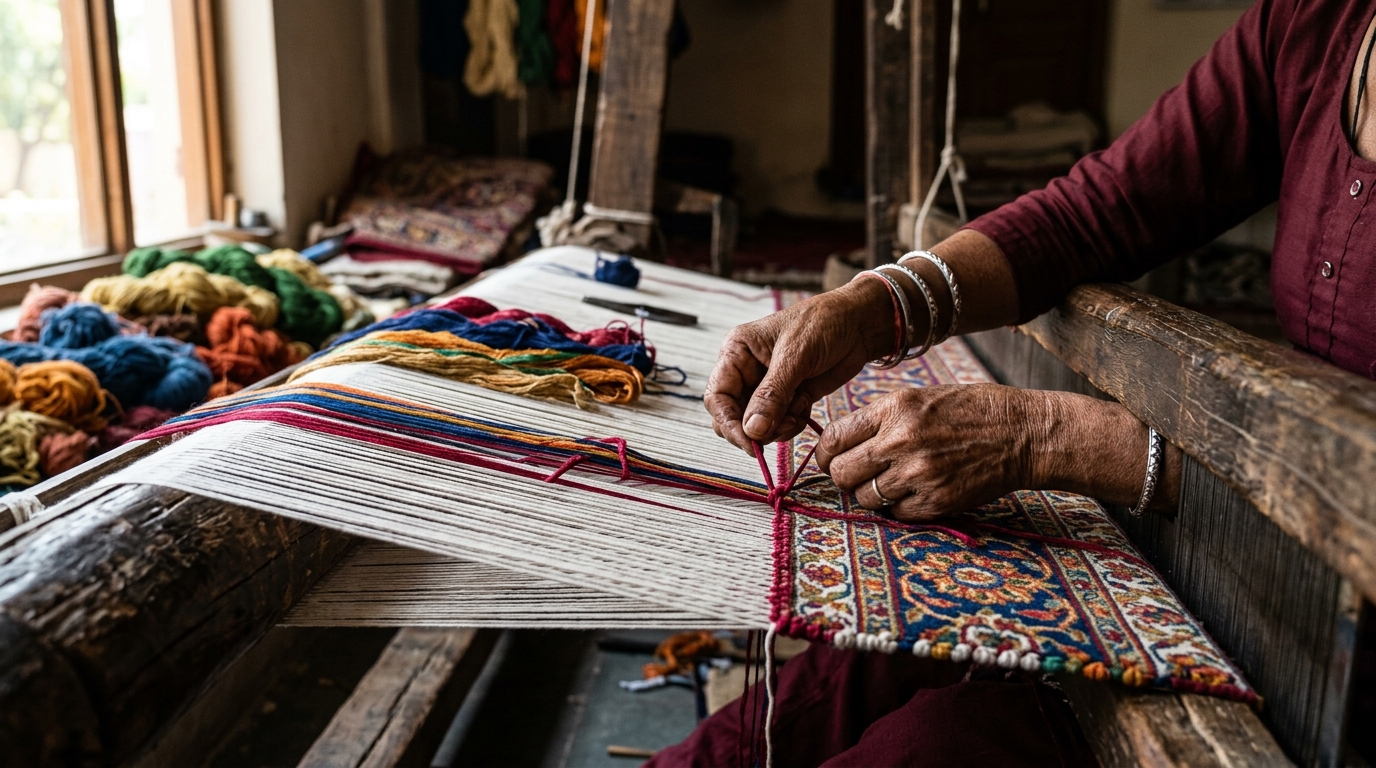
The most common surviving artifacts are terracotta objects. Artisans crafted small clay figures of animals, carts with moving wheels, and human forms. These objects likely served as toys or household items. We find very few large-scale sculptures here. The focus remained squarely on practical items for daily use, including complex drainage systems that outpaced anything else built in the ancient world at that time.
The Dancing Girl and Steatite Seals
One of the most famous artifacts from this era is the "Dancing Girl" of Mohenjo-Daro. This small bronze statue measures just 10.5 centimeters tall. It shows an early mastery of the lost-wax casting technique. The figure stands in a relaxed, confident pose, wearing bangles on her left arm.
Steatite seals offer another major visual milestone. Artisans carved these small, square stone seals with images of animals like bulls, elephants, and the famous one-horned "unicorn." They also feature a script that remains undeciphered today. Merchants used these seals to stamp clay tags on trade goods. This early focus on commercial branding shows how deeply trade influenced early Indian design.
Mauryan and Gupta Periods Formalized Monumental Architecture
Between the 3rd century BCE and the 6th century CE, Indian rulers began using permanent materials like stone to project power and spread ideas. This era introduced monumental pillars, rock-cut caves, and the first structural temples, setting the baseline for classical Indian architecture.
Ashokan Pillars and Stone Carving
Emperor Ashoka of the Mauryan Empire left a massive visual legacy. In the 3rd century BCE, he erected tall sandstone pillars across the subcontinent. He used these pillars to broadcast his edicts and promote Buddhist principles.
The Lion Capital at Sarnath is the most famous example. It features four Asiatic lions standing back to back, mounted on an abacus carved with other animals and a central wheel. The Indian government later adopted this specific artifact as the national emblem. The polished surface of Mauryan stone carving remains a distinct technical achievement of this era.
Cave Architecture at Ajanta and Ellora
The shift from wood to stone allowed builders to carve massive structures directly into rock faces. The Ajanta Caves, dating from the 2nd century BCE to the 5th century CE, contain some of the finest surviving examples of ancient Indian painting. Artists used natural pigments to paint complex murals depicting the past lives of the Buddha.
Ellora represents a later phase of rock-cut architecture. Here, builders carved entire freestanding temples out of solid basalt cliffs.
| Feature | Ajanta Caves | Ellora Caves |
|---|---|---|
| Primary Era | 2nd century BCE to 5th century CE | 6th century CE to 10th century CE |
| Religious Focus | Exclusively Buddhist | Hindu, Buddhist, and Jain |
| Key Artistic Medium | Fresco-style mural paintings | Deep-relief stone sculpture |
| Famous Structure | Cave 1 (Padmapani painting) | Kailasanatha Temple (Cave 16) |
These sites required generations of skilled labor. They show how religious patronage drove the rapid advancement of artistic techniques during this phase of the Indian cultural history timeline.
Medieval Craftsmanship Blended Indigenous and Islamic Styles
The medieval period transformed the Indian cultural history timeline through massive structural temples in the south and Islamic architectural integration in the north. Artisans combined local stone-carving traditions with new techniques like true arches, domes, and intricate inlay work.
Temple Architecture of the Cholas
In southern India, the Chola dynasty (9th to 13th centuries) pushed structural stone architecture to its limits. The Brihadisvara Temple at Thanjavur stands as a prime example. Builders constructed its massive tower entirely of granite without using binding mortar.
The Cholas also perfected bronze casting. Their artisans created the iconic Nataraja, a bronze statue depicting the Hindu god Shiva as the cosmic dancer. They refined the lost-wax technique to produce highly detailed, balanced metal figures that remain a global benchmark for bronze sculpture. The proportions used in these statues followed strict mathematical guidelines laid out in ancient texts.
Mughal Miniatures and Decorative Arts
The arrival of the Mughal Empire in the 16th century brought Persian artists to the Indian subcontinent. Emperor Akbar established large royal workshops where Persian masters worked alongside local Indian painters. This collaboration created the Mughal miniature painting style.
These paintings featured bright colors, fine brushwork, and complex borders. They documented royal hunts, court scenes, and natural life. Emperor Jahangir specifically commissioned highly accurate paintings of birds and flowers.
Beyond painting, the Mughals introduced new decorative arts. Artisans mastered pietra dura, a technique of inlaying semi-precious stones into white marble. You can see the peak of this craft on the walls of the Taj Mahal. Carpet weaving, metalwork, and jewelry design also reached new heights under Mughal patronage, blending geometric Islamic patterns with Indian floral motifs.
Colonial Trade Routes Reshaped Local Artisanal Practices
European arrival in the 16th century shifted Indian art toward global commercial demands. Artisans adapted traditional designs to suit foreign tastes, while colonial institutions introduced Western academic realism, fundamentally altering how Indian cultural artifacts were produced and consumed.
The Impact of European Demand on Textiles
Indian textiles dominated global trade long before the British arrived. Weavers produced fine muslin, brightly colored chintz, and durable calico. European markets developed a massive appetite for these fabrics.
To meet this demand, Indian artisans began modifying their patterns. They incorporated European floral motifs into traditional block prints. The Portuguese era in Goa shows similar hybrid designs in architecture and wood carving, where local craftsmen interpreted European baroque styles.
Eventually, the British East India Company took control of textile production centers. They exported raw Indian cotton to British mills and sold manufactured cloth back to India. This shift devastated local weaving communities. The history of India's textiles is essentially the history of its economy during the colonial period. Readers interested in this economic shift should look at our Indian textile history timeline.
Company School Painting and Hybrid Styles
As the British East India Company gained territory, its officials became new patrons of Indian art. They wanted visual records of their new surroundings. Indian artists, who had lost their traditional court patrons, began painting for the British.
This created the "Company style" (Kampani Kalam). Artists used watercolors instead of traditional opaque pigments. They adopted Western techniques like linear perspective and shading. They painted local tradespeople, festivals, plants, and animals. These paintings served as a visual encyclopedia for British audiences back home. It was a purely functional art form, driven by documentation rather than expression.
Modern Era Movements Reclaimed an Indian Cultural History Timeline
The late 19th and early 20th centuries sparked a nationalist revival in Indian art. Artists rejected purely Western academic styles and looked back to ancient Indian murals and folk traditions to forge a modern visual identity that supported the independence movement.
Raja Ravi Varma and Mass Production
Raja Ravi Varma changed how Indians consumed visual culture. He learned Western oil painting techniques but applied them to Indian mythological subjects. He gave human faces to Hindu deities, painting them in realistic settings with dramatic lighting.
His biggest impact came from technology. Varma set up a lithographic press to mass-produce his paintings as cheap oleographs. Suddenly, ordinary people could afford full-color images of gods and goddesses for their homes. This democratization of art created a unified visual standard for Hindu iconography that still influences Indian calendar art and cinema today.
The Bengal School of Art
As the independence movement grew, some artists felt Varma's Western oil techniques were un-Indian. Abanindranath Tagore led a backlash, founding the Bengal School of Art. He encouraged artists to look at Mughal miniatures and the Ajanta cave frescoes for inspiration.
The Bengal School promoted a delicate, hazy watercolor technique called the "wash" method. They painted historical, literary, and mythological scenes with a distinct sense of Indian spirituality.
Later artists like Nandalal Bose took this nationalist art further. Bose studied rural folk traditions. When Mahatma Gandhi needed visual support for the freedom struggle, he turned to Bose. Bose created the famous black-and-white linocut of Gandhi walking with a staff, which became the defining image of the Dandi March day-by-day. Bose was also tasked with illustrating the original manuscript of the Constitution of India, cementing his role in shaping the modern nation's visual identity.
Related Reading
- Indian History Timeline Chart: Key Milestones (Digital Reference)
- Indian History Milestones: The Maurya and Gupta Empires
- Milestones in Indian Women's History: A Chronological Guide
- 1,000 Years of Indian Medical History: A Chronological Guide
FAQ
Q: What is the oldest surviving art form in India? Rock art found in caves, such as the Bhimbetka rock shelters, represents the oldest surviving art in India. These prehistoric paintings date back over 10,000 years and depict animals, hunting scenes, and early human life using natural mineral pigments.
Q: How did the lost-wax technique work in ancient India? Artisans sculpted a figure in wax, coated it in clay, and baked it. The heat melted the wax, leaving a hollow clay mold. They then poured molten bronze into the mold, let it cool, and broke the clay to reveal the metal statue.
Q: Why are there no large palaces found in the Indus Valley ruins? Archaeologists have not found monumental royal palaces or grand temples in Indus Valley cities. The civilization appears to have invested its resources in civic amenities like public baths, granaries, and advanced drainage systems rather than structures glorifying individual rulers.
Q: What is the difference between Mughal and Rajput miniature paintings? Mughal miniatures focused heavily on court life, realistic portraiture, historical documentation, and nature studies. Rajput miniatures, developed in Hindu courts, focused more on religious themes, poetry, the life of Krishna, and used bolder, flatter colors.
Further reading
- The Wonder That Was India by A.L. Basham — A foundational text that thoroughly covers early Indian history, art, and daily life up to the arrival of the Muslims.
- Indian Art (Oxford History of Art) by Partha Mitter — A clear, chronological guide to the visual arts of the subcontinent from ancient times to the modern era.
- A History of Fine Arts in India and the West by Edith Tomory — A standard textbook that provides excellent comparative timelines of architectural and artistic developments.
- National Museum Institute (NMI) Digital Archives — An online resource to view high-resolution scans of actual artifacts, coins, and paintings mentioned in this timeline.