Historic Trade Routes of India: A Timeline of Global Commerce
The Quick Read
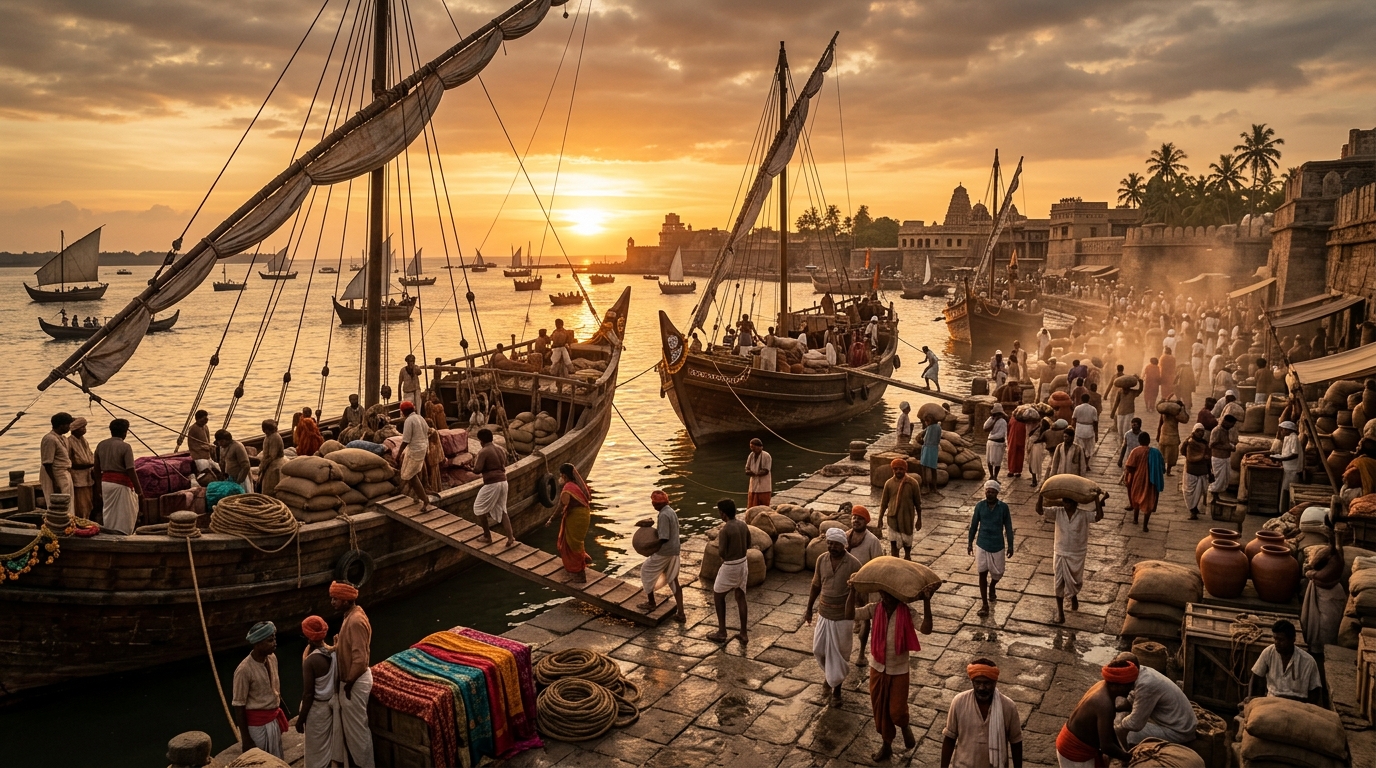
The historic trade routes of India formed a massive network of maritime and overland paths connecting the subcontinent to Rome, the Middle East, and Southeast Asia. From the ancient Indus Valley ports to the Silk Road and the Indian Ocean spice trade, these routes shaped global commerce for thousands of years.
Key Takeaways
- India controlled the global spice trade long before European ships arrived.
- The discovery of monsoon wind patterns revolutionized Indian Ocean maritime commerce.
- Overland routes connected northern Indian empires directly to the famous Silk Road.
- Control over these routes shifted from indigenous empires to European colonial powers.
Many people believe India was a closed-off, self-sustaining subcontinent before European colonization. In reality, India was the beating heart of global maritime and overland commerce for millennia. The historic trade routes India managed ferried spices, textiles, and precious stones to the far reaches of the Roman Empire, the Middle East, and Southeast Asia. We see the legacy of these networks in ancient port ruins, sunken shipwrecks, and foreign coins buried in Indian soil. Understanding this timeline explains how the subcontinent shaped the early global economy.
The Indus Valley and Early Overland Connections
Ancient Indian trade began around 3300 BCE with the Indus Valley Civilization. Merchants established early overland and coastal routes to exchange copper, timber, and semi-precious stones with Mesopotamia. These initial connections laid the groundwork for thousands of years of international commerce across the ancient world.
Lothal and the First Maritime Links
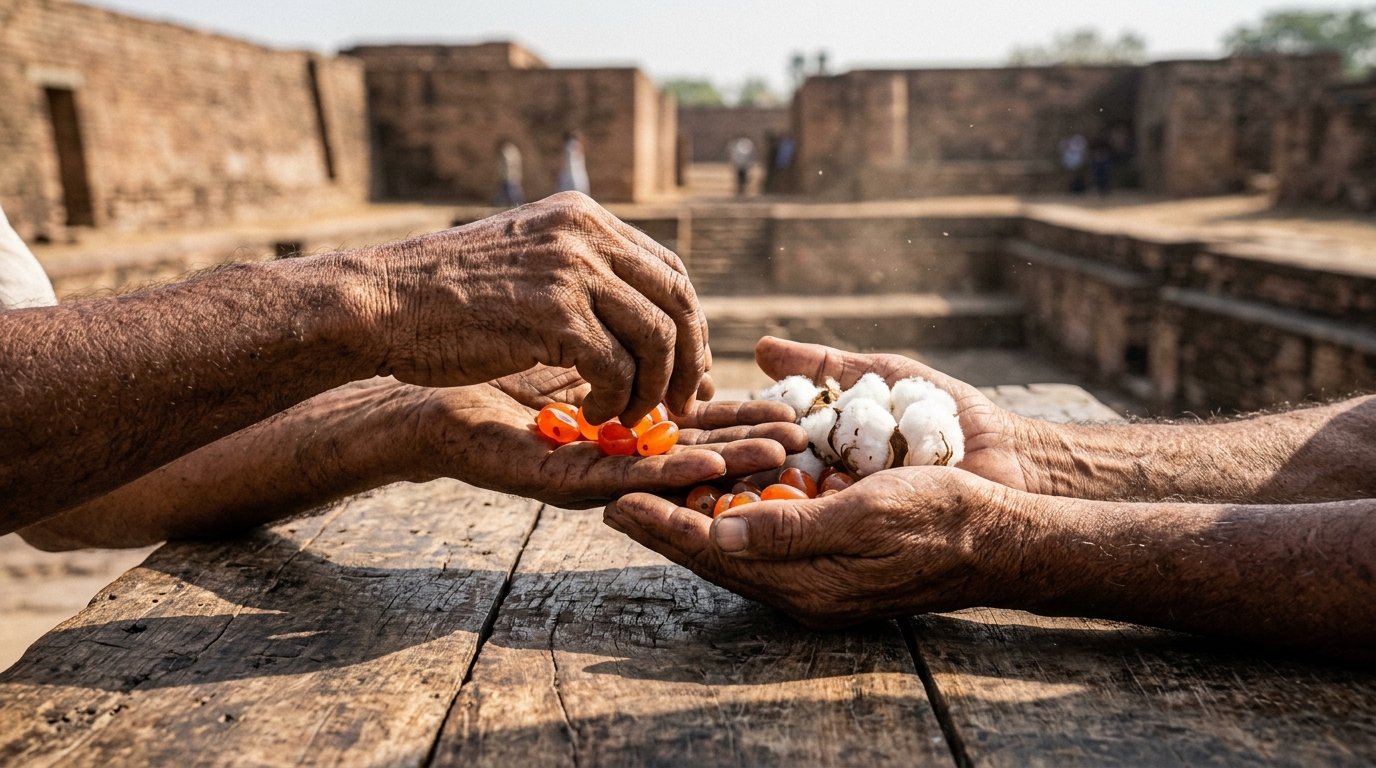
The city of Lothal featured one of the world's earliest known dry docks. Indus merchants used it to launch ships carrying cotton and carnelian beads. They sailed along the Arabian Sea coast toward the Persian Gulf. This was not casual bartering. It was a structured, heavily regulated export economy. Standardized weights and measures found at Indus sites prove these merchants ran sophisticated operations.
Mesopotamian Trade Records
We know these trades happened because the buyers kept receipts. Clay tablets from ancient Sumeria reference a land called "Meluhha." Historians widely identify this as the Indus Valley. The Sumerians imported lapis lazuli, gold, and ivory from Meluhhan traders. These early exchanges prove that Indian goods held high value in foreign markets over five thousand years ago. The demand for these luxury items pushed merchants to build better ships and chart longer routes.
How Did the Silk Road Impact the Subcontinent?
The Silk Road connected China to Europe, but India served as a crucial southern hub. Northern Indian empires controlled key mountain passes, allowing them to tax passing caravans and export their own goods. This connection flooded the subcontinent with foreign gold, new technologies, and diverse cultural influences.
The Kushan Empire's Strategic Hold
During the first century CE, the Kushan Empire dominated northern India and Central Asia. They sat directly astride the major arteries of the Silk Road. By securing these routes, the Kushans controlled a massive flow of goods between the Roman Empire and Han China. They minted gold coins using Roman bullion. This shows the immense wealth generated by their geographical advantage. The Kushans also exported Indian spices, cotton, and sugar along these northern trails.
Spices for Roman Gold
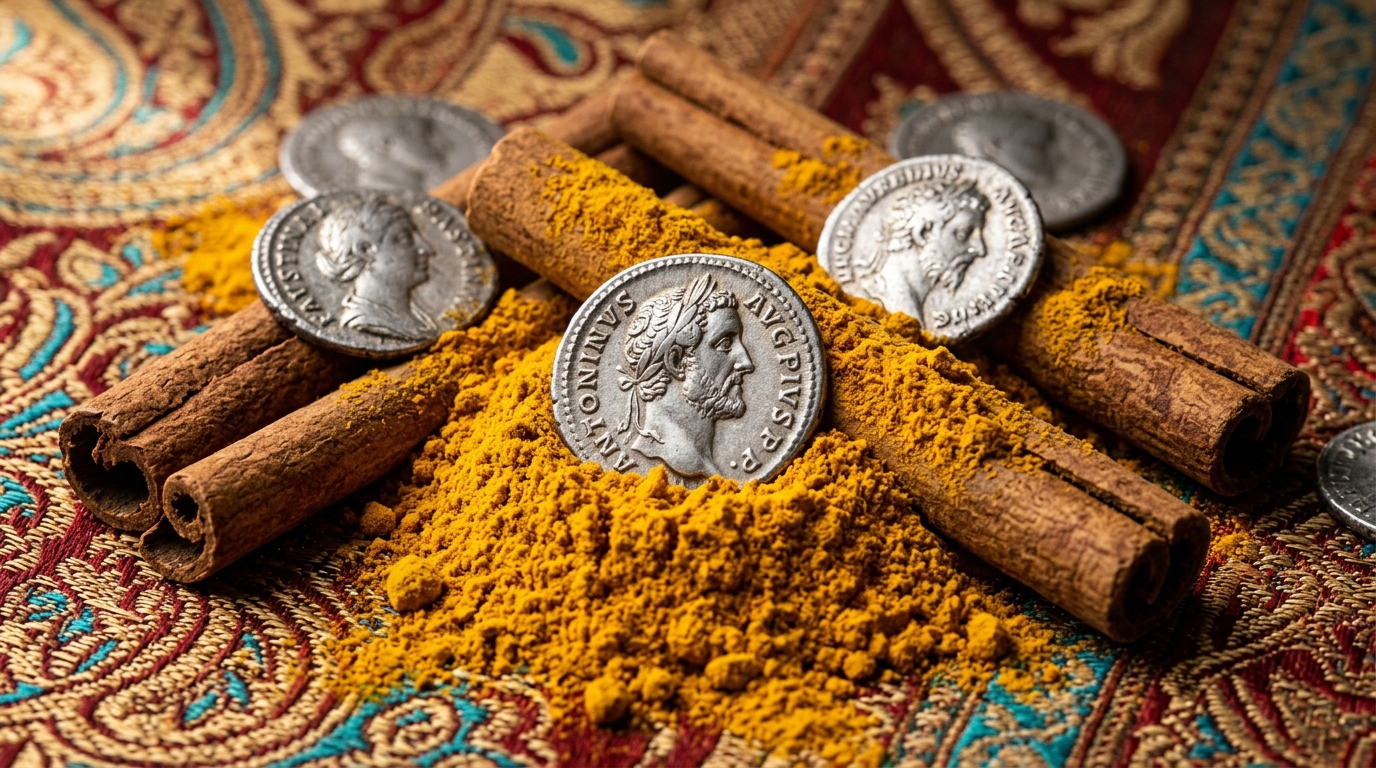
Roman historian Pliny the Elder famously complained about the empire's wealth draining into India. He was not exaggerating. Roman elites demanded Indian black pepper, pearls, and fine textiles. In exchange, Indian merchants demanded gold and silver. Archaeologists have unearthed massive hoards of Roman coins across southern India. This confirms a massive trade imbalance in India's favor. The scale of this wealth transfer shaped the economies of both regions for centuries.
Historic Trade Routes India: The Golden Age of Maritime Commerce
Between the 1st and 11th centuries, the Indian Ocean became the world's busiest maritime highway. Indian sailors mastered seasonal weather patterns to navigate open waters, transforming coastal shipping into trans-oceanic commerce. Southern Indian empires built massive navies to protect and expand these lucrative trade networks.
The Monsoon Winds Discovery
For centuries, ships hugged the coastlines to avoid getting lost at sea. That changed when sailors mapped the monsoon winds. The southwest monsoon blew ships from Africa and Arabia straight to India's west coast in the summer. The northeast monsoon blew them back in the winter. This natural conveyor belt drastically cut travel times. It allowed merchants to carry heavier cargo loads across the Arabian Sea and the Bay of Bengal. Trade volumes exploded once merchants trusted the winds.
Chola Naval Dominance
Under Rajendra Chola I in the 11th century, the Chola dynasty turned the Bay of Bengal into a Chola lake. They recognized that whoever controlled the sea routes controlled the wealth. The Chola navy launched expeditions into Southeast Asia to secure the Malacca Strait. This choke point was vital for the spice trade flowing from Indonesia to India and onward to the Middle East. By dominating this region, the Cholas dictated the terms of global maritime trade.
Major Trade Hubs and Their Export Commodities
Different regions of the subcontinent specialized in specific goods that drove the global economy. Southern ports focused on spices and gems, while northern and western hubs exported textiles and manufactured goods. Understanding these regional specialties helps map the vast historic trade routes of India.
Regional Trade Centers
The subcontinent operated as a network of highly specialized manufacturing and agricultural zones. The Malabar Coast stood as the undisputed center of the global pepper trade. Foreign merchants flocked to ports like Muziris and Calicut specifically for this black gold. Further north, Gujarat became famous for its cotton textiles. These fabrics served as actual currency in Southeast Asian spice markets.
On the eastern seaboard, the Coromandel Coast was renowned for dyed fabrics and pearls. Bengal served as the primary source of fine muslin cloth, silk, and later, opium and indigo. The wealth generated by these hubs funded the construction of massive temples and supported powerful standing armies.
| Region | Primary Exports | Key Trading Partners | Peak Historical Era |
|---|---|---|---|
| Malabar Coast | Black pepper, cardamom, cinnamon | Roman Empire, Arab states, Portugal | 1st Century CE – 16th Century CE |
| Gujarat | Cotton textiles, indigo, carnelian | East Africa, Persian Gulf, Southeast Asia | 11th Century CE – 17th Century CE |
| Coromandel Coast | Pearls, dyed cotton (chintz) | Southeast Asia, Roman Empire | 3rd Century BCE – 18th Century CE |
| Bengal | Muslin, silk, saltpeter, jute | China, Central Asia, Great Britain | 16th Century CE – 19th Century CE |
What Drew the Europeans to Indian Shores?
European powers sought a direct sea route to India to bypass the Ottoman Empire's monopoly on the overland spice trade. When Portuguese explorers finally rounded the Cape of Good Hope, they triggered a brutal race to control Indian Ocean commerce. This shift permanently altered the global balance of power.
Vasco da Gama's Arrival
In 1498, Vasco da Gama landed in Calicut on the Malabar Coast. He brought cheap goods that failed to impress the local ruler, the Zamorin. However, his return to Portugal with a cargo of pepper proved that a direct sea route was possible. This single voyage shattered the Arab and Venetian grip on the spice trade. It launched the Portuguese Era in Goa: Key Dates and Architectural Milestones. This established a permanent European foothold on the subcontinent. The date of his arrival remains one of the 10 Most Searched Dates in Indian History and Why They Matter.
The Shift from Arab to European Control
Before the Portuguese arrived, the Indian Ocean operated as a relatively free trade zone. Arab, Indian, and Chinese merchants shipped goods without heavily armed escorts. The Portuguese introduced naval artillery to these waters. They demanded that all merchant ships purchase a cartaz, or safe-conduct pass. If a ship lacked this pass, the Portuguese confiscated its cargo and sank the vessel. This militarization forced local merchants to adapt to a violent new reality. It marked the beginning of European maritime supremacy in Asia.
The Colonial Era and Modern Economic Shifts
The arrival of the British East India Company shifted India from an exporter of finished luxury goods to a supplier of raw materials. The historic trade routes of India were reconfigured to serve European industrial needs. This period dismantled traditional Indian industries while integrating the subcontinent into modern global capitalism.
The East India Company Monopoly
By the 18th century, the British East India Company dominated the subcontinent's trade. They built fortified trading posts in Madras, Bombay, and Calcutta. Instead of paying for Indian textiles with silver, the Company used tax revenues extracted from Indian peasants to buy Indian goods. This extractive model hollowed out the local economy. The transition from a global manufacturing hub to a colonized market is a defining chapter in the Economic Milestones in Indian History: From 1947 to Present.
The Transition to Modern Commerce
The opening of the Suez Canal in 1869 slashed the travel time between Britain and India. Steamships replaced sailing vessels, and railways connected India's interior to its major ports. The old overland caravan routes faded into obscurity. While these modern networks facilitated massive export volumes of cotton, tea, and indigo, they primarily enriched the British Empire. This infrastructure eventually became the foundation for independent India's modern economy. You can trace this evolution further in our India's maritime history timeline.
Related Reading
- Historic Dates in Modern India: From Independence to the 21st Century
- India at the Olympics: A Timeline of Historic Sporting Milestones
- The 1971 India-Pakistan War: Key Dates and Historical Summary
- Timeline of Mahatma Gandhi's Nonviolent Movements in India
FAQ
Q: What was the most valuable commodity exported from ancient India? Black pepper was highly prized, especially by the Roman Empire, where it was often worth its weight in gold. Other highly valuable exports included fine cotton textiles, indigo, and diamonds.
Q: How did the monsoon winds affect Indian Ocean trade? The monsoon winds provided a predictable, seasonal propulsion system for sailing ships. Merchants could sail from the Middle East to India in the summer and return in the winter, making trans-oceanic trade faster and safer.
Q: Did India trade with the Roman Empire? Yes, India had an extensive trade relationship with the Roman Empire. Roman elites imported massive quantities of Indian spices, gems, and textiles, paying for them with gold and silver coins.
Q: Why did European powers want direct sea routes to India? European nations wanted to bypass the Ottoman Empire and Venetian merchants, who controlled the overland spice trade and charged huge markups. A direct sea route allowed them to buy spices directly at the source.
Further reading
- The Ocean of Churn by Sanjeev Sanyal – Explores the history of the Indian Ocean and the maritime trade routes that shaped the region.
- The Silk Roads by Peter Frankopan – Provides a broader global context on how overland trade networks influenced empires, including those in northern India.
- India and the Indian Ocean World by Ashin Das Gupta – A deep dive into the merchant networks and economic systems of pre-colonial Indian maritime trade.