A Timeline of India's Internal Security and Paramilitary Formations
In Short
India's internal security architecture evolved from colonial-era militias into a specialized network of Central Armed Police Forces. This timeline tracks the foundational dates of organizations like the Assam Rifles, CRPF, and BSF, showing how border conflicts and domestic challenges shaped Indian national security history over two centuries.
Key Takeaways
- The Assam Rifles stands as the oldest paramilitary force, established in 1835.
- Border conflicts in 1962 and 1965 directly led to the ITBP and BSF formations.
- Internal crises during the 1980s prompted the creation of elite units like the NSG.
- Modern security relies on specialized forces protecting industrial assets and extensive maritime borders.
India shares exactly 15,106.7 kilometers of land border with seven countries, a geographical reality that dictates its entire defense posture. Managing this vast perimeter while maintaining domestic peace requires a massive, coordinated effort. The study of Indian national security history reveals that this coordination did not happen overnight. Instead, the country built its security apparatus piece by piece, responding to specific crises, wars, and internal rebellions. From guarding the high-altitude passes of the Himalayas to securing critical industrial installations, the evolution of these forces tells the story of a young republic learning to protect itself. Readers exploring this daily history archive often ask how these diverse forces fit together. This timeline breaks down the chronological development of India's paramilitary and internal security organizations, detailing the specific events that forced their creation.
How did India's internal security forces originate before independence?
The earliest internal security forces originated as colonial militias designed to protect British commercial interests and maintain local order. These units laid the essential groundwork for modern central policing, establishing command structures and operational tactics that the independent Indian republic later adapted for its own national defense needs.
The legacy of the Assam Rifles (1835)
Originally formed as the Cachar Levy, the Assam Rifles is the oldest paramilitary force in India. British authorities created this unit primarily to protect tea estates and settlements against raids by tribal groups in the northeastern frontier. Over the decades, the force underwent several name changes, becoming the Assam Frontier Police, the Assam Military Police, and finally the Assam Rifles in 1917. The force proved its utility during both World Wars, fighting alongside British Indian army units in various theaters. Today, the Assam Rifles operates under the dual control of the Ministry of Home Affairs and the Indian Army. This unique administrative arrangement allows the force to conduct counter-insurgency operations while also guarding the porous Indo-Myanmar border. The historical continuity of the Assam Rifles highlights a core theme in Indian national security history: the adaptation of colonial institutions to serve modern democratic needs.
The formation of the Crown Representative's Police (1939)
As political unrest grew in the years leading up to independence, the British administration realized the need for a dedicated armed police force. In 1939, they established the Crown Representative's Police to assist princely states in maintaining law and order. This force played a crucial role in managing the turbulent political climate of the 1940s. Following independence, the Indian government recognized the value of a central armed police force that could deploy across state lines to assist local authorities. In 1949, the government enacted the CRPF Act, renaming the unit the Central Reserve Police Force (CRPF). The CRPF quickly became the primary force for managing internal security, tackling riots, and conducting counter-insurgency operations across the nation. Its transition from a tool of colonial control to a pillar of democratic security marks a significant milestone in the country's institutional development.
Why did the 1965 war trigger a massive shift in border security?
The 1965 war exposed the severe limitations of relying on fragmented state armed police units to guard international borders. This realization forced the Indian government to create a unified, specialized central force capable of maintaining a constant, professional presence along the sensitive frontiers with Pakistan.
The vulnerabilities of state armed police
Before 1965, individual state governments managed the security of India's international borders. State armed police battalions patrolled the boundaries, operating with varying levels of training, equipment, and coordination. This decentralized approach created significant vulnerabilities. When Pakistani forces launched incursions into the Rann of Kutch in early 1965, the local state police struggled to mount an effective defense. The lack of a unified command structure delayed the response and complicated communication with the regular army. This structural failure demonstrated that border security required a national strategy, not a patchwork of state-level efforts. Historically, divided defenses have often invited trouble; just as fragmented kingdoms failed to stop early invasions detailed in the April 21, 1526: A Historical Timeline of the First Battle of Panipat, fragmented border patrols failed to secure the modern republic.
The birth of the Border Security Force (1965)
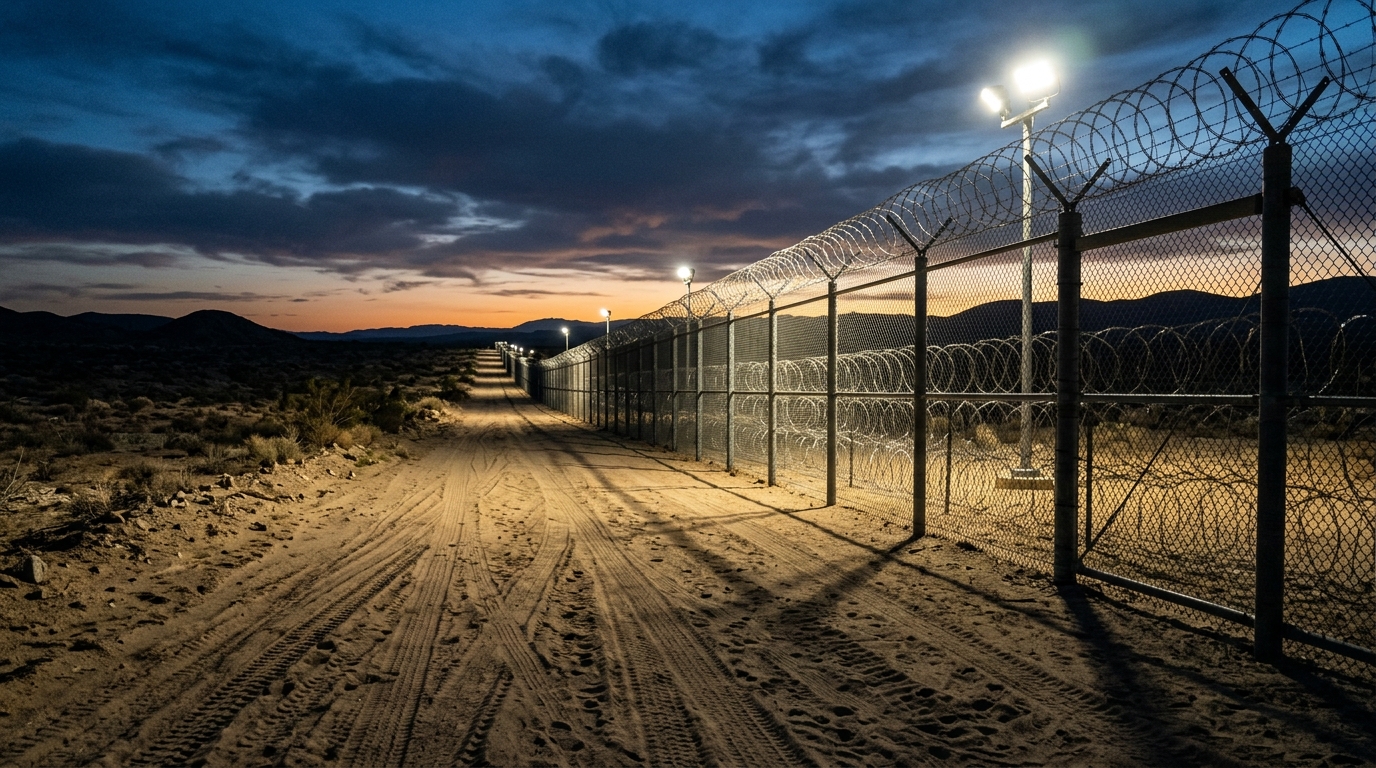
In the immediate aftermath of the 1965 war, the Indian government established the Border Security Force (BSF) on December 1, 1965. K.F. Rustamji, a distinguished police officer, served as the force's first Director General and shaped its operational ethos. The BSF received a clear mandate: secure the borders during peacetime and prevent transnational crime. Unlike the regular army, which prepares for full-scale war, the BSF handles the daily friction of border management. The force quickly expanded its capabilities, developing specialized water wings, air wings, and artillery units. Over the years, the BSF has played vital roles in conflicts, including the 1971 war, and in managing internal security challenges. The creation of the BSF represents a defining moment in Indian national security history, establishing the template for specialized border guarding forces.
What forced the rapid expansion of specialized forces in the 1960s?
The 1962 Sino-Indian War exposed critical gaps in high-altitude defense and intelligence gathering. In response, the government rapidly established specialized units like the ITBP and SSB to secure the Himalayan frontiers, build local resilience, and prevent future territorial surprises along the northern borders.
Securing the Himalayas with the ITBP (1962)
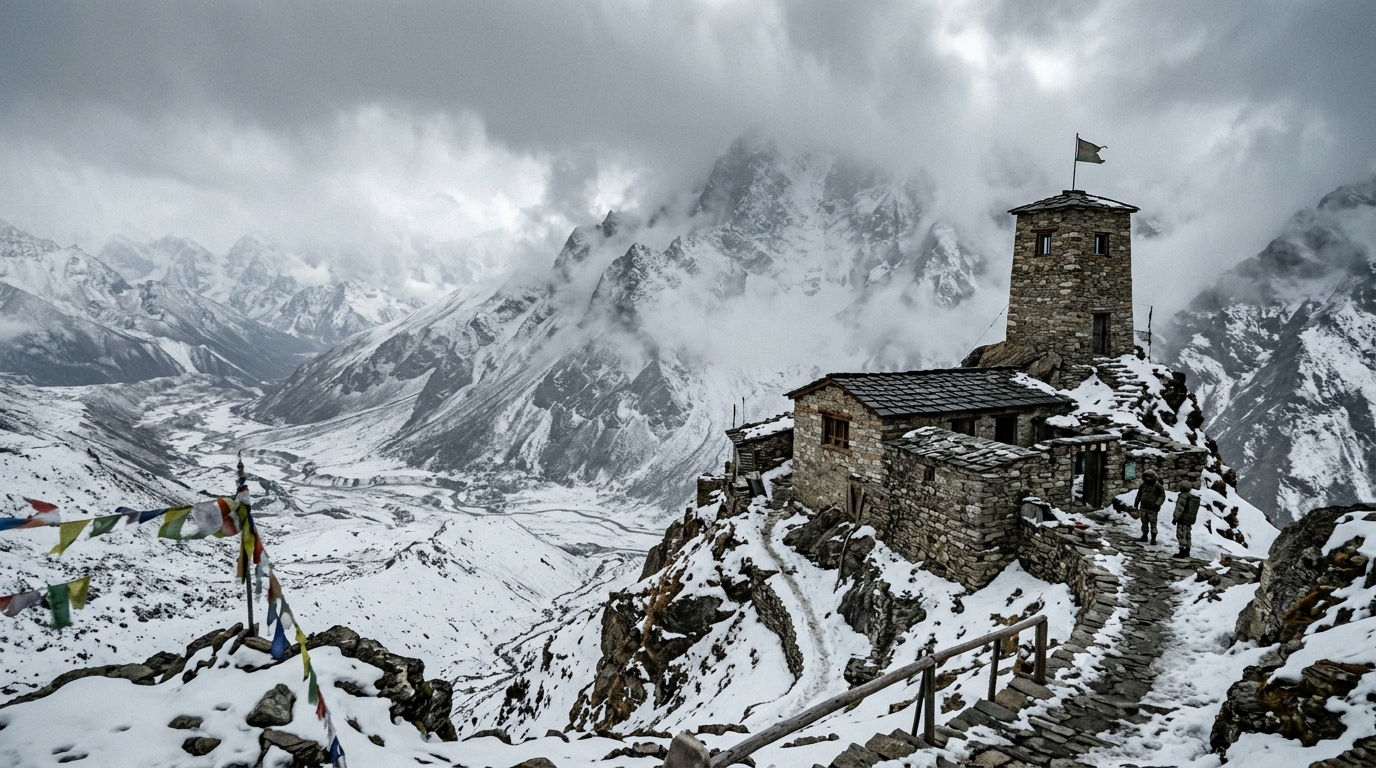
The brief but intense border war with China in October 1962 caught the Indian security apparatus off guard. The conflict highlighted the extreme difficulties of operating in the harsh, high-altitude terrain of the Himalayas. On October 24, 1962, just days into the conflict, the government raised the Indo-Tibetan Border Police (ITBP). The ITBP specifically recruits and trains personnel for mountain warfare, avalanche rescue, and high-altitude survival. These troops patrol some of the most unforgiving terrain on earth, maintaining outposts at elevations exceeding 18,000 feet. The ITBP's specialized focus ensures that India maintains a continuous, professional presence along the Line of Actual Control. This development shifted the paradigm of border defense, recognizing that specific terrains require specifically trained forces.
The strategic role of the Sashastra Seema Bal (1963)
Following the 1962 war, intelligence agencies realized that conventional military defense was insufficient without the support of local border populations. In 1963, the government created the Special Service Bureau, later renamed the Sashastra Seema Bal (SSB). Originally, the SSB operated as a covert organization designed to build national resilience among border communities and organize resistance in the event of an occupation. The force focused on civic action programs, intelligence gathering, and training local volunteers. In 2001, the government shifted the SSB's mandate, assigning it the responsibility of guarding the open borders with Nepal and Bhutan. This transition from a covert intelligence organization to a uniformed border guarding force illustrates the dynamic nature of Indian national security history.
How do elite counter-terror units fit into Indian national security history?
The rise of domestic militancy and high-profile assassinations in the 1980s exposed the need for surgical strike capabilities. The government responded by creating elite, highly trained units like the NSG and SPG to handle hostage situations, counter-terrorism operations, and the protection of top political leaders.
The creation of the National Security Guard (1984)
The early 1980s brought unprecedented internal security challenges, culminating in the assassination of Prime Minister Indira Gandhi and rising militancy in Punjab. Regular police and paramilitary forces lacked the specialized training required for precise, high-stakes counter-terrorism operations. In 1984, the government established the National Security Guard (NSG) to fill this gap. Modeled on elite international units like the British SAS and Germany's GSG 9, the NSG operates as a federal contingency deployment force. The force consists of two main components: the Special Action Group, drawn from the Indian Army, and the Special Ranger Group, drawn from central police organizations. The NSG gained widespread public recognition during the 2008 Mumbai attacks, where they neutralized the terrorists and secured critical locations. The events of the 1980s, much like the industrial disaster outlined in December 1984: A Historical Timeline of the Bhopal Gas Tragedy, forced the government to rethink its disaster and crisis response frameworks entirely.
The establishment of the Special Protection Group (1988)
The assassination of Indira Gandhi in 1984 revealed severe flaws in the security protocols for the Prime Minister. Prior to this event, the Delhi Police managed the Prime Minister's security. Following the Birbal Nath Committee's recommendations, the government created the Special Protection Group (SPG) in 1985, formalizing it with an Act of Parliament in 1988. The SPG provides proximate security to the Prime Minister of India and their immediate family members. The force operates with an uncompromising focus on zero-error security, utilizing advanced intelligence, specialized vehicles, and rigorous close-combat training. The creation of the SPG removed executive protection from the purview of local police, establishing a dedicated, highly professional agency.
Why did industrial and coastal security become distinct priorities?
As India's economy grew, state-owned enterprises, airports, and extensive coastlines became vulnerable to sabotage and smuggling. The government created the CISF and the Indian Coast Guard to provide dedicated protection for these critical economic assets and maritime boundaries, separating these duties from conventional policing.
Protecting infrastructure with the CISF (1969)
In the decades following independence, India invested heavily in public sector undertakings, building steel plants, oil refineries, and power stations. These massive industrial assets required specialized protection against theft, sabotage, and labor unrest. In 1969, the government established the Central Industrial Security Force (CISF). Initially a small force, the CISF has grown into one of the largest industrial security forces in the world. Today, the CISF secures critical infrastructure, including nuclear installations, space facilities, and major airports. Following the 1999 hijacking of Indian Airlines Flight 814, the government handed over airport security to the CISF, fundamentally changing the passenger experience. The force also offers consulting services to private sector entities, reflecting its deep expertise in asset protection.
Securing the maritime borders with the Coast Guard (1978)
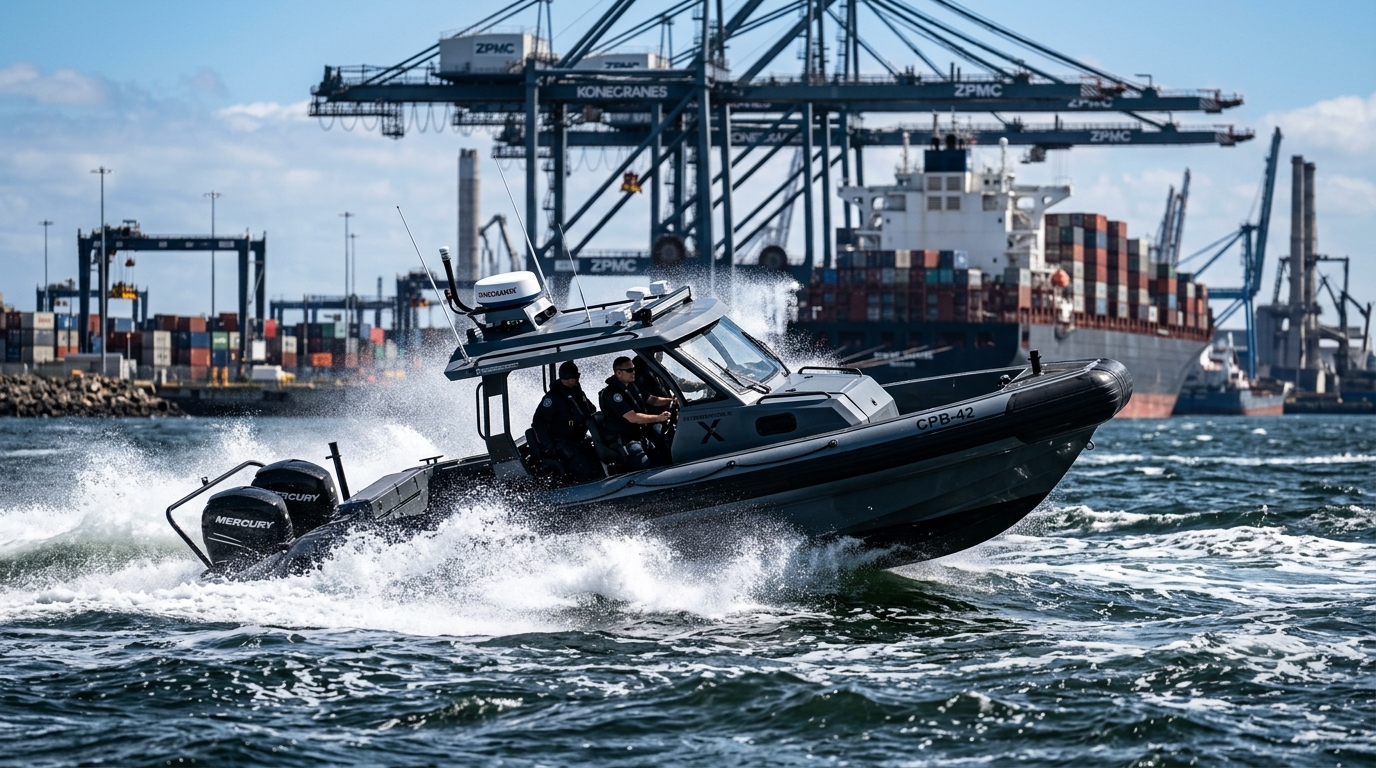
India's extensive coastline of over 7,500 kilometers presents unique security challenges, from smuggling and illegal fishing to maritime terrorism. Before the late 1970s, the Indian Navy handled coastal security, which distracted from its primary role of deep-water naval warfare. The Rustamji Committee recommended the creation of a specialized maritime force. On August 18, 1978, the Indian Coast Guard was formally established. The Coast Guard operates under the Ministry of Defence and enforces maritime law within India's territorial waters and exclusive economic zone. The force conducts search and rescue operations, protects marine environments, and works closely with coastal police and the Navy. The establishment of the Coast Guard allowed the Indian Navy to focus on strategic defense, optimizing the country's overall maritime security posture.
How have internal security doctrines adapted to modern insurgencies?
The persistence of armed insurgencies and sudden outbreaks of severe riot situations required forces capable of sustained operations in civilian areas. The military and police adapted by creating the Rashtriya Rifles and the Rapid Action Force, specialized units designed to handle prolonged internal conflicts without exhausting conventional troops.
The Rashtriya Rifles and counter-insurgency (1990)
By the late 1980s, the Indian Army found itself heavily committed to counter-insurgency operations in Jammu and Kashmir, as well as the Northeast. Using regular army units for prolonged internal security duties degraded their conventional war-fighting capabilities. To address this, the government sanctioned the creation of the Rashtriya Rifles (RR) in 1990. The RR is a specialized counter-insurgency force composed of regular army personnel on deputation. The force operates exclusively in Jammu and Kashmir, maintaining a permanent grid of bases that allows for deep area domination and continuous pressure on militant groups. The RR's structure allows the regular army to focus on external threats while maintaining a highly effective counter-insurgency posture. Readers tracking the 25 Historic Indian Events from 2000 to 2025: A Timeline will note that the RR has been central to managing the region's security dynamics over the last two decades.
The deployment of the Rapid Action Force (1992)
Communal riots and large-scale public disorder present complex challenges for local police forces, who often lack the numbers and specific riot-control training needed to restore peace quickly. In 1992, the government created the Rapid Action Force (RAF) as a specialized wing of the CRPF. The RAF is designed to respond instantly to communal violence and riot situations. The force uses distinct blue camouflage uniforms, which serve both a practical and psychological purpose, signaling the arrival of a neutral, highly trained central force. The RAF focuses on zero-lethality crowd control techniques, using tear gas, water cannons, and specialized riot gear. Their rapid deployment capability helps local administrations contain violence before it spreads, illustrating a tactical shift toward specialized riot management in Indian national security history.
Related Reading
- Milestones in Indian Women's History: A Chronological Guide
- 1,000 Years of Indian Medical History: A Chronological Guide
- Economic Milestones in Indian History: From 1947 to Present
- What Are the Major Events in Indian History? (FAQ Archive)
FAQ
Q: What is the difference between CAPFs and Paramilitary forces in India? Central Armed Police Forces (CAPFs) operate under the Ministry of Home Affairs and include the CRPF, BSF, ITBP, CISF, and SSB. True paramilitary forces, like the Assam Rifles and Indian Coast Guard, operate with military command structures and work closely with the Ministry of Defence.
Q: Which is the largest internal security force in India? The Central Reserve Police Force (CRPF) is the largest internal security force in India. It maintains hundreds of battalions dedicated to counter-insurgency, riot control, and general law and order duties across the country.
Q: How does India secure its borders with Nepal and Bhutan? The Sashastra Seema Bal (SSB) manages the open borders with Nepal and Bhutan. Because these borders allow for free movement of citizens, the SSB focuses on preventing smuggling, human trafficking, and anti-national activities rather than military defense.
Q: When was the National Security Guard (NSG) formed? The NSG was formed in 1984 following rising militancy and internal security crises. It serves as a federal contingency force designed specifically for complex counter-terrorism and anti-hijacking operations.
Further reading
- India's Special Forces: History and Future of Special Forces by P.C. Katoch and Saikat Datta — Explores the tactical evolution of India's elite military and police units.
- The BSF: Its Ethos and Origins — A deep dive into K.F. Rustamji's foundational work in organizing border security.
- A History of the Kargil War — A detailed timeline of the 1999 conflict that prompted major modern defense reforms.