A Timeline of Diplomatic and Trade Relations Between India and China
Bottom Line
The India China history timeline spans decades of complex diplomatic shifts, defined by an ongoing tension between territorial disputes and massive economic interdependence. Bilateral trade reached a record $155.62 billion in 2025 despite geopolitical friction. Both nations continually adapt their foreign investment rules and border policies to balance national security with industrial growth.
Key Takeaways
- Economic dependence persists alongside border disputes, pushing 2025 bilateral trade past $155 billion.
- The 1954 Panchsheel Agreement established initial diplomatic norms before the pivotal 1962 conflict.
- India relies heavily on Chinese active pharmaceutical ingredients and critical electronic components.
- Recent 2026 policies eased foreign direct investment rules to boost Indian manufacturing capacity.
- Cross-border trade routes reopened in August 2026 after a six-year diplomatic suspension.
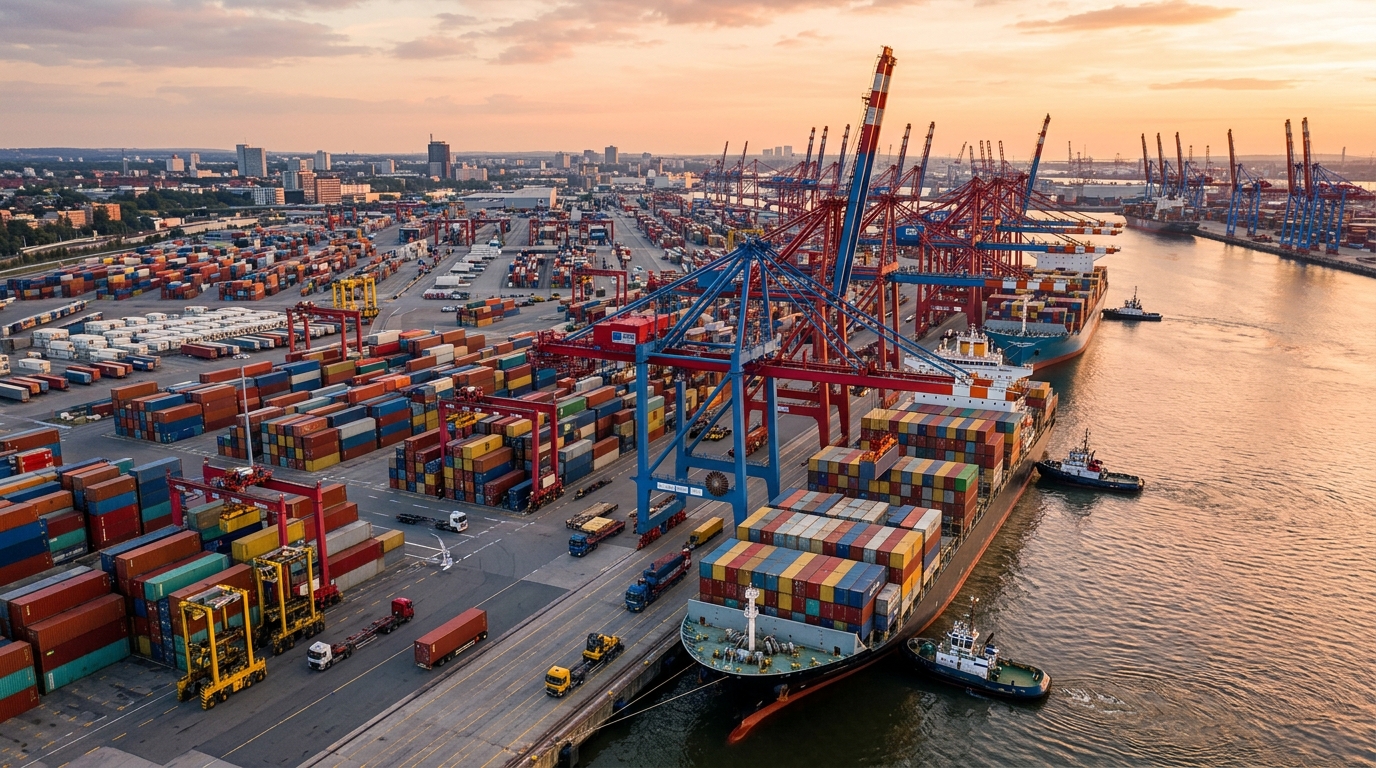
Cargo ships dock daily at Jawaharlal Nehru Port in Mumbai, unloading thousands of steel containers filled with electronic components, active pharmaceutical ingredients, and industrial machinery from Shenzhen and Shanghai. This physical exchange of goods happens around the clock. It underscores a stark reality in the India China history timeline. The two most populous nations on earth share a 3,488-kilometer unresolved border and a booming economic partnership. State-owned Chinese shipping carrier Sinolines is actively expanding its presence on India's east coast right now. They utilize Indian ports as a strategic gateway to reach markets in the Middle East and Africa [The Loadstar, 2026]. This daily movement of physical cargo reveals a relationship where economic necessity often overrides diplomatic friction. You can trace this specific dynamic back through decades of treaties, military conflicts, and pragmatic trade agreements. The physical supply chain tells a story that official diplomatic statements often obscure.

How did the early India China history timeline shape modern diplomacy?
The early India China history timeline established the dual themes of cooperation and conflict that define current relations. The 1954 Panchsheel Agreement created a framework for peaceful coexistence. The 1962 Sino-Indian War shattered that trust, leaving a legacy of militarized borders that still dictates bilateral policy today.
The 1954 Panchsheel Agreement
India became the first non-communist country in Asia to establish diplomatic relations with the People's Republic of China in April 1950. The initial years focused on building solidarity among newly independent Asian nations. Prime Minister Jawaharlal Nehru and Premier Zhou Enlai signed the Panchsheel Agreement in April 1954. This treaty outlined five principles of peaceful coexistence, including mutual respect for territorial integrity and non-interference in internal affairs. The agreement formally recognized Chinese sovereignty over Tibet while attempting to secure peace along the Himalayan frontier. It represented a high point in diplomatic optimism. The phrase "Hindi-Chini bhai-bhai" became a popular slogan during diplomatic visits in this era.
This diplomatic warmth proved short-lived. Divergent interpretations of the McMahon Line and the Johnson Line created quiet friction. India published new official maps in 1954 that clearly defined its northern boundaries. Chinese officials maintained that the borders were historically un-demarcated and required renegotiation. The Dalai Lama fled to India in 1959 following an uprising in Tibet. India granted him asylum, which deeply strained relations with Beijing. This sequence of events transformed a period of diplomatic cooperation into an era of deep suspicion.
The 1962 Border Conflict
The unresolved territorial claims erupted into open conflict in October 1962. Chinese forces advanced into the Aksai Chin region and the North-East Frontier Agency. The month-long war ended with a unilateral ceasefire declared by China in November. The conflict resulted in a decisive military defeat for India and a profound shift in its strategic outlook. Diplomatic relations were downgraded to the chargé d'affaires level for more than a decade. The war established the Line of Actual Control as the de facto border.
The legacy of 1962 fundamentally altered the Economic Milestones in Indian History: From 1947 to Present. Defense spending spiked immediately. Self-reliance became a central pillar of Indian industrial policy. Trade between the two nations practically ceased for years following the war. Both countries focused their diplomatic energies inward or toward Cold War alliances. The trauma of the conflict created a lasting trust deficit that still colors diplomatic interactions. Any modern discussion of border infrastructure or troop deployments inevitably references this historical baseline.
When did economic ties begin to dominate the bilateral relationship?
Economic ties began dominating the relationship in the late 1980s and accelerated rapidly through the 2000s. Prime Minister Rajiv Gandhi's 1988 visit to Beijing uncoupled trade from the border dispute. This policy shift allowed bilateral commerce to flourish even as territorial disagreements remained entirely unresolved.
The 1988 Diplomatic Thaw
Prime Minister Rajiv Gandhi visited Beijing in December 1988. This trip marked the first visit by an Indian premier in 34 years. It served as a massive turning point in the India China history timeline. Both nations agreed to establish a joint working group to address the border issue. More importantly, they decided to develop relations in other fields simultaneously. This decoupling strategy meant trade and cultural exchanges would no longer be held hostage by the border disputes. The two governments signed multiple agreements covering science, technology, and civil aviation. This pragmatic approach laid the groundwork for the massive economic integration that followed.
The immediate economic impact of the 1988 visit was modest but symbolic. Official bilateral trade hovered around $250 million in the early 1990s. The real value was structural. Both nations began liberalizing their economies shortly after. India launched its major economic reforms in 1991, opening its markets to foreign goods and capital. China had already begun similar reforms under Deng Xiaoping a decade earlier. The alignment of these domestic economic policies created a fertile environment for cross-border commerce. Business delegations slowly replaced military commanders as the primary point of contact. The 1993 Agreement on the Maintenance of Peace and Tranquility further stabilized the border to allow for trade expansion.
The 2000s Trade Explosion
The turn of the millennium witnessed unprecedented growth in Sino-Indian trade. Bilateral trade volume crossed the $1 billion mark in 2000 for the first time. China joined the World Trade Organization in 2001, cementing its role as the global manufacturing hub. Indian businesses quickly realized the cost advantages of sourcing raw materials and machinery from Chinese factories. The trade volume surged to $10 billion by 2005. Both governments signed a "Strategic and Cooperative Partnership for Peace and Prosperity" that same year.
This explosive growth created a complementary but unequal economic dynamic. India exported primary commodities like iron ore, cotton, and copper to fuel China's infrastructure boom. China exported manufactured goods, electronics, and heavy machinery to India. This pattern firmly established China as India's largest trading partner by 2008. The rapid expansion of commerce occurred alongside steady but slow border negotiations. The two countries managed to keep the peace along the border throughout this decade. This era proved that the 1988 decoupling strategy was highly effective at generating wealth.
Why does trade volume grow despite geopolitical friction?
Trade volume grows because India relies heavily on Chinese supply chains for its domestic manufacturing sector. Critical industries require Chinese components to function. Bilateral trade reached a record $155.62 billion in 2025 [Times of India, 2026]. This structural dependence makes immediate economic decoupling practically impossible for Indian industries.
Structural Reliance on Chinese Imports
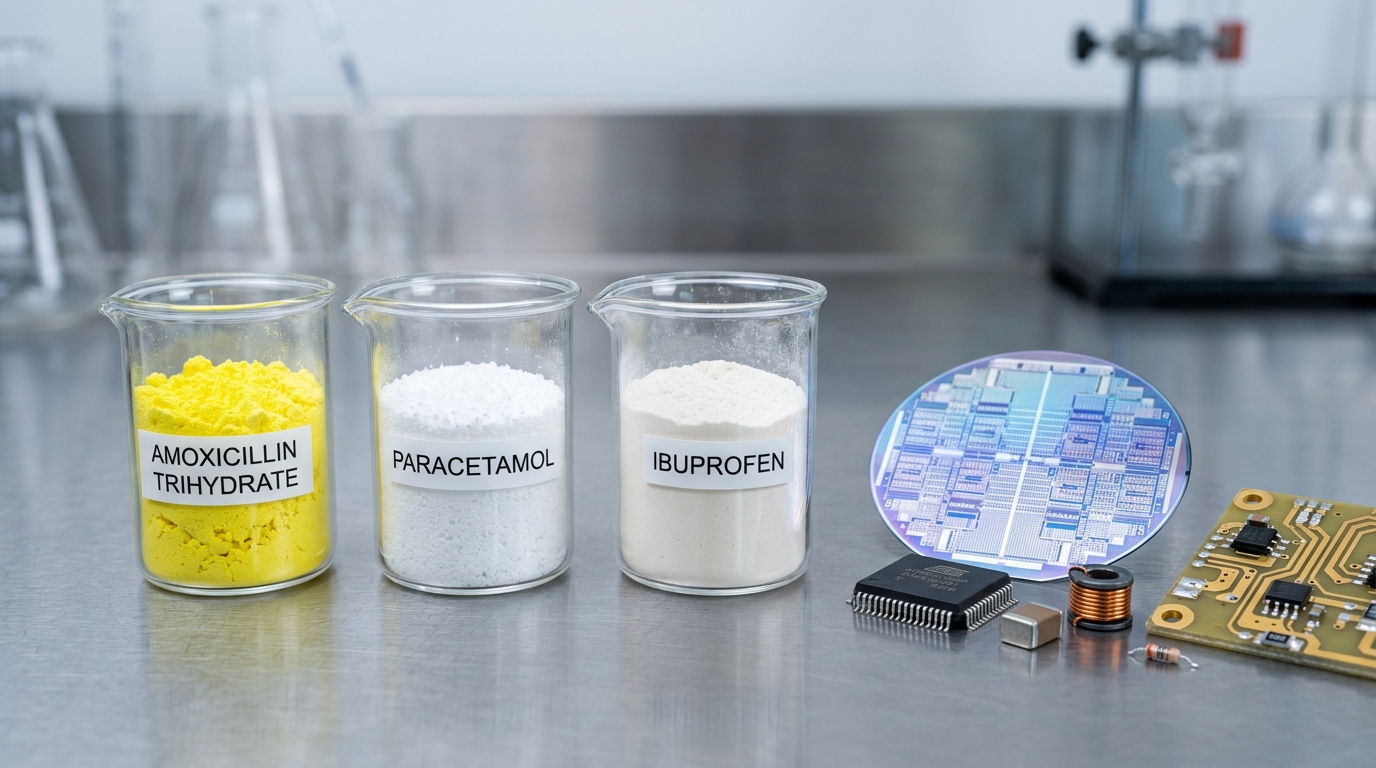
Indian manufacturing operates on a foundation of Chinese inputs. The pharmaceutical industry provides a clear example of this dynamic. India is a global leader in generic drug production, yet it imports the vast majority of its active pharmaceutical ingredients from China. The electronics sector faces a similar reality. Smartphone assembly plants in Noida and Chennai rely on printed circuit boards, lithium-ion cells, and display panels shipped from Shenzhen. This deep integration means any disruption in Chinese imports immediately halts Indian factory lines. Businesses prioritize supply chain stability and cost efficiency over geopolitical considerations.
The data from recent years highlights this persistent trend. In the first half of 2026, bilateral trade rose 23.6% year-on-year to $91.72 billion [Chinese Customs Data, 2026]. India's exports to China also increased by 37.2% to $12.31 billion during this period. This export growth was driven largely by electronics and engineering goods [Chinese Customs Data, 2026]. This data shows Indian manufacturers are finding specific niches within the Chinese market. The overall volume proves that commercial demand easily outpaces diplomatic hesitation. Companies will continue buying from the most reliable, cost-effective source available.
The 2025 Trade Deficit Record
The massive volume of commerce heavily favors Beijing. India's trade deficit with China hit an all-time high of $116.12 billion in 2025 [Times of India, 2026]. This imbalance stems from the nature of the goods exchanged. India imports high-value manufactured items and capital goods. It primarily exports lower-value raw materials and intermediate products. This structural asymmetry causes significant concern among Indian policymakers. The deficit represents capital flowing out of the country to a strategic rival.
Addressing this deficit requires building massive domestic manufacturing capacity. The Indian government launched various Production Linked Incentive schemes to boost local production of electronics and pharmaceuticals. The goal is to substitute Chinese imports with domestically manufactured alternatives. This transition takes years to execute and requires massive capital investment. Apple exported $23 billion worth of iPhones from India in 2025, capturing roughly 25% of global iPhone production [IMARC Engineering, 2026]. This illustrates the practical execution of the "China Plus One" manufacturing shift. The paradox is that scaling these Indian factories currently requires importing more Chinese industrial machinery.
How are recent border tensions impacting the India China history timeline?
Recent border tensions fractured the decades-old strategy of separating trade from territorial disputes. The 2020 clashes forced India to implement strict economic countermeasures against Chinese firms. While physical trade routes recently reopened in 2026, the diplomatic relationship remains highly cautious and tethered to military disengagement progress.
The 2020 Galwan Valley Clash
The bilateral relationship suffered a severe shock in June 2020. Indian and Chinese troops engaged in a fatal hand-to-hand clash in the Galwan Valley. This incident resulted in the first military casualties along the border in 45 years. The confrontation shattered the fragile trust built since the 1988 diplomatic thaw. India immediately changed its strategic posture. The government banned hundreds of Chinese mobile applications, citing national security concerns. It also canceled several infrastructure contracts awarded to Chinese state-owned enterprises.
The diplomatic fallout was swift and severe. S. Jaishankar, India's External Affairs Minister, stated clearly that peace and tranquility in the border areas remain the absolute prerequisite for normalizing ties and addressing the trade balance between the two nations [Reuters, 2026]. This statement officially ended the policy of decoupling trade from border disputes. Military commanders held dozens of talks to negotiate troop disengagement at various friction points. The physical standoff forced both nations to build extensive new infrastructure along the Himalayan frontier. This militarization of the border remains a defining feature of the current era. It echoes themes seen in 25 Historic Indian Events from 2000 to 2025: A Timeline, where sudden crises force immediate policy shifts.
The 2026 Border Trade Resumption
Physical connectivity slowly began to recover after years of suspension. Cross-border trade resumed through Shipki La, Lipulekh Pass, and Nathu La in August 2026 [Hindustan Times, 2026]. This reopening ended a six-year freeze triggered by the 2020 border clashes and the global pandemic. Local economies on both sides of the Himalayas rely heavily on this traditional barter trade. The resumption signals a pragmatic easing of local tensions. Direct flights between India and China also resumed in October 2025 after a five-year gap [The Hindu, 2026].
Diplomatic engagement is also showing signs of cautious normalization. Indian Foreign Secretary Vikram Misri visited Beijing in July 2026 to meet with Chinese officials [The Week, 2026]. He reaffirmed the need for border peace to advance bilateral cooperation. Xu Feihong, Chinese Ambassador to India, noted that the bilateral relationship has moved from a "reset" to a "new level of development," though both sides must actively address the serious trust deficit [The Hindu, 2026]. These engagements represent a slow thaw. High-level strategic disputes remain unresolved, but both sides recognize the need for functional communication channels.
What role does foreign direct investment play in this relationship?
Foreign direct investment acts as a highly regulated lever for economic control. India heavily restricted Chinese capital in 2020 to prevent opportunistic takeovers. In 2026, India eased these rules to attract the specific Chinese investments needed to build domestic manufacturing capacity in critical sectors.
Historical FDI Restrictions
Chinese direct investment in India has historically been remarkably low compared to trade volumes. Chinese foreign direct investment in India from April 2000 to December 2025 totaled just $2.5 billion [Islands Business, 2026]. This makes China only the 23rd-largest investor in the country. The Indian government issued Press Note 3 in April 2020. This required prior government approval for any investments from countries sharing a land border with India. This policy effectively targeted Chinese capital. It aimed to prevent hostile takeovers of Indian companies whose valuations crashed during the pandemic.
The 2020 restrictions starved the Indian startup ecosystem of Chinese venture capital. Major tech companies had relied heavily on funding from giants like Alibaba and Tencent. The approval process for new investments stretched into years. Many Chinese firms routed their investments through third-party jurisdictions like Singapore or Mauritius to bypass regulatory scrutiny. The government eventually caught on and began scrutinizing the beneficial ownership of these holding companies. This regulatory friction forced Indian startups to seek capital from domestic, American, or Middle Eastern investors instead. These new capital flows permanently altered the financial dynamics of the India China history timeline.
The 2026 FDI Rule Easing
Economic realities eventually forced a recalibration of these strict investment rules. India approved Press Note 2 in March 2026 [Islands Business, 2026]. This amendment changed the 2020 restrictions to allow non-controlling stakes of up to 10% in Indian firms from neighboring countries without prior government approval. This policy shift expedites Chinese investments in priority sectors like solar and electronics. The government realized that building a strong domestic supply chain requires Chinese capital and technical expertise. You cannot build a massive solar panel industry without partnering with the companies that dominate the global supply chain.
This targeted easing of rules reflects a highly pragmatic approach. India wants the benefits of Chinese industrial capacity without surrendering strategic control. Joint ventures in electronics manufacturing are now moving forward at a faster pace. The 10% cap ensures Indian promoters retain decision-making power. This careful balancing act defines the modern relationship. India aims to compete with China globally while utilizing Chinese resources locally. It is a complex strategy that requires constant regulatory adjustment to succeed.
How do multilateral forums influence the bilateral relationship?
Multilateral forums provide a neutral space for dialogue when bilateral relations freeze. Both nations utilize organizations like BRICS and the Shanghai Cooperation Organisation to maintain diplomatic contact. These platforms allow leaders to negotiate broader economic initiatives without directly addressing sensitive border disputes.
The BRICS and SCO Dynamics
India and China are founding members of the BRICS economic bloc. They also share membership in the Shanghai Cooperation Organisation. These multilateral platforms force regular interaction between the two governments. Leaders often hold sideline meetings during these summits even when formal bilateral visits are suspended. This dynamic creates a secondary channel for diplomacy. The forums focus on shared goals like reforming global financial institutions and countering Western economic dominance. This shared agenda occasionally overrides regional competition.
The New Development Bank serves as a practical example of this cooperation. The BRICS nations established this bank in 2015 to fund infrastructure projects. Both India and China contributed equal shares of the initial capital. Indian infrastructure projects regularly receive funding from this institution, which is headquartered in Shanghai. This financial arrangement highlights a strange reality in the India China history timeline. The two nations actively fund each other's development goals through international organizations while heavily restricting direct bilateral investments.
The Competition for Global South Leadership
Both nations actively compete to position themselves as the primary voice of the developing world. China uses its massive Belt and Road Initiative to build infrastructure across Africa and Asia. India counters this influence through targeted development grants and capacity-building programs. The Indian government focuses on digital public infrastructure exports and vaccine diplomacy. This competition plays out daily in multilateral voting blocs at the United Nations. Developing nations often find themselves navigating between Chinese capital and Indian technical assistance.
This rivalry shapes regional geopolitics across South Asia. Neighboring countries like Sri Lanka, Nepal, and the Maldives regularly shift their foreign policy alignments between New Delhi and Beijing. China secures long-term port leases and funds massive highway projects. India responds by offering rapid currency swap lines and emergency economic assistance. This proxy competition requires constant diplomatic attention from both sides. It ensures that the bilateral relationship remains a dominant factor in global foreign policy calculations.
Related Reading
- India at the Olympics: A Timeline of Historic Sporting Milestones
- Indian History Timeline Chart: Key Milestones (Digital Reference)
- Indian History Milestones: The Maurya and Gupta Empires
- Timeline of Mahatma Gandhi's Nonviolent Movements in India
FAQ
Q: What was the primary cause of the 1962 Sino-Indian War? A: The 1962 war stemmed from unresolved border disputes over the Aksai Chin region and the North-East Frontier Agency. Divergent historical maps and India's decision to grant asylum to the Dalai Lama escalated tensions into open conflict.
Q: How large is the current trade volume between India and China? A: Bilateral trade reached a record $155.62 billion in 2025. This volume continues to grow despite geopolitical friction, largely driven by India's structural reliance on Chinese industrial inputs.
Q: Did India ban Chinese investments completely? A: No. India implemented strict prior-approval requirements in 2020 to prevent hostile takeovers. In March 2026, the government eased these rules to allow non-controlling stakes up to 10% without prior approval in certain sectors.
Q: Are the physical borders between India and China open for trade? A: Yes. Cross-border trade resumed through specific mountain passes like Shipki La and Nathu La in August 2026. This reopening ended a six-year suspension triggered by the 2020 border clashes.
Further reading
- India's China Challenge by Ananth Krishnan: A detailed look at the modern political and economic dynamics shaping the bilateral relationship.
- The Sino-Indian War of 1962 by Amitav Acharya: An essential historical text that breaks down the military and diplomatic failures of the era.
- Timeline of Mahatma Gandhi's Nonviolent Movements in India: Contextualizes India's early 20th-century political philosophy, which influenced its initial peaceful approach to foreign policy.
- India's Manufacturing Shift Report: A suggested deep dive into how Production Linked Incentives are reshaping the domestic supply chain.
Sources
- India's Exports To China Rise By USD 5.5 Bn In 2025, Trade Deficit Hits USD 116.12 Bn — KNN India, 2026. Supports: Bilateral trade reached a record $155.62 billion in 2025.
- Uneasy Dance between an elephant and a dragon: 70 years of diplomatic relations between India and China — ThinkChina, 2020. Supports: India became the first non-communist country in Asia to establish diplomatic relations with the PRC in April 1950.
- Five Principles of Peaceful Coexistence — Wikipedia, 2026. Supports: The 1954 Panchsheel Agreement established initial diplomatic norms and was signed by Nehru and Zhou Enlai.
- Sino-Indian War — Wikipedia, 2026. Supports: The 1962 Sino-Indian War erupted in October 1962 and ended with a unilateral ceasefire by China in November.
- Gandhi Carries Olive Branch to Beijing — Los Angeles Times, 1988. Supports: Prime Minister Rajiv Gandhi visited Beijing in December 1988, marking the first visit by an Indian premier in 34 years.
- China pips US as India's No.1 trade partner — The Times of India, 2008. Supports: China became India's largest trading partner by 2008.