A History of Indian Technology: Computing to Semiconductors
The Quick Read
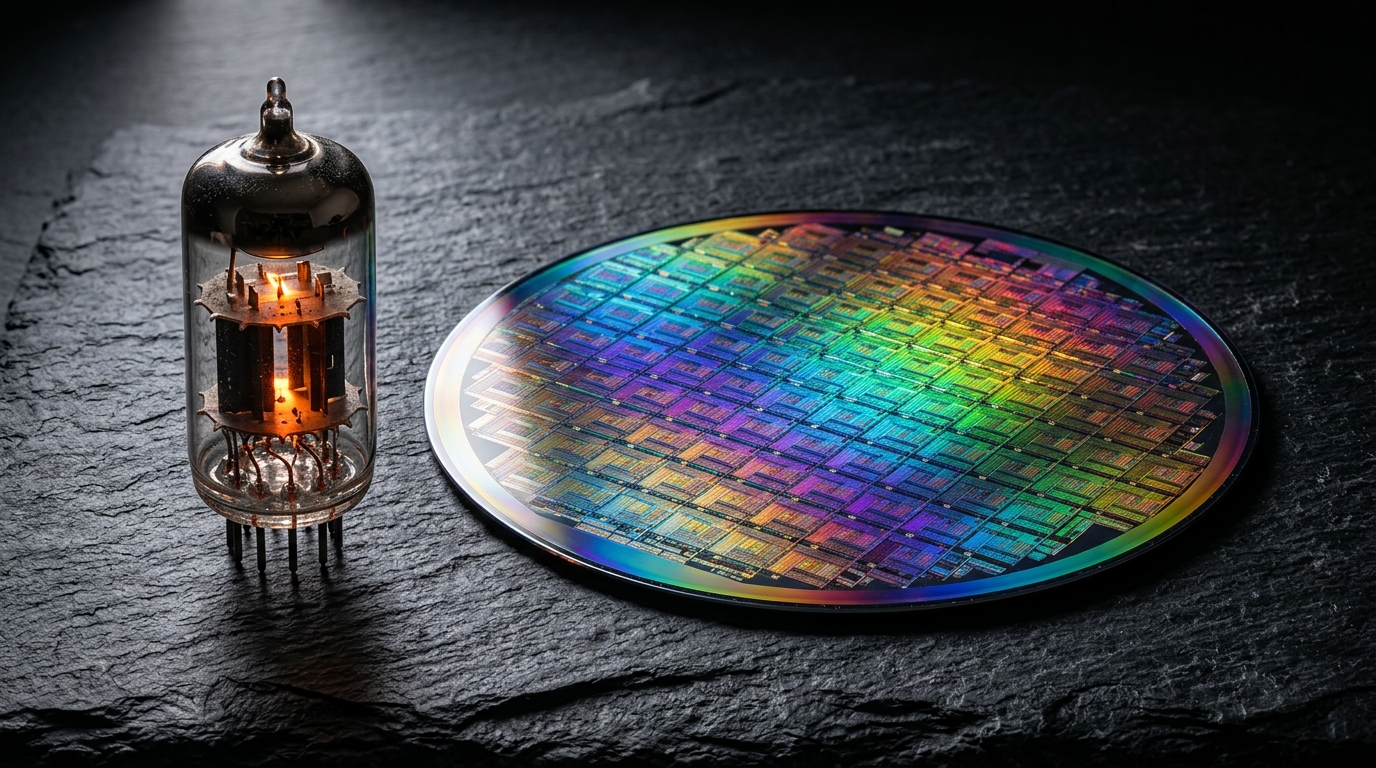
The Indian technology history timeline stretches from the assembly of the country's first indigenous computer, TIFRAC, in 1960 to modern multi-billion-dollar semiconductor manufacturing initiatives. This evolution highlights a shift from early state-sponsored scientific computing and a massive software services boom to current strategic investments in domestic hardware fabrication.
Key Takeaways
- India's computing journey started with the TIFRAC machine at the Tata Institute of Fundamental Research in 1960.
- The 1984 Computer Policy triggered a massive national shift toward software exports and IT services.
- Technology embargoes in the 1980s forced India to build the indigenous PARAM supercomputer from scratch.
- Current national initiatives focus heavily on establishing domestic semiconductor fabrication and display manufacturing ecosystems.
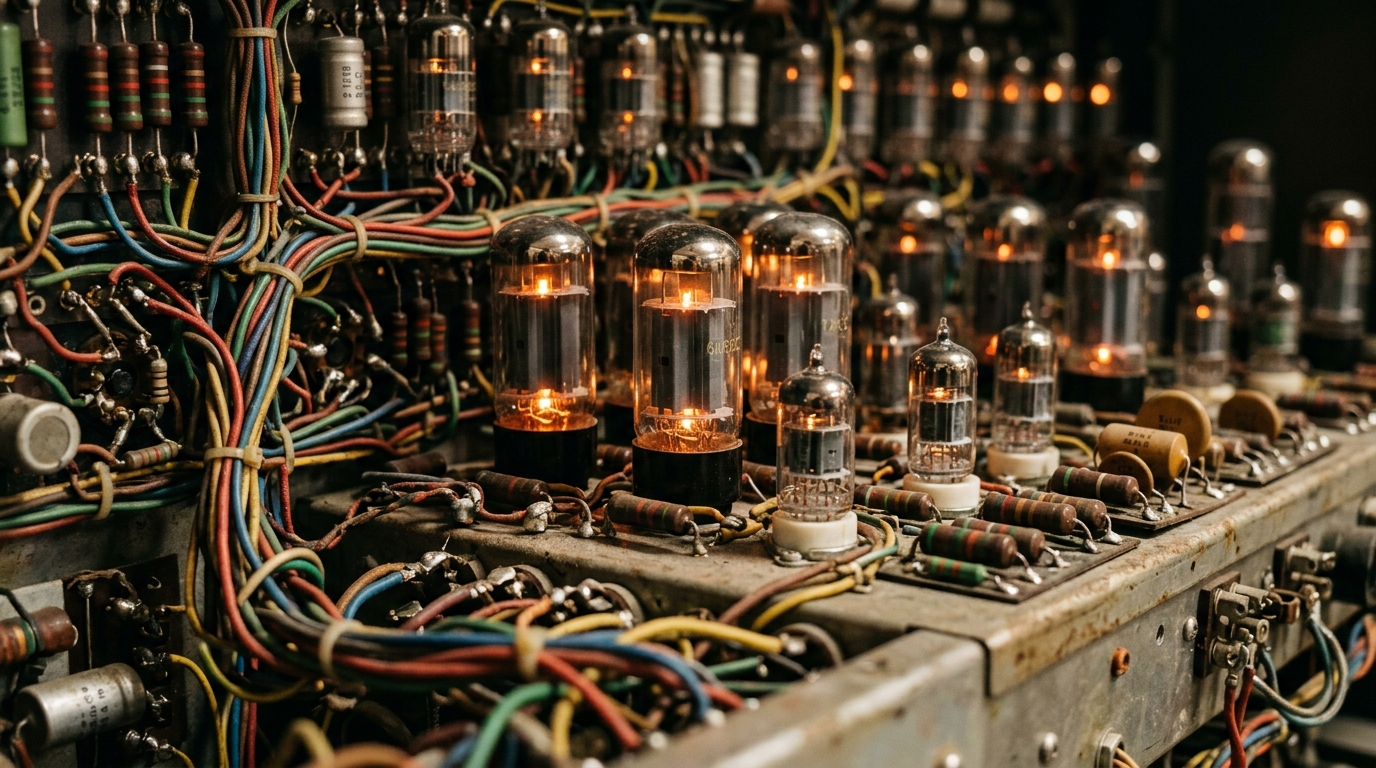
In 1960, a small group of scientists at the Tata Institute of Fundamental Research gathered around a massive assembly of vacuum tubes, resistors, and wires in Mumbai. They had just powered on TIFRAC, the first digital computer designed and built entirely in India. That single moment set the foundation for an industry that would eventually reshape the global digital economy.
Looking back at the complete Indian technology history timeline reveals a complex journey of self-reliance, strategic policy shifts, and global integration. The path from those early vacuum tubes to today's silicon wafer fabrication plants was rarely a straight line. It required navigating geopolitical technology denials, leveraging a massive engineering workforce, and adapting to rapid shifts in global computing demands. Understanding these historical milestones provides essential context for where the country's technology sector stands today.
How did India begin its computing journey in the 1950s and 60s?
India began its computing journey through state-funded research institutions that prioritized scientific self-reliance. Facing limited access to foreign technology, scientists at institutions like the Indian Statistical Institute and the Tata Institute of Fundamental Research built the country's earliest computational machines to support national scientific research and economic planning.
The birth of TIFRAC
The development of early Indian computing hardware was driven by a need for scientific independence. In the mid-1950s, under the guidance of physicist Homi J. Bhabha, a team at the Tata Institute of Fundamental Research (TIFR) began designing a digital computer. They built the machine using thousands of vacuum tubes and custom-wired circuits. By 1960, the TIFR Automatic Calculator (TIFRAC) became fully operational. It featured a ferrite core memory and a unique cathode ray tube display for output. Scientists across the country used TIFRAC for complex physics calculations until the machine was decommissioned in 1965.
Early academic computing centers
While TIFR focused on building hardware, other institutions focused on applying computing power to data. The Indian Statistical Institute (ISI) in Kolkata purchased a Hollerith Electronic Computer (HEC-2M) from the United Kingdom in 1956. This marked the installation of the first digital computer in India. ISI used the machine to process massive datasets related to national surveys and five-year economic plans. These early data processing efforts helped shape Economic Milestones in Indian History: From 1947 to Present. Academic centers slowly became the training grounds for the first generation of Indian software programmers and systems engineers.
The transition to commercial computing
Commercial computing took longer to establish itself in the country. Strict import regulations meant that private companies faced severe hurdles when trying to buy foreign computers. IBM and ICL set up early operations in India, but they primarily leased older, refurbished machines to domestic businesses. This created a significant technology gap between Indian enterprises and their Western counterparts. The government eventually pushed these foreign companies to reduce their equity stakes, leading to IBM's temporary exit from India in 1978. This exit forced domestic engineers to maintain existing systems and write their own software, inadvertently laying the groundwork for a massive independent IT services industry.
What drove the software boom in the Indian technology history timeline?
The software boom was driven by a combination of the 1984 Computer Policy, which lowered import tariffs on hardware, and the establishment of Software Technology Parks. These changes allowed domestic engineering talent to offer cost-effective offshore IT services, transforming the country into a global software hub.
The establishment of TCS and early service models
The seeds of the software services industry were planted well before the internet era. Tata Consultancy Services (TCS) was established in 1968 as a division of Tata Sons. The company initially focused on providing punch-card data processing services to sister companies within the Tata group. By the 1970s, TCS began sending programmers to the United States to work on client sites. This practice became known as "body shopping" and served as the earliest model of Indian IT exports. These engineers gained invaluable experience with modern mainframe systems that were unavailable back home.
The 1984 Computer Policy shift
Government policy shifts in the mid-1980s fundamentally changed the trajectory of Indian technology. The 1984 New Computer Policy recognized software as a distinct industry and slashed import duties on computer hardware. Before this policy, companies faced import tariffs as high as 135 percent on computing equipment. The new rules allowed Indian firms to import modern computers if they committed to exporting software. This policy shift reduced the barrier to entry for domestic tech companies. It allowed them to build local development centers rather than relying entirely on sending engineers abroad.
The rise of software technology parks
Infrastructure remained a massive hurdle for software exports throughout the 1980s. To solve this, the government established the Software Technology Parks of India (STPI) in 1991. These parks provided IT companies with high-speed satellite earth stations for data communication. They also offered significant tax holidays and allowed 100 percent foreign ownership. By bypassing the notoriously slow state telecom infrastructure, STPIs allowed Indian engineers to work directly on foreign client servers in real-time. This infrastructure leap fueled the massive offshore delivery model that defined the 1990s and 2000s.
| Era | Key Milestone | Primary Impact on Industry |
|---|---|---|
| 1950s-1960s | TIFRAC and HEC-2M | Established academic computing and scientific research capabilities. |
| 1970s-1980s | 1984 Computer Policy | Lowered hardware import barriers and recognized software as an export industry. |
| 1990s | STPI Establishment | Provided satellite data links, enabling the offshore IT services boom. |
| 2020s | India Semiconductor Mission | Shifted national focus back to domestic hardware and chip fabrication. |
When did indigenous supercomputing become a national priority?
Indigenous supercomputing became a national priority in the late 1980s after the United States denied India access to Cray supercomputers. This technology embargo forced the Indian government to establish the Center for Development of Advanced Computing (C-DAC) to build its own high-performance computing systems from scratch.
The technology denial of the 1980s
Geopolitics heavily influenced the hardware side of the Indian technology history timeline. In 1987, India requested to purchase a Cray X-MP supercomputer from the United States to aid in weather forecasting and monsoon modeling. The US government denied the export license due to fears that the technology could be diverted for nuclear weapons development. This denial served as a harsh wake-up call for Indian policymakers. It highlighted the strategic vulnerability of relying entirely on foreign vendors for critical computing infrastructure.
The creation of C-DAC
In response to the embargo, the Indian government launched an ambitious mission to build a domestic supercomputer. In 1988, they established the Center for Development of Advanced Computing (C-DAC) under the leadership of scientist Vijay Bhatkar. The government gave C-DAC a clear mandate: build a supercomputer equal to the Cray X-MP within three years, and do it using a budget less than the cost of buying the American machine. The team adopted a parallel processing architecture, linking together multiple standard microprocessors to achieve massive computational power.
The launch of PARAM 8000
The C-DAC team delivered on their mandate ahead of schedule. In 1991, they unveiled the PARAM 8000. It was the country's first indigenous supercomputer and ranked among the most powerful machines in the world at the time. The PARAM 8000 proved that Indian engineers could design complex hardware architectures, not just write software. C-DAC went on to export the PARAM systems to several other countries. This success broke the technology embargo and forced foreign vendors to eventually lower their prices and ease export restrictions.
How did economic reforms accelerate the Indian technology history timeline?
The 1991 economic liberalization accelerated technology growth by removing restrictive licensing and opening the market to foreign investment. This deregulation coincided perfectly with the global Y2K crisis, allowing Indian IT firms to secure massive international contracts and cement their reputation for reliable, large-scale software engineering.
The 1991 liberalization impact
The economic reforms of 1991 dismantled the complex system of industrial licensing known as the License Raj. Before these reforms, technology companies needed government approval for almost every business decision, from expanding capacity to importing software tools. Liberalization removed these barriers and made the rupee fully convertible for trade. Foreign direct investment flowed into the country, allowing multinational corporations to set up their own captive development centers in cities like Bangalore, Hyderabad, and Pune.
The Y2K bug as a global catalyst
The late 1990s provided a unique global crisis that perfectly matched India's engineering capabilities. The Y2K bug threatened to crash older mainframe systems globally when the year 2000 arrived. Fixing this required massive amounts of manual code review and rewriting. Indian IT firms mobilized thousands of engineers to audit and fix millions of lines of legacy COBOL code for global financial institutions and governments. This massive undertaking proved the reliability and scale of the Indian IT sector. You can trace many of the corporate expansions of this era in our overview of 25 Historic Indian Events from 2000 to 2025: A Timeline.
Transitioning from services to product development
The success of the IT services model created a massive pool of engineering talent and accumulated capital. By the 2010s, the focus began to shift from providing outsourced services to building original software products. A new generation of founders started building Software-as-a-Service (SaaS) platforms from India for global audiences. Companies in Chennai and Bangalore proved that domestic firms could design, market, and sell world-class software products. This transition marked a maturation of the tech ecosystem, moving the country up the global value chain. For more on this shift, explore the evolution of Indian software startups.
Why is the shift toward semiconductor manufacturing happening now?
The shift toward semiconductor manufacturing is happening now due to global supply chain vulnerabilities exposed during recent shortages and the strategic need for technological sovereignty. The government has launched heavily subsidized initiatives to attract global chipmakers and build a domestic fabrication ecosystem from the ground up.
Early attempts at hardware fabrication
India's ambition to manufacture hardware is not entirely new. In 1983, the government established the Semiconductor Complex Limited (SCL) in Mohali to manufacture large-scale integrated circuits. SCL successfully produced chips for telecommunications and space applications. However, a devastating fire in 1989 destroyed the fabrication facility. While the plant was eventually rebuilt, the multi-year delay caused India to miss the global explosion in consumer electronics manufacturing. The country lost its early momentum and spent the next three decades relying heavily on imported electronics.
The India Semiconductor Mission
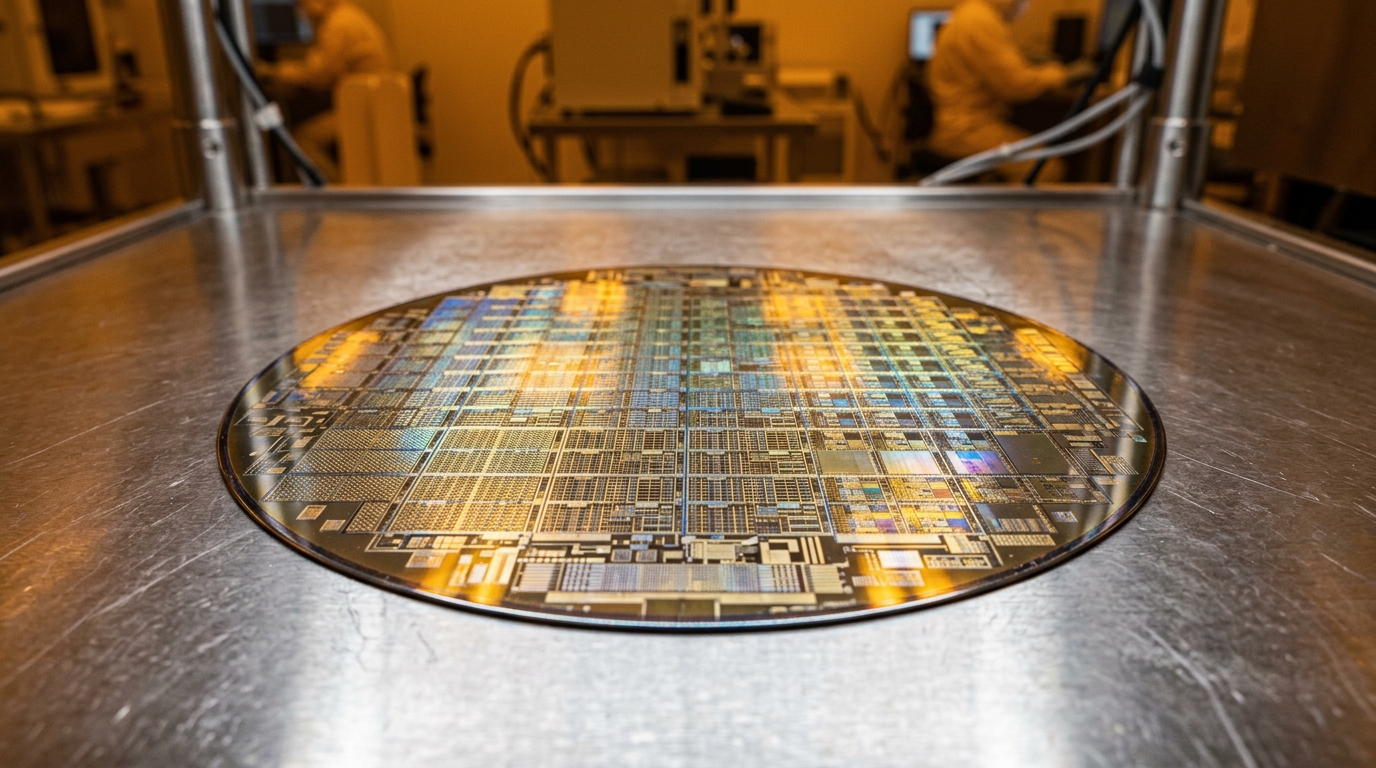
The global chip shortage during the 2020 pandemic forced a massive strategic rethink. Recognizing that semiconductors run everything from smartphones to defense systems, the government launched the India Semiconductor Mission (ISM) in 2021. The mission includes a $10 billion incentive program designed to attract global chip manufacturers. The government offers to cover up to 50 percent of the capital costs for companies willing to set up semiconductor fabrication plants, display fabs, and assembly facilities in the country. This policy aims to reduce import dependence and secure the domestic supply chain.
Current investments and future outlook
The aggressive incentive structures are beginning to yield tangible results. Major global players have started breaking ground on assembly, testing, marking, and packaging (ATMP) facilities in states like Gujarat and Assam. Domestic conglomerates like the Tata Group have partnered with foreign technology providers to establish the country's first commercial semiconductor fabrication plants. These facilities will initially produce trailing-edge chips for the automotive and consumer electronics sectors. Building a complete semiconductor ecosystem requires decades of sustained investment, reliable power, and ultra-pure water infrastructure. Success in this sector will define the next major chapter in the country's technology history.
Related Reading
- Indian History Timeline Chart: Key Milestones (Digital Reference)
- Indian History Milestones: The Maurya and Gupta Empires
- Milestones in Indian Women's History: A Chronological Guide
- 1,000 Years of Indian Medical History: A Chronological Guide
FAQ
Q: What was the first computer installed in India? The first digital computer installed in India was the HEC-2M. The Indian Statistical Institute in Kolkata purchased it from the United Kingdom in 1956 to process data for national economic planning.
Q: Why did India focus so heavily on software instead of hardware? Early import restrictions made hardware manufacturing difficult and expensive, while software required only human capital and basic computing access. The 1984 Computer Policy and the creation of Software Technology Parks heavily incentivized software exports, pushing the industry in that direction.
Q: What is the PARAM supercomputer? PARAM is a series of supercomputers designed and assembled by the Center for Development of Advanced Computing (C-DAC) in India. The first machine, PARAM 8000, was launched in 1991 after the United States denied India access to Cray supercomputers.
Q: What is the India Semiconductor Mission? The India Semiconductor Mission is a government initiative launched in 2021 to build a domestic chip manufacturing ecosystem. It offers significant financial incentives to attract global companies to set up fabrication and assembly plants in the country.
Further reading
- The Maverick Effect by Harish Mehta — A detailed firsthand account of how NASSCOM was formed and how the Indian IT industry became a global powerhouse.
- Against All Odds by Kris Gopalakrishnan and N. Dayasindhu — An analytical look at the early days of the Indian IT services sector and the creation of Infosys.
- C-DAC Official History Archives — Primary source documentation detailing the technical specifications and development timeline of the original PARAM supercomputer series.
- Ministry of Electronics and Information Technology (MeitY) Reports — Annual government reports tracking the current progress and capital investments under the India Semiconductor Mission.