A Chronological History of the Khelo India Games: Grassroots Sports Milestones
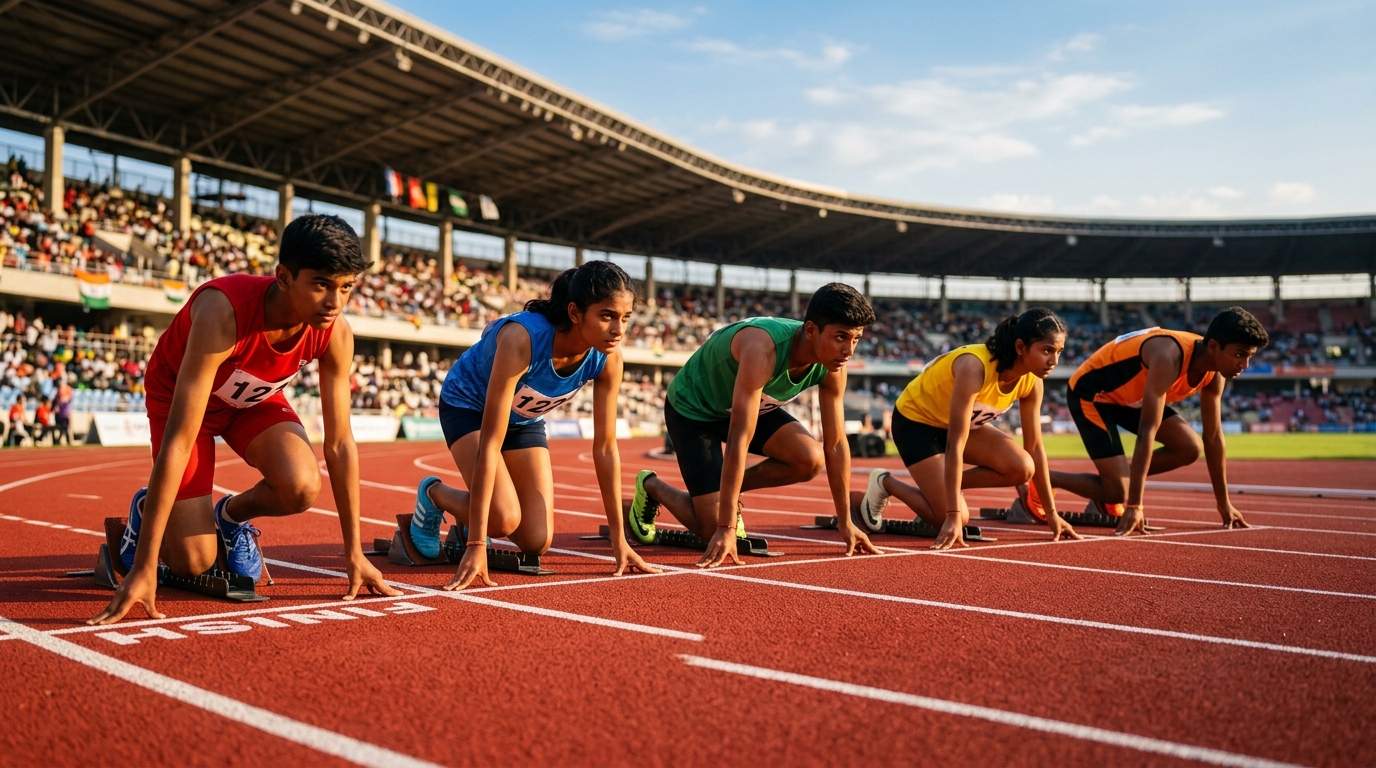
TL;DR: What Is the Khelo India Games History?
The Khelo India Games history is the record of India's flagship grassroots sports program launched in January 2018 by the Ministry of Youth Affairs and Sports. Expanding from school competitions into university, winter, and para divisions, the initiative supports emerging athletes through ₹5 lakh annual scholarships, 1,067 district training centres, and structured national championships.
Key Takeaways
- Launched in 2018, the games transformed talent scouting across Indian schools and universities.
- Over 60,800 athletes have competed across 21 combined national game editions.
- Selected talent receives ₹5 lakh annual scholarships for eight consecutive years.
- Maharashtra and Haryana maintain a fierce rivalry, leading the historical medal tallies.
- The Union Cabinet approved a ₹36,441 crore expansion for 2026 to 2031.
Many sports enthusiasts assume Olympic medalists emerge only from specialized senior academies. The reality is that early talent discovery happens on dusty school fields and district tracks long before an athlete enters elite national camps.
Studying the Khelo India Games history reveals how India created a structured pipeline to bridge this gap. Before 2018, young athletes faced fragmented school tournaments with little financial security or national visibility. The introduction of standardized, broadcasted youth competitions changed how states identify and support emerging champions. Today, the platform serves as the foundation for India's broader international sporting goals.
When Did the Khelo India Games History Begin?
The Khelo India Games history began on January 31, 2018, with the inaugural Khelo India School Games in New Delhi. Designed by the Ministry of Youth Affairs and Sports, the event unified fragmented regional school tournaments into a single national talent identification system with live television broadcasts and cash scholarships.
+-------------------------------------------------------------------------+
| KHELO INDIA EXPANSION TIMELINE |
| |
| 2018: School Games (New Delhi) |
| | |
| 2019: Rebranded as Youth Games (Pune) -> U-17 and U-21 tiers |
| | |
| 2020: University Games (Odisha) & Winter Games (Leh/Gulmarg) launched |
| | |
| 2023: Inaugural Para Games (New Delhi) |
| | |
| 2024: Beach Games (Diu) & Water Sports debut |
| | |
| 2025: 7th Youth Games in Bihar (5 cities, Maharashtra champion) |
| | |
| 2026: Tribal Games (Chhattisgarh) & ₹36,441 Cr Cabinet Outlay |
+-------------------------------------------------------------------------+
The 2018 Inaugural School Games in New Delhi
Prime Minister Narendra Modi opened the first Khelo India School Games at the Indira Gandhi Indoor Stadium in New Delhi. The championship ran from January 31 to February 8, 2018. Over 3,500 school athletes from 36 states and Union Territories competed across 16 sporting disciplines.
Haryana topped the medal table with 38 gold medals, closely followed by Maharashtra with 36 golds. The event produced instant stars. A sixteen-year-old Manu Bhaker set a national junior record in the 10-meter air pistol event, kicking off an athletic journey that led directly to India at the Olympics. Weightlifter Jeremy Lalrinnunga broke national youth records in the 62kg division. Broadcast coverage on national television gave these teenagers instant recognition across the country.
What Was the Rebranding to the Youth Games in 2019?
The rebranding to the Youth Games in 2019 is the structural expansion of India's flagship school tournament into the Khelo India Youth Games (KIYG) during the January 2019 Pune edition. Organized by the Ministry of Youth Affairs and Sports, the event added Under-17 and Under-21 divisions, allowing college-aged athletes to compete alongside high school participants.
The 2019 format change resolved eligibility restrictions that previously excluded college-going teenagers under 21 years old. By establishing two distinct age divisions, the Ministry of Youth Affairs and Sports doubled the tournament's competitive talent pool. Host state Maharashtra secured the overall team championship with 85 gold medals. Over 10,000 participants, including athletes, coaches, and technical officials, attended the 2019 Pune games.
The Initial Scholarship Model
Competition alone does not build an athletic career. Young athletes from low-income families often leave sports due to high equipment and nutrition costs.
To solve this, the sports ministry introduced an annual scholarship of ₹5 lakh per year for eight consecutive years to the top 1,000 performers across all disciplines. The program also added a ₹10,000 monthly out-of-pocket allowance for athletes inducted into national training centres. According to data from the National Institute of Public Finance and Policy [NIPFP, 2026], this financial safety net currently supports 2,904 active Khelo India Athletes (KIAs) across the country.
How Did the Tournament Expand Across Different Divisions?
The tournament expanded rapidly between 2020 and 2026 by launching specialized divisions for universities, winter disciplines, para-athletes, and indigenous sports. This multi-tiered structure connected school programs with collegiate athletic departments and gave cold-weather and disabled competitors equal access to national platforms and funding.
+-------------------------------------------------------------------+
| KHELO INDIA COMPETITION TIERS |
| |
| [Youth Games] -> Under-18/Under-21 School & Club Athletes |
| [University Games] -> Inter-Collegiate & Higher Education Stars |
| [Winter Games] -> Alpine Skiing, Nordic, Ice Hockey |
| [Para Games] -> Elite Disabled Athletes Across States |
| [Beach & Tribal] -> Regional Traditions & Indigenous Sports |
+-------------------------------------------------------------------+
What Was the Launch of the University Games in 2020?
The launch of the University Games in 2020 is the establishment of the Khelo India University Games (KIUG) in February 2020 by the Ministry of Youth Affairs and Sports to revitalize collegiate athletics. Hosted in Bhubaneswar, Odisha, the multi-sport competition connected 3,100 student-athletes from 158 higher education institutes directly into national scouting pipelines.
Odisha organized the inaugural KIUG tournament at the Kalinga Institute of Industrial Technology in Bhubaneswar across 17 sporting disciplines. Panjab University captured the first team championship by winning 46 total medals. The collegiate competition gave late-blooming student-athletes a structured platform for national selectors, establishing a direct pathway for university sprinters, rowers, and fencers to join senior national teams.
Pioneering the Winter Games in Leh and Gulmarg
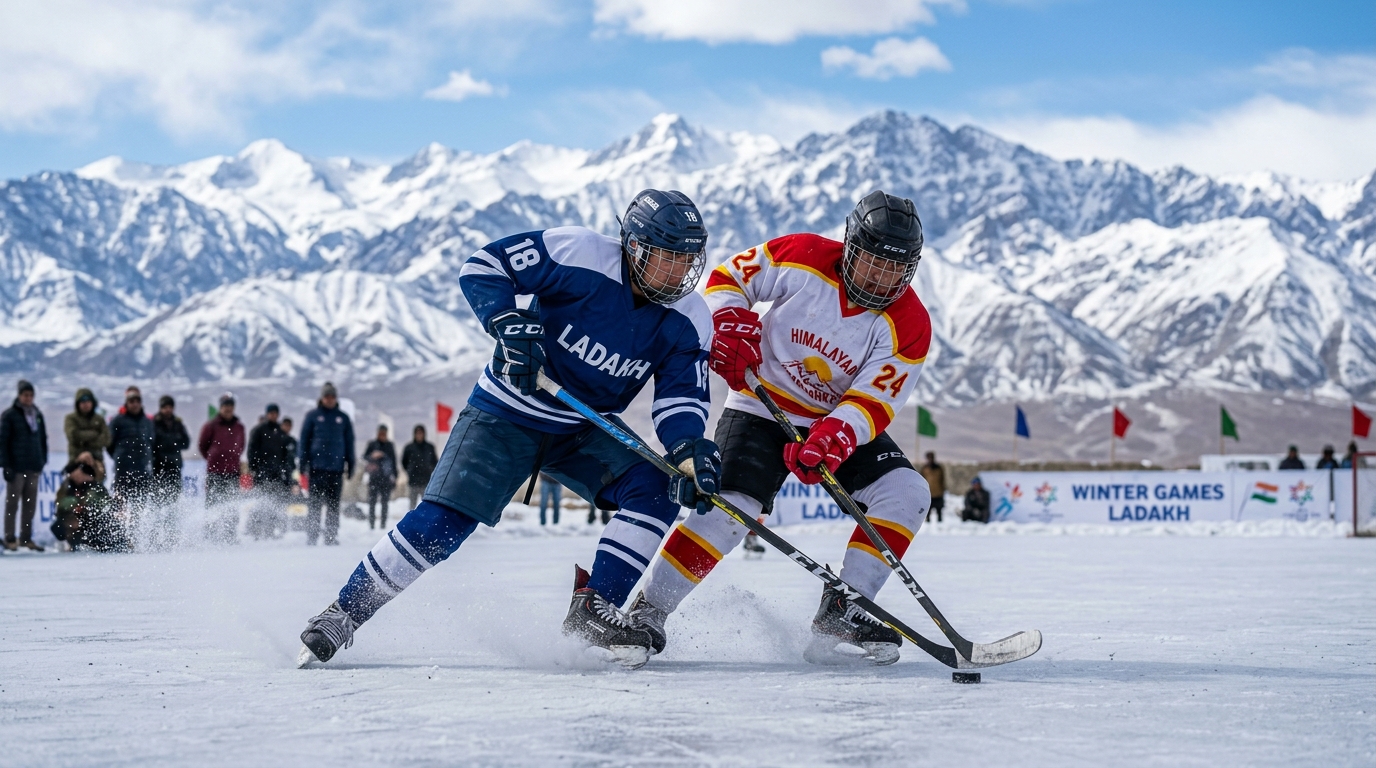
Cold-weather sports in India historically received minimal funding and media coverage. The Khelo India Winter Games launched in early 2020 to develop winter sports hubs in Ladakh and Jammu & Kashmir.
The games split competitions between Leh for ice events and Gulmarg for snow sports. Athletes compete in:
- Ice Hockey
- Figure Skating and Speed Skating
- Alpine Skiing
- Nordic Skiing
- Snowboarding
The Indian Army team established early dominance in these games. In the 2026 Winter Games, the Army retained its team championship across Leh and Gulmarg by winning 23 medals, including 9 golds [Olympics.com, 2026]. The games spurred local winter tourism and improved snow-making equipment and ski lift facilities in northern mountain regions.
Introducing Para, Beach, and Tribal Games
Grassroots expansion continued with dedicated platforms for neglected athletic communities. The first Khelo India Para Games took place in New Delhi in December 2023, drawing over 1,400 para-athletes across seven sports. Haryana dominated the medal tally with 105 total medals.
Coastal and indigenous sports joined the calendar shortly after. The 2024 Khelo India Beach Games in Diu highlighted coastal athletics like beach volleyball, sepak takraw, and open-water swimming.
In early 2026, Chhattisgarh hosted the inaugural Khelo India Tribal Games [Olympics.com, 2026]. The event drew 1,300 tribal athletes who competed in nine disciplines, including traditional archery, kabaddi, and indigenous wrestling. These specialized games brought remote athletes directly into the national talent registry.
Which States and Athletes Have Dominated the Record Books?
Maharashtra and Haryana have dominated the Khelo India Youth Games since 2018, trading the top position on the medal table. These games have served as a launching pad for international medalists in shooting, weightlifting, track, and boxing.
| Edition | Year | Host State / City | Champion | Runner-up | Standout Discipline |
|---|---|---|---|---|---|
| 1st (School) | 2018 | New Delhi | Haryana | Maharashtra | Shooting, Wrestling |
| 2nd (Youth) | 2019 | Pune, Maharashtra | Maharashtra | Haryana | Swimming, Gymnastics |
| 3rd (Youth) | 2020 | Guwahati, Assam | Maharashtra | Haryana | Athletics, Weightlifting |
| 4th (Youth) | 2021* | Panchkula, Haryana | Haryana | Maharashtra | Kabaddi, Boxing |
| 5th (Youth) | 2023 | Bhopal, Madhya Pradesh | Maharashtra | Haryana | Kayaking, Shooting |
| 6th (Youth) | 2024 | Chennai, Tamil Nadu | Maharashtra | Haryana | Squash, Fencing |
| 7th (Youth) | 2025 | Bihar (5 Cities) | Maharashtra | Haryana | Track & Field, Wrestling |
*Note: The 4th edition was postponed and held in mid-2022 due to pandemic restrictions.
The Haryana-Maharashtra Rivalry
The battle between Maharashtra and Haryana highlights two distinct sporting models. Haryana relies on combat sports and power disciplines. Its medal count comes from wrestling, boxing, kabaddi, and field events. Maharashtra counters with high medal yields in aquatic sports, gymnastics, athletics, and shooting.
In May 2025, Bihar hosted the 7th Khelo India Youth Games across Patna, Rajgir, Gaya, Bhagalpur, and Begusarai [Drishti IAS, 2025]. Maharashtra retained the team championship, finishing with 158 total medals, including 58 golds [Olympics.com, 2025].
This victory marked Maharashtra's fifth overall KIYG title. Haryana took second place with 47 gold medals, relying on its dominance in wrestling mats. The rivalry has pushed both state governments to invest more money in their local sports infrastructure.
+-------------------------------------------------------------------+
|               KIYG CHAMPIONSHIP TITLES (2018-2025)                |
|                                                                   |
|  Maharashtra : [#####] 5 Titles (2019, 2020, 2023, 2024, 2025)    |
|  Haryana     : [##]    2 Titles (2018, 2021/22)                   |
+-------------------------------------------------------------------+
Breakout Athletes from Grassroots to Global Podiums
The true measure of the Khelo India Games history is how well its medalists perform in senior international tournaments. Several prominent Indian athletes began their national journeys on these tracks.
- Manu Bhaker (Shooting): Won gold in the 2018 inaugural games. She went on to win two bronze medals at the Paris 2024 Olympic Games, proving the value of early competitive exposure.
- Jeremy Lalrinnunga (Weightlifting): Broke records at the 2018 School Games. He won gold at the 2018 Youth Olympics and followed it with gold at the 2022 Commonwealth Games.
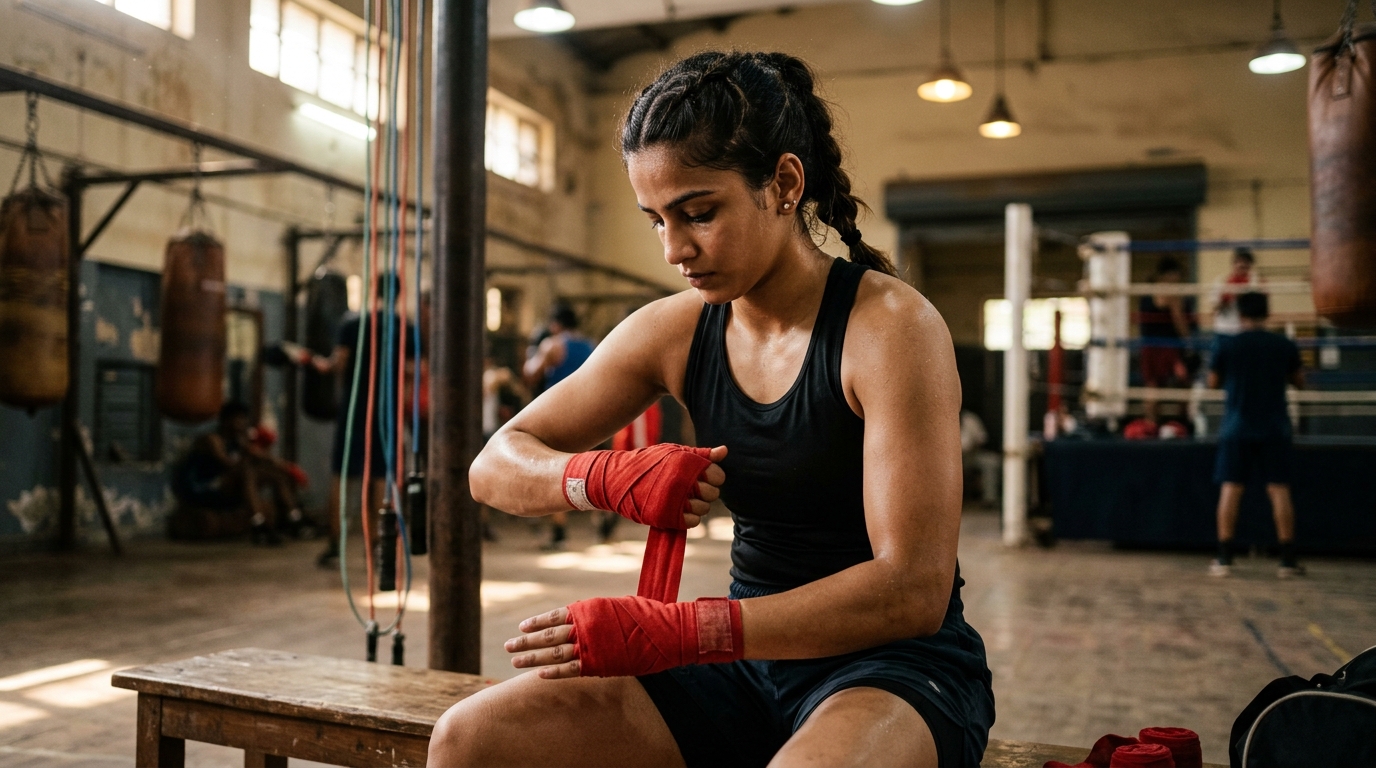
- Arundhati Choudhary (Boxing): Claimed three consecutive gold medals in KIYG boxing rings. She carried that momentum into the senior international circuit, winning gold medals for the national squad [DD India, 2026].
These success stories match historical milestones tracked in our archive of historic milestones in Indian athletics.
Emerging Sports Hubs Beyond the Traditional Belts
The games helped other states develop their own athletic specialties. Tamil Nadu built a strong reputation in squash, fencing, and track events, finishing third in the 2024 home games.
Madhya Pradesh invested heavily in water sports at its Bhopal academy, winning medals in rowing, canoeing, and slalom. Assam and Manipur continue to produce top weightlifters and boxers. Rajasthan built a strong archery and shooting pipeline. This geographic variety keeps talent scouting from relying solely on one or two states.
What Structural Challenges Does the Grassroots System Face?
Despite setting up nearly 1,000 district centres, the Khelo India framework deals with budget underutilization, equipment maintenance backlogs, and athlete drop-outs during the switch from junior to senior divisions. Fixing these operational gaps is critical to sustaining long-term international results.
Budget Allocations and Grassroots Spending Gaps
High financial allocations on paper do not always lead to immediate spending on the ground. Administrative delays and slow state-level approvals often leave allocated funds unspent.
According to fiscal data analyzed by the National Institute of Public Finance and Policy [NIPFP, 2026], the actual expenditure for the Khelo India Scheme in FY 2024–25 was ₹620.75 crore against a Budget Estimate of ₹900 crore. That represents a 68.97% fund utilization rate.
Similar mid-year budget trims occurred in FY 2025–26, where the initial ₹1,000 crore allocation dropped to a Revised Estimate of ₹700 crore. These funding adjustments can delay planned track repairs, hostel upgrades, and modern sports science equipment at regional hubs.
District Khelo India Centres and Coach Retention
The grassroots model relies on small district setups called Khelo India Centres (KICs). The ministry has notified 1,067 KICs across 759 districts, with 991 centres fully operational [NIPFP, 2026].
+-------------------------------------------------------------------+
|               DISTRICT KIC IMPLEMENTATION STATUS                  |
|                                                                   |
|  Total Notified Centres    : [====================] 1,067 (100%)  |
|  Operational Centres       : [==================> ] 991 (92.8%)   |
|  Past Champion Coaches     : [==================> ] 962 Active    |
|  District Geographic Reach : 759 Districts Across India           |
+-------------------------------------------------------------------+
These local centres employ 962 Past Champion Athletes as head trainers and mentors. This gives former athletes stable jobs while passing practical knowledge down to young students.
However, running these centres comes with real operational challenges. Rural KICs often struggle with worn-out equipment, lack of certified physiotherapists, and delayed coach salary payouts. While tier-1 State Centres of Excellence have modern facilities, remote district centres often lack basic gym and recovery gear.
Junior-to-Senior Athletic Drop-Off Rates
The biggest leak in Indian sports occurs between the ages of 18 and 23. Many young athletes win medals at the Youth Games but struggle to move into senior national teams.
This drop-off happens for several reasons:
- Loss of age-group age eligibility without immediate senior team selection
- Pressure from families to choose traditional college degrees or jobs
- Lack of access to high-performance nutritionists and biomechanics experts
- Career-threatening injuries without proper medical insurance
To reduce these drop-offs, the sports ministry connects top Khelo India performers to the senior Target Olympic Podium Scheme. This transition remains an active area of policy reform as India tracks its sports development through the 25 historic Indian events from 2000 to 2025.
How Will the Scheme Evolve Heading Toward 2030 and Beyond?
The scheme is shifting toward deeper school integration through Feeder Schools, Utkrishta Vidyalayas, and coordinated funding with National Sports Federations (NSFs). Backed by a multi-year Union Cabinet outlay, this modernization supports India's bid to host the 2036 Olympic Games.
+-------------------------------------------------------------------+
|               FUTURE RESTRUCTURING TARGETS (2026-2031)            |
|                                                                   |
|  [₹36,441 Cr Cabinet Outlay] -> Combined Scheme & NSF Funding     |
|  [Feeder Schools Network]    -> Early Childhood Talent Scouting   |
|  [Utkrishta Vidyalayas]      -> Specialized Sports Academies      |
|  [Digital Passports]         -> Biometric & Medical Tracking      |
+-------------------------------------------------------------------+
What Is the ₹36,441 Crore Cabinet Expansion (2026–2031)?
The ₹36,441 crore Cabinet expansion is a multi-year financial package approved by the Union Cabinet to fund the Khelo India Scheme and National Sports Federations from 2026–27 through 2030–31 [Press Information Bureau, 2026]. According to Union Minister Ashwini Vaishnaw, the outlay integrates grassroots school scouting, sports science laboratories, and international training into a unified athletic pipeline [Press Information Bureau, 2026].
The consolidated government package combines funding for annual national championships, overseas training tours, and district-level scouting programs under a single administrative framework. According to government announcements reported by the Press Information Bureau [2026], this dedicated financial allocation connects grassroots school physical education classes directly with elite national sports federations to prepare competitors for global multi-sport events.
School Feeder Networks and Talent Scouting
The updated strategy focuses on identifying talent at a younger age. The ministry introduced three new institutional tiers:
- Khelo India Feeder Schools: Selected elementary and middle schools that receive grants to build basic sporting facilities and run fitness tests.
- Utkrishta Vidyalayas: High schools with dedicated sports wings, modern gyms, and full-time coaches.
- Emerging Khelo India Athletes Tier: A new scholarship pool for promising 10-to-14-year-olds, expanding the national scouting pool tenfold.
These feeder networks run standardized motor-skill and physical fitness tests. This testing helps coaches spot natural endurance, speed, and hand-eye coordination in children before they pick a single sport.
How Does Grassroots Data Connect to the 2036 Olympic Bid?
Connecting grassroots data to the 2036 Olympic bid is a Sports Authority of India initiative that logs junior performance analytics to prepare elite talent for future Olympic competition. Through digital athlete profiles, the Sports Authority of India records race times, jump heights, medical histories, and physical fitness test scores from Khelo India events in a centralized talent identification registry.
Sports scientists and national coaches evaluate digital athlete profiles to assess long-term performance trends, diagnose early training plateaus, and prevent over-training injuries among youth competitors. By feeding standardized district-level athletic metrics directly to national sports federations and selection committees, the Sports Authority of India ensures high-performing rural athletes receive elite coaching and international development opportunities.
Related Reading
- India at the Olympics: A Timeline of Historic Sporting Milestones
- Milestones in Indian Women's History: A Chronological Guide
- 1,000 Years of Indian Medical History: A Chronological Guide
- Economic Milestones in Indian History: From 1947 to Present
FAQ
Q: What is the age limit for athletes competing in the Khelo India Youth Games?
The Khelo India Youth Games features two main age brackets: Under-17 and Under-21 categories for school and collegiate participants. Athletes must provide verified municipal birth certificates and school enrollment documents to confirm their eligibility before regional qualifiers.
Q: How much financial support do selected Khelo India Athletes receive?
Selected athletes receive an annual financial scholarship of ₹5 lakh for up to eight consecutive years to cover coaching, equipment, and travel expenses. Athletes training at designated national academies also receive a ₹10,000 monthly out-of-pocket allowance for nutrition and personal upkeep.
Q: Which state has won the most Khelo India Youth Games titles?
Maharashtra holds the record with five overall team championships, winning titles in 2019, 2020, 2023, 2024, and 2025. Haryana sits in second place with two team titles, won at the 2018 inaugural School Games and the 2021 edition.
Q: What is the main difference between the Youth Games and University Games?
The Youth Games focus on school and club athletes under the age of 21 across individual state teams. The University Games cater specifically to student-athletes enrolled in higher education institutes, with competitors representing their respective universities rather than home states.
Further reading
- Ministry of Youth Affairs and Sports Annual Reports: Official annual reports detailing sports expenditure, scheme allocations, and athlete induction counts across Indian states.
- National Institute of Public Finance and Policy (NIPFP) Research Papers (2026): In-depth policy studies evaluating budget utilization rates and institutional challenges within grassroots sports schemes.
- Sports Authority of India (SAI) Athlete Portal: Digital database providing entry requirements, calendar dates, and scholarship eligibility criteria for aspiring junior athletes.
To explore how these grassroots milestones translate to international achievements, track your district's operational Khelo India Centre and follow regional qualifier dates on the official Sports Authority of India calendar this season.
Sources
- What is Khelo India Games? Know history and winners — Olympics.com, 2026. Supports: The chronological timeline of the Khelo India Games from the 2018 School Games, the 2019 rebranding to Youth Games, and historical championship dominance by Maharashtra and Haryana.
- Prime Minister to launch Khelo India School Games in the Capital tomorrow — Press Information Bureau, 2018. Supports: The January 31, 2018 launch of the inaugural Khelo India School Games in New Delhi and the ₹5 lakh annual financial scholarship for eight years.
- First Khelo India University Games to be launched by PM Modi in Bhuwaneshwar — Press Information Bureau, 2020. Supports: The February 2020 launch of the inaugural Khelo India University Games in Odisha across 17 sports disciplines.
- Khelo India University Games 2021 venue announced — Olympics.com, 2021. Supports: The inaugural Khelo India University Games held at the KIIT campus in Bhubaneswar and Panjab University capturing the first team championship.
- Shri Kiren Rijiju inaugurates 1st Khelo India Winter Games in Leh, Ladakh — Press Information Bureau, 2020. Supports: The establishment and inauguration of the first Khelo India Winter Games in 2020 across Leh (Ladakh) and Gulmarg (Jammu & Kashmir).
- Khelo India Youth Games 2025 dates announced — Olympics.com, 2025. Supports: The hosting of the 7th Khelo India Youth Games across five cities in Bihar and the multi-title records of Maharashtra and Haryana.