Women Pioneers In Indian History Timeline
Bottom Line
The women pioneers in indian history timeline spans ancient Vedic scholars to modern political leaders, scientists, and working-class heroes. This chronological guide highlights figures like botanist Janaki Ammal and the 60,000 female coal miners of WWII, moving beyond traditional political narratives to document their full economic and scientific impact.
Key Takeaways
- Working-class women drove major economic efforts, including 60,000 female coal miners during WWII.
- Early STEM pioneers like Janaki Ammal reshaped modern agricultural science with high-yield crops.
- Historical archives continually uncover hidden roles, like South Asian women in global conflicts.
- Modern institutions actively lobby for permanent physical museums to preserve these historical narratives.
In 1936, a 21-year-old woman named Sarla Thakral climbed into a Gypsy Moth aircraft at the Lahore Flying Club. She accumulated over 1,000 hours of flying time. That flight made her the first Indian woman to acquire an aviation pilot license. Her achievement sits inside a much larger framework of historical milestones. When we build a women pioneers in indian history timeline, we often focus exclusively on queens and political martyrs. We miss the scientists, the pilots, and the working-class laborers who built the nation. History requires active rehabilitation to show the complete picture.
Who were the early trailblazers in the women pioneers in indian history timeline?
Early trailblazers included ancient Vedic scholars who shaped philosophical thought and 19th-century leaders who fought colonial expansion. These women established a foundation for female agency in governance and education long before formal political movements began in the twentieth century.
Ancient Scholars and Rulers
Timelines frequently start with the high status of women in the early Vedic period. Figures like Gargi Vachaknavi and Maitreyi contributed to philosophical debates in ancient texts. Gargi publicly challenged the sage Yajnavalkya in the Brihadaranyaka Upanishad. Her inclusion shows that early Indian society held spaces for female intellectual authority. Later centuries saw a decline in these roles. The fight for deliverance took hundreds of years. Rulers like Ahilyabai Holkar of Malwa demonstrated exceptional administrative skills in the 18th century. She rebuilt temples, established trade routes, and maintained decades of peace. Her reign proves that female leadership existed well before modern democratic structures.
Who led the fight against colonial rule in India?
The fight against colonial rule in India is a historical movement defined by female leaders like Rani Lakshmi Bai and Begum Hazrat Mahal, who led armed resistance during the 1857 rebellion. Begum Hazrat Mahal took control of Lucknow and actively fought British forces, establishing a legacy of female political revolutionaries. Decades later, Matangini Hazra gave her life during the 1942 Quit India Movement. Usha Mehta organized the Secret Congress Radio in 1942 to broadcast anti-colonial messages. You can trace these events through our guide on Milestones in Indian Women's History: A Chronological Guide. Rani Lakshmi Bai and Usha Mehta became symbols of national defiance. Dr. Seema Thakur from the Centre for Women's Studies and Development notes that history is an exercise in power. The historical record has systematically relegated women from colonized regions to the margins. Studying female revolutionaries requires active historical rehabilitation, not just chronicling.
How did women shape India's scientific and agricultural advancement?
Female scientists drove massive agricultural and medical breakthroughs in the twentieth century. Pioneers developed high-yield crops suited to local climates and created essential anti-malarial drugs, proving that women were central to India's early modernization and scientific independence.
Breaking Ground in Botany
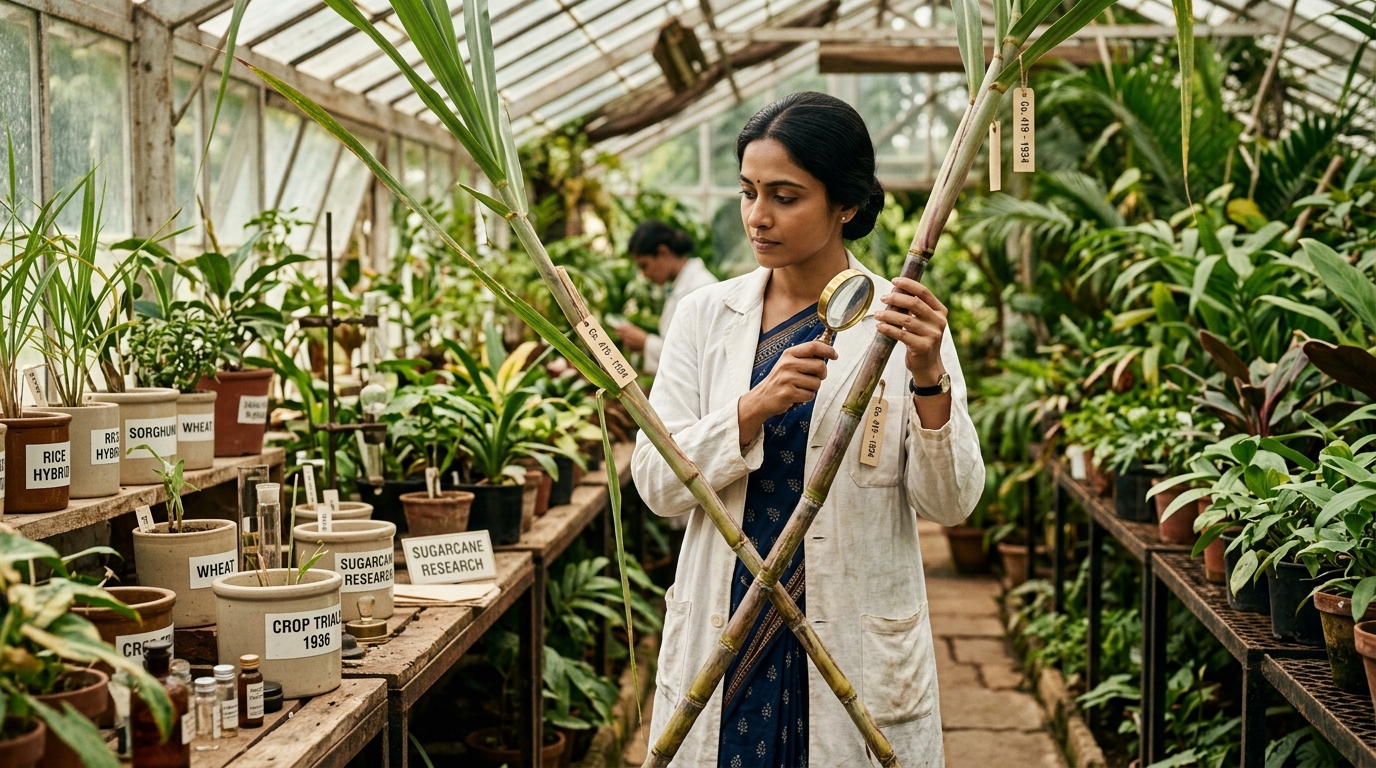
Historical narratives heavily index on warriors and politicians. They frequently omit early female scientists. Janaki Ammal (1897-1984) stands out as one of India's first female botanists. She developed high-yield sugarcane varieties suited to India's climate. Her work fundamentally reshaped modern agricultural science. She mapped the chromosomes of thousands of plant species while working in London and India. A specific magnolia flower, Magnolia kobus Janaki Ammal, bears her name today. This research helped India improve its food security during critical post-independence years. Her contributions remain a vital part of the women pioneers in indian history timeline. For more on the evolution of domestic science and medicine, see our 1,000 Years of Indian Medical History: A Chronological Guide.
How did Asima Chatterjee advance organic chemistry in India?
Asima Chatterjee (1917-2006) is a pioneering organic chemist who revolutionized medicine by developing anti-epileptic and anti-malarial drugs from native Indian plants. Chatterjee conducted extensive research on vinca alkaloids, which have anti-cancer properties, becoming the first woman to receive a Doctorate of Science from an Indian university. Asima Chatterjee later established the Regional Research Laboratory in Kolkata. Chatterjee's success paved the way for thousands of female researchers. These STEM achievements belong on any timeline documenting national progress. Without Chatterjee and Janaki Ammal's specific scientific contributions, India would have relied entirely on imported agricultural and medical technology.
What role did working-class women play during major global conflicts?
Working-class Indian women formed the economic backbone of the Allied war effort during WWII. Tens of thousands took on grueling industrial labor in mines and factories, sustaining supply chains while facing severe pay disparities and dangerous working conditions.
Who were the hidden female coal miners of WWII?
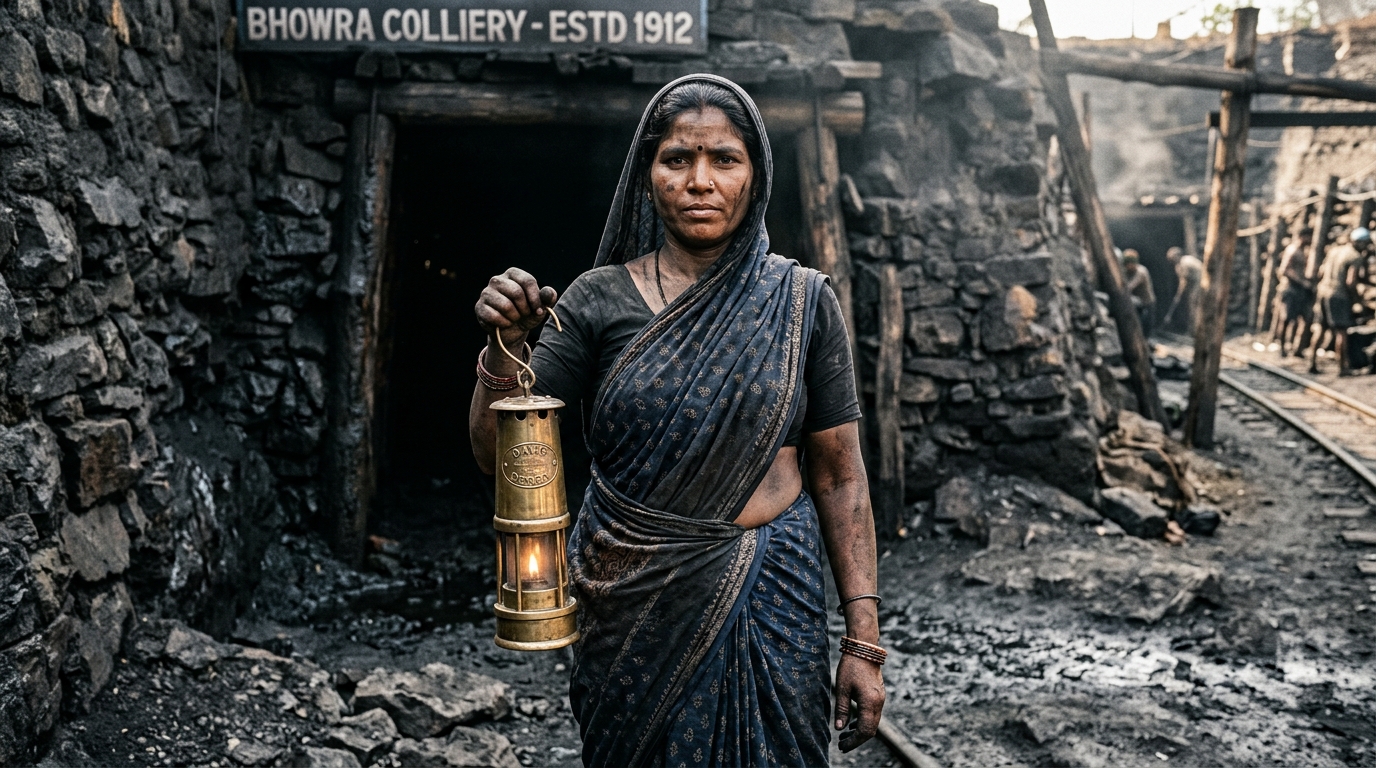
The hidden female coal miners of WWII are an estimated 60,000 working-class and lower-caste Indian women who provided the economic backbone for the Allied war effort. These laborers worked in India's coal mines after the British government lifted a 1943 ban on women working underground to replace drafted male laborers. Mainstream timelines focus on queens and political leaders, ignoring the female miners who carried heavy loads to maintain the war effort. The female coal miners earned far less pay than male laborers. The women's daily sacrifice kept industrial production running during a global crisis. We rarely see the miners' names recorded in official documents. Yet, the women's collective output fueled the trains and factories that supplied the front lines.
Spies, Broadcasters, and Allied Support
The scope of female involvement extended far beyond the subcontinent. Approximately 10,000 Indian women supported the Allied war effort in pre-partition India. Princess Indira Devi of Kapurthala drove ambulances. She also broadcast news in Hindi to Indian soldiers. Noor Inayat Khan took a different path. She became a secret agent and the first female wireless operator sent to Nazi-occupied France. Her espionage work saved countless lives before her capture and execution at Dachau. Her story highlights the global reach of Indian women during the twentieth century. We cover similar wartime impacts in our suggested timeline of indian military history.
Why does the women pioneers in indian history timeline still omit certain groups?
Traditional historical records favor prominent political leaders and elite classes. This bias leaves out indentured workers, early diasporic migrants, and lower-caste laborers whose economic contributions remain buried in colonial archives rather than celebrated in mainstream textbooks.
The Missing Diasporic Narratives
The history of Indian women taken as indentured workers to the Caribbean is largely absent from domestic timelines. Colonial administrators sent thousands of "girmitiya" women to work on sugar plantations in Fiji, Mauritius, and Trinidad. These women rebuilt communities in foreign lands under brutal conditions. Others migrated as early pioneers to places like New Zealand and Canada. Their stories represent a massive gap in how we teach Indian history. They established cultural outposts and fought for labor rights abroad. Including them changes our understanding of Indian influence worldwide.
Reclaiming the "Unsung" Narrative
Almost all ranking articles frame these women as deliberately erased by patriarchal and colonial textbook narratives. Finding documentation for working-class women is difficult due to historical illiteracy rates and a lack of official record-keeping. Roobina Karode from the Kiran Nadar Museum of Art points out a crucial fact. The trauma and violent displacement of women during the Partition of India is a foundational wound that refuses to be buried. Modern institutions have a responsibility to hold space for these narratives. Acknowledging these gaps is the first step toward fixing them. Historians must dig into regional archives and oral histories to find the women left out of the official record.
What impact did women have on India's social reform movements?
Female reformers drove the creation of schools, shelters, and legal frameworks that protected vulnerable populations. They challenged entrenched social practices and built the early infrastructure for women's education, setting the stage for later political and economic freedoms.
Who pioneered education for girls in India?
Savitribai Phule is the pioneering educator who opened the first school for girls in Pune in 1848, changing the trajectory of the nation. Phule faced intense public backlash, with people throwing stones and mud at the teacher as Phule walked to work to build the early infrastructure for women's education. Savitribai Phule carried a spare sari to change into once Phule reached the classroom. Fatima Sheikh worked alongside Phule, providing space in Sheikh's home for the school. Phule and Sheikh's persistence created a blueprint for grassroots educational reform. Following Phule and Sheikh's lead, other reformers established educational institutions across the country. The new schools trained the next generation of female leaders. You can read about the impact of these movements in our Timeline of Mahatma Gandhi's Nonviolent Movements in India.
Legal and Social Advocacy
Education was only one part of the struggle. Women also fought for legal protections against child marriage and forced widowhood. Pandita Ramabai founded the Arya Mahila Samaj to promote women's education and deliverance from oppression. She established shelters for widows and advocated for medical training for women. Rukhmabai fought a landmark legal case in the 1880s regarding the age of consent. She later became one of the first practicing female doctors in India. Their work forced colonial administrators to acknowledge the need for social reform. These early advocates used their limited resources to build lasting institutions. Their efforts directly influenced the legal rights granted to women after independence.
How are modern institutions expanding the women pioneers in indian history timeline today?
Modern museums and heritage projects are actively unearthing letters, photographs, and artifacts to document women's history. These organizations lobby for dedicated physical spaces and host specialized exhibitions to ensure female pioneers receive permanent public recognition.
What are the uncovered WWII archives of South Asian women?
The uncovered WWII archives of South Asian women are newly discovered photographs and letters documenting the hidden roles of Indian women in global conflicts. Published in March 2026 by the "Believe in Me" heritage project and the National Lottery Heritage Fund, these materials provide hard evidence of female military participation. The historical archives force textbook publishers to update educational chronologies. Finding the historical documents requires painstaking research. The research process involves cross-referencing military ration cards with personal correspondence. The dedicated archival work pulls forgotten names back into the public record.
Institutional Recognition and Museums
Physical spaces dedicated to these stories are growing. The Indian Music Experience Museum in Bengaluru hosted "Women's History, Art & Music (WHAM) 2026." This exhibition foregrounded how Indian women shaped the nation's music across history. The Jaipur Wax Museum recently unveiled a statue of Indian women's cricket captain Harmanpreet Kaur. This event commemorated the team's historic World Cup victory. It reflects a modern push to memorialize female pioneers. In 2025, the Indian Women's History Museum Foundation launched the Inspiration Awards. They are actively lobbying government organizations for a permanent physical museum space dedicated solely to Indian women's history. You can explore modern cultural milestones in our Historic Milestones of Indian Cinema on the Global Stage.
Related Reading
- Milestones in Indian Women's History: A Chronological Guide
- Indian History Timeline Chart: Key Milestones (Digital Reference)
- Indian History Milestones: The Maurya and Gupta Empires
- 1,000 Years of Indian Medical History: A Chronological Guide
FAQ
Q: Who was the first Indian woman to get a pilot license? Sarla Thakral became the first Indian woman to acquire an aviation pilot license in 1936. She accumulated over 1,000 hours of flying at the Lahore Flying Club at just 21 years old.
Q: What role did Indian women play in WWII? An estimated 60,000 women worked in India's coal mines to sustain the war effort. Roughly 10,000 Indian women supported the Allied forces through roles like driving ambulances and broadcasting news.
Q: Who was Janaki Ammal and why is she important? Janaki Ammal was a pioneering Indian botanist who developed high-yield sugarcane varieties. Her research fundamentally reshaped modern agricultural science and helped secure India's domestic food supply.
Q: Where can I learn more about Indian women's history? Institutions like the Indian Women's History Museum Foundation and specific exhibits at the Indian Music Experience Museum curate these stories. The "Believe in Me" heritage project also recently published archives on South Asian women in WWII.
Review the historical dates most relevant to your current studies or interests. Search our 10 Most Searched Dates in Indian History and Why They Matter to find a specific era to focus on. Pick one unsung pioneer from that period, read their primary source letters, and add their milestones to your personal study notes today.
Sources
- Sarla Thukral — Wikipedia, 2026. Supports: Sarla Thakral was the first Indian woman to acquire an aviation pilot license in 1936 at age 21, accumulating over 1,000 hours of flying time.
- Gārgī Vāchaknavī — Wikipedia, 2026. Supports: Gargi Vachaknavi publicly challenged the sage Yajnavalkya in the Brihadaranyaka Upanishad.
- Janaki Ammal — Wikipedia, 2026. Supports: Janaki Ammal was an early Indian female botanist who developed high-yield sugarcane varieties and had a magnolia flower (Magnolia kobus Janaki Ammal) named after her.
- Asima Chatterjee's 100th Birthday — Google Doodles, 2017. Supports: Asima Chatterjee was the first woman to receive a Doctorate of Science from an Indian university, researching vinca alkaloids and developing anti-epileptic and anti-malarial drugs.
- Women beneath the Surface: Coal and the Colonial State in India during the Second World War — Taylor & Francis, 2020. Supports: An estimated 60,000 Indian women worked in coal mines during WWII after the British government lifted a 1943 ban on women working underground.
- Noor Inayat Khan | Biography, World War II, SOE, French Resistance, & Facts — Britannica, 2024. Supports: Noor Inayat Khan was a secret agent and the first female wireless operator sent to Nazi-occupied France, later executed at Dachau.