Unearthing the Past: Key Dates in Indian Archaeological Discoveries
The Quick Read
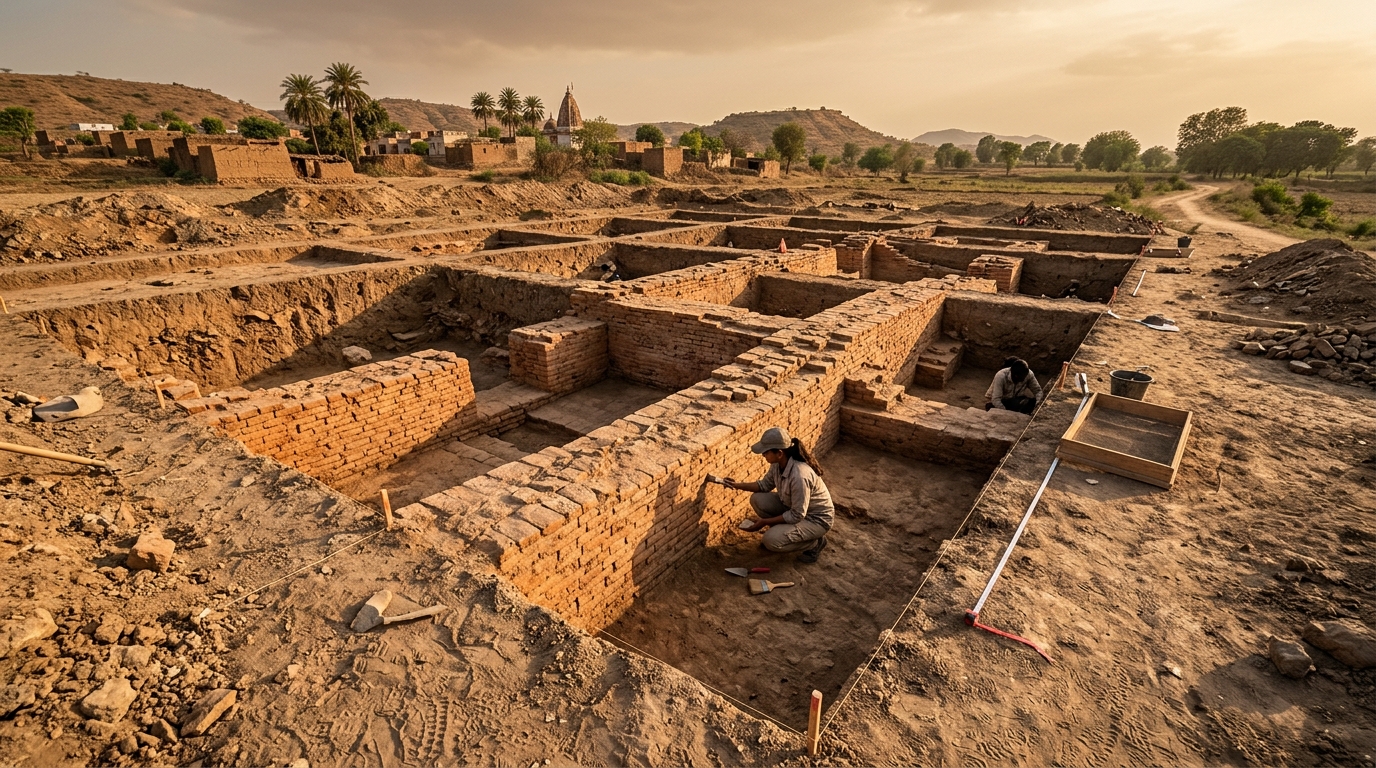
Indian archaeological history dates trace back to 1819 when a British officer stumbled upon the Ajanta Caves. The most monumental shifts occurred in 1921 and 1922 with the unearthing of Harappa and Mohenjo-Daro, proving the Indus Valley Civilization's existence. Recent discoveries like Keeladi in 2015 continue pushing India's ancient timeline further back.
Key Takeaways
- The 1921 discovery of Harappa pushed India's known history back by millennia.
- Colonial officers stumbled upon major sites like the Ajanta Caves while hunting.
- South Indian excavations at Keeladi redefine the Sangam era timeline today.
- Recent DNA evidence from Rakhigarhi reshapes our understanding of ancient migrations.
- Modern technology like ground-penetrating radar accelerates new historical discoveries.
In 1921, Daya Ram Sahni stood in the dusty plains of Punjab, staring at a series of strange brick mounds. He ordered his team to dig, unaware they were about to uncover Harappa and add thousands of years to the subcontinent's known past. This single moment redefined Indian archaeological history dates forever, shifting the world's understanding of human civilization.
What are the foundational Indian archaeological history dates?
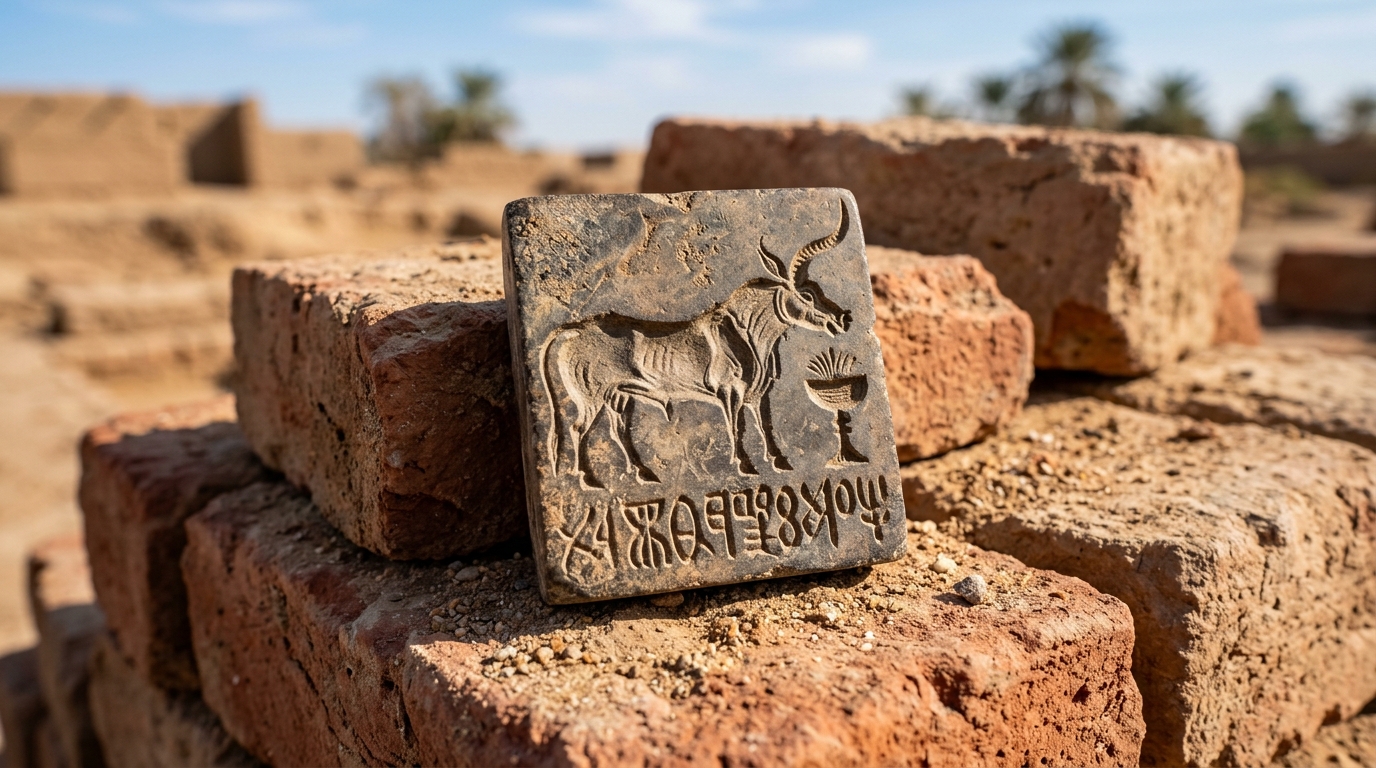
The foundational Indian archaeological history dates center on 1921 and 1922. These years mark the excavation of Harappa and Mohenjo-Daro by the Archaeological Survey of India. Before these dates, historians believed Indian history began with the Vedic period. These two discoveries pushed the timeline back by over 2,000 years.
The 1921 Harappa Breakthrough
For decades, railway workers in the Punjab region used ancient, perfectly baked bricks as track ballast. They did not know they were dismantling a 4,000-year-old city. In 1921, the Archaeological Survey of India (ASI) officially began excavations at Harappa under Daya Ram Sahni.
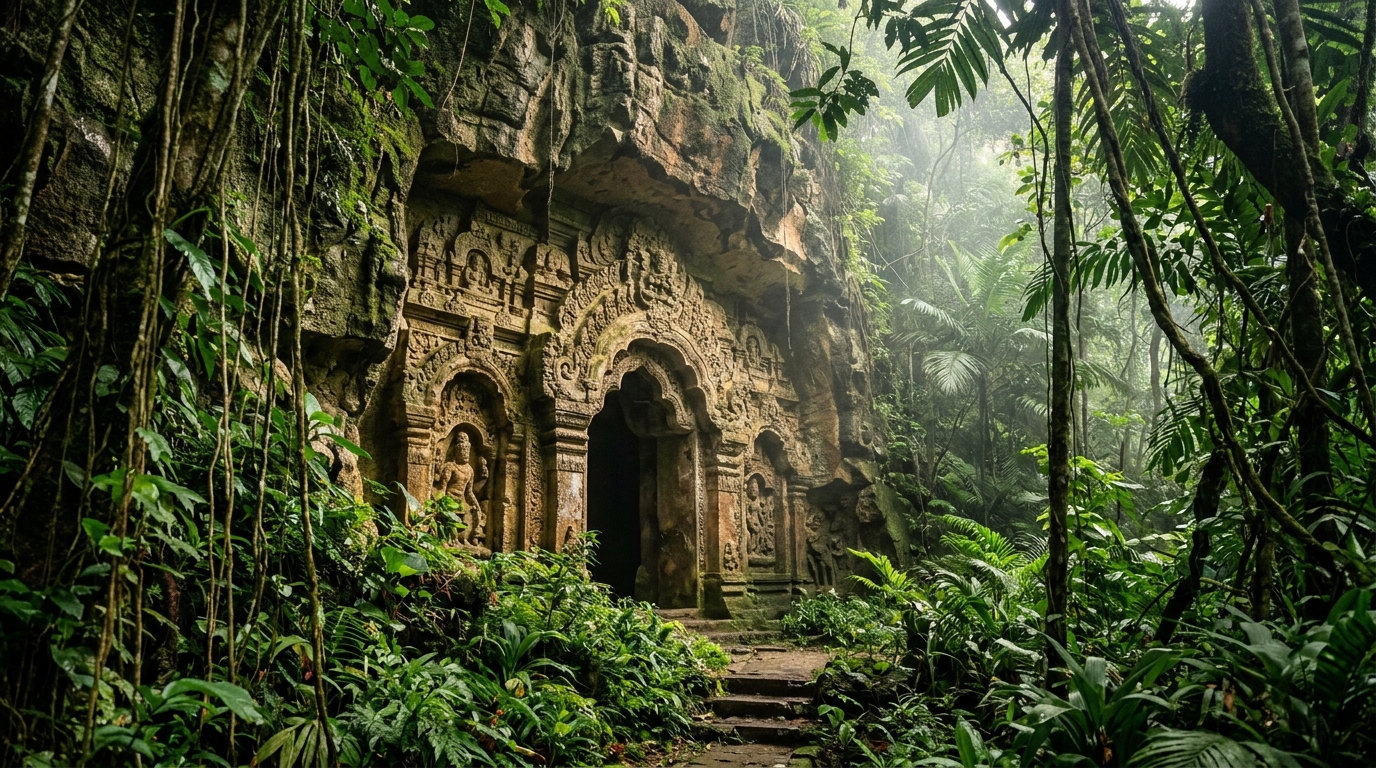
Sahni found seals with an unreadable script. He found sophisticated drainage systems. He found evidence of a highly organized urban society. This discovery proved that a massive, ancient civilization existed along the Indus River. It instantly became one of the 10 most searched dates in Indian history and why they matter for students and researchers alike.
Mohenjo-Daro's 1922 Revelation
Just one year later, in 1922, R.D. Banerji made an equally staggering discovery 400 miles away in Sindh. He was initially looking for a Buddhist stupa. Instead, beneath the stupa, he found the sprawling ruins of Mohenjo-Daro.
John Marshall, the Director-General of the ASI, announced these findings to the world in 1924. He stated that India possessed a civilization to rival Egypt and Mesopotamia. The artifacts found here, including the famous bronze "Dancing Girl" and the "Priest-King" statue, remain central to our understanding of ancient human life.
| Site Name | Discovery Date | Lead Archaeologist | Key Finding |
|---|---|---|---|
| Harappa | 1921 | Daya Ram Sahni | Steatite seals with Indus script |
| Mohenjo-Daro | 1922 | R.D. Banerji | The Great Bath, bronze artifacts |
| Lothal | 1954 | S.R. Rao | Ancient dockyard |
| Kalibangan | 1952 | A. Ghosh | Ploughed field, fire altars |
The 1954 Discovery of Lothal
After the partition of India in 1947, most known Indus Valley sites ended up in Pakistan. Indian archaeologists needed to find sites within their new borders. In 1954, S.R. Rao discovered Lothal in Gujarat.
Lothal revealed the world's earliest known dockyard. It showed that the Indus Valley people were not just land-based farmers, but active maritime traders. They traded beads, gems, and valuable ornaments across the Arabian Sea.
When were India's earliest rock art and paintings discovered?
India's earliest rock art and cave paintings were primarily discovered between 1819 and 1957. The Ajanta Caves were found by a British hunting party in 1819. Decades later, in 1957, an Indian archaeologist spotted the Bhimbetka rock shelters from a train window, revealing prehistoric paintings dating back 30,000 years.
Uncovering the Ajanta Caves in 1819
In April 1819, a British cavalry officer named John Smith was tiger hunting in the Deccan Plateau. He followed a tiger's trail down into a steep gorge. Look closely through the brush, he saw a carved facade hidden in the rock face.
Smith had stumbled upon Cave 10 of the Ajanta Caves. These caves held some of the most intricate and well-preserved Buddhist frescoes in the world. The discovery sparked a massive interest in ancient Indian art. It showed a level of artistic mastery that European scholars previously did not believe existed in ancient India.
Bhimbetka's 1957 Discovery
Fast forward to 1957. Archaeologist V.S. Wakankar was riding a train through Madhya Pradesh. He looked out the window and noticed sandstone rock formations that looked surprisingly similar to sites he had seen in Spain and France.
He stopped his journey and hiked into the jungle to investigate. He found the Bhimbetka rock shelters. These caves contained thousands of paintings depicting animals, hunting scenes, and human life. Some of these paintings are over 30,000 years old. Wakankar's sharp eye added one of the most crucial Indian archaeological history dates to the prehistoric timeline.
The 1900s Exploration of Ellora
While the Ellora caves were never truly "lost" like Ajanta, their systematic archaeological study began in the early 20th century. The ASI took over their conservation in the 1920s.
Ellora represents a unique blend of religious tolerance. Buddhist, Hindu, and Jain monuments stand side by side, carved directly out of the basalt cliffs. The Kailasa temple, carved from a single piece of rock, remains an engineering marvel that modern architects still struggle to fully explain.
How did colonial-era excavations shape Indian archaeological history dates?
Colonial-era excavations established the formal timeline of Indian archaeological history dates starting in the mid-19th century. Alexander Cunningham founded the Archaeological Survey of India in 1861. His work mapping Buddhist sites like Sarnath and Sanchi created the first structured chronological record of India's ancient monuments.
Alexander Cunningham and Sarnath in 1861
Alexander Cunningham was a British army engineer with a deep passion for history. In 1861, he convinced the British government to fund an official archaeological survey. He became the first Director-General of the ASI.
Cunningham used the travel logs of ancient Chinese pilgrims, like Xuanzang, to locate lost Buddhist sites. He systematically excavated Sarnath, the site where the Buddha gave his first sermon. He also restored the Great Stupa at Sanchi. His methods were crude by today's standards, but he saved countless monuments from complete destruction.
His work laid the groundwork for future historians. You can see similar colonial influences on regional architecture in our guide to the Portuguese Era in Goa: Key Dates and Architectural Milestones.
The 1845 Taxila Surveys
Before Cunningham, other officers were mapping the northwest frontier. In the 1840s, explorers began identifying the ruins of Taxila. This ancient city was a massive center of learning and trade.
Taxila was conquered by Alexander the Great, ruled by the Mauryans, and later controlled by the Indo-Greeks. The excavations here revealed a blend of Greek and Indian artistic styles known as Gandhara art. It proved that ancient India was deeply connected to the Mediterranean world through trade and conquest.
Lord Curzon's 1904 Preservation Act
A major turning point in Indian archaeological history dates occurred in 1904. Lord Curzon, the Viceroy of India, passed the Ancient Monuments Preservation Act.
Before this act, locals and colonial officers frequently looted sites for building materials or personal collections. The 1904 act made it a legal requirement to protect these historical assets. It provided the ASI with the authority and funding to maintain sites, ensuring that future generations could study them.
What are the key dates for South Indian archaeological sites?
The key dates for South Indian archaeological sites gained momentum in 1945 with the excavation of Arikamedu. More recently, the 2015 discoveries at Keeladi completely shifted the timeline of the Sangam era. These dates prove that South India hosted complex, urban civilizations much earlier than previously recorded.
Arikamedu's 1945 Roman Connection
In 1945, Mortimer Wheeler took charge of excavating Arikamedu near Pondicherry. He brought strict, scientific stratigraphic digging methods to India.
Wheeler found something remarkable: Roman pottery. He uncovered amphorae that once held Mediterranean wine and olive oil, along with Roman lamps and glassware. This 1945 discovery provided hard, physical evidence of the extensive maritime trade network between the Roman Empire and South India during the first century CE. It proved that India's coastal cities were global trade hubs.
Keeladi's 2015 Sangam Era Shift
One of the most disruptive Indian archaeological history dates in modern times is 2015. The ASI, led by Amarnath Ramakrishna, began excavating a site called Keeladi in Tamil Nadu.
They found a massive urban settlement along the Vaigai River. Carbon dating of the artifacts pushed the Sangam era back to 580 BCE. They found Tamil-Brahmi script on pottery, advanced brick structures, and evidence of high literacy among the common people.
Keeladi changed the narrative. It proved that a sophisticated, urban civilization existed in South India at the same time the second urbanization was happening in the Gangetic plains.
The 2004 Tsunami and Mahabalipuram
Sometimes nature forces a discovery. In 2004, the devastating Indian Ocean tsunami pulled the sea back several hundred meters off the coast of Mahabalipuram.
For a brief moment, locals and tourists saw the ruins of ancient temples emerging from the sea floor. When the water returned, it washed away centuries of sand on the beach, revealing previously unknown rock sculptures. The ASI quickly moved in to document and excavate these new finds, confirming local legends about the "Seven Pagodas" of Mahabalipuram.
Which recent Indian archaeological history dates rewrite our understanding?
Recent Indian archaeological history dates from 2015 to 2018 are actively rewriting our understanding of the subcontinent. The 2018 discovery of a copper-age chariot at Sinauli challenges older theories of ancient warfare. Meanwhile, 2015 DNA findings from Rakhigarhi provide new insights into the genetic origins of the Harappan people.
Sinauli's 2018 Chariot Discovery
In 2018, the ASI excavated a site at Sinauli in Uttar Pradesh. They found something unprecedented in the Indian subcontinent: full-sized, copper-decorated chariots buried alongside warriors.
The site dates back to roughly 2000 BCE. Before 2018, historians widely believed that chariots were brought to India later by migrating Indo-Aryan groups. The Sinauli chariots challenge this timeline. They show a highly advanced, indigenous warrior class producing complex vehicles earlier than previously thought. This site is rapidly becoming a focal point in the history of the Archaeological Survey of India.
Rakhigarhi's DNA Findings in 2015
Rakhigarhi, located in Haryana, is currently recognized as the largest Indus Valley Civilization site. While discovered earlier, the crucial date here is 2015, when scientists successfully extracted ancient DNA from skeletal remains found at the site.
The 2015 genetic study published by Vasant Shinde and a team of global geneticists showed that the Harappan people had an independent origin. They did not have the Steppe pastoralist ancestry that arrived in India later. This DNA evidence settled decades of debate about who built the Indus Valley cities.
Dholavira's 1990 Water Management Revelations
Discovered in 1967, Dholavira in Gujarat saw its most extensive excavations begin in 1990 under R.S. Bisht. Dholavira stands out because it lacks a major river.
The 1990 excavations revealed how the city survived: through an incredibly complex water management system. The ancient engineers built massive stone reservoirs and check dams to harvest monsoon rain. This level of hydraulic engineering from 3000 BCE continues to astound modern urban planners. The site was so significant that it recently earned UNESCO World Heritage status.
For more context on how ancient Indians managed resources and health, you can read our guide to 1,000 Years of Indian Medical History: A Chronological Guide.
Related Reading
- 10 Most Searched Dates in Indian History and Why They Matter
- Milestones in Indian Women's History: A Chronological Guide
- Online Indian History Study Materials: Important Dates Index
- 1,000 Years of Indian Medical History: A Chronological Guide
FAQ
Q: What is the oldest archaeological site discovered in India? The Bhimbetka rock shelters in Madhya Pradesh contain evidence of human habitation stretching back over 100,000 years, with cave paintings dating to roughly 30,000 BCE. It remains the oldest confirmed site of continuous human presence in the region.
Q: Who founded the Archaeological Survey of India? Alexander Cunningham founded the Archaeological Survey of India in 1861. He was a British army engineer who recognized the need to systematically document and protect India's rapidly decaying historical monuments.
Q: When was the Indus Valley Civilization first discovered? The civilization was officially recognized after the excavations of Harappa in 1921 and Mohenjo-Daro in 1922. These discoveries proved the existence of a massive Bronze Age society in the northwest of the subcontinent.
Q: Can visitors access active archaeological sites in India? Yes, many major sites like Lothal, Dholavira, and Sarnath are open to the public. However, access to active digging trenches is usually restricted to ASI personnel and authorized researchers to prevent damage to delicate artifacts.
Review the timeline of these discoveries, pick one site that catches your interest, and search the official ASI website for their original excavation reports today. Reading the exact field notes from 1921 or 1945 gives you a raw, unfiltered look at the exact moment history changed.