Tracking the Skies: A Historical Timeline of Meteorology in India
TL;DR
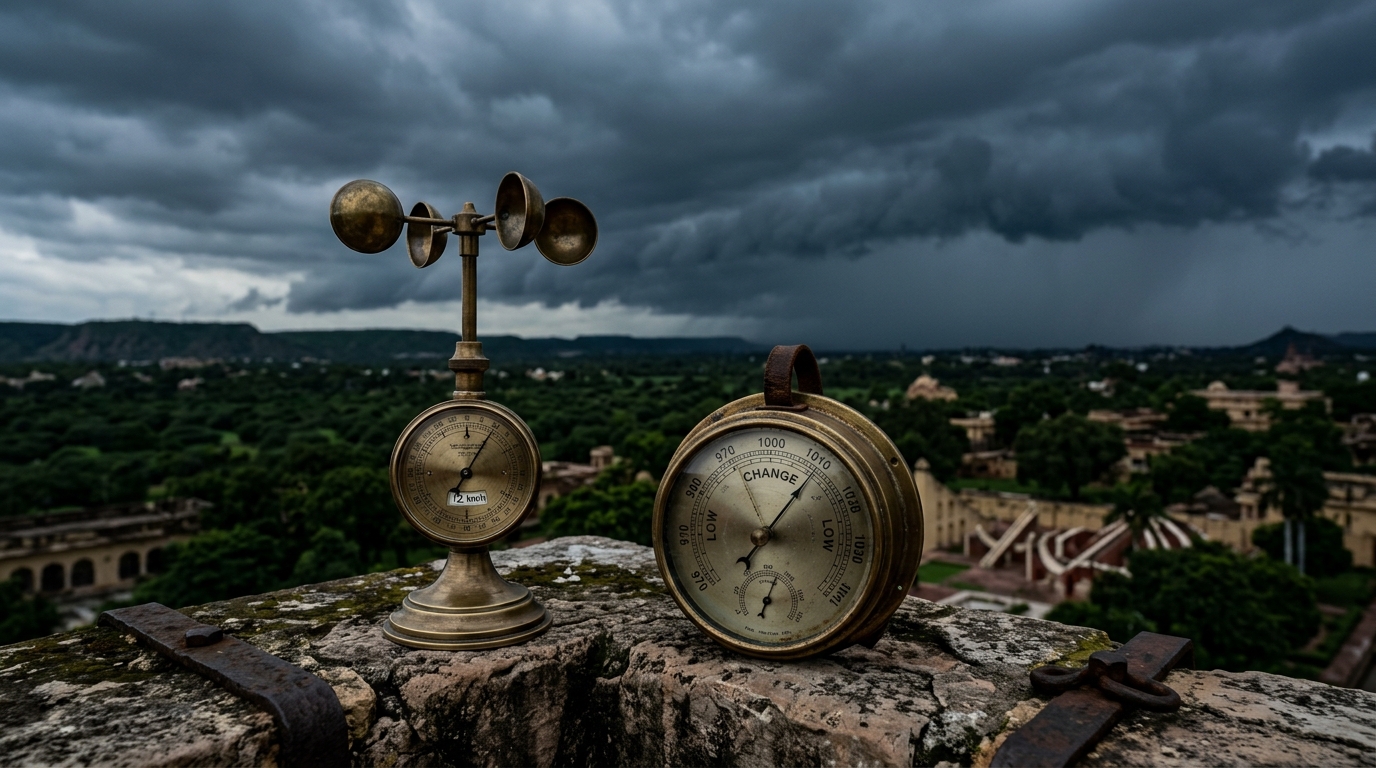
The history of Indian meteorology traces the evolution of weather tracking from the establishment of the Madras Observatory in 1792 to modern satellite-based forecasting. Driven by the need to predict monsoon patterns and devastating cyclones, India developed a robust scientific framework that continues to protect lives and agricultural economies today.
Key Takeaways
- The catastrophic cyclones of 1864 triggered the creation of India's first centralized meteorological system.
- The India Meteorological Department (IMD) officially unified regional weather tracking in 1875.
- Indian physicist Anna Mani revolutionized meteorological instrumentation for solar and wind energy.
- The INSAT satellite series in the 1980s shifted forecasting from ground-based to space-based observation.
- Supercomputing investments in the 1990s dramatically improved the accuracy of long-range monsoon predictions.
In 1864, two catastrophic cyclones struck the eastern coast of India within two months, killing over 100,000 people in Calcutta and Machilipatnam. This staggering loss of life exposed a massive blind spot in administrative planning. You cannot govern an agrarian society without understanding its weather. The history of Indian meteorology is fundamentally a story of survival, adaptation, and scientific rigor. Tracking the skies became an absolute necessity for managing agriculture, securing shipping routes, and ensuring public safety.
The timeline of these developments rivals the complexity of any major national milestone, much like the 1,000 Years of Indian Medical History: A Chronological Guide. From early colonial trade interests to independent India's ambitious space programs, weather prediction required constant, relentless innovation. We track these dates daily at India On This Day because they explain how the subcontinent built resilience against natural disasters over centuries.
How Did the Earliest Observatories Shape the History of Indian Meteorology?
The earliest observatories transformed isolated weather observations into systematic scientific records. By establishing fixed locations with standardized instruments in the late 18th century, early scientists created baseline data for temperature, pressure, and rainfall that future meteorologists used to identify long-term climatic patterns across the subcontinent.
The Madras Observatory (1792)
The East India Company established the Madras Observatory in 1792. It was the first formal astronomical and meteorological observatory in the region. William Petrie, an astronomer and Company officer, initially set up private instruments at his residence before transferring them to the government. This facility began keeping systematic records of temperature, barometric pressure, and rainfall.
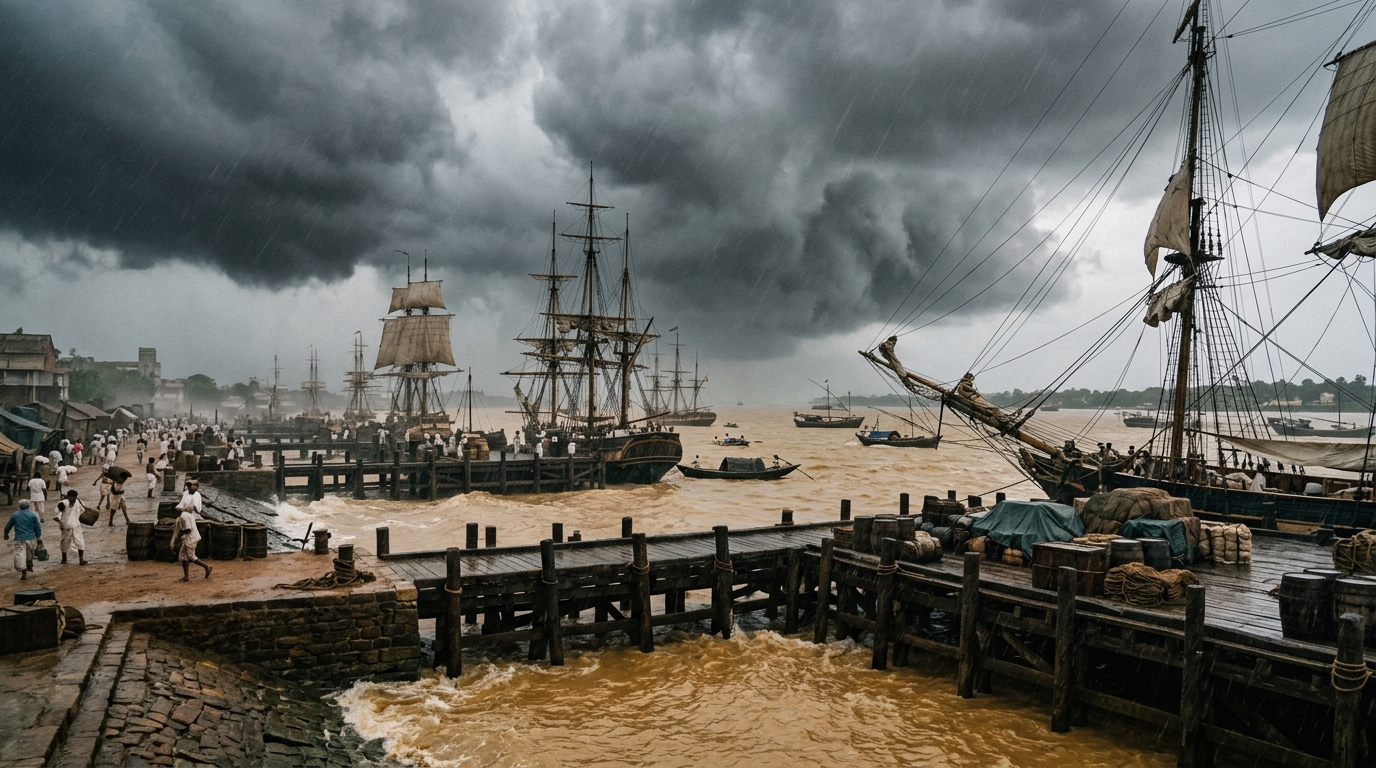
These early logs provided the first continuous dataset of Indian weather. Meteorologists rely on long-term data to spot anomalies. Without the decades of continuous daily logging started in Madras, later scientists would have lacked the historical baseline needed to understand the complex variations of the Asian monsoon.
The Colaba Observatory in Bombay (1826)
Following the success in Madras, the government established the Colaba Observatory in Bombay in 1826. This facility initially focused on magnetic and astronomical observations to aid maritime navigation. However, by 1841, it expanded its scope to include regular meteorological recordings.
The Colaba Observatory played a critical role in understanding the Arabian Sea's weather systems. Ships entering the busy port of Bombay required accurate wind and tide data. The observatory staff meticulously recorded hourly atmospheric pressure changes. These records eventually helped researchers trace the path of cyclonic storms forming off the western coast.
Early Instruments and East India Company Directives
Before centralized departments existed, weather tracking depended on the initiative of individual medical officers and engineers scattered across military cantonments. The East India Company issued directives requiring medical officers to maintain weather diaries. They believed local climate directly impacted the spread of tropical diseases.
These officers used simple but effective mercury barometers, wet-and-dry bulb thermometers, and basic rain gauges. While the data collection lacked strict uniformity, it seeded the concept of a subcontinent-wide observational network.
| Observatory Location | Year Established | Primary Focus Areas |
|---|---|---|
| Madras (Chennai) | 1792 | Astronomy, baseline temperature, and rainfall logging |
| Colaba (Mumbai) | 1826 | Magnetic observations, maritime weather, Arabian Sea tracking |
| Trivandrum | 1836 | Magnetic and meteorological data for southern peninsula |
| Dodabetta | 1847 | High-altitude atmospheric observations |
Why Was the India Meteorological Department (IMD) Formed in 1875?
The India Meteorological Department was formed in 1875 to consolidate fragmented regional weather data into a single national framework. Following severe famines and deadly cyclones, the colonial administration realized that isolated observatories could not issue the timely, subcontinent-wide warnings necessary to protect agricultural output and human life.
The Catalyst of the 1864 Cyclones
Isolated data cannot predict moving storm systems. The twin cyclones of 1864 proved this with devastating clarity. The Calcutta cyclone destroyed port infrastructure and sank hundreds of ships. Shortly after, a massive storm surge hit Machilipatnam.
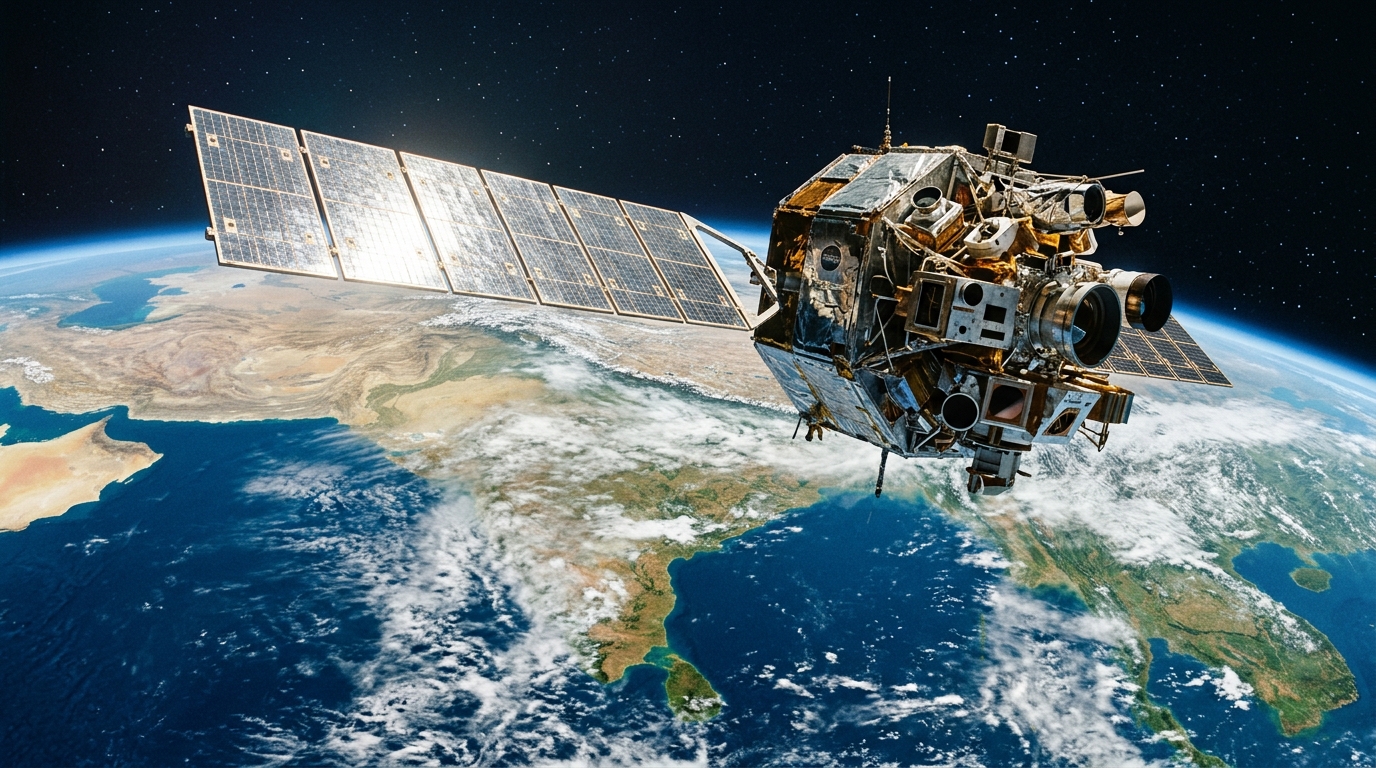
These events forced a reckoning. The government realized that regional administrators were working in silos. Much like the systemic changes documented in December 1984: A Historical Timeline of the Bhopal Gas Tragedy, massive loss of life forced the government to overhaul its approach to public safety and early warning systems.
Henry Francis Blanford and the First Centralized System
In 1875, the government established the India Meteorological Department (IMD) and appointed Henry Francis Blanford as the first Imperial Meteorological Reporter. Blanford brought order to the chaos. He recognized that predicting the monsoon required viewing the Indian subcontinent as a single, interconnected atmospheric system.
He centralized the collection of data from over 75 observatories. Blanford also initiated the publication of daily weather reports. His work laid the administrative foundation that the IMD still operates on today. By bringing all provincial meteorologists under one central authority, he eliminated redundant efforts and standardized the science.
Standardizing Data Collection Across the Subcontinent
Data is useless if it is not standardized. Before the IMD, an observer in Bengal might measure rainfall differently than an observer in Punjab. Blanford mandated the use of uniform instruments across all stations. He also introduced standardized times for taking readings.
The telegraph network proved vital to this effort. Observers telegraphed their daily readings to the central office in Calcutta. This rapid transmission of data allowed the IMD to draw the first synoptic weather charts of India. These charts mapped pressure systems across the country, enabling the first real attempts at short-range weather forecasting.
What Role Did Indian Scientists Play in Advancing Weather Prediction?
Indian scientists localized global meteorological concepts to decode the unique dynamics of the Asian monsoon. They designed indigenous weather instruments, developed complex statistical models for rainfall prediction, and established high-altitude research stations that drastically improved the accuracy of seasonal forecasts for farmers and policymakers.
Lala Deen Dayal and Visual Records
Historical sites and events thrive on imagery. While meteorologists recorded numbers, photographers captured the reality of the weather. Lala Deen Dayal, a prominent Indian photographer in the late 19th century, documented the aftermath of monsoons and famines.
His visual records provided crucial context for the meteorological data. When the IMD recorded a severe rainfall deficit in 1899, photographs of dry riverbeds and failing crops translated those numbers into tangible historical evidence. Today, defining these historical figures as clear entities helps us map the intersection of art, science, and history.
Dr. Vasantrao Gowarikar and the Monsoon Model
Predicting the Indian monsoon is notoriously difficult. In the late 1980s, Indian meteorologist Dr. Vasantrao Gowarikar developed the 16-parameter power regression model. This model revolutionized long-range forecasting in India.
Gowarikar's team identified 16 distinct global and regional weather parameters—such as Eurasian snow cover and the El Niño phenomenon—that directly influenced the Indian monsoon. By feeding these variables into a statistical model, the IMD achieved unprecedented accuracy in predicting total seasonal rainfall. This breakthrough directly supported agricultural planning across the country.
Anna Mani's Contributions to Solar and Wind Instrumentation
You cannot discuss the history of Indian meteorology without recognizing Anna Mani. An Indian physicist and meteorologist, Mani joined the IMD in 1948. She realized that India relied too heavily on imported weather instruments.
Mani led the effort to design and manufacture over 100 different meteorological instruments domestically. She specifically pioneered the measurement of solar radiation and wind energy in India. Her work involved setting up a network of solar radiation stations. She also developed the Indian ozonesonde, an instrument sent up in balloons to measure atmospheric ozone levels. Her rigorous standardization ensured that Indian weather data met the strict guidelines of the World Meteorological Organization (WMO).
How Did Independence Transform the History of Indian Meteorology?
Independence shifted the focus of meteorological science from serving colonial trade routes to prioritizing national food security and public safety. The government relocated headquarters, integrated weather services with agricultural planning, and expanded the observational network into remote regions like the Himalayas to better serve Indian citizens.
Relocating Headquarters and Expanding Networks
The IMD headquarters moved several times before settling in New Delhi in 1944. After 1947, the newly independent Indian government rapidly expanded the department's reach. The colonial administration had largely focused on coastal areas and major trade hubs. Independent India needed data from every district.
The government established hundreds of new surface observatories. They also expanded the radiometeorology network, using weather radars to track thunderstorms and cyclones. This expansion ensured that early warnings reached inland farmers, not just coastal shipping companies.
The Impact of the Green Revolution on Agro-Meteorology
The Green Revolution of the 1960s changed Indian agriculture forever. High-yield crop varieties required precise water management. The IMD adapted by launching specialized agro-meteorological advisory services.
Meteorologists began issuing tailored forecasts for different farming zones. They advised farmers on the optimal times for sowing, irrigation, and harvesting based on short-term weather predictions. This integration of weather tracking and farming directly ties into the Economic Milestones in Indian History: From 1947 to Present. Accurate weather data became a cornerstone of India's economic survival.
Transitioning from Colonial Legacy to National Priorities
Colonial meteorology primarily served the British Empire's commercial and military interests. Post-independence, the mandate shifted to serving the Indian citizen. The IMD established the Directorate of Aviation Meteorology to support the growing domestic airline industry.
They also focused heavily on hydrology. India's major rivers are prone to flooding. The IMD set up flood meteorological offices to monitor rainfall in river catchments. By combining rainfall data with river gauge readings, they developed early warning systems that saved thousands of lives in the flood plains of the Ganges and Brahmaputra.
When Did Satellites and Computers Revolutionize Indian Climate Tracking?
The integration of satellites and supercomputers in the 1980s and 1990s revolutionized climate tracking by enabling real-time monitoring of weather systems from space. This technological leap allowed meteorologists to process massive datasets instantly, leading to precise cyclone tracking and highly accurate long-range monsoon forecasting.
The Launch of INSAT-1A in 1982
Ground-based observation has limits. You can only see a storm when it approaches the coast. The launch of the Indian National Satellite System (INSAT) changed everything. In 1982, INSAT-1A went into orbit, equipped with Very High Resolution Radiometer (VHRR) payloads.
This satellite provided continuous images of cloud cover over the entire Indian Ocean. Meteorologists could finally track cyclones from the moment they formed at sea. The history of isro satellites is deeply intertwined with meteorology. Today, the INSAT-3D series provides multi-spectral imagery, profiling atmospheric temperature and humidity with incredible precision.
Supercomputing and the Introduction of Param
Weather prediction is a math problem. The atmosphere is a fluid, and tracking its movement requires solving complex differential equations. In the 1980s, India faced technology embargoes that restricted access to foreign supercomputers.
In response, the Center for Development of Advanced Computing (C-DAC) built the Param 8000 supercomputer in 1991. The IMD immediately utilized this massive computing power to run Numerical Weather Prediction (NWP) models. These models divide the atmosphere into a three-dimensional grid, calculating future weather states based on current data. Supercomputing transformed long-range forecasting from a statistical guessing game into a precise physical science.
Modern Early Warning Systems and Cyclone Phailin
The ultimate test of a meteorological system is a severe weather event. In 1999, a super cyclone hit Odisha, killing over 10,000 people. The tracking was accurate, but the dissemination of warnings failed.
By 2013, when the similarly powerful Cyclone Phailin approached the same coast, the system had evolved. The IMD used advanced satellite tracking and supercomputer modeling to predict the exact landfall location and time days in advance. Government agencies evacuated nearly a million people. The death toll was kept under 50. This massive success demonstrated how far the history of Indian meteorology had progressed. The science now actively prevents natural hazards from becoming human disasters.
Related Reading
- Milestones in Indian Women's History: A Chronological Guide
- 1,000 Years of Indian Medical History: A Chronological Guide
- Economic Milestones in Indian History: From 1947 to Present
- What Are the Major Events in Indian History? (FAQ Archive)
FAQ
Q: When was the India Meteorological Department established? The India Meteorological Department (IMD) was officially established in 1875. The government appointed Henry Francis Blanford as the first Imperial Meteorological Reporter to centralize weather data collection across the subcontinent.
Q: What is the primary role of the IMD today? The IMD serves as the national meteorological service of the country. It provides weather forecasts, issues early warnings for severe weather events like cyclones, and maintains the national seismological network to monitor earthquakes.
Q: Who was Anna Mani and why is she important? Anna Mani was an Indian physicist and meteorologist who joined the IMD in 1948. She revolutionized the field by designing and standardizing over 100 indigenous weather instruments, specifically pioneering solar radiation and wind energy measurement in India.
Q: How does India track cyclones currently? India tracks cyclones using a combination of space-based and ground-based technology. The IMD relies heavily on the INSAT series of satellites for real-time imagery, supported by a coastal network of Doppler Weather Radars that measure the internal wind speeds of approaching storms.
Check the IMD's official website today to view the current satellite imagery of the Indian subcontinent. Observing the real-time cloud cover patterns over the Indian Ocean will give you an immediate, practical understanding of how meteorologists track the monsoon systems discussed in this timeline.