Today in Indian History: January Events, Birthdays, and Milestones
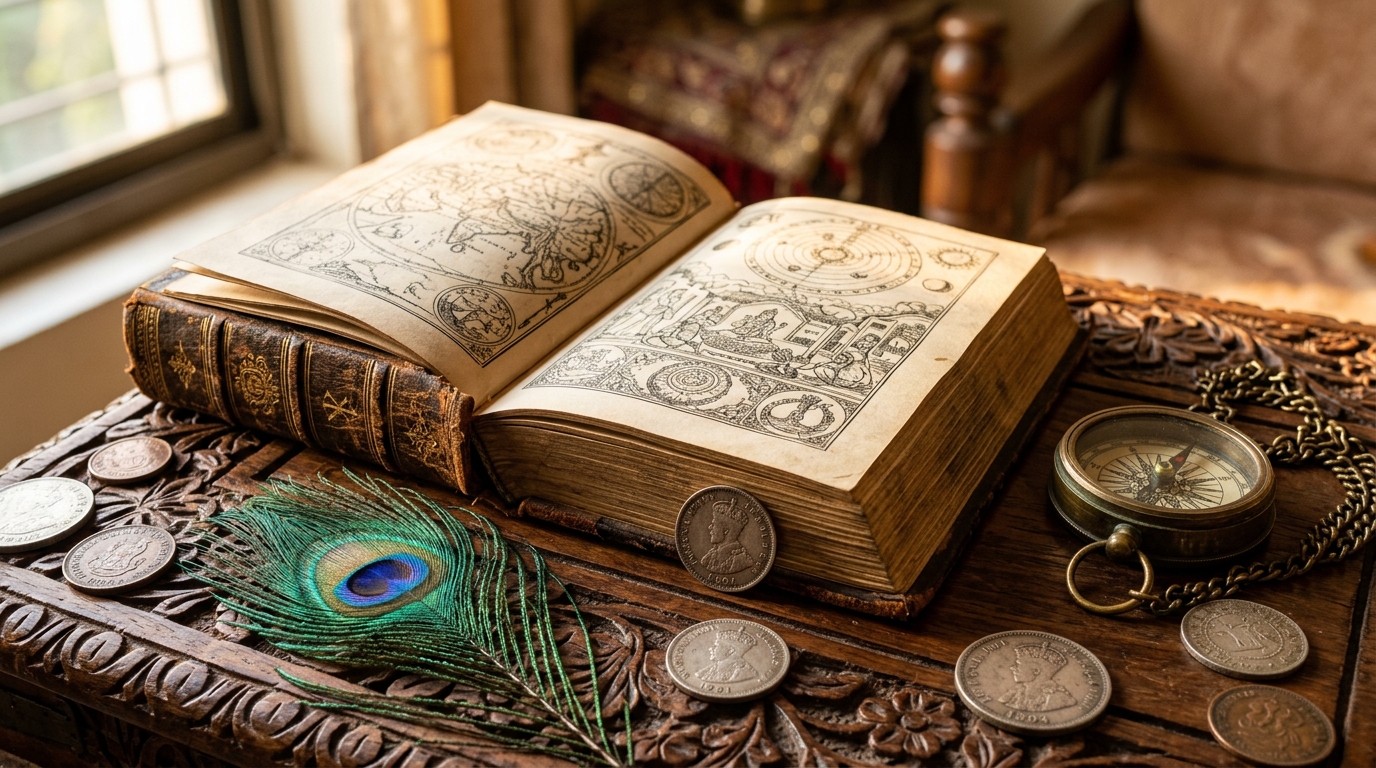
January marks the start of the Gregorian calendar year. In India, this month carries the weight of a new republic, the birth of social visionaries, and the tragic end of a founding father. Tracking these daily moments requires a reliable indian historical events calendar. This guide breaks down the first month of the year. You will find daily history facts, famous births, and significant milestones organized into scannable sections.
History is not just a list of years. It is a daily unfolding of human decisions. Using an indian historical events calendar helps students and curious readers connect past actions to present realities. Let us walk through the notable events that shaped India every day in January.
Early January Milestones in the Indian Historical Events Calendar
The first week of January sets a tone of scientific discovery and social reform. Many figures born in these early days changed how Indians learn and live.
January 1 to January 3: Science and Social Reform
January 1 brings the birth of Satyendra Nath Bose in 1894. This brilliant physicist collaborated with Albert Einstein. Together, they developed the Bose-Einstein statistics. His work laid the foundation for quantum mechanics. The class of particles known as "bosons" bears his name today.
January 2 marks a major civic milestone. In 1954, the Indian government instituted the Bharat Ratna. This is the highest civilian award in the country. The Padma Vibhushan, Padma Bhushan, and Padma Shri awards also began on this day. These honors recognize exceptional service across art, science, and public life.
January 3 celebrates a pioneer of Indian education. Savitribai Phule was born on this day in 1831. She fought against immense social pressure to open the first school for girls in Pune in 1848. Her work alongside her husband, Jyotirao Phule, challenged the caste system. She remains a central figure in India's social reform movement.
January 4 to January 7: Resistance and Arts
January 4 holds a somber record in the freedom struggle. In 1932, British colonial authorities arrested Mahatma Gandhi. They detained him at Yerwada Central Jail. This arrest followed the failure of the Round Table Conferences in London. The British attempted to crush the growing civil disobedience movement.
January 5 notes the birth of Shah Jahan in 1592. He was the fifth Mughal emperor. His reign is often called the golden age of Mughal architecture. He commissioned the Taj Mahal in Agra to house the tomb of his favorite wife, Mumtaz Mahal.
January 6 brings the birth of music legend A.R. Rahman in 1967. Born in Madras, Rahman transformed Indian film music. He mixed classical Indian ragas with electronic sounds and global beats. His work eventually earned two Academy Awards, elevating Indian music on the world stage.
January 7 marks the birth of Bimal Roy in 1909. He directed classic Hindi films like Do Bigha Zamin and Devdas. Roy brought Italian neo-realism to Indian cinema. He showed the harsh realities of rural poverty and urban migration on screen.
Mid-January: Treaties, Youth, and the Army
The second week of January highlights geopolitical shifts and national defense. It also honors the youth of the nation.
January 8 to January 11: Leaders and Diplomacy
January 8 marks the death of Bimal Roy in 1966. His passing left a massive void in parallel cinema. Directors still study his lighting techniques and storytelling methods today.
January 9 is celebrated as Pravasi Bharatiya Divas. On this day in 1915, Mahatma Gandhi returned to India from South Africa. He arrived in Bombay. His return marked a turning point in the Indian independence movement. He brought back the concept of Satyagraha, a method of non-violent resistance.
January 10 is World Hindi Day. It commemorates the anniversary of the first World Hindi Conference held in Nagpur in 1975. On this same day in 1966, India and Pakistan signed the Tashkent Declaration. This peace agreement ended the Indo-Pakistani War of 1965.
January 11 brings a tragic loss. Just one day after signing the Tashkent Declaration, Prime Minister Lal Bahadur Shastri died in Tashkent in 1966. He gave India the slogan "Jai Jawan, Jai Kisan" (Hail the Soldier, Hail the Farmer). His sudden death remains a topic of historical debate.
January 12 to January 15: Celebrating the Nation
January 12 is National Youth Day. This date honors the birth of Swami Vivekananda in 1863. He was a chief disciple of the 19th-century mystic Ramakrishna. Vivekananda introduced the Indian philosophies of Vedanta and Yoga to the Western world. His famous 1893 speech in Chicago made him a global figure.
January 13 notes the birth of Rakesh Sharma in 1949. He became the first Indian citizen to travel into space. In 1984, he flew aboard the Soviet rocket Soyuz T-11. When Prime Minister Indira Gandhi asked how India looked from space, he famously replied, "Sare Jahan Se Achha" (Better than the entire world).
January 14 marks the Third Battle of Panipat in 1761. The Maratha Empire clashed with the invading Afghan army of Ahmad Shah Durrani. It was one of the largest and most fiercely fought battles in the 18th century. The heavy Maratha losses changed the power dynamics of the Indian subcontinent.
January 15 is Indian Army Day. On this day in 1949, Field Marshal K.M. Cariappa took over as the first Indian Commander-in-Chief of the Indian Army. He replaced General Sir Francis Butcher, the last British commander. This transfer of power finalized the nationalization of the armed forces.
The Turning Point of the Indian Historical Events Calendar
Late January moves the focus toward statehood, constitutional law, and the structure of modern India.
January 16 to January 20: Thinkers and Creators
January 16 honors Mahadev Govind Ranade, who died on this day in 1901. He was a distinguished scholar, social reformer, and author. Ranade helped establish the Indian National Congress. He believed that social reform must precede political freedom.
January 17 marks the birth of M.G. Ramachandran in 1917. Popularly known as MGR, he dominated Tamil cinema before entering politics. He served as the Chief Minister of Tamil Nadu for a decade. MGR pioneered welfare schemes like the midday meal program for school children.
January 18 records a medical milestone. In 1896, the first X-ray machine was exhibited in India at the Asiatic Society in Calcutta. This event happened just months after Wilhelm Röntgen discovered X-rays in Germany. It showed India's rapid integration of new scientific technologies.
January 19 marks the death of Maharana Pratap in 1597. He was the Hindu Rajput king of Mewar. He famously resisted the expansion of the Mughal Empire under Akbar. His guerrilla warfare tactics in the Aravalli hills made him a symbol of regional defiance.
January 20 notes the birth of Ajit Doval in 1945. He later became the National Security Advisor to the Prime Minister of India. His career in intelligence shaped India's modern counter-terrorism strategies.
January 21 to January 25: States and Visionaries
January 21 is Statehood Day for three northeastern states. In 1972, Tripura, Meghalaya, and Manipur became full states under the North Eastern Region (Re-organization) Act. This move decentralized power and recognized the distinct cultural identities of the region.
January 22 marks the death of Emperor Shah Jahan in 1666. He spent his final years imprisoned by his own son, Aurangzeb, in the Agra Fort. He died looking out at the Taj Mahal.
January 23 is Parakram Diwas. This day honors the birth of Subhash Chandra Bose in 1897. Bose was a fierce nationalist. He parted ways with Gandhi's non-violent methods. He later formed the Azad Hind Fauj (Indian National Army) to fight the British with Japanese support.
January 24 is National Girl Child Day. It also marks the death of Homi J. Bhabha in 1966. Bhabha was the principal architect of India's nuclear energy program. He died in a mysterious plane crash near Mont Blanc in the Swiss Alps.
January 25 is National Voters' Day. On this day in 1950, the Election Commission of India was established. This independent body manages the largest democratic elections in the world. They ensure peaceful transfers of power across the vast nation.
Republic Day and the Month's Close
The final days of January hold the most critical dates in India's modern political history. A complete indian historical events calendar must highlight these moments clearly.
January 26: The Constitution Takes Effect
January 26 is Republic Day. In 1950, the Constitution of India came into force. It replaced the Government of India Act of 1935 as the governing document. India officially became a sovereign democratic republic.
The date was chosen carefully. On January 26, 1930, the Indian National Congress proclaimed the Declaration of Indian Independence (Purna Swaraj). They rejected the British offer of Dominion status. Dr. Rajendra Prasad began his term as the first President of India on this day in 1950. The drafting committee, led by Dr. B.R. Ambedkar, created a framework that united a diverse nation under one law.
January 27 to January 31: Martyrs' Day and Final Milestones
January 27 marks the death of R. Venkataraman in 2009. He served as the eighth President of India. He guided the country through a period of rapid political changes and coalition governments in the late 1980s.
January 28 celebrates the birth of Lala Lajpat Rai in 1865. Known as Punjab Kesari (The Lion of Punjab), he was a vocal leader in the independence movement. On this same day in 1950, the Supreme Court of India held its inaugural sitting.
January 29 brings a media milestone. In 1780, James Augustus Hicky published Hicky's Bengal Gazette. This was the first printed newspaper in India. It was highly critical of the British East India Company. The authorities eventually seized the press, but it sparked a legacy of print journalism.
January 30 is Martyrs' Day. In 1948, Nathuram Godse assassinated Mahatma Gandhi in New Delhi. The nation plunged into mourning. Prime Minister Jawaharlal Nehru addressed the country via radio, stating, "The light has gone out of our lives, and there is darkness everywhere."
January 31 records the adoption of the peacock as the national bird of India in 1963. The government chose the peacock for its wide distribution across the country and its deep roots in Indian art and culture.
Key January Dates at a Glance
Here is a quick reference table of the most impactful January dates to keep in your daily history archive.
| Date | Event | Year | Historical Impact |
|---|---|---|---|
| January 3 | Savitribai Phule born | 1831 | Started the first school for girls in India. |
| January 9 | Pravasi Bharatiya Divas | 1915 | Gandhi returns to India from South Africa. |
| January 15 | Indian Army Day | 1949 | First Indian Commander-in-Chief takes charge. |
| January 26 | Republic Day | 1950 | The Constitution of India comes into effect. |
| January 30 | Martyrs' Day | 1948 | Mahatma Gandhi is assassinated. |
How Educators Use This Indian Historical Events Calendar
Teachers and students rely on a daily history archive to make the past feel present. Reading about an event on its exact anniversary builds a stronger connection to the material. You can use this timeline to plan lessons, run morning assemblies, or spark daily discussions.
Adding Visual Context for Students
Historical sites and figures thrive on imagery. Students learn better when they see what they are reading about. When using this calendar in a classroom, pair the daily facts with photographs. Show a picture of the original Constitution document on January 26. Display a portrait of Savitribai Phule on January 3.
If you build digital resources for your students, add descriptive alt text to these images. Use phrases like "History of the Indian Constitution drafting" or "Historical portrait of Subhash Chandra Bose." This simple step makes the material accessible to visually impaired students using screen readers.
Connecting Historical Entities
History does not happen in a vacuum. Events link together. When you study the indian historical events calendar, connect the figures.
- Link Gandhi's return on January 9 to his arrest on January 4 years later.
- Connect the Purna Swaraj declaration of 1930 to the choice of January 26 for Republic Day in 1950.
- Compare the approaches of Swami Vivekananda and Mahadev Govind Ranade to social reform.
Explicitly defining these historical figures and their relationships helps students build a mental map. You can easily transition from this month to the next by checking our february-historical-milestones guide.
Start treating history as a daily practice. Open your calendar each morning and find out who shaped the nation on this exact date decades ago. You will quickly build a deep, practical understanding of India's past.