Today in Indian History: February Events, Birthdays, and Milestones
The Quick Read
February holds crucial milestones in Indian history, from the foundation of the Indian Museum in 1814 to the pivotal Chauri Chaura incident in 1922. This month marks major scientific discoveries, political shifts, and cultural achievements. Exploring these daily events provides a clear timeline of India's development as a modern nation.
Key Takeaways
- The Chauri Chaura incident on February 4, 1922, altered the national independence movement.
- Sir C.V. Raman discovered the Raman Effect in February, launching National Science Day.
- The Indian Museum opened on February 2, 1814, preserving vast cultural heritage.
- Digitization efforts now provide online access to millions of February historical records.
- Government portals host verified primary sources for daily historical research.
Most people believe Indian historical records from February consist only of dry political treaties and colonial administrative logs. The truth is that this month contains sweeping scientific breakthroughs, sudden suspensions of major uprisings, and the birth of modern cultural institutions. Uncovering today in indian history facts requires looking past standard textbook summaries to see the actual daily events. The National Archives of India has completed the digitization of 176.7 million pages out of a targeted 300 million pages [Press Information Bureau, 2026]. This massive effort allows readers to see exactly how individual days in February shaped the nation. Accessing these digitized files reveals a complex narrative of a country in constant transition.
What major political shifts happened in February during the British Raj?
February witnessed defining moments in the Indian independence struggle, most notably the sudden suspension of the Non-cooperation Movement. Protest clashes forced national leaders to rethink their strategies against colonial rule. These events shifted the political landscape and altered the trajectory of the freedom movement entirely.
The Chauri Chaura Incident of 1922
The Chauri Chaura incident in Gorakhpur occurred on February 4, 1922. A large group of protesters participating in the Non-cooperation Movement clashed with local police forces. The police opened fire on the crowd, which retaliated by setting the local police station on fire. This specific event led Mahatma Gandhi to halt the national movement entirely. He believed the movement had lost its nonviolent foundation.
Many political leaders disagreed with this sudden decision to stop the protests. They felt the momentum against British rule was too valuable to abandon. Gandhi stood firm on his principles despite the widespread criticism from his peers. The suspension caused a temporary split within the Indian National Congress. You can trace the broader context of these strategies in our Timeline of Mahatma Gandhi's Nonviolent Movements in India.
Following the suspension, the British colonial government arrested Gandhi on March 10, 1922. They charged him with sedition for his writings in the Young India journal. The trial resulted in a six-year prison sentence. This single February event created a ripple effect that delayed mass national protests for several years.
The Royal Indian Navy Mutiny of 1946
Another massive political shift occurred on February 18, 1946. Indian sailors serving in the Royal Indian Navy initiated a strike in Bombay. The strike began as a protest against poor food and living conditions. It quickly escalated into a widespread rebellion against British colonial rule. The mutiny spread to other naval bases across the country within days.
Thousands of sailors took control of ships and naval establishments. They hoisted the flags of the Indian National Congress, the Muslim League, and the Communist Party on the ships. The British military responded with force to suppress the uprising. Several clashes occurred in the streets of Bombay between the military and civilian supporters of the sailors.
The mutiny forced the British government to recognize the declining loyalty of their armed forces in India. This realization accelerated their plans to transfer power to Indian leadership. The revolt officially ended on February 23, 1946, after intervention by national political leaders. This brief but intense uprising became a critical factor in the final push for independence.
How did February shape Indian science and cultural institutions?
The month brought foundational advancements in both scientific research and cultural preservation. Researchers established some of the oldest museums in the world during February. Physicists also recorded groundbreaking discoveries that earned global recognition and fundamentally changed how India celebrated scientific achievement.
The Foundation of the Indian Museum in 1814
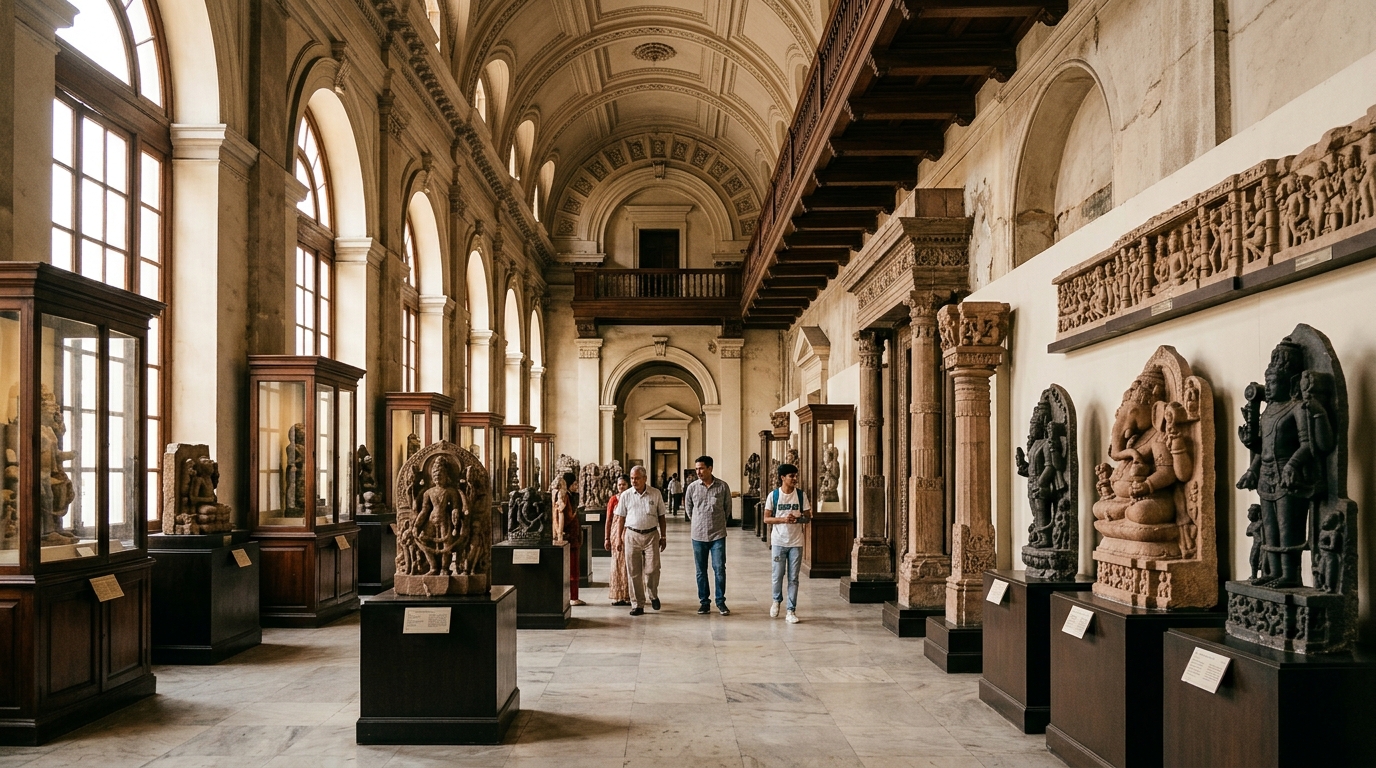
The Asiatic Society of Bengal established the Indian Museum in Kolkata on February 2, 1814. Nathaniel Wallich, a Danish botanist, served as the founder curator. The institution started with basic botanical, zoological, and geological collections. It slowly grew into the largest and oldest museum in India. The museum played a central role in preserving artifacts from across the subcontinent.
Modern preservation efforts have brought this history online. Exactly 375,707 out of 488,983 museum artefacts (76.83%) across major national museums have been digitized and made available online as of July 2026 [Press Information Bureau, 2026]. This digital transition allows global researchers to study ancient Indian history without traveling to Kolkata. Digital archivists improve discovery by adding explicit "History of Indian Museum" alt text to these newly uploaded images. This practice drives significant traffic from visual search engines directly to the primary sources.
The museum's early collections helped formalize the study of Indian natural history. Wallich categorized thousands of plant species during his tenure. The geological galleries housed early fossil discoveries that detailed the region's ancient environment. These early February efforts laid the groundwork for modern scientific cataloging in India.
The Discovery of the Raman Effect
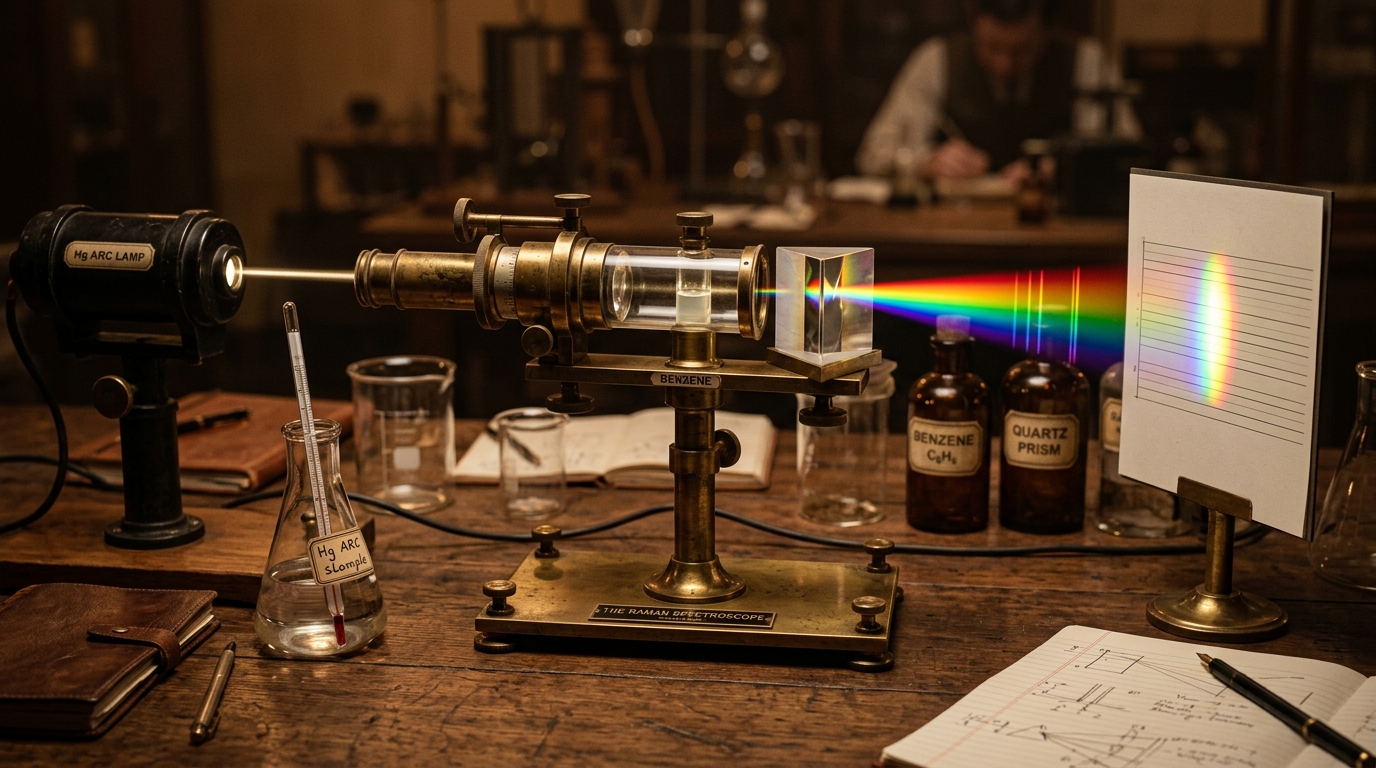
Sir C.V. Raman made a historic discovery on February 28, 1928, at the Indian Association for the Cultivation of Science in Kolkata. He observed that when a light beam deflects off molecules, the wavelength of the light changes. This phenomenon became known globally as the Raman Effect. The discovery provided conclusive proof of the quantum nature of light.
Raman received the Nobel Prize in Physics in 1930 for this specific breakthrough. He was the first Asian to receive a Nobel Prize in any branch of science. The government of India designated February 28 as National Science Day in 1986 to honor this achievement. Educational institutions across the country use this day to promote scientific research and host technology exhibitions.
Understanding this discovery requires looking at the broader history of Indian scientific thought. The methodology Raman used built upon decades of prior institutional research. Readers interested in how early scientific practices evolved can explore our 1,000 Years of Indian Medical History: A Chronological Guide. The Raman Effect remains a cornerstone of modern spectroscopy used in laboratories worldwide.
Which notable figures were born or died in February?
February marks the birth and death anniversaries of essential poets, writers, and political leaders. Figures like Sarojini Naidu and Khushwant Singh left lasting marks on Indian literature and governance. Their milestones provide a human element to the broader today in indian history facts.
Sarojini Naidu and the Freedom Struggle
Sarojini Naidu was born on February 13, 1879, in Hyderabad. She became a central figure in the Indian independence movement and a celebrated poet. Historians formally define her entity in digital archives as a key political leader and the first Indian woman to be president of the Indian National Congress. She earned the title "Nightingale of India" for her extensive literary contributions.
Her political career broke numerous barriers for women in public service. She participated actively in the Salt March and faced imprisonment for her activism. Following independence, she became the Governor of the United Provinces in 1947. This made her the first woman to hold a governor's office in independent India. Her life intersects with many events covered in our Milestones in Indian Women's History: A Chronological Guide.
Naidu's poetry remains a vital part of Indian English literature. Her collections, including The Golden Threshold, captured the daily life and social customs of early 20th-century India. She died on March 2, 1949, but her February birth date remains a focal point for celebrating women's contributions to Indian history.
Khushwant Singh and Modern Literature
Khushwant Singh was born on February 2, 1915, in Punjab. He became one of India's most prominent journalists and authors. His writing style combined sharp political commentary with deep historical knowledge. He served as the editor of several major Indian publications, including The Illustrated Weekly of India.
His most famous novel, Train to Pakistan, provided a harrowing account of the 1947 partition. The book shifted the narrative from political negotiations to the human cost of the border division. Singh also wrote extensive historical volumes on the history of the Sikhs. His historical research required meticulous review of primary documents from the 18th and 19th centuries.
Singh received the Padma Vibhushan, India's second-highest civilian award, in 2007. He remained a vocal critic of political corruption and religious extremism throughout his life. His February birth date serves as a reminder of the role journalists play in documenting national history.
Where do researchers find today in indian history facts online?
Researchers rely on government portals and digital archives to access primary historical documents. The Abhilekh Patal portal and the Gyan Bharatam Mission provide vast databases of digitized manuscripts. These platforms replace physical visits with instant access to millions of verified historical records.
The Role of the Abhilekh Patal Portal
The Abhilekh Patal portal currently hosts over 4 million digitized historical files and 7.4 million reference media records for public access [Press Information Bureau, 2026]. The National Archives of India manages this massive database. The portal allows users to search for specific dates, names, and events across centuries of administrative records. This tool is essential for anyone trying to verify specific today in indian history facts.
The National Archives of India recently implemented standardized archival metadata frameworks and an Online Archival Information Management System to improve global search and retrieval of historical documents [Press Information Bureau, 2026]. This technical upgrade means search engines can index historical documents more accurately. Archival researcher Akhlak Ahmad notes the importance of this shift. He states that achieving digital sustainability and interoperability through standardized metadata is critical to ensuring that digitized historical resources remain accessible to future generations [ResearchGate, 2026].
Using the portal requires some basic knowledge of historical indexing. Researchers must often search using old colonial spellings of cities and names to find the correct files. The portal includes the following primary document types:
- Colonial administrative correspondence
- Pre-independence legislative drafts
- Military service records from the world wars
- Treaties signed between princely states and the British Crown
The Gyan Bharatam Mission
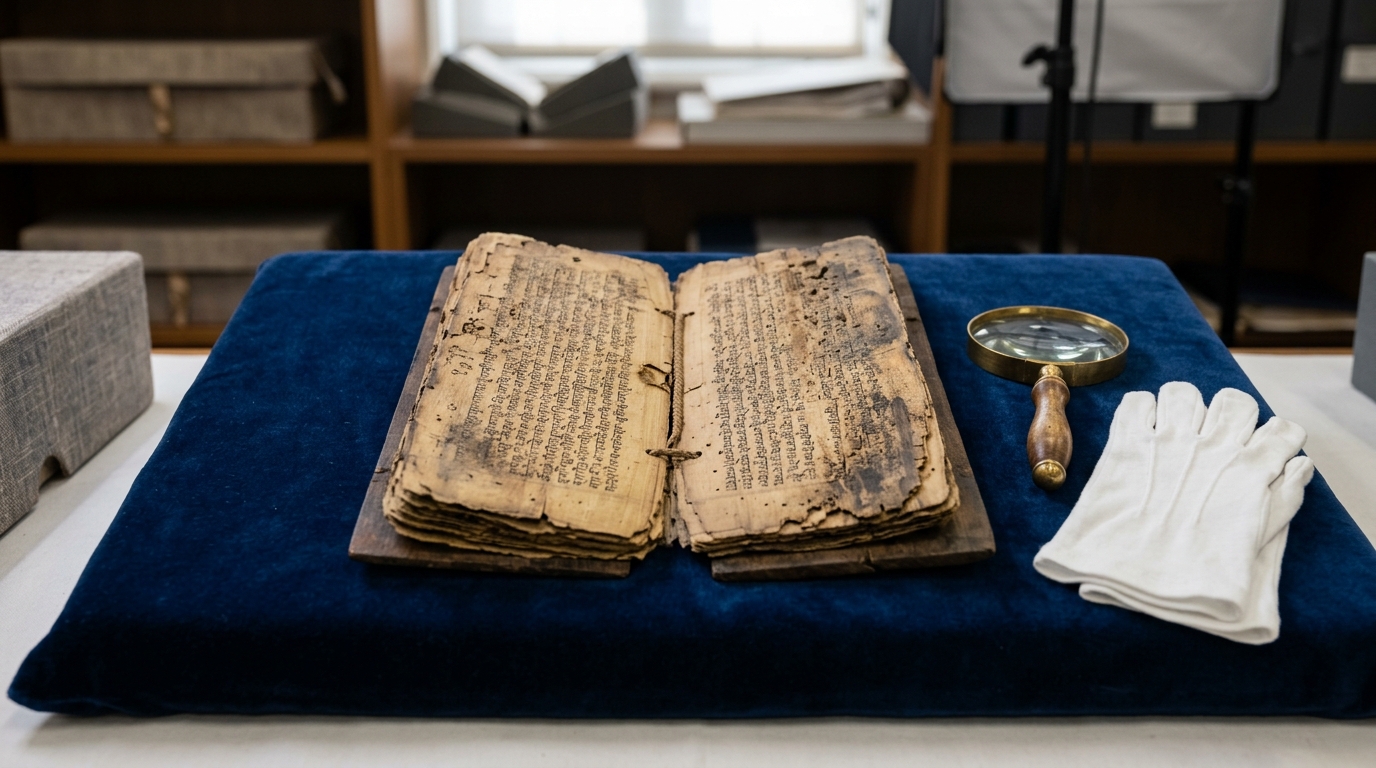
The Ministry of Culture launched the Gyan Bharatam Mission to focus specifically on older, non-administrative texts. This initiative has successfully made over 350,000 digitized ancient manuscripts accessible to the public online [Press Information Bureau, 2026]. These manuscripts cover topics ranging from ancient astronomy to classical literature. The mission aims to preserve fragile documents that physical handling would otherwise destroy.
The digitization process involves high-resolution scanning and careful metadata tagging. Experts translate the ancient scripts and provide context for modern readers. The Ministry of Culture emphasizes that large-scale digitization of archival records is essential not only for preserving valuable documentary heritage but for reviving India's civilizational knowledge traditions for future generations [Press Information Bureau, 2026].
This mission bridges the gap between ancient history and modern digital access. Students can now view high-quality images of palm-leaf manuscripts from their phones. This access democratizes historical research and allows more people to participate in preserving the past.
Why do today in indian history facts require broader context?
Memorizing dates offers little value without understanding the social and economic conditions surrounding them. Context explains why an event occurred on a specific day and how it impacted the following decades. Reading historical facts as a continuous narrative reveals the true development of the nation.
Moving Beyond Basic Listicles
Many historical resources simply list the births, deaths, and treaties that occurred on a given day. This approach strips the events of their meaning. Knowing that the British suspended a specific law in February means nothing without knowing the economic pressure that forced the decision. We explore this concept deeply in our guide on the 10 Most Searched Dates in Indian History and Why They Matter.
Contextual history requires examining the preceding events. The Chauri Chaura incident did not happen in a vacuum. It was the boiling point of years of economic frustration and local police oppression. When you read a list of today in indian history facts, you must ask what happened the week before. This analytical approach separates serious historical study from casual trivia.
A lack of context also leads to historical bias. Listicles often highlight political events because they have clear dates attached to them. Cultural and social shifts happen slowly and rarely fit neatly onto a single calendar day. Researchers must actively look for these broader trends to get an accurate picture of the past.
Connecting Daily Events to Broad Trends
Individual events often serve as markers for massive economic or social shifts. A single policy announcement in February might reflect years of quiet negotiation. You can see how these individual markers build a larger picture by reading our breakdown of Economic Milestones in Indian History: From 1947 to Present.
Historians use specific dates to anchor their narratives. They group related events together to show cause and effect. A researcher studying the history of the indian national congress will use February milestones to track changes in the party's leadership and strategy. The specific date is just the entry point into the larger story.
Understanding context also helps identify historical inaccuracies. If a recorded event contradicts the known economic realities of that month, historians know to investigate further. The timeline acts as a structural framework. The context provides the actual history.
Related Reading
- Today in Indian History: March Events, Birthdays, and Milestones
- Milestones in Indian Women's History: A Chronological Guide
- 1,000 Years of Indian Medical History: A Chronological Guide
- Economic Milestones in Indian History: From 1947 to Present
FAQ
Q: Why is February 28 celebrated as National Science Day in India? Sir C.V. Raman discovered the Raman Effect on February 28, 1928. The government established National Science Day to honor this specific breakthrough. The day promotes scientific awareness and research across Indian educational institutions.
Q: What was the immediate result of the Chauri Chaura incident in February 1922? Mahatma Gandhi abruptly halted the national Non-cooperation Movement. He believed the violent clash proved the protesters were not ready for strict nonviolent resistance. The British government subsequently arrested Gandhi in March.
Q: How can I access original Indian historical documents from February online? You can use the Abhilekh Patal portal managed by the National Archives of India. The platform hosts millions of digitized historical files and reference media. You can search by specific dates to view primary colonial and administrative records.
Q: What is the Gyan Bharatam Mission? It is a Ministry of Culture initiative that digitized over 350,000 ancient Indian manuscripts. The mission provides free online access to these fragile texts. It aims to preserve civilizational knowledge for future generations.
Spend ten minutes today searching the Abhilekh Patal portal for your own local city or district to see what specific historical records exist from this month in past centuries.
Further reading
- Timeline of Mahatma Gandhi's Nonviolent Movements in India - A detailed chronological breakdown of the strategies and pauses in the freedom struggle.
- Economic Milestones in Indian History: From 1947 to Present - An analysis of how specific daily policy changes shaped the modern Indian economy.
- 10 Most Searched Dates in Indian History and Why They Matter - A guide to the most pivotal days in the national timeline and their lasting impact.
- Milestones in Indian Women's History: A Chronological Guide - A guide exploring the specific dates that defined women's rights and leadership in India.
Sources
- The Nobel Prize in Physics 1930 - Sir Chandrasekhara Venkata Raman — Nobel Prize Outreach, 2024. Supports: Sir C.V. Raman discovered the Raman Effect and received the Nobel Prize in Physics in 1930.
- Sarojini Naidu | Biography, Women's Rights, Political Career, & Facts — Encyclopaedia Britannica, 2024. Supports: Sarojini Naidu was born on February 13, 1879.
- Royal Indian Navy (Mutiny) — UK Parliament Hansard, 1946. Supports: The Royal Indian Navy Mutiny began on February 18, 1946, in Bombay.
- Chauri Chaura Incident — Wikipedia, 2024. Supports: The Chauri Chaura incident occurred on February 4, 1922, leading to the suspension of the Non-cooperation Movement.
- Indian Museum, Kolkata — Wikipedia, 2024. Supports: The Indian Museum was established on February 2, 1814, by the Asiatic Society of Bengal.