Today in Indian History: April Events, Birthdays, and Milestones

In Short
April holds some of the most transformative moments in India's timeline. This guide catalogs the major April events in Indian history, from the First Battle of Panipat to the launch of the Aryabhata satellite. Readers can use this archive to quickly find daily historical facts and educational milestones.
Key Takeaways
- April 13 marks the tragic Jallianwala Bagh massacre that shifted the freedom struggle.
- The Mughal Empire established its roots in India during the month of April.
- India launched its first space satellite and started its first railway line in April.
- Social reformers like Dr. B.R. Ambedkar and Jyotirao Phule were born this month.
Walk into any Indian classroom as the academic year closes, and you see dates written in chalk across the board. Students memorize these numbers to pass exams. Tour guides at historic monuments recite them to crowds standing in the summer heat. These dates are not just trivia. They are the coordinates of how modern India was built.
Understanding April events in Indian history requires looking past the dry textbook summaries. The fourth month of the year brought wars that changed dynasties, laws that reshaped the economy, and births of leaders who rewrote social codes. By organizing these facts day-by-day, educators and students can see the patterns. History stops being a blur of years. It becomes a sequence of deliberate actions taken by real people.
April Events in Indian History Shape the Nation's Destiny
The foundational moments of both the Mughal era and the modern Indian independence movement occurred in April. These events act as pivot points. Before them, the country looked one way. After them, the political reality changed completely.
The First Battle of Panipat (April 21, 1526)
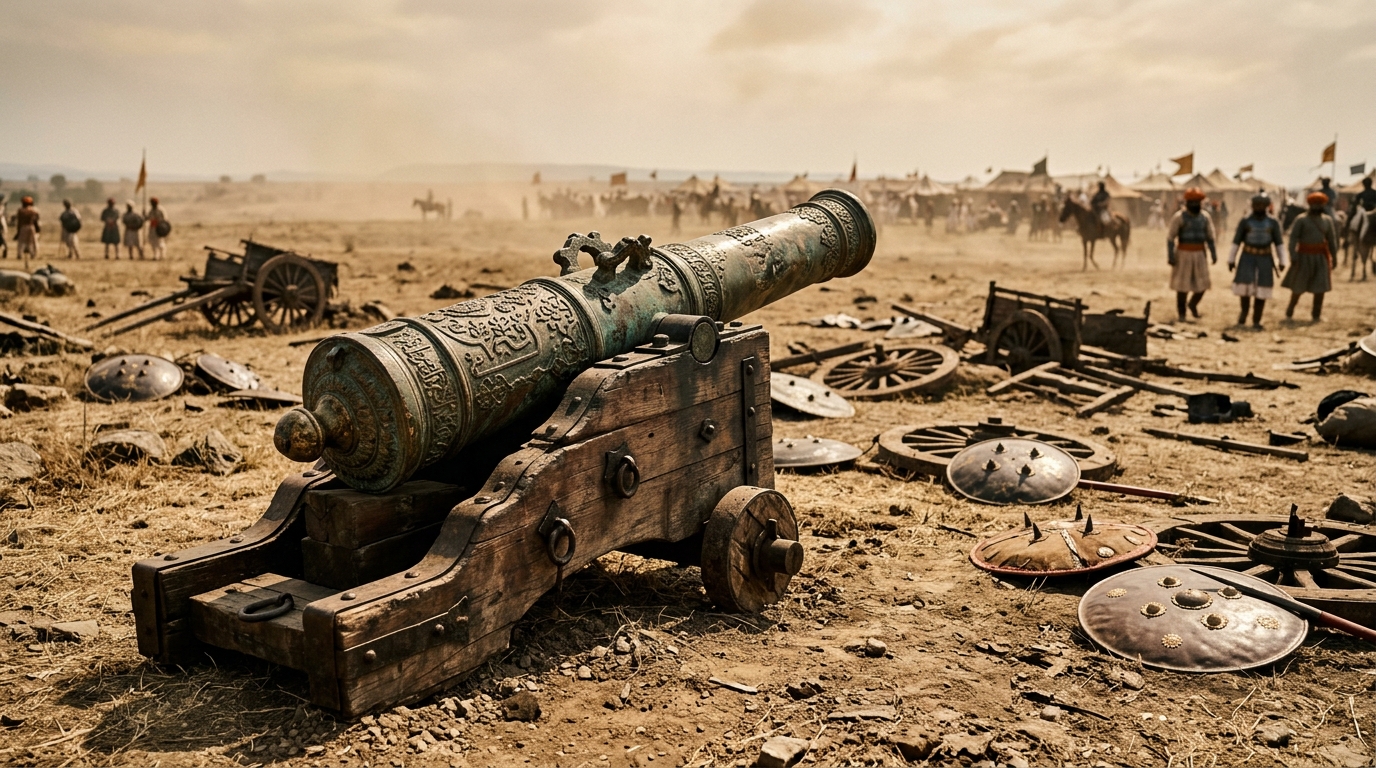
Babur faced Ibrahim Lodi on the dusty plains of Panipat on April 21, 1526. This clash introduced field artillery to the subcontinent. Babur brought cannons and matchlocks. Lodi brought war elephants and a massive infantry. The new technology won.

This single day ended the Delhi Sultanate. It marked the beginning of the Mughal Empire, which would rule large parts of India for centuries. You can explore the exact troop movements and strategies in our guide to April 21, 1526: A Historical Timeline of the First Battle of Panipat. The battle remains a core case study in military history.
The Jallianwala Bagh Massacre (April 13, 1919)
Thousands of unarmed civilians gathered at Jallianwala Bagh in Amritsar to celebrate the Baisakhi festival. Many also came to peacefully protest the arrest of nationalist leaders. Brigadier-General Reginald Dyer ordered his troops to block the only exit. He then ordered them to fire into the dense crowd.
The shooting lasted for ten minutes. Hundreds died, and over a thousand were injured. This brutal act destroyed any remaining trust Indians had in British justice. It pushed leaders like Mahatma Gandhi to demand full independence rather than just self-rule. The event remains a somber day of remembrance across the country.
The Dandi March Concludes (April 6, 1930)
Mahatma Gandhi walked 240 miles from Sabarmati Ashram to the coastal village of Dandi. He arrived on April 5. The next morning, on April 6, he picked up a handful of salt from the mudflats. This simple action broke the British salt laws.
The British held a monopoly on salt production and taxed it heavily. By making his own salt, Gandhi launched the Civil Disobedience Movement. Millions of Indians followed his lead. They began making salt illegally, boycotting foreign goods, and refusing to pay taxes. Read more about this daily progression in The Dandi March Day-by-Day: A Timeline of the 1930 Salt Satyagraha.
Birthdays of Visionaries Define the Month
Many leaders who built India's modern social framework were born in April. Their birthdays serve as annual reminders of the ongoing work needed to achieve equality and justice.
Dr. B.R. Ambedkar (April 14, 1891)
Bhimrao Ramji Ambedkar was born in Mhow, in present-day Madhya Pradesh. He overcame severe caste discrimination to become an economist, lawyer, and social reformer. He later chaired the Drafting Committee of the Constituent Assembly.
Ambedkar shaped the Constitution of India. He ensured it contained strong protections for marginalized communities. His work dismantled legal untouchability and established affirmative action policies. We cover his vast contributions in Dr. B.R. Ambedkar's Life: A Chronological Timeline of Legacy. His birthday is now a public holiday celebrated by millions.
Mahatma Jyotirao Phule (April 11, 1827)
Jyotirao Phule was born in Maharashtra. He dedicated his life to eradicating untouchability and the caste system. Alongside his wife, Savitribai Phule, he pioneered women's education in India.
They opened the first school for girls in Pune in 1848. Phule also formed the Satyashodhak Samaj in 1873 to secure human rights and social justice for low-caste people. His writings and activism laid the groundwork for the Dalit and Bahujan movements that followed decades later.
K.L. Saigal (April 11, 1904)
Kundan Lal Saigal was born in Jammu. He became the first true superstar of the Hindi film industry. Saigal introduced a natural, conversational style of singing to Indian cinema.
Before him, film singers used loud, theatrical voices. Saigal sang softly into the microphone, changing playback singing forever. His work in films like Devdas (1935) set the standard for generations of actors and musicians.
Scientific and Infrastructure Milestones Occur in April
Beyond politics and social reform, the most searched April events in Indian history revolve around science and nation-building. The infrastructure that powers modern India often traces its origins back to this month.
The Reserve Bank of India Begins Operations (April 1, 1935)
The British government established the Reserve Bank of India (RBI) to manage the country's currency and credit system. It started operations on April 1, 1935, in Calcutta. The central office later moved to Mumbai in 1937.
Initially, the RBI was privately owned. The Indian government nationalized it in 1949 after independence. Today, the RBI controls monetary policy, regulates banks, and issues the national currency. Its creation was a critical step toward economic independence.
India's First Passenger Train (April 16, 1853)
The first passenger train in India ran between Bori Bunder in Bombay and Thane. It traveled a distance of 34 kilometers. Three steam locomotives named Sahib, Sindh, and Sultan pulled the 14 carriages.
The train carried 400 guests and took 57 minutes to complete the journey. This single trip launched the Indian Railways network. Today, that network is the fourth largest in the world. It transports millions of passengers and tons of freight every single day.
Aryabhata Satellite Launch (April 19, 1975)
India entered the space age on April 19, 1975. The Indian Space Research Organisation (ISRO) built its first satellite and named it Aryabhata, after the ancient Indian astronomer.
A Soviet rocket launched the satellite from Kapustin Yar. The mission taught Indian scientists how to design, build, and operate space technology. This early success paved the way for future missions to the Moon and Mars. It proved that a developing nation could build advanced aerospace technology.
Late April in Indian History Reshapes Modern Governance
The final weeks of the month contain legal and political shifts that dictate how India is governed today. You can see a broader overview of this period in our guide to Late April in Indian History: Key Dates, Birthdays, and Milestones.
The Kesavananda Bharati Judgment (April 24, 1973)
The Supreme Court of India delivered its most important verdict on April 24, 1973. The case of Kesavananda Bharati v. State of Kerala involved a 13-judge bench. They sat for 68 days to hear arguments.
The court ruled that the Parliament could amend the Constitution, but it could not alter its "basic structure." This doctrine prevents any government from destroying the core principles of the Constitution, such as democracy, secularism, and judicial independence. It remains the ultimate safeguard of Indian democracy.
National Panchayati Raj Day (April 24, 1993)
The 73rd Amendment Act came into force on April 24, 1993. This law institutionalized the Panchayati Raj system across the country. It created a three-tier system of local self-governance at the village, block, and district levels.
The amendment transferred power from state capitals directly to villages. It also mandated that one-third of all seats be reserved for women. This act brought millions of new leaders into the democratic process. India celebrates this milestone every year as National Panchayati Raj Day.
Rakesh Sharma Enters Space (April 3, 1984)
Squadron Leader Rakesh Sharma became the first Indian citizen to travel into space. He flew aboard the Soviet Soyuz T-11 mission on April 3, 1984.
Sharma spent nearly eight days aboard the Salyut 7 space station. He conducted scientific experiments and took photographs of India from orbit. When Prime Minister Indira Gandhi asked him how India looked from space, he famously replied, "Sare Jahan Se Achha" (Better than the entire world).
Comparing the Impact of Major April Events
Historical dates do not exist in isolation. When you place these milestones side by side, you see clear shifts in national priorities over time. Early events center on conquest and resistance. Later events focus on institution-building and scientific progress.
| Historical Event | Date | Era | Primary National Impact |
|---|---|---|---|
| First Battle of Panipat | April 21, 1526 | Medieval | Shifted political control of North India to the Mughals. |
| Jallianwala Bagh Massacre | April 13, 1919 | British Colonial | Destroyed trust in British rule and fueled the independence movement. |
| RBI Operations Begin | April 1, 1935 | Late Colonial | Centralized monetary policy and banking regulation. |
| First Passenger Train | April 16, 1853 | Early Colonial | Launched the transport network that unified the subcontinent. |
| Aryabhata Launch | April 19, 1975 | Republic of India | Established India as a capable space-faring nation. |
| Panchayati Raj Act | April 24, 1993 | Modern Republic | Decentralized political power to the village level. |
Pre-Independence vs. Post-Independence Milestones
Before 1947, most significant dates mark struggles for control. The British built the railways in April 1853 to move troops and extract resources. Gandhi broke the salt law in April 1930 to challenge that exact extraction.
After 1947, the narrative shifts toward self-reliance. The launch of Aryabhata in 1975 shows a nation looking outward. The Panchayati Raj Act of 1993 shows a nation looking inward to fix its democratic structures. This contrast makes April a perfect microcosm for studying India's evolution.
How Educators Use These Dates
Teachers rely on these specific dates to anchor their lesson plans. Rather than teaching abstract concepts like "colonial economics," they point to the establishment of the RBI. Instead of vaguely discussing "social reform," they celebrate Dr. Ambedkar's birthday.
This approach grounds complex history in reality. It gives students a specific day, a specific person, and a specific outcome to study. You can see why these dates rank highly in our list of the 10 Most Searched Dates in Indian History and Why They Matter.
Related Reading
- What Are the Major Events in Indian History? (FAQ Archive)
- Today in Indian History: March Events, Birthdays, and Milestones
- Late April in Indian History: Key Dates, Birthdays, and Milestones
- Milestones in Indian Women's History: A Chronological Guide
FAQ
Q: What is the most significant historical event in April for India? The Jallianwala Bagh massacre on April 13, 1919, is widely considered the most significant. It fundamentally changed the relationship between the British Empire and its Indian subjects. The tragedy united various political factions in the demand for complete independence.
Q: Why do we celebrate April 14 in India? April 14 is Ambedkar Jayanti. It celebrates the birth anniversary of Dr. B.R. Ambedkar, the chief architect of the Indian Constitution. The day honors his lifelong fight against caste discrimination and his work in establishing equal rights.
Q: Did any major Indian wars happen in April? Yes. The First Battle of Panipat occurred on April 21, 1526. Babur defeated Ibrahim Lodi, which led directly to the establishment of the Mughal Empire in India.
Q: What major scientific achievement happened in April? India launched its first satellite, Aryabhata, on April 19, 1975. Rakesh Sharma also became the first Indian in space on April 3, 1984. Both events marked major leaps in India's space program.
Q: How does the Kesavananda Bharati case affect us today? The April 24, 1973 judgment established the "basic structure" doctrine. This means Parliament cannot pass laws that destroy the fundamental democratic principles of the Constitution. It protects citizens from authoritarian changes to the law.
Bookmark this page and use it to look up historical context whenever an April date approaches on the calendar.