The Quick Read
The Shimla Agreement timeline runs from the war's end on December 16, 1971, to a signing at Barnes Court around midnight on July 2, 1972. Indira Gandhi and Pakistani President Zulfikar Ali Bhutto signed it after talks deadlocked on July 1. It took effect on August 4, 1972. Deals in 1973 and 1974 completed the prisoner returns.
Key Takeaways
- The agreement was signed near midnight on July 2, 1972, after days of deadlock.
- Bhutto signed as Pakistan's President. He became Prime Minister only in 1973.
- Prisoner returns came later, through the 1973 Delhi Agreement and 1974 tripartite deal.
- The Line of Control replaced the old 1949 ceasefire line in Jammu and Kashmir.
- In 2025, Pakistan gave mixed signals about suspending the agreement.
The Shimla Agreement was one meeting that ended on one summer night in 1972. That is the common picture, and it's incomplete. The signing was the middle of a process, not the whole of it. The full Shimla Agreement timeline stretches from December 1971 to April 1974. It took more than two years, three separate agreements and one new country's recognition to settle what the 1971 war left behind.

This guide lays out that sequence date by date. Each section stands on its own, so you can jump to the part you need for a class, an exam or a quick check.
The road to Shimla began on December 16, 1971
The Shimla talks grew directly out of the 1971 India-Pakistan war. The war ended with Pakistan's surrender in Dhaka on December 16, 1971. India then held about 93,000 Pakistani prisoners and roughly 13,000 sq km of West Pakistani territory, according to Anantam IAS (2025). Both facts gave India strong bargaining cards.
The war ends in Dhaka
The fighting on the western front stopped a day after the surrender in the east. A ceasefire took hold on December 17, 1971. That date matters more than most readers expect. The positions troops held on December 17 later became the basis for the Line of Control in Jammu and Kashmir.
Bangladesh emerged as an independent nation from this war. For a full day-by-day account of the fighting, see our guide to the 1971 India-Pakistan war's key dates.
Bhutto takes power in Pakistan
Zulfikar Ali Bhutto was Pakistan's President and Chief Martial Law Administrator at the time of the Shimla Agreement. Bhutto took charge of Pakistan on December 20, 1971, replacing General Yahya Khan. Bhutto did not become Prime Minister until August 1973, under Pakistan's new constitution, so in July 1972 he negotiated and signed as President.
Bhutto's title is a detail that trips up many study guides. When Bhutto signed the Shimla Agreement in July 1972, he did so as President. Britannica describes him as "Pakistani Pres. Zulfikar Ali Bhutto" in its entry on the agreement.
Emissaries prepare the ground
The Murree talks were the preparatory meeting, held in late April 1972 at Murree in Pakistan, where Indian and Pakistani officials laid the groundwork for the Shimla summit. India's team was led by D.P. Dhar, a senior adviser to Indira Gandhi. Pakistan's side was led by Aziz Ahmed.
The Murree talks fixed both the agenda and the venue, because leaders rarely meet without such groundwork. Dhar and Ahmed agreed that the heads of government, Indira Gandhi and Zulfikar Ali Bhutto, would meet in Shimla, then the summer capital of Himachal Pradesh.
Five days at Barnes Court shaped the Shimla Agreement timeline
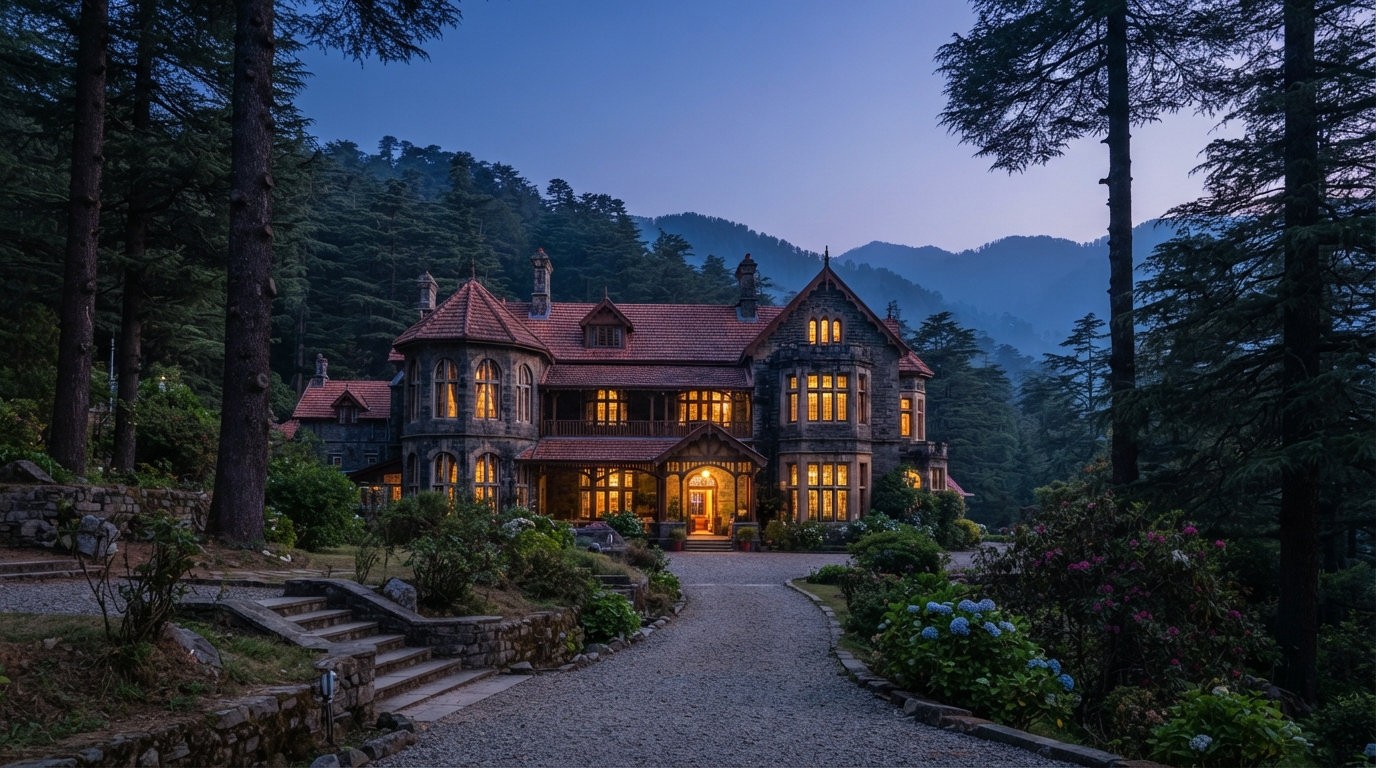
The summit itself ran from June 28 to July 2, 1972. According to Ritam Digital, talks began on June 28 and continued until June 30 without consensus. On July 1, the leaders reached a deadlock. A late-night breakthrough on July 2 produced the signed text at Barnes Court, now the Himachal Raj Bhavan.
June 28: Bhutto arrives in Shimla
Bhutto reached Shimla with a large delegation on June 28, 1972. His daughter Benazir Bhutto travelled with him. She later became Pakistan's Prime Minister herself.
The first three days went to delegation-level talks. Officials traded drafts. Neither side would give ground on the core issues.
July 1: the talks stall
The sticking points were clear by July 1:
- Kashmir. India wanted a settled line. Pakistan resisted any wording that looked like a final border.
- Prisoners of war. Pakistan wanted its 93,000 personnel back. India linked their return to Bangladesh, since many faced inquiries there.
- Bilateralism. India wanted all future disputes handled between the two countries alone.
Reports from the time describe delegations preparing to leave without a deal. Many accounts say the Pakistani side had already started packing.
July 2: the midnight signing
A final one-on-one meeting between Indira Gandhi and Bhutto broke the deadlock. The two leaders signed the agreement late that night at Barnes Court. The signing happened close to midnight. That is why some sources date it July 3, 1972.
The document is formally dated July 2, 1972. Note one small spelling point. The original text uses "Simla," the older spelling of the town's name.
The agreement set out four core commitments
The Shimla Agreement is short, roughly two pages. Its core rests on four commitments: settle disputes peacefully and bilaterally, respect a new Line of Control in Jammu and Kashmir, pull troops back to the international border, and restore normal links such as trade and travel. Every later reading of the deal comes back to these four.
Bilateralism and peaceful settlement
Both countries agreed to settle differences "by peaceful means through bilateral negotiations." They also agreed not to use force or the threat of force against each other.
This clause still shapes India's policy today. India uses it to reject third-party roles in Kashmir. In 2025, SP Vaid, a former Jammu and Kashmir police chief, told ANI that India's approach follows the Shimla Agreement in refusing outside mediation.
The Line of Control in Jammu and Kashmir
The agreement turned the December 17, 1971 ceasefire positions into the Line of Control. This replaced the older ceasefire line set up in 1949. The LoC runs about 740 to 776 km, according to Wikipedia.
The legal nature of the line is precise. Britannica (2025) notes that both sides agreed to respect the LoC and not alter it by force. It was not recognised as an international border. That gap has fed decades of debate.
Troop withdrawal and territory
Forces were to pull back to their own side of the international border. The text set a 30-day window from the date the agreement took effect.
Here is the tradeoff many summaries miss. India returned most of the roughly 13,000 sq km it held, as Anantam IAS (2025) records. That return applied along the international border in Punjab and Sindh. In Jammu and Kashmir, the new LoC followed the December 17 positions. Some areas taken there in 1971 stayed with India. One study-guide site, LRNIN (2025), names Turtuk as an example. Verify claims like that against a primary source before you quote them in an exam.
The Shimla Agreement timeline continued long after July 1972
The Shimla Agreement timeline is the two-year sequence that followed the July 2, 1972 signing. Ratification came in July and August 1972. Prisoners returned only after the Delhi Agreement of August 28, 1973. Pakistan recognised Bangladesh in February 1974, and a three-way deal followed on April 9, 1974. These steps finished what Shimla began.
Most accounts stop at the signing, but the real work of implementing the Shimla Agreement ran until 1974.
Ratification and entry into force
According to Wikipedia, the dates ran as follows:
- July 15, 1972: Pakistan ratified the agreement.
- August 3, 1972: India ratified it.
- August 4, 1972: The agreement came into force.
Military commanders then marked the LoC on maps over the following months. Troop withdrawals along the border were carried out in late 1972.
The Delhi Agreement and prisoner returns
The Shimla Agreement did not free the prisoners. The Shimla Agreement only promised further talks. Those talks produced the Delhi Agreement on August 28, 1973. Wikipedia describes the Delhi Agreement as a trilateral agreement ratified only by India and Pakistan.
Repatriation began on September 19, 1973, according to a UN document reproduced by Virtual Bangladesh. The repatriation process moved people in three directions. Pakistani personnel went home from India. Bengalis stranded in Pakistan went to Bangladesh. Some non-Bengalis in Bangladesh went to Pakistan.
A note on the 93,000 figure: Anantam IAS (2025) counts them as "Pakistani military and civilian personnel." Not all were soldiers.
Recognition and the 1974 tripartite deal
Pakistan's recognition of Bangladesh in February 1974, as recorded by UN Peacemaker, was the step that brought Bangladesh fully into the Shimla settlement. On April 9, 1974, India, Pakistan and Bangladesh signed a tripartite agreement in New Delhi. The tripartite agreement closed the main prisoner question left by the 1971 war.
Bangladesh was not at the Shimla table in 1972. Bangladesh welcomed the Shimla Agreement all the same, but its full place in the settlement came only with the 1974 recognition and the New Delhi tripartite agreement.
The full timeline at a glance
| Date | Event | Place |
|---|---|---|
| December 16, 1971 | Pakistani forces surrender | Dhaka |
| December 17, 1971 | Ceasefire on the western front | India–Pakistan border |
| December 20, 1971 | Bhutto becomes President of Pakistan | Islamabad |
| Late April 1972 | Preparatory emissary talks | Murree |
| June 28, 1972 | Summit talks begin | Shimla |
| July 1, 1972 | Talks reach deadlock | Shimla |
| July 2, 1972 | Agreement signed near midnight | Barnes Court, Shimla |
| July 15, 1972 | Pakistan ratifies | Pakistan |
| August 3, 1972 | India ratifies | India |
| August 4, 1972 | Agreement enters into force | Both countries |
| August 28, 1973 | Delhi Agreement signed | New Delhi |
| September 19, 1973 | Three-way repatriation begins | India, Pakistan, Bangladesh |
| February 1974 | Pakistan recognises Bangladesh | Lahore |
| April 9, 1974 | Tripartite agreement signed | New Delhi |
To place these dates within the wider sweep of Indian history, from the Mughal empire timeline to post-1947 diplomacy, use our Indian history timeline chart.
Sources disagree on several Shimla details
Even reliable sources differ on some Shimla facts. The three most common problems are the signing date, Bhutto's title in 1972 and how the 93,000 prisoners are described. Each has a clear answer once you check primary records. Getting them right matters most in exams, where one wrong title can cost marks.
July 2 or July 3?
The formal date is July 2, 1972. The confusion comes from timing. The leaders signed close to midnight, and some newspapers reported it on July 3.
Use July 2 for exams and citations. Mention the midnight signing if you want to show depth.
President, not Prime Minister
Zulfikar Ali Bhutto was President of Pakistan, not Prime Minister, when he signed the Shimla Agreement in July 1972. Bhutto held the presidency from December 20, 1971, and became Prime Minister only in August 1973. Britannica's entry on the agreement accordingly refers to him as "Pakistani Pres. Zulfikar Ali Bhutto."
Many websites still call Bhutto "Prime Minister" at Shimla, and that title is wrong for July 1972. Indira Gandhi, by contrast, was Prime Minister of India throughout the Shimla talks and the signing.
What the numbers include
Three figures cause the most errors. This list shows the safe version of each:
- 93,000 prisoners: military and civilian personnel, not soldiers alone (Anantam IAS, 2025)
- 13,000 sq km: territory held in West Pakistan, mostly returned (Anantam IAS, 2025)
- 740–776 km: the LoC's length, depending on the source used (Wikipedia)
The agreement's status was questioned in 2025
More than 50 years after it was signed, the Shimla Agreement returned to the news in 2025. Pakistani officials made statements about suspending it. Those statements did not line up with each other. For history readers, the key point is simple. The 1972 text still defines the LoC and the bilateral principle, whatever its current political standing.
Pakistan's mixed signals
The record from 2025 shows three different positions:
- April 24, 2025: Pakistan's National Security Committee announced it would suspend the agreement, according to the EurAsian Times (2025). This came after India suspended the Indus Waters Treaty following the Pahalgam attack, which killed 26 civilians.
- June 2025: Defence Minister Khawaja Asif said Pakistan had effectively returned to its 1948 position on Kashmir, as reported by the Express Tribune (2025).
- Soon after: Pakistan's Foreign Office said no formal decision had been made to withdraw, according to Samaa (2025).
Business Standard (2025) also reported that Pakistan's measures included closing the Wagah border and suspending visas.
Why the original text still matters
Statements by officials are not the same as a formal withdrawal. The agreement has no exit clause. That leaves its legal standing open to debate.
For study purposes, the safest approach is to treat 1972 to 1974 as settled history. Treat the 2025 statements as a separate, unresolved chapter. Keep the two apart in your notes.
Related Reading
- India at the Olympics: A Timeline of Historic Sporting Milestones
- December 1984: A Historical Timeline of the Bhopal Gas Tragedy
- Indian History Timeline Chart: Key Milestones (Digital Reference)
- The Dandi March Day-by-Day: A Timeline of the 1930 Salt Satyagraha
FAQ
Q: Who signed the Shimla Agreement? Prime Minister Indira Gandhi signed for India. President Zulfikar Ali Bhutto signed for Pakistan. The signing took place at Barnes Court in Shimla, now the Himachal Raj Bhavan.
Q: When did the Shimla Agreement come into force? It came into force on August 4, 1972. Pakistan ratified it on July 15, 1972, and India ratified it on August 3, 1972, according to Wikipedia.
Q: Did the Shimla Agreement free the 93,000 prisoners? Not directly. It promised further talks on the issue. The prisoners returned through the Delhi Agreement of August 28, 1973, with repatriation starting on September 19, 1973.
Q: Is the Line of Control an international border? No. Britannica (2025) notes that both sides agreed to respect the LoC and not change it by force. It was never recognised as an international border.
Q: Why do some sources date the agreement July 3, 1972? The leaders signed it around midnight on July 2. Some reports carried the next day's date. The formal date on the document is July 2, 1972.
Your next move: Decide which slice of this timeline you need, then study only that. If your exam asks about the agreement's terms, focus on the four core commitments and the July 2 date. If it asks about outcomes, add the 1973 Delhi Agreement and the April 9, 1974 tripartite deal, since examiners often reward students who know the story didn't end at Shimla.