The Historical Roots of Vishu: A Timeline of Kerala's Harvest Festival
The Quick Read
Vishu is Kerala's astronomical and agrarian festival marking the solar transit into Aries (Mesha Sankranti). Rooted in the 9th-century Chera Kingdom, it historically synchronized medieval land leases, seasonal crop planting, and regional calendar calculations. The festival reflects centuries of astronomical scholarship and agricultural tradition across southwestern India.
Key Takeaways
- Vishu aligns with the sidereal solar transit into Mesha rather than the tropical equinox.
- Ninth-century Chera inscriptions confirm state-sponsored astronomical tracking for the festival.
- Kerala maintains separate dates for its civil new year and astronomical harvest festival.
- Feudal agrarian contracts and initial soil plowing historically centered on Vishu morning.
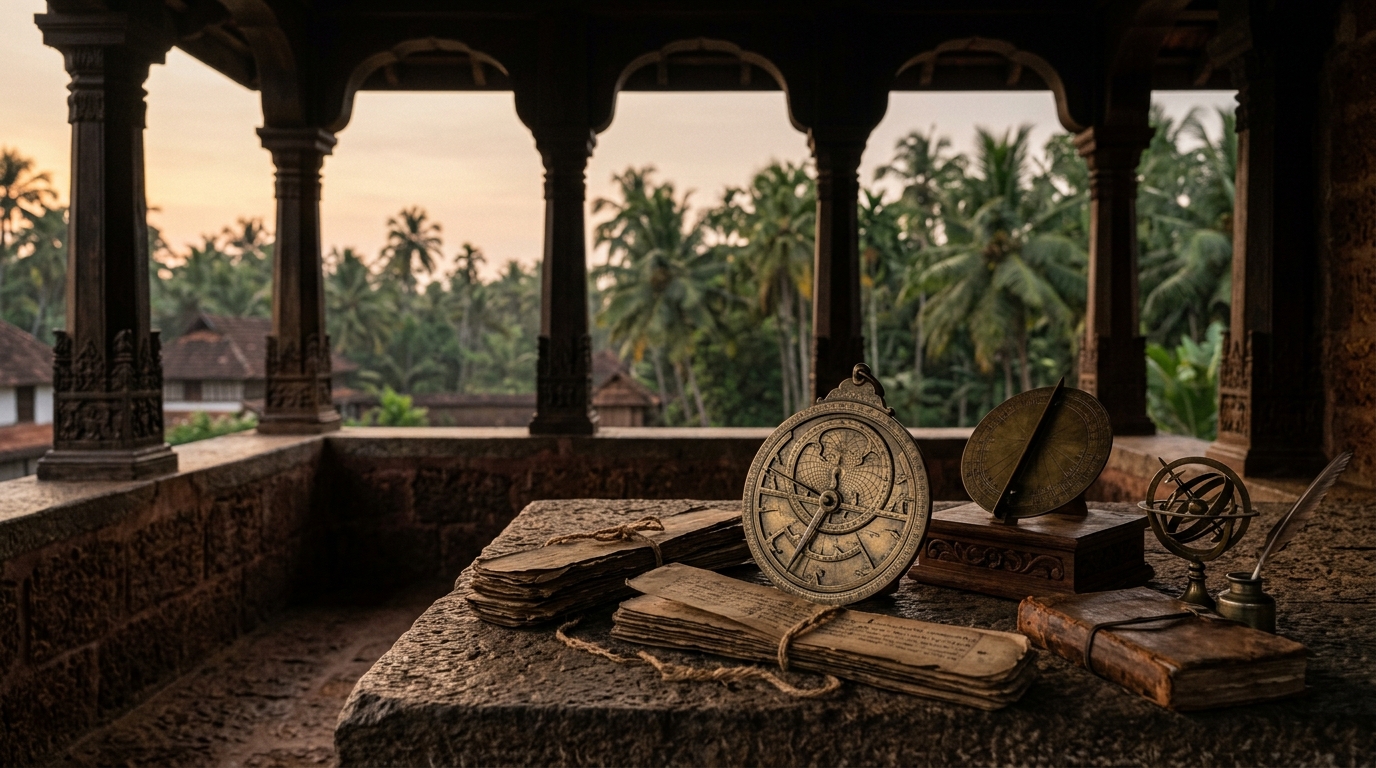
In 869 CE, royal astronomers at the Mahodayapuram observatory completed mathematical calculations that standardized solar calendars across southwestern India. The observatory operated under Chera King Sthanu Ravi Varma. Astronomer Sankaranarayana authored the Laghu Bhaskariya Vivarana to document these celestial observations. This work marked a major turning point for Vishu festival history India, establishing institutional records for seasonal celebrations and taxation cycles.
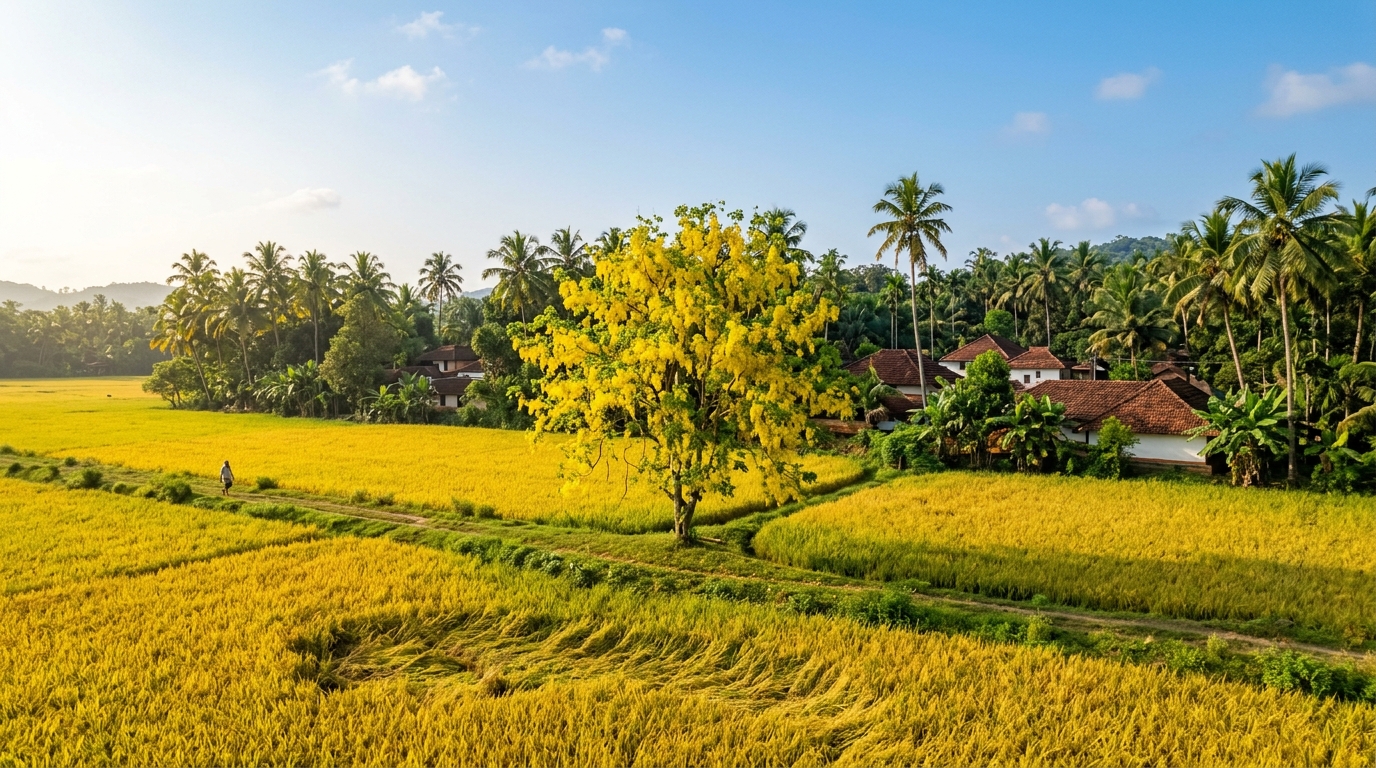
Agricultural life in medieval Kerala followed strict solar and monsoon rhythms. Cultivators needed reliable markers to prepare their fields before the torrential southwest monsoon arrived in June. Vishu offered that precise anchor point. The celebration fell on the first day of the Malayalam month of Medam, matching the sun's entry into the constellation Aries.
Over the past twelve centuries, Vishu changed from a practical astronomical milestone into a central cultural celebration. It combined temple endowments, agrarian tenancy resets, and household rituals into a single civic event. Examining this evolution requires looking past popular folklore to inspect medieval stone records, astronomical mathematics, and agrarian economic systems.
+-------------------------------------------------------------------------------+
|                      HISTORICAL TIMELINE OF VISHU                             |
+-------------------------------------------------------------------------------+
|  825 CE      | Inception of Kollavarsham (Malayalam Calendar)                 |
|  869 CE      | Sankaranarayana records solar tracking at Mahodayapuram        |
|  962-1021 CE | Bhaskara Ravi Varman II issues Trikodithanam Vishu inscription |
|  1887 CE     | William Logan documents Malabar land tenancy resets on Vishu   |
|  Present     | State market interventions and regional temple gatherings      |
+-------------------------------------------------------------------------------+
How Do Astronomical Origins Define the Sidereal Calendar Transition in Vishu Festival History India?
Vishu is the historical Kerala harvest festival marking the solar transit into Aries (Mesha Sankranti) according to the sidereal calendar. While axial precession shifted the astronomical equinox (Viṣuvam) to March, Indian astronomers tracked the sidereal solar entry on April 14 or 15, establishing Vishu as the agricultural benchmark for southwestern India.
The Mathematical Shift of the Spring Equinox
The Sanskrit word Viṣuvam originally designated the exact astronomical equinox when day and night were of equal length. Ancient Indian astronomers understood this balance as a critical seasonal marker. As the Earth's axis wobbles over a 25,772-year cycle, a phenomenon known as axial precession (Ayanamsha), the tropical equinox drifted backwards. Today, the tropical vernal equinox falls on March 20 or 21.
Traditional Indian calendar systems continued using the sidereal zodiac, which tracks the sun against fixed stellar constellations. Consequently, the sidereal solar transit into Aries (Mesha Sankranti) now occurs on April 14 or 15. This solar passage places Vishu alongside other regional spring observances across the subcontinent, such as Tamil Puthandu, Baisakhi, and Poila Baisakh. These dates frequently appear among searched dates in Indian history and late April historical milestones due to their shared astronomical roots.
Medieval Astronomical Treatises from Mahodayapuram
During the Second Chera Empire (circa 800–1124 CE), astronomical observation received direct royal patronage at the capital city of Mahodayapuram, located near modern-day Kodungallur. King Sthanu Ravi Varma established an observatory equipped with armillary spheres and ring dials. Astronomers tracked planetary positions and equinoctial shifts to maintain regional agricultural schedules.
The court astronomer Sankaranarayana completed the Laghu Bhaskariya Vivarana in 869 CE [Kerala State Gazetteer, 2023]. This text detailed observational techniques and provided mathematical corrections for solar movements. These calculations allowed local administrators to forecast monsoon onsets and fix seasonal temple rites with high precision.
The Dual Calendar Separation of Chingam and Medam
Kerala is distinct in maintaining two separate New Year milestones throughout its cultural calendar. The civil calendar, known as Kollavarsham, began in 825 CE [Department of Cultural Affairs, Government of Kerala, 2024]. The first month of Kollavarsham is Chingam (August–September), which historically aligned with administrative record-keeping and the major autumn harvest festival of Onam.
Medam 1, which marks Vishu, remained the astronomical and agricultural beginning of the solar year. While Chingam handled civil governance and revenue collections, Medam governed the biological and meteorological calendar of planting. Farmers looked to Medam as the moment of renewal when the sun returned to the start of the sidereal zodiac.
                    KERALA DUAL CALENDAR SYSTEM

   CHINGAM 1 (Aug/Sep)                  MEDAM 1 / VISHU (Apr)
   +-----------------------+            +-----------------------+
   | - Civil New Year      |            | - Astronomical Start  |
   | - Administrative Start|            | - Sowing Cycle Begins |
   | - Kollavarsham Month 1|            | - Sidereal Mesha Entry|
   | - Associated with Onam|            | - Associated with Kani|
   +-----------------------+            +-----------------------+
How Do Epigraphic Records Trace Vishu Through Medieval Chera Administration?
Epigraphic documentation of Vishu is the historical record preserved in 9th to 11th-century Second Chera dynasty inscriptions verifying state sponsorship of the festival. Stone records from rulers like Bhaskara Ravi Varman II demonstrate that medieval Chera administrators pegged temple endowments, civic paddy distributions, and agrarian tax assessments directly to the solar transit of Chithira Vishu.
Stone Endowments at Trikodithanam Temple
Archaeological evidence verifies that Vishu held official administrative status in medieval Kerala. The Trikodithanam Shasanam, an inscription carved during the reign of Chera King Bhaskara Ravi Varman II (962–1021 CE), provides a clear epigraphic record [Archaeological Survey of India Records, 2024]. This stone tablet records specific endowments of land and measures of paddy dedicated to temple rituals during Chithira Vishu.
The inscription specifies revenue allocations for feeding Brahmins, maintaining sacred oil lamps, and distributing food to tenant farmers. These records show that Vishu was not merely a private household event. It served as a civic occasion where local governing bodies redistributed resources and re-established social contracts.
+-------------------------------------------------------------------------------+
|                TRIKODITHANAM EPIGRAPHIC DETAILS (962–1021 CE)                 |
+-------------------------------------------------------------------------------+
| Ruler             | Chera King Bhaskara Ravi Varman II                        |
| Location          | Trikodithanam Mahavishnu Temple, Kottayam District        |
| Language / Script | Old Malayalam / Vatteluttu                                |
| Key Mandate       | Dedication of paddy lands for annual Chithira Vishu rites |
| Social Function   | Community feeding and agricultural tax allocation         |
+-------------------------------------------------------------------------------+
How Did Feudal Land Tenure and Agrarian Lease Resets Function During Vishu?
Agrarian lease reset on Vishu is the medieval Kerala land tenure practice whereby tenant farmers (Kanakkars) settled annual dues with feudal lords (Janmis) and temple trusts (Devaswom). As historian Dr. M.G.S. Narayanan noted in Perumals of Kerala (2013), Vishu festival history India shows this solar date established the formal fiscal boundary for renewing agricultural contracts.
Colonial administrator William Logan later documented these tenancy patterns in the Malabar Manual (1887). Logan observed that tenant cultivators settled outstanding dues and renegotiated land tenancies on Vishu day. Debts were calculated, land boundaries were confirmed, and tenants received seed allocations for the coming monsoon season. This institutional timeline is comparable to other historical tenancy agreements found in traditional Indian agricultural calendars.
The Chalbani Plowing Rite and Sowing Cycles
The connection between land and festival culminated in the Chalbani ritual of North Malabar. On the morning of Vishu, farmers gathered at their fields after viewing the auspicious domestic displays. They brought out their bullocks, oiled the plowshares, and carved the first ceremonial furrows into the dry soil.
This ritual furrow, called the Chal, signaled the start of summer sowing (Poochakkal). Farmers scattered the first handfuls of paddy seeds into the earth. The seeds remained dormant in the warm soil for several weeks, ready to germinate immediately upon the arrival of the Edavappathi rains in early June.
How Does Ritual Materiality Reflect Agrarian Prosperity Across Kerala Households?
Ritual materiality in Vishu is the symbolic domestic arrangement of agricultural wealth that showcases seasonal harvests across Kerala households. Through ceremonial practices like the dawn viewing of the Vishukkani, the gifting of Vishu Kaineettam, and shared Vishu Sadya feasts, families redistribute agrarian surplus and celebrate horticultural ecology at the start of the solar planting cycle.
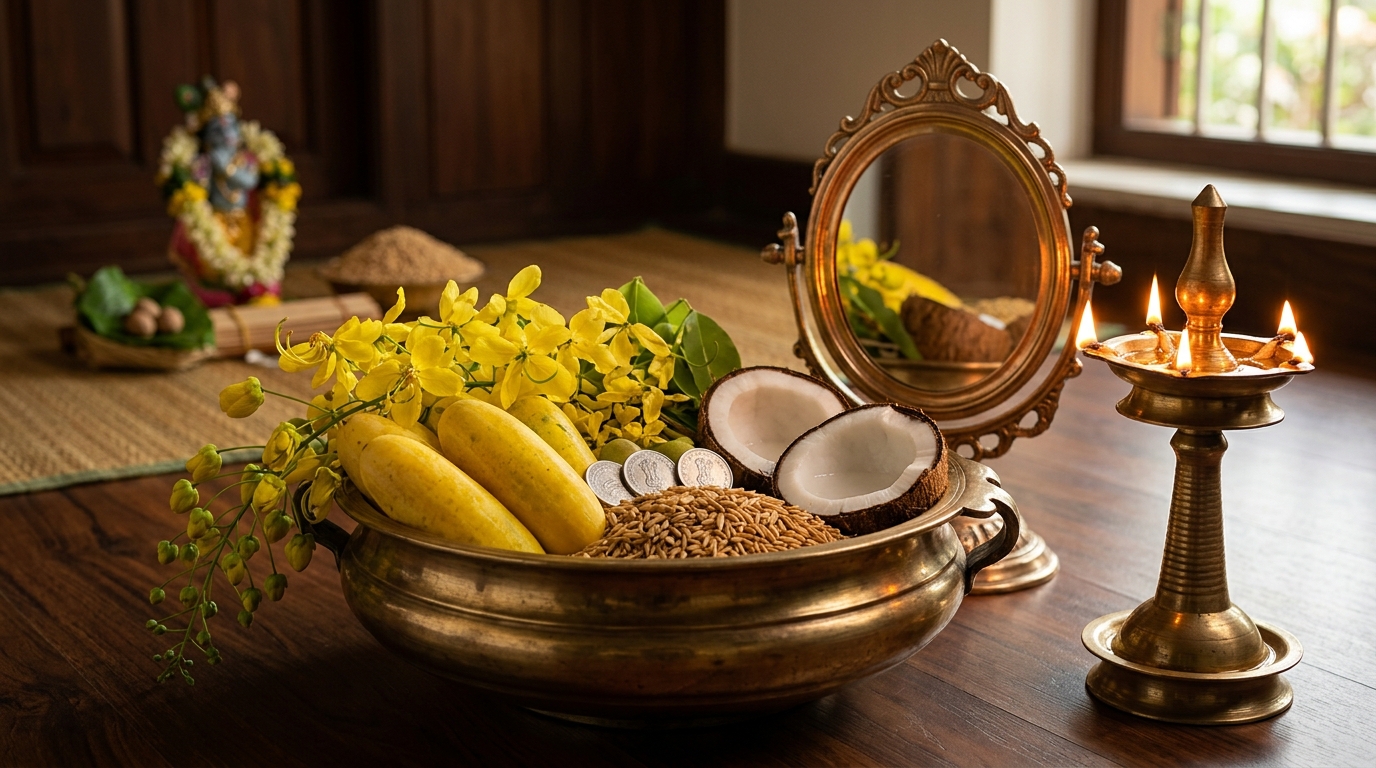
                       VISHUKKANI ARRANGEMENT

                         [ Nilavilakku ]
                           (Bronze Lamp)
                                 |
         +-----------------------+-----------------------+
         |                       |                       |
   [ Valkannadi ]        [ Kani Konna ]         [ Uruli Vessel ]
  (Bronze Mirror)        (Golden Shower)        (Paddy, Coins,
                                                Cucumber, Fruits)
The Composition and Symbolism of the Vishukkani
The central ritual of the festival is the Vishukkani, which translates to "that which is seen first on Vishu." Household elders arrange the display on the eve of the festival inside a large bell-metal vessel called an Uruli. Family members are led blindfolded to the display at dawn so that the arrangement is the first visual impression of the new solar year.
Every item in the Uruli represents an essential element of the regional rural economy:
- Unhakkalari: Raw, unpolished rice grains that represent basic subsistence and grain security.
- Kani Vellarikka: A distinct golden-yellow cucumber (Cucumis sativus) that symbolizes agricultural maturity.
- Kani Konna: Golden blossoms of the Indian Laburnum (Cassia fistula), which naturally bloom during mid-April.
- Valkannadi: A handheld, polished-bronze mirror from Aranmula that invites self-reflection.
- Kasavu Pudava: Unbleached handloom cloth with gold borders, reflecting local weaving traditions.
- Coins and Gold: Physical currency denoting household liquidity and commercial success.
- Nilavilakku: A lit two-tiered bronze lamp that illuminates the entire arrangement.
Economic Redistribution Through Vishu Kaineettam
Following the dawn viewing, the eldest member of the family conducts the Vishu Kaineettam. The elder gives a small coin or currency note, traditionally accompanied by a betel leaf and areca nut, to younger relatives and domestic workers.
In earlier centuries, Vishu Kaineettam served a practical redistributive function within the matrilineal joint-family (Tharavadu). The Karanavar (family patriarch) distributed physical wealth from the common estate to junior members who held no independent property rights. The gift provided individuals with personal spending money for the upcoming festival fairs.
Culinary Geography in the Traditional Vishu Sadya
The festival meal, known as Vishu Sadya, highlights local crops harvested in early spring. Unlike the purely vegetarian Onam feast, regional variations of Vishu cuisine reflect local geography. In central and southern Kerala, sweet and savory preparations use jackfruit, raw mangoes, and pumpkin.
Two dishes remain unique to the morning of Vishu:
- Vishu Kanji: A thick porridge prepared from freshly harvested rice, coconut milk, and split cowpeas, lightly salted.
- Vishu Katta: A savory rice cake cooked with coconut milk and cumin seeds, served alongside sweet jaggery syrup (Pani).
These dishes provided complex carbohydrates and electrolytes needed by agricultural laborers preparing for intense field work in the pre-monsoon heat.
How Do Modern Economic Shifts Reshape Vishu Festival History India?
Modern Vishu is an evolving cultural celebration shaped by state market interventions, pilgrimage tourism, and environmental changes across southwestern India. While medieval Vishu centered on subsistence agrarian leases, contemporary celebrations in Vishu festival history India involve government commodity subsidies, high pilgrim turnout at major shrines, and altered flowering cycles of the ritual Kani Konna tree.
State Market Stabilization and Festive Subsidies
As Kerala moved away from subsistence agriculture toward a service and remittance economy, the state government stepped in to manage festival-related price inflation. The Department of Food and Civil Supplies uses public agencies like Supplyco and Consumerfed to stabilize retail markets ahead of the festival.
During seasonal festival runs, Consumerfed operates approximately 1,750 subsidized markets across all 14 districts. In recent fiscal cycles, these stabilization drives generated ₹69 crore in subsidized retail sales [Kerala State Planning Board Economic Review, 2025]. The state caps the prices of essential commodities like coconut oil, sugar, rice, and pulses. These interventions protect household purchasing power during high-demand festival periods, marking important economic milestones in Indian history.
+-------------------------------------------------------------------------------+
|             MEDIEVAL VS. MODERN VISHU: STRUCTURAL COMPARISON                  |
+-------------------------------------------------------------------------------+
| Dimension         | Medieval Vishu (800–1200 CE) | Modern Vishu (2000s–Present)|
+-------------------+------------------------------+----------------------------+
| Calendar Function | Astronomical solar transit   | Public holiday / cultural  |
| Economic Driver   | Land lease resets & sowing   | Retail markets & tourism   |
| Primary Display   | Home-grown harvest produce   | Market-purchased goods     |
| Institutional Hub | Local temple trusts & Janmis | Devaswom boards & state    |
+-------------------+------------------------------+----------------------------+
Pilgrimage Economics at Guruvayur and Sabarimala
Vishu has expanded into a major religious tourism driver in southern India. Tens of thousands of pilgrims travel to major shrines to witness the dawn Vishukkani darshan. Temples managed by the Travancore Devaswom Board and the Guruvayur Devaswom record their highest single-day crowds during April 14 and 15 [Travancore Devaswom Board, 2025].
This influx creates a secondary economy for regional hospitality, public transport, and artisanal handicrafts. Bell-metal artisans in Mannar and Aranmula experience peak annual orders for bronze Urulis and Valkannadis in the months leading up to the festival.
       SEASONAL PRODUCTION CYCLE FOR FESTIVAL ARTISANS (MANNAR / ARANMULA)

  JAN - FEB: Raw metal sourcing (Copper / Tin alloys)
      |
  FEB - MAR: Casting, shaping, and mirror polishing
      |
  MAR - APR: Wholesale distribution to statewide retail markets
      |
  APR (Vishu): Peak retail purchase by households and temples
Climate Shifts and the Phenology of Kani Konna
Environmental shifts have disrupted the natural botanical timing of the festival. The yellow blossoms of the Kani Konna (Cassia fistula) have long served as the visual hallmark of Vishu. Historically, the tree flowered exclusively in early to mid-April, triggered by rising pre-monsoon temperatures.
Agronomists and climate researchers have reported that Cassia fistula now blooms as early as February or March across several districts [Kerala Agricultural University Reports, 2024]. Rising winter temperatures and erratic rainfall patterns cause the trees to flower prematurely. This ecological shift forces urban families to purchase artificial plastic blossoms for their Vishukkani displays, showing how environmental change directly impacts cultural heritage.
Frequently Asked Questions
Q: Why does Vishu fall in mid-April instead of the actual spring equinox in March?
Vishu is calculated using the sidereal solar calendar rather than the tropical solar calendar. Axial precession (Ayanamsha) shifted the tropical spring equinox to March 20–21 over the centuries. Vishu marks the sun's entry into the sidereal constellation of Aries (Mesha Sankranti), which consistently occurs around April 14–15.
Q: What is the historical difference between Chingam 1 and Vishu in Kerala?
Chingam 1 is the official civil New Year that marks the start of the Malayalam Kollavarsham calendar, which was established in 825 CE for administrative and revenue purposes. Vishu (Medam 1) is the astronomical and agricultural New Year, historically used by farmers and astronomers to align planting seasons with solar transits.
Q: How did medieval Chera kings celebrate Vishu?
Medieval Chera rulers supported astronomical observatories to track the exact solar transit and funded large temple endowments for Vishu. Inscriptions like the Trikodithanam Shasanam confirm that kings allocated state-collected paddy and gold to supply temple feasts and community offerings on the day of Chithira Vishu.
Q: What role did Vishu play in Kerala's historical land tenure system?
Under traditional feudal land tenure systems, Vishu served as the annual settlement date for tenant farmers (Kanakkars) and landlords (Janmis). Tenants cleared outstanding debts, renewed agricultural leases, and performed the ceremonial Chalbani plowing ritual to start the summer sowing cycle before the arrival of the monsoon.
Further Reading
- Perumals of Kerala by Dr. M.G.S. Narayanan (2013): An authoritative historical study examining the political, astronomical, and social structures of the Second Chera Kingdom.
- Malabar Manual by William Logan (1887): A detailed colonial administrative record that documents 19th-century land tenure systems, agrarian customs, and festival routines in northern Kerala.
- Laghu Bhaskariya Vivarana (Historical Commentary): Academic translations of Sankaranarayana's 869 CE astronomical text, providing technical insight into early solar tracking at the Mahodayapuram observatory.
- Kerala State Planning Board Economic Review (2025): An annual government report analyzing state market stabilization programs, public distribution networks, and seasonal retail subsidy sales.
Related Reading
- India at the Olympics: A Timeline of Historic Sporting Milestones
- Milestones in Indian Women's History: A Chronological Guide
- 1,000 Years of Indian Medical History: A Chronological Guide
- Economic Milestones in Indian History: From 1947 to Present
Sources
- Full text of "Pingree, Jyotihsastra: Astral And Mathematical Literature" — Otto Harrassowitz via Internet Archive, 1981. Supports: Sankaranarayana's authorship of the astronomical commentary Laghubhaskariyavivarana in 869 CE in medieval Kerala.
- History | District Kollam, Government of Kerala — District Administration Kollam, Government of Kerala, 2026. Supports: The inception and commencement of the Kollavarsham (Malayalam Calendar / Kollam Era) in 825 CE.
- Malabar Manual, Vol. 2 — Superintendent, Government Press (Madras) via Internet Archive, 1887. Supports: William Logan's documentation of agrarian land tenures, cultivation statistics, and traditional tenancy cycles in Malabar.
- Sthanu Ravi Kulasekhara — Wikimedia Foundation, 2024. Supports: The 9th-century reign of Chera King Sthanu Ravi Varma and the royal patronage of the astronomical observatory at Mahodayapuram.
- Śaṅkaranārāyaṇa — Wikimedia Foundation, 2024. Supports: The documentation of solar observations, planetary calculations, and astronomical instruments at Mahodayapuram in 869 CE.