The Global Journey of Indian Cuisine: A Timeline of Culinary Exports
In Short
The history of Indian cuisine globally spans thousands of years, evolving from ancient maritime spice trade routes to modern fine dining. This timeline tracks how merchants, colonial migrations, and diaspora communities introduced regional Indian flavors to the world. These historical milestones transformed local ingredients into a celebrated global food culture.
Key Takeaways
- Ancient spice routes first introduced Indian black pepper and cardamom to Roman and Arab merchants.
- 19th-century indentured laborers brought regional Indian cooking techniques to the Caribbean and Africa.
- Sake Dean Mahomed opened the first formal Indian restaurant in London in 1810.
- Post-war diaspora communities established the modern curry house culture across the United Kingdom.
- Contemporary chefs now elevate regional Indian dishes to earn international Michelin star recognition.
Most people believe the history of Indian cuisine globally began when post-war immigrants opened neighborhood curry houses in London. The actual spread of Indian food started centuries earlier through ancient maritime trade and complex colonial migrations. Long before chicken tikka masala became a staple in Western diets, Indian spices were reshaping the culinary landscapes of the Roman Empire, Southeast Asia, and the Caribbean. Understanding this timeline requires looking past modern takeout menus. We must examine the historical trade routes, the movement of laborers, and the early entrepreneurs who carried their culinary heritage across oceans. The global footprint of Indian food tells a broader story about human migration and cultural adaptation. Every dish served in a diaspora restaurant today represents a specific historical intersection of ingredients, necessity, and survival.
Ancient Trade Networks Initiated the History of Indian Cuisine Globally
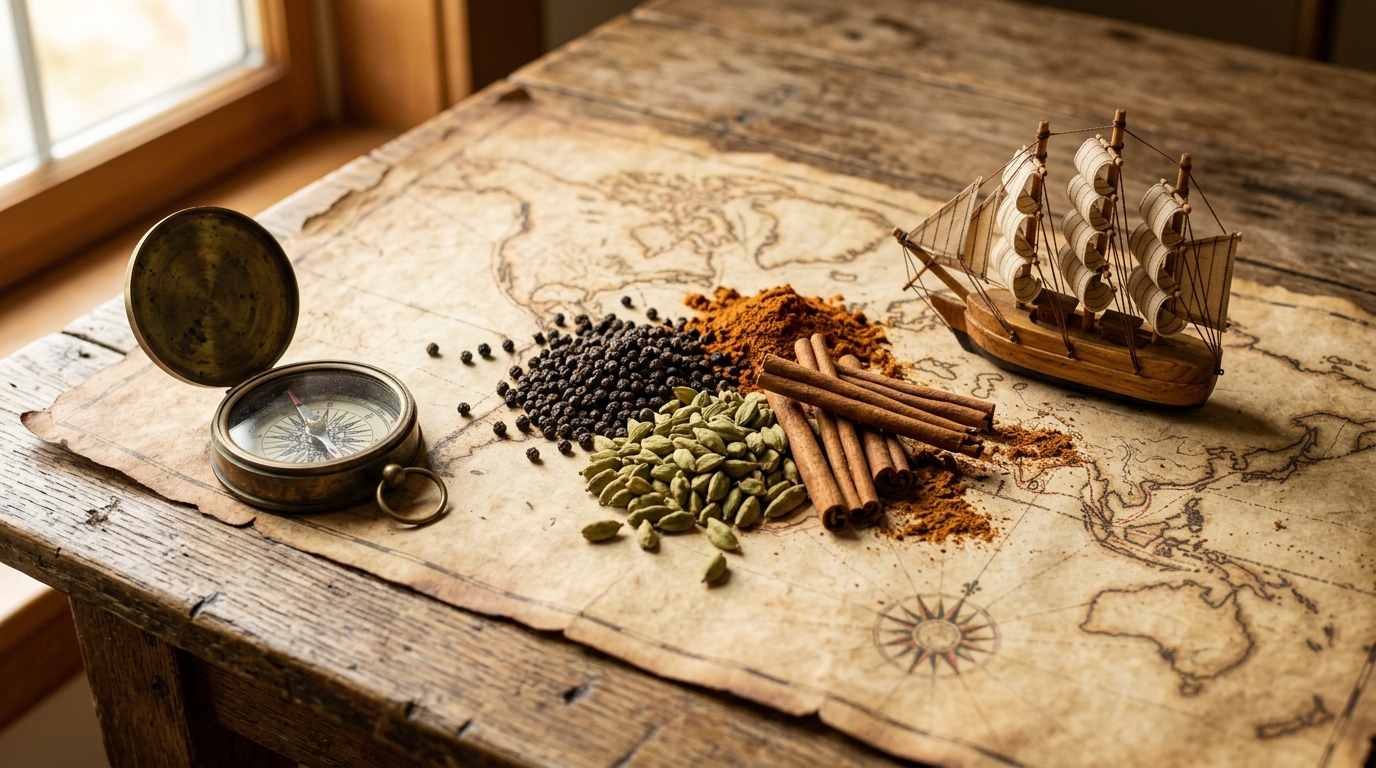
The earliest phase of Indian food exports relied entirely on the spice trade rather than finished dishes. Ancient merchants transported black pepper, cardamom, and cinnamon from the Malabar Coast to Rome and the Middle East. These raw ingredients fundamentally altered global flavor profiles long before written recipes traveled.
The Roman Empire's Demand for Black Pepper
Roman ships sailed across the Arabian Sea using monsoon winds to reach the southern coast of India. The port city of Muziris in present-day Kerala served as the primary hub for this lucrative exchange. Roman merchants traded heavy loads of gold and silver for Indian black pepper. The demand grew so intense that Roman author Pliny the Elder famously complained about the massive drain of wealth from Rome to India just to satisfy culinary tastes. Pepper became a status symbol among the Roman elite. Wealthy households used it to mask the taste of preserved meats and display their financial standing. This early trade established India as the undisputed center of the global spice market.
Arab Merchants and the Middle Eastern Exchange
Arab traders controlled the overland and maritime spice routes long after the fall of the Roman Empire. These merchants facilitated a massive culinary exchange between the Indian subcontinent and the Middle East. They brought dates, saffron, and rose water to Indian ports. They returned home with turmeric, cloves, and ginger. This exchange permanently altered Middle Eastern cooking techniques. Arab scholars also documented Indian agricultural practices and culinary uses for various plants. The integration of Indian spices into Middle Eastern stews and roasted meats laid the groundwork for future culinary fusions. Spices moved from luxury commodities to essential daily ingredients across the Arab world.
Southeast Asian Culinary Integration
Indian influence spread eastward through Hindu and Buddhist missionaries, merchants, and regional empires. The Chola dynasty's maritime dominance helped push Indian culinary concepts into present-day Indonesia, Malaysia, and Thailand. Indian traders introduced tamarind, garlic, and specific methods of tempering spices in hot oil. Southeast Asian cooks adopted these techniques but substituted local ingredients like coconut milk and lemongrass. This historical exchange explains the deep similarities between South Indian curries and Southeast Asian dishes. The foundation of many Thai and Malay spice pastes directly mirrors traditional Indian wet masalas.
Colonial Labor Migrations Planted Regional Flavors Across Continents
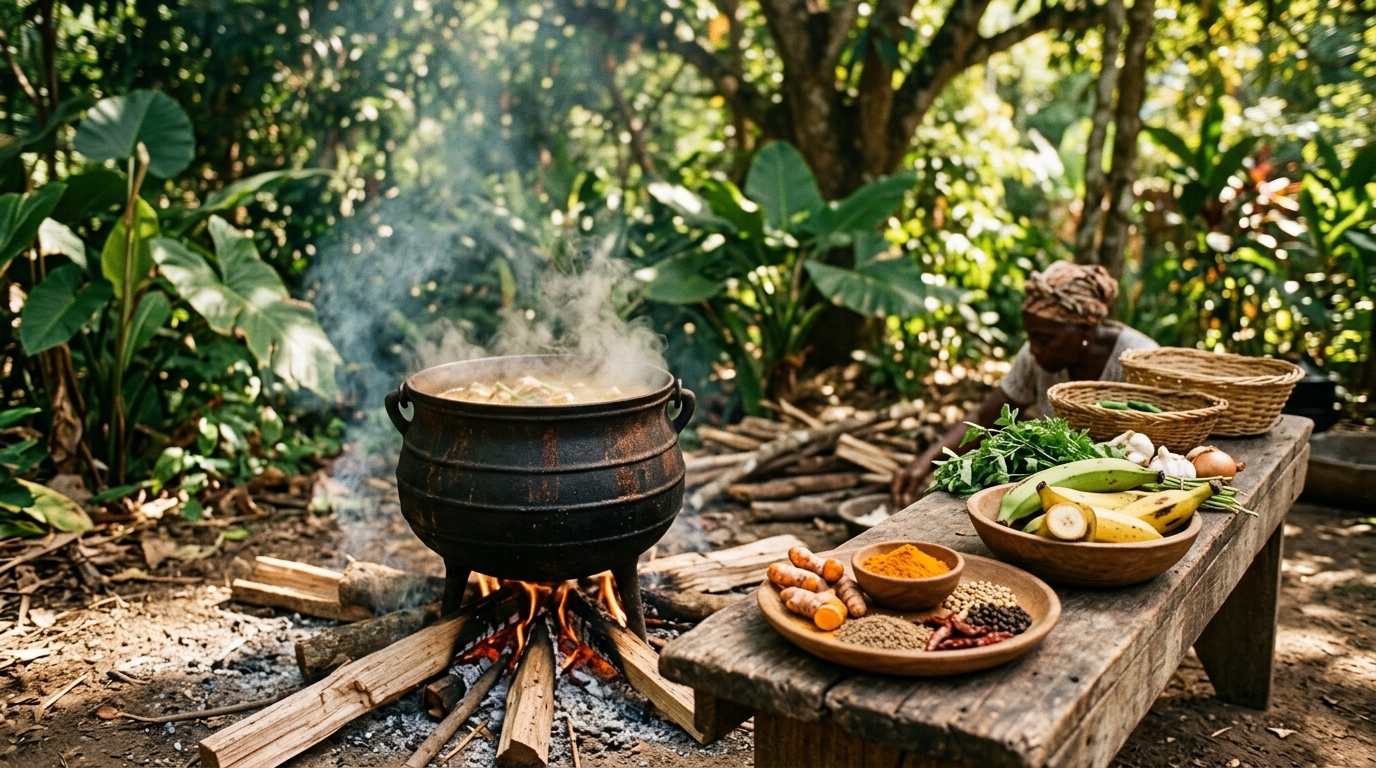
European colonial policies forced millions of Indian laborers to relocate to plantations in the Caribbean, Africa, and Fiji during the 19th century. These workers brought native seeds, spices, and cooking techniques with them. This forced migration created unique, localized versions of Indian cuisine that still thrive today.
Indentured Laborers in the Caribbean and Africa
The British Empire abolished slavery in 1833 and replaced it with a system of indentured servitude. Between 1834 and 1917, colonial administrators transported over a million Indian workers to places like Trinidad, Guyana, Mauritius, and South Africa. These laborers faced harsh conditions and limited food rations. They adapted their traditional recipes using local Caribbean and African ingredients. In Trinidad, workers created roti wraps filled with curried chickpeas and local meats. In Durban, South Africa, the Indian community invented the "Bunny Chow," a hollowed-out loaf of bread filled with spicy curry. This dish originated as a practical way for plantation workers to carry their lunch to the fields. You can explore similar labor movements in our indentured-labor-migration-timeline.
European Powers Absorbed Indian Culinary Concepts
British colonial officials stationed in India developed a strong taste for local food. They employed Indian cooks who adjusted traditional dishes to suit milder European palates. The British East India Company commercialized this preference by creating pre-mixed "curry powder" in the 18th century. This invention allowed returning officials to replicate Indian flavors back in England. The word "curry" itself stems from an anglicized version of the Tamil word "kari," meaning sauce. Other European powers experienced similar culinary shifts. The Portuguese Era in Goa: Key Dates and Architectural Milestones highlights how Portuguese colonists introduced chili peppers to India. In return, the Goan dish "carne de vinha d'alhos" evolved into the globally recognized Vindaloo.
The Anglo-Indian Culinary Synthesis
A distinct Anglo-Indian cuisine emerged during the British Raj. Cooks combined British roasting and baking techniques with Indian spices. Dishes like mulligatawny soup, kedgeree, and railway mutton curry became standard fare in colonial households and gentlemen's clubs. These recipes represented a compromise between two distinct food cultures. Railway mutton curry, for example, was specifically designed to be served in the dining cars of the Indian railway network. It used fewer perishable ingredients to survive long train journeys. This hybrid cuisine served as the primary introduction to Indian food for most British citizens during the 19th century.
The First Diaspora Restaurants Formalized the History of Indian Cuisine Globally
The 19th and early 20th centuries saw the first formal Indian dining establishments open in Western cities. These early restaurants catered primarily to returning colonial officials and a small population of Indian students or sailors. They set the foundational template for the modern Indian restaurant industry.
Sake Dean Mahomed and the Hindoostane Coffee House
Sake Dean Mahomed stands as a central figure in the history of Indian cuisine globally. Born in Patna in 1759, Mahomed served in the East India Company army before immigrating to Britain. In 1810, he opened the Hindoostane Coffee House in Portman Square, London. This establishment holds the distinction of being the first Indian restaurant in the United Kingdom. Mahomed designed the restaurant to offer an authentic experience for returning colonial officials. The menu featured meat and vegetable curries, and the dining room included bamboo cane seating and hookahs. The venture ultimately failed financially, and Mahomed declared bankruptcy in 1812. Despite its short life, the restaurant proved that a commercial market for Indian food existed outside the subcontinent.
Early 20th Century Eateries in the United States
Indian food took longer to establish a foothold in North America. Early 20th-century immigration restrictions severely limited the South Asian population in the United States. A few pioneering restaurants opened in major cities to serve a niche clientele. The Taj Mahal Hindu Restaurant opened in New York City in the 1920s. It catered primarily to bohemian crowds, intellectuals, and a small number of Indian immigrants. These early American establishments often presented Indian food as exotic and mystical. The menus relied heavily on generic curry dishes and imported chutneys. They lacked the regional specificity that defines modern Indian dining.
The Veeraswamy Landmark in London
Edward Palmer, a retired British Indian Army officer, opened Veeraswamy in London in 1926. This restaurant succeeded where the Hindoostane Coffee House failed. Palmer originally started a company to sell Indian spices and condiments to the British public. He opened the restaurant to showcase his products during the British Empire Exhibition. Veeraswamy quickly became a permanent fixture in London's West End. It attracted a high-profile clientele, including Winston Churchill and Charlie Chaplin. The restaurant survived World War II and remains open today. It holds the title of the oldest surviving Indian restaurant in the United Kingdom.
Post-War Diaspora Communities Built the Curry House Empire
Mass migration from South Asia to the United Kingdom and North America after World War II transformed Indian food into a mainstream staple. Sylheti sailors and Punjabi immigrants opened thousands of affordable eateries. These restaurants adapted traditional recipes to suit the milder palates of Western consumers.
The UK Curry Boom in the 1960s and 1970s
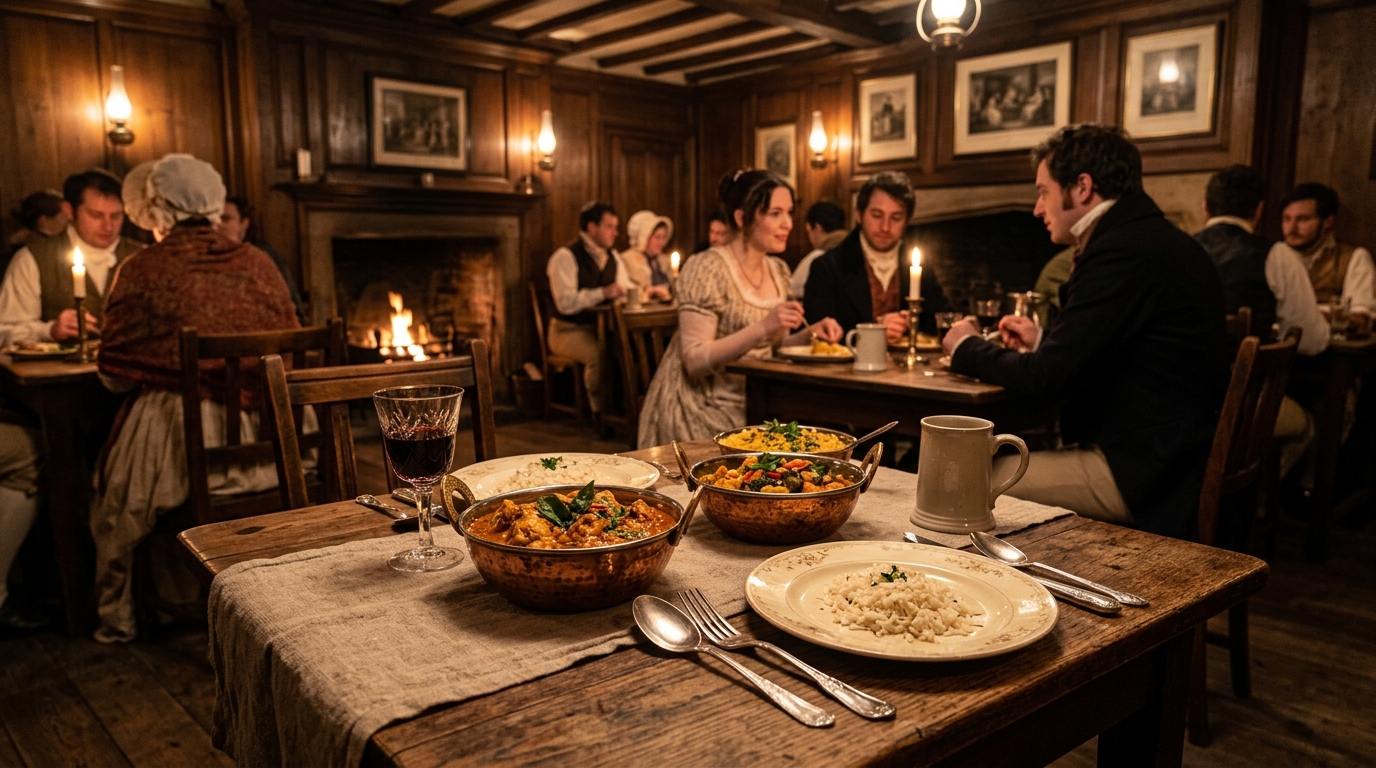
Thousands of South Asian immigrants arrived in Britain to help rebuild the country after World War II. Many of these immigrants were Sylheti sailors from present-day Bangladesh. These men had worked in the boiler rooms of British merchant ships. They began purchasing bombed-out fish and chip shops across London and the Midlands. They kept serving British food during the day but added curry to the menu at night. These establishments stayed open late to cater to patrons leaving local pubs. The combination of cheap, flavorful food and late-night availability sparked a massive cultural shift. The British "curry house" became an institution.
The Invention of Chicken Tikka Masala
The adaptation of Indian food to Western tastes peaked with the creation of chicken tikka masala. Culinary historians generally trace the dish to a restaurant in Glasgow, Scotland, during the 1970s. According to the widely accepted narrative, a customer complained that his chicken tikka was too dry. The chef, Ali Ahmed Aslam, improvised a sauce using condensed tomato soup, yogurt, and mild spices. The resulting dish became a massive commercial success. It perfectly bridged the gap between authentic Indian cooking techniques and British flavor preferences. In 2001, British Foreign Secretary Robin Cook famously declared chicken tikka masala a true British national dish.
North American Expansion in the Late 20th Century
The United States passed the Immigration and Nationality Act of 1965, which abolished national origin quotas. This policy change triggered a significant wave of Indian immigration to North America. Many new arrivals settled in urban centers and opened restaurants to serve their growing communities. The Economic Milestones in Indian History: From 1947 to Present tracks how this demographic shift created new markets. Punjabi immigrants dominated the early North American restaurant scene. They popularized dishes like butter chicken, naan, and saag paneer. The all-you-can-eat lunch buffet emerged as a popular business model. This format allowed diners to sample unfamiliar dishes with low financial risk.
Modern Globalization Shifted Focus to Authentic Regional Dishes
The 21st century marked a shift from monolithic "curry" menus to specialized, regional Indian fine dining. Chefs began highlighting distinct culinary traditions from Kerala, Gujarat, and Bengal. This era elevated Indian cuisine to the highest levels of international gastronomy and Michelin recognition.
Michelin Stars and the Recognition of Regional Cuisine
The global perception of Indian food changed dramatically in 2001. Two London restaurants, Tamarind and Zaika, became the first Indian dining establishments to receive Michelin stars. This milestone proved that Indian cuisine could command the same respect and price points as French or Japanese fine dining. Chefs like Vineet Bhatia and Vikas Khanna led a movement to abandon heavy, cream-based sauces. They focused instead on precise techniques, high-quality local ingredients, and regional authenticity. Diners learned to distinguish between the coconut-heavy seafood curries of the Malabar coast and the complex vegetarian thalis of Gujarat.
The Rise of Indian Street Food Abroad
While fine dining elevated the prestige of Indian food, the street food movement expanded its accessibility. Diaspora entrepreneurs began opening casual restaurants focused on chaat, vada pav, and dosa. These establishments rejected the formal dining room model in favor of fast, vibrant, and authentic street snacks. Much like the Historic Milestones of Indian Cinema on the Global Stage helped export Indian visual culture, street food franchises normalized everyday Indian eating habits. Brands like Dishoom in the UK successfully recreated the atmosphere of old Irani cafes in Bombay. These concepts proved that Western diners wanted authentic cultural experiences, not just modified curries.
Plant-Based Dining and Ayurvedic Influence
Modern global food trends heavily favor plant-based diets and functional foods. Indian cuisine naturally aligns with these demands. India has the largest vegetarian population in the world, and its culinary traditions offer centuries of plant-based innovation. Western consumers increasingly look to Indian recipes for sophisticated vegetarian options. The global wellness industry has also adopted traditional Indian ingredients. The sudden popularity of "golden milk" in Western cafes is simply a rebranding of haldi doodh, a traditional turmeric drink. You can read more about the roots of these health practices in our guide to 1,000 Years of Indian Medical History: A Chronological Guide.
Related Reading
- Milestones in Indian Women's History: A Chronological Guide
- 1,000 Years of Indian Medical History: A Chronological Guide
- Economic Milestones in Indian History: From 1947 to Present
- What Are the Major Events in Indian History? (FAQ Archive)
FAQ
Q: When did the first Indian restaurant open in the UK? Sake Dean Mahomed opened the Hindoostane Coffee House in London in 1810. It served meat and vegetable curries to returning colonial officials but closed due to bankruptcy in 1812.
Q: Who invented chicken tikka masala? The dish was likely invented in the 1970s by Ali Ahmed Aslam, a chef in Glasgow, Scotland. He created a mild tomato-based sauce to satisfy a customer who found traditional chicken tikka too dry.
Q: How did Indian food reach the Caribbean? British colonial administrators transported over a million Indian indentured laborers to Caribbean plantations between 1834 and 1917. These workers adapted their traditional recipes using local ingredients, creating unique regional variations.
Q: What was the primary Indian spice traded with the Roman Empire? Black pepper was the most highly sought-after Indian spice in ancient Rome. Merchants traded massive amounts of gold and silver at the port of Muziris to secure pepper for the Roman elite.
Q: When did Indian restaurants get their first Michelin stars? The London-based restaurants Tamarind and Zaika received Michelin stars in 2001. This marked the first time Indian cuisine was recognized at the highest level of international fine dining.
Further reading
- Curry: A Tale of Cooks and Conquerors by Lizzie Collingham — A detailed historical account tracing the evolution of Indian food through the British Empire.
- The Oxford Companion to Food by Alan Davidson — Provides excellent encyclopedic entries on the migration of specific Indian spices and cooking techniques.
- Dishoom: From Bombay with Love by Shamil Thakrar — Offers practical insights into how modern diaspora restaurants adapt historical Indian cafe culture for global audiences.
- Historical Dictionary of Indian Food by K.T. Achaya — The definitive academic reference for understanding the ancient origins of Indian ingredients and trade routes.