The 1991 Economic Reforms: A Timeline of India's Liberalization
Bottom Line
India's 1991 economic reforms unfolded over a few tense months. A balance-of-payments crisis peaked in mid-1991, with reserves covering only weeks of imports. The new Rao government devalued the rupee on July 1 and July 3. Then, on July 24, it presented a reform Budget and an Industrial Policy that ended most licensing and opened the door to foreign investment.
Key Takeaways
- The decisive reform steps came in about five weeks, from June 21 to July 24, 1991.
- India sent about 67 tonnes of gold abroad to secure emergency loans.
- The rupee was devalued twice within three days: first 9%, then 11%.
- The July 24 Industrial Policy kept licensing for only 18 industries.
- Later milestones like GST (2017) and the labour codes (2025) extend the 1991 story.
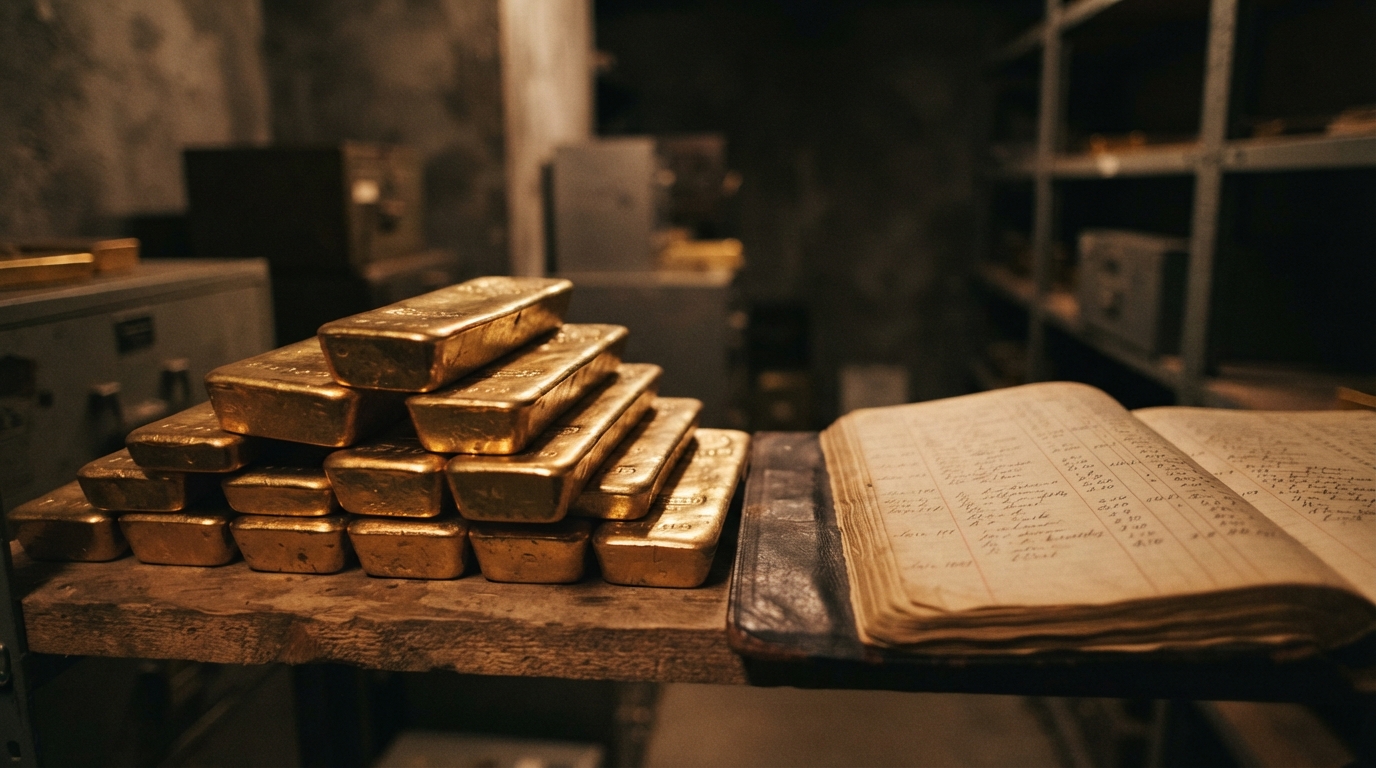
In May 1991, 20 tonnes of India's gold left the country for the Union Bank of Switzerland in Zurich. Two months later, 47 more tonnes went to the Bank of England. Bars that had sat in national vaults now served as collateral for loans India badly needed. That image is the usual starting point for any 1991 economic reforms timeline. Most accounts then jump straight to a list of "LPG" features: liberalisation, privatisation, globalisation. The dates get lost. This guide keeps them in order, from the failed budget of February 1991 to the labour codes of November 2025. It's built the way our daily history archive works: one date, one event, one clear card at a time.
What Pushed India Into the 1991 Crisis?
India's 1991 crisis was a balance-of-payments emergency that grew from years of heavy government borrowing, a widening trade gap and a sudden oil shock. By early 1991, the fiscal deficit stood as high as 8.4 per cent of GDP, according to India TV (2024). Foreign lenders had lost confidence, reserves were draining fast, and unstable governments couldn't respond.
A deficit problem years in the making
India's 1991 balance-of-payments crisis was the result of a deficit problem built up through the 1980s. During that decade, the government spent more than it earned and borrowed to cover the gap, much of it from abroad on short terms. The 1990 Gulf War then raised oil prices and cut remittances, leaving India owing more foreign currency than it could earn.

The crisis didn't start in 1991. The government's borrowing through the 1980s left India exposed to any external shock. In 1990, the Gulf War pushed oil prices up sharply. India imported most of its oil, so India's import bill jumped. Remittances from Indian workers in the Gulf also fell as those workers returned home. The result was a classic balance-of-payments squeeze, a situation in which India owed more foreign currency than it could earn.
February 1991: the budget that couldn't pass
The February 1991 budget failure was the moment politics deepened India's money problem. The Chandra Shekhar ministry was unable to pass a full budget, according to Wikipedia, after Moody's downgraded India's bond ratings. The Chandra Shekhar government resigned in March 1991, and policy decisions stalled while India's foreign currency reserves kept shrinking.
Politics made the money problem worse. The budget failure in February 1991 came after the Moody's downgrade of India's bond ratings. A downgrade tells lenders that a borrower looks riskier, so credit became harder and costlier for India to get.
After the Chandra Shekhar government resigned in March 1991, the country moved toward fresh elections. During the campaign, former Prime Minister Rajiv Gandhi was assassinated on May 21, 1991. Policy decisions stalled through these weeks while reserves kept shrinking.
May 1991: gold leaves the country
The gold shipment in May marked how close India came to default. India sent 20 tonnes of gold to the Union Bank of Switzerland in Zurich, as Business Standard (2026) records. The point was to raise foreign currency quickly. Sources disagree on exactly how low reserves fell. Wikipedia, citing PTI, says reserves were $1.2 billion in January and fell by half by June. Drishti IAS puts them at under $6 billion, covering about two weeks of imports. Both agree on the core fact: India had only weeks of import cover left. For exam answers, cite "two to three weeks of imports" and check the RBI's own data for the dollar figure.
June to July 1991: Five Weeks That Reset Policy
The core of the 1991 economic reforms timeline is the five-week window from June 21 to July 24, 1991. In that window, the new P.V. Narasimha Rao government devalued the rupee twice and pledged more gold abroad. These steps stabilised India's foreign accounts and prepared the ground for the larger structural changes announced on July 24.
June 21, 1991: a new government is sworn in
June 21, 1991 is the date P.V. Narasimha Rao was sworn in as Prime Minister and chose Manmohan Singh as Finance Minister. Singh was an economist and former Governor of the Reserve Bank of India. Rao also kept the Industry portfolio himself, so the Prime Minister's own ministry would carry the industrial policy changes.
Manmohan Singh was an economist, not a career politician. Rao's decision to keep the Industry portfolio matters because it placed the industrial policy changes directly under the Prime Minister's own ministry. The pairing of Rao and Singh appears in nearly every account of 1991. Each man had a distinct role. Rao managed the political side, and Singh drafted and defended the economics.
July 1 and July 3: the rupee is devalued in two steps
The first big move came within ten days. On July 1, 1991, the rupee was devalued by about 9% against major currencies, according to Drishti IAS. Two days later, on July 3, the rupee was devalued by a further 11%. Splitting the move in two let the government test the market's reaction before going further. A cheaper rupee made Indian exports less costly for foreign buyers. A cheaper rupee also made imports more expensive, which helped slow the drain on reserves. A common student error is merging the two devaluations into one event. Keep them as two dates.
July 1991: 47 tonnes go to the Bank of England
The second gold shipment followed in July. India sent an additional 47 tonnes to the Bank of England, as Business Standard (2026) notes. Together with the May shipment, about 67 tonnes of gold secured emergency loans of roughly $600 million. That sum was small next to India's debts. Its value lay in timing. It bought weeks of breathing room while larger support from the International Monetary Fund was arranged. The Indian National Congress (2021) puts IMF loans at about $2 billion across two tranches. Other sources say $2.2 billion. IMF records are the safest place to confirm the figure.
What Changed on July 24, 1991?
July 24, 1991 is the single most important date in India's liberalisation. On that day, the government released a new Statement on Industrial Policy and Manmohan Singh presented the Union Budget. Together, they ended most industrial licensing, opened sectors to private firms and raised limits on foreign investment.
The Budget speech
Manmohan Singh's Budget speech set out the case for change in plain terms. He closed with a line from Victor Hugo: "No power on earth can stop an idea whose time has come." The speech also tackled the deficit directly. The 1991 Budget aimed to cut the fiscal deficit by nearly two percentage points of GDP, according to India TV (2024). That meant spending cuts, including on fertiliser subsidies, along with changes to taxes and tariffs. July 24, 2026 marks the 35th anniversary of this Budget, which set off a wave of retrospective coverage. Singh died on December 26, 2024, at the age of 92.
The Industrial Policy statement
The Industrial Policy statement, released the same day, carried the structural changes. Its main measures were:
- Licensing: Industrial licensing was abolished for all industries except 18, mostly linked to security, safety or the environment.
- Public sector reservation: Industries reserved for the public sector fell from 17 to 8.
- Company size limits: Asset limits on large companies under the MRTP Act were removed.
- Foreign investment: Automatic approval was allowed for foreign direct investment up to 51 per cent in priority industries, up from the earlier cap of 40 per cent, according to the Indian National Congress (2021).
The original policy text, held by DPIIT, is the primary source for these numbers.
Before and after July 24, 1991
| Area | Before July 1991 | After July 24, 1991 |
|---|---|---|
| Industrial licensing | Required for most industries | Required for only 18 industries |
| Public sector reserved industries | 17 | 8 |
| Foreign equity, automatic route | Capped at 40% | Up to 51% in priority industries |
| Large company asset limits | Set under the MRTP Act | Removed |
| Rupee | Pre-crisis rate | Devalued about 9% (July 1) and 11% (July 3) |
The table shows why July 24 is the turning point. The devaluations fixed an emergency. The industrial policy changed how Indian business would run for decades.
The 1991 Economic Reforms Timeline Beyond 1991
The 1991 economic reforms timeline beyond 1991 is the sequence of follow-up steps in banking, stock markets, currency rules and trade through the mid-1990s, plus later phases such as GST in 2017 and four labour codes in 2025. India's liberalisation did not end in July 1991, and reading 1991 as one event misses how gradually the reforms took shape.
1991 to 1995: the follow-through years
The 1991-to-1995 follow-through years were the period when India built the financial system that open markets needed. Between November 1991 and January 1995, India reformed banking, gave SEBI statutory powers, unified the rupee exchange rate, launched the National Stock Exchange and joined the World Trade Organization as a founding member.
In November 1991, the Narasimham Committee submitted its report on banking reform. In 1992, SEBI gained statutory powers to regulate the stock market. In March 1993, India moved to a unified, market-based exchange rate for the rupee. In 1994, the National Stock Exchange began trading. On January 1, 1995, India became a founding member of the World Trade Organization. Each of these five steps is easy to skip in a summary. Together, the five steps turned a crisis response into a lasting system.
Key dates at a glance
| Date | Event |
|---|---|
| February 1991 | Chandra Shekhar ministry unable to pass budget after Moody's downgrade |
| May 1991 | 20 tonnes of gold sent to Union Bank of Switzerland, Zurich |
| June 21, 1991 | P.V. Narasimha Rao sworn in; Manmohan Singh named Finance Minister |
| July 1, 1991 | Rupee devalued by about 9% |
| July 3, 1991 | Rupee devalued by a further 11% |
| July 1991 | 47 tonnes of gold sent to the Bank of England |
| July 24, 1991 | Union Budget and Statement on Industrial Policy |
| November 1991 | Narasimham Committee report on banking |
| 1992 | SEBI given statutory powers |
| March 1993 | Unified market exchange rate |
| January 1, 1995 | India joins WTO as a founding member |
| July 1, 2017 | Goods and Services Tax (GST) takes effect |
| November 21, 2025 | Four labour codes enacted |
For more context on earlier policy shifts, see our guide to economic milestones in Indian history since 1947.
Later phases: GST in 2017 and the labour codes in 2025
The later phases of India's liberalisation are two milestones widely called the next big steps after 1991: the Goods and Services Tax, which took effect on July 1, 2017, and four labour codes, enacted on November 21, 2025. Both reforms touch areas the 1991 package left mostly alone: indirect taxes and labour rules.
On July 1, 2017, the Goods and Services Tax replaced a web of central and state taxes with one national system. On November 21, 2025, India enacted four labour codes. The Lowy Institute (2025) reports that the labour codes are described as India's most significant structural reform since 1991. Because GST and the labour codes cover indirect taxes and labour rules, both belong on the same timeline as 1991. Our list of historic Indian events from 2000 to 2025 places these in wider context.
How Should Readers Judge the Results?
The results of 1991 are best judged with specific numbers and clear caveats. Growth, income and foreign investment rose sharply after the reforms. Critics point to weak manufacturing, jobs and inequality. Some popular statistics also cover periods long after 1991, so students should check what each number actually measures.
What the numbers show
The headline figures point to a large shift. Between Independence and 1991, India's economy grew about 4 to 5 per cent a year on average. Since the reforms, growth has averaged around 6 to 7 per cent, according to Business Standard and World Bank data (2026). GDP per capita rose from about $303 in 1991 to around $2,700 in 2025, by the same source. Foreign direct investment reached $82 billion in 2020-21, up from $97 million in 1991, according to Drishti IAS (2024). Extreme poverty fell to 5.3 per cent in 2022-23 from 27.1 per cent in 2011-12, according to World Bank data cited by Business Standard (2025).
Where the record is contested
The poverty figure shows why caution matters. It compares 2011-12 with 2022-23, two decades after 1991. Many later policies shaped that drop, so it can't be credited to 1991 alone. Comparisons with other countries add another angle. Vietnam started with less than half India's per capita income in 1991 and now has an 80 per cent higher income level, according to ThePrint (2026). A 2026 ThePrint opinion piece argues that India is richer and less poor, but that jobs, manufacturing, education and inequality reveal an unfinished agenda. Debate existed from the start, too. Montek Singh Ahluwalia, one of the 1991 architects, has said many PhDs in economics opposed the reforms, as reported by Business Today (2026).
What the architects say now
The people who built the reforms don't treat them as finished. Ahluwalia has said India needs a fresh reform roadmap, faster private investment and broader policy consensus, according to Business Standard (2026). That view matches the long tail on the timeline above. The crisis steps took five weeks. The structural work took decades and is still going. For students, the practical lesson is simple. Learn the July 1991 dates first, then add the LPG framework on top. Dates anchor an answer, while labels alone feel vague to examiners. Our Indian history timeline chart uses the same date-first approach.
Related Reading
- Economic Milestones in Indian History: From 1947 to Present
- India at the Olympics: A Timeline of Historic Sporting Milestones
- December 1984: A Historical Timeline of the Bhopal Gas Tragedy
- Indian History Timeline Chart: Key Milestones (Digital Reference)
FAQ
Q: When did the 1991 economic reforms start? The main reforms began after the Rao government took office on June 21, 1991. The rupee was devalued on July 1 and July 3. The key structural changes came on July 24, 1991, with the Budget and the Industrial Policy statement.
Q: Why did India pledge its gold in 1991? India's foreign exchange reserves had fallen to only weeks of import cover. Sending about 67 tonnes of gold to Zurich and London secured emergency loans of roughly $600 million, according to Business Standard (2026). This helped India avoid defaulting on its foreign payments.
Q: Who led the 1991 economic reforms? Prime Minister P.V. Narasimha Rao and Finance Minister Manmohan Singh led them. Economists such as Montek Singh Ahluwalia helped design the policies. Rao also held the Industry portfolio, which issued the July 24 Industrial Policy.
Q: What did the 1991 Industrial Policy change? It ended industrial licensing for all but 18 industries. It cut public sector reserved industries from 17 to 8 and removed MRTP asset limits. It also allowed automatic approval of foreign investment up to 51 per cent in priority industries.
Q: Are GST and the labour codes part of the 1991 reforms? They aren't part of the original 1991 package. Many analysts see them as later phases of the same reform path. The Lowy Institute (2025) reports the 2025 labour codes are described as the most significant structural reform since 1991.
Your next move: Pick the one date you'll anchor your notes or lesson on. If you need the moment India's economic rules changed, choose July 24, 1991, and cite both the Budget and the Industrial Policy. If you need the crisis itself, choose the July 1 and July 3 devaluations. Then check that date's figures against RBI or IMF records before you use them in an exam or a classroom.
Sources
- 35 years of liberalisation: How the 1991 BoP crisis forced historic reforms — Business Standard, 2026. Supports: India sent 20 tonnes of gold to the Union Bank of Switzerland in Zurich in May 1991 and 47 more tonnes to the Bank of England by July, which secured about $600 million in emergency loans.
- Political and Economic Reforms in 1991 — Drishti IAS, 2024. Supports: the rupee was devalued about 9% on July 1, 1991 and another 11% two days later, and reserves fell below $6 billion, about two weeks of imports.
- 1991 Indian economic crisis — Wikipedia. Supports: in February 1991 the Chandra Shekhar ministry couldn't pass the budget after Moody's downgraded India's bond ratings.
- Manmohan Singh and 1991 Budget: The economic stalwart, finance minister who changed shape of Indian economy — India TV, 2024. Supports: the fiscal deficit was as high as 8.4% of GDP, and the 1991 Budget aimed to cut it by nearly two percentage points.
- From scarcity to scale: How the 1991 reforms transformed India's economy — Business Standard, 2026. Supports: growth averaged about 4–5% a year before 1991 and about 6–7% since, and GDP per capita rose from about $303 in 1991 to around $2,700 in 2025 (World Bank data).
- India's economic reforms: Domestic resilience to reshape global standing — Lowy Institute, 2025. Supports: four labour codes were enacted on November 21, 2025 and are described as India's most significant structural reform since 1991.
- 35 years after India's 1991 reforms: What changed and what didn't — ThePrint, 2026. Supports: Vietnam started with less than half India's per capita income in 1991 and now has an 80% higher income level.
- Death and state funeral of Manmohan Singh — Wikipedia, 2024. Supports: Manmohan Singh died on December 26, 2024, at the age of 92.