The 1946 Royal Indian Navy Mutiny: A Day-by-Day Historical Account
In Short
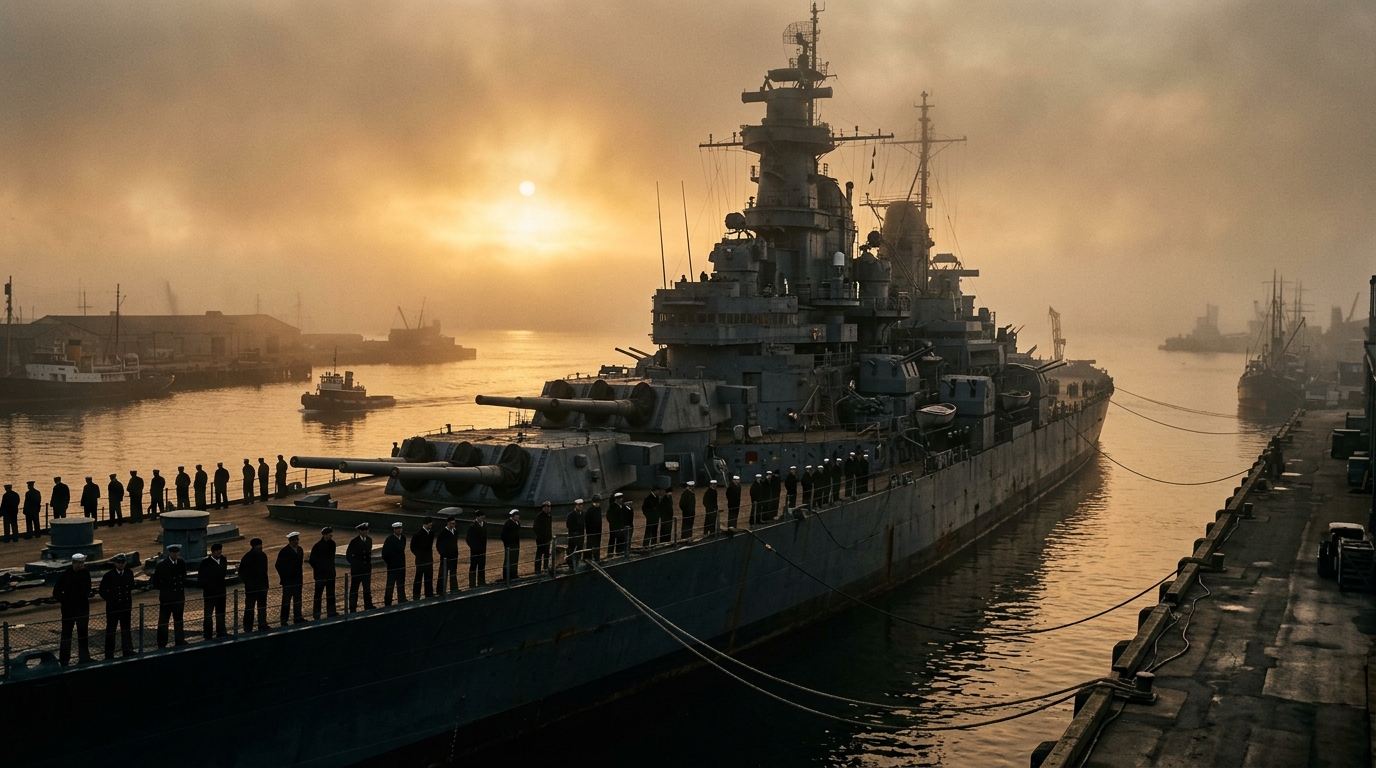
The 1946 Royal Indian Navy mutiny was a massive naval strike that began in Bombay on February 18, 1946, and quickly spread across British India. Driven by poor conditions and nationalist fervor, over 20,000 sailors seized ships and shore bases, proving to the British that they could no longer rely on the Indian armed forces to maintain colonial rule.
Key Takeaways
- The tipping point was bad food. The uprising started as a hunger strike over inedible rations and racist abuse from British commanding officers.
- It united political factions temporarily. Sailors hoisted the flags of the Indian National Congress, the Muslim League, and the Communist Party together on ship masts.
- Civilians joined the fight. Ordinary citizens supported the sailors, leading to massive street protests and strikes in Bombay where hundreds died.
- Political leaders urged surrender. Both Sardar Patel and Muhammad Ali Jinnah convinced the sailors to stand down to prevent further bloodshed.
- It accelerated British departure. The mutiny convinced the British government that their military grip on India was permanently broken.
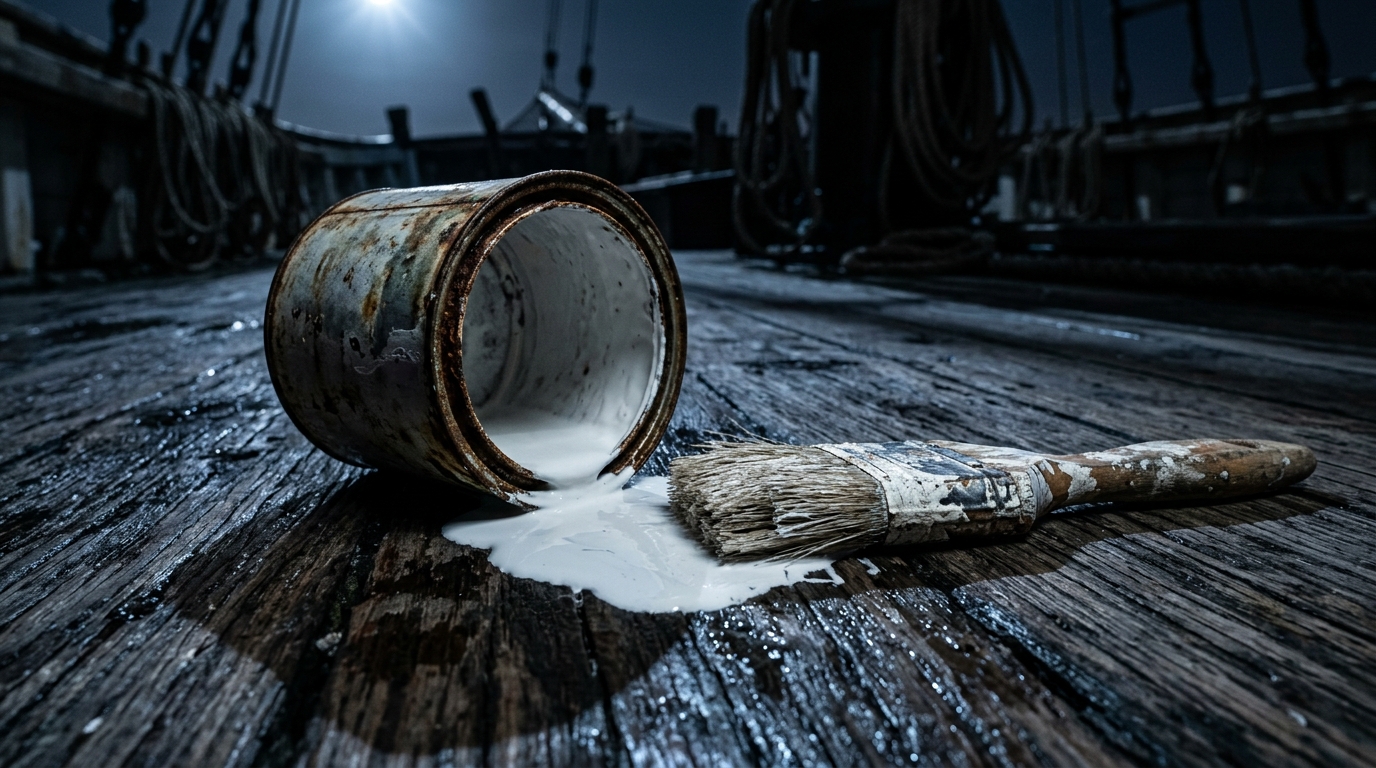
On the night of February 1, 1946, a young telegraphist named B.C. Dutt crept onto the deck of the HMIS Talwar in Bombay. With a tin of white paint, he scrawled "Quit India" across the ship's wooden hull. He knew the British officers would find it by morning, but he did not know his quiet act of defiance would soon ignite a massive naval strike. This event would fracture the very foundation of the British Empire in India.
The 1946 Royal Indian Navy mutiny remains one of the most dramatic, yet frequently overlooked, chapters in the story of Indian independence. It lasted less than a week. Yet, in those few days, the uprising shattered the illusion of colonial military control. To understand how such a rapid escalation happened, we have to look at the daily events that turned a protest over bad food into an armed rebellion.
If you look at the 10 most searched dates in Indian history and why they matter, the dates surrounding August 1947 dominate. But the events of February 1946 made that August possible.
What Sparked the 1946 Royal Indian Navy Mutiny?
The 1946 Royal Indian Navy mutiny was sparked by a combination of terrible living conditions, blatant racial discrimination, and the rising tide of Indian nationalism following World War II. The immediate trigger was unpalatable food served to the enlisted sailors, known as ratings, combined with the abusive response of their British commander.
The Tipping Point at HMIS Talwar
HMIS Talwar was a signals training establishment located in Colaba, Bombay. It housed hundreds of ratings who communicated with the entire naval fleet. Conditions here were notoriously poor. The breaking point arrived on February 18, when the ratings were served watery dal and half-cooked chapattis.
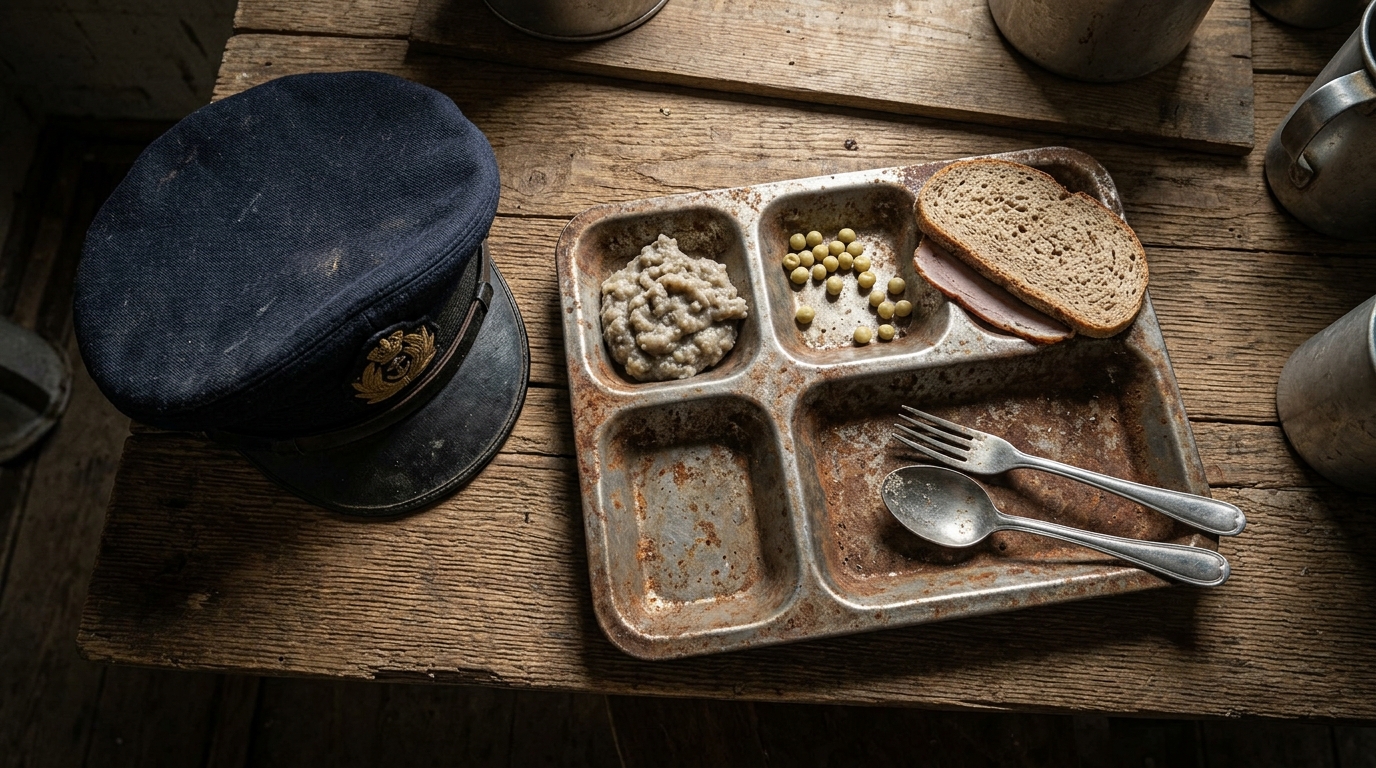
When the men complained to the commanding officer, Commander Arthur King, he responded with severe racial slurs. This was a fatal miscalculation. The ratings refused to eat. They walked out of the mess hall, chanting "No food, no work." What started as a local grievance instantly transformed into a coordinated strike.
Simmering Racial Tensions
The bad food was just a catalyst. During World War II, the Royal Indian Navy had expanded rapidly. The British recruited thousands of young Indian men, promising them good pay and adventure. The reality was starkly different.
Indian ratings earned a fraction of what their white British counterparts made. They slept in cramped quarters, received inferior uniforms, and faced a rigid ceiling on promotions. British officers routinely treated Indian sailors with contempt. Once the war ended, the threat of demobilization and unemployment loomed large. The sailors felt used and discarded.
The Influence of the INA Trials
Nationalist sentiment was already boiling across the country. The British were conducting public treason trials for the captured soldiers of Subhas Chandra Bose's Indian National Army at the Red Fort.
These ina-red-fort-trials dominated the newspapers. The ratings read these stories daily. They saw the INA soldiers not as traitors, but as patriots. B.C. Dutt, the sailor who painted the slogans on HMIS Talwar, later wrote in his memoir Mutiny of the Innocents that the ratings realized their true loyalty belonged to India, not the British Crown. The navy was ripe for rebellion.
The Day-by-Day Escalation of the Strike
The strike escalated from a localized mess hall boycott into a full-scale mutiny spanning the entire Indian coastline within 48 hours. By taking control of the communication hubs, the rebelling sailors broadcast their demands to every ship in the fleet, prompting a massive, synchronized uprising.
February 18: The Strike Begins
The morning of February 18 started with the hunger strike at HMIS Talwar. By the afternoon, the ratings formed a strike committee. Naval Central Strike Committee leader M.S. Khan took charge.
The ratings drafted a list of demands. These were not just about food. They demanded the release of all Indian political prisoners, the withdrawal of Indian troops from Indonesia, equal pay with British sailors, and the release of INA prisoners. The sailors used the wireless equipment at HMIS Talwar to transmit these demands to ships stationed in Bombay harbor and at sea. The message was clear: join us.
February 19: Taking the Harbours
The next day, the uprising exploded. Ratings from shore establishments in Bombay poured into the streets. They commandeered military trucks, driving through the city while waving flags and chanting anti-British slogans.
In the harbor, sailors took control of their ships. They ordered British officers off the vessels, sometimes at gunpoint. On the masts of the captured ships, they lowered the British White Ensign. In its place, they tied three flags together: the tricolor of the Indian National Congress, the green flag of the Muslim League, and the red flag of the Communist Party.
By nightfall, the strike had spread to Karachi, Calcutta, Cochin, and Vizag. Over 20,000 sailors and 78 ships were now part of the 1946 Royal Indian Navy mutiny.
February 20: A Standoff in Bombay
The British military command panicked. They realized they had lost control of their naval assets in India's most important ports. In Bombay, British forces threw an armed cordon around the harbor and the shore establishments.
The ratings were trapped inside their bases and ships, cut off from food and water supplies. However, the civilian population of Bombay stepped in. Ordinary citizens, shopkeepers, and mill workers brought food to the Gateway of India. When British guards tried to stop them, civilians hired small boats to smuggle rice and bread to the mutineering ships. This civilian solidarity terrified the colonial administration.
How Did the British Authorities React to the Uprising?
The British authorities reacted to the uprising with overwhelming military force and threats of total destruction. Realizing that Indian army regiments might refuse to fire on the sailors, British commanders deployed fully British battalions and Royal Air Force bomber squadrons to crush the mutiny by force.
February 21: Gunfire at Castle Barracks
The standoff turned violent on February 21. At Castle Barracks in Bombay, British guards opened fire on the ratings. The sailors, who had broken into the armories, fired back. A pitched gun battle raged throughout the morning.
The British initially ordered the Maratha Light Infantry to suppress the sailors. The Indian soldiers, however, showed clear reluctance to shoot their countrymen. Recognizing the danger of the army joining the mutiny, the command quickly withdrew the Indian troops and replaced them with British battalions equipped with heavy artillery.
Admiral Godfrey’s Ultimatum
Vice Admiral J.H. Godfrey, the Flag Officer Commanding the Royal Indian Navy, took to the radio. His broadcast was uncompromising and brutal.
He stated that the British government would not negotiate with mutineers. He warned that if the ratings did not surrender immediately, the British military would destroy the entire Indian navy. To back up his threat, Godfrey ordered Royal Air Force bomber squadrons to fly low over the harbor. The heavy bombers circled the captured ships, a clear signal that the British were prepared to sink their own vessels.
The Battle in Karachi
While Bombay saw the heaviest civilian action, the most intense military confrontation happened in Karachi. Ratings had seized the HMIS Hindustan.
When British troops ordered them to disembark, the sailors refused. British artillery on the shore opened fire on the ship. The ratings returned fire using the ship's naval guns. The bombardment lasted for hours, causing significant damage to the vessel and resulting in several casualties before the ratings were finally forced to surrender.
February 22: Bloodshed on the Streets
Back in Bombay, the Communist Party of India and local trade unions called for a general strike to support the sailors. Hundreds of thousands of mill workers walked off the job.
The city ground to a halt. British military police and troops rolled into the streets in armored cars. They fired indiscriminately into the protesting crowds. The official death toll for that single day was over 200 civilians, with thousands more injured. The 1946 Royal Indian Navy mutiny had sparked a city-wide war.
| Aspect of the Mutiny | Total Numbers Involved |
|---|---|
| Ships Captured | 78 |
| Shore Establishments Seized | 20 |
| Ratings on Strike | 20,000+ |
| Civilian Casualties (Bombay) | 200+ killed, 1,000+ injured |
| Duration of Mutiny | 5 Days |
Political Leaders Intervene to End the Standoff
Indian political leaders intervened to end the standoff because they feared a massive military slaughter and wanted to ensure a peaceful transfer of power. Leaders from both the Congress and the Muslim League pressured the ratings to surrender, promising to protect them from British retaliation.
The Stance of the Indian National Congress
The leadership of the Indian National Congress was caught off guard by the mutiny. They were in the middle of delicate negotiations with the British government regarding independence.
Sardar Vallabhbhai Patel rushed to Bombay. He recognized the bravery of the sailors but saw the mutiny as a dangerous destabilizing force. He knew the British would carry out their threat to bomb the ships. Patel sent a message to the Naval Central Strike Committee, urging them to lay down their arms. He gave his personal guarantee that the Congress would ensure no sailor was victimized or punished.
The Muslim League's Position
Muhammad Ali Jinnah, the leader of the Muslim League, took a remarkably similar stance. He sent a message to the Muslim ratings, advising them to surrender peacefully.
Both political parties were preparing to govern a free India. They needed a disciplined military, not one prone to mutiny. While local leaders like Aruna Asaf Ali strongly supported the sailors and criticized the senior leadership for abandoning them, the national figures prioritized a negotiated settlement with the British over an armed revolution.
Mahatma Gandhi's Disapproval
Mahatma Gandhi also condemned the violence. He believed that a violent uprising would only lead to a violent future for the country.
He criticized the ratings for taking up arms and the civilians for rioting. For a comprehensive look at Gandhi's approach to protests, you can review the Timeline of Mahatma Gandhi's Nonviolent Movements in India. Gandhi stated that if the ratings had grievances, they should have resigned their posts rather than mutinying. This lack of political backing left the strike committee isolated.
February 23: The Final Surrender
Faced with overwhelming British military force and abandoned by the national political leadership, the Naval Central Strike Committee made a difficult choice.
On the morning of February 23, M.S. Khan announced the surrender. The ratings lowered the political flags and raised the surrender flags. In their final broadcast, the strike committee stated: "We surrender to India and not to the British." The 1946 Royal Indian Navy mutiny was over.
Why Did the 1946 Royal Indian Navy Mutiny Accelerate Independence?
The 1946 Royal Indian Navy mutiny accelerated independence because it proved to the British government that the Indian armed forces were no longer loyal to the Crown. Without the backing of the military, the British realized they lacked the manpower and resources to control a hostile subcontinent.
Shattering the Myth of Loyalty
Since the uprising of 1857, British rule in India relied entirely on the loyalty of Indian soldiers. The British officer class was tiny compared to the vast numbers of Indian troops they commanded.
The naval strike shattered this foundational pillar of colonial power. If the navy could mutiny over food and nationalism, the army and the air force could do the same. In fact, sympathy strikes did occur in the Royal Indian Air Force and among some army regiments in Jabalpur. The British military command sent urgent reports to London stating that the armed forces could no longer be trusted to suppress nationalist movements.
Accelerating the British Departure
The impact was immediate. Just weeks after the mutiny, the British government dispatched the Cabinet Mission to India to discuss the transfer of power.
Years later, Clement Attlee, who was the British Prime Minister in 1946, acknowledged the critical role of the mutiny. When asked why the British left India so quickly after winning World War II, Attlee cited the erosion of loyalty in the Indian military, specifically referencing the naval mutiny, as the primary reason. The British simply did not have the troops to hold India by force.
To see how this period fits into the broader economic shifts of the era, you can explore the Economic Milestones in Indian History: From 1947 to Present.
The Forgotten Legacy
Despite their crucial role in accelerating independence, the ratings faced a tragic aftermath. Following the surrender, the British arrested hundreds of sailors. Many were court-martialed, dismissed from service, and sent home without pay or pensions.
When India and Pakistan gained independence in 1947, neither the new Indian Navy nor the Pakistani Navy reinstated the mutineers. The new governments viewed them as a disciplinary risk. The men who had risked everything to strike a fatal blow against the British Empire were largely forgotten by the nations they helped liberate. Only decades later did the government officially recognize them as freedom fighters.
Related Reading
- Milestones in Indian Women's History: A Chronological Guide
- 1,000 Years of Indian Medical History: A Chronological Guide
- Historic Milestones of Indian Cinema on the Global Stage
- Economic Milestones in Indian History: From 1947 to Present
FAQ
Q: How many ships were involved in the 1946 naval mutiny? The mutiny involved 78 ships and 20 shore establishments across the Indian coastline. It began in Bombay but quickly spread to Karachi, Calcutta, Cochin, and Visakhapatnam.
Q: Did the Indian political leaders support the mutiny? Local and radical leaders supported the sailors, but senior national leaders did not. Both Sardar Patel of the Congress and Muhammad Ali Jinnah of the Muslim League urged the ratings to surrender to prevent a massacre.
Q: What happened to the sailors after they surrendered? The British military arrested hundreds of ratings, dismissing many from service without pay or pensions. After independence, the Indian and Pakistani governments refused to reinstate them into the armed forces, considering them a disciplinary risk.
Q: Were there civilian casualties during the mutiny? Yes, significant civilian casualties occurred in Bombay. When the city went on a general strike to support the sailors, British troops fired into the crowds, killing over 200 civilians and injuring more than a thousand.
Q: How did the naval mutiny impact British rule? It proved to the British that they could no longer rely on the Indian armed forces to maintain colonial control. This realization forced the British government to accelerate the timeline for granting Indian independence.
Read primary source accounts of the uprising, such as B.C. Dutt's Mutiny of the Innocents, to understand the raw, firsthand perspective of the young sailors who defied an empire. By studying these personal memoirs, you grasp the human element behind the dates and statistics of the independence struggle.