The Quick Read
Indian sports policy history is the historical evolution of state intervention, statutory frameworks, and funding mechanisms governing athletics in India from 1947 to the present. Originating with advisory bodies in 1954, the policy framework transitioned to institutional training under the Sports Authority of India in 1984 and statutory oversight via the National Sports Governance Act of 2025.
Key Takeaways
- India transitioned from uncoordinated advisory committees to statutory legislative governance over seven decades.
- Hosting the 1982 Asian Games catalyzed the creation of the Sports Authority of India.
- High Court rulings forced National Sports Federations to adopt age and tenure limits.
- Elite funding through TOPS bypassed federation bottlenecks to yield international medals.
- The National Sports Policy 2025 aligns grassroots physical education directly with Olympic ambitions.
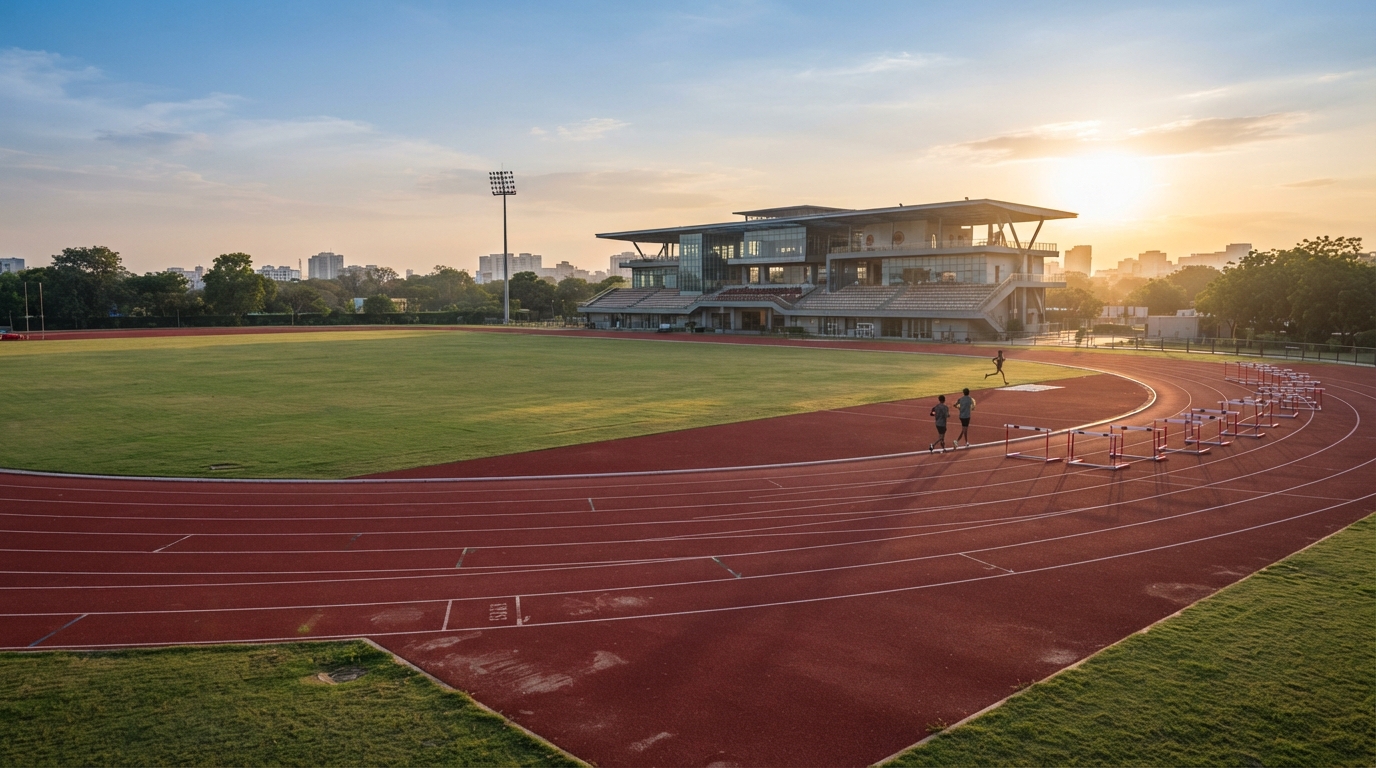
In October 1982, sports administrators stood inside the newly built Jawaharlal Nehru Stadium in New Delhi. They faced an urgent test. India had just weeks to organize the 9th Asian Games, yet lacked a central agency to maintain world-class tracks or support athletes after the closing ceremony. That logistical scramble forced the Union government to rethink how the state manages athletics.
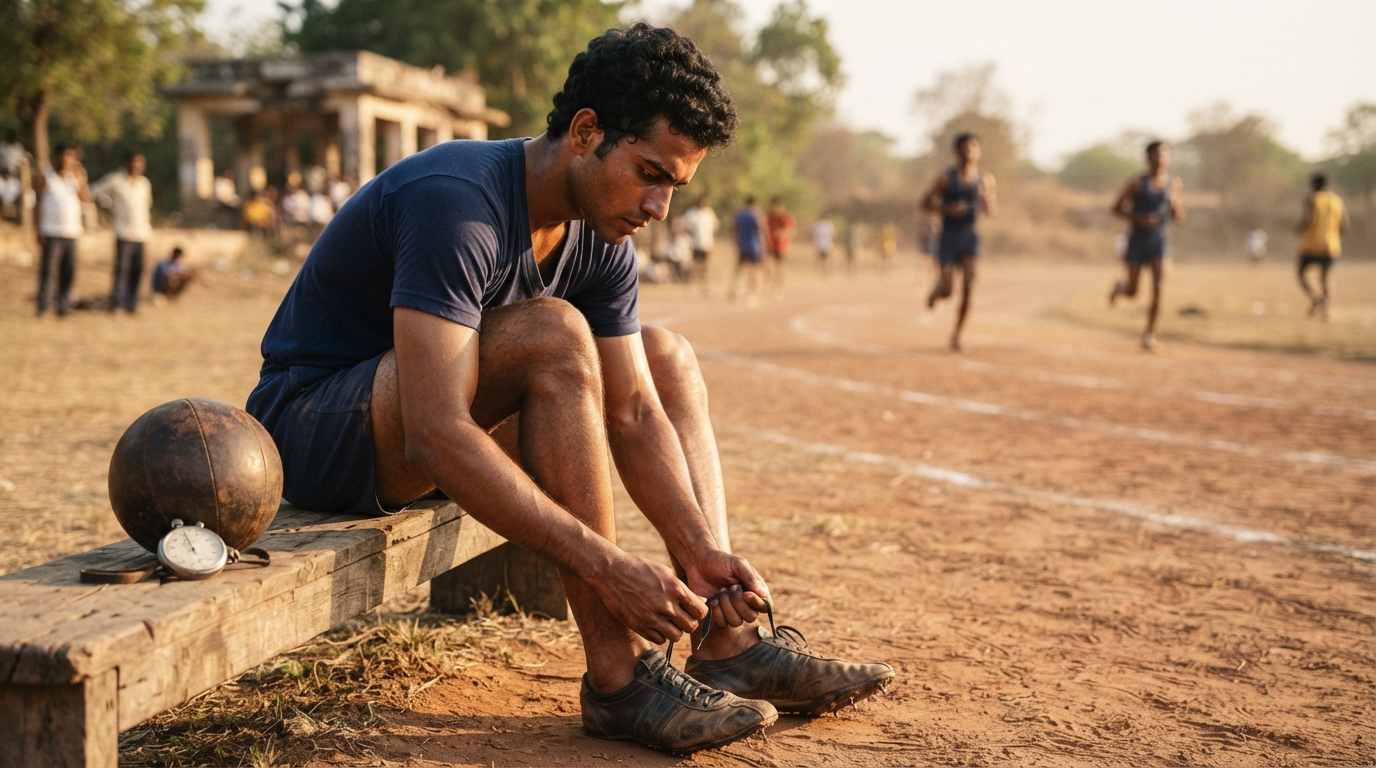
Studying Indian sports policy history shows how a country once reliant on royal patronage and ad-hoc committees built a multi-thousand-crore athletic ecosystem. When you explore dates in modern Indian records on our Indian history timeline chart, state interventions mark critical turning points for national pride.
How Did Indian Sports Policy History Begin After 1947?
Early Indian sports policy history began with ad-hoc advisory bodies that lacked statutory power and dedicated funding. Following independence, the Union government left sports administration to autonomous federations and regional councils. Real institutional intervention only arrived in 1982 when New Delhi hosted the Asian Games, sparking the creation of dedicated national infrastructure.
The 1954 All-India Council of Sports and Early Ad-Hoc Committees
Independent India inherited a fragmented sports ecosystem. Maharajas and colonial clubs funded most athletic events before 1947. When royal purses shrank, athletic standards collapsed.

In 1953, Health Minister Rajkumari Amrit Kaur introduced the Rajkumari Amrit Kaur Coaching Scheme. The scheme was the first state-funded athletic coaching program in independent India. The scheme provided government funds to hire international coaches for track, field, and tennis.
One year later, in 1954, the Union government established the All-India Council of Sports (AICS). The Ministry of Education formed AICS as a non-statutory advisory body. AICS advised the central government on sports policies, coaching standards, and financial grants to National Sports Federations (NSFs).
The state took another structural step in March 1961. The government established the National Institute of Sports (NIS) in Patiala. Later renamed the Netaji Subhas National Institute of Sports (NSNIS), NSNIS served as the primary hub for producing certified Indian coaches.
Yet these early initiatives lacked legislative backing. Federations functioned as private autonomous societies under the Societies Registration Act of 1860. Federations accepted public grants but resisted state accountability.
The 1982 Asian Games and the Birth of SAI in 1984
The 1982 Asian Games is the pivotal multi-sport event in New Delhi that catalyzed centralized state intervention in Indian sports policy history. Hosting the 1982 Asian Games required modern facilities, prompting the Union government to construct the Jawaharlal Nehru Stadium, Talkatora Swimming Pool, and the Dr. Karni Singh Shooting Range in New Delhi.
India needed a permanent body to manage these massive assets after the Games. Leaving stadiums to local municipal bodies risked rapid decay.
In January 1984, the Department of Sports established the Sports Authority of India (SAI). SAI registered as an autonomous society under the Ministry of Youth Affairs and Sports. SAI took custody of New Delhi's mega-stadiums and launched nationwide talent-spotting schemes.
SAI soon merged with the National Coaching Scheme and NSNIS Patiala. This consolidation unified sports management, training infrastructure, and coach education under a single federal body.
Constitutional Constraints: The State List Dilemma
A structural hurdle shaped Indian sports policy from the start. Under the Seventh Schedule of the Indian Constitution, "Sports" falls under Entry 33 of the State List (List II).
Entry 33 groups sports with entertainment, theaters, and betting. Because sports sit on the State List, the Union government cannot easily pass binding national legislation for regional clubs.
State governments prioritize basic public services over athletic infrastructure. Municipal grounds frequently turn into commercial real estate.
The Union government relies on executive guidelines and financial grants to influence state bodies. This jurisdictional split created friction between central funding bodies and local sports associations for decades.
What Drove the Shift Toward National Sports Policies Between 1984 and 2001?
India adopted its first formal National Sports Policy in 1984 to establish basic athletic infrastructure across schools and rural blocks. Economic liberalization in the 1990s and poor Olympic medal counts then pushed the government to publish the revised National Sports Policy 2001, which emphasized international excellence alongside mass participation.
The First National Sports Policy of 1984
Parliament discussed sports systematically for the first time in 1984. Both houses adopted the National Sports Policy (NSP) resolution in August 1984.
The 1984 policy outlined clear goals:
- Make physical education mandatory in school curricula.
- Build basic sports infrastructure in rural and urban blocks.
- Identify young athletic talent through district-level competitions.
- Preserve traditional Indian sports like kabaddi and kho-kho.
- Provide nutritious diets and job reservations for national athletes.
The policy looked good on paper. However, it lacked statutory backing and dedicated financial appropriations. State governments viewed the guidelines as optional advice.
The 41-year span between the 1984 policy and modern statutory governance highlights how slowly administrative reform moved [Vidhi Centre for Legal Policy, 2025].
Economic Liberalization and the National Sports Policy 2001
The economic reforms of 1991 shifted Indian state priorities. As documented in our review of economic milestones in Indian history, market deregulation brought private sponsorships into broadcasting. Cricket commercialized rapidly, while Olympic disciplines struggled for basic funds.
India won a solitary bronze medal at the 1996 Atlanta Olympics and another single bronze at Sydney 2000. These dismal outcomes forced the Department of Youth Affairs and Sports to rewrite its core strategy.
In 2001, the Union government released the National Sports Policy 2001. This document introduced a dual objective:
- Broad-basing sports: Promoting mass participation across rural communities, women, and schools.
- Achieving excellence: Concentrating high-performance resources on disciplines with proven medal potential at Asian, Commonwealth, and Olympic levels.
The 2001 policy encouraged joint ventures between the central government, state bodies, and private industries. It laid early groundwork for public-private partnerships in athletic training.
Funding Gaps and the Multi-Decade Budget Surge
For decades, sports received minor allocations in national budgets. In Fiscal Year 2004–05, the central sports budget stood at ₹466 crore [PIB, 2025]. Athletes traveled without sports physiotherapists, proper gear, or customized nutrition.
Over the next two decades, federal funding grew steadily. The allocation rose to over ₹3,397 crore by FY 2023–24, marking a more than sevenfold nominal increase [PIB, 2025]. By the 2025 Union Budget, the total allocation for the Ministry of Youth Affairs and Sports reached ₹3,794.30 crore [The Hindu, 2025].
| Era / Milestone | Key Administrative Focus | Primary Policy Document / Act | Central Budget Scale |
|---|---|---|---|
| 1947–1983 | Ad-hoc coaching schemes; post-colonial club structures. | Rajkumari Amrit Kaur Coaching Scheme (1953) | Nominal central grants (<₹50 crore) |
| 1984–2000 | Infrastructure building; post-Asiad facility maintenance. | National Sports Policy (1984) | Under ₹200 crore |
| 2001–2010 | Broad-basing sports; elite training centers; CWG build-up. | National Sports Policy (2001) | ₹400 crore to ₹1,200 crore |
| 2011–2024 | Good governance codes; direct athlete funding (TOPS); grassroots games. | National Sports Development Code (2011) | ₹1,500 crore to ₹3,400 crore |
| 2025–Present | Statutory regulation; dispute tribunals; Olympic host bidding. | National Sports Governance Act (2025) / NSP 2025 | ₹3,794.30 crore [The Hindu, 2025] |
Rising funding changed operational realities. Athletes no longer had to rely solely on meager daily allowances during overseas tours.
How Did Courts Shape Modern Indian Sports Policy History?
Courts became the primary enforcement engine in modern Indian sports policy history because executive guidelines lacked statutory teeth. Through public interest litigation, judges compelled sports federations to follow transparent election rules, age limits, and tenure caps as conditions for receiving government financial support and national team representation rights.
The 2011 National Sports Development Code
Preparations for the 2010 New Delhi Commonwealth Games exposed severe administrative corruption within sports federations. Federation executives held office for decades without holding open elections. Athletes faced arbitrary selection trials.
In January 2011, the Ministry of Youth Affairs and Sports issued the National Sports Development Code of India (commonly called the Sports Code 2011). The Sports Code combined executive orders issued since 1975 into a single regulatory framework.
The 2011 Code introduced strict conditions:
- Age limit: Officials over 70 years old could not run for executive positions.
- Tenure limits: Presidents could serve a maximum of three terms (12 years). Secretaries and Treasurers could serve two consecutive terms (8 years) before taking a mandatory cooling-off break.
- Athlete representation: Federations had to include active or retired athletes with voting rights on their management boards.
- RTI compliance: Federations receiving state grants had to follow the Right to Information Act, 2005.
The Rahul Mehra Litigation and Federation Accountability
The Rahul Mehra litigation is a landmark series of public interest petitions (Rahul Mehra v. Union of India) before the Delhi High Court that established judicial enforcement over non-compliant National Sports Federations. Advocate Rahul Mehra challenged federation governance after National Sports Federations argued that the 2011 Sports Code infringed on autonomy under the Olympic Charter [Law.asia, 2024].
The Delhi High Court delivered landmark rulings across a decade of litigation [Law.asia, 2024]. The judiciary held that sports federations perform a public function because federations select teams representing India, deploy the national flag, and receive state funding. Consequently, the High Court ruled that federations must comply with the Sports Code to retain government recognition.
When federations refused to hold code-compliant elections, the Delhi High Court suspended federation executive bodies. The Delhi High Court appointed Committees of Administrators (CoA) led by retired judges to run daily operations.
Judicial Intervention as a Policy Enforcer
Judicial intervention in Indian sports policy history is the constitutional mechanism whereby high courts enforce administrative compliance on sports bodies in the absence of explicit parliamentary legislation. Legal researchers Shravan Anande and Hari Priya Murarikar noted that Indian sports governance historically suffered because executive circulars lacked statutory authority, making court intervention the only check against non-compliant federations until 2025 [Vidhi Centre for Legal Policy, 2025].
Rajat Prakash, Managing Partner at Athena Legal, observed that while national athletic ambitions demand capital expenditure, structural ambiguity and executive-only codes invited prolonged litigation across National Sports Federations [Law.asia, 2024].
Courts filled this regulatory vacuum. The judiciary protected athlete welfare and forced transparency until Parliament drafted binding sports legislation. You can read more about how institutional reforms influenced track achievements in our guide to Indian athletics track and field records.
What Are the Key Modern Schemes Fueling Elite and Grassroots Athletes?
Modern state support centers on two targeted interventions: the Target Olympic Podium Scheme (TOPS) for elite performers and Khelo India for grassroots talent. These programs bypass traditional administrative red tape by paying stipends, medical support, and foreign coaching fees directly to vetted individual athletes.
+----------------------------------------------------------------+
|             MINISTRY OF YOUTH AFFAIRS & SPORTS (MYAS)          |
+----------------------------------------------------------------+
                               |
        +----------------------+----------------------+
        |                                             |
        v                                             v
+-------------------------------+             +-------------------------------+
|     GRASSROOTS PATHWAY        |             |      ELITE PODIUM PATHWAY     |
|         Khelo India           |             |   Target Olympic Podium (TOPS)|
+-------------------------------+             +-------------------------------+
        |                                             |
        v                                             v
• 2,904 LTAD Athletes                         • Customized Foreign Training
• ₹1,000 Cr Outlay (FY 25–26)                 • ₹50,000/Month Pocket Allowance
• District Centers & State CoEs               • Direct Equipment & Physio Grants
• School, University & Para Games             • Selection via Mission Olympic Cell
Target Olympic Podium Scheme (TOPS) and Direct Athlete Support
The Ministry of Youth Affairs and Sports launched the Target Olympic Podium Scheme (TOPS) in September 2014 under the National Sports Development Fund (NSDF). TOPS changed how India funds its top athletes.
Historically, the government sent funds to federations. Federations then decided how to spend the money. TOPS changed this model.
The Mission Olympic Cell (MOC)—a committee of veteran athletes, high-performance directors, and administrators—evaluates individual athlete needs. TOPS funds:
- Customized overseas training camps with international coaches.
- Specialized gear, physiological assessments, and biomechanical analysis.
- Full-time personal physiotherapists, nutritionists, and psychologists.
- An out-of-pocket allowance of ₹50,000 per month for elite athletes and ₹25,000 for development group athletes.
Direct funding removed bureaucratic barriers. TOPS played a central role in India's multiple medal wins at Tokyo 2020 and Paris 2024, as well as historic Paralympic podium sweeps.
Khelo India: From Annual Games to a 10-Year Mission
The central government launched Khelo India in 2017–18 by merging three legacy schemes: the Rajiv Gandhi Khel Abhiyan, the Urban Sports Infrastructure Scheme, and the National Sports Talent Search Scheme.
Khelo India built a talent pipeline across twelve verticals. It created the Khelo India Youth Games, University Games, Winter Games, and Para Games.
The Union Cabinet converted Khelo India into a structured 10-year mission running up to 2036 [NIPFP, 2026]. The scheme received an allocation of ₹1,000 crore for FY 2025–26, up from ₹800 crore in 2024–25 [The Hindu, 2025].
The scheme supports 2,904 active athletes under its Long-Term Athlete Development (LTAD) pathway [NIPFP, 2026]. Each identified talent receives an annual financial grant of ₹5 lakh for up to eight consecutive years. This steady stipend protects young prospects from quitting sports due to family financial stress.
Corporate Social Responsibility and Private Ecosystem Partnerships
Public funding alone cannot support a nation of 1.4 billion people. The introduction of Section 135 in the Companies Act, 2013 provided a crucial funding boost. The law classified the training of Olympic, Paralympic, and nationally recognized sports disciplines as eligible Corporate Social Responsibility (CSR) spending.
Private foundations stepped in to build training centers:
- The Inspire Institute of Sport (IIS) established Olympic-standard centers for wrestling, boxing, and athletics.
- The Reliance Foundation built high-performance centers for athletics and weightlifting in partnership with state governments.
- Non-profits like Olympic Gold Quest (OGQ) and GoSports Foundation provided specialized medical, mental, and nutritional assistance to complement TOPS grants.
This public-private collaboration gives athletes world-class training without forcing them to rely on state sports departments for every travel visa or training shoe.
How Does the National Sports Governance Act 2025 Redefine Indian Sports Policy History?
The National Sports Governance Act of 2025 replaced decades of non-statutory circulars with binding legislative mandates. Alongside the National Sports Policy 2025 (Khelo Bharat Niti), this framework established the Sports Regulatory Board of India and a dedicated tribunal to resolve athletic disputes swiftly without civil court delays.
+-------------------------------------------------------------------------+
|                  NATIONAL SPORTS GOVERNANCE ACT, 2025                   |
+-------------------------------------------------------------------------+
                                     |
         +---------------------------+---------------------------+
         |                                                       |
         v                                                       v
+-----------------------------------+   +-----------------------------------+
|  SPORTS REGULATORY BOARD OF INDIA |   |      NATIONAL SPORTS TRIBUNAL     |
|              (SRBI)               |   |                                   |
+-----------------------------------+   +-----------------------------------+
| • Federation Recognition & Audits |   | • Resolves Selection Disputes     |
| • Enforces 2011 Code Term Limits  |   | • Fast-Track 30-Day Decisions     |
| • Mandates 20% Athlete Board Seat |   | • Replaces Civil Court Injunctions|
| • Safe Sport & Anti-Harassment    |   | • Binding Appellate Decisions     |
+-----------------------------------+   +-----------------------------------+
The Khelo Bharat Niti (National Sports Policy 2025)
In 2025, the Union Cabinet approved the National Sports Policy 2025 (Khelo Bharat Niti) to replace the outdated 2001 policy [Drishti IAS, 2025]. The policy aligns domestic sports administration with India's formal bid to host the 2036 Olympic and Paralympic Games.
The Khelo Bharat Niti establishes five pillars [KPMG India, 2025]:
- Global Excellence: World-class coaching, scientific athlete testing, and foreign exposure.
- Economic Development: Developing the sports industry, event hosting, apparel manufacturing, and sports tourism.
- Social Inclusion: Dedicated infrastructure for rural communities, women athletes, and para-athletes.
- Mass Participation: Promoting grassroots fitness and community leagues across districts.
- Education Integration: Merging sports into school credit frameworks through the National Education Policy (NEP) 2020.
This policy views sports as an economic driver rather than a simple extracurricular activity.
Statutory Powers: The Sports Regulatory Board and Sports Tribunal
The National Sports Governance Act of 2025 provides the legislative authority that Indian sports administration lacked for 70 years [PRS Legislative Research, 2025]. The Act resolves historical friction between the state and sports federations through three key mechanisms:
First, it establishes the Sports Regulatory Board of India (SRBI). The SRBI acts as a statutory regulator for National Sports Federations, similar to SEBI's oversight of financial markets. It oversees recognition, financial audits, and election cycles.
Second, it mandates internal athlete commissions. Every recognized national federation must reserve at least 20 percent of its executive voting seats for active or retired athletes.
Third, it creates the National Sports Tribunal. In the past, athletes and disgruntled officials tied up sports administration in civil courts. The Tribunal provides an exclusive, fast-track body to settle election, selection, and disciplinary disputes. This structure helps resolve issues before international events begin, preventing emergency court stays before major competitions.
Readers tracking governance reforms can learn more in our detailed analysis of Indian Olympic Association governance reforms.
Why the 2025 Statutory Shift Matters for Modern Athletes
The 2025 reforms give clear legal backing to athletic policy. Sports administrators can no longer dismiss age caps and transparency requirements as voluntary recommendations.
The SRBI holds statutory authority to derecognize non-compliant associations and stop their public funding. Athletes have access to an independent tribunal to appeal unfair trials or selection omissions.
India's sports administration now has the legal tools to build a sustainable, medal-winning sporting culture.
Frequently Asked Questions About Indian Sports Policy History
Q: What is the main law governing sports administration in India today?
The National Sports Governance Act of 2025 is the primary statutory law governing sports administration in India [PRS Legislative Research, 2025]. It established the Sports Regulatory Board of India and the National Sports Tribunal to enforce governance, election integrity, and dispute resolution across all recognized national federations.
Q: Why was the Sports Authority of India (SAI) established in 1984?
The central government created SAI in 1984 to manage the stadiums and sports infrastructure built for the 1982 New Delhi Asian Games [The Hindu, 2025]. SAI grew into the state's main sports development agency, running national training centers, coach education, and athlete talent schemes across India.
Q: How does the Target Olympic Podium Scheme (TOPS) help athletes?
TOPS provides customized financial and training support directly to elite athletes preparing for the Olympic and Paralympic Games [PMF IAS, 2025]. The program pays for specialized coaching, international training camps, personal physiotherapists, and a monthly out-of-pocket allowance of up to ₹50,000.
Q: Why did sports federations frequently challenge government guidelines in court?
Sports federations operated as private autonomous societies and argued that state guidelines infringed on Olympic Charter autonomy. Because earlier rules like the 2011 Sports Code were executive circulars rather than statutory laws, federations challenged them in court until the 2025 Act created binding legal mandates [Vidhi Centre for Legal Policy, 2025].
Practical Next Steps for Researchers and Sports Enthusiasts
Researching Indian sports policy history is the systematic study of government legislation, judicial precedents, and budgetary allocations that determine athletic performance and administrative accountability in India. To track this ongoing evolution or explore related dates in Indian sporting records, review policy updates published directly by the Ministry of Youth Affairs and Sports.
Further reading
- Ministry of Youth Affairs and Sports Annual Reports (MYAS Archive): Official government performance audits and budgetary breakdowns across national federations.
- National Sports Governance Act, 2025 (Legislative Text): The primary statutory act defining the powers of the Sports Regulatory Board and Sports Tribunal.
- Vidhi Centre for Legal Policy — Sports Governance Briefs: Independent legal analyses examining the judicial history and structural reforms of Indian sports federations.
- Khelo India Operational Guidelines: Detailed framework documents outlining the talent scouting metrics and long-term funding pathways for youth athletes.
Related Reading
- Milestones in Indian Women's History: A Chronological Guide
- 1,000 Years of Indian Medical History: A Chronological Guide
- Economic Milestones in Indian History: From 1947 to Present
- What Are the Major Events in Indian History? (FAQ Archive)
Sources
- About Us — Sports Authority of India, 2024. Supports: The establishment of the Sports Authority of India (SAI) in 1984 to manage the stadiums built for the 1982 New Delhi Asian Games and serve as the apex sports development agency.
- Target Olympic Podium Scheme — Press Information Bureau, Government of India, 2019. Supports: The launch of the Target Olympic Podium Scheme (TOPS) under the National Sports Development Fund to provide direct, customized financial and elite training support to medal prospects.
- Sports Ministry Compiles National Sports Development Code of India, 2011 — Press Information Bureau, Government of India, 2011. Supports: The compilation and notification of the National Sports Development Code of India in 2011, establishing mandatory age caps, tenure restrictions, and governance standards for National Sports Federations.
- Ministry of Youth Affairs and Sports Demand No. 102 — Ministry of Finance, Government of India, 2025. Supports: The budgetary allocation of ₹3,794.30 crore for the Ministry of Youth Affairs and Sports in the FY 2025–26 Union Budget.
- Issues for Consideration: The National Sports Governance Bill, 2025 — PRS Legislative Research, 2025. Supports: The statutory provisions of the National Sports Governance Act of 2025 establishing the Sports Regulatory Board of India and creating the National Sports Tribunal for athletic dispute resolution.
- Statutory Form, Executive Substance — Vidhi Centre for Legal Policy, 2025. Supports: The legal transition from non-statutory executive circulars (2011 Sports Code) to binding statutory governance under the National Sports Governance Act of 2025.
- Stop funds, assitance to federations not following sports code: HC — The Hindu, 2022. Supports: Judicial enforcement in the Rahul Mehra litigation compelling sports federations to follow the 2011 Sports Code as a prerequisite for receiving state funds and national recognition.