Royal Women of Indian History: Historic Milestones of Queens and Princesses
In Short
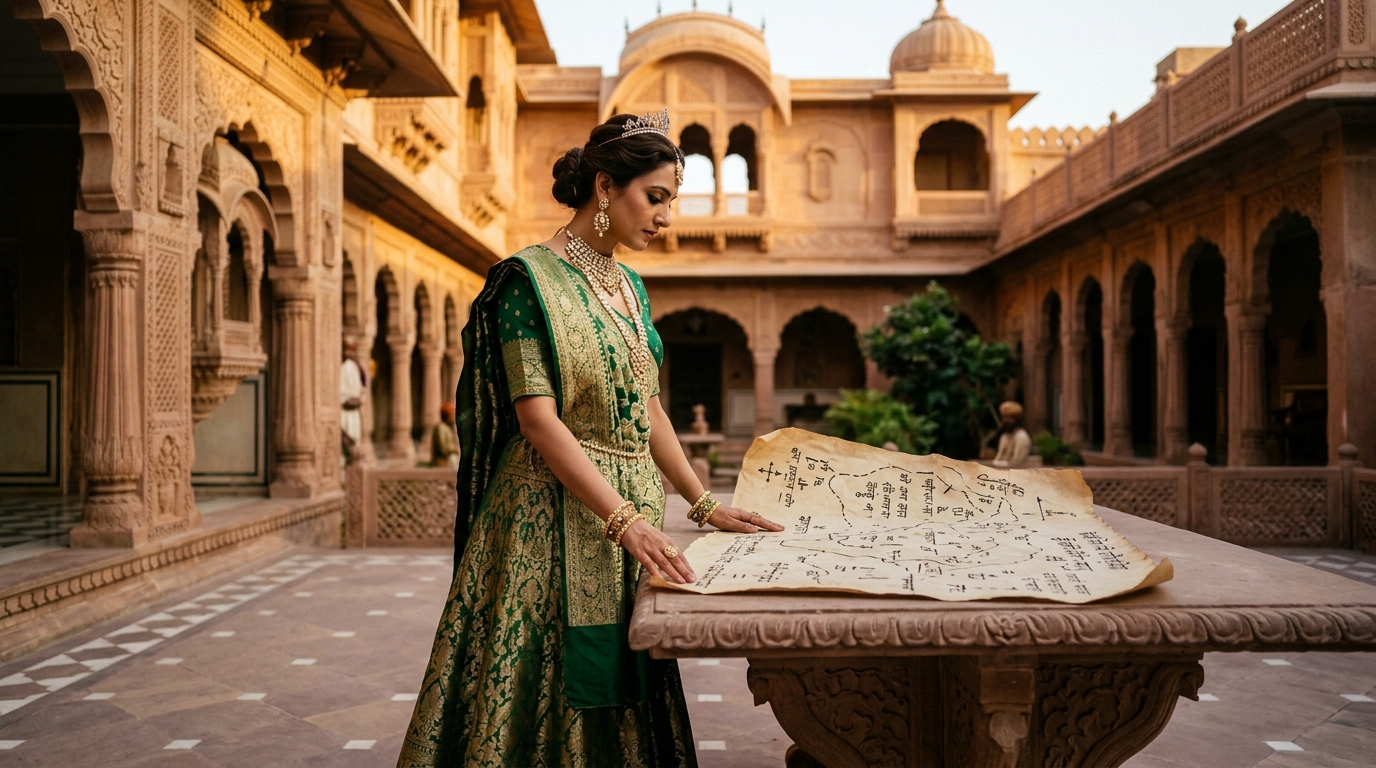
Indian royal women history is defined by queens and princesses who actively ruled empires, commanded armies, and directed state economies. From Razia Sultana's 13th-century ascension in Delhi to Ahilyabai Holkar's 18th-century administrative reforms, these leaders secured their legacies through decisive governance and strategic military resistance.
Key Takeaways
- Female rulers frequently acted as primary administrators and military commanders across Indian empires.
- Regent queens stabilized fractured kingdoms during periods of succession crisis and civil war.
- Architectural patronage served as a major tool for queens to project political authority.
- Regional queens led the heaviest resistance against early British colonial expansion.
- Southern queens controlled lucrative maritime trade routes to fund massive infrastructure projects.
History often paints Indian queens as passive figures confined to palaces behind ornate veils. The reality is that royal women actively ruled empires, commanded armies, and directed state economies. When you dig into the historical records, a completely different picture emerges. Queens managed vast treasuries. Princesses negotiated complex international treaties. Dowagers led thousands of troops into open battle. Indian royal women history reveals a continuous tradition of female authority spanning ancient dynasties to the modern republic. To understand how the subcontinent's borders and cultures evolved, you have to look at the women who held the actual reins of power.
How did early queens shape Indian royal women history through administration?
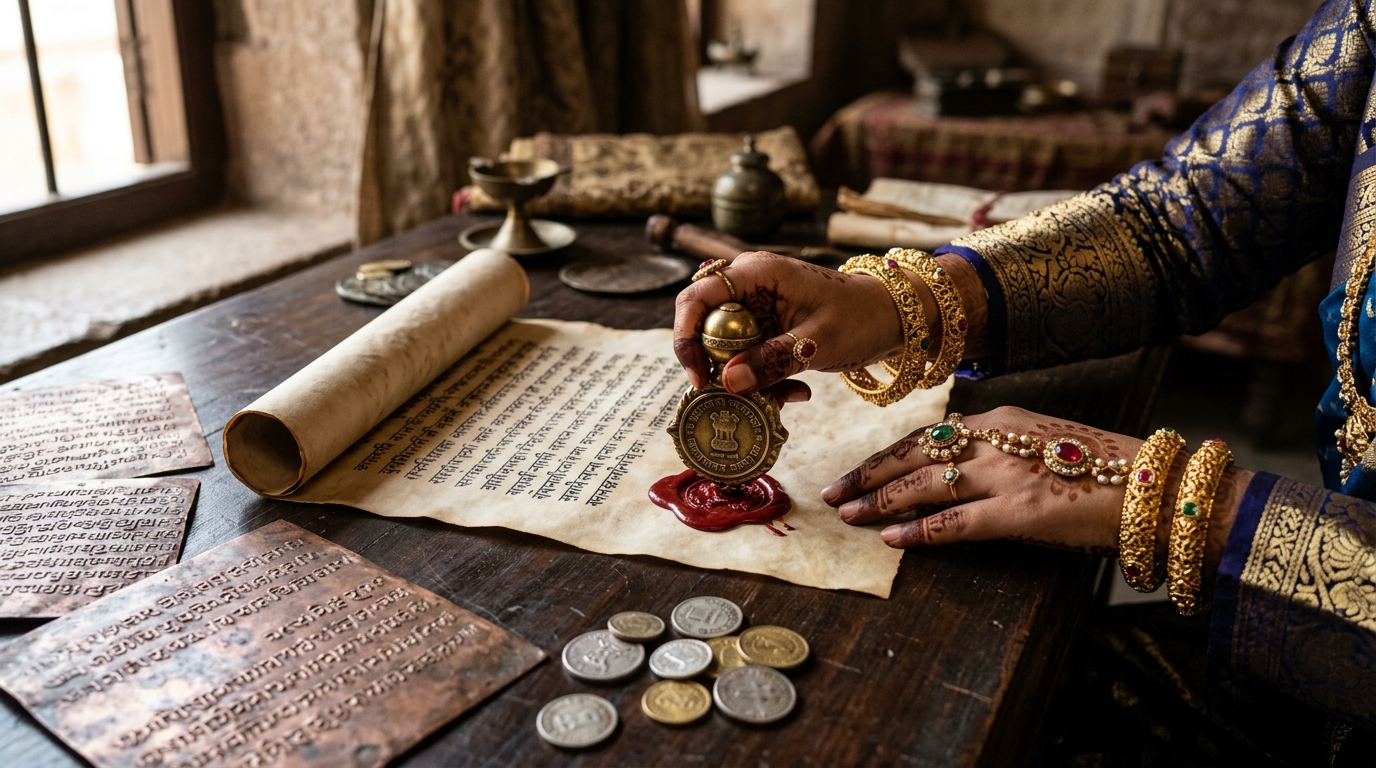
Early Indian royal women history shows queens functioning as central administrators rather than mere consorts. During periods of dynastic transition, female regents issued land grants, managed state finances, and forged political alliances. They stabilized volatile regions and ensured the continuity of their empires.
Prabhavatigupta and the Vakataka-Gupta Alliance
In the late fourth century, Prabhavatigupta assumed control of the Vakataka kingdom. She was the daughter of the powerful Gupta emperor Chandragupta II. When her husband Rudrasena II died unexpectedly, she stepped in as regent for her young sons. She did not just hold the throne warm. She actively governed for over twenty years.
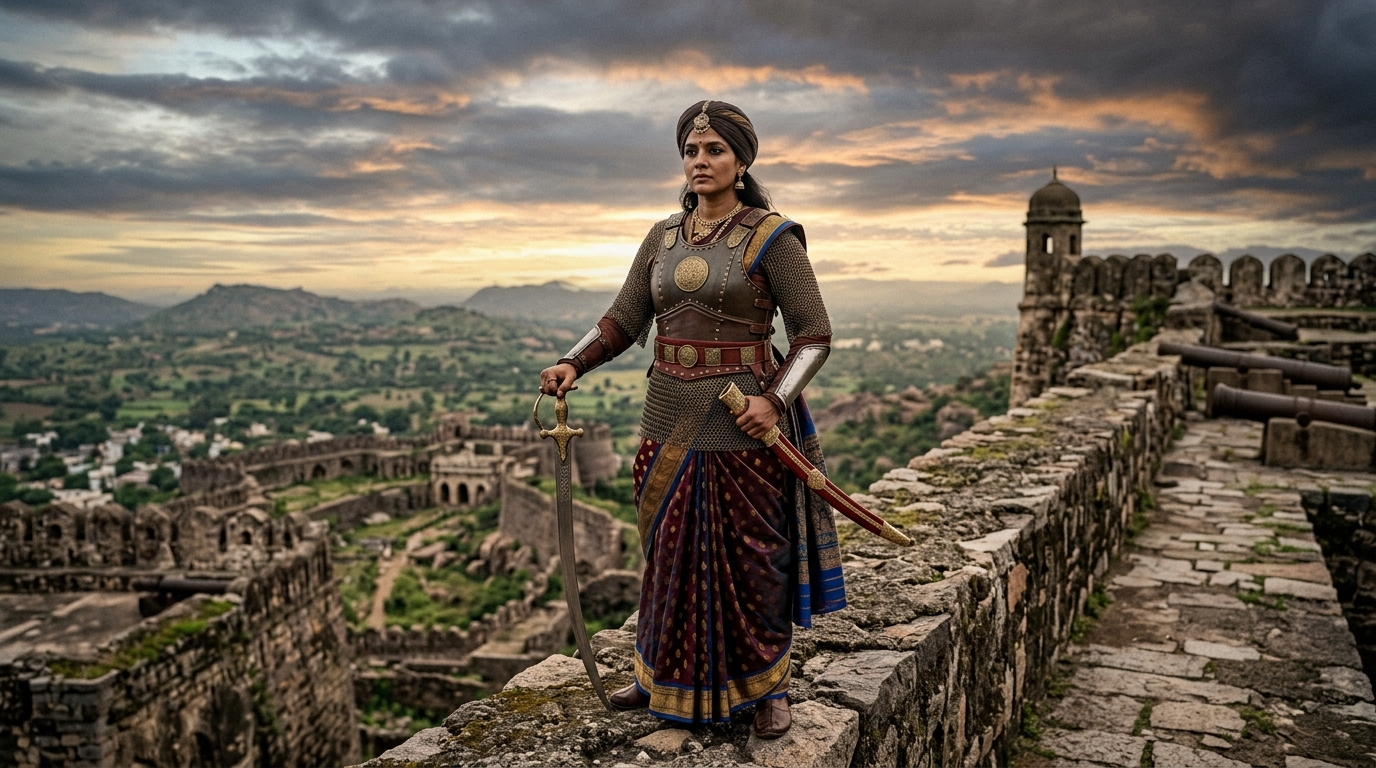
Historical evidence of her rule survives in the form of copper plate inscriptions. The Poona copper plate inscription, issued in her own name, details specific land grants given to religious institutions. These documents prove she controlled the state treasury and managed agrarian resources. Her reign effectively fused the administrative systems of the Gupta and Vakataka empires. This alliance secured central India and allowed the Gupta empire to expand its influence southward without military conflict.
Didda of Kashmir's Iron Grip
Move forward to the tenth century, and you find Queen Didda of Kashmir. She ruled the Kashmir Valley for nearly five decades, first as a regent and later as an absolute monarch. The 12th-century historian Kalhana detailed her complex reign in his authoritative text, the Rajatarangini.
Didda was a ruthless and highly effective administrator. She inherited a politically unstable kingdom plagued by rebellious ministers and rival factions. She systematically dismantled these threats. She executed disloyal officials, bribed wavering commanders, and reorganized the military command structure. Despite physical disabilities that required her to be carried by porters, she maintained an iron grip on the Lohara dynasty. Her administrative purges stabilized Kashmir's economy and secured the borders against external invasions for a generation.
What military milestones define Indian royal women history?
Military command stands as a cornerstone of Indian royal women history. Queens regularly led troops on the battlefield to defend their territories against imperial expansion. Their tactical decisions during sieges and open warfare directly altered the borders of major medieval and early modern kingdoms.
Razia Sultana's Ascension in Delhi
In 1236 CE, Razia Sultana achieved something unprecedented. She became the first and only female ruler of the Delhi Sultanate. Her father, Iltutmish, explicitly named her as his heir. He recognized that she possessed better administrative and military skills than any of her brothers.
Her reign lasted only four years, but it shifted the political landscape. Razia discarded the traditional veil. She wore the qaba (tunic) and kulah (headpiece) of a male ruler. She rode war elephants through the streets of Delhi to project strength. She struck coins bearing her name and titles. When the provincial governors rebelled against her authority, she personally led the imperial army out of Delhi to crush the insurrections. Her eventual defeat stemmed from entrenched political misogyny among the Turkish nobility, not a lack of military competence.
Rani Durgavati's Stand Against the Mughals
During the 16th century, the Gondwana kingdom in central India accumulated immense wealth under the rule of Rani Durgavati. She governed the region for 15 years after her husband's death. She maintained a standing army of 20,000 cavalry and 1,000 war elephants.
Her defining military milestone occurred in 1564. The Mughal Empire, expanding rapidly after the events detailed in April 21, 1526: A Historical Timeline of the First Battle of Panipat, targeted Gondwana for its riches. The Mughal general Asaf Khan invaded with a massive force. Durgavati did not surrender. She led her outnumbered troops into the defensive terrain of Narhi. She fought on the front lines atop her elephant. When she sustained severe arrow wounds and realized defeat was imminent, she chose to end her own life rather than face capture. Her resistance delayed Mughal consolidation in central India.
Kittur Chennamma's Early Anti-British Resistance
Decades before the famous 1857 rebellion, Rani Chennamma of Kittur took up arms against the British East India Company. In 1824, the British attempted to annex her state in present-day Karnataka using an early version of the Doctrine of Lapse. They refused to recognize her adopted son as the legitimate heir.
Chennamma rejected their demands. She fortified Kittur and mobilized her local militia. When the British forces arrived to seize the treasury, her army ambushed them. Her forces killed the British collector, St. John Thackeray, and captured two British officers. She held them hostage to force negotiations. Though the British eventually returned with a larger army and captured her, Chennamma's tactical initial victory remains a landmark event in the timeline of indigenous resistance.
What impact did Southern queens have on regional trade and culture?
Southern queens managed lucrative maritime trade routes and funded massive temple complexes. Their control over spice exports and coastal ports generated immense wealth. They used this economic power to sponsor arts, literature, and regional infrastructure that still defines southern India today.
Rani Abbakka Chowta's Naval Defense
In the 16th century, the coastal town of Ullal was a thriving port for pepper and spice exports. Rani Abbakka Chowta ruled this region. She recognized the growing threat of European maritime expansion. The Portuguese, having established strongholds further south as seen in the Portuguese Era in Goa: Key Dates and Architectural Milestones, demanded tribute from Ullal.
Abbakka refused to pay. For over four decades, she successfully repelled Portuguese naval attacks. She forged strategic alliances with the Zamorin of Calicut and local Muslim leaders to build a unified naval defense. She utilized local geography, directing fire-ships into the heavy Portuguese galleons. Her ability to protect the vital maritime trade routes kept the local economy out of colonial hands well into the late 1500s.
Mangammal of Madurai's Infrastructure Projects
Queen Mangammal ruled the Madurai Nayak kingdom as regent from 1689 to 1704. While she managed several military campaigns against neighboring states, her true legacy lies in civil administration and infrastructure.
She understood that trade and agriculture required stable logistics. Mangammal commissioned a vast network of roads connecting major commercial hubs. She built choultries (rest houses) along these routes to shelter traveling merchants and pilgrims. She funded the construction of large irrigation tanks to support agriculture during drought seasons. Many of the avenues she planted with shade trees are still in use today. Her investments in public infrastructure stabilized the Nayak economy during a period of intense regional warfare.
How did Maratha queens transform governance and diplomacy?
Maratha queens transformed governance by decentralizing military command and standardizing taxation. During the 17th and 18th centuries, these women managed complex confederacies. They funded massive public works, rebuilt destroyed infrastructure, and maintained diplomatic pressure on rival empires through calculated guerrilla warfare.
Tarabai's Defense Against Aurangzeb
In 1700, the Maratha Empire faced total collapse. King Rajaram had died, and the Mughal Emperor Aurangzeb was personally leading a massive army to crush the Marathas once and for all. Queen Tarabai stepped into the void. She declared her infant son the king and took absolute control of the military.
Tarabai did not manage the war from a safe palace. She traveled with the army. She utilized the rugged terrain of the Western Ghats to wage a relentless guerrilla campaign. She authorized local commanders to collect taxes (chauth) directly from Mughal territories, effectively funding the Maratha resistance with Mughal money. For seven years, she outmaneuvered Aurangzeb. Her strategic brilliance during this period is a defining chapter in the history of the maratha confederacy. She saved the Maratha state from extinction.
Ahilyabai Holkar's Architectural Legacy
Ahilyabai Holkar ruled the Malwa kingdom from 1767 to 1795. She represents one of the highest points of administrative excellence in Indian royal women history. After her husband and father-in-law died, she petitioned the Peshwa to let her take over the administration. She moved her capital to Maheshwar and transformed it into a literary, musical, and industrial hub.
Ahilyabai's greatest impact was architectural. She used the state treasury to rebuild Hindu infrastructure that had been destroyed during centuries of conflict. She funded the reconstruction of the Kashi Vishwanath temple in Varanasi. She built ghats, wells, and rest houses from the Himalayas to South India. She also industrialized her state, sponsoring the local textile industry that produces the famous Maheshwari sarees to this day.
| Royal Figure | Reign / Era | Region | Key Contribution |
|---|---|---|---|
| Razia Sultana | 1236–1240 | Delhi Sultanate | First female monarch of Delhi; established direct military command. |
| Tarabai | 1700–1708 | Maratha Empire | Led successful guerrilla resistance against the Mughal Empire. |
| Ahilyabai Holkar | 1767–1795 | Malwa (Indore) | Rebuilt major national infrastructure and industrialized local textiles. |
| Rani Lakshmibai | 1853–1858 | Jhansi | Commanded regional forces during the 1857 anti-British rebellion. |
What role did royal women play during the British colonial era?
During the British colonial era, royal women became the primary faces of regional resistance and state preservation. When the British East India Company attempted to annex sovereign territories, queens mobilized local militias, funded insurgencies, and negotiated complex treaties to retain their administrative autonomy.
You can trace many of these pivotal events through the Milestones in Indian Women's History: A Chronological Guide. The 19th century forced royal women to adapt rapidly to modern imperial warfare and legal maneuvering.
Rani Lakshmibai and the 1857 Rebellion
Rani Lakshmibai of Jhansi remains the most recognized figure of this era. When her husband died in 1853, the British East India Company applied the Doctrine of Lapse. They refused to recognize her adopted son's claim to the throne and annexed Jhansi.
When the rebellion of 1857 erupted, Lakshmibai initially sought to hold Jhansi in trust for the British. But as British forces turned hostile, she took up arms. She fortified the city and mounted heavy cannons on the walls. When General Hugh Rose laid siege to Jhansi in March 1858, she directed the defense. After the city fell, she escaped through enemy lines with her son strapped to her back. She joined forces with other rebel leaders and captured the fortress of Gwalior. She died in combat in June 1858. Her military leadership forced the British to entirely re-evaluate their policies toward princely states.
Begum Hazrat Mahal's Tactical Retreat
In the neighboring region of Awadh, Begum Hazrat Mahal led a parallel resistance. The British annexed Awadh in 1856 on dubious charges of misgovernance, exiling her husband, Nawab Wajid Ali Shah. Hazrat Mahal stayed behind in Lucknow.
When the 1857 rebellion began, she seized control. She crowned her young son, Birjis Qadr, as the ruler and assumed the regency. She united disparate factions of the Awadh army, local landowners, and peasant militias. Her forces laid siege to the British Residency in Lucknow for months. When the British eventually recaptured the city with overwhelming reinforcements, Hazrat Mahal did not surrender. She executed a tactical retreat into the forests of Nepal. She continued to fund and direct insurgent attacks from across the border, refusing any British offers of a pension in exchange for submission.
How did princely state princesses transition into modern India?
As princely states integrated into the democratic republic, royal women transitioned from hereditary rulers to elected politicians. They leveraged their historical influence to win democratic elections, advocate for regional development, and preserve their cultural heritage within the new constitutional framework of independent India.
Maharani Gayatri Devi's Political Pivot
Maharani Gayatri Devi of Jaipur exemplifies this transition. After India gained independence in 1947, the princely states lost their sovereign ruling powers. Rather than retreating into private life, Gayatri Devi entered modern democratic politics.
She joined the Swatantra Party, positioning herself in direct opposition to the ruling Indian National Congress. In the 1962 Lok Sabha elections, she won the Jaipur constituency with the world's largest landslide victory, securing 192,909 out of 246,516 cast votes. She used her parliamentary seat to advocate for free enterprise and oppose the centralization of state power. Her political career showed how historical royal influence could successfully translate into modern voter mobilization.
The Integration of States
The transition was not without friction. Royal women had to navigate severe economic and social changes. You can see the broader financial context of this era in the Economic Milestones in Indian History: From 1947 to Present.
In 1971, the Indian government passed the 26th Amendment, abolishing the privy purses. This stripped the former royal families of their state pensions and official titles. Royal women responded by pivoting to heritage preservation and business. Many converted their ancestral palaces into luxury heritage hotels, sustaining local tourism economies. Others established educational trusts and museums. They transformed their historical legacy from a system of governance into a mechanism for cultural preservation and economic development in modern India.
Related Reading
- Milestones in Indian Women's History: A Chronological Guide
- 1,000 Years of Indian Medical History: A Chronological Guide
- Economic Milestones in Indian History: From 1947 to Present
- What Are the Major Events in Indian History? (FAQ Archive)
FAQ
Q: Who was the first female ruler of the Delhi Sultanate? Razia Sultana was the first and only female ruler of the Delhi Sultanate. She ascended the throne in 1236 CE, actively commanding the military and issuing coins in her own name before her death in 1240.
Q: How did Ahilyabai Holkar contribute to Indian architecture? Ahilyabai Holkar funded the construction and restoration of major Hindu temples, ghats, and rest houses across India during the 18th century. Her most famous architectural contribution is the rebuilding of the Kashi Vishwanath temple in Varanasi.
Q: What was the Doctrine of Lapse? The Doctrine of Lapse was an annexation policy applied by the British East India Company. It stated that any princely state lacking a biological male heir would be absorbed into British territory, invalidating the traditional right of adoption.
Q: Did Indian queens actually lead armies in battle? Yes. Queens like Rani Durgavati, Tarabai, and Rani Lakshmibai personally rode into combat to direct their troops. They commanded cavalry units, managed siege defenses, and executed complex guerrilla warfare tactics.
Your next move is to explore the exact dates these events occurred to understand their chronological impact. Check our daily history archive to find the specific birth dates, battle anniversaries, and ascension days of these historical figures. Searching by date will help you connect these individual milestones to the broader timeline of Indian history.