Remembering Asha Bhosle: A Timeline of Her Historic Music Milestones
What Is the Quick Read on the Asha Bhosle History Timeline?
The Asha Bhosle history timeline is the official record of an 83-year playback singing career spanning from 1943 to 2026. Certified by Guinness World Records as music history's most recorded artist, Asha Bhosle completed over 11,000 songs across 20 languages, earning two National Film Awards and two Grammy Award nominations [Guinness World Records, 2026; The Siasat Daily, 2026].
Key Takeaways
- Guinness World Records officially verified Asha Bhosle as the most recorded artist in music history, with over 11,000 songs across 20 languages.
- Her creative partnerships with composers O.P. Nayyar, R.D. Burman, and Khayyam redefined Hindi film music from 1950s swing to 1980s ghazals.
- Bhosle won two National Film Awards for Umrao Jaan (1981) and Ijaazat (1987).
- She earned two Grammy Award nominations for international collaborative albums in 1997 and 2006.
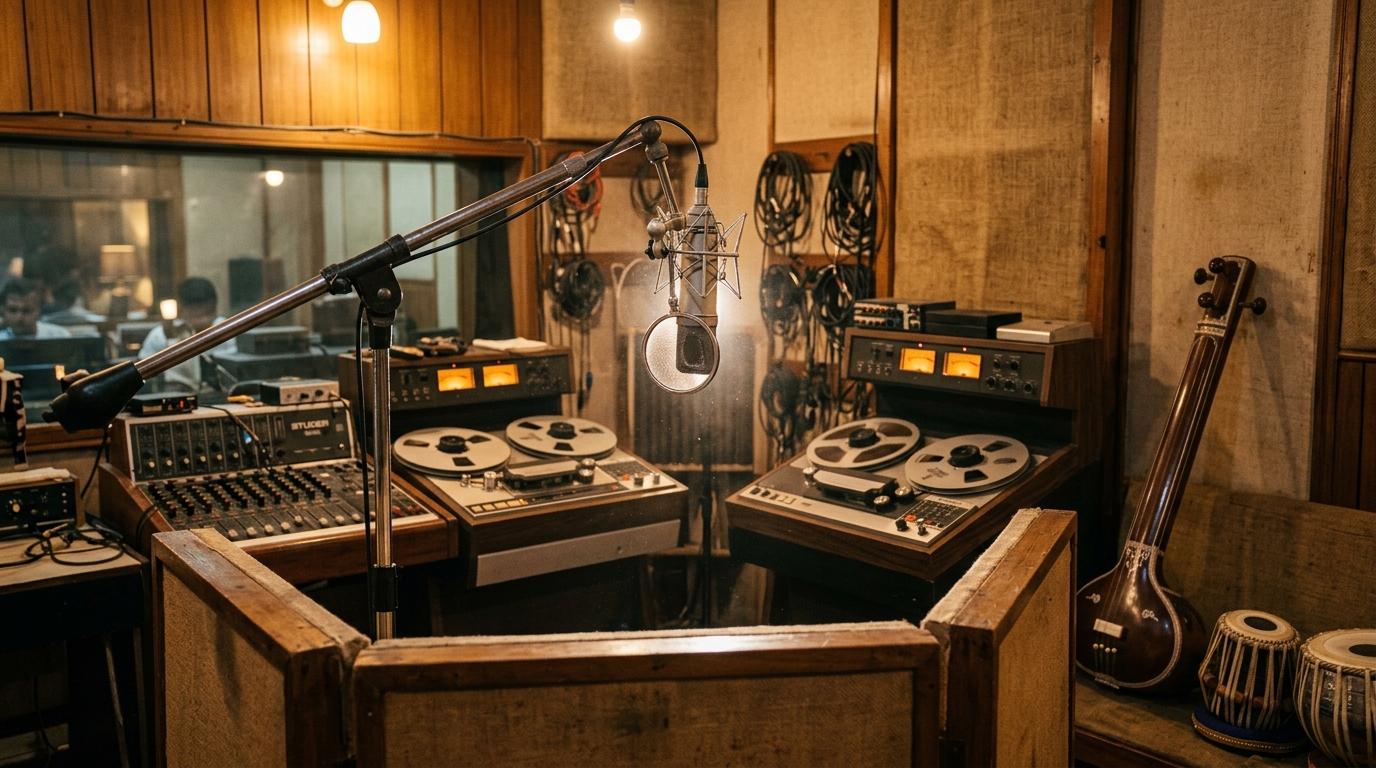
A red recording light glows inside a cramped 1957 Bombay studio. Music director O.P. Nayyar counts down the tempo. Asha Bhosle stands at the microphone with handwritten Urdu lyrics on a wooden music stand. She taps her foot, leans into the dynamic ribbon mic, and delivers the opening line of "Maang Ke Saath Tumhara" for the film Naya Daur.

The performance shifted her career from secondary tracks to leading roles. It also set into motion eight continuous decades of studio recordings.
Understanding the Asha Bhosle history timeline reveals how one artist altered playback singing in Indian cinema. Her body of work covers classical ragas, cabaret numbers, pop experiments, and cross-border fusion. Bhosle did not merely adapt to changing production styles. She shaped the sound of Indian popular music across multiple generations. Her recorded catalog stands as a pillar within milestones in Indian women's history.
How Did Asha Bhosle Build Her Early Career in Indian Cinema?
Asha Bhosle established her professional footing during the 1940s through necessity following family hardship. She accepted songs that established singers rejected, mastering diverse vocal styles and regional languages. This intense early workload built the vocal stamina and sight-reading speed that supported her record-breaking output.
+-------------------------------------------------------------+
| Early Career Milestones (1943–1957) |
| |
| [1943] Professional Debut: "Chala Chala Nav Bala" |
| │ (Film: Majha Bal | Age: 9) |
| ▼ |
| [1948] Hindi Film Debut: "Saawan Aaya" |
| │ (Film: Chunariya) |
| ▼ |
| [1957] Breakthrough: Naya Daur (Composer: O.P. Nayyar) |
| Transitions from B-movies to frontline playback |
+-------------------------------------------------------------+
The 1943 Debut and Early Industry Struggles
Asha Bhosle entered the music industry out of economic urgency. Her father, the classical singer and theater artist Pandit Deenanath Mangeshkar, died in 1942. His death left the family without a steady income. Bhosle was just nine years old when she sang her first playback track, "Chala Chala Nav Bala," for the Marathi film Majha Bal in 1943 [Nepal News, 2026].
Her Hindi cinema debut followed in 1948 with the song "Saawan Aaya" in the film Chunariya. During the late 1940s and early 1950s, leading composers reserved premier tracks for established vocalists. Bhosle routinely received assignments for B-grade films, vamps, and background dancers.
Rather than treating these assignments as lesser work, Bhosle studied the physical movements of dancers on set. She tailored her breath control to match on-screen choreography. If an actress danced at an accelerated tempo, Bhosle added percussive breaths and syncopated accents into the vocal take.
She also recorded extensively in regional film industries. Her work helped drive record-breaking runs in Indian regional cinema, where she mastered Marathi, Bengali, Gujarati, and Tamil diction.
Stepping Out of the Classical Shadow
The mid-1950s presented a distinct professional obstacle: the dominant vocal style of Hindi cinema. Her elder sister, Lata Mangeshkar, set the industry standard with pure, straight-tone high notes suitable for traditional heroines. Producers expected young singers to imitate that delivery.
Bhosle chose a different sonic path. She focused on rhythmic flexibility, vocal ornamentation, and lower chest-voice power. In 1954, director Bimal Roy hired her for Parineeta, giving her access to mainstream cinematic drama.
Her breakthrough arrived when filmmaker B.R. Chopra selected her for Naya Daur (1957). Composer O.P. Nayyar paired Bhosle with Mohammed Rafi for duets like "Uden Jab Jab Zulfen Teri" and "Saathi Haath Badhana." The film's commercial success proved Bhosle could lead a major soundtrack. It severed her association with second-tier productions and established her as a primary voice for leading actresses.
How Does the Asha Bhosle History Timeline Define the Golden Era of Hindi Film Music?
The Asha Bhosle history timeline is the definitive musical record documenting how Indian playback singing transitioned from classical orthodoxy into modern global genres between the 1950s and 1970s. Through long-term creative partnerships with music directors O.P. Nayyar and Rahul Dev (R.D.) Burman, Asha Bhosle introduced Western big-band swing, rock-and-roll, jazz, and Latin bossa nova rhythms into mainstream Hindi film scores. Bhosle adapted Bhosle's vocal phrasing, dynamic microtonal pitch bends, and rapid breath control to complex orchestral arrangements across landmark films such as Naya Daur (1957), Teesri Manzil (1966), and Haré Rama Haré Krishna (1971) [The Guardian, 2026]. This stylistic evolution challenged formal playback conventions and earned Bhosle seven Filmfare Awards for Best Female Playback Singer between 1968 and 1979 [Guinness World Records, 2026]. Bhosle's versatile performances established new commercial production standards across eight decades of Indian cinematic history.
Collaborating with O.P. Nayyar and Defining the 1950s Swing
Between 1956 and 1973, O.P. Nayyar composed without using Lata Mangeshkar, relying almost entirely on Bhosle's vocal versatility. Nayyar brought Punjabi folk rhythms and Western big-band horns into the recording room. Bhosle delivered the swift tempo changes his arrangements demanded.
Their partnership produced classic soundtracks, including CID (1956), Howrah Bridge (1958), Kashmir Ki Kali (1964), and Mere Sanam (1965). In "Aao Huzoor Tumko" from Kismat (1968), Bhosle incorporated microtonal pitch bends and spoken-word phrases. Critics of the era initially questioned whether such informal delivery belonged in classical Indian cinema. Audiences responded with record ticket and vinyl sales.
Bhosle's work during this period showed that playback singing did not need to sound formal to convey emotion. She used sharp dynamic shifts, moving from soft whispers to full-volume belt tones within a single musical bar.
Breaking Genre Conventions with R.D. Burman in the 1970s
In 1966, Bhosle collaborated with composer Rahul Dev (R.D.) Burman on the soundtrack for Teesri Manzil. The film paired rock-and-roll guitar riffs with fast-paced Hindi lyrics. Bhosle performed high-tempo vocal runs on tracks like "O Haseena Zulfonwali" and "Aaja Aaja Main Hoon Pyar Tera." These performances required rapid tongue articulation and sustained breath support over long horn lines.
Key R.D. Burman & Asha Bhosle Collaborations (1966–1981):
├── 1966: Teesri Manzil ("O Haseena Zulfonwali", "Aaja Aaja")
├── 1971: Caravan ("Piya Tu Ab To Aaja")
├── 1971: Haré Rama Haré Krishna ("Dum Maro Dum")
├── 1972: Apna Desh ("Duniya Mein Logon Ko")
└── 1977: Hum Kisise Kum Naheen ("Yeh Ladka Hai Allah")
Their work expanded in 1971 with Caravan ("Piya Tu Ab To Aaja") and Haré Rama Haré Krishna ("Dum Maro Dum") [The Guardian, 2026]. "Dum Maro Dum" defined the 1970s youth counterculture movement across South Asia. Bhosle sang behind the beat, matching the psychedelic organ riffs and acoustic guitar strumming.
Music critic Robin Denselow observed that Bhosle often became more celebrated than the actresses lip-syncing her tracks on screen [The Guardian, 2026]. Between 1968 and 1979, Bhosle won seven Filmfare Awards for Best Female Playback Singer [Guinness World Records, 2026]. In 1979, she formally requested that Filmfare exclude her name from future nominations to give emerging singers room to compete.
Why Was the Umrao Jaan Shift a Turning Point for Her Vocal Legacy?
The 1981 film Umrao Jaan marked a turning point by showing Bhosle's mastery of classical Urdu ghazals. Composer Khayyam lowered her vocal key by one semitone, accessing a rich lower register that surprised the industry. The project earned Bhosle her first National Film Award and broke her image as strictly a fast-tempo singer.
Vocal Key Comparison for Umrao Jaan (1981):

Standard Hindi Playback Pitch:
[ C# / D Scale ] ────── High, Piercing, Cabaret Registers

Khayyam's Direction for Umrao Jaan:
[ C Scale (Half-Step Down) ] ────── Intimate, Resonant, Classical Ghazals
Lowering the Pitch: Khayyam and the Classical Ghazal Re-invention
By 1980, directors frequently typecast Bhosle for Western dance numbers, cabaret pieces, and fast duets. Director Muzaffar Ali and music director Khayyam challenged this assumption when casting for the period drama Umrao Jaan (1981). The story required a sophisticated 19th-century courtesan singing introspective ghazals.
Khayyam made an uncommon technical choice during pre-production rehearsals. He instructed Bhosle to sing one half-step lower than her customary studio pitch.
The lower key brought out warmth and resonance in her lower chest register. Bhosle spent weeks working with Urdu dialect coaches to master complex poetic nuances. When Umrao Jaan hit theaters, tracks like "Dil Cheez Kya Hai," "In Aankhon Ki Masti," and "Justuju Jiski Thi" drew praise from classical purists and mainstream listeners alike.
National Recognition and Critical Triumphs
The critical reception of Umrao Jaan changed Bhosle's public standing. In 1981, she won the National Film Award for Best Female Playback Singer for "Dil Cheez Kya Hai" [The Siasat Daily, 2026]. The film proved she could handle complex semi-classical pieces just as effectively as modern Western arrangements.
Her success with classical material continued in 1987 with director Gulzar's film Ijaazat. Working with R.D. Burman, Bhosle recorded "Mera Kuchh Saamaan," an unconventional song written in free-verse prose without standard rhyming meters.
Industry veterans doubted that non-rhyming poetry could work as a popular film track. Bhosle phrased the free-flowing lines naturally, turning conversational pauses into emotional accents. The performance earned her a second National Film Award in 1987 [The Siasat Daily, 2026].
How Did Asha Bhosle Cross Over to Global Audiences and Modern Pop?
Asha Bhosle's global crossover is a multi-decade expansion beyond Indian cinema into international world music, alternative rock, and contemporary pop collaborations. Beginning in the 1990s, Asha Bhosle expanded international awareness through studio projects with global musicians, earning two Grammy Award nominations in 1997 for Legacy with sarod maestro Ustad Ali Akbar Khan and in 2006 for You've Stolen My Heart with the Kronos Quartet [The Siasat Daily, 2026; Wikipedia, 2026]. British band Cornershop celebrated Bhosle's cultural legacy with the 1997 UK chart-topping single "Brimful of Asha," while Bhosle recorded duets with Boy George, Michael Stipe, and Brett Lee. In 2026, Bhosle contributed guest vocals to the track "The Shadowy Light" on Gorillaz's album The Mountain [Guinness World Records, 2026]. These cross-border recordings demonstrated Bhosle's vocal adaptability across Western time signatures and reinforced historic milestones of Indian cinema on the global stage.
Independent Albums and Western Collaborations
During the 1990s, Bhosle adjusted to changes in the music industry by releasing independent pop and collaborative albums. British band Cornershop paid tribute to her legacy in 1997 with their single "Brimful of Asha," which reached number one on the UK Singles Chart.
Bhosle expanded her work with international artists across multiple genres:
- Classical Indian Fusion (1997): Partnered with sarod maestro Ustad Ali Akbar Khan on the album Legacy, earning her first Grammy Award nomination in the Traditional World Music category [The Siasat Daily, 2026].
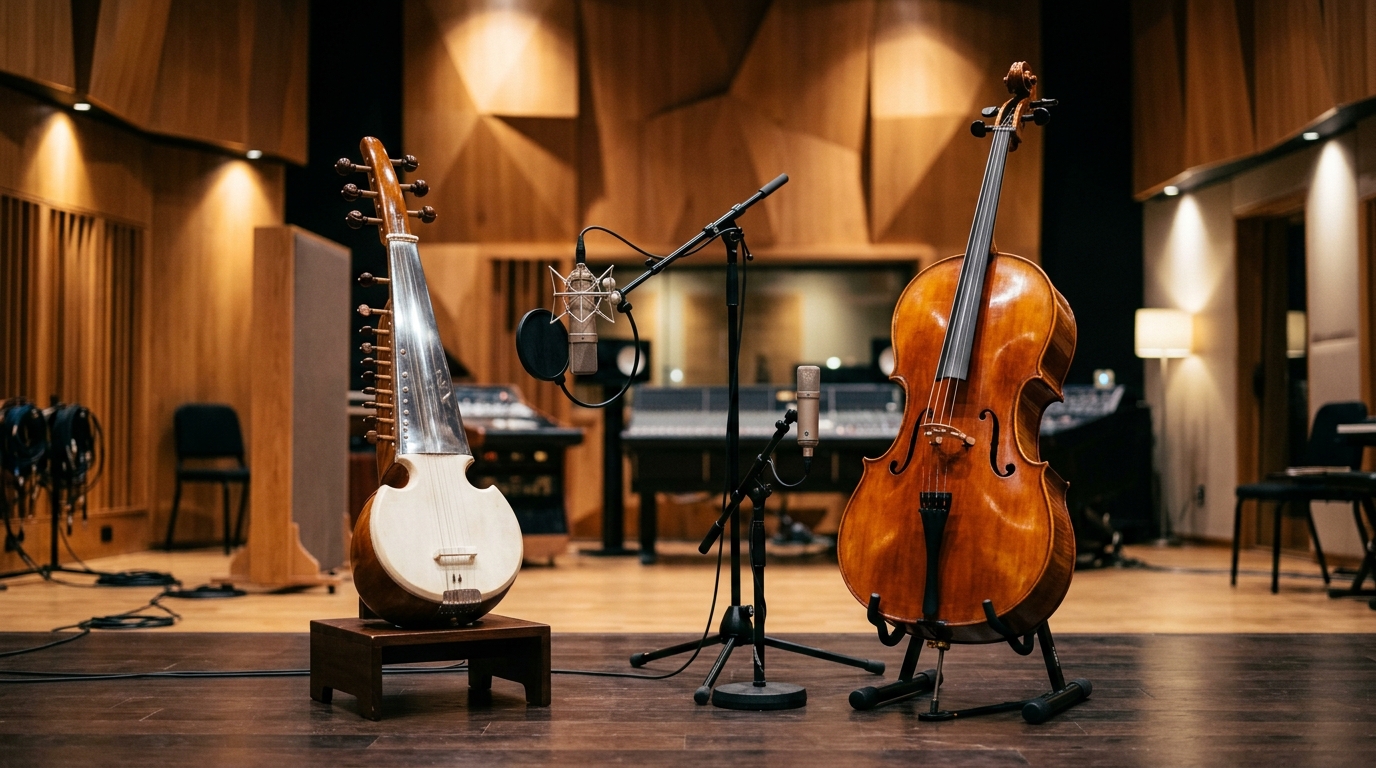
- Contemporary String Arrangements (2005): Collaborated with the American avant-garde Kronos Quartet on You've Stolen My Heart: Songs from R.D. Burman's Bollywood [Wikipedia, 2026]. The album reinterpreted vintage Hindi film scores and earned a 2006 Grammy nomination [The Siasat Daily, 2026].
- Indie Pop and Duets (2000s): Recorded tracks with British singer Boy George, R.E.M. frontman Michael Stipe, and Australian cricketer Brett Lee.
- Alternative Electronic (2026): Contributed guest vocals to the track "The Shadowy Light" on Gorillaz's studio album The Mountain [Guinness World Records, 2026].
These collaborations required adjusting her Indian vocal style to fit Western time signatures. Instead of using standard playback tracking, Bhosle recorded live in the room with the Kronos Quartet. Her precise intonation preserved the character of Burman's compositions within a chamber music setting.
Breaking World Records and Later Honors
In 2011, Guinness World Records officially verified Asha Bhosle as the most recorded artist in music history [Guinness World Records, 2026; BBC, 2026]. The organization counted over 11,000 solo songs, duets, and chorus tracks recorded across more than 20 Indian and foreign languages since 1943.
The Indian government honored her contributions with the Dadasaheb Phalke Award in 2000, the country's highest cinema honor [The Hindu, 2026]. In 2008, she received the Padma Vibhushan, India's second-highest civilian award [The Hindu, 2026]. Bhosle maintained an active touring schedule well into her late eighties, headlining arena concerts such as the "ASHA@90" show in Dubai [The Better India, 2026].
What Key Milestones Anchor the Complete Asha Bhosle History Timeline?
The complete Asha Bhosle history timeline stretches from her early studio work during British colonial rule to international records in the 2020s. This timeline tracks her key career milestones across eight decades of active singing.
Asha Bhosle: Eight Decades of Music Milestones

1940s ── 1943: First playback song ("Majha Bal")
      └── 1948: Hindi film debut in "Chunariya"

1950s ── 1957: Breakthrough with O.P. Nayyar on "Naya Daur"

1960s ── 1966: Rock-and-roll playback shift in "Teesri Manzil"
      └── 1968: First Filmfare Award ("Garibon Ki Suno", Dus Lakh)

1970s ── 1971: Cultural impact of "Dum Maro Dum"
      └── 1979: Steps down from Filmfare contention after 7 wins

1980s ── 1981: First National Film Award for "Umrao Jaan"
      └── 1987: Second National Film Award for "Ijaazat"

1990s ── 1997: First Grammy nomination for "Legacy"

2000s ── 2000: Awarded the Dadasaheb Phalke Award
      ├── 2006: Second Grammy nomination ("You've Stolen My Heart")
      └── 2008: Conferred the Padma Vibhushan

2010s ── 2011: Guinness World Record for Most Recorded Artist
      └── 2013: Lead acting debut in Marathi film "Mai"

2020s ── 2026: Feature on Gorillaz album; passing on April 12
      └── 2026: Final single announced by A.R. Rahman
What Is the Chronological Table of Historic Dates and Achievements in the Asha Bhosle History Timeline?
The chronological table of the Asha Bhosle history timeline is a verified record of major cinematic milestones spanning from Bhosle's 1943 debut in Majha Bal to Bhosle's 2026 final recording with composer A.R. Rahman [Nepal News, 2026; The Siasat Daily, 2026]. This reference details Bhosle's government honors, National Film Awards, and Guinness World Records verification [Guinness World Records, 2026; The Hindu, 2026].
| Year | Milestone / Work | Historical Significance | Source / Reference |
|---|---|---|---|
| 1943 | "Chala Chala Nav Bala" (Majha Bal) | Professional playback debut at age nine | Nepal News, 2026 |
| 1957 | Naya Daur | Major commercial breakthrough with O.P. Nayyar | The Better India, 2026 |
| 1966 | Teesri Manzil | Introduced Western pop and rock to mainstream Hindi playback | The Guardian, 2026 |
| 1971 | "Dum Maro Dum" (Haré Rama Haré Krishna) | Defined the 1970s youth counterculture sound in South Asia | The Guardian, 2026 |
| 1979 | Voluntary Filmfare Retirement | Withdrew from Best Female Playback category after seven wins | Guinness World Records, 2026 |
| 1981 | Umrao Jaan | Won first National Film Award; transformed her image with ghazals | The Siasat Daily, 2026 |
| 1987 | "Mera Kuchh Saamaan" (Ijaazat) | Won second National Film Award for non-rhyming free-verse lyricism | The Siasat Daily, 2026 |
| 1997 | Legacy (with Ali Akbar Khan) | First Grammy Award nomination (Traditional World Music) | The Siasat Daily, 2026 |
| 2000 | Dadasaheb Phalke Award | Received India's highest official cinematic honor | The Hindu, 2026 |
| 2006 | You've Stolen My Heart (Kronos Quartet) | Second Grammy Award nomination (Contemporary World Music) | Wikipedia, 2026 |
| 2008 | Padma Vibhushan | Conferred India's second-highest civilian honor | The Hindu, 2026 |
| 2011 | Guinness World Records Certificate | Officially certified as the most recorded artist in music history | Guinness World Records, 2026 |
| 2013 | Film Acting Debut (Mai) | Starred in title role of critically acclaimed Marathi family drama | BBC, 2026 |
| 2026 | Feature on Gorillaz's The Mountain | Recorded vocals for international track "The Shadowy Light" | Guinness World Records, 2026 |
| 2026 | State Honors & Final Single | Passed away April 12; A.R. Rahman announced final studio single | The Hindu, 2026; NDTV, 2026 |
Entrepreneurship, Acting, and Final Recordings
Bhosle expanded her work beyond music studios. In 2002, she launched Asha's, an international chain of restaurants serving North-Western Indian cuisine [BBC, 2026]. She personally selected spice blends and trained chefs on family recipes, expanding the business across Dubai, Birmingham, Manchester, and Kuwait.
In 2013, at age 79, Bhosle made her feature acting debut in the Marathi film Mai [BBC, 2026]. She played an elderly woman experiencing the onset of Alzheimer's disease who is abandoned by her children. Critics praised her restrained dramatic performance.
Bhosle passed away on April 12, 2026, at age 92 in Mumbai. She received a state funeral with full honors at Shivaji Park [The Hindu, 2026; NDTV, 2026]. Following her passing, composer A.R. Rahman announced the release of her final studio recording, accompanied by a tribute video featuring Shah Rukh Khan, Salman Khan, and Kamal Haasan [The Siasat Daily, 2026]. Her final work closed an uninterrupted 83-year recording career.
Frequently Asked Questions
Q: How many songs did Asha Bhosle record throughout her career?
A: Guinness World Records officially verified that Asha Bhosle recorded over 11,000 individual solo, duet, and chorus tracks across more than 20 languages [Guinness World Records, 2026; BBC, 2026]. Some music historians estimate her catalog exceeds 12,000 songs when counting private devotional tracks and unreleased studio tapes.
Q: Which songs earned Asha Bhosle her National Film Awards?
A: Bhosle won two National Film Awards for Best Female Playback Singer during her career [The Siasat Daily, 2026]. She won her first award for "Dil Cheez Kya Hai" from Umrao Jaan (1981) and her second for "Mera Kuchh Saamaan" from Ijaazat (1987).
Q: Why did Asha Bhosle stop accepting Filmfare Award nominations?
A: After winning her seventh Filmfare Award for Best Female Playback Singer in 1979, Bhosle asked organizers to exclude her from future ballots [Guinness World Records, 2026]. She took this step to encourage newer talent entering the Hindi film industry. Filmfare later presented her with a Lifetime Achievement Award in 2001.
Q: Did Asha Bhosle receive any Grammy Award nominations?
A: Bhosle earned two Grammy nominations in the World Music categories [The Siasat Daily, 2026]. Her first nomination came in 1997 for Legacy with sarod maestro Ali Akbar Khan, and her second in 2006 for You've Stolen My Heart with the Kronos Quartet [Wikipedia, 2026].
Explore the recordings and technical range of Asha Bhosle firsthand by listening to the landmark tracks mentioned above in chronological order. Building a focused playlist from Naya Daur (1957) through Umrao Jaan (1981) reveals how her vocal mechanics and tonal control developed across changing recording technologies.
What Books and Sources Provide Further Reading on Asha Bhosle?
Recommended further reading on Asha Bhosle is a curated selection of biographical texts and archival documentation analyzing Bhosle's vocal technique, historical collaborations, and studio records. These publications document Bhosle's work with composers O.P. Nayyar and R.D. Burman, alongside the verification criteria used for Bhosle's world-record musical catalog [Guinness World Records, 2026].
- Asha Bhosle: A Musical Biography by Raju Bharatan — A detailed look into her studio collaborations with mid-century music directors.
- R.D. Burman: The Man, The Music by Anirudha Bhattacharjee and Balaji Vittal — An analytical account of how Burman and Bhosle developed modern arrangements during the 1970s.
- Guinness World Records Music Archive (2026 Edition) — Official documentation and cataloging methodology behind Bhosle's world record for studio output.
Related Reading
- Indian History Timeline Chart: Key Milestones (Digital Reference)
- India at the Olympics: A Timeline of Historic Sporting Milestones
- Indian History Milestones: The Maurya and Gupta Empires
- Milestones in Indian Women's History: A Chronological Guide
Sources
- Most recorded female artist — Guinness World Records, 2026. Supports: Asha Bhosle's Guinness World Record recognition as the most recorded artist in music history with over 11,000 songs across 20 languages, as well as her seven Filmfare Awards.
- Asha Bhosle Grammy Awards and Nominations, Song & Bio — The Recording Academy, 2026. Supports: Asha Bhosle's two Grammy Award nominations for the collaborative albums Legacy (1997) and You've Stolen My Heart (2006).
- Asha Bhosle: Timeline of a legendary life (1933–2026) — Nepal News, 2026. Supports: Bhosle's 1943 debut song "Chala Chala Nav Bala" in Majha Bal, her 1948 Hindi debut in Chunariya, and her two National Film Award wins for Umrao Jaan and Ijaazat.
- Obituary: Asha Bhosle, the voice that defied genres, time — The Hindu, 2026. Supports: Bhosle's career breakthrough with composer O.P. Nayyar in Naya Daur (1957) and her mastery of breath control and varied musical genres across eight decades.
- Remembering Asha Bhosle Through 20 Years of Conversations — Rolling Stone India, 2026. Supports: Bhosle's transition across genres from 1950s swing to 1980s ghazals with Khayyam in Umrao Jaan and her cross-border collaborative albums.
- Asha Bhosle death at 92: She held a Guinness World Record no singer can match. Here's what she achieved — The Economic Times, 2026. Supports: Bhosle's start in the music industry following the death of her father Pandit Deenanath Mangeshkar in 1942 and her catalog spanning over 11,000 songs.